
Why Is My Cat Sleeping So Much? Normal vs Lethargic
By RexVet Team | Reviewed by Dr. Tiffany Delacruz, DVM
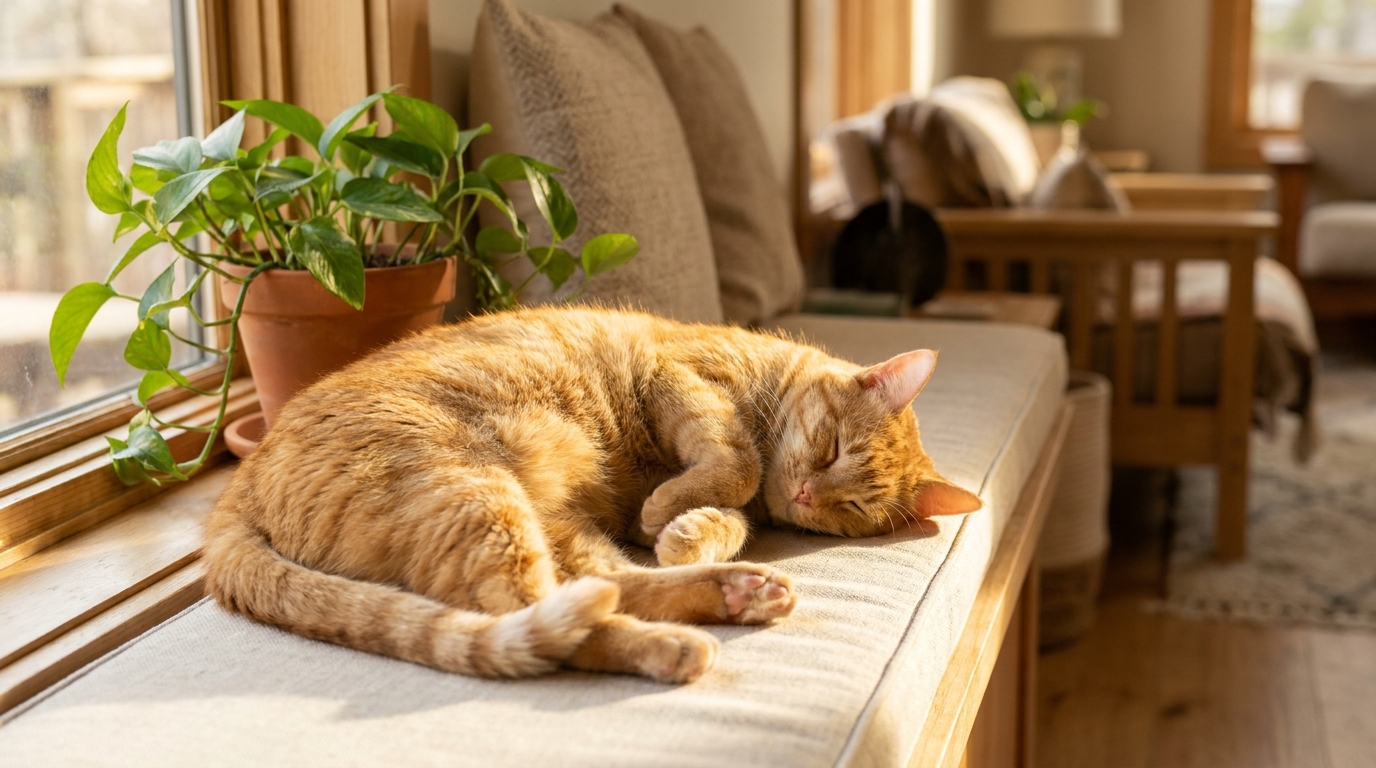
How many hours cats sleep at each age, a 60-second test for sleepy vs lethargic, and the signs that mean a vet today or the ER now.
Quick answer: Most cats spend about 15 hours a day asleep or resting; kittens and seniors may sleep more. A cat that wakes easily, eats, grooms and uses the litter box is usually fine. One that is dull, hides, stops grooming or eats less needs a vet today. Go to an ER now if your cat is hard to rouse, collapses, strains to pee, has pale or blue gums, or breathes open-mouthed.
This article is general information, not a diagnosis. If you think your pet is in danger, go to the nearest emergency animal hospital.
How many hours a day do cats sleep?
The Merck Veterinary Manual puts a cat's day at about 15 hours asleep or resting and calls cats crepuscular, meaning most active at dawn and dusk. The figure comes from free-roaming farm cats, so treat it as a guide. PDSA, a UK veterinary charity, gives a similar average and says some cats sleep up to 20 hours, kittens and seniors especially.
What matters more is a change from your cat's normal and how it acts once awake. PDSA notes that a sudden change in sleeping pattern can point to an underlying health problem.
Normal sleep by age (adults: Merck Veterinary Manual; kittens and seniors: PDSA; senior means over 10, per AAFP/AAHA).
| Age | Typical sleep | Worry if |
|---|---|---|
| Kitten (under 1 yr) | Up to about 20 h | Limp, cold, vomiting or diarrhea: ER now. Not eating: vet within hours |
| Adult (1-10 yr) | About 15 h asleep or resting | Hard to wake, skips meals, hides, stops grooming |
| Senior (over 10 yr) | May sleep more than adults | Sudden change, weight loss, new hiding spots, grooms less, night yowling |
Sleepy or lethargic? The 60-second wake-up test
A sleepy cat switches on when something interesting happens; a lethargic cat stays dull even when awake. Try this while your cat dozes:
- Shake the treat bag or open a can. A healthy cat lifts its head, looks toward the sound and usually gets up to follow.
- Watch for a minute. Is it alert, walking normally and interested in you?
- Check the coat (greasy or matted means it has stopped grooming), the litter box and the water bowl against your cat's usual.
- Lift the lip in good light. Healthy gums are pink in most cats.
If your cat fails the first two steps, or its gums are pale, white, blue, gray, yellow or brown, use the emergency table below.
| Sign | Sleepy cat | Lethargic cat |
|---|---|---|
| Wakes to a food sound | Yes, quickly | Slowly or not at all |
| Alert once awake | Yes, looks and follows | Dull, stares, ignores you |
| Grooming | Normal | Stops; coat greasy or matted |
| Eats and drinks | Normally | Less or not at all |
| Litter box | Normal use | Accidents; lies in the box or strains: ER now |
| Hiding | Usual spots | New spots (closet, under bed), avoids people |
| Plays briefly | Yes | No interest |
When extra sleep is an emergency
Anything marked ER now or vet today needs in-person care that a video visit cannot replace.
| What you see | What to do |
|---|---|
| Hard to rouse, collapse, seizure, wobbly walk | ER now |
| Pale, white, blue, gray, yellow or brown gums | ER now |
| Open-mouth breathing, belly heaving, or over 35 breaths a minute at rest in a dull cat | ER now |
| Sudden dragging back legs, cold paws, severe pain | ER now |
| Any cat (mostly males) straining or making repeated trips with little or no urine, or lying in the box | ER now |
| Sudden blindness or poor balance | ER now |
| Diabetic cat very sleepy, wobbly or trembling | ER now |
| Possible lily, antifreeze, human pain pill or dog flea product | ER now; call a poison line on the way |
| Swollen face, vomiting or trouble breathing after shots | ER now |
| Dull or hiding and eating less or vomiting | Vet today |
| Eats nothing for about 24 h (sooner: kitten, senior, overweight, diabetic) | Vet today |
| Any lethargic kitten | Vet within hours |
| Sleeping breath rate stays above 30, no other signs | Call a vet today |
| Senior over 10 with a new sleep change | Book an in-person exam with bloodwork |
| Sleeps more but wakes easily, eats, grooms, uses the box | Log it for 2-3 days; book a check if it continues |
Cornell's Feline Health Center calls a urinary blockage an absolute emergency (a fully blocked cat may die in less than 24 to 48 hours) and says low blood sugar in a diabetic cat on insulin can be fatal if left untreated. It also calls ketoacidosis a medical emergency, so a diabetic or very thirsty cat that is vomiting, refusing food or weak goes to an ER too. If your own vet gave you a low-blood-sugar plan, follow it on the way.
If your cat may have touched or eaten any part of a lily (pollen and vase water count), had a dog-only flea product put on it, or got into antifreeze or any human pain reliever, go to an emergency vet now, even if it seems to be sleeping it off. Bring the plant, package or a photo, and call ASPCA Animal Poison Control at (888) 426-4435 (a consultation fee may apply) or Pet Poison Helpline at (855) 764-7661 (a per-incident fee applies) on the way, not instead of going. Do not try to make your cat vomit at home.
Lily kidney damage is generally permanent if treatment is delayed 18 hours or more (FDA), so go before any signs start. For antifreeze, see antifreeze poisoning in dogs and cats.
Also see an in-person vet the same day if:
- an outdoor cat comes home lethargic or hiding (possible bite abscess, fall or tick-borne infection); or
- an unspayed female is lethargic, drinking more or has a vaginal discharge (possible uterine infection).
Normal reasons cats sleep more
- Indoor boredom. An indoor cat with little to do often fills the day with naps; short play sessions help.
- A cold house. Many cats seek warm spots in a cold house, and PDSA notes that cats tend to avoid bad weather in colder seasons. It should not come with skipped meals, and a cat that feels cold to the touch (ears, paws) and is lethargic needs an ER now.
- The clock change. When daylight saving time ends in the fall (November 1 in 2026, per NIST), mealtimes shift by an hour and your cat may nap or ask for food at odd times. Moving meals over gradually is fine.
- A move, a new pet or visitors. Stress can make a cat hide and rest more for a few days, but it should still eat and pee normally. Cornell notes that stress and a move can raise the risk of bladder problems, so a cat that strains in the litter box or passes little or no urine (especially a male) needs an ER now. An overweight cat that stops eating after a stressful change needs a vet within a day.
- Recent vaccines. Lethargy, a poor appetite or fever for a few days are the most common reactions (AAHA/AAFP). As a cautious rule, call your vet if the sleepiness lasts past 48 hours or your cat eats nothing for 24 hours, and go to an ER now for vomiting, diarrhea, facial swelling, itching, trouble breathing or collapse after a shot.
Medical reasons a cat sleeps more
Most of these need an in-person exam and tests to confirm.
- Pain. Arthritis or dental disease can make a cat rest more, sit hunched, stop jumping, squint, hide and groom less.
- Fever and infection. Cat cold viruses cause sneezing, eye and nose discharge and lethargy, sometimes with fever (Cornell); see how to tell if your cat has a fever.
- Kidney disease. Cornell says it can make cats feel ill, look lethargic and unkempt, and lose weight, and it can cause anemia and high blood pressure.
- Diabetes. Owners most often notice weight loss despite a good appetite, plus more thirst and urination (Cornell).
- Anemia. Cornell says the first sign is often lethargy, and an anemic cat may sleep more than usual. Its gums may look almost white, or yellow.
- Heart disease. It can cause lethargy, a poor appetite, fast breathing and clots that paralyze the back legs (Cornell).
- Hyperthyroidism. Most hyperthyroid cats are restless, hungry and losing weight; a small minority instead turn quiet and eat less.
- FIP in young cats. Cornell says about 70% of cases are in cats under 1.5 years old. FIP is now treatable with prescription medicine, so a young cat that is lethargic with a fever, a swollen belly or weight loss should see a vet in person within a day (see early FIP signs).
- Cancer. It can cause tiredness, a smaller appetite and weight loss, especially in older cats.
Senior cats: normal aging or a warning sign?
Senior cats (over 10) may sleep more than younger adults (PDSA), but a new or sudden change should not be put down to age. Kidney disease, hyperthyroidism, diabetes, arthritis and high blood pressure all become more common with age.
Book an in-person exam with bloodwork, soon but not as an emergency, if your senior cat sleeps more and is also losing weight, stiff, grooming less, having litter box accidents or drinking more (see why an old cat drinks a lot of water). If it also eats less, see a vet today.
Some older cats go the other way, sleeping less and pacing or yowling at night, and Cornell says night-time vocalizing is fairly common in cats with hyperthyroidism or high blood pressure. That pattern has its own guide: night-time yowling in older cats.
Many vets advise checkups about twice a year for senior cats.
Sleeping a lot and not eating: why 24 hours matters
Cornell says not eating can seriously harm an adult cat's health in as little as 24 hours, and that for a kitten under 6 weeks old, 12 hours without food can be life-threatening.
The added risk is fatty liver disease (hepatic lipidosis), which the Merck Veterinary Manual calls the most common acquired, potentially lethal liver disease of cats. Stress or illness can put a cat off food, and fatty liver can follow within days, especially in overweight cats (P. Jane Armstrong, DVM, DACVIM, WSAVA). Cornell says it is likely to be fatal if not treated promptly.
- Lethargic and eating less: vet today, with no 24-hour wait.
- Alert cat, no food for about 24 hours: vet the same day.
- Kitten, senior, overweight or diabetic cat: sooner.
- Not eating plus yellow or pale gums, repeated vomiting or hard to rouse: ER now.
What to log before you call a vet
Start a log as soon as you notice a change, but do not wait to finish it if your cat starts eating less or any emergency sign appears.
- Sleep and meals for 2 to 3 days: how long, where, and whether your cat wakes for food.
- Water and litter box: how fast the bowl empties, and the number and size of urine clumps.
- Gum color: a photo in daylight.
- Breath count: count breaths for 30 seconds while your cat sleeps and double it. A sleeping cat should take fewer than 30 a minute; see cat breathing fast while sleeping.
- A 30-second video of your cat resting and walking.
- Recent changes: new food, a move, visitors, vaccines, new plants or flowers, and any flea product or medicine.
When an online vet visit helps and when it does not
RexVet is a 501(c)(3) non-profit with one vet, Dr. Tiffany Delacruz, DVM, licensed in Florida, New York and Virginia. She sees cats by live video when a slot is open (about 8 AM to 11 PM ET), and your cat must be located in one of those three states.
A $64.99 live video visit fits when your cat is sleeping more than usual but still eats, drinks, pees and breathes normally and wakes up for food. Bring the log described above.
She can go through your notes and videos, tell you how urgent it looks and how soon your cat should be seen in person, list the in-person tests to ask about (such as bloodwork), and point you to a nearby clinic. For a cat over 10 with a new sleep change, a video visit can help you prepare for that exam; it does not replace or delay it. A video visit cannot take a temperature, check blood pressure, listen to the heart and lungs, feel the belly or bladder, run blood or urine tests, or give fluids. No prescription is promised: many causes of extra sleep, such as kidney disease, hyperthyroidism and diabetes, need an in-person exam and tests first.
If more than one pet may need a check this year, the one-time $120 Family Plan covers 4 visits over 12 months for every pet in the home and never auto-renews.
Skip the video visit and go to an emergency vet now if your cat is hard to rouse, collapses, has a seizure, suddenly loses its balance or sight, is diabetic and very sleepy or wobbly, has pale, white, blue, gray, yellow or brown gums, breathes with its mouth open or heaves its belly, suddenly drags its back legs or has cold back paws, or strains in the litter box with little or no urine (any cat, especially a male). See an in-person vet the same day, not by video, for a cat that has eaten nothing for about 24 hours or a lethargic kitten. For a possible toxin, go to an ER and call a poison line on the way (numbers above).
Need an Expert Opinion on This Topic?
Book a video visit with a licensed vet, evenings and weekends included
See open timesFrequently Asked Questions
Is it normal for a cat to sleep 20 hours a day?
For a kitten it can be: PDSA says kittens may sleep up to about 20 hours. For an adult, 20 hours is on the high side of the Merck Veterinary Manual's figure of about 15 hours asleep or resting. A cat that wakes easily for food, eats and grooms is usually fine; one that is dull, hides or eats less needs a vet today.
Do cats sleep more in winter?
Many cats nap more in a cold house, and PDSA notes that cats tend to avoid bad weather in colder seasons, but cold does not explain a big change in sleep. A cat that feels cold to the touch and is lethargic is not "winter sleepy": go to an emergency vet now.
Why is my cat sleeping more and eating less?
Call a vet today. Pain, infection, kidney disease, diabetes and stress can all cause both, and fatty liver disease can follow within days of not eating, especially in overweight cats. Go to an ER now for pale or yellow gums, repeated vomiting or a cat that is hard to rouse.
Why is my old cat sleeping all day?
Seniors (over 10) may sleep more, but a sudden change should not be put down to age. Cornell notes that causes such as hyperthyroidism and kidney disease are ruled out first. Doing that takes an in-person exam and blood tests. Book an in-person exam with bloodwork if your senior cat also loses weight, drinks more, grooms less or is stiff.
Do cats sleep more when they are in pain?
Often, yes. A cat in pain may rest more, hide, sit hunched, avoid jumping or squint. Never give it a human pain reliever such as acetaminophen, ibuprofen or aspirin: cats are especially sensitive to them (Merck Veterinary Manual).
Is it normal for my cat to sleep a lot after vaccines?
Usually, yes. The 2020 AAHA/AAFP guidelines say sleepiness, a smaller appetite or a low fever for a few days are the most common reactions, and in a study of nearly 500,000 cats, reactions within 30 days were reported in only about 1 in 200. Call your vet if sleepiness lasts past 48 hours or your cat eats nothing for 24 hours. Go to an ER now for vomiting, diarrhea, facial swelling, itching, trouble breathing or collapse after a shot.
Can a vet help by video if my cat is in Florida, New York or Virginia?
Yes, if your cat is located in Florida, New York or Virginia and still eats, drinks, pees and breathes normally and wakes for food. On camera, Dr. Tiffany Delacruz, DVM, can watch your cat move and breathe, review your log, gum photos and videos, tell you how urgent it looks and how soon it should be seen, and point you to a nearby clinic. Taking a temperature or blood pressure, listening to the heart and lungs, and blood or urine tests need an in-person visit. A cat that is hard to rouse, has pale, blue or yellow gums, breathes open-mouthed or strains to pee needs an ER, not video. No prescription is promised. If medicine comes up: in Florida, a video-only visit may lead only to FDA-approved animal drugs used as labeled, for up to 14 days (1 month for flea-and-tick-only products), with no renewal without an in-person exam; human-labeled, compounded anti-infective and controlled drugs need an in-person exam. Federal rules require a recent in-person exam for off-label or human-drug use. Virginia allows the exam to be electronic. New York's rules for prescribing by video are unsettled, and she will tell you what applies. If she sends a prescription to an outside pharmacy, a pharmacy transfer fee applies; RexVet is not a pharmacy.
FAQs
Is it normal for a cat to sleep 20 hours a day?
For a kitten it can be: PDSA says kittens may sleep up to about 20 hours. For an adult, 20 hours is on the high side of the Merck Veterinary Manual's figure of about 15 hours asleep or resting. A cat that wakes easily for food, eats and grooms is usually fine; one that is dull, hides or eats less needs a vet today.
Do cats sleep more in winter?
Many cats nap more in a cold house, and PDSA notes that cats tend to avoid bad weather in colder seasons, but cold does not explain a big change in sleep. A cat that feels cold to the touch and is lethargic is not "winter sleepy": go to an emergency vet now.
Why is my cat sleeping more and eating less?
Call a vet today. Pain, infection, kidney disease, diabetes and stress can all cause both, and fatty liver disease can follow within days of not eating, especially in overweight cats. Go to an ER now for pale or yellow gums, repeated vomiting or a cat that is hard to rouse.
Why is my old cat sleeping all day?
Seniors (over 10) may sleep more, but a sudden change should not be put down to age. Cornell notes that causes such as hyperthyroidism and kidney disease are ruled out first. Doing that takes an in-person exam and blood tests. Book an in-person exam with bloodwork if your senior cat also loses weight, drinks more, grooms less or is stiff.
Do cats sleep more when they are in pain?
Often, yes. A cat in pain may rest more, hide, sit hunched, avoid jumping or squint. Never give it a human pain reliever such as acetaminophen, ibuprofen or aspirin: cats are especially sensitive to them (Merck Veterinary Manual).
Is it normal for my cat to sleep a lot after vaccines?
Usually, yes. The 2020 AAHA/AAFP guidelines say sleepiness, a smaller appetite or a low fever for a few days are the most common reactions, and in a study of nearly 500,000 cats, reactions within 30 days were reported in only about 1 in 200. Call your vet if sleepiness lasts past 48 hours or your cat eats nothing for 24 hours. Go to an ER now for vomiting, diarrhea, facial swelling, itching, trouble breathing or collapse after a shot.
Can a vet help by video if my cat is in Florida, New York or Virginia?
Yes, if your cat is located in Florida, New York or Virginia and still eats, drinks, pees and breathes normally and wakes for food. On camera, Dr. Tiffany Delacruz, DVM, can watch your cat move and breathe, review your log, gum photos and videos, tell you how urgent it looks and how soon it should be seen, and point you to a nearby clinic. Taking a temperature or blood pressure, listening to the heart and lungs, and blood or urine tests need an in-person visit. A cat that is hard to rouse, has pale, blue or yellow gums, breathes open-mouthed or strains to pee needs an ER, not video. No prescription is promised. If medicine comes up: in Florida, a video-only visit may lead only to FDA-approved animal drugs used as labeled, for up to 14 days (1 month for flea-and-tick-only products), with no renewal without an in-person exam; human-labeled, compounded anti-infective and controlled drugs need an in-person exam. Federal rules require a recent in-person exam for off-label or human-drug use. Virginia allows the exam to be electronic. New York's rules for prescribing by video are unsettled, and she will tell you what applies. If she sends a prescription to an outside pharmacy, a pharmacy transfer fee applies; RexVet is not a pharmacy.
Medically Reviewed
Reviewed by Dr. Tiffany Delacruz, DVM — licensed veterinarian and CEO of RexVet. Last reviewed October 30, 2026.
Content is for informational purposes and does not replace professional veterinary advice.
Chief Executive Officer · Licensed Veterinarian
Dr. Delacruz is a licensed Doctor of Veterinary Medicine specializing in preventive care and veterinary telehealth. She reviews all health content on RexVet to ensure accuracy and clinical relevance.
Sources & References
- · American Veterinary Medical Association — Telehealth Guidelines
- · AVMA — Pet Care Resources
- · U.S. FDA — Animal & Veterinary