
Old Cat Drinking a Lot of Water: Causes and When to Worry
By RexVet Team | Reviewed by Dr. Tiffany Delacruz, DVM
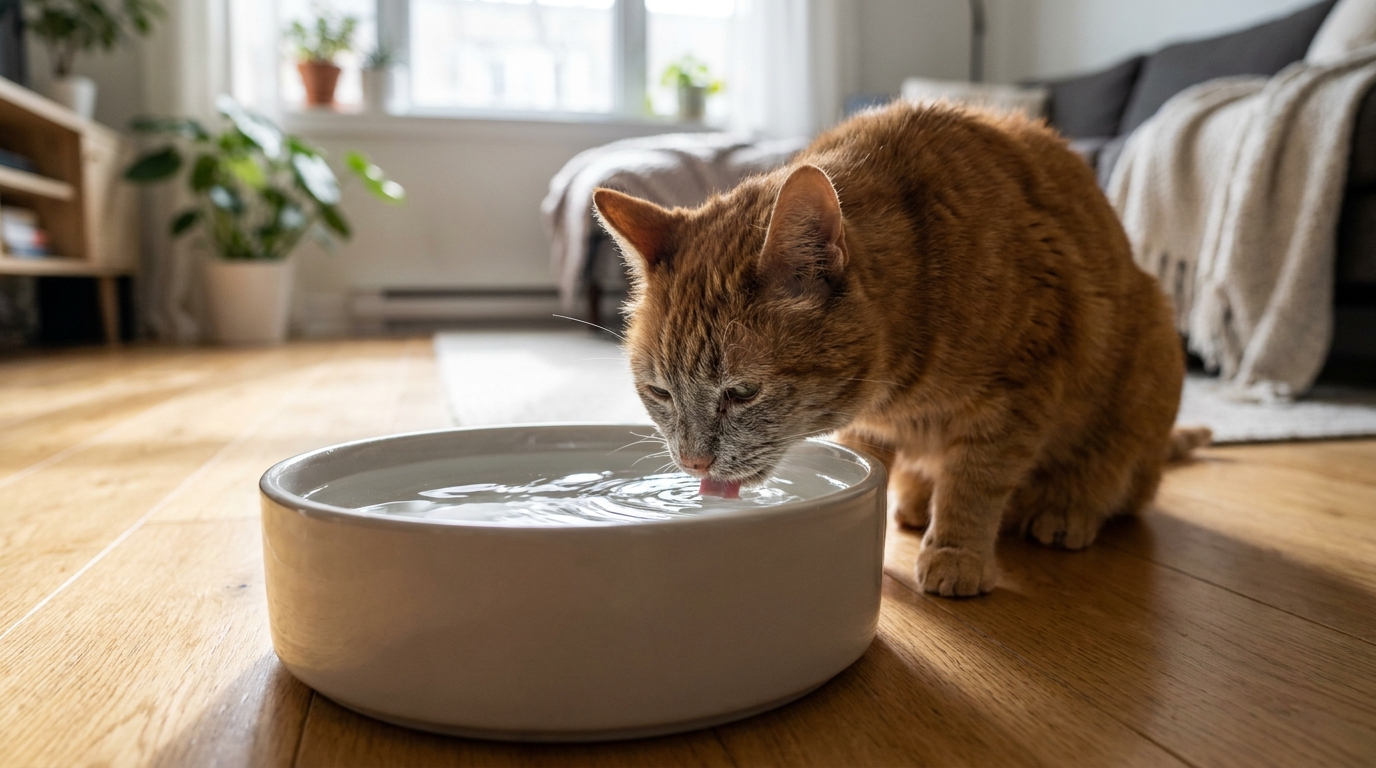
Why a senior cat starts drinking more, how to measure it at home, which signs mean the ER now, and the tests that find the cause.
Quick answer: An older cat drinking clearly more than usual, or making bigger or more frequent litter clumps, most often has kidney disease, an overactive thyroid or diabetes. Never limit its water. Book an in-person exam with blood and urine tests within a few days, or today if it eats less. Go to an emergency vet now if it is vomiting, refusing food, weak or straining to pee.
This article is general information, not a diagnosis. If you think your pet is in danger, go to the nearest emergency animal hospital.
How Urgent Is It? A Quick Triage
If more than one row fits your cat, follow the most urgent.
| Sign | What it can mean | What to do |
|---|---|---|
| Straining, little or no urine, or a male with blood in his urine | Blockage or kidney failure | ER now |
| May have touched a lily or daylily (any part, pollen or vase water), even with no signs | Kidney poisoning | ER now; call a poison line on the way |
| May have licked antifreeze, even if the cat now seems better | Kidney poisoning | ER now; never make the cat vomit |
| Drinking more plus vomiting, not eating, weakness or much quieter | Kidney crisis or diabetic emergency (DKA) | ER now |
| Fast or open-mouth breathing, sudden blindness, collapse, seizure or dragging back legs | Heart strain, high blood pressure or a clot | ER now |
| Drinking more and eating less, but alert and not vomiting | Kidney disease or diabetes getting worse | In-person vet today |
| Sudden jump in thirst plus weight loss, yowling or bigger clumps | Overactive thyroid, diabetes or kidney disease | Vet within 1-2 days |
| Drinking and peeing more, still eating and acting normal | Chronic disease likely | Exam with blood and urine tests within a few days |
| Small rise after a switch to dry food or a heat wave, no other signs | Often normal | Measure for 24-48 hours; book an exam if it stays up |
Late at night, or when your clinic can't fit your cat in, any "today" row means an emergency hospital. For a possible poisoning, call ASPCA Animal Poison Control at (888) 426-4435 (a consultation fee may apply) or Pet Poison Helpline at (855) 764-7661 (per-incident fee) on the way, not instead of going.
The Cornell Feline Health Center calls a urethral blockage an absolute emergency, and males are at greater risk. The FDA warns that every part of a true lily is toxic to cats, even the pollen and vase water, and that early treatment greatly improves the outlook, so go now even if your cat seems fine. Our guide to cat vomiting and white foam explains which vomiting needs the ER.
Antifreeze tastes sweet, and Merck says a cat may seem to recover for a while before kidney failure sets in; every hour of delay makes the outlook worse. See our page on antifreeze poisoning in dogs and cats. Vomiting or weakness in a thirsty cat can mean diabetic ketoacidosis (DKA), which the American Animal Hospital Association (AAHA) calls life-threatening. Sudden blindness, bumping into things or very large fixed pupils can mean high blood pressure has detached the retina: go to an emergency vet now.
How Much Is Too Much? Measure the Bowl and the Box
There is no single number to aim for. PetMD's rough guide for a cat on dry food is about 4 ounces of water per 5 pounds of body weight a day: a ballpark, not a target or a limit. Cats on canned food drink less (Merck), and International Cat Care (iCatCare) says a wet-fed cat may rarely, if ever, be seen drinking. Experts don't agree on one cutoff for "too much," so the real test is whether your cat drinks clearly more than its own normal.
iCatCare suggests measuring what is gone from the bowl after 24 hours. Fill each bowl to a marked line with a measuring cup, then measure what it takes to refill it a day later. An identical bowl set out of reach shows how much simply evaporates. Shared bowls in a multi-cat home make this tricky, so measure the household total, keep every bowl full and never take water away from any cat. If you can't measure, still tell the vet you see your cat at the bowl more often. Start the log today and book the exam at the same time: the log is for the vet, not a reason to wait.
Check the litter box. Count the clumps each day and note their size. Cornell explains that kidney disease, diabetes and an overactive thyroid all raise urine output, so the box gets soiled faster and a cat may start peeing elsewhere. If the clumps suddenly get small or stop, or your cat strains in the box, go to an emergency vet now.
Watch where it drinks. A new habit of drinking from the tap, your glass or the toilet can be an early clue.
The Three Usual Causes in Older Cats
Chronic kidney disease is the most common cause. Cornell says it affects up to 40% of cats over 10 and 80% of cats over 15. Merck says more thirst and more urine are the earliest signs, but they don't show until about two-thirds of the kidneys' filtering units are lost. That is why tests should happen within days, not weeks. Later signs include a fading appetite, weight loss, vomiting and mouth sores, so a thirsty cat that eats less points toward the kidneys.
An overactive thyroid (hyperthyroidism) affects up to 10% of cats older than 10, according to guidelines from the American Association of Feline Practitioners (AAFP). The classic picture is weight loss with a big appetite, plus more thirst and urine. Merck adds vomiting, hyperactivity and excessive vocalizing. Our guide to cat hyperthyroidism symptoms covers the early signs.
Diabetes will be diagnosed in about 1 in 100 to 1 in 500 cats during their lives, Cornell estimates. Owners most often notice weight loss despite a good appetite, along with more thirst and big litter clumps. Our page on cat diabetes symptoms explains when it becomes an emergency.
Two of these can occur together. Merck and the AAFP both explain that an overactive thyroid can make kidney tests look better than they are, so kidney disease that was already there may show up once the thyroid is treated. Treatment mainly uncovers it rather than causing it, which is why vets recheck kidney values once thyroid treatment starts.
Read the Other Signs: What the Combination Suggests
| Drinking a lot plus... | Often points to | How soon |
|---|---|---|
| Weight loss with a big appetite | Overactive thyroid or diabetes | Within a few days |
| Weight loss with a fading appetite | Kidney disease | Today |
| Tacky gums or sunken eyes | Dehydration despite drinking | Today; ER now if weak or quiet |
| Vomiting | Kidney crisis, DKA or thyroid disease | ER now |
| Not eating at all | Kidney crisis, DKA or liver trouble | ER now |
| Peeing outside the box | More urine than the box can handle, or bladder trouble | Within a few days; ER now if straining |
| Restless or yowling at night | Overactive thyroid | Within a few days |
| Yellow gums, skin or eyes | Liver disease or fatty liver | Today; ER now if not eating |
| Unspayed female with discharge, a swollen belly or lethargy | Uterine infection (pyometra) | ER now |
| Diabetic on treatment that still drinks a lot or gains weight | Diabetes not controlled; rarely acromegaly | Call the treating vet within days |
These are patterns, not diagnoses. Only blood and urine tests tell the causes apart.
Already diabetic? A cat on insulin that is wobbly, unusually sleepy, trembling or seizing may have low blood sugar: go to an ER now. AAHA's 2026 guidelines warn that SGLT2-class diabetes pills can cause DKA even when blood sugar is normal. If your cat takes one and seems lethargic or eats less, call the prescribing vet right away. Go to an ER now if it is weak, vomiting or not eating, or if you can't reach the vet.
Less Common Causes Vets Also Check
- Kidney infection. Merck says pyelonephritis can cause vomiting, poor appetite and excessive thirst and urination. A bladder infection mainly causes frequent or painful peeing, not large amounts.
- Liver disease. Merck lists excessive thirst and urination among its signs.
- High blood calcium. Hypercalcemia raises drinking and peeing. Merck says in cats it is often of unknown cause, but it can come from cancer or from vitamin D rat bait, so it always needs a full workup. If your cat may have eaten rat or mouse bait, go to an ER now and call a poison line on the way.
- Medicines. PetMD notes that steroids and diuretics (water pills) can raise thirst. If the thirst rose after a new medicine or diet, call the vet who prescribed or recommended it.
- Pyometra. Merck warns this uterine infection of unspayed females can progress rapidly to shock and death. An unspayed female that drinks more and is lethargic or vomiting, or has a discharge or a swollen belly, needs an emergency vet now.
Usually Harmless Reasons a Cat Drinks More
A switch from canned to dry food raises bowl drinking, since the cat gets less water from its food. iCatCare notes that cats drink more in warmer weather. Dry indoor heat or a new fountain can also raise drinking for a while. A harmless rise is small and short, with no extra litter clumps and no other signs. Measure for 24 to 48 hours and book an exam if it stays up. iCatCare's advice: any cat drinking more than usual should be seen by a vet.
What Not to Do at Home
- Don't limit water. PetMD says never to withhold water unless your vet tells you to. A cat that pees more drinks to keep up, so taking the bowl away can dehydrate it. Scoop more often or add a box instead.
- Don't stop or change a prescribed medicine on your own. Call the vet who prescribed it.
- Don't start a kidney diet, supplements or a new food before the tests. The right plan depends on the results.
- Never give human medicines, and never try to make your cat vomit.
- Don't wait out a day without food. A thirsty senior cat that eats less needs a vet today, and one that refuses food or is vomiting needs an emergency vet now. Not eating also puts a cat at risk of fatty liver.
What the Vet Will Test
After a physical exam that includes feeling the neck for an enlarged thyroid, expect these tests:
| Test | What it looks for |
|---|---|
| Chemistry panel with creatinine and SDMA | Kidney function (SDMA can rise earlier), calcium, liver values, blood sugar |
| Complete blood count (CBC) | Red and white blood cells |
| Total T4 | Overactive thyroid; repeat if normal but signs fit |
| Blood sugar plus a longer-term sugar test | Diabetes, not just a stress spike |
| Urinalysis with specific gravity | Dilute urine (an early kidney sign), sugar, infection |
| Urine culture | Kidney or bladder infection |
| Blood pressure, repeated | High pressure, which can harm the eyes |
The longer-term sugar test is fructosamine, which Merck says stays normal with stress; an overactive thyroid can lower it. Stress raises blood pressure, so it needs repeat readings (Merck).
What to bring: your water log, litter-clump notes, a recent weight, a list of all medicines and foods, and a short video of your cat drinking or at the box.
Where an Online Vet Visit Fits
An older cat drinking more than usual needs an in-person exam with blood and urine tests within a few days, or today if it starts eating less but is alert and not vomiting. A video visit can help you get ready for that exam; it does not replace it or push it back.
RexVet is a 501(c)(3) nonprofit with one vet, Dr. Tiffany Delacruz, DVM. If your cat is located in Florida, New York or Virginia, is drinking or peeing more, still eats and acts normally, and pees without straining, a $64.99 live video visit with Dr. Delacruz can help when a slot is open (usually about 8 AM-11 PM ET). She can go through your water log, litter notes and your cat's weight, tell you how urgent it looks, list the tests to ask for, and point you to a nearby clinic that can run them. She can also go over results you already have. Book a video visit with Dr. Delacruz.
A video visit can't diagnose kidney disease, thyroid disease or diabetes. That takes in-person blood and urine tests and a physical exam to feel the neck and check blood pressure and the eyes. No prescription is promised.
When it does not fit: if your cat is straining to pee or making little or no urine, has stopped eating, is vomiting, is weak or much quieter than usual, is breathing fast or with its mouth open, collapses, has a seizure, suddenly bumps into things or has big fixed pupils, drags or cries over its back legs, is a male with blood in the urine, or is an unspayed female that is lethargic or has a discharge or a swollen belly, go to an emergency vet now. Do the same if it may have touched any part of a true lily or daylily, licked lily pollen off its fur, drunk vase water or licked antifreeze, and call ahead or call a poison line on the way. A call must not delay leaving. Don't wait for signs, and don't try to make your cat vomit.
Need an Expert Opinion on This Topic?
Book a video visit with a licensed vet, evenings and weekends included
See open timesFrequently Asked Questions
Is it normal for old cats to drink more water?
No, not as a normal part of aging. A small, short rise after a switch to dry food or in hot weather can be normal. An older cat that keeps drinking clearly more than usual needs an exam with blood and urine tests within a few days. International Cat Care says any cat drinking more than usual should be seen by a vet.
Does drinking a lot always mean kidney failure?
No. Kidney disease is the most common cause in older cats, but an overactive thyroid, diabetes, high blood calcium, liver disease, a kidney infection and steroids or water pills can cause the same thirst. Two can occur together, and only blood and urine tests tell them apart.
How much water should a senior cat drink a day?
There is no exact target, and experts don't agree on one cutoff for too much. Cats on dry food drink far more from the bowl than cats on canned food, and International Cat Care says a wet-fed cat may rarely be seen drinking at all. Compare your cat with its own normal by measuring the bowl over 24 hours, and tell your vet about any clear rise.
Should I limit water if my cat pees a lot?
No. PetMD says never to withhold water unless your vet tells you to. A cat that pees more is losing water and drinks to keep up. If the box fills fast, scoop more often or add a second box, and tell your vet.
Why does my old cat drink from the tap or my glass?
A new habit of drinking from taps, glasses or the toilet can be a sign of more thirst. The AAFP notes that owners of cats with an overactive thyroid may notice the thirst as drinking from dripping faucets. If the habit is new, measure the bowl, count the clumps and book an exam within a few days.
What if my older cat is drinking a lot and losing weight or throwing up?
Weight loss with a big appetite most often points to an overactive thyroid or diabetes. Weight loss with a fading appetite points more toward kidney disease. Book an in-person exam with blood and urine tests within a few days, or today if your cat is eating less. A thirsty cat that is vomiting, refusing food or weak needs an emergency vet now, because a kidney crisis or DKA is possible.
How soon should my cat see a vet for drinking more?
Within a few days if it is still eating and acting normally. Today if it eats less but is alert and not vomiting. An emergency vet now if it is vomiting, refusing food, weak or straining to pee, or may have touched a lily or licked antifreeze. Late at night, or when your clinic can't fit your cat in, a "today" sign means an emergency hospital.
Can an online vet tell why my cat is drinking so much?
Not on its own: kidney disease, thyroid disease and diabetes are diagnosed with in-person blood and urine tests. If your cat is in Florida, New York or Virginia and is still eating, acting normally and peeing without straining, a video visit with Dr. Tiffany Delacruz, DVM, can review your water and litter notes, judge how urgent the signs look, and list the tests to ask for. It does not replace or delay the in-person exam, and no prescription is promised.
FAQs
Is it normal for old cats to drink more water?
No, not as a normal part of aging. A small, short rise after a switch to dry food or in hot weather can be normal. An older cat that keeps drinking clearly more than usual needs an exam with blood and urine tests within a few days. International Cat Care says any cat drinking more than usual should be seen by a vet.
Does drinking a lot always mean kidney failure?
No. Kidney disease is the most common cause in older cats, but an overactive thyroid, diabetes, high blood calcium, liver disease, a kidney infection and steroids or water pills can cause the same thirst. Two can occur together, and only blood and urine tests tell them apart.
How much water should a senior cat drink a day?
There is no exact target, and experts don't agree on one cutoff for too much. Cats on dry food drink far more from the bowl than cats on canned food, and International Cat Care says a wet-fed cat may rarely be seen drinking at all. Compare your cat with its own normal by measuring the bowl over 24 hours, and tell your vet about any clear rise.
Should I limit water if my cat pees a lot?
No. PetMD says never to withhold water unless your vet tells you to. A cat that pees more is losing water and drinks to keep up. If the box fills fast, scoop more often or add a second box, and tell your vet.
Why does my old cat drink from the tap or my glass?
A new habit of drinking from taps, glasses or the toilet can be a sign of more thirst. The AAFP notes that owners of cats with an overactive thyroid may notice the thirst as drinking from dripping faucets. If the habit is new, measure the bowl, count the clumps and book an exam within a few days.
What if my older cat is drinking a lot and losing weight or throwing up?
Weight loss with a big appetite most often points to an overactive thyroid or diabetes. Weight loss with a fading appetite points more toward kidney disease. Book an in-person exam with blood and urine tests within a few days, or today if your cat is eating less. A thirsty cat that is vomiting, refusing food or weak needs an emergency vet now, because a kidney crisis or DKA is possible.
How soon should my cat see a vet for drinking more?
Within a few days if it is still eating and acting normally. Today if it eats less but is alert and not vomiting. An emergency vet now if it is vomiting, refusing food, weak or straining to pee, or may have touched a lily or licked antifreeze. Late at night, or when your clinic can't fit your cat in, a "today" sign means an emergency hospital.
Can an online vet tell why my cat is drinking so much?
Not on its own: kidney disease, thyroid disease and diabetes are diagnosed with in-person blood and urine tests. If your cat is in Florida, New York or Virginia and is still eating, acting normally and peeing without straining, a video visit with Dr. Tiffany Delacruz, DVM, can review your water and litter notes, judge how urgent the signs look, and list the tests to ask for. It does not replace or delay the in-person exam, and no prescription is promised.
Medically Reviewed
Reviewed by Dr. Tiffany Delacruz, DVM — licensed veterinarian and CEO of RexVet. Last reviewed October 28, 2026.
Content is for informational purposes and does not replace professional veterinary advice.
Chief Executive Officer · Licensed Veterinarian
Dr. Delacruz is a licensed Doctor of Veterinary Medicine specializing in preventive care and veterinary telehealth. She reviews all health content on RexVet to ensure accuracy and clinical relevance.
Sources & References
- · American Veterinary Medical Association — Telehealth Guidelines
- · AVMA — Pet Care Resources
- · U.S. FDA — Animal & Veterinary