
Cat Breathing Fast While Sleeping: Normal or Emergency?
By RexVet Team | Reviewed by Dr. Tiffany Delacruz, DVM
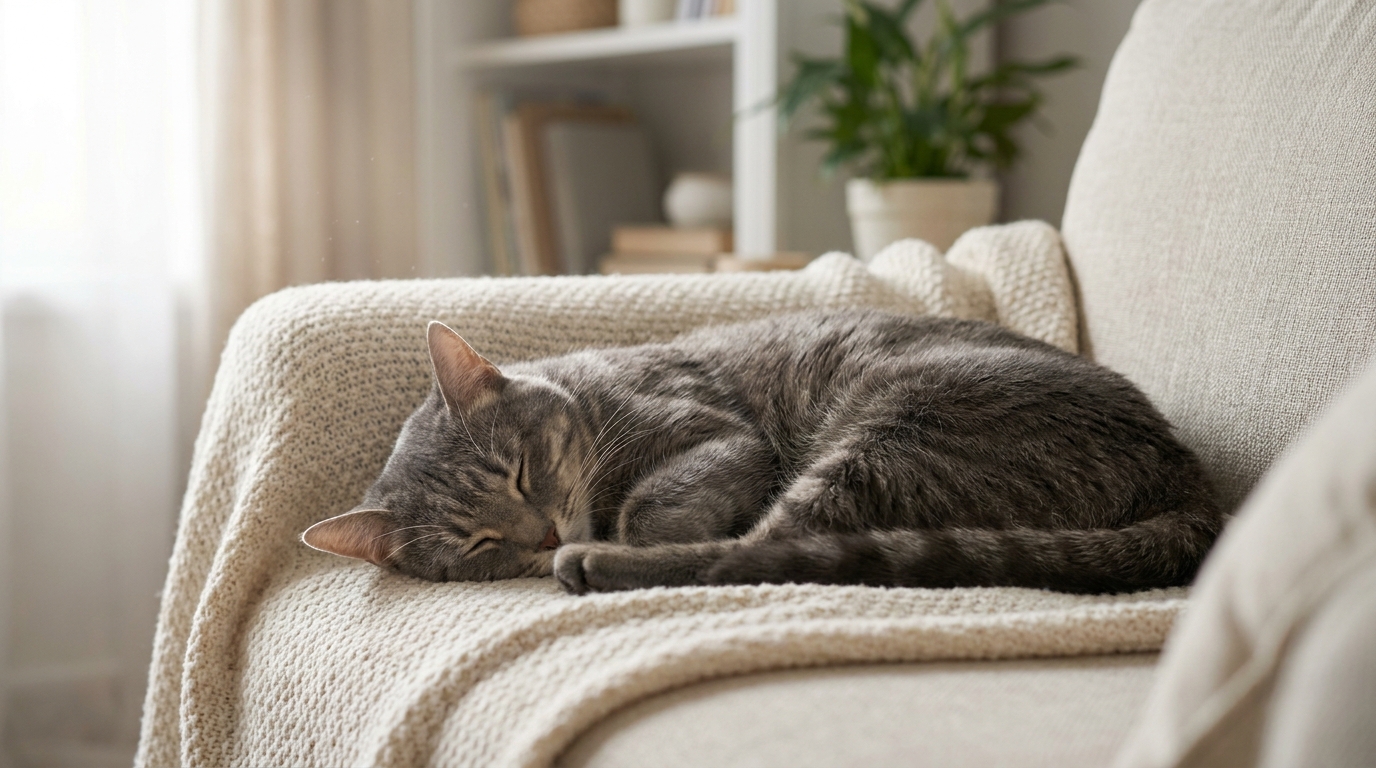
A sleeping cat should take fewer than 30 breaths a minute. Count for 60 seconds; a rate that stays higher, or any open-mouth breathing, needs a vet.
If your cat is breathing with its mouth open, breathing with its belly heaving or neck stretched out, cannot settle or lie down normally, has pale or bluish gums, or is breathing more than 35 times a minute while resting or asleep and also seems unwell in any other way, go to an in-person emergency vet right now; do not wait for a video visit.
If your cat shows any sign in that bold line, stop reading and go; counting is for a cat that looks comfortable. If you noticed your cat breathing fast while sleeping and it is otherwise loose and relaxed, the job now is an honest count.
What is a normal breathing rate for a sleeping cat?
According to VCA Animal Hospitals, a cat resting calmly or asleep normally takes 15 to 30 breaths per minute, and a rate consistently above 30 while fully relaxed is considered abnormal. Sleeping runs at the low end of resting, so a sleeping count near 30 is already the top of normal.
The Cornell Feline Health Center describes a separate warning zone: cats in congestive heart failure usually breathe with more effort and at a resting rate above 35 breaths a minute, often with low energy and a poor appetite. No single count is a diagnosis.
VCA notes that rates run higher when a cat is hot, stressed or active, so a warm, humid night in Florida, New York or Virginia can push it up. Count only when the room is cool and the cat is calm and asleep.
How to count your cat's breaths
VCA's home breathing-rate guide sets the rules: one in-and-out movement of the chest is one breath, count a full 60 seconds or 30 seconds doubled, and the cat must not be purring. The rest is practical advice. Do not touch, talk to or uncover the cat until you have finished.
- Wait until your cat is in a deep, quiet sleep and completely still, in a cool room.
- Make sure it is not purring; the vibration of the chest wall hides the rise and fall.
- Watch one flank from a short distance. One rise and fall of the side is one breath.
- Time a full 60 seconds, or count for 30 seconds and multiply by two.
- Repeat two or three times over the next hour.
- Write each number down with the time of day.
VCA is direct about the result. If the sleeping rate is consistently elevated, contact your veterinarian as soon as possible. If it is elevated along with any other sign, VCA says it may be an emergency and you may need a veterinary emergency center; signs to take seriously alongside a high count include poor appetite, low energy, visible effort, coughing or hiding. A high count on its own means calling in the morning, not logging for weeks.
Dreaming or trouble? Sleep twitching vs true fast breathing
As VCA Animal Hospitals notes, cats dream during rapid eye movement (REM) sleep and may paddle their paws, twitch or make little sounds. In practice, breathing may go briefly quick and irregular, then settle once the dream passes, and the cat stays relaxed throughout.
True fast breathing is steady and sustained rather than brief and patchy, and often comes with effort you can see in the belly. Wait for the twitching to stop, then time a full 60 seconds; if the count is still above 30 on repeat checks, treat it as real.
Signs the fast breathing is an emergency
These signs mean an in-person clinic now, not a video visit:
- Breathing with the mouth open, or cat panting of any kind
- The belly heaving with every breath
- Crouching low with the neck stretched out and the head forward
- Unable to get comfortable or lie down normally
- Pale, gray or bluish gums
- Sudden weakness, or hiding in a spot the cat never uses
The Cornell Feline Health Center describes cats in respiratory distress as breathing rapidly, panting noisily with an open mouth, coughing often, or lowering the head and extending the body forward as if gagging. Glance at the gums only if your cat allows it; never restrain it or delay leaving to check. These cases need a physical exam, oxygen and imaging that no screen can provide. Cornell's rule: any time there is a question about an animal's ability to breathe comfortably, get it to a veterinarian right away.
Why a cat breathes fast while sleeping: the main causes
The Cornell Feline Health Center lists the three most common causes of respiratory distress in cats as asthma and its flare-ups, heart failure that lets fluid build up inside the lungs, and pleural effusion, which is fluid collecting around the lungs.
Pneumonia or another infection can raise the rate. So can pain or stress carried into sleep; read the signs your cat is in pain if it has also been hiding or moving stiffly. An overheated room raises the rate, but heat only explains the count if it drops back under 30 once the room is cool. Anemia, a shortage of red blood cells, means each breath carries less oxygen, so the cat breathes faster. With low energy or a reduced appetite as well, treat it as the emergency in the bold line above and go in person now, as you would for any visible effort.
Heart disease: the silent cause every cat parent should know
Hypertrophic cardiomyopathy (HCM) is a thickening of the heart muscle. The Cornell Feline Health Center calls it the most common feline cardiomyopathy and notes that many affected cats show no signs early in the disease. In congestive heart failure, Cornell describes increased respiratory effort, a resting rate above 35 breaths a minute, lethargy and decreased appetite.
Cornell says breeds predisposed to HCM include the Maine Coon, Ragdoll, Sphynx, British Shorthair, Chartreux and Persian. If you live with one of these, see the Maine Coon HCM page.
The sleeping-breath count is the home monitoring tool veterinarians ask for; in the clinic, an echocardiogram (heart ultrasound) confirms HCM and chest X-rays check for fluid.
Feline asthma and fast breathing
Feline asthma, chronic inflammation of the lower airways, affects between 1 and 5 percent of cats according to the Cornell Feline Health Center. Cornell lists the signs as difficulty breathing, wheezing, rapid breathing, coughing or hacking and open-mouthed breathing; during an attack many cats hunch close to the ground and extend their necks forward. For hacking that never produces a hairball, see cat coughing.
Cornell's view is that feline asthma cannot be cured but is generally manageable. Veterinarians usually prescribe corticosteroids to reduce airway inflammation, with or without bronchodilators, in oral, inhaled or injectable forms. The choice is the veterinarian's; the cat asthma guide covers diagnosis and long-term management.
How to video your cat's breathing for a vet
A short clip plus your written counts is what a veterinarian needs:
- Use good light so the video is not grainy.
- Hold the phone steady and level with your cat's side, so the flank is visible.
- Keep the whole cat in the frame.
- Do not pet, talk to or disturb the cat; that changes the breathing.
- Make sure no blanket covers the chest and belly.
- Record 30 to 60 seconds.
- Say or note the time of day and your counted breaths per minute.
- Also film any cough, hunched posture or stretched-out neck.
When to see a vet in person vs when an online vet visit helps
Any sign from the emergency list above means the nearest emergency clinic now, without a video call first. The online vet vs emergency vet guide spells out the difference.
A video visit fits a different cat: one that is eating and acting normally but whose sleeping count is borderline or has crept up over a few days; an owner deciding whether in-clinic chest X-rays or a heart ultrasound are the next step; or follow-up counts for a cat already diagnosed with asthma or heart disease. A RexVet veterinarian licensed in Florida, New York or Virginia can look at your cat by video ($64.99), review your counts and clip, and help you decide between monitoring, in-clinic tests or going in tonight. If the veterinarian decides medication is appropriate, they can prescribe where state rules allow.
Frequently asked questions
How many breaths per minute is normal for a sleeping cat?
Fifteen to 30 breaths per minute while resting calmly or asleep, according to VCA Animal Hospitals. A rate consistently above 30 in a relaxed, non-purring cat is abnormal.
Why is my cat breathing fast while sleeping but acting normal when awake?
A warm room or a dream can explain one high count, but a sleeping rate that stays above 30 on repeat checks can be an early sign of a respiratory or heart problem even in a cat that eats and plays normally. Write the numbers down and contact a vet as soon as possible.
Is my cat dreaming or having trouble breathing?
Dream twitching is brief and irregular and the cat stays relaxed; true fast breathing is steady, sustained and often comes with visible belly effort. Do not wake or handle your cat to check. Wait for the twitching to stop and count again for a full 60 seconds; if the rate is still above 30 or you see any effort, treat it as real and contact a veterinarian.
Is a cat breathing fast while sleeping an emergency?
It is an emergency if the fast breathing comes with any effort, an open mouth, pale or blue gums, or a cat that seems unwell in any other way. A sleeping count that stays above 30 with no other signs is not always an immediate emergency, but it still means calling a vet as soon as possible rather than waiting days.
Can an online vet help if my cat is breathing fast while sleeping?
Only if your cat is not showing any emergency sign. Open-mouth breathing, heaving, a crouched neck-out posture or pale or blue gums means an in-person emergency clinic now, not a video call. For a stable cat with a borderline or slowly rising count, a veterinarian can review your counts and video and advise the next step.
If none of the emergency signs apply, a RexVet veterinarian licensed in Florida, New York or Virginia can look at your cat by video ($64.99) and help you decide the next step.
Sources
FAQs
How many breaths per minute is normal for a sleeping cat?
Fifteen to 30 breaths per minute while resting calmly or asleep, according to VCA Animal Hospitals. A rate consistently above 30 in a relaxed, non-purring cat is abnormal.
Why is my cat breathing fast while sleeping but acting normal when awake?
A warm room or a dream can explain one high count, but a sleeping rate that stays above 30 on repeat checks can be an early sign of a respiratory or heart problem even in a cat that eats and plays normally. Write the numbers down and contact a vet as soon as possible.
Is my cat dreaming or having trouble breathing?
Dream twitching is brief and irregular and the cat stays relaxed; true fast breathing is steady, sustained and often comes with visible belly effort. Do not wake or handle your cat to check. Wait for the twitching to stop and count again for a full 60 seconds; if the rate is still above 30 or you see any effort, treat it as real and contact a veterinarian.
Is a cat breathing fast while sleeping an emergency?
It is an emergency if the fast breathing comes with any effort, an open mouth, pale or blue gums, or a cat that seems unwell in any other way. A sleeping count that stays above 30 with no other signs is not always an immediate emergency, but it still means calling a vet as soon as possible rather than waiting days.
Can an online vet help if my cat is breathing fast while sleeping?
Only if your cat is not showing any emergency sign. Open-mouth breathing, heaving, a crouched neck-out posture or pale or blue gums means an in-person emergency clinic now, not a video call. For a stable cat with a borderline or slowly rising count, a veterinarian can review your counts and video and advise the next step.
If none of the emergency signs apply, a RexVet veterinarian licensed in Florida, New York or Virginia can look at your cat by video ($64.99) and help you decide the next step.
Sources
Medically Reviewed
Reviewed by Dr. Tiffany Delacruz, DVM — licensed veterinarian and CEO of RexVet. Last reviewed September 14, 2026.
Content is for informational purposes and does not replace professional veterinary advice.
Chief Executive Officer · Licensed Veterinarian
Dr. Delacruz is a licensed Doctor of Veterinary Medicine specializing in preventive care and veterinary telehealth. She reviews all health content on RexVet to ensure accuracy and clinical relevance.
Sources & References
- · American Veterinary Medical Association — Telehealth Guidelines
- · AVMA — Pet Care Resources
- · U.S. FDA — Animal & Veterinary
Need an Expert Opinion on This Topic?
Connect with a certified vet via video call in minutes
Talk to Vet Now