
Cat Pooping Outside the Litter Box? Medical Causes First
By RexVet Team | Reviewed by Dr. Tiffany Delacruz, DVM
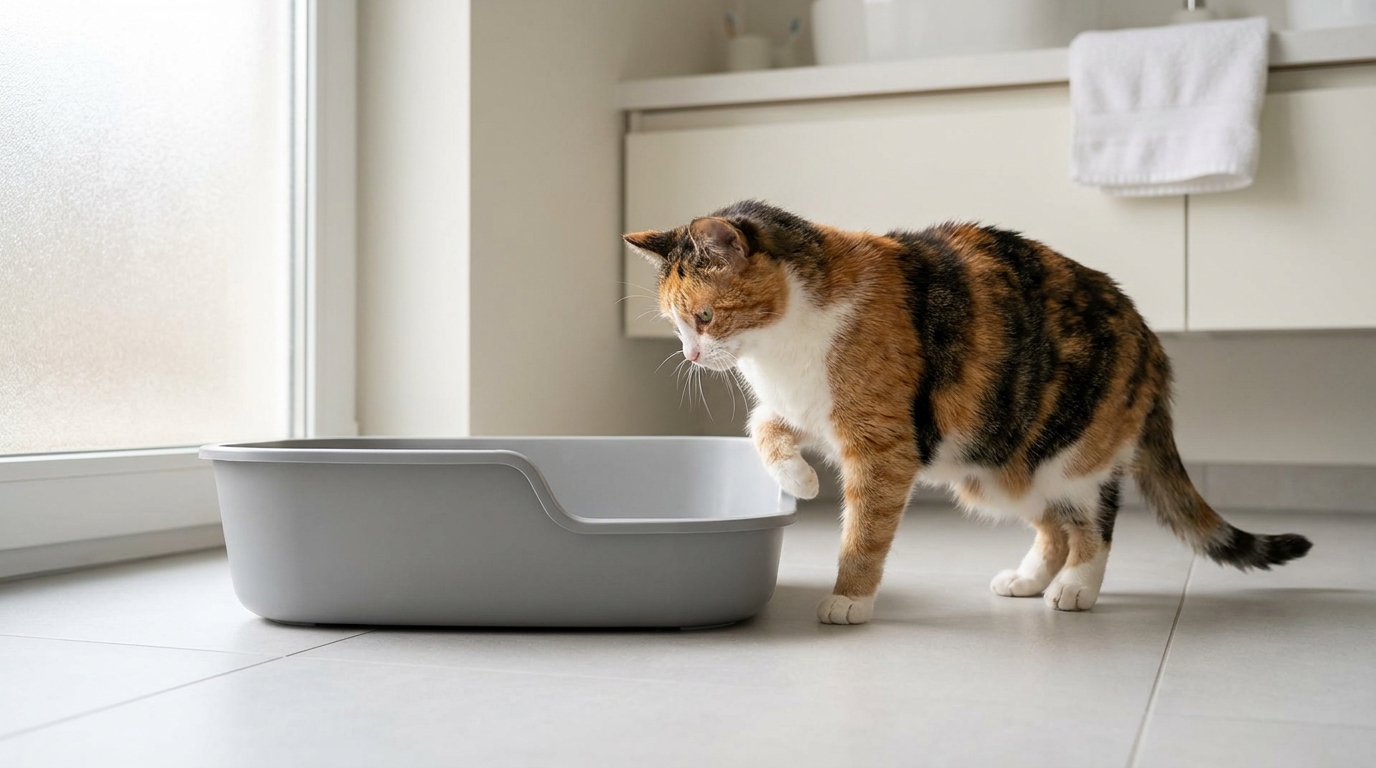
Cat pooping outside the litter box often starts with a medical problem such as constipation, diarrhea or sore joints, so rule those out first.
Go to an in-person emergency vet now if your cat is straining in the box with little or no urine, crying in the box, vomiting over and over, has a swollen or painful belly, or has stopped eating and is hiding.
Finding stool on the rug, the bath mat or right next to the box is frustrating, especially when your cat still seems to pee in the box just fine. The Cornell Feline Health Center notes that "House soiling is the most common behavior problem reported by cat owners." It is not spite. This guide covers the body first, then the box, then the household.
Cat Pooping Outside the Litter Box: Start With Medical Causes
Before you buy a new box or move furniture, think about your cat's health. Cornell puts it plainly: "Any medical condition that interferes with a cat's normal urination or defecation behavior can cause litter box problems."
For stool accidents, two kinds of problems are worth thinking about: trouble in the digestive tract, and trouble getting into and using the box. Cornell also points out that "age-related diseases that interfere with a cat's mobility or with his cognitive functions can influence his ability to get to the litter box in time."
Your cat may look fine otherwise. In Cornell's words, "Cats with medical conditions may not always act sick."
Emergency Signs: When a Pooping Problem Can't Wait
A few signs mean the problem can't wait. Go to an in-person emergency vet now, day or night, if your cat:
- Is straining in the box and passing little or no urine
- Is crying or yowling in the box
- Is vomiting over and over
- Has a swollen or painful belly
- Has stopped eating and is hiding
Straining is easy to misread. Repeated squatting with little or no urine can look like constipation, but it may be a urinary blockage, which is an emergency, especially in male cats. If you are not sure whether your cat is trying to pee or poop, treat it as urinary and go now. Our guide on male cats straining to pee explains why this can't wait.
Straining to pass stool with no result, especially along with vomiting or lethargy, also needs a vet promptly. Read more about a cat who hasn't pooped, and keep this pet emergency checklist handy for other situations.
If you see any of these signs, go now. Do not wait to send photos or try box changes.
Diarrhea, Constipation and the Poop That Didn't Make It
Many stool accidents happen because the cat simply couldn't get there in time. Cornell explains that "digestive tract problems may make it painful for a cat to defecate, increase the frequency or urgency, and decrease a cat's control over defecation."
In plain words, loose stools can come on so fast that your cat goes wherever they happen to be. That may be the poop you find halfway down the hallway or just outside the box.
Hard, dry stool works the other way. Passing it hurts, and your cat can start to blame the box for the pain. The ASPCA notes: "If your cat had a medical condition that caused her pain when she eliminated, she may have learned to associate the discomfort with using her litter box." That habit can stick around even after the stool itself improves.
Here is what helps your vet most:
- Take a clear photo of each accident, and of what you find in the box.
- Note whether stools are loose, watery, hard or dry, and whether you see blood or mucus.
- Note when accidents happen and anything that changed, such as a new food.
Photos help the vet see consistency, blood or mucus. They are not a way to judge urgency; the emergency signs above do that. Loose stools with blood, vomiting, lethargy or not eating, or hard stools with repeated straining and little or no result, need prompt veterinary attention. Our page on cat diarrhea covers the common causes in more detail.
Sore Joints, Constipation and a Box That's Hard to Get Into
Stiff, sore joints can make the box itself hard to use. Cornell's page on older cats notes that "The cat may have trouble hopping in and out of its litter box."
Joint pain can also cause constipation directly. Cornell adds: "It is also possible for a cat with a severe joint problem to become constipated because it can't position itself properly to defecate." So a senior cat pooping outside the litter box area may be dealing with sore joints and hard stool at the same time.
The box itself can be the barrier. The ASPCA says: "Geriatric cats or cats with physical limitations may have a difficult time using certain types of litter boxes such as top-entry boxes, or litter boxes with high sides."
A low-entry box on the same floor where your cat spends its time (no stairs) is an easy change to try, but it does not replace a vet check for joint pain. A cat can use the new box and still hurt, and a cat whose problem is digestive may not improve at all.
Learn how to tell if your cat is in pain, and see our senior cat care guide.
Litter Box Details That Lead to Pooping Next to the Box
Once medical causes are being looked at, check the setup. A cat pooping next to the litter box may be telling you the box is close, but not good enough. The ASPCA lists common reasons a cat avoids the box, including:
- The box is not cleaned often enough.
- There are not enough boxes for the household.
- The box is too small for your cat.
- Your cat can't easily get to the box at all times.
- The box has a hood or liner your cat doesn't like.
- The litter is too deep.
On numbers, the ASPCA's advice is simple: "Be sure to have a litter box for each of your cats, as well as one extra."
Litter and lids matter too. Cornell notes that "Most cats prefer unscented litter." And while people like covered boxes, Cornell points out that from a cat's point of view, covers "hold odors in." If you use a hooded box, try taking the hood off.
Scoop every day and keep the box clean. A box that smells fine to you may not smell fine to a cat.
Stress, Other Cats and Pooping on the Floor
The ASPCA notes that problems can develop "as a result of conflict between multiple cats in a home." One cat may sit near the box or block the hallway to it. The other cat then goes somewhere that feels safer, such as the floor right beside a guarded box or a rug in a quiet room.
Cornell adds that a cat can develop an aversion to the box, the litter or the location of the box, so a spotless box can still be one your cat avoids.
A move, a new pet or a new schedule can unsettle a cat. If you notice a cat pooping outside box suddenly after a change at home, keep routines steady and make sure at least one box is in a calm, easy-to-reach place.
Small spaces bring their own challenges. In a New York City studio, the only box may be a small one tucked in a closet or bathroom, where the door can swing shut. A roomier box in a more open spot may help.
In multi-cat homes, adding an extra box in a quiet spot, away from the others, is worth trying. The ASPCA notes that "Stress can cause litter-box problems." Even so, if accidents continue, have a vet rule out medical causes first rather than assuming it is purely behavioral.
Cleaning Up Poop Accidents So They Don't Repeat
How you clean matters. Cornell advises that cleaning is most effective when done soon after an accident, and that "odors must be neutralized, not just deodorized."
Use an enzymatic cleaner made for pet messes; the ASPCA advises cleaning accidents thoroughly with one designed to neutralize pet odors.
Skip certain household products. Cornell warns: "Avoid cleaning products containing ammonia or vinegar as they smell like urine and can be irritating."
Never punish your cat, rub their nose in it or use a spray bottle. Punishment adds stress and fear, which can make accidents worse.
What a RexVet Online Vet Can and Cannot Do for Stool Accidents
If your cat has any of the emergency signs above, go to an in-person ER instead. For a cat who is otherwise eating, alert and comfortable, a video visit with an online vet for cats can help you sort out the likely cause and next steps without a carrier trip.
During a video visit, the veterinarian can:
- Review your photos of the stool and the accidents
- Watch a video of your cat walking, jumping and using the box
- Look at the box setup with you on camera
- Take a full history of diet, habits and household changes
- Build a step-by-step plan with you
A video vet cannot feel your cat's belly, run a fecal test, or take X-rays or bloodwork, so they will tell you if an in-person exam is needed.
If the veterinarian decides medication is appropriate, they can prescribe where state rules allow. In Florida, prescriptions based solely on a telehealth evaluation are limited to up to 14 days of treatment for animal drugs other than flea and tick products, and may not be renewed without an in-person examination. Controlled substances are not prescribed by video.
When you are ready, book a RexVet video visit. A video visit is $64.99, and vets are available 24/7, including nights, weekends and holidays. RexVet's veterinarians are licensed in Florida, New York and Virginia, so visits are for pet parents located in those states only.
When Stool Accidents Need an In-Person Vet in Florida, New York or Virginia
A swollen belly, or crying or straining in the box, is an emergency; see the signs above. For problems that are not urgent but still need hands-on care, plan an in-person visit if your cat has:
- Weight loss
- Vomiting now and then (vomiting over and over is an emergency)
- Blood or mucus in the stool
- Ongoing diarrhea or hard stools
- New trouble with stairs, jumping or climbing into the box, especially in a senior cat
- No improvement after you have made the box changes above
Cornell recommends taking a house-soiling cat "to your veterinarian for a thorough physical examination and appropriate diagnostic tests." An in-person vet can feel the belly, run a fecal test for parasites, and do bloodwork or X-rays to look for other causes; some cats need further tests.
Under Florida law, a telehealth vet gives you the contact information for at least one physical veterinary clinic near your location. You can read more about online care in Florida, New York and Virginia.
If the problem is urine rather than stool, see our guide on why a cat pees outside the litter box.
Frequently Asked Questions
Why is my cat suddenly pooping on the floor?
A sudden change can come from a new medical problem such as loose stools, constipation or sore joints, or from a change in the box, the litter or the household. Check for the emergency signs first. Then have a vet look for medical causes before you rearrange the whole house, since a cat can seem well and still be unwell.
Can pooping outside the litter box be a medical problem?
Yes. Digestive upset, constipation and joint pain can all lead to accidents. Even after the problem clears up, a cat may keep avoiding the box because she learned to link it with pain.
Why does my cat pee in the box but poop outside it?
The ASPCA notes that "Some only use their boxes for urination or defecation but not for both." A cat who still pees in the box but poops elsewhere may also find passing stool painful, for example from constipation, loose or urgent stools, or sore joints. Cornell notes that a cat with a severe joint problem may be unable to "position itself properly to defecate." Have a vet check your cat before you change the box.
How many litter boxes do I need?
The ASPCA's rule is one box per cat, plus one extra. Adding an extra box in a quiet spot is worth trying if accidents started when your household changed.
Should I punish my cat for pooping outside the box?
No. Punishment does not teach a cat where to go, and it adds stress that can make accidents worse. Focus on medical rule-outs, careful clean-up and a box setup your cat is comfortable using.
If your cat is eating, alert and comfortable but the accidents keep happening, RexVet's veterinarians are licensed in Florida, New York and Virginia and are available 24/7 for pet parents in those states. A video visit is $64.99, so book a video visit now and get a plan for your cat.
FAQs
Why is my cat suddenly pooping on the floor?
A sudden change can come from a new medical problem such as loose stools, constipation or sore joints, or from a change in the box, the litter or the household. Check for the emergency signs first. Then have a vet look for medical causes before you rearrange the whole house, since a cat can seem well and still be unwell.
Can pooping outside the litter box be a medical problem?
Yes. Digestive upset, constipation and joint pain can all lead to accidents. Even after the problem clears up, a cat may keep avoiding the box because she learned to link it with pain.
Why does my cat pee in the box but poop outside it?
The ASPCA notes that "Some only use their boxes for urination or defecation but not for both." A cat who still pees in the box but poops elsewhere may also find passing stool painful, for example from constipation, loose or urgent stools, or sore joints. Cornell notes that a cat with a severe joint problem may be unable to "position itself properly to defecate." Have a vet check your cat before you change the box.
How many litter boxes do I need?
The ASPCA's rule is one box per cat, plus one extra. Adding an extra box in a quiet spot is worth trying if accidents started when your household changed.
Should I punish my cat for pooping outside the box?
No. Punishment does not teach a cat where to go, and it adds stress that can make accidents worse. Focus on medical rule-outs, careful clean-up and a box setup your cat is comfortable using.
If your cat is eating, alert and comfortable but the accidents keep happening, RexVet's veterinarians are licensed in Florida, New York and Virginia and are available 24/7 for pet parents in those states. A video visit is $64.99, so book a video visit now and get a plan for your cat.
Medically Reviewed
Reviewed by Dr. Tiffany Delacruz, DVM — licensed veterinarian and CEO of RexVet. Last reviewed September 22, 2026.
Content is for informational purposes and does not replace professional veterinary advice.
Chief Executive Officer · Licensed Veterinarian
Dr. Delacruz is a licensed Doctor of Veterinary Medicine specializing in preventive care and veterinary telehealth. She reviews all health content on RexVet to ensure accuracy and clinical relevance.
Sources & References
- · American Veterinary Medical Association — Telehealth Guidelines
- · AVMA — Pet Care Resources
- · U.S. FDA — Animal & Veterinary
Need an Expert Opinion on This Topic?
Connect with a certified vet via video call in minutes
Talk to Vet Now