
Why Is My Cat Peeing Outside the Litter Box?
By RexVet Team | Reviewed by Dr. Tiffany Delacruz, DVM
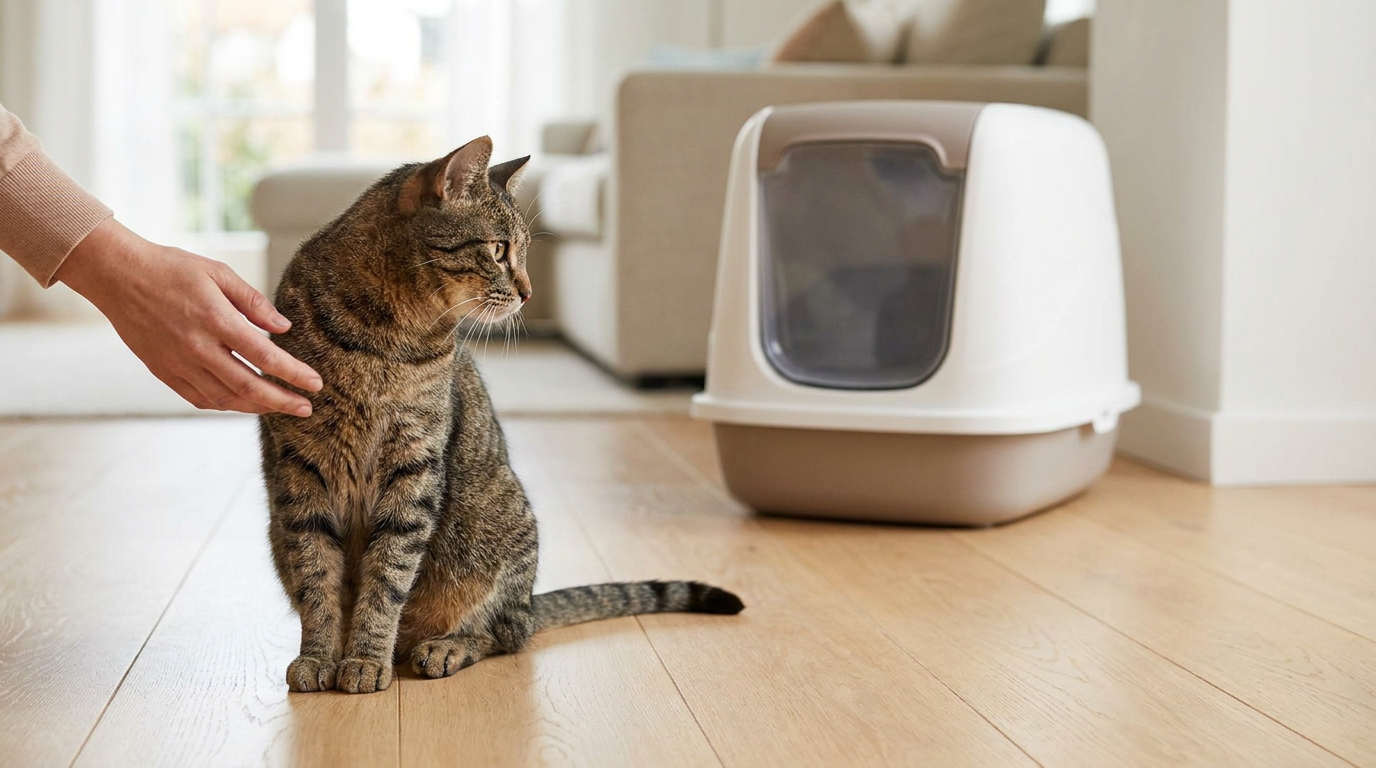
Finding your cat urinating outside the litter box is a stressful experience for any pet owner. Whether you are dealing with a cat peeing on your bed, clothes, or elsewhere in the home, it is essential to understand that this behavior is rarely done out of spite. When you ask yourself, Why Is My Cat Peeing Outside the Litter Box?, the answer often lies in a combination of medical discomfort and environmental stressors. In many cases, cats suffering from conditions like a urinary tract infection or feline idiopathic cystitis may associate the litter box with pain, leading them to seek other surfaces for relief.
Because medical issues can escalate quickly, it is vital to rule out physical health concerns before assuming the problem is purely behavioral. Why Is My Cat Peeing Outside the Litter Box? This question requires a careful look at your cat's health, litter box setup, and overall stress levels. As a non-profit telehealth platform, RexVet helps you determine if your cat needs urgent care or if you can manage the situation from home. By consulting with a licensed veterinarian online, you can receive professional triage and guidance to ensure your cat stays happy and healthy.
Behavior vs Medical Causes
When you ask, Why Is My Cat Peeing Outside the Litter Box?, it is vital to distinguish between a physical health crisis and a behavioral preference. Inappropriate elimination often stems from feline lower urinary tract disease, where pain during urination causes your cat to associate the box with discomfort. Conversely, behavioral triggers like territorial marking or litter box aversion are responses to environmental changes or stress.
To help you identify the root cause, consider these key indicators:
- Medical: Frequent, small amounts of urine, straining, vocalizing, or blood in the urine, which are common signs of a urinary tract infection.
- Behavioral: Urinating on vertical surfaces, targeting specific items like laundry, or avoiding the box only when there is high household activity or a new pet.
Understanding Why Is My Cat Peeing Outside the Litter Box? is the first step toward relief. If you notice signs of illness, a urinalysis is often the diagnostic standard. Because feline idiopathic cystitis can be triggered by stress, our team at RexVet helps you navigate these complex situations from the comfort of your home, ensuring you get professional triage without the stress of a clinic visit.
Common Litter Box Problems
When investigating Why Is My Cat Peeing Outside the Litter Box?, you must examine the physical setup of their bathroom area. A primary culprit is a dirty litter box; cats are fastidious creatures, and if waste is not scooped daily, they may refuse to step inside. Furthermore, the wrong location can trigger avoidance. If the box is placed in a high-traffic area, near noisy appliances, or in a dark, inaccessible corner, your cat may feel vulnerable or disturbed while trying to do their business.
Litter preference plays a massive role in feline behavior. Some cats dislike the texture of scented or dusty clay, which can lead to litter box aversion. In a multi-cat household, competition is another major factor. If one cat guards the box or if there are not enough stations for every pet, stress levels skyrocket. When you ask Why Is My Cat Peeing Outside the Litter Box?, remember that environmental factors often dictate success. Ensuring each cat has their own private, clean, and easily accessible space is the first step toward restoring harmony in your home.
Stress and Territory
When you find yourself asking, Why Is My Cat Peeing Outside the Litter Box?, it is often a sign of underlying stress and anxiety . Cats are creatures of habit who rely on a stable environment to feel secure. Significant life changes—such as moving to a new home, the arrival of a new baby, or even rearranging furniture—can trigger territorial marking. In these moments, your cat may use their scent to reclaim their space, leading to inappropriate elimination on furniture or carpets.
In a multi-cat household, social tension is a frequent culprit. If one cat feels intimidated by another, they may avoid the litter box entirely to escape potential confrontation. This behavior is distinct from medical issues, though chronic stress can lead to feline idiopathic cystitis. If you are struggling to identify the trigger, our team at RexVet can help you evaluate your home environment. Understanding Why Is My Cat Peeing Outside the Litter Box? requires looking at the big picture, from social dynamics to subtle shifts in your cat's routine. With professional guidance, you can implement calming strategies to restore your cat's confidence and stop the behavior for good.
Urinary Problems That Look Like Behavior
When you wonder, Why Is My Cat Peeing Outside the Litter Box?, it is crucial to recognize that physical ailments often masquerade as behavioral issues. Cats are experts at hiding pain, but their bathroom habits are a primary indicator of internal distress. Conditions like feline lower urinary tract disease or a painful urinary tract infection can make the act of urinating feel like a burning sensation. Because the cat associates the litter box with this discomfort, they instinctively avoid it, seeking softer surfaces like carpets or bedding to find relief.
Beyond infections, feline idiopathic cystitis creates inflammation of the bladder wall without a clear bacterial cause, often exacerbated by stress. If your cat is straining or producing only tiny drops, this is a medical emergency requiring immediate attention. Why Is My Cat Peeing Outside the Litter Box? The answer may involve crystals or stones blocking the urethra, which can be fatal if left untreated. Our RexVet team provides professional triage to help you distinguish between a non-urgent behavioral shift and a life-threatening blockage, ensuring your pet gets the right care without the stress of an unnecessary clinic trip.
When This May Be Urgent
When you ask Why Is My Cat Peeing Outside the Litter Box?, you must consider that some scenarios are true medical emergencies. A blocked urethra is a life-threatening condition, particularly in male cats, where crystals or inflammation prevent urine from leaving the body. If your cat is straining to urinate, crying in the box, or producing no urine at all, this is a critical situation that requires immediate veterinary intervention to prevent kidney failure or bladder rupture.
Other red flags include lethargy, vomiting, or a hard, painful abdomen. If you notice your cat repeatedly visiting the box without success, do not wait for the behavior to resolve on its own. Why Is My Cat Peeing Outside the Litter Box? In these urgent cases, the answer is physical inability, not a behavioral choice. Because time is of the essence, our virtual triage service at RexVet allows you to speak with a licensed professional immediately to assess these symptoms. We help you determine if your pet needs an emergency clinic visit or if the situation can be stabilized, providing you with peace of mind during a frightening health crisis.
When Online Vet Guidance Can Help
When you find yourself asking, Why Is My Cat Peeing Outside the Litter Box?, virtual triage offers a convenient, low-stress alternative to traditional clinic visits. Many owners worry that their cat will become anxious during travel or a physical exam, which can worsen stress-related conditions like feline idiopathic cystitis. By choosing a virtual consultation, you allow a licensed veterinarian to assess your cat in their natural environment.
Our experts can help you determine if your pet is suffering from a urinary tract infection or simply needs a change in their home setup. This proactive approach is particularly beneficial for multi-cat households where social dynamics are complex. When you ask, Why Is My Cat Peeing Outside the Litter Box?, our team evaluates your specific situation to provide tailored advice on environmental enrichment and medical intervention. With 24/7 access, you can avoid unnecessary trips to the emergency room while ensuring your cat receives timely, professional care. This service is designed to bridge the gap between observation and treatment, giving you peace of mind while keeping your furry friend comfortable at home.
Ask RexVet for $64.99
When you find yourself asking, Why Is My Cat Peeing Outside the Litter Box?, remember that professional help is just a click away. You do not have to navigate this stressful situation alone or wait for an expensive in-person appointment. At RexVet, our licensed veterinarians provide expert guidance to help you distinguish between a simple behavioral habit and a serious health concern. For just $64.99, you can access a virtual consultation to receive a personalized triage plan tailored to your cat's specific needs.
Our platform is designed to make veterinary care accessible and affordable for every pet parent. Whether you are dealing with inappropriate elimination or need help managing feline idiopathic cystitis, our team offers the support you need from the comfort of your home. If you are still wondering, Why Is My Cat Peeing Outside the Litter Box?, reach out to our experts today to get the answers and peace of mind you deserve. We help you determine the next best steps, ensuring your cat stays comfortable and your home remains clean without the unnecessary stress of a clinic visit.
Frequently Asked Questions
Why is my cat peeing on my bed?
When you ask Why Is My Cat Peeing Outside the Litter Box?, specifically on your bed, it often signals stress or a medical issue. Cats associate your bed with your scent, which provides comfort when they feel anxious or unwell. If your cat is experiencing pain from a urinary tract infection, they may associate the litter box with that discomfort and seek a soft, absorbent surface like a bed instead. We recommend consulting a vet to rule out medical problems before addressing potential behavioral triggers.
Is my cat peeing outside the box out of spite?
It is a common misconception that a cat is peeing outside the litter box to be spiteful. Cats do not possess the complex human emotion of spite. If your cat is peeing outside the litter box, they are communicating a need. This could be a physical health issue, such as pain or inflammation, or an environmental stressor like a new pet, a move, or a dirty litter box. Always treat these incidents as a cry for help rather than a behavioral punishment.
Can a UTI make cats avoid the litter box?
Yes, a urinary tract infection (UTI) is a leading medical reason for why a cat is peeing outside the litter box. When a cat has a UTI or feline lower urinary tract disease, urinating becomes painful. The cat may develop a negative association with their box, believing it is the source of their pain. If you notice your cat straining, crying, or visiting the box frequently with little output, you should speak with a professional immediately to prevent a life-threatening blockage.
When is litter box trouble urgent?
You should treat litter box trouble as an urgent medical emergency if your cat is a male and is straining to urinate, crying in the box, or producing no urine at all. These are classic signs of a urinary blockage, which can be fatal within hours. Other urgent signs include vomiting, lethargy, or collapse. If you are unsure, our licensed vets at RexVet can provide rapid triage to help you determine if you need to head to an emergency clinic right away.
How can I stop my cat from peeing everywhere?
To stop your cat from peeing everywhere, you must first rule out medical concerns with a vet. Once cleared, focus on the environment: 1) Ensure you have one box per cat plus one extra. 2) Clean the boxes daily with a mild, unscented soap. 3) Use an enzymatic cleaner on all accident spots to remove pheromones that attract the cat back to the same area. If the behavior persists, our virtual consultations can help you create a personalized plan to reduce stress and anxiety.
FAQs
Why is my cat peeing on my bed?
When you ask why is my cat peeing outside the litter box, specifically on your bed, it often signals stress or a medical issue. Cats associate your bed with your scent, which provides comfort when they feel anxious or unwell. If your cat is experiencing pain from a urinary tract infection, they may associate the litter box with that discomfort and seek a soft, absorbent surface like a bed instead. We recommend consulting a vet to rule out medical problems before addressing potential behavioral triggers.
Is my cat peeing outside the box out of spite?
It is a common misconception that a cat is peeing outside the litter box to be spiteful. Cats do not possess the complex human emotion of spite. If your cat is peeing outside the litter box, they are communicating a need. This could be a physical health issue, such as pain or inflammation, or an environmental stressor like a new pet, a move, or a dirty litter box. Always treat these incidents as a cry for help rather than a behavioral punishment.
Can a UTI make cats avoid the litter box?
Yes, a urinary tract infection (UTI) is a leading medical reason for why a cat is peeing outside the litter box. When a cat has a UTI or feline lower urinary tract disease, urinating becomes painful. The cat may develop a negative association with their box, believing it is the source of their pain. If you notice your cat straining, crying, or visiting the box frequently with little output, you should speak with a professional immediately to prevent a life-threatening blockage.
When is litter box trouble urgent?
You should treat litter box trouble as an urgent medical emergency if your cat is a male and is straining to urinate, crying in the box, or producing no urine at all. These are classic signs of a urinary blockage, which can be fatal within hours. Other urgent signs include vomiting, lethargy, or collapse. If you are unsure, our licensed vets at RexVet can provide rapid triage to help you determine if you need to head to an emergency clinic right away.
How can I stop my cat from peeing everywhere?
To stop your cat from peeing everywhere, you must first rule out medical concerns with a vet. Once cleared, focus on the environment: 1) Ensure you have one box per cat plus one extra. 2) Clean the boxes daily with a mild, unscented soap. 3) Use an enzymatic cleaner on all accident spots to remove pheromones that attract the cat back to the same area. If the behavior persists, our virtual consultations can help you create a personalized plan to reduce stress and anxiety.
Medically Reviewed
Reviewed by Dr. Tiffany Delacruz, DVM — licensed veterinarian and CEO of RexVet. Last reviewed June 17, 2026.
Content is for informational purposes and does not replace professional veterinary advice.
Chief Executive Officer · Licensed Veterinarian
Dr. Delacruz is a licensed Doctor of Veterinary Medicine specializing in preventive care and veterinary telehealth. She reviews all health content on RexVet to ensure accuracy and clinical relevance.
Sources & References
- · American Veterinary Medical Association — Telehealth Guidelines
- · AVMA — Pet Care Resources
- · U.S. FDA — Animal & Veterinary
Need an Expert Opinion on This Topic?
Connect with a certified vet via video call in minutes
Talk to Vet Now