
Cat Hasn't Pooped in 3 Days: Causes and What to Do Tonight
By RexVet Team | Reviewed by Dr. Tiffany Delacruz, DVM
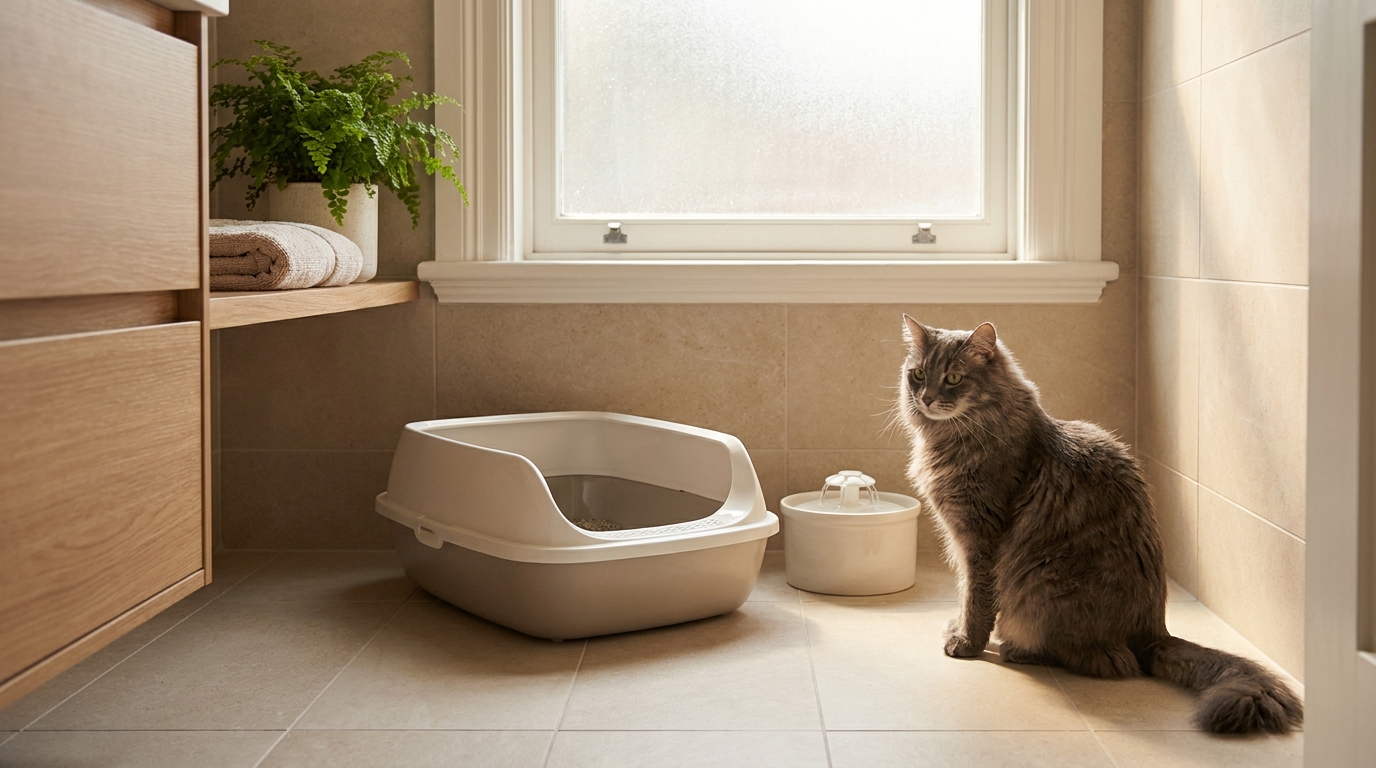
Three days without stool needs a vet call today; if your cat strains and passes no urine, especially a male, go to an emergency clinic now.
If your cat is going in and out of the litter box, straining, crying out, or producing little or no urine, especially a male cat, this may be a urinary blockage, not constipation: go to an in-person emergency vet now, do not wait until morning.
If your cat hasn't pooped in 3 days, two things matter tonight: making sure the empty box is not hiding a blocked bladder, and knowing that day three is when veterinary guidance says to call rather than keep watching.
Is it an emergency? Rule out a urinary blockage first
Constipation and a urinary blockage look the same in the box: repeated trips, squatting, straining, sometimes crying out, then nothing. Owners commonly mistake a blockage for constipation. The Cornell Feline Health Center describes a blocked cat as one that makes frequent attempts to urinate, produces little if any urine and often cries out in pain, and warns that the time from complete obstruction until death may be less than 24 to 48 hours. Male and neutered male cats are at greater risk because their urethra is longer and narrower, according to Cornell. Vomiting and hiding can go with a blockage too.
Before anything else, check the box for urine. A few drops, tiny clumps or damp spots outside the box count as "little", not normal. If your cat is straining and you cannot find normal urine clumps, or you cannot tell (non-clumping litter, several cats, outdoor access), treat it as a blockage and go now. A video visit cannot examine the bladder or unblock a cat. The cat urinary blockage guide and the post on a male cat straining to pee explain what happens at the clinic.
If urine is normal and your cat is alert and eating, this is most likely constipation, which still needs a vet call today.
How often should a cat poop?
Most healthy cats pass stool about once a day, according to VCA Animal Hospitals, and VCA advises calling your veterinarian if your cat has not had a bowel movement within 48 to 72 hours. Day three is therefore the call-today line, not a wait-and-see day. The longer stool sits in the colon, the drier and harder it gets.
Why your cat hasn't pooped in 3 days: the common causes
VCA lists the causes of constipation in cats as hairballs (especially in long-haired cats), indigestible material such as bones, obesity and lack of exercise, megacolon, neurologic disease, painful conditions such as osteoarthritis, pelvic injuries, tumors, and any condition that causes dehydration. The ones owners see most:
- Dehydration. The Merck Veterinary Manual names it as a recognized cause, particularly in cats with chronic kidney disease. A dry-only diet, low water intake and a hot Florida summer all push the same way; see the cat dehydration signs post.
- Hair and things that do not digest. Swallowed fur is a leading cause in long-haired cats; see the cat hairball guide. Bones and litter can also pack the colon.
- Weight and inactivity. An overweight indoor cat asleep all day in a New York or Virginia apartment has a slower gut than a lean, active one.
- Pain that makes squatting hard. Osteoarthritis and old pelvic injuries make the crouch hurt, so the cat puts it off. The vet can manage arthritis pain; the Solensia for cats page explains one option a veterinarian may consider.
- A box the cat is avoiding. A dirty box, new litter or a household upheaval can make a cat hold it, and held stool dries out.
- Medications. Merck notes that opioids, diuretics, antihistamines, anticholinergics, sucralfate and aluminum hydroxide can cause constipation as a side effect. Tell the vet everything your cat takes, including supplements.
- Megacolon. Merck defines constipation as infrequent or difficult passing of dry, hard stool; obstipation as constipation so severe the cat cannot pass the mass; and megacolon as an enlarged colon with weak motility, which Merck's cat-owner guide says can follow long-term constipation. VCA says megacolon is idiopathic (no cause found) in most cases; other causes are spinal cord injury, mechanical obstruction (tumors, foreign bodies, hairballs, strictures) and orthopedic problems that prevent normal defecation.
Constipation signs, and what else it could be
VCA lists the signs of constipation as straining, small hard dry feces or a very small amount of watery feces, vomiting, decreased appetite and lethargy. A little liquid stool leaking around a firm mass is easily mistaken for diarrhea.
VCA also points out that constipated cats go in and out of the litter box frequently, just like cats with urinary disorders, so the two are easy to confuse. The only way to tell at home is urine output: normal clumps point to constipation; little or no urine is an emergency.
What is safe to do at home tonight, and what you must never give
These steps support your cat while you arrange the vet call; they do not replace it.
- Fresh water in several places.
- Add or offer wet food for the moisture, mixed in rather than a sudden full switch.
- A scooped box that is easy to get into, especially for a senior or arthritic cat.
- Gentle brushing if your cat is long-haired and will tolerate it.
- A calm house and a close watch on the box for urine, stool and vomiting.
Merck's cat-owner guide warns that laxatives formulated for human use can be very dangerous for pets, and that you should only give your cat the laxative your veterinarian prescribed. Never give an enema at home, of any kind: Merck notes that phosphate-containing enemas must be avoided in cats because they can cause severe electrolyte imbalances. Never give mineral oil by mouth; Merck lists aspiration pneumonia as the risk. Leave hairball gels and anything from the human medicine cabinet for the vet to decide on, and do not press on or massage your cat's belly.
Overnight stop rule: straining with little or no urine, vomiting, a swollen or painful belly, or refusing food means the emergency clinic now.
When to see a vet in person, and when an online vet visit helps
Go to an in-person clinic tonight if you see any of these:
- Straining with little or no urine, or you cannot confirm urine is being passed
- Repeated vomiting
- Blood in the stool or the urine
- A swollen, tense or painful belly
- Collapse or weakness
- A cat that has stopped eating (see the cat not eating guide)
- Hiding, crying or hunching
A video visit is a reasonable first step for a cat that is still eating, drinking and urinating normally, with mild straining. On camera the vet can go through diet, water, litter and medications and help you decide whether X-rays, bloodwork or fluids are needed in person, or plan for a senior or arthritic cat. A video visit cannot treat a urinary blockage; that is always an in-person emergency.
If your cat is still eating, drinking and urinating, a RexVet veterinarian licensed in Florida, New York or Virginia can look at your cat by video ($64.99), 24/7, and help you decide whether a clinic visit is needed.
How a veterinarian treats constipation
The vet will check hydration, feel the belly for a packed colon and, as VCA describes, often take abdominal X-rays to see how enlarged the colon is and rule out an obstruction.
Fluids come first if the cat is dehydrated; Merck notes that laxatives can worsen dehydration. Per VCA, the vet may use a laxative or stool softener chosen for your cat, an enema or manual removal by the vet, sometimes under anesthesia, and diet changes with added fiber. For megacolon, VCA describes medical management with fluids, enemas, laxatives, stool softeners, drugs that stimulate the colon wall such as cisapride, and high-fiber diets; surgery (subtotal colectomy) is considered only if that fails. If the veterinarian decides medication is appropriate, they can prescribe where state rules allow.
Preventing the next episode
Once this episode is over:
- A water fountain, several bowls, and wet food every day.
- Regular brushing for long-haired cats.
- A clean, easy-to-enter box with low sides for a senior cat.
- Weight control and daily play.
- Managing arthritis pain with the vet if your cat is older or stiff.
- A daily glance at the box in summer heat, especially in Florida.
If your cat has repeat episodes and is otherwise well, a RexVet veterinarian licensed in Florida, New York or Virginia can look at your cat by video ($64.99) and help you build a prevention plan.
Frequently asked questions
How long can a cat go without pooping before it is dangerous?
VCA Animal Hospitals says to call your veterinarian if your cat has not had a bowel movement within 48 to 72 hours, so three days is the call-today line. It is dangerous immediately if your cat is straining and passing little or no urine; that is an emergency clinic visit tonight.
How do I tell if my cat is constipated or has a urinary blockage?
Check the litter box for urine. Both make a cat go in and out of the box and strain; normal urine clumps point to constipation, while little or no urine, especially in a male cat, means a possible blockage and an in-person emergency clinic now.
Can I give my cat a laxative, an enema or mineral oil at home?
No. Merck warns that laxatives formulated for human use can be very dangerous for pets, phosphate enemas can cause severe electrolyte imbalances in cats, and mineral oil by mouth can cause aspiration pneumonia. Only give what your veterinarian prescribes.
Why is my cat straining in the litter box but nothing comes out?
Check the box for urine first: if there is little or none, especially in a male cat, go to an in-person emergency clinic now because this may be a urinary blockage. If urine is normal, the likely explanation is stool too hard and dry to pass, which needs a vet call today, not home remedies.
Can an online vet help if my cat hasn't pooped in 3 days?
Yes, if your cat is still eating, drinking and urinating normally. A video vet can review diet, water, litter and medications and help you decide whether an in-person exam is needed. A cat passing no urine needs an emergency clinic, not a video call.
Sources
- Cornell Feline Health Center: Feline Lower Urinary Tract Disease
- VCA Animal Hospitals: Constipation in Cats
- Merck Veterinary Manual: Constipation, Obstipation, and Megacolon in Small Animals
- Merck Veterinary Manual: Disorders of the Stomach and Intestines in Cats
- VCA Animal Hospitals: Megacolon in Cats
FAQs
How long can a cat go without pooping before it is dangerous?
VCA Animal Hospitals says to call your veterinarian if your cat has not had a bowel movement within 48 to 72 hours, so three days is the call-today line. It is dangerous immediately if your cat is straining and passing little or no urine; that is an emergency clinic visit tonight.
How do I tell if my cat is constipated or has a urinary blockage?
Check the litter box for urine. Both make a cat go in and out of the box and strain; normal urine clumps point to constipation, while little or no urine, especially in a male cat, means a possible blockage and an in-person emergency clinic now.
Can I give my cat a laxative, an enema or mineral oil at home?
No. Merck warns that laxatives formulated for human use can be very dangerous for pets, phosphate enemas can cause severe electrolyte imbalances in cats, and mineral oil by mouth can cause aspiration pneumonia. Only give what your veterinarian prescribes.
Why is my cat straining in the litter box but nothing comes out?
Check the box for urine first: if there is little or none, especially in a male cat, go to an in-person emergency clinic now because this may be a urinary blockage. If urine is normal, the likely explanation is stool too hard and dry to pass, which needs a vet call today, not home remedies.
Can an online vet help if my cat hasn't pooped in 3 days?
Yes, if your cat is still eating, drinking and urinating normally. A video vet can review diet, water, litter and medications and help you decide whether an in-person exam is needed. A cat passing no urine needs an emergency clinic, not a video call.
Sources
- Cornell Feline Health Center: Feline Lower Urinary Tract Disease
- VCA Animal Hospitals: Constipation in Cats
- Merck Veterinary Manual: Constipation, Obstipation, and Megacolon in Small Animals
- Merck Veterinary Manual: Disorders of the Stomach and Intestines in Cats
- VCA Animal Hospitals: Megacolon in Cats
Medically Reviewed
Reviewed by Dr. Tiffany Delacruz, DVM — licensed veterinarian and CEO of RexVet. Last reviewed September 14, 2026.
Content is for informational purposes and does not replace professional veterinary advice.
Chief Executive Officer · Licensed Veterinarian
Dr. Delacruz is a licensed Doctor of Veterinary Medicine specializing in preventive care and veterinary telehealth. She reviews all health content on RexVet to ensure accuracy and clinical relevance.
Sources & References
- · American Veterinary Medical Association — Telehealth Guidelines
- · AVMA — Pet Care Resources
- · U.S. FDA — Animal & Veterinary
Need an Expert Opinion on This Topic?
Connect with a certified vet via video call in minutes
Talk to Vet Now