
Why Is My Dog Suddenly Clingy? Causes and When to Worry
By RexVet Team | Reviewed by Dr. Tiffany Delacruz, DVM
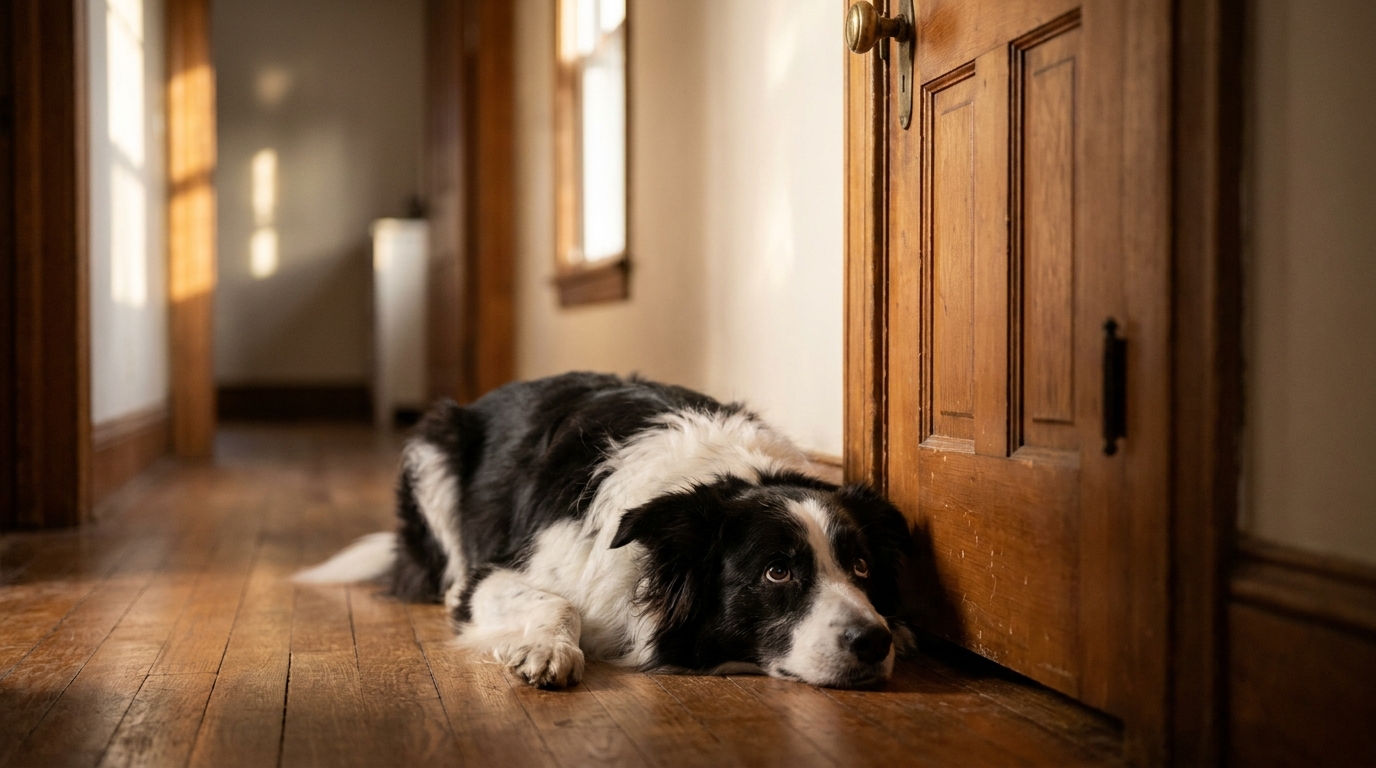
Sudden clinginess can come from stress, pain, fading senses or illness. How to sort the causes, and which signs mean a vet today or an ER now.
Quick answer: A suddenly clingy dog may be reacting to a change at home, anxiety, pain, illness or slowly fading hearing or sight; the 2023 AAHA Senior Care Guidelines list behavior changes among common signs of chronic disease in older pets. A clingy dog that refuses food needs an in-person vet today; retching with nothing coming up, a swollen belly or vomiting more than once means an emergency vet now.
This article is general information, not a diagnosis. If you think your pet is in danger, go to the nearest emergency animal hospital.
When is a clingy dog a warning sign?
A clingy dog needs an emergency vet now if it retches with nothing coming up, has a swollen or hard belly, vomits more than once, collapses, or has pale gums or hard breathing, and a clingy dog that refuses food or pants and trembles at rest needs an in-person vet today.
Emergency vet now: retching or dry heaving with nothing coming up, even before the belly swells (see bloated stomach in dogs); a swollen, hard or fast-growing belly; restlessness with drooling, especially in a deep-chested dog after a meal; vomiting more than once, vomiting blood, or black, tarry stool; collapse, weakness, pale, gray or blue gums, or labored breathing at rest; any seizure; a new head tilt, loss of balance, circling or flicking eyes; one pupil bigger than the other; hearing or sight lost over hours or days; crying at a gentle touch or constant crying; sudden back-leg weakness or dragging, or a leg that hangs or won't move; straining to pee with little or no urine.
In-person vet today: a dog that has eaten nothing for about a day, or pants, shakes or trembles while resting. A puppy, senior or diabetic dog that has stopped eating or vomited should be seen within hours, and one vomit in a bright dog that is still eating means call a vet today.
Poison line or ER now: sudden restlessness, trembling or clinginess when your dog may have gotten into human antidepressant, anxiety or ADHD pills, a cannabis edible, chocolate or caffeine. Call ASPCA Animal Poison Control at (888) 426-4435 (a consultation fee may apply) or the Pet Poison Helpline at (855) 764-7661 (a per-incident fee applies).
Common reasons a dog suddenly gets clingy
A dog can turn suddenly clingy because of pain, illness, slowly fading hearing or sight, cognitive dysfunction, anxiety, a heat cycle or a change at home, and the clues below point to the next step.
| Cause | Clues | Next step |
|---|---|---|
| Pain | Stiff, licks one spot | Vet visit |
| Severe pain | Cries at a touch | ER now |
| Illness | Eats less, sleeps more | Vet today |
| Slow hearing loss | Misses calls | Vet visit |
| Slow sight loss | Bumps into things | Vet visit |
| Sudden hearing or sight loss | Over hours or days | ER now |
| Dementia | Paces at night, lost | Vet visit |
| Anxiety | Panics when alone | Behavior plan |
| Home change | Guests, move, travel | Keep routine |
| After heat | Discharge, thirst | Vet today |
| Bloat | Retching, big belly | ER now |
| Toxin | Pills, edible, caffeine | Poison line now |
Hearing or sight that seems to go over hours or days, a new head tilt or a seizure means an emergency vet now.
After heat: if the dog is also vomiting, not eating, lethargic, weak or has a swollen belly, go to an emergency vet now.
Is my dog clingy because it is in pain?
Pain is one hidden reason a dog turns clingy: Cornell's Riney Canine Health Center lists seeking more attention and affection than usual among the signs of pain in dogs.
Some dogs in pain hide, while others follow their owners or want to be held. The Merck Veterinary Manual notes that dogs may wag their tails and greet people despite being in pain, and it calls pain an important risk factor for behavior problems, so medical causes are ruled out first.
Other pain signs: restlessness or not settling; hiding; licking, chewing or guarding one spot; flinching at touch; a hunched or stiff posture; reluctance to use stairs or jump into the car; panting and trembling while resting; and eating less. Crying at a gentle touch or sudden back-leg weakness means an emergency vet now. Never give a dog a pain reliever from your own medicine cabinet.
Senior dog suddenly clingy: hearing, sight or thinking changes
An older dog that turns newly clingy can have slowly fading hearing or sight, chronic pain or cognitive dysfunction, so the change deserves a vet check rather than being put down to age.
The Merck Veterinary Manual notes that aging dogs become more dependent on their human family, and the 2023 AAHA Senior Care Guidelines warn that owners often mistake signs of chronic pain in older pets for normal aging.
From RexVet's visit data: "41% of RexVet video visits were for pets aged 7 or older." The figure covers dogs and cats seen for any reason.
Hearing. A dog that is slowly going deaf may miss its name, sleep more deeply and act more nervous or clingy; hearing that fades over months needs a routine exam. Hearing that seems to vanish over hours or a few days (or you cannot tell how fast), or goes with a head tilt, needs an emergency vet now (see hearing loss in dogs).
Sight. Signs of failing sight include bumping into things, moving more cautiously and staying closer to you. A slow change over months gets a routine exam, but bumping into things over hours or days, or a red, painful or bulging eye, means an emergency vet now. See cloudy eyes in dogs.
Cognitive dysfunction (dog dementia). A cognitive dysfunction checklist vets use lists increased anxiety when separated from the owner as one sign, alongside getting stuck or lost at home, pacing or waking at night and new house soiling. Pain, a urinary tract infection or other illness can look similar, so a vet rules those out. A new head tilt, loss of balance, circling, flicking eyes or a seizure means an emergency vet now; sudden confusion needs a vet today or sooner.
Why is my dog clingy at night?
A dog that is clingy and restless at night may be anxious, in pain, needing to pee more or showing cognitive dysfunction, and night restlessness with retching, drooling or a swollen belly means an emergency vet now.
The American College of Veterinary Surgeons says early bloat can look like anxiety, with an anxious look, drooling and retching without producing anything, so a restless dog that is retching or drooling, especially a deep-chested dog after a meal, needs an emergency vet now, even before the belly swells.
An older dog drinking and peeing much more that is otherwise bright and eating needs a vet within days for blood and urine tests, but should be seen within hours if it is also vomiting, off its food or lethargic. An unspayed female after a heat needs an in-person vet today (see below), and straining with little or no urine means an emergency vet now. Sleeping breath counts that stay above 30 a minute need a vet today. A dog found dazed, wobbly or wet with urine or drool may have had a seizure and needs an emergency vet now.
Clingy female dog: heat, false pregnancy and pyometra
An unspayed female dog with discharge or heavy drinking at any point up to about 4 months after a heat needs an in-person vet exam today for possible pyometra, and an emergency vet now if the dog is also vomiting, not eating, lethargic, weak or has a swollen belly.
Some unspayed females become more affectionate, restless or anxious during heat.
The Merck Veterinary Manual describes pyometra as a uterine infection of unspayed dogs, mainly those over 5, that causes lethargy, poor appetite, more drinking and peeing, and vomiting, and can progress quickly to shock and death; a closed cervix may give no discharge at all.
VCA Animal Hospitals says false pregnancy signs usually begin 4 to 9 weeks after the previous heat. They include nesting, mothering, restlessness and guarding toys, sometimes with enlarged mammary glands. Never assume a false pregnancy if the dog is lethargic, vomiting, off its food, drinking much more or has a discharge; those can be pyometra, so follow the pyometra steps above.
Clingy after a change: guests, a move, a new baby or a new schedule
Household changes such as guests, a move, a new baby, boarding or a new schedule are a common harmless trigger for clinginess, and many dogs settle as the new routine becomes familiar if walks, meals and a quiet spot stay steady.
The Merck Veterinary Manual says a consistent, predictable routine reduces the stress caused by change. Keep walks, meals and bedtime at the usual times, and give the dog a quiet room away from guests, moving boxes or New Year's Eve fireworks.
Clinginess after a kennel stay or a week of holiday guests often fades as a dog settles back in (see what is normal after boarding). If it comes with not eating, vomiting or another red flag above, follow those steps, and see a vet if it does not ease.
Clingy dog or separation anxiety?
A dog that follows you around the house is not, on that alone, showing separation anxiety; panic when you leave, such as howling, damage at doors or windows, accidents or drooling, is the sign that needs a behavior plan with a vet.
The Merck Veterinary Manual says dogs that follow their families around the house are at no greater risk of separation anxiety than dogs that do not. Its signs of separation distress include destruction at exits, howling, house soiling, drooling and pacing, usually starting within 15 to 30 minutes after the owner leaves. Merck calls video of the dog alone an invaluable diagnostic tool.
A dog that breaks teeth or bleeds trying to escape, or swallows chewed door frame or drywall, needs an emergency vet now. A dog that panics in a crate can be hurt trying to escape, so ask the veterinarian about a safer space.
From RexVet's visit data: "New York pet owners named anxiety, behavior problems or shaking in 15% of RexVet visits, compared with 9% in Florida." The figures cover all anxiety, behavior and shaking concerns in dogs and cats, not separation anxiety or clinginess alone.
What helps a clingy dog at home
A clingy dog does best with a predictable routine, rewards for settling calmly on a bed nearby, short and calm practice departures, and enrichment such as sniff walks and puzzle feeders, and the clinging should never be punished.
The Merck Veterinary Manual supports reward-based training, a consistent routine for play and exercise, teaching a dog to relax in a set place with chews and puzzle feeders, and graduated practice departures for moderate to severe cases. Treat sniff walks as enrichment, not a cure. Merck warns that punishment, such as scolding or pushing the dog away, can make a dog fearful and anxious toward its owner. Ask a vet before giving any calming supplement or medicine, and never give a dog a person's medicine.
When a video visit helps, and when it does not
A live video visit can be a good first step for a clingy dog that is otherwise well, because the veterinarian can watch the dog at home, where the behavior happens.
For a dog located in Florida, New York or Virginia that has turned clingy but is still eating, drinking, peeing and moving normally, RexVet, a nonprofit online vet service, offers a $64.99 live video visit with a veterinarian licensed in the dog's state, about 8 AM to 11 PM Eastern when a slot is open. RexVet serves pets located in Florida, New York and Virginia by video visit, and the dog must be in one of those states during the visit; a same-day slot is not guaranteed.
A video visit also fits an older dog whose hearing or sight has faded slowly over months, or who paces at night; clinginess after a move, guests, boarding or a schedule change; and panic when left alone with no injury. Film a short clip of the behavior if you can, including a few minutes of the dog alone after you leave.
A licensed RexVet vet watches the dog on camera, asks about routine, appetite, sleep, toileting and pain clues, and sets a plan: home steps, what to film next, and whether an in-person exam, blood work or a behavior specialist is needed. No prescription is promised; the veterinarian decides, and human-labeled or off-label anxiety medicines need an in-person exam.
Go to an emergency vet now, not a video visit, if a clingy dog retches with nothing coming up, is restless and drooling (especially a deep-chested dog after a meal), has a swollen or hard belly, vomits more than once, collapses, has pale gums or hard breathing, has a seizure, cries at a gentle touch, has sudden back-leg weakness, strains to pee with little or no urine, suddenly loses hearing or sight, has a new head tilt, loss of balance, circling or flicking eyes, or may have swallowed medicine, an edible, chocolate or caffeine (call a poison line on the way).
See a vet in person today if a clingy dog refuses food, pants and trembles at rest, or seems suddenly confused, and have a puppy, senior or diabetic dog that is not eating seen within hours. An unspayed female with discharge, or drinking and peeing much more, at any point up to about 4 months after a heat needs a vet exam in person today, and an emergency vet now if the dog is also vomiting, not eating, weak, lethargic or has a swollen belly.
If none of these signs apply, book a live video visit.
Need an Expert Opinion on This Topic?
Book a video visit with a licensed vet, evenings and weekends included
See open timesFrequently Asked Questions
Can dogs sense when you are sick or pregnant?
Not reliably: no study shows that a pet dog's clinginess means its owner is sick or pregnant. Small studies found that trained dogs could pick out bladder cancer (BMJ, 2004) and human stress (PLOS ONE, 2022) by smell, and no study we found tests pregnancy. Check the dog's own health first.
Is a clingy dog a sign of illness?
Sometimes: pain or illness can make a dog seek more attention than usual, so a sudden change deserves a vet check. A clingy dog that refuses food needs an in-person vet today; vomiting more than once, retching with nothing coming up, a swollen belly or collapse means an emergency vet now.
Why is my senior dog suddenly following me everywhere?
Slowly fading hearing or sight, pain or cognitive dysfunction can cause it, so have a vet check the change rather than blaming age. Hearing or sight lost over hours or days, a new head tilt or a seizure means an emergency vet now.
Is it normal for my dog to follow me everywhere?
Yes, for many dogs: a "velcro dog" that follows you around the house is showing normal attachment, not separation anxiety on its own. Watch for a sudden change, clinginess with eating less or night pacing, or panic when you leave.
Should I ignore my clingy dog?
No, not a sudden change: rule out pain or illness first, then reward calm settling nearby instead of scolding or pushing the dog away. Keep walks, meals and bedtime predictable.
Can anxiety medicine help a clingy dog?
Sometimes, but only if a veterinarian finds a condition such as separation anxiety and decides medicine fits, and then only alongside a behavior plan. No medicine is approved for clinginess itself, and no prescription is promised. Human-labeled or off-label medicines need an in-person exam under federal rules, and Florida limits video-only prescriptions further. Never give a dog a person's anxiety medicine.
Can an online vet help with my dog's behavior change in Florida, New York or Virginia?
Yes, for a dog located in Florida, New York or Virginia that is clingy but still eating, drinking, peeing and moving normally. On live video, a veterinarian licensed in your pet's state can watch the dog at home, review clips you filmed, ask about routine, appetite, sleep and toileting, and set a plan. Blood work, a hands-on exam for pain or belly problems, and any human-labeled or off-label medicine need an in-person visit. No prescription is promised; the veterinarian decides. In Florida, a vet who has only seen your dog by video may prescribe only FDA-approved animal drugs used as labeled, for up to 14 days (up to 1 month for products labeled solely for flea and tick control), with no renewal until the dog is examined in person and no human-labeled drugs, controlled drugs or compounded anti-infectives. Under federal rules (21 CFR 530.3), using any medicine outside its label, including human-labeled anxiety medicines, needs a vet-client-patient relationship based on an in-person exam. Virginia allows the exam to be done electronically, but the federal limits above still apply. In New York, prescribing after a video-only visit is unsettled. RexVet is not a pharmacy; a pharmacy transfer fee applies when RexVet sends a prescription to an outside pharmacy.
FAQs
Can dogs sense when you are sick or pregnant?
Not reliably: no study shows that a pet dog's clinginess means its owner is sick or pregnant. Small studies found that trained dogs could pick out bladder cancer (BMJ, 2004) and human stress (PLOS ONE, 2022) by smell, and no study we found tests pregnancy. Check the dog's own health first.
Is a clingy dog a sign of illness?
Sometimes: pain or illness can make a dog seek more attention than usual, so a sudden change deserves a vet check. A clingy dog that refuses food needs an in-person vet today; vomiting more than once, retching with nothing coming up, a swollen belly or collapse means an emergency vet now.
Why is my senior dog suddenly following me everywhere?
Slowly fading hearing or sight, pain or cognitive dysfunction can cause it, so have a vet check the change rather than blaming age. Hearing or sight lost over hours or days, a new head tilt or a seizure means an emergency vet now.
Is it normal for my dog to follow me everywhere?
Yes, for many dogs: a "velcro dog" that follows you around the house is showing normal attachment, not separation anxiety on its own. Watch for a sudden change, clinginess with eating less or night pacing, or panic when you leave.
Should I ignore my clingy dog?
No, not a sudden change: rule out pain or illness first, then reward calm settling nearby instead of scolding or pushing the dog away. Keep walks, meals and bedtime predictable.
Can anxiety medicine help a clingy dog?
Sometimes, but only if a veterinarian finds a condition such as separation anxiety and decides medicine fits, and then only alongside a behavior plan. No medicine is approved for clinginess itself, and no prescription is promised. Human-labeled or off-label medicines need an in-person exam under federal rules, and Florida limits video-only prescriptions further. Never give a dog a person's anxiety medicine.
Can an online vet help with my dog's behavior change in Florida, New York or Virginia?
Yes, for a dog located in Florida, New York or Virginia that is clingy but still eating, drinking, peeing and moving normally. On live video, a veterinarian licensed in your pet's state can watch the dog at home, review clips you filmed, ask about routine, appetite, sleep and toileting, and set a plan. Blood work, a hands-on exam for pain or belly problems, and any human-labeled or off-label medicine need an in-person visit. No prescription is promised; the veterinarian decides. In Florida, a vet who has only seen your dog by video may prescribe only FDA-approved animal drugs used as labeled, for up to 14 days (up to 1 month for products labeled solely for flea and tick control), with no renewal until the dog is examined in person and no human-labeled drugs, controlled drugs or compounded anti-infectives. Under federal rules (21 CFR 530.3), using any medicine outside its label, including human-labeled anxiety medicines, needs a vet-client-patient relationship based on an in-person exam. Virginia allows the exam to be done electronically, but the federal limits above still apply. In New York, prescribing after a video-only visit is unsettled. RexVet is not a pharmacy; a pharmacy transfer fee applies when RexVet sends a prescription to an outside pharmacy.
Medically Reviewed
Reviewed by Dr. Tiffany Delacruz, DVM — licensed veterinarian and CEO of RexVet. Last reviewed November 20, 2026.
Content is for informational purposes and does not replace professional veterinary advice.
Chief Executive Officer · Licensed Veterinarian
Dr. Delacruz is a licensed Doctor of Veterinary Medicine specializing in preventive care and veterinary telehealth. She reviews all health content on RexVet to ensure accuracy and clinical relevance.
Sources & References
- · American Veterinary Medical Association — Telehealth Guidelines
- · AVMA — Pet Care Resources
- · U.S. FDA — Animal & Veterinary