
Dog Acting Weird After Boarding? Normal vs When to Worry
By RexVet Team | Reviewed by Dr. Tiffany Delacruz, DVM
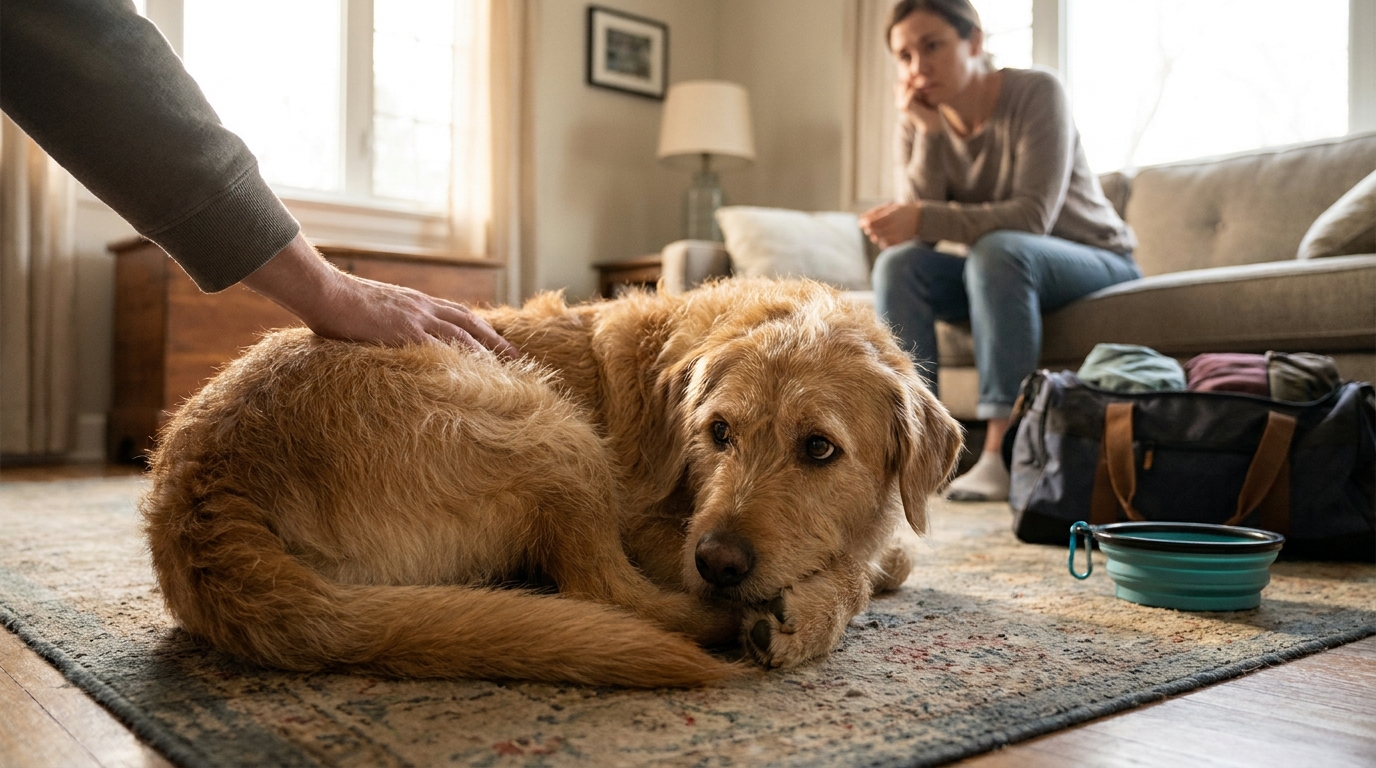
Tired, thirsty or off food after a kennel stay? What is normal at home, what needs a vet call and what means an emergency vet now.
Quick answer: Many dogs come home from boarding tired, thirsty, clingy or a little distant. A dog that is only tired wakes easily and perks up after a night's sleep. Call a vet if a healthy adult eats nothing for 24 hours, has diarrhea past 2 days or starts coughing. Retching that brings nothing up, labored breathing, black stool, bloody diarrhea with vomiting or collapse means an emergency vet now.
This article is general information, not a diagnosis. If you think your pet is in danger, go to the nearest emergency animal hospital.
Emergency signs after boarding
A dog home from boarding needs an emergency vet now for any of these: retching that brings nothing up, with or without a swollen belly; restlessness with drooling; pale, gray or blue gums; labored breathing; black or "raspberry jam" stool; bloody stool with vomiting; vomiting more than once, or any vomit with blood or coffee-ground material; not keeping water down or refusing water; straining to pee with little or no urine; a seizure; weakness or collapse.
The American College of Veterinary Surgeons (ACVS) calls bloat, or gastric dilatation-volvulus (GDV), a rapidly progressive, life-threatening emergency; early signs include drooling, a swelling belly and retching that brings nothing up. Large, deep-chested dogs are most at risk. ACVS says stress has been suggested as a risk factor, and the Merck Veterinary Manual also links once-daily feeding and eating fast to bloat, but any dog that retches without bringing anything up needs an emergency vet. Go to an emergency vet now at any sign of bloat; never wait to see if it passes. Kennel cough can end in a gag or retch right after a honking coughing fit. Retching that is not part of a coughing fit, keeps repeating, or comes with a swollen belly, restlessness or drooling is a bloat sign, even in a dog that also has a cough. If in doubt, go now.
The Merck Veterinary Manual warns that sudden, heavy "raspberry jam" diarrhea can cause shock before dehydration shows; go now, even if your dog seems bright. If your dog may have eaten something toxic, call ASPCA Animal Poison Control at (888) 426-4435 (a consultation fee may apply) or the Pet Poison Helpline at (855) 764-7661 (a per-incident fee applies), and do not make your dog vomit unless a vet or the poison line says to.
| Sign | Do this |
|---|---|
| Dry retching, tight belly | ER now |
| Labored or open-mouth breathing | ER now |
| Black or raspberry jam stool | ER now |
| Bloody stool plus vomiting | ER now |
| Weak, trembly toy puppy | ER now |
| Vomits more than once | ER now |
| Seizure or collapse | ER now |
| Restless, drooling, pale gums | ER now |
| Can't keep water down | ER now |
| Straining, little or no urine | ER now |
| Cough plus fever or no appetite | In-person today |
| Any puppy with diarrhea | In-person today |
| Diarrhea plus one vomit | In-person today |
| Puncture, bite or pus | In-person today |
| Red streaks with mucus | Vet in 24 h |
What is normal right after boarding
Extra sleep, extra thirst, a big appetite or one skipped meal, and clinginess or mild aloofness are common right after boarding in a dog that is bright, wakes easily and keeps drinking.
VCA Animal Hospitals says many dogs eat or drink less during a stay, so a long drink at home is often catch-up.
| What you see | Usually | See a vet if |
|---|---|---|
| Sleeping a lot | Common | Dull next day; ER if hard to wake or weak |
| Drinking a lot | Common at first | Past 2 days, or ill |
| Big appetite | Common | Retching: ER now |
| Skips one meal | Common | Adult: no food 24 h |
| Puppy, toy, senior skips | Not normal | Call a vet today |
| Soft stool | Common | Adult: past 2 days |
| Cough | Not normal | Call a vet |
| Clingy or aloof | Common | New fear or biting |
Why dogs are tired after boarding
Boarding is busy and noisy, so many dogs play more and sleep less during the stay and catch up at home. A tired dog wakes easily and perks up after a night's sleep, while a dog that stays dull the next day needs a vet today, and a dog that is hard to rouse, confused, wobbly or slow to respond to your voice needs an emergency vet now.
PetMD notes that a dog that was on alert at a boarding kennel may come home and crash. A lethargic dog, unlike a tired one, stays inactive for no clear reason. Pale, gray or blue gums mean an emergency vet now. The Merck Veterinary Manual says toy and miniature breeds are especially at risk of low blood sugar, so a toy-breed puppy that turns weak, trembly or wobbly needs an emergency vet now.
Not eating after boarding
A healthy adult dog that skips a meal after boarding but is bright is usually fine. A dog that has eaten nothing for 24 hours needs a same-day vet call, and a puppy, toy breed, senior or diabetic dog that skips meals needs a vet the same day.
PetMD advises a vet call when not eating comes with vomiting, lethargy or weight loss. A dog that vomits and refuses food for more than 12 hours needs an in-person vet. If a diabetic dog ate poorly while getting insulin, call the vet who manages the insulin before the next dose, and go to an emergency vet now if it turns weak, wobbly or shaky, collapses or has a seizure, because insulin without enough food can drop blood sugar dangerously. Never fast a puppy, toy breed or diabetic dog.
On the first night, feed the usual food in the usual amount, keep play calm around meals, and never take the water away. Fatty kennel treats or a rich welcome-home meal can trigger pancreatitis, so watch for 4 days afterward: vomiting more than once, belly pain or weakness means an emergency vet now, and refusing food means an in-person vet today.
Coughing after boarding
A honking cough that starts a few days to about 10 days after boarding is often kennel cough, which is contagious, so call a vet and keep your dog away from other dogs; labored breathing means an emergency vet now.
The Merck Veterinary Manual describes a "goose honk" cough, sometimes followed by gagging. Cornell's Riney Canine Health Center says most dogs recover within about two weeks, that vaccinated dogs can still get milder signs, and that dogs with Bordetella can stay contagious for up to eight weeks, even after the cough ends. Canine flu looks the same, Cornell's Animal Health Diagnostic Center says, and the Merck Veterinary Manual says to treat a flu-exposed dog as contagious for up to 4 weeks. Keep a coughing dog away from other dogs until a vet says it is no longer contagious.
Puppies, seniors, unvaccinated dogs and dogs with airway disease or weak immunity need an in-person vet the same day for any cough, because pneumonia can develop. So does any dog whose cough gets worse or comes with fever, lethargy, poor appetite or thick nasal discharge. Call the clinic ahead so it can keep your dog away from other patients. At home, use a harness instead of a collar and give no human cough or cold medicine; see dog colds and cold medicine safety and kennel cough symptoms and treatment.
Diarrhea after boarding
Stress and a change of food commonly cause soft stool after boarding. A bright adult dog needs a vet call if soft stool lasts more than 2 days, while any puppy with diarrhea, or diarrhea with a vomit or refusing food, needs an in-person vet today. A puppy that is not fully vaccinated and has vomiting, diarrhea or no appetite may have parvo, so it needs an in-person vet the same day, never a video visit; call ahead so the clinic can keep it away from other dogs. Cornell's Riney Canine Health Center lists being boarded among stressful events that can cause diarrhea, and VCA says stress colitis can bring mucus or a little bright red blood. Red streaks with mucus in a bright adult need a vet within 24 hours, more than a streak of blood needs an in-person vet today, and toy breeds and seniors with soft stool need a vet call the same day. Keep fresh water out, skip broth and gravy, don't give human stomach medicines unless a vet says to, and follow the home-care plan for diarrhea after table food. Black or tarry stool, raspberry-jam stool, bloody stool with vomiting, or vomiting more than once means an emergency vet now.
Drinking a lot, peeing more or weight loss
Extra thirst on the first day home from boarding is common. Thirst that lasts past a day or two, or comes with vomiting, lethargy, not eating, yellow gums or peeing much more or less, needs an in-person vet the same day.
The AKC says regular heavy drinking may be one of the earliest clues of an underlying health problem. Never limit water unless a vet says to; see why a dog drinks too much water.
AAHA, the American Animal Hospital Association, lists time in kennels or dog daycares as a risk factor for leptospirosis, which the Merck Veterinary Manual says can cause lethargy, vomiting, yellow gums or eyes, and peeing much more or less. It can spread to people, so wear gloves to clean up urine. Little or no urine means an emergency vet now.
Frequent small pees, new accidents, or blood in the urine of a dog that pees normal amounts and acts normal need a vet within 24 hours; bladder stones and crystals are one cause. A dog that came home from boarding noticeably thinner may have eaten less during the stay, but it still needs a vet check.
Behavior changes: clingy, distant or anxious
Clinginess or brief aloofness after boarding usually fades as a dog settles back into its routine. New fear, withdrawal, house soiling, aggression or distress when left alone deserves a vet check, because pain or illness can cause sudden behavior changes.
Keep meals, walks and bedtime on the usual schedule and give your dog a quiet place to rest, away from any holiday guests. Many calming medicines are human-labeled or used off-label, which federal rules say needs an in-person exam first, in every state, so ask a vet before giving any.
Skin, eyes and paws: what to check the first night
Check a dog's skin, eyes and paws the first night home from boarding. Have a vet see any of these in person the same day: a puncture or bite mark, swelling, heat, pus, a moist spreading hot spot, a squinting eye or a limp.
The Merck Veterinary Manual says puncture wounds often trap bacteria and form abscesses, so even a small bite mark needs an in-person look, and a bite to the neck, chest or belly needs an emergency vet now. Skip human creams and essential oils unless a vet who has examined your dog says to.
If people in the home also get an itchy rash, your dog needs an in-person exam for mange, and those people should see their own doctor. A cloudy, bluish or bulging eye, blood inside the eye or unequal pupils needs an emergency vet now. A cracked pad that bleeds needs an in-person vet the same day, and a deep split or bleeding that will not stop needs an emergency vet now.
Before the next boarding stay
Ask the boarding facility which vaccines it requires, often Bordetella and sometimes canine flu. Book them at an in-person clinic well before the stay, because canine flu vaccine needs a booster a few weeks later and injectable Bordetella vaccines take longer to protect.
VCA says rabies, distemper, parvovirus and Bordetella vaccines are universally required, and AAHA lists leptospirosis as core. A nose (intranasal) Bordetella vaccine can bring sneezing or a mild cough on days 2 to 5; see what is normal after dog vaccines. Pack your dog's usual food, as the AKC suggests, and ask for a short report at pickup on eating, sleep, cough and stool.
When a video visit helps
A video visit can help when an adult dog home from boarding is alert, breathing comfortably, drinking, not vomiting and still eating some food, with one mild problem: extra sleepiness, a mild honking cough with no fever or nasal discharge, soft stool for less than 2 days, or a small surface scrape or patch of itchy skin.
RexVet, a nonprofit online vet service, serves pets located in Florida, New York and Virginia by video visit. The visit is with a licensed RexVet vet, a veterinarian licensed in your pet's state, and your dog must be in that state during the call. A live video visit is $64.99. Live video slots run about 8 AM to 11 PM ET, including weekends; there are no overnight visits, a same-day slot is not guaranteed, and holiday hours may differ. More than half of RexVet visits (52%) took place outside standard weekday hours of 8 AM to 6 PM, Monday to Friday.
The veterinarian asks about the stay, watches your dog move and breathe, listens to any cough, and looks at gums, eyes, skin, paws and stool photos. They tell you what is normal recovery, what needs home care, whether to keep your dog away from other dogs, and whether your dog needs an in-person exam and how soon, and can point you to a clinic near you.
A video visit cannot listen to the lungs, take a temperature, feel the belly, run tests or X-rays, treat a wound or give vaccines. So a cough that gets worse or comes with fever, lethargy, poor appetite or thick nasal discharge, any cough in a puppy, senior or dog with airway disease or weak immunity, any puppy with diarrhea, diarrhea with one vomit or refusing food, more than a streak of blood in the stool, a bite, swelling, pus or a squinting eye needs an in-person vet today. Dry retching, restlessness with drooling, pale, gray or blue gums, labored breathing, black or raspberry-jam stool, bloody stool with vomiting, vomiting more than once, blood in the vomit or not keeping water down, straining to pee with little or no urine, a seizure, weakness or collapse needs an emergency vet now, not video. After about 11 PM ET, or in any emergency, go to an emergency hospital.
The one-time $120 Family Plan covers 4 visits over 12 months, shared across every pet in the home, and it never auto-renews.
Most mild kennel cough clears up on its own, so a video visit does not mean an antibiotic or cough medicine. No prescription is promised; any medicine is the veterinarian's decision after the visit. State and federal rules limit video-only prescribing; the last FAQ below explains them. RexVet is not a pharmacy; a pharmacy transfer fee applies if a prescription is sent to an outside pharmacy.
If your dog fits, book a live video visit.
Need an Expert Opinion on This Topic?
Book a video visit with a licensed vet, evenings and weekends included
See open timesFrequently Asked Questions
Is it normal for a dog to sleep all day after boarding?
Often, yes: a tired dog wakes easily, eats, drinks and perks up after a night's sleep. A dog that stays dull the next day, or is sleepy and not eating, needs a vet today; a dog that is hard to wake, confused, wobbly or shaky needs an emergency vet now. Fast or labored breathing at rest, pale gums or collapse means an emergency vet now.
Why is my dog drinking so much water after boarding?
Extra drinking the first day home is common; thirst lasting past a day or two needs a vet. Heavy thirst with vomiting, lethargy, not eating, yellow gums or peeing much more or less needs an in-person vet the same day, because AAHA lists kennel time as a risk factor for leptospirosis.
Can dogs get depressed after boarding?
Boarding stress can leave a dog tired, clingy or withdrawn at first, but lasting withdrawal, new fear, aggression or house soiling needs a vet check. AAHA's behavior guidelines list these among behaviors that should prompt a veterinary assessment. A sudden change can come from pain or illness, not only stress, so a dog that also stops eating, limps or hides needs to be seen.
How long does kennel cough last after boarding?
Mild kennel cough usually clears within about two weeks, Cornell's Riney Canine Health Center says, and it often starts 2 to 10 days after exposure. Call a vet about any new cough. A worsening cough, or one with fever, lethargy, not eating or thick nasal discharge, needs an in-person vet the same day, and so does any coughing puppy or senior; labored breathing at rest means an emergency vet now.
Should I bathe my dog after boarding?
Yes, once you have checked the skin; a dog with a puncture, bite, hot spot or open sore should see a vet first. Swelling, heat, pus or a new limp needs an in-person vet the same day, and a bite to the neck, chest or belly needs an emergency vet now.
Can an online vet check my dog after boarding in Florida, New York or Virginia?
Often, yes, for an alert adult dog with one mild problem, if the dog is in Florida, New York or Virginia during the video visit. On camera, the veterinarian can hear the cough, watch breathing, review photos and say whether your dog needs an in-person exam. Video cannot listen to the lungs, take a temperature or run tests, so a cough with fever, any coughing puppy or senior, any puppy with diarrhea, diarrhea with one vomit, or a bite needs an in-person vet today. Dry retching, pale or blue gums, labored breathing, black or raspberry-jam stool, bloody stool with vomiting, vomiting more than once, straining to pee with little or no urine, a seizure or collapse means an emergency vet now. No prescription is promised. If medicine comes up, Florida s.474.2021 allows only FDA-approved animal drugs used on-label after a video-only visit, for up to 14 days (1 month for products labeled only for fleas and ticks), with no renewal without an in-person exam and no human-labeled, controlled or compounded anti-infective drugs. Federal rules require an in-person exam for off-label or human-drug use in every state, even in Virginia, where the exam may otherwise be electronic; New York's rules are not settled.
FAQs
Is it normal for a dog to sleep all day after boarding?
Often, yes: a tired dog wakes easily, eats, drinks and perks up after a night's sleep. A dog that stays dull the next day, or is sleepy and not eating, needs a vet today; a dog that is hard to wake, confused, wobbly or shaky needs an emergency vet now. Fast or labored breathing at rest, pale gums or collapse means an emergency vet now.
Why is my dog drinking so much water after boarding?
Extra drinking the first day home is common; thirst lasting past a day or two needs a vet. Heavy thirst with vomiting, lethargy, not eating, yellow gums or peeing much more or less needs an in-person vet the same day, because AAHA lists kennel time as a risk factor for leptospirosis.
Can dogs get depressed after boarding?
Boarding stress can leave a dog tired, clingy or withdrawn at first, but lasting withdrawal, new fear, aggression or house soiling needs a vet check. AAHA's behavior guidelines list these among behaviors that should prompt a veterinary assessment. A sudden change can come from pain or illness, not only stress, so a dog that also stops eating, limps or hides needs to be seen.
How long does kennel cough last after boarding?
Mild kennel cough usually clears within about two weeks, Cornell's Riney Canine Health Center says, and it often starts 2 to 10 days after exposure. Call a vet about any new cough. A worsening cough, or one with fever, lethargy, not eating or thick nasal discharge, needs an in-person vet the same day, and so does any coughing puppy or senior; labored breathing at rest means an emergency vet now.
Should I bathe my dog after boarding?
Yes, once you have checked the skin; a dog with a puncture, bite, hot spot or open sore should see a vet first. Swelling, heat, pus or a new limp needs an in-person vet the same day, and a bite to the neck, chest or belly needs an emergency vet now.
Can an online vet check my dog after boarding in Florida, New York or Virginia?
Often, yes, for an alert adult dog with one mild problem, if the dog is in Florida, New York or Virginia during the video visit. On camera, the veterinarian can hear the cough, watch breathing, review photos and say whether your dog needs an in-person exam. Video cannot listen to the lungs, take a temperature or run tests, so a cough with fever, any coughing puppy or senior, any puppy with diarrhea, diarrhea with one vomit, or a bite needs an in-person vet today. Dry retching, pale or blue gums, labored breathing, black or raspberry-jam stool, bloody stool with vomiting, vomiting more than once, straining to pee with little or no urine, a seizure or collapse means an emergency vet now. No prescription is promised. If medicine comes up, Florida s.474.2021 allows only FDA-approved animal drugs used on-label after a video-only visit, for up to 14 days (1 month for products labeled only for fleas and ticks), with no renewal without an in-person exam and no human-labeled, controlled or compounded anti-infective drugs. Federal rules require an in-person exam for off-label or human-drug use in every state, even in Virginia, where the exam may otherwise be electronic; New York's rules are not settled.
Medically Reviewed
Reviewed by Dr. Tiffany Delacruz, DVM — licensed veterinarian and CEO of RexVet. Last reviewed November 4, 2026.
Content is for informational purposes and does not replace professional veterinary advice.
Chief Executive Officer · Licensed Veterinarian
Dr. Delacruz is a licensed Doctor of Veterinary Medicine specializing in preventive care and veterinary telehealth. She reviews all health content on RexVet to ensure accuracy and clinical relevance.
Sources & References
- · American Veterinary Medical Association — Telehealth Guidelines
- · AVMA — Pet Care Resources
- · U.S. FDA — Animal & Veterinary