
Why Does My Cat Chew Plastic? Bags, Cords and When to Worry
By RexVet Team | Reviewed by Dr. Tiffany Delacruz, DVM
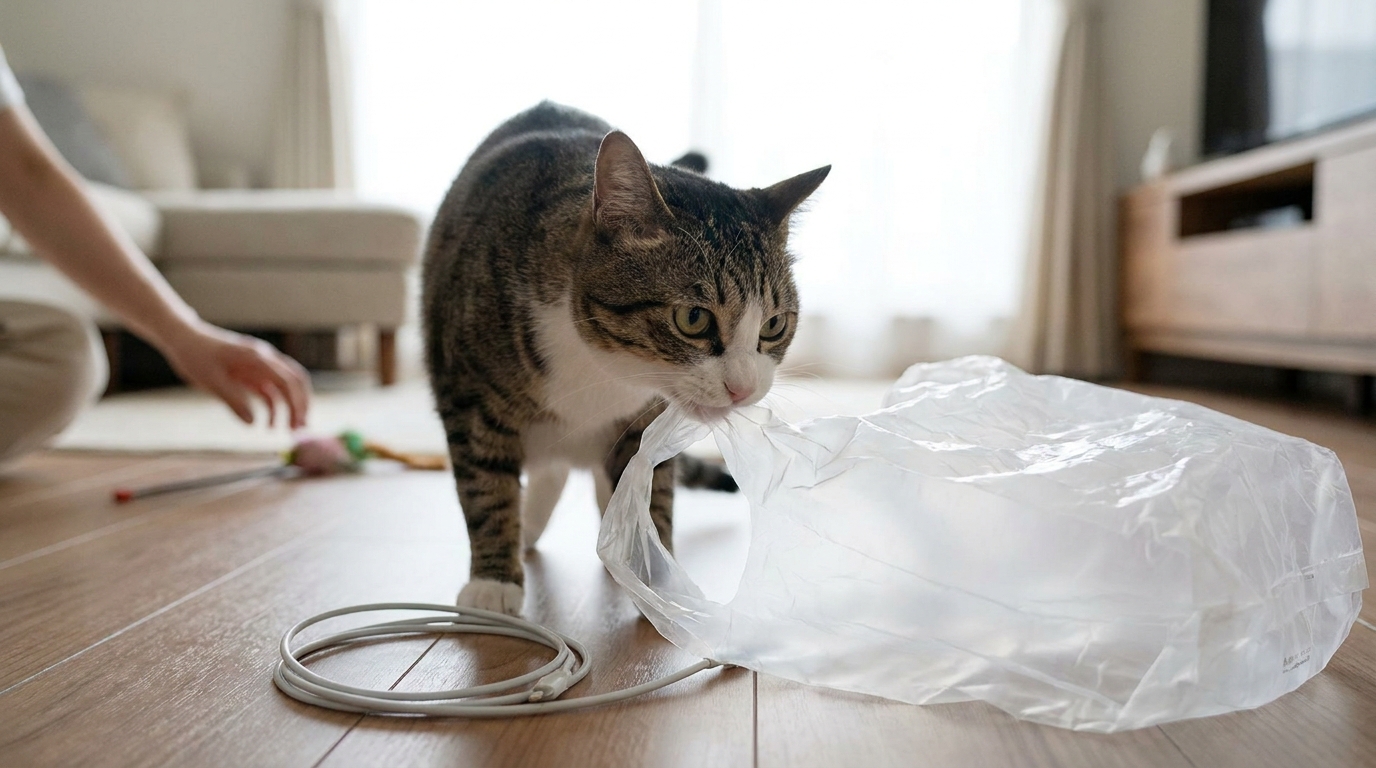
Licking a bag now and then is common. See when plastic or cord chewing is pica, which medical causes to rule out and when it is an emergency.
Quick answer: Many cats lick or chew plastic now and then, but repeatedly chewing or eating non-food items is called pica and can be linked to boredom, stress or illness such as anemia, diabetes or hyperthyroidism. A cat that may have swallowed plastic needs an in-person vet now; swallowed string, ribbon or a hair tie, or a bite on a plugged-in cord (cut the power first), means an emergency vet now.
This article is general information, not a diagnosis. If you think your pet is in danger, go to the nearest emergency animal hospital.
Why do cats chew and lick plastic?
Kittens commonly chew as they explore, the Cornell Feline Health Center says, and adult cats may chew or lick plastic out of boredom or stress, so an occasional lick is not always a sign of illness.
In the University of Bristol's Bristol Cats study of 534 cats, owners reported chewing non-food items, with or without swallowing them, in about 43% of cats at 6 months and about 31% at 18 months, and plastic was the most common target.
Smell and crinkly-feel theories about why plastic appeals are unproven. The Merck Veterinary Manual lists plastic among the things cats with oral repetitive behaviors suck, lick, chew or eat, and says disease, especially gut disease, should be ruled out first.
Habit, pica or emergency?
Occasional licking of a plastic bag is a habit a cat owner can manage at home, new or daily chewing is a reason for a vet visit, and any swallowed string, cord bite or breathing trouble is an emergency.
Cat chewing plastic or cords: what it can mean and what to do
| What you see | Could mean | Do this |
|---|---|---|
| Licks bags now and then | Habit, boredom | Store bags away |
| New or daily chewing | Pica, illness | Vet visit soon |
| Plastic piece missing | Blockage risk | In-person vet now |
| Swallowed it, now vomits | Blockage | ER now |
| Ribbon, string, hair tie | Gut damage | ER now; never pull |
| Bit a plugged-in cord | Burn, lung fluid | Power off; ER now |
| Bit a battery | Mouth burns | ER now |
| Gagging, pawing at mouth | Stuck piece | In-person vet now; ER if string |
| Head stuck in a bag | Suffocation | Remove; vet now |
| Pale gums, weak | Anemia, shock | ER now |
| Weight loss, more hunger | Thyroid, diabetes | Vet, bloodwork |
| Male cat straining | Urine block | ER now |
If more than one row fits, follow the most urgent one. Never make a cat vomit at home.
My cat ate plastic: what to do now
If a cat may have swallowed a piece of plastic, see a vet in person now even if it seems fine; vomiting, not eating, lethargy or a painful belly after a possible swallow means an emergency vet now.
VCA Animal Hospitals says most swallowed objects pass without trouble but advises contacting your veterinarian as soon as possible. You can't tell at home which piece will pass: the Merck Veterinary Manual says even an object as small as a pencil eraser may block a small cat.
Going early matters. While a piece is still in the stomach, Merck says a vet may be able to remove it with an endoscope. Some plastics don't show on plain X-rays, so a normal plain X-ray doesn't rule out a blockage; this guide to intestinal blockage in dogs explains tests vets also use for cats.
VCA lists these signs of a swallowed object: vomiting, diarrhea, belly pain, eating less, straining to poop, lethargy, and biting or growling when the belly is touched. A cat that is still eating can still have a blockage. Any litter-box change in a male cat, including straining, means the ER now.
- Never make your cat vomit. The ASPCA says hydrogen peroxide should not be given to cats and that nothing can be given at home to make a cat vomit safely.
- Give nothing to help it pass: no bread, pumpkin, oil or hairball paste.
- Never pull string. If string, ribbon or a hair tie shows at the mouth or bottom, leave it, don't force the mouth open, and go to the ER now; the Merck Veterinary Manual says pulling can perforate the gut.
- Check what the plastic held. Medicine (a pill bottle or blister pack), a detergent pod, vape liquid or a chemical means the ER now; call ASPCA Animal Poison Control at (888) 426-4435 (a consultation fee may apply) or Pet Poison Helpline at (855) 764-7661 (per-incident fee) on the way, not instead of going.
A swallowed or missing hair tie, rubber band, curling ribbon, tinsel, thread, strip of bag, or meat-wrapping string counts as string and means the ER now, even if your cat keeps eating; VCA says string can cut the intestines while bunching them up like an accordion.
If nothing could have been swallowed, vomiting more than once in a day, not keeping water down, about 24 hours without food (sooner for a kitten, senior, overweight or diabetic cat), or hiding, hunched or low energy but still alert means an in-person vet the same day; never hold back food on purpose. Repeated vomiting with lethargy, weakness, or a swollen, painful belly means the ER now; see why a cat throws up white foam.
Chewing cords and Christmas lights
A cat that bit a plugged-in cord needs the power switched off before anyone touches it, then an emergency vet now even if it seems fine, because MSPCA-Angell says fluid in the lungs can be delayed up to 12-36 hours.
After the visit, watch your cat's breathing closely for several days, as MSPCA-Angell advises. Go back now for coughing, white or pink foam from the mouth or nose, labored breathing, or blue or gray gums. Mouth burns can look pale yellow, tan or gray.
MSPCA-Angell says cats aged 8 weeks to 2 years are affected more often, and the Cornell Feline Health Center says cats that chew fabric may also chew electrical cords and twist ties. Treat every cord as a risk, including phone chargers and holiday lights.
A bitten or swallowed battery also means the ER now: it can burn the mouth, food pipe or gut, and mouth ulcers may not show for hours.
When plastic chewing becomes pica
Repeatedly chewing or eating things that are not food is called pica, and in cats it has been linked to boredom, stress, a recent move, breed (Siamese and Burmese cats more often than others) and medical problems.
VCA Animal Hospitals lists anxiety and compulsive disorders among its behavioral causes. In a 2016 case-control study in the Journal of Feline Medicine and Surgery, shoelaces or threads were the top target and plastic came second.
The Merck Veterinary Manual says Siamese, Burmese, Tonkinese and related breeds develop pica, especially wool sucking, more often than other cats, and the Cornell Feline Health Center says fabric chewing is most common in Burmese and Siamese cats, which suggests a genetic predisposition.
A move is linked to pica but not proven to cause it. The Bristol study tied ongoing pica to moving house between 6 and 12 months of age, and a 1997 survey in Applied Animal Behaviour Science of 152 cats with pica, mostly Siamese and Burmese types, found it most often began in the 2 months after the cat went to a new home. Early weaning may play a role, Merck says, though the 2016 study found pica did not seem to result from it.
Many kittens stop: in the Bristol study, about half of the 280 cats that showed pica early in life no longer did at about 18 months, though Cornell says some cats keep the habit for life.
Medical causes a vet will want to rule out
VCA Animal Hospitals lists anemia, diabetes, hyperthyroidism, an imbalanced diet, gut disease and brain conditions as medical causes of pica in cats, so new chewing in an adult cat deserves a vet check.
- Anemia: VCA says pale gums or weakness can show, and the Merck Veterinary Manual lists pica among the behavior signs of anemia. Pale gums in an alert cat mean a vet the same day; with weakness or collapse, the ER now.
- Hyperthyroidism and diabetes: chewing with weight loss, a bigger appetite or more thirst calls for bloodwork; see the early signs of hyperthyroidism in cats and cat diabetes symptoms.
- Gut disease: VCA names inflammatory bowel disease, exocrine pancreatic insufficiency and liver shunts. In a 2019 pilot study in the Canadian Veterinary Journal, all 8 cats that ate fabric at least weekly had gut abnormalities, though the authors could not show a cause.
Tooth damage is a known result of pica: VCA says chewed material can fracture a tooth or lodge between teeth and lead to fast-moving periodontal disease, so bad breath or a cracked tooth needs an in-person dental check soon.
Holiday hazards: gift bags, ribbon, tape and tinsel
The holidays add gift bags, curling ribbon, tape, tinsel, light cords and roast string at cat height, and a cat that swallows any string-like piece needs an emergency vet now.
The Cornell Feline Health Center says tinsel wrapped around the base of a cat's tongue acts like a piano wire, and advises avoiding long ribbon ties. Turkey and roast string or netting counts as string too, so put it in a lidded trash can after carving.
Pull ribbon handles off gift bags, gather tape and wrapping scraps as you go, and unplug lights when no one is in the room. For tree water, ornaments and lights, see Christmas tree hazards for cats.
How to stop a cat chewing plastic
To stop a cat chewing plastic, remove the target, give a better outlet such as oat grass or a food puzzle, and have a vet look for a medical reason if the chewing is new or frequent.
- Bags: store bags out of reach, and cut the sides open or cut a bag into pieces before throwing it away. The FDA says pets can suffocate in less than five minutes when their heads become stuck in a bag. If your cat's head gets stuck, carefully remove the bag and contact a vet immediately.
- Cords: unplug unused cords, tie them up or use a heavy plastic cord protector (Cornell), and check covers for bite marks; a protector lowers the risk but doesn't make a cord safe.
- Deterrents: use a bitter-tasting pet spray (taste, not scent) whose label lists no essential oils such as citrus, on objects only, never on the cat. Pet Poison Helpline lists citrus oil, peppermint, eucalyptus and tea tree among oils poisonous to cats; see essential oils that are toxic to cats.
- Safe outlets: oat grass, catnip or catmint, cat-safe rubber toys (Cornell), prey-like toys and scratching posts (VCA).
- Play and food: a wand-toy session before meals and bed (then put the toy away), feeding toys instead of a bowl (VCA), and small portions through the day (Merck).
- No punishment: VCA warns punishment can increase anxiety and worsen the behavior, and Merck says interruptions should not startle a cat. Swap the plastic for a toy and reward the switch.
When a video visit helps
A video visit helps when a cat has started chewing or licking plastic or unplugged cords, nothing is missing and nothing could have been swallowed, and the cat is otherwise eating, using the litter box and acting normally.
RexVet, a nonprofit online vet service, serves pets located in Florida, New York and Virginia by video visit. Choose a $64.99 live video visit, or a one-time $120 Family Plan: 4 visits over 12 months, every pet in the home, never auto-renews. Each visit is with a licensed RexVet vet, a veterinarian licensed in your pet's state, with your pet located there. Live video slots run about 8 AM to 11 PM ET, subject to availability; holiday hours may differ. Book a video visit.
The veterinarian can watch a video you recorded of the chewing, check the mouth and gum color on camera if your cat allows it safely, and review diet, weight, age, breed and litter habits. They can build an enrichment and safety plan and say whether bloodwork (for anemia, thyroid disease or diabetes) or a dental exam is needed in person. Video can't include bloodwork, X-rays or a belly or full mouth exam, so it can't rule out a swallowed piece or a blockage.
Not a fit: a missing piece your cat could have swallowed (in-person vet now), or drooling, gagging, repeated swallowing or pawing at the mouth after chewing (in-person vet now; the ER if string could be involved). Go to an emergency vet now for string, ribbon or a hair tie, a cord or battery bite, vomiting, not eating, belly pain or lethargy after a possible swallow, breathing trouble, pale, white, blue or gray gums, weakness or collapse, or a male cat straining or with any litter-box change. Outside those hours, if no slot is open, or if anything gets worse, go to an emergency vet.
No prescription is promised; any medicine is the veterinarian's decision after the visit, within the state limits in the FAQ below, and any medicine for the chewing habit itself needs an in-person exam first. RexVet is not a pharmacy; a pharmacy transfer fee applies when RexVet sends a prescription to an outside pharmacy.
Need an Expert Opinion on This Topic?
Book a video visit with a licensed vet, evenings and weekends included
See open timesFrequently Asked Questions
Is it bad if my cat licks plastic bags?
Usually not if it happens now and then and nothing gets swallowed, but store bags away, because chewed pieces can block a cat's gut. The FDA says pets can suffocate in less than five minutes when their heads become stuck in a bag, so cut bags open before throwing them away. Daily chewing or a sudden start in an adult cat means a vet check.
Can plastic make a cat sick?
Yes: swallowed plastic can block a cat's stomach or intestines. The Merck Veterinary Manual says blockages usually involve objects that can't be digested, such as plastic. A missing piece means an in-person vet now; vomiting, not eating, lethargy or a painful belly means an emergency vet now. Plastic that held medicine or a chemical means the ER now; call a poison line on the way, not instead of going.
Why does my cat chew plastic at night?
Often boredom around dawn and dusk, when cats are most active; the Merck Veterinary Manual calls cats crepuscular. Feed small portions through the day, some in toys your cat must bat or roll, and play with a wand toy before bed, then put it away. Night chewing with weight loss, more hunger or more thirst needs a vet check for hyperthyroidism or diabetes.
Is pica in cats a sign of anemia?
It can be: VCA Animal Hospitals lists anemia among medical causes of pica. A cat that newly eats odd things needs a vet check with bloodwork. Pale gums in an alert cat mean a vet the same day; pale or white gums with weakness or collapse mean the ER now.
Will my cat pass a small piece of plastic?
Sometimes, but you can't tell at home: see a vet in person now if your cat swallowed plastic, even if it seems fine. VCA says most objects pass but advises contacting a vet as soon as possible, and the Merck Veterinary Manual says a piece still in the stomach may be removable by endoscope. Give nothing to help it pass, and never make your cat vomit. String-like pieces, vomiting or not eating mean the ER now.
My cat bit a plugged-in cord but seems fine. Do I still need an emergency vet?
Yes: switch off the power before you touch your cat, then go to an emergency vet now. MSPCA-Angell says to seek care regardless of how the pet is acting, because fluid in the lungs can be delayed up to 12-36 hours. Watch breathing for several days; coughing, white or pink foam from the mouth or nose, labored breathing, or blue or gray gums means going back now.
Can an online vet help with my cat's chewing in Florida, New York or Virginia?
Often yes for the chewing habit itself; no if your cat may have swallowed plastic, string or a hair tie, or bit a plugged-in cord. For a cat located in Florida, New York or Virginia, a veterinarian licensed in that state can watch a video of the chewing, check the mouth and gums on camera, review diet and habits, and plan enrichment and safety. Bloodwork, X-rays, belly and mouth exams and any possibly swallowed object need an in-person visit. No prescription is promised. Florida s.474.2021 limits telehealth-only prescriptions to FDA-approved animal drugs used on-label, for up to 14 days (1 month for products labeled only for fleas and ticks), with no renewal without an in-person exam and no human-labeled, controlled or compounded anti-infective drugs. In every state, federal rules (21 CFR 530.3) require an in-person exam before off-label or human-drug use. Virginia allows the exam to be electronic; New York's rules are not settled, so a visit there may cover less.
FAQs
Is it bad if my cat licks plastic bags?
Usually not if it happens now and then and nothing gets swallowed, but store bags away, because chewed pieces can block a cat's gut. The FDA says pets can suffocate in less than five minutes when their heads become stuck in a bag, so cut bags open before throwing them away. Daily chewing or a sudden start in an adult cat means a vet check.
Can plastic make a cat sick?
Yes: swallowed plastic can block a cat's stomach or intestines. The Merck Veterinary Manual says blockages usually involve objects that can't be digested, such as plastic. A missing piece means an in-person vet now; vomiting, not eating, lethargy or a painful belly means an emergency vet now. Plastic that held medicine or a chemical means the ER now; call a poison line on the way, not instead of going.
Why does my cat chew plastic at night?
Often boredom around dawn and dusk, when cats are most active; the Merck Veterinary Manual calls cats crepuscular. Feed small portions through the day, some in toys your cat must bat or roll, and play with a wand toy before bed, then put it away. Night chewing with weight loss, more hunger or more thirst needs a vet check for hyperthyroidism or diabetes.
Is pica in cats a sign of anemia?
It can be: VCA Animal Hospitals lists anemia among medical causes of pica. A cat that newly eats odd things needs a vet check with bloodwork. Pale gums in an alert cat mean a vet the same day; pale or white gums with weakness or collapse mean the ER now.
Will my cat pass a small piece of plastic?
Sometimes, but you can't tell at home: see a vet in person now if your cat swallowed plastic, even if it seems fine. VCA says most objects pass but advises contacting a vet as soon as possible, and the Merck Veterinary Manual says a piece still in the stomach may be removable by endoscope. Give nothing to help it pass, and never make your cat vomit. String-like pieces, vomiting or not eating mean the ER now.
My cat bit a plugged-in cord but seems fine. Do I still need an emergency vet?
Yes: switch off the power before you touch your cat, then go to an emergency vet now. MSPCA-Angell says to seek care regardless of how the pet is acting, because fluid in the lungs can be delayed up to 12-36 hours. Watch breathing for several days; coughing, white or pink foam from the mouth or nose, labored breathing, or blue or gray gums means going back now.
Can an online vet help with my cat's chewing in Florida, New York or Virginia?
Often yes for the chewing habit itself; no if your cat may have swallowed plastic, string or a hair tie, or bit a plugged-in cord. For a cat located in Florida, New York or Virginia, a veterinarian licensed in that state can watch a video of the chewing, check the mouth and gums on camera, review diet and habits, and plan enrichment and safety. Bloodwork, X-rays, belly and mouth exams and any possibly swallowed object need an in-person visit. No prescription is promised. Florida s.474.2021 limits telehealth-only prescriptions to FDA-approved animal drugs used on-label, for up to 14 days (1 month for products labeled only for fleas and ticks), with no renewal without an in-person exam and no human-labeled, controlled or compounded anti-infective drugs. In every state, federal rules (21 CFR 530.3) require an in-person exam before off-label or human-drug use. Virginia allows the exam to be electronic; New York's rules are not settled, so a visit there may cover less.
Medically Reviewed
Reviewed by Dr. Tiffany Delacruz, DVM — licensed veterinarian and CEO of RexVet. Last reviewed November 3, 2026.
Content is for informational purposes and does not replace professional veterinary advice.
Chief Executive Officer · Licensed Veterinarian
Dr. Delacruz is a licensed Doctor of Veterinary Medicine specializing in preventive care and veterinary telehealth. She reviews all health content on RexVet to ensure accuracy and clinical relevance.
Sources & References
- · American Veterinary Medical Association — Telehealth Guidelines
- · AVMA — Pet Care Resources
- · U.S. FDA — Animal & Veterinary