
Cat Throwing Up White Foam: Causes and When It's an Emergency
By RexVet Team | Reviewed by Dr. Tiffany Delacruz, DVM
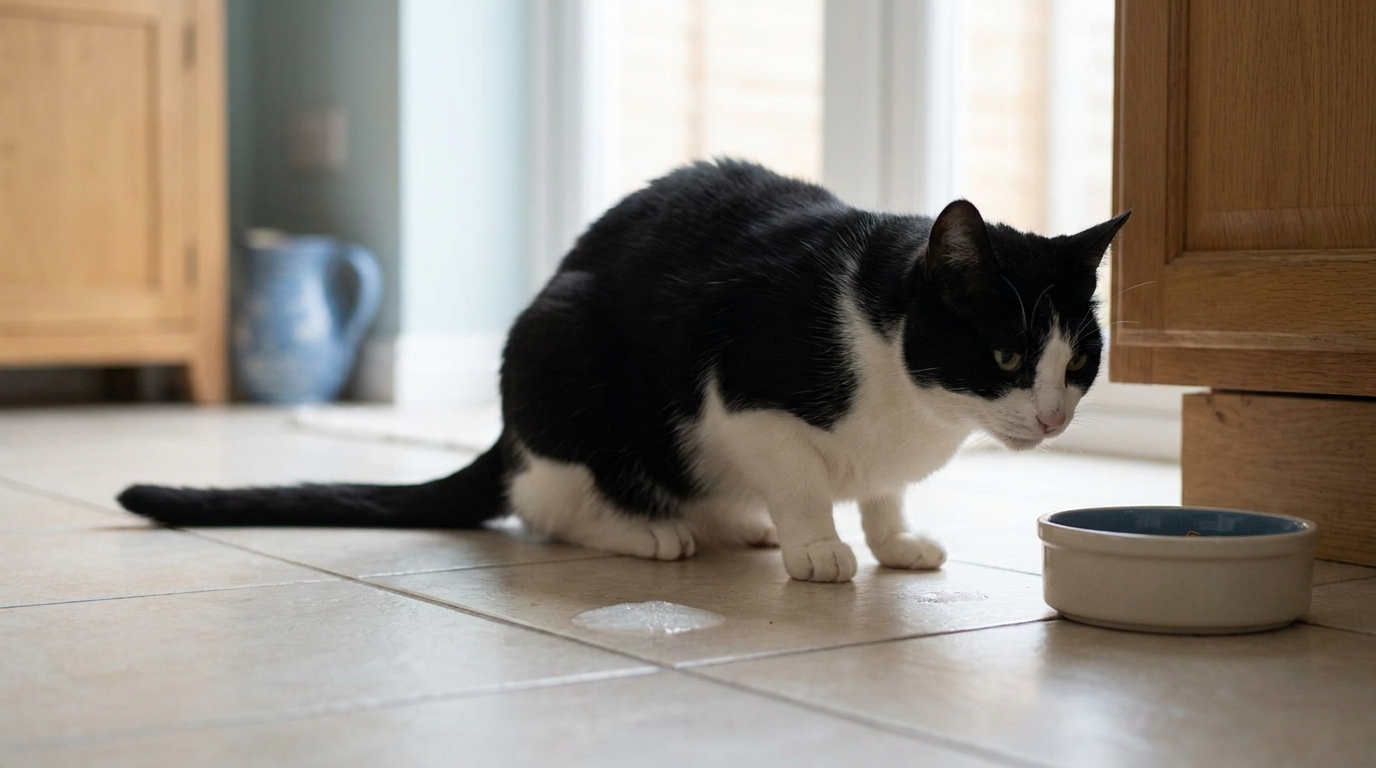
What white foam means in cats, which signs mean the ER now, and why a male cat straining in the litter box or a chewed lily can't wait.
Quick answer: One bout of white foam in an adult cat that is eating, drinking, peeing and acting normally often settles. Exceptions: a male cat with any litter-box change, or any cat with possible lily, string, antifreeze or medicine exposure, bloody vomit or hard breathing, needs an ER now. Otherwise watch closely for 24 hours. Foam more than once in a day, no food for 24 hours, or lethargy means a vet the same day.
This article is general information, not a diagnosis. If you think your pet is in danger, go to the nearest emergency animal hospital.
White Foam by Situation: What to Do
White foam, white foamy liquid and plain white liquid all get the same steps. If more than one row fits your cat, follow the most urgent one. Watch at home only when no other row fits.
| What you see | What it may mean | What to do |
|---|---|---|
| Foam (even once) + male cat with any litter-box change | Possible urinary blockage | ER now |
| Foam + possible lily, string, antifreeze or medicine | Poisoning or gut blockage | ER now; call a poison line on the way |
| Red vomit, vomit like coffee grounds, or black stool | Bleeding in the gut | ER or vet now |
| Foam in a kitten | Kittens have less reserve than adults | Vet the same day |
| Foam in a diabetic cat on insulin | Vomiting can be a sign of low blood sugar, and insulin plus a missed meal is risky | Call the prescribing vet before the next insulin dose; ER if weak, wobbly or seizing |
| Foam 2+ times in a day, or can't keep water down | Ongoing vomiting; dehydration risk | Vet the same day |
| Foam + no food for about 24 h | Illness; fatty-liver risk | Vet the same day (kittens, seniors, overweight, diabetic: sooner) |
| Foam + lethargy, hiding or belly pain | More than a simple upset | Vet the same day; ER if weak or collapsed |
| Foam + bloody or repeated diarrhea | Bigger fluid loss or infection | Vet the same day |
| Foam + diarrhea, cat otherwise bright | Gut upset; fluid lost faster | Prompt vet check |
| Foam or hairballs more than once a week, otherwise normal | Not "just hairballs"; may be an ongoing problem | Prompt check; a video visit can be step one |
| Hairballs or foam every couple of weeks | Worth a look | Routine, non-urgent exam |
| Foam once; adult cat eating, drinking, peeing and acting normally | Often a minor upset that settles | Watch closely 24 h; call if it happens again |
"Vet the same day" means an in-person clinic.
Emergency Signs: When White Foam Can't Wait
Go to the nearest emergency animal hospital now if any of these apply:
- A male cat with any litter-box change: straining, frequent trips, little or no urine, crying in the box or licking his genitals, even if he vomited only once.
- Any chance of lily exposure, including pollen on the fur or vase water. Don't wait for signs.
- Possible antifreeze. A small amount can be deadly. Don't wait for signs.
- Possible poison: any human medicine, a dog-only flea product, rodent bait, a cleaning product or a concentrated essential oil.
- String, thread, tinsel, ribbon or a hair tie hanging from the mouth or bottom, or possibly swallowed. Don't pull it.
- Breathing trouble: open-mouth breathing, panting, fast or labored breathing, or blue or gray gums. A cat that seems to retch foam while breathing hard may be having an asthma attack.
- Collapse or severe weakness, a seizure or tremors, pale or yellow gums, or cold ears or paws.
- Blood: red or coffee-ground vomit, or black, tarry stool (Cornell, Merck Veterinary Manual).
Never make a cat vomit at home; hydrogen peroxide is never safe for cats. For a possible poisoning, call ASPCA Animal Poison Control at (888) 426-4435 (a consultation fee may apply) or Pet Poison Helpline at (855) 764-7661 (per-incident fee) on the way, not instead of going.
See a vet in person the same day if:
- Foam or vomit comes up more than once in a day, or your cat can't keep water down.
- Your cat hasn't eaten for about 24 hours (sooner for kittens, seniors, overweight or diabetic cats).
- Your cat is lethargic, hiding, hunched or has a painful or swollen belly.
- Your cat keeps dry retching with nothing coming up. Cornell says this can be asthma or another problem.
- Your cat has a history of hairballs and is now constipated or not eating. Cornell warns a hairball can lodge in the intestine. In a male cat, straining may be a urinary blockage, so go to the ER.
- Your cat is a kitten, especially one that is unvaccinated or was just adopted. See our guide to a newly adopted cat that isn't eating or is hiding.
- Your cat is diabetic and on insulin. Call the prescribing vet before the next dose.
- Vomiting started after a new medicine or surgery. Call the treating vet, and don't stop or change any medicine yourself.
Book a prompt, non-emergency check if foam or hairballs come up more than once a week (Cornell's line), if your cat shows hidden nausea such as lip licking, or if an older cat is also losing weight, drinking more or peeing more, which calls for bloodwork in person. See our guide to a cat losing weight while still eating.
When a Video Visit Makes Sense
Say your adult cat has brought up foam a few separate times over several days but is still eating, drinking, peeing normally without straining, and acting like their usual self. A live video visit can be the first step of the prompt check Cornell recommends.
RexVet is a 501(c)(3) nonprofit. If your cat is in Florida, New York or Virginia, you can book a $64.99 live video visit with Dr. Tiffany Delacruz, DVM when a slot is open (usually about 8 AM to 11 PM ET). Have a photo or video of the vomit and your vomiting log ready. She will go over the pattern, diet and grooming, and whether this looks like hairballs, nausea or a cough. She will also tell you whether your cat needs an in-person exam, bloodwork or x-rays.
A video visit can't feel the belly or bladder or look under the tongue, so it can't rule out a blockage. Anti-nausea medicine isn't something it can promise: the one labeled for cats is an injection given at a clinic, and the tablets vets commonly use for cats are off-label, which federal rules allow only after an in-person exam. If the vet does prescribe something and it is sent to an outside pharmacy, a pharmacy transfer fee applies (Terms 5.4); RexVet is not a pharmacy.
It is not the right first step for any litter-box change, possible lilies, string, antifreeze or medicines, blood, lethargy, hard breathing, repeated dry retching, vomiting several times in one day, or no food for about a day. Those go to an ER, a poison line or an in-person clinic the same day.
Foam Once but Acting Normal? What to Do at Home
Don't wait at home if your cat is a male with any litter-box change, may have touched a lily, swallowed string, antifreeze or any medicine, or been exposed to another poison such as a dog-only flea product, rodent bait, a cleaner or a concentrated essential oil, or has blood in the vomit or hard breathing. Go to an ER now. A kitten or a lethargic cat should see a vet the same day. If your cat is diabetic and on insulin, call the prescribing vet before the next dose. If the vomiting started after a new medicine or surgery, call the treating vet instead of waiting.
Otherwise, for an adult cat that brought up foam once and is still eating, drinking, peeing and acting normally, watch closely for 24 hours. That watch is RexVet's own cautious line, not a rule from Merck or Cornell.
- Keep food and fresh water available. Don't hold back food to "rest the stomach."
- Check the litter box for normal urine clumps and stool.
- Look at what came up for string, plant pieces or blood, and take a photo.
- Start a log: date, what came up, whether your cat ate, and litter-box output.
- Don't give human medicines, laxatives or hairball remedies without a vet's approval.
Call a vet if the foam comes back, your cat skips meals, or any warning sign shows up.
Why Cats Throw Up White Foam
When only foam comes up, your cat's stomach usually had little or no food in it at the time. The Merck Veterinary Manual notes that in dogs and cats with an irritated stomach (gastritis), vomit may contain bile, food, froth or blood. Possible causes:
- A passing upset from a diet change or something eaten off the floor. Merck notes most sudden vomiting isn't caused by a blockage and often settles, but vomiting that keeps going, especially with lethargy, needs a vet promptly.
- Hairballs, with foam coming up before or instead of one.
- Eating too fast, with foam or food coming up soon after a gulped meal.
- Ongoing illness, such as food sensitivities, inflammatory bowel disease, kidney disease, an overactive thyroid, pancreatitis or liver disease, which need tests to sort out.
- Swallowed objects or toxins, and in male cats, a urinary blockage.
Is It Really Vomiting? Look-Alikes to Rule Out
Coughing and drooling can look like throwing up but point to different problems.
| What it looks like | What it may be | Next step |
|---|---|---|
| Belly heaves, then foam or fluid comes up | Vomiting | Use the first table |
| Comes up without heaving, soon after eating | Food coming back from the food pipe, not the stomach | Vet check; same day if repeated |
| Crouched low, neck stretched out, hacking; little comes up | Cough or asthma, not a hairball | Same day; ER if breathing hard |
| Foam or drool at the mouth, no heaving | Bitter taste (licked flea product), mouth pain, toxin or seizure | Call a vet or poison line now; ER if a dog flea product, trembling or seizing |
A short phone video of the episode helps any vet tell these apart. Rarely, foaming at the mouth plus a sudden change in behavior in an unvaccinated outdoor cat that may have been bitten can be rabies: don't handle the cat bare-handed, and call a vet or animal control.
Why a Cat Should Never Go Days Without Food
Some advice written for dogs says to hold back food after vomiting. Don't carry that over to your cat without a vet's direction.
Cats that stop eating can develop hepatic lipidosis (fatty liver). The Merck Veterinary Manual describes it as the most common acquired liver disease in cats, and a potentially fatal one. It starts when a cat stops eating from illness or lack of food, and overweight cats are at higher risk. Signs include weight loss, lethargy, vomiting, drooling and yellow skin or gums.
The Cornell Feline Health Center adds that it almost always follows a loss of appetite, can affect healthy-looking cats, and is likely to be fatal if not treated promptly. The University of Illinois College of Veterinary Medicine advises prompt veterinary attention whenever a cat stops eating. RexVet's line: call a vet once your cat has gone about 24 hours without food, and sooner for a kitten, senior, overweight or diabetic cat.
Frequent "Hairballs" Deserve a Vet Check
The Cornell Feline Health Center recommends a prompt vet check if a cat vomits more than once a week, or if vomiting comes with lethargy, less appetite, blood, more thirst, a change in urination or diarrhea. A review in the Journal of Feline Medicine and Surgery (Cannon, 2013) notes that most cats swallow plenty of fur without regularly vomiting hairballs, and that in most shorthaired cats, frequent hairballs point to an underlying chronic disease.
Feline specialists St. Denis and O'Brien argued the same in a 2017 conference talk, "Hairballs Are Not Normal," noting that hidden nausea can show as lip licking, gagging or eating grass. Cornell also warns that a hairball can lodge in the small intestine and be fatal without surgery, and that no laxative should be given without a vet's approval. Hairballs or foam every couple of weeks are worth raising at a routine exam.
Male Cat Vomiting? Check the Litter Box
A male cat who vomits may seem to have a stomach problem when the real trouble is his bladder. The Merck Veterinary Manual lists straining to urinate, lethargy and vomiting as common signs of a urinary blockage. In young males it is often a plug of protein and crystal material; stones and bladder inflammation can also block. With a complete blockage, waste builds up in the blood quickly, and high potassium can slow or disturb the heart rhythm.
The Cornell Feline Health Center calls urethral obstruction "an absolute emergency" and warns that a blocked cat may die in less than 24 to 48 hours. Males and neutered males are at greater risk because their urethra is longer and narrower. Blocked cats strain, make frequent trips and pass little or no urine, and may cry out.
Check the box before deciding to wait: fewer or smaller urine clumps, or none, is a warning. Straining to pee can look like constipation, so never give a laxative or hairball remedy. Any litter-box change plus vomiting in a male cat means the ER.
String, Lilies and Antifreeze
String. Merck says cats are more likely than dogs to get an intestinal blockage from string, yarn or dental floss, usually swallowed during play. It can anchor under the tongue, and these blockages carry a higher risk of tearing the intestine. Signs include not eating, vomiting, diarrhea and lethargy. Never pull string hanging from the mouth or bottom. Look under the tongue only if your cat allows it safely. Halloween costumes, holiday ribbon and tinsel are common sources this season.
Lilies. The FDA warns that true lilies (Easter, Asiatic, stargazer, tiger) and daylilies are toxic to cats in every part, including pollen and vase water. Early signs such as drooling and vomiting usually start within 12 hours, and kidney failure follows within 24 to 72 hours. A treatment delay of 18 hours or more generally means kidney failure that can't be reversed. Go now and bring the plant or a photo. Peace and calla lilies irritate the mouth, so call a vet or poison line about those. Lily of the valley is not a true lily, but it can make the heart beat abnormally, so treat it as an emergency too. See our guide to lily poisoning in cats.
Antifreeze. It tastes sweet, and a small amount can be deadly. Merck says cats can look drunk within 30 minutes to 12 hours and may vomit, drink more and pee more, then seem to recover briefly before kidney damage shows. The outlook worsens the longer treatment waits, so don't wait for signs: go to an ER now, even if your cat seems fine. Fall winterizing raises the risk.
Need an Expert Opinion on This Topic?
Book a video visit with a licensed vet, evenings and weekends included
See open timesFrequently Asked Questions
Why is my cat throwing up white foam?
Foam with no food in it shows the stomach was nearly empty at the time, but it doesn't tell you why your cat vomited. The cause can be a passing upset, a hairball, an ongoing gut problem, swallowed string, a lily or, in a male cat, a urinary blockage. One episode in an otherwise normal adult cat often settles. Foam that keeps coming back, or comes with any warning sign, needs a vet.
Is it just a hairball?
Not always. Cornell says a cat that keeps retching without bringing up a hairball may have another digestive problem or asthma. A Journal of Feline Medicine and Surgery review found that in most shorthaired cats, frequent hairballs point to chronic disease. Foam or hairballs more than once a week deserve a prompt vet check.
How long can a cat go without eating after vomiting?
Don't wait days. Cats that stop eating can develop fatty liver (hepatic lipidosis), which can be fatal. Call a vet if your cat has not eaten for about 24 hours, and sooner for a kitten, senior, overweight or diabetic cat. Never hold back food on purpose.
My male cat threw up and keeps going to the litter box. Are they connected?
They can be, and it is an emergency. Merck lists vomiting, straining and lethargy as common signs of a urinary blockage, and Cornell says a blocked cat may die in less than 24 to 48 hours. Go to an emergency hospital now, even if he vomited only once. Don't treat it as constipation.
Why does my cat throw up white foam after eating?
It may be vomiting from eating too fast, or regurgitation, which comes up from the food pipe without belly heaving. A cat crouched low with its neck stretched out, hacking, is often coughing, which can be asthma. If it keeps happening after meals, book a vet check. Hard or open-mouthed breathing means the ER.
My cat may have chewed a lily but seems fine. Can I wait and see?
No. The FDA says a treatment delay of 18 hours or more generally leads to kidney failure that can't be reversed. Go to an emergency vet now and bring the plant. You can also call ASPCA Animal Poison Control at (888) 426-4435 (a consultation fee may apply) or Pet Poison Helpline at (855) 764-7661 (per-incident fee).
Can an online vet help, and can I get anti-nausea medicine?
A video visit can help an adult cat that has vomited foam a few separate times this week but is still eating, drinking, peeing and acting normally. If your cat is in Florida, New York or Virginia, the video-visit section above explains how to book a live visit with Dr. Tiffany Delacruz, DVM. It can't rule out a blockage, and anti-nausea medicine can't be promised, because the tablets commonly used for cats are off-label and need an in-person exam.
FAQs
Why is my cat throwing up white foam?
Foam with no food in it shows the stomach was nearly empty at the time, but it doesn't tell you why your cat vomited. The cause can be a passing upset, a hairball, an ongoing gut problem, swallowed string, a lily or, in a male cat, a urinary blockage. One episode in an otherwise normal adult cat often settles. Foam that keeps coming back, or comes with any warning sign, needs a vet.
Is it just a hairball?
Not always. Cornell says a cat that keeps retching without bringing up a hairball may have another digestive problem or asthma. A Journal of Feline Medicine and Surgery review found that in most shorthaired cats, frequent hairballs point to chronic disease. Foam or hairballs more than once a week deserve a prompt vet check.
How long can a cat go without eating after vomiting?
Don't wait days. Cats that stop eating can develop fatty liver (hepatic lipidosis), which can be fatal. Call a vet if your cat has not eaten for about 24 hours, and sooner for a kitten, senior, overweight or diabetic cat. Never hold back food on purpose.
My male cat threw up and keeps going to the litter box. Are they connected?
They can be, and it is an emergency. Merck lists vomiting, straining and lethargy as common signs of a urinary blockage, and Cornell says a blocked cat may die in less than 24 to 48 hours. Go to an emergency hospital now, even if he vomited only once. Don't treat it as constipation.
Why does my cat throw up white foam after eating?
It may be vomiting from eating too fast, or regurgitation, which comes up from the food pipe without belly heaving. A cat crouched low with its neck stretched out, hacking, is often coughing, which can be asthma. If it keeps happening after meals, book a vet check. Hard or open-mouthed breathing means the ER.
My cat may have chewed a lily but seems fine. Can I wait and see?
No. The FDA says a treatment delay of 18 hours or more generally leads to kidney failure that can't be reversed. Go to an emergency vet now and bring the plant. You can also call ASPCA Animal Poison Control at (888) 426-4435 (a consultation fee may apply) or Pet Poison Helpline at (855) 764-7661 (per-incident fee).
Can an online vet help, and can I get anti-nausea medicine?
A video visit can help an adult cat that has vomited foam a few separate times this week but is still eating, drinking, peeing and acting normally. If your cat is in Florida, New York or Virginia, the video-visit section above explains how to book a live visit with Dr. Tiffany Delacruz, DVM. It can't rule out a blockage, and anti-nausea medicine can't be promised, because the tablets commonly used for cats are off-label and need an in-person exam.
Medically Reviewed
Reviewed by Dr. Tiffany Delacruz, DVM — licensed veterinarian and CEO of RexVet. Last reviewed October 19, 2026.
Content is for informational purposes and does not replace professional veterinary advice.
Chief Executive Officer · Licensed Veterinarian
Dr. Delacruz is a licensed Doctor of Veterinary Medicine specializing in preventive care and veterinary telehealth. She reviews all health content on RexVet to ensure accuracy and clinical relevance.
Sources & References
- · American Veterinary Medical Association — Telehealth Guidelines
- · AVMA — Pet Care Resources
- · U.S. FDA — Animal & Veterinary