
Cat Hyperthyroidism Symptoms: Early Signs and When to See a Vet
By RexVet Team | Reviewed by Dr. Tiffany Delacruz, DVM
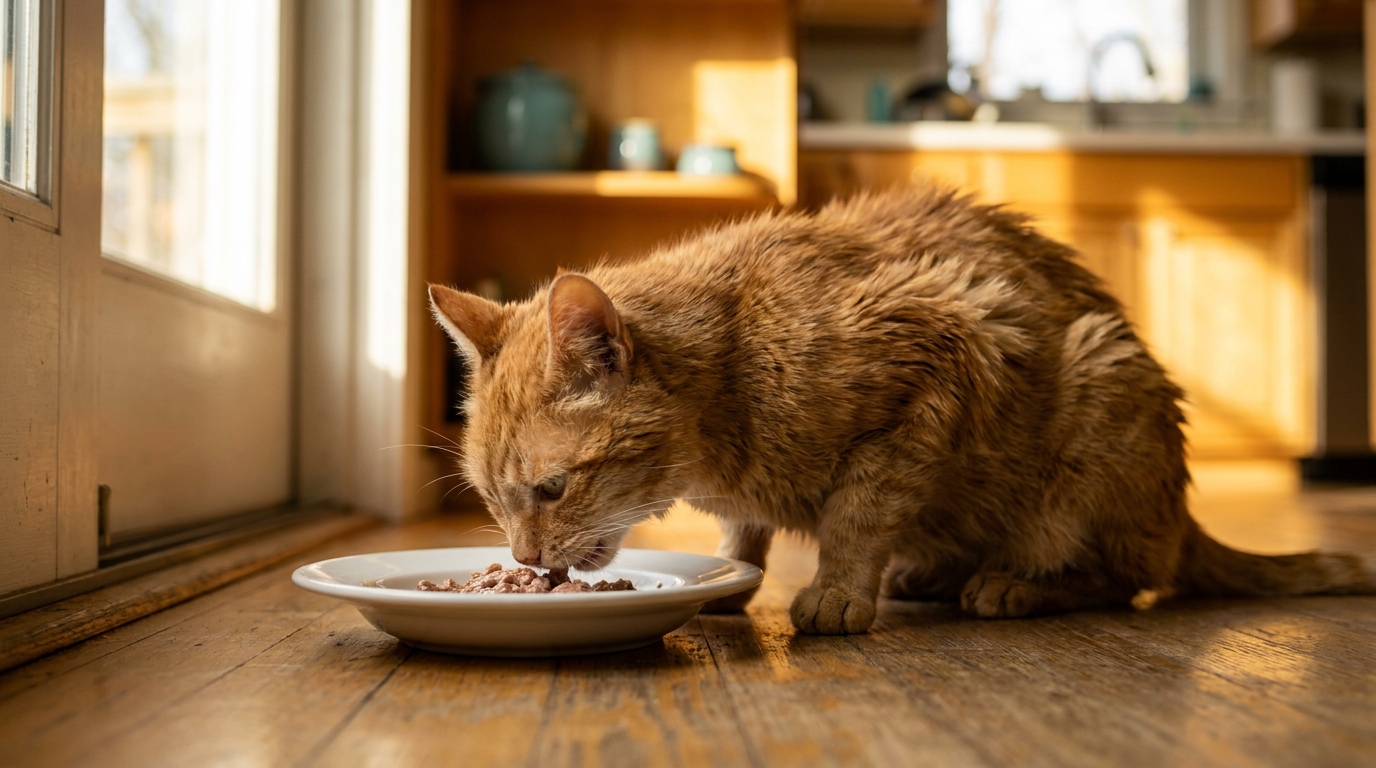
Weight loss in an older cat that still eats well is the classic sign. What else to watch for, and which signs mean an ER now.
Quick answer: Hyperthyroidism is the most common hormone disorder in older cats, affecting up to 1 in 10 cats over 10. The classic sign is weight loss despite a hearty appetite, often with more thirst, vomiting or night yowling. If your cat is losing weight but otherwise acting well, book an exam and T4 blood test within 1-2 weeks. Sudden blindness, open-mouth breathing or dragging back legs mean an ER now.
This article is general information, not a diagnosis. If you think your pet is in danger, go to the nearest emergency animal hospital.
How Urgent Is It? A Quick Triage
Hyperthyroidism builds slowly, but some of its complications are emergencies. If more than one row fits your cat, follow the most urgent.
| Sign | What it can mean | What to do |
|---|---|---|
| Sudden blindness or bumping into things, very large fixed pupils, blood in the eye | High blood pressure detaching the retina | ER now; sight often doesn't return, so don't wait |
| Fast, labored or open-mouth breathing at rest | Heart failure or a blood clot | ER now |
| Sudden weakness, pain or dragging in one or both back legs, crying, cold legs, or pale or purplish paw pads | Blood clot in the legs (saddle thrombus, uncommon) | ER now |
| Seizure, collapse, head tilt, circling or confusion | Blood-pressure emergency or rare thyroid crisis | ER now |
| On methimazole: black or bloody stool, bloody vomit, nosebleed, bruising, pale gums | Rare bleeding or blood-cell reaction | ER now |
| Days after thyroid surgery: twitching, tremors, face rubbing | Low blood calcium | ER now |
| On methimazole: not eating, yellow gums or eyes, fever, repeated vomiting, face scratched raw or swollen | Drug reaction (liver, immune or skin) | Call the prescribing vet today, before the next dose; ER if you can't reach them |
| About 24 hours without food (sooner for a senior) | Risk of fatty liver disease | Call a vet |
| Vomiting more than once in a day, or can't keep water down | Dehydration risk, or another illness | See a vet in person the same day |
| Weight loss plus vomiting, poor appetite, lethargy or a sudden jump in thirst | Thyroid disease with a second problem, or another illness | Vet within a day or two |
| Weight loss with a good appetite, cat otherwise bright | Possible overactive thyroid | Exam and T4 blood test within 1-2 weeks |
Fast or open-mouth breathing at rest can mean heart failure or a clot; our guide to a cat breathing fast while sleeping or resting covers other causes. If your cat's back legs suddenly go weak, cold or painful, go to an ER now: a blood clot to the back legs is an emergency. A seizure can be a blood-pressure emergency in the brain (ACVIM 2018 consensus) or a rare severe thyroid crisis, which some specialists question. Either way, go to an ER.
What Hyperthyroidism Is and Which Cats Get It
Hyperthyroidism means the thyroid glands in the neck make too much hormone, speeding up the heart, metabolism and appetite while the body burns muscle. The American Association of Feline Practitioners (AAFP) 2016 guidelines call it the most common hormone disorder of middle-aged and older cats, affecting up to 1 in 10 cats over 10. Nearly all cases come from benign, non-cancerous thyroid growths. Thyroid cancer is rare: under 3% of cases (Merck Veterinary Manual) and about 2% at diagnosis (AAFP). Most cats are diagnosed around 12-13 years old, fewer than 5% are younger than 10, and it is uncommon before 8.
The Classic Symptoms and How Often Vets See Them
These figures come from one study of 462 hyperthyroid cats referred to a specialist clinic, median age 13 (Peterson, Castellano and Rishniw, Journal of Veterinary Internal Medicine, 2016), so treat them as a rough guide.
| Sign | What you notice at home | How common (462-cat study) |
|---|---|---|
| Weight loss | Lighter when you lift them; spine and hips easier to feel, even while eating well | About 92% |
| Bigger appetite | Finishes meals fast, begs, steals food, wakes you at night for food | About 55% |
| Vomiting | Brings up food more often, sometimes soon after eating | About 47% |
| Restlessness, pacing, night yowling | Pacing, crankiness, crying or yowling at night | About 41% were overactive; no figure for yowling |
| More thirst and urine | Water bowl empties faster; bigger or more litter clumps | About 33% |
| Fast heartbeat | Your vet hears a racing heart at the exam (don't try to count it at home) | About 31% (measured by a vet) |
| Diarrhea or larger stools | Softer, bigger or more frequent stools | About 21% |
| Seeking cool spots | Lies on tile or bathroom floors, avoids warm places | About 13% (reported as heat intolerance) |
| Unkempt, matted or greasy coat | Stops grooming, or fur looks clumped or oily | Common (no study figure) |
Muscle loss was found in about 3 in 4 cats at the exam.
The Cornell Feline Health Center names the same top signs: weight loss, a bigger appetite, and more thirst and urination.
Early Signs Owners Miss
"He finally slimmed down." If your cat was on the heavy side, early weight loss can look like good news. In the 462-cat study, median weight fell from about 12 lb one to two years before diagnosis to about 9.6 lb, yet about two in three cats still had an ideal or overweight body shape and more than 3 in 4 had lost muscle. Regular home weigh-ins catch the drop your eyes miss: weigh yourself holding your cat, then alone, and write down the difference and the date.
Begging at night. A cat that suddenly wakes you for food or clears its bowl in seconds may be hungry because its metabolism is running fast, not because it is spoiled.
Coat changes. Fur that turns clumped, matted or greasy is easy to blame on age, but Cornell lists an unkempt coat among the signs.
Mood and noise. New restlessness, crankiness or crying at night, together with weight loss or a bigger appetite, is a good reason to ask for a T4 test.
When a Hyperthyroid Cat Stops Eating Instead
Not every hyperthyroid cat is ravenous. A small minority (about 1 in 10 in one review, Vaske and colleagues, 2014) have apathetic hyperthyroidism: they eat less and turn lethargic instead of hungry and restless. Merck calls this form rare and notes these cats still usually lose weight.
The Merck Veterinary Manual describes fatty liver disease (hepatic lipidosis) as the most common acquired liver disease of cats and potentially fatal; it develops when a cat stops eating, often because of another illness, and overweight cats are most at risk. As a rule of thumb, call a vet once your cat has gone about 24 hours without food, and sooner for a kitten, senior, overweight or diabetic cat. For most cats with hyperthyroidism, that means sooner, because almost every one is a senior and many have already lost muscle.
If your cat is already on methimazole, a poor appetite can be a drug reaction. Call the prescribing vet the same day, before the next dose, and never stop or change the dose yourself.
Hyperthyroidism vs Kidney Disease and Other Look-Alikes
Vets also rule out diabetes, intestinal malabsorption, cancer (especially intestinal lymphoma), chronic kidney disease and parasites (AAFP). These can occur alongside hyperthyroidism, not only instead of it.
| Pattern | More likely cause | Test that tells them apart |
|---|---|---|
| Weight loss with a big appetite, restlessness, racing heart, sometimes a neck lump | Overactive thyroid | Total T4 (repeat it, or add free T4, if the result is normal but the signs fit) |
| Weight loss with heavy thirst and urination, appetite fading, sometimes vomiting | Kidney disease | Creatinine, SDMA and a urine test; can look falsely good while the thyroid is high |
| Big appetite, heavy thirst and urination, weight loss | Diabetes | Persistently high blood glucose plus glucose in the urine |
| Weight loss with ongoing vomiting or diarrhea; appetite may drop | IBD or intestinal lymphoma | Abdominal ultrasound and intestinal biopsy |
So one high T4 does not end the workup. Hyperthyroidism speeds blood flow through the kidneys and can make kidney tests look better than they are. Treatment mainly unmasks kidney disease that was already there, and an underactive thyroid after treatment can worsen kidney values. In one study of 262 cats, 16% showed kidney changes 4-8 months after radioactive iodine, and a high SDMA beforehand caught only about a third of them (Peterson and colleagues, 2018). Even so, AAFP calls it harmful to keep a cat with kidney disease slightly hyperthyroid to protect its kidney numbers.
See our guides to a cat losing weight but eating normally and to cat IBD.
What Happens If It Is Left Untreated
AAFP calls untreated hyperthyroidism a progressive disease that can lead to significant illness and death. Over months, the extra hormone:
- speeds the heart and can thicken its muscle; some cats develop congestive heart failure
- can raise blood pressure, damaging the eyes, kidneys and brain (study estimates range widely, from 5% to 87% of hyperthyroid cats, per ACVIM 2018)
- burns muscle, so cats weaken even while eating well
- is one uncommon cause of clots that block the back legs (Smith and colleagues, 2003)
No reliable survival figure exists for untreated cats. Treating the thyroid often helps the heart and blood pressure, but not in every cat. Blood pressure needs rechecking after treatment because it can stay high or rise for the first time.
Late-stage disease can look like a very thin, weak cat at higher risk of the emergencies in the triage table. If your cat is failing despite treatment, our quality-of-life guide can help you weigh comfort with your vet.
How Vets Confirm It
Confirming it takes a hands-on exam and blood work. More than 9 in 10 affected cats have a thyroid the vet can feel (Vaske 2014), but a neck lump alone doesn't confirm the disease. AAFP's minimum database is a complete blood count (CBC), serum chemistry, urinalysis and total T4. AAFP also calls a blood pressure check at every visit optimal and recommends an eye exam for pressure damage.
A normal T4 does not always rule it out. About 5-10% of hyperthyroid cats have a normal total T4 (Merck). If the signs fit, vets repeat it a few weeks later, add a free T4, or both.
Treatment Options at a Glance
The right choice depends on your cat's kidneys, heart, other illnesses and what your household can manage.
Radioactive iodine. A single treatment cures about 95% of cats, usually within three months, with no anesthesia or surgery (Cornell). It is given only at specially licensed facilities, with a hospital stay of several days to a few weeks depending on state radiation rules (AAFP). Up to half of cats develop some degree of underactive thyroid afterward (Cornell).
Methimazole. This daily medicine controls the disease but doesn't cure it: it is given for life, and hyperthyroidism returns if it stops (VCA). FDA-approved methimazole for cats comes as coated tablets and as an oral solution; ear gels are compounded, not FDA-approved, and can vary in how well and how safely they work. Expect blood tests a few weeks after starting and after any dose change, then every few months for life. Call the prescribing vet the same day, before the next dose, about poor appetite, vomiting, face itching or swelling, lethargy or fever, and never stop or change the dose yourself. Black or bloody stool, bloody vomit, a nosebleed, bruising or pale gums mean an ER now.
Iodine-restricted diet. This prescription diet works only if it is the cat's only food for life, with no treats, other foods or hunting (Merck, VCA), which is hard in multi-cat or indoor-outdoor homes. With good compliance, AAFP reports that 75% of cats have a markedly lower T4 within 28 days.
Surgery. Removing the affected gland can work. The main risk is damage to the nearby parathyroid glands, causing low blood calcium (Cornell); AAFP reports this in 6-82% of cases, depending on the method.
After any treatment. In the weeks and months after, new thirst, appetite loss, vomiting or lethargy can mean unmasked kidney disease, and weight gain or a dull coat an underactive thyroid; ask for a prompt recheck of T4, kidney values and blood pressure. If another pet swallows your cat's medicine, call ASPCA Animal Poison Control at (888) 426-4435 (consultation fee may apply) or Pet Poison Helpline at (855) 764-7661 (per-incident fee).
What a Video Visit Can and Cannot Do
If your older cat is located in Florida, New York or Virginia and shows these signs, a $64.99 live video visit with Dr. Tiffany Delacruz, DVM (slots about 8 AM-11 PM ET) can help you judge how urgent it is and which tests to ask your clinic for. She can also go through T4 and kidney results you already have and talk through treatment options.
A video visit alone can't diagnose hyperthyroidism: that takes a T4 blood test drawn at a clinic, plus a physical exam to feel the neck and check heart rate, blood pressure and the eyes. A prescription is never guaranteed. In Florida, a prescription from a video visit alone must be an FDA-approved animal drug used as labeled, can cover 14 days at most and can't be renewed without an in-person exam. Methimazole is lifelong, so ongoing treatment and rechecks run through a clinic that examines your cat. Compounded methimazole gels and human-labeled methimazole tablets aren't approved for cats, so they need a vet who has examined your cat in person. Virginia allows the exam over video, but a prescription still depends on blood work and Dr. Delacruz's judgment; New York's rules are still unsettled.
RexVet is not a pharmacy, so if Dr. Delacruz does write a prescription, a pharmacy transfer fee applies when RexVet sends it to an outside pharmacy. Sudden blindness, a seizure or collapse, labored or open-mouth breathing, or painful, dragging back legs mean go to an emergency clinic now, not a video visit.
Need an Expert Opinion on This Topic?
Book a video visit with a licensed vet, evenings and weekends included
See open timesFrequently Asked Questions
Is hyperthyroidism painful for cats?
Not usually in an obvious way. The extra hormone races the heart, can raise blood pressure and burns muscle, so cats may seem restless, hungry, nauseated or cranky. But a blood clot that blocks the back legs is a painful emergency: sudden crying and cold or dragging legs mean an emergency vet now.
Why does my hyperthyroid cat yowl at night?
Extra thyroid hormone can leave a cat restless and hungry, and VCA notes that affected cats often vocalize more, particularly at night. If your older cat has started yowling at night, especially with weight loss or a bigger appetite, ask your vet for a T4 test and a blood pressure check. Night yowling in seniors has other causes too, so a checkup is worth it either way.
Can a cat have hyperthyroidism with a normal T4?
Yes. About 5-10% of hyperthyroid cats have a normal total T4 (Merck), often because the disease is early and levels fluctuate, or because another illness is pulling T4 down. More than 95% of hyperthyroid cats with a normal total T4 have a high free T4, but free T4 is read together with total T4, never alone, because up to about 12% of cats sick with something else also show a high free T4 (Vaske 2014).
How long can a cat live with hyperthyroidism?
With treatment, many cats live for years. In one study of 167 treated cats, those without kidney disease before treatment lived a median of about 2 years on daily methimazole alone and about 4 to 5 years after radioactive iodine (Milner and colleagues, 2006). Cats with kidney disease before treatment lived shorter. In a 300-cat general-practice study, the overall median was about 14 months, and older age, high blood pressure and protein in the urine were linked to shorter survival (Williams and colleagues, 2010).
Can hyperthyroidism in cats be cured?
Often, yes. A single radioactive iodine treatment cures about 95% of cats (Cornell), and surgery can also cure it. Methimazole and the iodine-restricted diet only control it, and the disease returns if they stop. Up to half of cats develop some underactive thyroid after radioactive iodine, so follow-up T4 tests matter.
Can an online vet prescribe methimazole?
Not as a first step, and a prescription is never guaranteed. A physical exam and clinic blood work come first, and cats on methimazole need blood checks for life, so ongoing treatment runs through a clinic that examines your cat. In Florida, a video-only prescription must be an FDA-approved animal drug used as labeled, can cover 14 days at most, and "may not be renewed without an in-person examination." Compounded gels and human-labeled tablets need a vet who has examined your cat in person. Virginia allows the exam over video, but a prescription still depends on blood work and the vet's judgment; New York's rules are still unsettled.
Is weight loss in my older cat just normal aging?
Don't assume so. Many hyperthyroid cats still look a healthy shape while losing muscle underneath. If your older cat is losing weight while eating well and acting normally, book an exam with a T4 test within 1-2 weeks. If the weight loss comes with vomiting, a poor appetite or lethargy, see a vet within a day or two.
FAQs
Is hyperthyroidism painful for cats?
Not usually in an obvious way. The extra hormone races the heart, can raise blood pressure and burns muscle, so cats may seem restless, hungry, nauseated or cranky. But a blood clot that blocks the back legs is a painful emergency: sudden crying and cold or dragging legs mean an emergency vet now.
Why does my hyperthyroid cat yowl at night?
Extra thyroid hormone can leave a cat restless and hungry, and VCA notes that affected cats often vocalize more, particularly at night. If your older cat has started yowling at night, especially with weight loss or a bigger appetite, ask your vet for a T4 test and a blood pressure check. Night yowling in seniors has other causes too, so a checkup is worth it either way.
Can a cat have hyperthyroidism with a normal T4?
Yes. About 5-10% of hyperthyroid cats have a normal total T4 (Merck), often because the disease is early and levels fluctuate, or because another illness is pulling T4 down. More than 95% of hyperthyroid cats with a normal total T4 have a high free T4, but free T4 is read together with total T4, never alone, because up to about 12% of cats sick with something else also show a high free T4 (Vaske 2014).
How long can a cat live with hyperthyroidism?
With treatment, many cats live for years. In one study of 167 treated cats, those without kidney disease before treatment lived a median of about 2 years on daily methimazole alone and about 4 to 5 years after radioactive iodine (Milner and colleagues, 2006). Cats with kidney disease before treatment lived shorter. In a 300-cat general-practice study, the overall median was about 14 months, and older age, high blood pressure and protein in the urine were linked to shorter survival (Williams and colleagues, 2010).
Can hyperthyroidism in cats be cured?
Often, yes. A single radioactive iodine treatment cures about 95% of cats (Cornell), and surgery can also cure it. Methimazole and the iodine-restricted diet only control it, and the disease returns if they stop. Up to half of cats develop some underactive thyroid after radioactive iodine, so follow-up T4 tests matter.
Can an online vet prescribe methimazole?
Not as a first step, and a prescription is never guaranteed. A physical exam and clinic blood work come first, and cats on methimazole need blood checks for life, so ongoing treatment runs through a clinic that examines your cat. In Florida, a video-only prescription must be an FDA-approved animal drug used as labeled, can cover 14 days at most, and "may not be renewed without an in-person examination." Compounded gels and human-labeled tablets need a vet who has examined your cat in person. Virginia allows the exam over video, but a prescription still depends on blood work and the vet's judgment; New York's rules are still unsettled.
Is weight loss in my older cat just normal aging?
Don't assume so. Many hyperthyroid cats still look a healthy shape while losing muscle underneath. If your older cat is losing weight while eating well and acting normally, book an exam with a T4 test within 1-2 weeks. If the weight loss comes with vomiting, a poor appetite or lethargy, see a vet within a day or two.
Medically Reviewed
Reviewed by Dr. Tiffany Delacruz, DVM — licensed veterinarian and CEO of RexVet. Last reviewed October 19, 2026.
Content is for informational purposes and does not replace professional veterinary advice.
Chief Executive Officer · Licensed Veterinarian
Dr. Delacruz is a licensed Doctor of Veterinary Medicine specializing in preventive care and veterinary telehealth. She reviews all health content on RexVet to ensure accuracy and clinical relevance.
Sources & References
- · American Veterinary Medical Association — Telehealth Guidelines
- · AVMA — Pet Care Resources
- · U.S. FDA — Animal & Veterinary