
Cat Diabetes Symptoms: Early Signs and When It Is an Emergency
By RexVet Team | Reviewed by Dr. Tiffany Delacruz, DVM
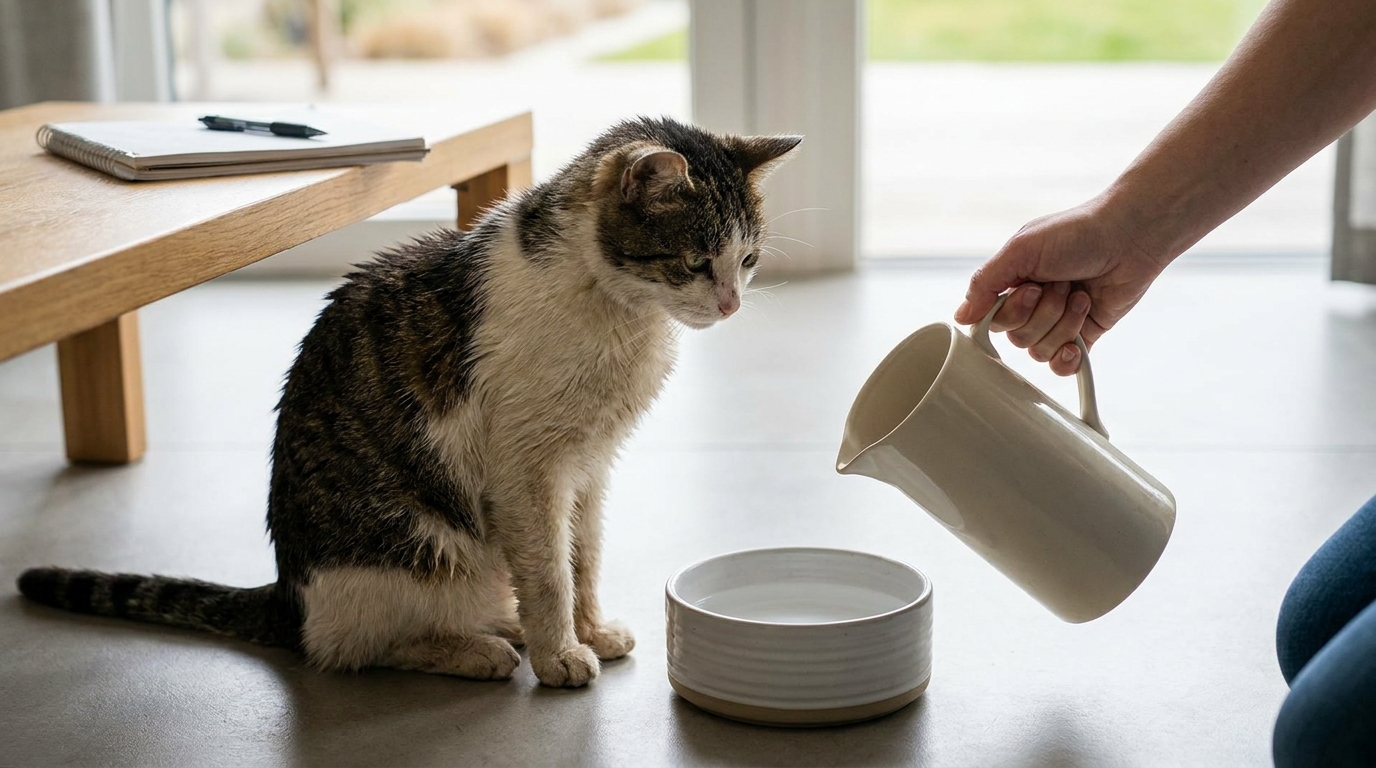
More thirst, bigger litter clumps and weight loss while eating are the classic signs. What to check at home, and which signs mean the ER now.
Quick answer: The classic signs of diabetes in cats are drinking and peeing much more than usual (bigger or more frequent litter clumps) and losing weight while still eating well. Book an in-person vet exam with blood and urine tests within a few days, or today if your cat starts eating less. If it is vomiting, refusing food, weak, breathing fast or straining to pee, go to an emergency vet now.
This article is general information, not a diagnosis. If you think your pet is in danger, go to the nearest emergency animal hospital.
The 4 Classic Signs of Diabetes in Cats
The Cornell Feline Health Center says owners most often notice weight loss despite a good appetite, plus more drinking and peeing. Cornell estimates that between 1 in 100 and 1 in 500 cats will be diagnosed with diabetes during their lifetime, and the Merck Veterinary Manual notes the signs usually build over weeks to months.
- Drinking lots of water, often from taps, sinks or glasses.
- Peeing a lot, with bigger or more frequent clumps.
- Weight loss while eating normally or more.
- An appetite that rises, then may drop. A later drop is a warning sign, not a normal stage: Merck says up to 50% of diabetic cats eat less, and AAHA warns that a diabetic cat with poor appetite, vomiting and dehydration may have diabetic ketoacidosis (DKA).
| Sign | What you notice at home | Why diabetes causes it |
|---|---|---|
| More thirst | The bowl empties faster; drinking from taps, sinks or glasses | Sugar spilling into the urine pulls water out, so the cat drinks to keep up |
| More urine | Bigger or more frequent clumps; litter changed more often; accidents | High urine sugar draws extra water into the urine |
| Weight loss while eating | Thinner along the back and hips while eating normally or more | Cells can't use glucose without enough insulin, so the body burns fat and muscle |
| Appetite rises, then may drop | Begging or finishing meals faster; later eating less | Starved cells drive hunger; a later drop is a warning sign |
Emergency Signs: Diabetic Ketoacidosis (DKA)
AAHA's 2026 Diabetes Management Guidelines for Cats call DKA a life-threatening complication of diabetes. It is more common in cats not yet treated, so it can be the first sign you see. Pancreatitis, an infection or kidney disease often triggers it. The FDA, VCA and AAHA list these signs:
- Vomiting, diarrhea, or both
- Refusing food, or not wanting to drink
- Weakness, or acting quieter than normal
- Dehydration, such as dry or tacky gums or sunken eyes
- Fast, deep or labored breathing
- Sweet-smelling or unusually bad breath
- Collapse, or a cat that won't respond
Any of these in a cat with diabetes signs, or in a diagnosed diabetic, means an emergency vet now. The Merck Veterinary Manual calls DKA a medical emergency that requires immediate treatment and hospitalization. AAHA says treatment means fluids, electrolyte correction and insulin in the hospital, and VCA notes that untreated DKA is fatal. If you can't smell anything on the breath, that does not rule out DKA.
A cat straining with little or no urine is a separate emergency: Cornell says a complete urethral blockage can kill in less than 24 to 48 hours, and males are at greater risk. Go to an emergency vet now.
RexVet's general rule: call a vet once your cat has gone about 24 hours without food, and sooner for a kitten, senior, overweight or diabetic cat. For a diagnosed diabetic, or a cat already drinking or peeing more or losing weight, don't wait for 24 hours: eating less means an in-person vet today, and refusing food, vomiting, weakness or lethargy means an emergency vet now. If your cat takes Bexacat or Senvelgo, eating less means stop the drug and call the prescribing vet now. If your cat is on insulin and hasn't eaten its usual meal, follow the missed-meal plan your vet gave you, or call the prescribing vet or an ER before giving the next injection, and never give extra. If your cat is vomiting but has none of these diabetes signs, the guide to a cat throwing up white foam covers other causes.
Already Diagnosed? Signs of Low Blood Sugar
In a cat on insulin, AAHA lists lethargy, sleepiness, strange behavior, an abnormal gait, weakness, tremors and seizures as signs of low blood sugar. It can strike after weeks of your cat doing better, because a cat that slips into remission unnoticed can drop dangerously low on its usual insulin. Go to an emergency vet now, and call ahead so staff can guide you; bring the insulin and the time of the last injection. If your cat is fully awake and will eat on its own, offer its regular food right away while you get ready to leave; AAHA and Cornell both advise feeding a conscious cat, and it does not replace the ER trip. Never put anything in the mouth of a cat that is seizing, very drowsy or unresponsive, including your fingers: AAHA warns a dazed cat can inhale it, and Cornell says never to force fingers, food or fluids into the mouth of a convulsing or comatose cat. Never give extra insulin, don't give the next injection until a vet tells you to, and if you're unsure whether a dose was given, don't give another; call the prescribing vet.
How Urgent Is It?
Match what you see to the closest row. If unsure, pick the faster option.
| What you see | How urgent | What to do |
|---|---|---|
| More drinking, bigger clumps without straining, or weight loss; eating and acting normal | Within a few days | Book an in-person exam with blood and urine tests |
| Those signs, and the cat now eats less but is alert and not vomiting | Today | In-person vet today; ER if your clinic can't see the cat today |
| Those signs plus vomiting, refusing food, weakness, acting quieter or fast breathing | Emergency now | Emergency vet now (possible DKA) |
| Straining, frequent trips, crying in the box, little or no urine; or a male with bloody urine | Emergency now | Emergency vet now: possible blockage, which can look like constipation |
| Female with blood in the urine or accidents, normal-size clumps, acting normal | Today | Call a vet today |
| Diabetic cat on insulin that is wobbly, trembling, very sleepy, seizing or unresponsive | Emergency now | ER now; if fully awake, offer usual food; nothing in its mouth if drowsy or seizing; never give extra insulin |
| Cat on Bexacat or Senvelgo that eats less, is less active, vomits, has diarrhea, is weak or struggles to walk | Now | Stop the drug and call the prescribing vet; ER now if weak, vomiting or no answer |
| Yellow gums, ears or whites of the eyes | Today | Vet today (possible fatty liver); ER now if not eating or lethargic |
| Sudden back-leg paralysis with crying or pain | Emergency now | ER now (possible blood clot, not diabetes) |
Late at night, or when your clinic can't fit your cat in, any "today" row means an emergency hospital. These levels are RexVet's cautious triage built on AAHA, FDA, Merck and Cornell, not timings those sources publish.
Quieter Signs Owners Miss
AAHA notes that gradual changes may be subtle and go unnoticed. Watch for:
- Walking flat on the hocks. In some cats with uncontrolled diabetes (Cornell calls it rare), nerve damage makes the cat stand or walk with its hocks on or near the ground. Cornell says this isn't painful and often resolves with treatment.
- An unkempt or poorly groomed coat, which AAHA lists among exam findings.
- Jumping less onto the bed or counter.
- Sleeping more and playing less. A cat that is weak or much quieter than normal, or a cat on insulin that is unusually sleepy, belongs in the emergency signs above.
- Repeat bladder infections. Merck notes diabetic animals often get recurrent infections such as cystitis.
Gradual, painless hock-walking means book an exam. Sudden back-leg lameness or paralysis with crying or severe pain is different: Cornell links that picture to a possible blood clot (saddle thrombus) and calls sudden paralysis a medical emergency. Go to an ER now.
Check These at Home Before the Visit
- Water over 24 hours. Fill the bowl with a measured amount and check what's left a day later; AAHA calls 24-hour water intake a practical indicator of diabetes control. Canned food adds water, so compare your cat with its own usual pattern.
- Litter clumps: count them and note their size each day.
- Weight: weigh yourself holding the cat on a bathroom scale and subtract your own weight, or use a kitchen scale for a small cat.
- Appetite: log what your cat eats and any vomiting.
A positive home urine glucose strip or glucose-detecting litter means book an exam. A negative result doesn't clear your cat: kidney and thyroid disease cause the same signs, so keep the exam if the signs are there. A human glucose meter reading does not diagnose diabetes; AAHA advises only veterinary-calibrated meters. If your cat already takes Bexacat or Senvelgo, urine tests stay positive and a normal blood sugar doesn't rule out ketoacidosis, so watch appetite, energy and vomiting instead.
Is It Diabetes or Something Else?
Other conditions share these signs and can occur together. Cornell gives the same top signs for an overactive thyroid in cats, and says chronic kidney disease affects up to 40% of cats over 10.
| Condition | Signs shared with diabetes | Clue that points elsewhere |
|---|---|---|
| Overactive thyroid | Weight loss, bigger appetite, more thirst and urine | Restlessness, vomiting or diarrhea, fast heart rate, a neck lump; T4 blood test |
| Chronic kidney disease | More thirst and urine, weight loss | Appetite usually falls; lethargy, pale gums; BUN, creatinine and SDMA tests |
| Bladder inflammation or infection | More trips to the box, peeing outside it | Small, frequent pees, straining, crying or blood, not big clumps; ER now if little or no urine, or in a male |
An overactive thyroid can also lower fructosamine, a key diabetes test, so AAHA recommends a CBC, chemistry panel, urinalysis, total T4 and a blood pressure check for any cat with diabetes signs.
Which Cats Are Most at Risk
- Overweight cats. Cornell says obese cats are up to four times more likely to develop diabetes.
- Middle-aged and older cats. One study cited by AAHA found 82% of diabetic cats were over 7, and half were 10 to 15.
- Male and inactive cats (AAHA).
- Cats given steroids for problems such as feline asthma (Cornell). Tell your vet about any recent steroid, and never stop a prescribed one on your own.
- Burmese cats, in some countries. Cornell says this may not be true in the United States, and AAHA notes most diabetic cats are mixed breed.
How Vets Test Cats for Diabetes
Diagnosis happens in person. AAHA says confirming diabetes requires proof that blood sugar stays high: a raised fructosamine, which reflects roughly the past one to two weeks, or high blood or urine sugar found more than once while the cat is calm or at home. The workup also checks blood ketones and the thyroid.
A frightened cat's blood sugar can spike at the clinic, and severe stress can even put sugar in the urine, so one high reading alone doesn't prove diabetes. If your cat also has the signs, the vet confirms with fructosamine or repeat tests. Marked weight loss (over 15%, per AAHA) or a very thin cat also prompts checks for pancreatitis, cancer, hyperthyroidism or bowel disease, so book the next available exam rather than waiting weeks.
What Treatment Usually Involves
- Insulin injections at home, after your vet shows you how.
- Oral SGLT2 drugs for selected cats: Bexacat tablets, which in December 2022 became the first FDA-approved oral animal drug for diabetic cats, and Senvelgo, an oral liquid approved in August 2023. Both are only for otherwise healthy, newly diagnosed cats that are eating, well hydrated and have never had insulin.
- A low-carbohydrate canned diet, which AAHA prefers over dry food. It supports treatment, but AAHA says diet alone shouldn't be expected to bring remission. On insulin or an oral diabetes drug, change food only with the prescribing vet; AAHA advises keeping a cat on its usual food for the first 2 weeks of Bexacat or Senvelgo.
Both oral drugs carry a boxed warning for ketoacidosis, including a form with normal blood sugar, which can be fatal; AAHA puts that at about 5 to 7% of treated cats, similar to DKA on insulin, mostly in the first 2 weeks. If a cat on either drug shows less interest in food or stops eating, is less active, vomits, has diarrhea, or seems weak or has trouble walking, the FDA says to stop the drug and contact the vet immediately. If the cat is weak, vomiting or not eating, or you can't reach the vet right away, go to an ER now and say your cat takes an SGLT2 drug.
Remission: How Often It Happens and What It Means
Remission is possible. AAHA defines it as normal blood sugar for more than 4 weeks without diabetes drugs, and supports an average remission rate of about 30% in the United States, mostly within 6 months. Cornell says a cat not in remission within the first six months will almost certainly need life-long insulin. Remission is not a cure, and relapse is common.
Where an Online Vet Visit Fits
If your cat is in Florida, New York or Virginia and is drinking or peeing more (bigger or more frequent clumps without straining), or losing weight while still eating and acting bright, a $64.99 RexVet live video visit with Dr. Tiffany Delacruz, DVM, can help you plan the next step. Live slots run about 8 AM to 11 PM ET. She can review your water, litter and weight notes, tell you how urgent it looks, list the blood and urine tests to ask for, point you to a nearby clinic that can run them, and, in a follow-up visit, walk you through the results. Book a video visit with Dr. Delacruz.
A video visit can't diagnose diabetes, because that takes bloodwork and a urinalysis. It also can't start, change or renew insulin, Bexacat or Senvelgo: starting one takes an in-person exam with blood and urine tests, and any change to the medicine or diet goes through the vet who prescribed it.
A video visit is not the right step for a cat that is vomiting, refusing food, weak, breathing fast or collapsing (possible DKA). The same goes for a cat straining with little or no urine, a cat with sudden painful back legs, or a diabetic cat that is wobbly, trembling or seizing. Those cats need an emergency vet now, as does any cat with same-day signs after about 11 PM ET.
Need an Expert Opinion on This Topic?
Book a video visit with a licensed vet, evenings and weekends included
See open timesFrequently Asked Questions
Can cat diabetes go into remission?
Yes, in some cats. AAHA's 2026 guidelines support an average remission rate of about 30% in the United States, with most remissions within 6 months of diagnosis. Remission is not a cure, and relapse is common. On insulin, remission can first show up as low blood sugar, so change insulin or food only with the prescribing vet.
How long can a cat live with untreated diabetes?
No reliable source gives a survival time, and waiting is risky. Untreated diabetes can lead to diabetic ketoacidosis, which is fatal without hospital treatment. If your cat has been drinking and peeing more and now vomits, won't eat or seems weak, go to an emergency vet now. If it is still bright and eating, book an in-person exam with blood and urine tests within a few days.
Can my cat have diabetes if it is still eating normally?
Yes. The classic picture is weight loss despite a normal or bigger appetite, plus more drinking and peeing. If a cat with those signs starts eating less, a falling appetite can mean ketoacidosis or another illness: see a vet the same day, or go to an ER now if the cat is also vomiting or weak.
Is there a pill for cat diabetes?
For some cats. The FDA has approved Bexacat tablets and Senvelgo, an oral liquid, for selected newly diagnosed cats that are eating, well hydrated and have never had insulin. Both carry a boxed warning for ketoacidosis and need an exam and lab tests first. Many cats still need insulin; your local vet decides which fits.
Do diabetic cats pee outside the litter box?
They can. Cornell lists diabetes, along with kidney and thyroid disease, as possible reasons a cat stops using the box, because these conditions make cats pee more. Big clumps and accidents mean an exam within a few days. A cat that strains, keeps going back to the box or passes little or no urine may be blocked, especially a male, and needs an emergency vet now. So does a male with blood in the urine.
Can I test my cat for diabetes at home?
Not reliably. A human glucose meter can't diagnose diabetes, and AAHA advises only meters calibrated for cats. A positive urine glucose strip or glucose-detecting litter means book an exam, where your vet confirms it with fructosamine or repeat blood and urine tests. A negative result doesn't rule out diabetes if your cat has the signs.
Can an online vet diagnose diabetes in my cat?
No. Diagnosis takes in-person blood and urine tests, such as fructosamine or repeated glucose checks, a urinalysis that checks for ketones, and a thyroid test. If your cat is in Florida, New York or Virginia, a RexVet video visit with Dr. Tiffany Delacruz, DVM, can help you judge how urgent the signs are, plan which tests to ask a local clinic for, and go over the results in a follow-up visit. It cannot start or change diabetes medicines.
FAQs
Can cat diabetes go into remission?
Yes, in some cats. AAHA's 2026 guidelines support an average remission rate of about 30% in the United States, with most remissions within 6 months of diagnosis. Remission is not a cure, and relapse is common. On insulin, remission can first show up as low blood sugar, so change insulin or food only with the prescribing vet.
How long can a cat live with untreated diabetes?
No reliable source gives a survival time, and waiting is risky. Untreated diabetes can lead to diabetic ketoacidosis, which is fatal without hospital treatment. If your cat has been drinking and peeing more and now vomits, won't eat or seems weak, go to an emergency vet now. If it is still bright and eating, book an in-person exam with blood and urine tests within a few days.
Can my cat have diabetes if it is still eating normally?
Yes. The classic picture is weight loss despite a normal or bigger appetite, plus more drinking and peeing. If a cat with those signs starts eating less, a falling appetite can mean ketoacidosis or another illness: see a vet the same day, or go to an ER now if the cat is also vomiting or weak.
Is there a pill for cat diabetes?
For some cats. The FDA has approved Bexacat tablets and Senvelgo, an oral liquid, for selected newly diagnosed cats that are eating, well hydrated and have never had insulin. Both carry a boxed warning for ketoacidosis and need an exam and lab tests first. Many cats still need insulin; your local vet decides which fits.
Do diabetic cats pee outside the litter box?
They can. Cornell lists diabetes, along with kidney and thyroid disease, as possible reasons a cat stops using the box, because these conditions make cats pee more. Big clumps and accidents mean an exam within a few days. A cat that strains, keeps going back to the box or passes little or no urine may be blocked, especially a male, and needs an emergency vet now. So does a male with blood in the urine.
Can I test my cat for diabetes at home?
Not reliably. A human glucose meter can't diagnose diabetes, and AAHA advises only meters calibrated for cats. A positive urine glucose strip or glucose-detecting litter means book an exam, where your vet confirms it with fructosamine or repeat blood and urine tests. A negative result doesn't rule out diabetes if your cat has the signs.
Can an online vet diagnose diabetes in my cat?
No. Diagnosis takes in-person blood and urine tests, such as fructosamine or repeated glucose checks, a urinalysis that checks for ketones, and a thyroid test. If your cat is in Florida, New York or Virginia, a RexVet video visit with Dr. Tiffany Delacruz, DVM, can help you judge how urgent the signs are, plan which tests to ask a local clinic for, and go over the results in a follow-up visit. It cannot start or change diabetes medicines.
Medically Reviewed
Reviewed by Dr. Tiffany Delacruz, DVM — licensed veterinarian and CEO of RexVet. Last reviewed October 21, 2026.
Content is for informational purposes and does not replace professional veterinary advice.
Chief Executive Officer · Licensed Veterinarian
Dr. Delacruz is a licensed Doctor of Veterinary Medicine specializing in preventive care and veterinary telehealth. She reviews all health content on RexVet to ensure accuracy and clinical relevance.
Sources & References
- · American Veterinary Medical Association — Telehealth Guidelines
- · AVMA — Pet Care Resources
- · U.S. FDA — Animal & Veterinary