
Why Do Dogs Eat Snow? Is It Safe and When to Worry
By RexVet Team | Reviewed by Dr. Tiffany Delacruz, DVM
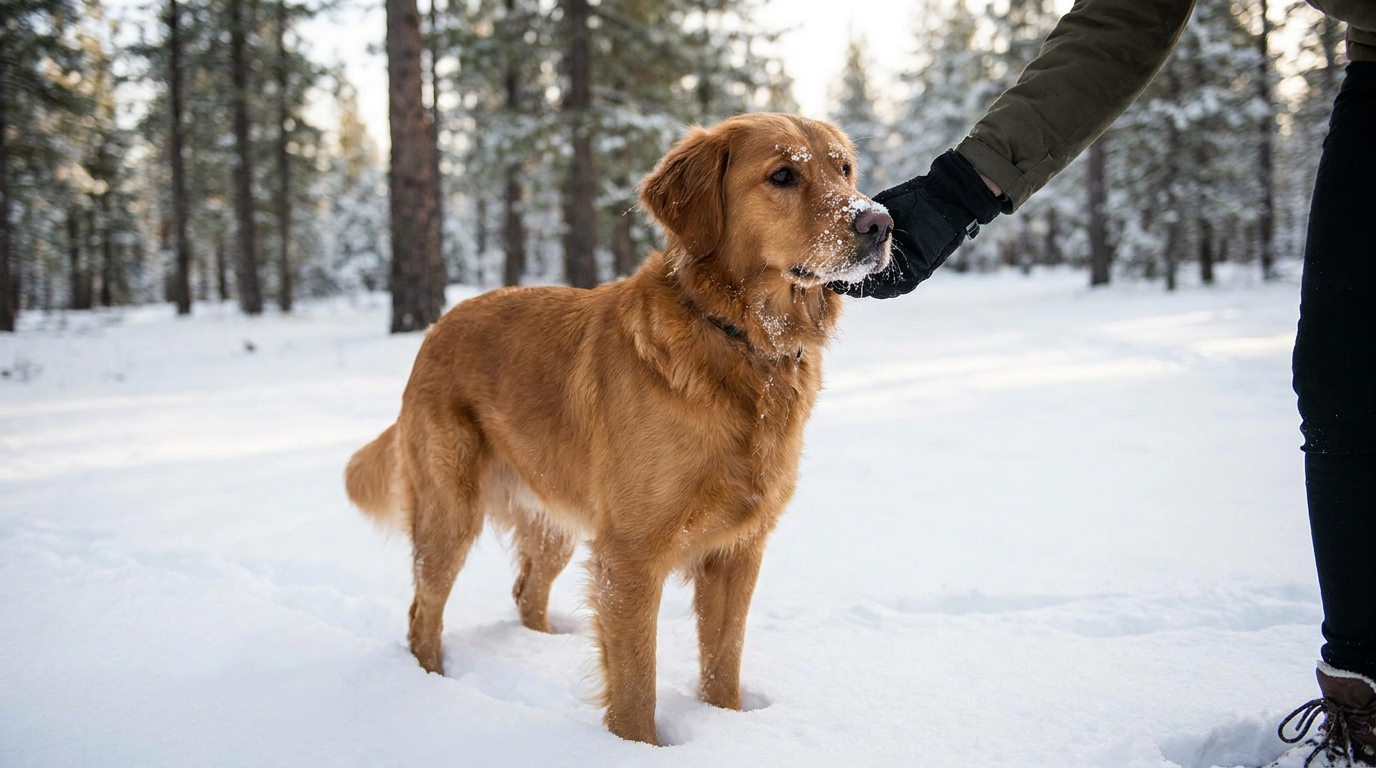
Why dogs eat snow, which snow can hide ice melt or antifreeze, and the vomiting, thirst and cold signs that need a vet or an ER.
Quick answer: A few mouthfuls of fresh, clean snow are usually harmless for a healthy adult dog. Keep your dog off plowed, roadside, yellow or slushy snow, which can hold ice melt, antifreeze or urine. Vomiting more than twice in 24 hours needs a vet in person within hours. Obsessive snow eating with more drinking and peeing needs a vet exam. Any chance of antifreeze means an emergency vet now.
This article is general information, not a diagnosis. If you think your pet is in danger, go to the nearest emergency animal hospital.
Is it safe for dogs to eat snow?
A few mouthfuls of fresh, clean snow are generally safe for a healthy adult dog; the risk is what the snow has picked up, such as ice melt, antifreeze, urine or hidden objects. The University of Illinois College of Veterinary Medicine advises supervising dogs so they don't eat snow, especially treated snow.
Why do dogs eat snow?
Common reasons a dog eats snow include thirst, a frozen or empty water bowl, play and the cold texture, and sometimes an upset stomach or an illness that raises thirst.
- Thirst: a dog that has been running hard, or whose outdoor bowl froze, may turn to snow for water.
- Play and curiosity: many dogs enjoy pouncing on and crunching snow.
- An upset stomach: some dogs eat snow or grass when they feel queasy.
- Illness that raises thirst: diabetes, Cushing's disease and kidney disease can make a dog drink much more, and snow becomes one more source of water.
Which snow is dangerous for dogs?
Plowed, roadside, driveway, slushy and yellow snow are the kinds to keep a dog out of, because they can hold ice melt, antifreeze or urine.
| Snow type | Risk | What to do |
|---|---|---|
| Fresh, clean yard snow | Low | A few bites OK |
| Plowed or roadside snow | Salt, ice melt | Keep away |
| Driveway or garage slush | Antifreeze, salt | Keep away; ER if licked |
| Yellow or dirty snow | Urine, infection | Keep away |
| Snowmelt puddles | Infection | Fresh water instead |
| Deep yard snow | Hidden objects | Supervise |
| Hard ice chunks | Broken teeth | Small pieces only |
"ER if licked" means go to an emergency vet now and call a poison line on the way.
The ASPCA's professional guidance (ASPCApro) says a couple of licks mainly cause drooling, vomiting or diarrhea that settles on its own, but a pet that ate more than a casual lick, has more than mild vomiting or shows neurological signs should be seen right away; large amounts of calcium chloride can cause mouth and stomach ulcers. Pet Poison Helpline says every type of ice melt can be hazardous, including the urea types usually labeled pet-safe, so no ice melt is safe to eat.
The Merck Veterinary Manual says dogs can catch leptospirosis, an infection that can injure the kidneys, through contaminated urine or water, so skip yellow snow and snowmelt puddles. Snow can also hide sticks, rocks, bones and trash. If your dog may have swallowed one, see a vet in person now for X-rays; anything sharp, a battery or string means an ER now. Don't make your dog vomit at home.
Signs that need poison control or an ER now
A dog that may have licked antifreeze, wobbles, has tremors or a seizure, retches with nothing coming up, can't keep sips of water down, or is weak and very cold needs an emergency vet now; a dog that ate ice melt from the bag needs a poison-line call and a vet right away. For antifreeze, go now and call a poison line on the way for any possible lick, seen or not: garage or driveway slush, drips under a car, a winterized RV, cabin or boat toilet, or a broken snow globe.
The Merck Veterinary Manual says antifreeze poisoning is often fatal in dogs and cats, and the ASPCA says antifreeze tastes sweet and only a small amount can be fatal. Merck notes that some animals still find bittered antifreeze palatable, so bittering does not make it safe. A poisoned dog acts drunk, may seem better, then goes into kidney failure, and Merck says the outlook worsens the longer treatment is delayed. Don't wait for signs. For the stages, see antifreeze poisoning signs and timeline.
Windshield washer fluid usually contains methanol, and Pet Poison Helpline says some brands add ethylene or propylene glycol. If your dog licked washer fluid or a de-icer, call a poison line now and bring the bottle: ASPCA Animal Poison Control, (888) 426-4435 (a consultation fee may apply), or Pet Poison Helpline, (855) 764-7661 (a per-incident fee applies).
Bloat (GDV) also needs an ER now, especially in a large, deep-chested dog that gulped snow or water after hard play: retching that brings up nothing, a swollen belly, pacing or pale gums.
| Sign | May mean | Next step |
|---|---|---|
| Clean snow, 1-2 vomits, bright | Stomach upset | Watch at home |
| Vomits 3+ times in 24 hours | Upset gut, toxin | In person within hours |
| Sips of water come back up | Dehydration | ER now |
| Dry retching, swollen belly | Bloat (GDV) | ER now |
| Acts drunk or wobbly | Antifreeze | ER now |
| Tremors or a seizure | Salt, toxin | ER now |
| Ate ice melt from the bag | Salt toxicity | Poison line, vet now |
| Drooling, pawing at mouth | Mouth burns | In person today |
| Blood in vomit, black stool | Bleeding | Vet now or ER |
| Weak, confused, stopped shivering | Hypothermia | Blankets, ER now |
The "Watch at home" row applies only to a healthy adult dog that ate clean, untreated yard snow, keeps sips down and has no diarrhea. Puppies, seniors and diabetic dogs that vomit need a vet in person within hours.
My dog ate snow and threw up: what now?
A healthy adult dog that vomits clear or foamy liquid once or twice after eating clean snow, then stays bright and keeps sips of water down, can usually be watched at home; more than twice in 24 hours needs a vet in person within hours. While you watch, offer small amounts of water often; don't force it, and don't cut off water.
- In person within hours: any vomiting in a puppy, toy breed, senior or diabetic dog, or a dog with kidney or heart disease. An unvaccinated puppy needs the clinic, where the parvo test is done. A dog with kidney or heart disease that ate salty snow should get a call to its vet today, even if it seems fine.
- Poison line now: vomiting after snow that may have been treated, even once.
- ER now: sips coming back up, retching that brings up nothing, a swollen belly, pale gums, weakness or collapse.
- Vet now or ER: blood in the vomit, red or like coffee grounds.
Never withhold food from a puppy without a vet's advice. For more, see dog throwing up clear liquid or water.
Can eating snow give a dog diarrhea?
Yes: snow treated with ice-melt salts can cause vomiting and diarrhea in dogs, the University of Illinois College of Veterinary Medicine says; call a poison line now and get a vet right away if a dog ate ice melt or a lot of salty slush (ER now if drooling, vomiting, tremors, wobbling or weakness start), and call a vet if loose stool lasts more than two days in a bright adult dog. Cornell's Riney Canine Health Center says to call sooner if the dog is also vomiting, has bloody stool or is lethargic.
- Call a vet: a bright adult dog whose diarrhea lasts past 2 days (toy breeds and seniors: today).
- In-person vet today: any puppy with diarrhea, diarrhea plus one vomit, or a dog that refuses food.
- Emergency vet now: diarrhea with vomiting more than once, black or tarry stool, a swollen or painful belly, dry retching, pale gums, weakness, collapse or water that won't stay down.
When constant snow eating can be a sign of illness
A dog that eats snow constantly and also drinks and pees more than usual may have a thirst-raising illness such as diabetes, Cushing's disease or chronic kidney disease, which needs an in-person exam with bloodwork and a urine test. Cornell's Dr. Brian Collins told the American Kennel Club these are the most common causes of excessive drinking in dogs; others include high blood calcium, liver disease, leptospirosis, pyometra (a uterine infection) and some medicines. If your dog takes a steroid medicine, which commonly raises thirst, and is drinking more, call the prescribing vet, and never stop or change the dose yourself.
Before the exam, fill the bowl using a measuring cup, measure what is left after 24 hours, and keep a 3-day log. Keep your dog off snow during the log, because snow is water the bowl never measures. Cornell's Riney Canine Health Center considers more than 100 mL per kg of body weight a day excessive, but a clear rise from your dog's usual amount matters even below that line. Never cut back water unless a veterinarian tells you to. See dogs drinking too much water for the causes.
- ER now: sudden heavy thirst with wobbling or vomiting, a possible sign of antifreeze poisoning.
- In-person vet today: an unspayed female dog drinking much more within about 4 months after a heat (ER now if vomiting, not eating, lethargic or weak), or any dog whose drinking has crept up over days or weeks and who is now vomiting or not eating. If the thirst came on suddenly, or your dog has recently spent time near roads, driveways, garages or cars, treat it as possible antifreeze: ER now.
If your dog instead drinks almost nothing for most of a day, call a vet the same day (a puppy, senior or sick dog that won't drink: in person within hours); see dog not drinking water.
Can dogs eat ice cubes or icicles?
The Royal Kennel Club says ice cubes are not known to raise a dog's risk of bloat, but hard ice can crack or break teeth, so offer small pieces and skip big chunks. Treat icicles like any hard ice, and keep your dog away from ice and slush around cars, where antifreeze can leak. A chipped tooth needs a vet; choking distress needs an ER.
How long can a dog play in the snow?
Below freezing (32°F), keep every dog's snow play short and supervised, and below 20°F limit small, short-coated, young, old and sick dogs to brief bathroom breaks and even hardy adults to about 30 minutes at most. The Merck Veterinary Manual says small, young and old animals are at higher risk of hypothermia, and Cornell's vet college says short-haired breeds are among the most vulnerable to cold.
- Shivering only: bring your dog inside, dry it and watch. Merck notes that shivering is not a reliable sign of hypothermia.
- ER now: a weak or confused dog, slow breathing, or a dog that stopped shivering while still cold. Dry it, wrap it in warm blankets and go.
- In person now: pale, gray or hard ear tips, tail or paws (possible frostbite). Merck says not to rub the area or apply snow.
For a chart by size and coat, see how cold is too cold for dogs.
Should you stop your dog from eating snow?
Stop a dog from eating snow near roads, driveways and garages, but a few bites of clean yard snow are usually fine for a healthy adult dog; offer fresh, unfrozen water, use a short leash and redirect with a toy.
- Keep the water bowl indoors, or use a heated outdoor bowl, and check it often.
- Carry water on long winter walks, and reward your dog for leaving snow alone.
- Store ice-melt bags out of reach; the ASPCA says some pets eat ice melt straight from the package.
- Clean antifreeze drips right away, then cover the spot with cat litter or sawdust, as the Merck Veterinary Manual advises.
- After walks, wipe paws, legs and belly with a warm, damp cloth and work out snowballs between the toes. See cracked dog paw pads for winter paw care.
When a video vet visit can help
RexVet, a nonprofit online vet service, serves pets located in Florida, New York and Virginia by video visit, and a video visit can help with a healthy adult dog's mild stomach upset after eating clean snow. It also fits a dog that eats snow constantly and has slowly started drinking more but is otherwise eating and acting normally, when you want to know whether bloodwork is needed.
A licensed RexVet vet, a veterinarian licensed in your pet's state, with your pet located there during the visit, can review the history, watch your dog on camera and help you plan next steps. A live video visit costs $64.99, with live slots about 8 AM to 11 PM ET. The one-time $120 Family Plan covers 4 visits over 12 months for every pet in the home and never auto-renews. Book a live video visit.
For possible antifreeze, wobbling, tremors, seizures, collapse, retching with nothing coming up, a swollen belly, sips that won't stay down, blood in vomit or black stool, or a weak, very cold dog, skip the video visit: go to the nearest emergency vet now and call ASPCA Animal Poison Control (888) 426-4435 (a consultation fee may apply) or Pet Poison Helpline (855) 764-7661 (a per-incident fee applies) on the way. For ice melt eaten from the bag, call a poison line now and get a vet right away instead. A video visit cannot run blood or urine tests, take X-rays or test for antifreeze. Outside live slots, go to an emergency clinic for anything urgent.
No prescription is promised; any medicine is the veterinarian's decision after the visit. RexVet is not a pharmacy, and a pharmacy transfer fee applies if a prescription is sent to an outside pharmacy.
Need an Expert Opinion on This Topic?
Book a video visit with a licensed vet, evenings and weekends included
See open timesFrequently Asked Questions
Is it OK for my puppy to eat snow?
A few bites of clean, untreated snow are usually fine for a puppy, but keep snow time short and watch closely. The Merck Veterinary Manual says young animals are at higher risk of hypothermia. Any vomiting in a puppy needs an in-person vet within hours, and a puppy with diarrhea needs one the same day.
Why does my dog eat snow and then throw up?
Gulping a lot of cold snow fast can upset or irritate a dog's stomach and bring on a vomit or two. A healthy adult that ate clean yard snow, stays bright and keeps sips down can usually be watched at home; more than twice in 24 hours needs a vet in person within hours. A puppy, senior or diabetic dog that vomits needs a vet in person within hours. Sips that come back up, retching that brings up nothing, a swollen belly or possible antifreeze mean an ER now; blood in the vomit, red or like coffee grounds, means a vet now or an ER; treated snow means a poison-line call.
Is yellow snow dangerous for dogs?
Yes, keep your dog out of it: yellow snow is animal urine. The Merck Veterinary Manual says dogs can catch leptospirosis through contaminated urine or water. If your dog drank from snowmelt puddles and then eats less, vomits, seems tired or pees less, see a vet in person the same day.
Can my dog stay hydrated by eating snow instead of drinking water?
No, don't rely on snow: give your dog fresh, unfrozen water indoors and on every winter outing. Cornell's vet college says outdoor pets need shelter and fresh water. Call a vet the same day if your dog drinks almost nothing for most of a day. A puppy, senior or sick dog that won't drink needs an in-person vet within hours.
Can cats eat snow?
A lick of clean snow is not the main worry for a cat; ice melt, salty slush and antifreeze on its paws or fur are. Cats groom their paws, and the Merck Veterinary Manual says cats are poisoned by far smaller amounts of antifreeze than dogs. If a cat may have walked through or licked antifreeze, go to an emergency vet now and call a poison line on the way.
Can dogs get brain freeze from eating snow?
No one knows for sure whether dogs get brain freeze. If a dog paws at its face or mouth, or seems distressed for more than a few minutes after eating snow or ice, call a vet. Heavy drooling after eating treated snow needs an in-person vet the same day.
Can an online vet help if my dog ate snow and we are in Florida, New York or Virginia?
Often, yes, for a healthy adult dog with mild stomach upset after eating clean snow; possible antifreeze, bloat or seizures mean an ER instead. If your dog is located in Florida, New York or Virginia during the visit, a veterinarian licensed in that state can watch your dog on camera, read an ice-melt label with you and decide how urgent things are. Bloodwork, X-rays, antifreeze testing and ice melt eaten from the bag need in-person care. No medicine is promised. Florida's s.474.2021 limits telehealth-only prescriptions to FDA-approved animal drugs used as labeled, for up to 14 days (1 month for products labeled only for fleas and ticks), with no renewal without an in-person exam and no human-labeled drugs, controlled substances, or compounded antibacterial, antifungal, antiviral or antiparasitic drugs. In every state, federal FDA rules (21 CFR 530.3) require an in-person vet-client-patient relationship before a vet uses a human drug or an animal drug off-label. Virginia law allows the exam to be electronic, but the federal in-person rule above still applies to human and off-label drugs there, and New York's telehealth prescribing rules are not settled.
FAQs
Is it OK for my puppy to eat snow?
A few bites of clean, untreated snow are usually fine for a puppy, but keep snow time short and watch closely. The Merck Veterinary Manual says young animals are at higher risk of hypothermia. Any vomiting in a puppy needs an in-person vet within hours, and a puppy with diarrhea needs one the same day.
Why does my dog eat snow and then throw up?
Gulping a lot of cold snow fast can upset or irritate a dog's stomach and bring on a vomit or two. A healthy adult that ate clean yard snow, stays bright and keeps sips down can usually be watched at home; more than twice in 24 hours needs a vet in person within hours. A puppy, senior or diabetic dog that vomits needs a vet in person within hours. Sips that come back up, retching that brings up nothing, a swollen belly or possible antifreeze mean an ER now; blood in the vomit, red or like coffee grounds, means a vet now or an ER; treated snow means a poison-line call.
Is yellow snow dangerous for dogs?
Yes, keep your dog out of it: yellow snow is animal urine. The Merck Veterinary Manual says dogs can catch leptospirosis through contaminated urine or water. If your dog drank from snowmelt puddles and then eats less, vomits, seems tired or pees less, see a vet in person the same day.
Can my dog stay hydrated by eating snow instead of drinking water?
No, don't rely on snow: give your dog fresh, unfrozen water indoors and on every winter outing. Cornell's vet college says outdoor pets need shelter and fresh water. Call a vet the same day if your dog drinks almost nothing for most of a day. A puppy, senior or sick dog that won't drink needs an in-person vet within hours.
Can cats eat snow?
A lick of clean snow is not the main worry for a cat; ice melt, salty slush and antifreeze on its paws or fur are. Cats groom their paws, and the Merck Veterinary Manual says cats are poisoned by far smaller amounts of antifreeze than dogs. If a cat may have walked through or licked antifreeze, go to an emergency vet now and call a poison line on the way.
Can dogs get brain freeze from eating snow?
No one knows for sure whether dogs get brain freeze. If a dog paws at its face or mouth, or seems distressed for more than a few minutes after eating snow or ice, call a vet. Heavy drooling after eating treated snow needs an in-person vet the same day.
Can an online vet help if my dog ate snow and we are in Florida, New York or Virginia?
Often, yes, for a healthy adult dog with mild stomach upset after eating clean snow; possible antifreeze, bloat or seizures mean an ER instead. If your dog is located in Florida, New York or Virginia during the visit, a veterinarian licensed in that state can watch your dog on camera, read an ice-melt label with you and decide how urgent things are. Bloodwork, X-rays, antifreeze testing and ice melt eaten from the bag need in-person care. No medicine is promised. Florida's s.474.2021 limits telehealth-only prescriptions to FDA-approved animal drugs used as labeled, for up to 14 days (1 month for products labeled only for fleas and ticks), with no renewal without an in-person exam and no human-labeled drugs, controlled substances, or compounded antibacterial, antifungal, antiviral or antiparasitic drugs. In every state, federal FDA rules (21 CFR 530.3) require an in-person vet-client-patient relationship before a vet uses a human drug or an animal drug off-label. Virginia law allows the exam to be electronic, but the federal in-person rule above still applies to human and off-label drugs there, and New York's telehealth prescribing rules are not settled.
Medically Reviewed
Reviewed by Dr. Tiffany Delacruz, DVM — licensed veterinarian and CEO of RexVet. Last reviewed November 3, 2026.
Content is for informational purposes and does not replace professional veterinary advice.
Chief Executive Officer · Licensed Veterinarian
Dr. Delacruz is a licensed Doctor of Veterinary Medicine specializing in preventive care and veterinary telehealth. She reviews all health content on RexVet to ensure accuracy and clinical relevance.
Sources & References
- · American Veterinary Medical Association — Telehealth Guidelines
- · AVMA — Pet Care Resources
- · U.S. FDA — Animal & Veterinary