
Dog Not Drinking Water: How Long Is Too Long and When to Worry
By RexVet Team | Reviewed by Dr. Tiffany Delacruz, DVM
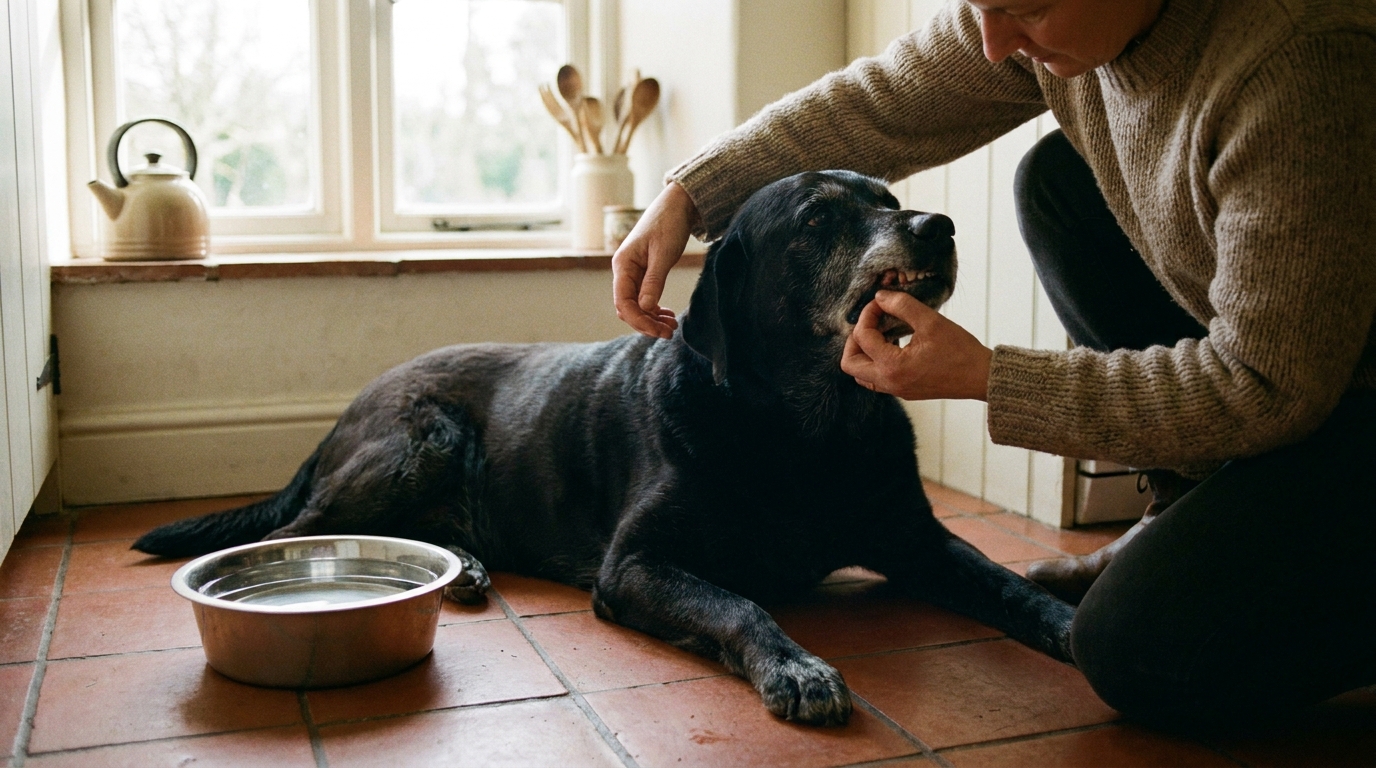
Time rules for adults, puppies, seniors and dogs after surgery, the common causes, safe ways to help, and the signs that mean go to an ER now.
Quick answer: A dog drinking less but bright, eating and peeing normally can usually be watched at home. Call a vet the same day if it drinks almost nothing for most of a day. A puppy, senior or sick dog that won't drink or has another sign, or any dog that keeps vomiting, needs an in-person vet within hours. Go to an ER now for collapse, pale, gray or sticky gums, or water that won't stay down.
This article is general information, not a diagnosis. If you think your pet is in danger, go to the nearest emergency animal hospital.
How long can a dog go without water? Time rules by dog type
There is no safe number of hours to test, and survival figures online are not a waiting window. Texas A&M's veterinary college lists a dog that stops eating or drinking as a reason to see a vet, with no hour cut-off. Judge by how your dog acts and what kind of dog it is.
| Dog | OK to watch at home | Call a vet |
|---|---|---|
| Healthy adult, cool weather or wet food | Bright, eating and peeing normally; log the bowl for 24 hours | Drinks almost nothing for most of a day: call the same day |
| Puppy under 6 months | A brief dip; still playful, eating and peeing | Won't drink, vomits or has diarrhea: in person within hours; now if not fully vaccinated |
| Senior, or kidney disease, diabetes or heart disease | A slight dip while eating and peeing normally | Call the vet who manages the condition today; any other sign: in person within hours |
| Vomiting or diarrhea | One episode in an adult; keeps sips down and acts normal | Sips come back up: ER now. More than 2 episodes in 24 hours: in person within hours |
| Hot weather or after exercise | Drinks once cooled and rested | Heavy panting, hot skin, wobbly or collapsed: cool the dog and go to an ER |
| After surgery or sedation | Sleepy the first night; small sips offered often | No water over 12 hours, over 3 vomits in 12 hours, or not alert next day: call clinic now |
The 12-hour figure applies only after anesthesia (AAHA's sample discharge sheet); your own clinic's sheet comes first.
Emergency signs: go to an ER now
These signs, and any blood in vomit or stool, mean hands-on care now, whatever your dog's age and however long it has gone without drinking.
| Sign | Why it matters | Action |
|---|---|---|
| Even sips of water come back up | Fluids aren't staying down | ER now |
| Collapse, too weak to stand, seizures, stumbling or hard breathing | Shock or severe illness | ER now |
| A small or toy dog that is vomiting or has diarrhea and isn't drinking | Fluids are being lost and not replaced, and dehydration can build quickly | ER now |
| Pale, white, gray, blue, brick-red or yellow gums, or pink returns slower than 2 seconds | Shock, anemia, low oxygen, heatstroke or jaundice | ER now |
| Retching with nothing coming up, or a swollen, tight belly, often with drooling or restlessness | Possible bloat (GDV) | ER now |
| Straining or crying out while trying to pee, with only drops or nothing | Possible urinary blockage | ER now, even at night |
| Possible toxin: antifreeze, xylitol, grapes or raisins, onion or garlic, a THC edible, human or dog pain pills | Can harm the kidneys, liver, blood cells or blood sugar | Poison line and ER now; don't make it vomit unless told |
| Heat exposure with hot skin, heavy panting, drooling or wobbliness | Heatstroke | Cool with cool water and a fan on the way to the ER |
| Sticky gums (not from panting), skin stays tented, sunken eyes | Already dehydrated; fluids are given at a clinic | Vet or ER now |
For a possible poison, call ASPCA Animal Poison Control at (888) 426-4435 (a consultation fee may apply) or Pet Poison Helpline at (855) 764-7661 (per-incident fee). Both answer 24 hours a day. After antifreeze, a dog may seem better before kidney failure sets in (Merck Veterinary Manual), so go even if your dog seems fine.
For heatstroke, move your dog out of the heat, wet it with cool (not ice-cold) water, especially the belly, and use a fan, including on the way to the vet (Merck). Offer small sips only once it is alert.
Is your dog really drinking less?
First, check whether your dog is getting water another way:
- Wet food. Merck's Dog and Cat Foods page puts canned food at 68-78% water and dry food at about 10%. Dogs on mostly canned food drink less, but water should not be restricted.
- Other sources. The toilet, a pool, puddles or a pond. Standing water can carry leptospirosis, an infection that can injure the kidneys (Merck). If your dog drank from standing or flood water and now eats less, vomits, seems tired or pees less, see a vet in person the same day.
- Cool weather and less exercise. A small drop is common.
Normal intake varies with size, diet, weather and activity, so there's no fixed "too little" line. Your own dog's record tells you more. Measure the bowl for 24 hours:
- Close the toilet lid and block other water sources.
- Mark a line on one bowl with tape, and refill it to that line with the same cup.
- Write down the time and how much you add at each refill.
- Note pee trips, vomiting, appetite and energy for your vet.
Why is my dog not drinking water? Common reasons
| Cause | Clues you can see | What to do |
|---|---|---|
| Dirty, new or moved bowl, or water tastes different | Sniffs the bowl and walks away | Wash it, refill with fresh water, or bring back the old bowl |
| New home, boarding or stress | A recent change; otherwise well | Quiet spot, small frequent offers; call the same day if it drinks almost nothing |
| Mouth or dental pain | Drooling, pawing at the mouth, dropping food | Same-day vet; ER for a chewed cord or trouble breathing |
| Nausea or stomach upset | Lip licking, drooling, vomiting | Don't take the water away; ER if even sips come back up |
| Swallowed toy, sock, bone or corn cob | Vomiting or no appetite | Same-day vet; ER if vomiting repeats or the belly hurts |
| After anesthesia or a dental cleaning | Groggy the first night | Offer water in small amounts every 1-2 hours; follow the discharge sheet |
| Neck or back pain | Walks to the bowl and stares; won't lower its head | Raise the bowl for now; same-day exam; ER for wobbly or dragging legs |
| Sudden kidney injury or late-stage kidney disease | Vomiting, no appetite, little urine | Same-day in-person vet |
| Antifreeze | Thirst and wobbliness, then a dull dog that drinks less | ER and a poison line now, even if your dog seems better |
Merck notes that a mouth burn can make a dog hesitate to eat or drink, and a sore, ulcerated or inflamed mouth can make a dog reluctant to eat. Cornell's Riney Canine Health Center says dogs with neck or back disc pain may walk to the bowl and just stare; a raised bowl is only a stopgap.
Kidney problems are easy to misread: early chronic kidney disease usually causes more thirst, not less, while sudden kidney injury and late-stage disease bring poor appetite, vomiting and dehydration (Merck). Triggers of sudden injury include antifreeze, grapes or raisins, NSAID pain pills and leptospirosis.
Dog not drinking water but eating
This pattern is often the least worrying, because food supplies water, especially canned food or soaked kibble. If your dog is bright, eating its usual amount and peeing normally, measure the bowl for a day and keep watching.
Call a vet the same day if your dog also pees much less, seems tired, vomits or has diarrhea, or is a puppy, a senior or chronically ill. In hot weather, call sooner, and sticky gums mean see a vet now.
When a video visit can help
A video visit fits one situation: your dog is drinking less but is still bright, eating, peeing normally and keeping water down, and you're unsure whether to wait. RexVet, a non-profit, offers a $64.99 live video visit with Dr. Tiffany Delacruz, DVM, licensed in Florida, New York and Virginia. It is for dogs located in one of those states at the time of the visit, if a slot is open (about 8 AM to 11 PM ET). She can watch on camera as you check your dog's gums and do a skin-tent test, go over your water log and food, and tell you whether home monitoring is reasonable or your dog needs an in-person exam or tests. Book a live video visit.
A video visit can't rule out early dehydration, give fluids, or include bloodwork or a urine test. It is not the right choice if your dog vomits more than once or can't keep water down, has collapsed, has pale, white, gray or bluish gums, has sticky gums, tented skin or sunken eyes, is a puppy with vomiting or diarrhea, might have eaten a toxin, or shows any sign in the emergency table. Those dogs need hands-on care at an emergency clinic, plus a poison line call for a toxin. The poison lines answer 24 hours a day; RexVet's video visits do not. After surgery, call the clinic that did it first. Outside RexVet's video hours, if no slot fits, or if anything gets worse, call your regular vet or go to an emergency clinic.
Dog not eating or drinking
A dog that refuses both food and water gets no moisture at all, so dehydration can build faster. Call a vet the same day, and see one in person within hours if your dog is a puppy, a senior or chronically ill, or is also vomiting, has diarrhea or seems weak.
A diabetic dog that isn't eating or drinking needs a vet call before its next insulin injection; if it also vomits or seems weak, go to an ER now. Vomiting after fatty food or table scraps needs an in-person exam and blood tests the same day; belly pain or weakness means go now.
Dog not drinking water but peeing a lot, or peeing very little
- Drinking little but peeing a lot. Your dog is losing more water than it takes in. Causes such as diabetes or kidney problems need testing, so see a vet in person the same day.
- Peeing very little. No urine for 12-24 hours in a dog that isn't straining and is drinking little can point to dehydration or sudden kidney injury. See a vet in person the same day.
- Straining with only drops or nothing. Merck calls a urinary blockage an emergency. Go to an ER now, especially with a male dog.
The opposite problem, drinking much more than usual, has its own causes, including diabetes, kidney disease and urinary tract infection (AAHA). See our guide to dogs drinking too much water.
Signs of dehydration: how to check your dog at home
- Gum moisture. Healthy gums feel slippery and moist. If your finger sticks to dry or tacky gums, AAHA says the dog is dehydrated and needs veterinary care right away.
- Gum color and refill. Press a fingertip on the gum until it pales, then let go. Pink should return in about 1-2 seconds (Merck). Slower refill, or pale, gray, blue, yellow or bright red gums, means go to an ER. If the gums are dark, check the inner lip.
- Skin tent. Gently lift the skin between the shoulder blades and let go. In a dehydrated dog it stays tented for a second or two (AAHA).
- Eyes. Sunken eyes are a sign of severe dehydration (AAHA).
AAHA's 2024 fluid therapy guidelines say mild dehydration (under 5% of body weight) can't be detected on exam. Merck notes that old or very thin dogs can show slow skin recoil and sunken eyes while hydrated, and a drooling, nauseated dog can have moist gums while dehydrated. The skin test can mislead in overweight dogs too.
So normal-looking gums and skin never rule out an emergency, especially with a swollen belly, retching or weakness, and any failed check means a vet now. The one exception is gums that feel dry right after hard panting; recheck once your dog has rested in a cool spot. If the panting doesn't settle with rest, or your dog has hot skin, drooling or wobbliness, treat it as heatstroke and go to an ER now.
How to get a sick dog to drink water safely
- Offer fresh, cool water in a clean bowl, washed daily.
- Try a wider bowl, a water fountain, or the old bowl in its old spot.
- Add water to kibble, or offer wet food.
- Offer plain, low-sodium, low-fat broth with no onion, garlic or chives. The ASPCA warns that onion and garlic damage red blood cells, and too much salt can cause vomiting and seizures. If your dog already had a broth with onion or garlic, call a poison line or your vet, then read about onion and garlic toxicity.
- Make small, frequent offers rather than one big drink, as AAHA advises after anesthesia.
What not to do:
- Don't squirt or pour water into your dog's mouth, especially if it is weak, vomiting, choking, retching or groggy from sedation; offer the bowl and let it drink on its own. Forcing liquids or food can cause aspiration pneumonia (Merck). Coughing or noisy breathing after drinking needs a same-day vet visit; labored breathing or blue gums means go to an ER now.
- Don't take water away from a vomiting dog unless a clinic is giving fluids (Merck).
- Don't give electrolyte drinks or human medicines without a vet's OK. Some powdered drink mixes and liquid medicines contain xylitol (Pet Poison Helpline).
- Don't salt food to make your dog thirsty.
Puppies, seniors and dogs after surgery need lower thresholds
Puppies. A puppy that is vomiting, has diarrhea or won't drink needs an in-person vet within hours, and now if it isn't fully vaccinated, because parvovirus can cause severe dehydration quickly (Texas A&M's veterinary college). Don't fast a puppy at home unless a vet tells you to.
Seniors and dogs with a chronic illness. Dogs with kidney disease, diabetes or heart disease, including those on a "water pill," have less margin. Call the vet who manages the condition the same day if intake drops, and go in person within hours for any other sign.
After surgery or sedation. Tufts' spay and neuter clinic says dogs are often sleepy the first night but should be bright and alert by the next day. AAHA's sample discharge sheet says some pets eat less for a day or two, but more than 12 hours without eating or drinking, or more than three vomits in 12 hours, means seek care right away. Offer small amounts of water every 1-2 hours. If your dog is on an anti-inflammatory pain medicine and vomits or won't eat or drink, call the clinic before the next dose. Call the surgical clinic first, and for wound worries see swelling or an open incision after a neuter.
Need an Expert Opinion on This Topic?
Book a video visit with a licensed vet, evenings and weekends included
See open timesFrequently Asked Questions
How long can a dog safely go without water?
There's no safe number to aim for, so don't test it. If your dog is bright, eating and peeing normally, measure the bowl for 24 hours. If it drinks almost nothing for most of a day, call a vet the same day. A puppy, senior or sick dog that won't drink or has any other sign should see a vet in person within hours. Go to an ER now if water won't stay down.
Why is my dog not drinking water but still eating?
Food supplies water. Canned food is about 68-78% water and dry food about 10% (Merck), so a dog on wet food drinks less from the bowl. Call a vet if your dog also pees much less or seems tired, and see one now if its gums feel sticky.
Is it normal for a dog to drink less in cold weather?
A small drop is common in cooler weather and on quiet days. It's fine if your dog stays bright, eats and pees normally. Measure the bowl for a day, and call a vet if intake falls to almost nothing or there's any other sign.
Can I give my dog Pedialyte?
Ask a vet first, because the right choice depends on why your dog isn't drinking. Some sugar-free drink mixes and liquid medicines contain xylitol, which is toxic to dogs; the FDA notes it may be labeled birch sugar or wood sugar. If your dog can't keep water down, go to an ER now.
Why is my senior dog not drinking water?
Common reasons include dental pain, neck or back pain when bending to the bowl, nausea, and sudden kidney injury or late-stage kidney disease. Early kidney disease usually causes more drinking, not less. Call your vet the same day, and go in person within hours if your dog also vomits, won't eat or seems weak.
Can a vet check my dog's water intake by video?
If your dog is in Florida, New York or Virginia and is bright and keeping water down, a licensed vet can review your water log by live video and watch you check its gums. A video visit can't give fluids or rule out early dehydration, so any red flag means an in-person vet or an ER.
FAQs
How long can a dog safely go without water?
There's no safe number to aim for, so don't test it. If your dog is bright, eating and peeing normally, measure the bowl for 24 hours. If it drinks almost nothing for most of a day, call a vet the same day. A puppy, senior or sick dog that won't drink or has any other sign should see a vet in person within hours. Go to an ER now if water won't stay down.
Why is my dog not drinking water but still eating?
Food supplies water. Canned food is about 68-78% water and dry food about 10% (Merck), so a dog on wet food drinks less from the bowl. Call a vet if your dog also pees much less or seems tired, and see one now if its gums feel sticky.
Is it normal for a dog to drink less in cold weather?
A small drop is common in cooler weather and on quiet days. It's fine if your dog stays bright, eats and pees normally. Measure the bowl for a day, and call a vet if intake falls to almost nothing or there's any other sign.
Can I give my dog Pedialyte?
Ask a vet first, because the right choice depends on why your dog isn't drinking. Some sugar-free drink mixes and liquid medicines contain xylitol, which is toxic to dogs; the FDA notes it may be labeled birch sugar or wood sugar. If your dog can't keep water down, go to an ER now.
Why is my senior dog not drinking water?
Common reasons include dental pain, neck or back pain when bending to the bowl, nausea, and sudden kidney injury or late-stage kidney disease. Early kidney disease usually causes more drinking, not less. Call your vet the same day, and go in person within hours if your dog also vomits, won't eat or seems weak.
Can a vet check my dog's water intake by video?
If your dog is in Florida, New York or Virginia and is bright and keeping water down, a licensed vet can review your water log by live video and watch you check its gums. A video visit can't give fluids or rule out early dehydration, so any red flag means an in-person vet or an ER.
Medically Reviewed
Reviewed by Dr. Tiffany Delacruz, DVM — licensed veterinarian and CEO of RexVet. Last reviewed October 23, 2026.
Content is for informational purposes and does not replace professional veterinary advice.
Chief Executive Officer · Licensed Veterinarian
Dr. Delacruz is a licensed Doctor of Veterinary Medicine specializing in preventive care and veterinary telehealth. She reviews all health content on RexVet to ensure accuracy and clinical relevance.
Sources & References
- · American Veterinary Medical Association — Telehealth Guidelines
- · AVMA — Pet Care Resources
- · U.S. FDA — Animal & Veterinary