
How Cold Is Too Cold for Cats? Safe Temps and Warning Signs
By RexVet Team | Reviewed by Dr. Tiffany Delacruz, DVM
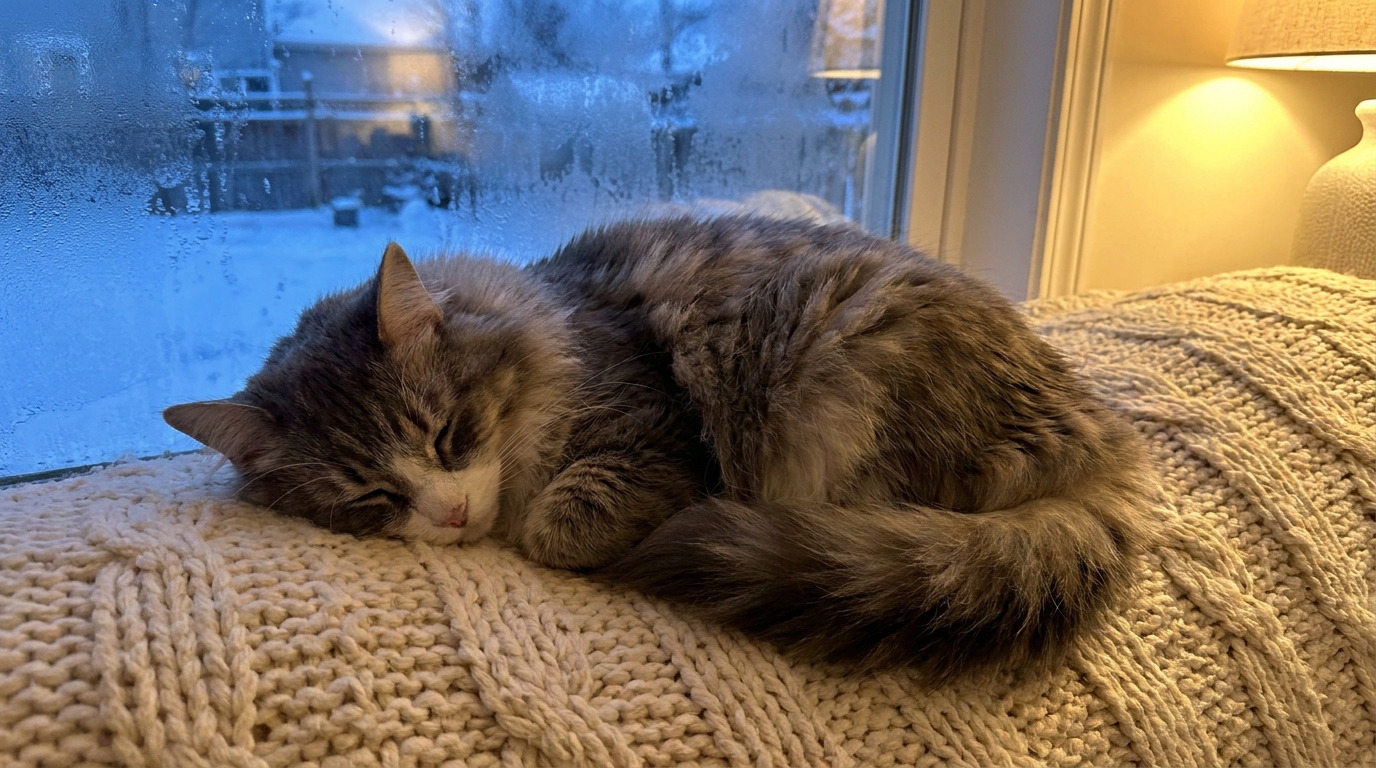
Outdoor and indoor temperature limits for cats, the signs of hypothermia and frostbite, safe warming steps, and when a cold cat needs an ER now.
Quick answer: Most cats get uncomfortable below about 45F, PetMD says, so bring them inside; kittens, seniors and sick cats chill sooner. Below freezing (32F), every cat risks frostbite and hypothermia, and wind and wet fur make it worse. A cat that is cold to the touch and sluggish, limp or breathing slowly, or reads below 99F after time in the cold, needs an emergency vet now.
This article is general information, not a diagnosis. If you think your pet is in danger, go to the nearest emergency animal hospital.
Cat temperature chart: when cold becomes dangerous
Most cats start to feel uncomfortable below about 45F (about 7C), PetMD says, and below 32F (0C) every cat risks frostbite and hypothermia with long exposure, so bring a cat inside once the temperature drops below 45F.
| Outdoor temp | Healthy adult cat | Kitten, senior, thin, sick or short coat |
|---|---|---|
| 50-60F | Usually fine | Arthritic or very thin: may be chilled |
| 45-50F | Watch for cold signs | Feels it more; watch closely |
| 32-45F | Chilled over time: bring inside | Keep inside |
| Below 32F | Frostbite, hypothermia risk: indoors | Indoors only |
These bands are PetMD's general guidance, not a set rule. Cornell's Feline Health Center says wind, snow or ice make hypothermia and frostbite more likely, and the Merck Veterinary Manual says wet or windy conditions raise the frostbite risk, so treat a windy day or a wet coat as colder than the thermometer reads.
Signs a cat is too cold, and when it becomes hypothermia
A cat that is too cold shivers, hunches or curls into a tight ball, and a cat that is cold to the touch and sluggish may have hypothermia and needs an emergency vet now. Follow the most urgent row that fits.
| Sign | What it can mean | What to do |
|---|---|---|
| Shivering, hunched, tight ball, nose under tail; still alert | Too cold | Bring in, dry, warm slowly; watch closely |
| Cold to the touch (ears, paws) and sluggish or sleepy | Hypothermia | ER now; wrap in a warm towel |
| Stopped shivering while still cold; weak, limp, collapsed, confused or hard to wake | Worsening hypothermia | ER now |
| Fast, slow, shallow, labored or open-mouth breathing; pale, gray or blue gums | Hypothermia or illness | ER now |
| Reads below 99F after time in the cold | Too low | ER now; never stop to measure a weak cat |
| Kitten cold to the touch | Can turn critical fast | Warm gently, no food; vet or ER now |
| Feels cold in a warm house; lethargic or pale gums | Shock or sepsis | ER now |
| Ear tip, tail or paw pale, gray or bluish, or cold and brittle | Frostbite | In-person vet now; never rub |
| Pale spot now red, swollen and sore; blisters or dark skin | Thawing or dead tissue | In-person vet now |
| Cold back paws, sudden back-leg weakness, dragging or crying | Blood clot (heart disease) | ER now |
The Merck Veterinary Manual puts an adult cat's normal rectal temperature at 100.5-102.5F (38.1-39.2C), and VCA calls a reading below 99F an emergency, so after time in the cold it means an ER now; see RexVet's cat fever guide.
Do not wait for shivering. Merck says shivering is not a reliable sign of hypothermia, and Texas A&M's vet college says shivering stops as hypothermia worsens, so a cold cat that stops shivering is getting worse, not better. A cold, lethargic cat is not just "winter sleepy" either: it needs an ER now, as RexVet's guide to normal sleep versus lethargy in cats explains.
Frostbite on a cat's ears, tail and paws
Frostbite in a cat usually hits the ear tips, tail and paws (Merck Veterinary Manual), and any patch that is pale, gray or bluish, or cold and brittle, needs an in-person vet now.
VCA says frostbitten skin can turn red and painful as it thaws, and dead tissue turns dark blue to black and sloughs off over days to weeks. Signs can take several days to appear (VCA), so recheck the ears, tail and paws daily for a few days; new pale, dark or blistered skin also needs an in-person vet now.
- Warm the whole cat first. VCA says to treat hypothermia before the frostbitten spot. A cold, weak cat with frostbite needs an ER now.
- Never rub it. Do not massage the area or apply snow, and use no heating pad, hair dryer or very hot water (Merck, VCA).
- Do not thaw it where it could refreeze. VCA says not to warm the area outdoors or anywhere it could freeze again. Warming it should never delay leaving. Water used on the spot should be warm, never hot: water you can comfortably hold your hand in (VCA).
- Go in person now. VCA says to seek medical attention immediately if you suspect frostbite. If your regular vet is closed, go to an emergency vet; do not wait for morning or a video visit.
How to warm a cold cat safely
To warm a cold cat, dry it if it is wet, wrap it in warm towels and put towel-wrapped warm (not hot) water bottles beside it, never a heating pad or hair dryer. If the cat is sluggish, limp, breathing slowly or has stopped shivering while still cold, do this on the way to an emergency vet, not instead of going.
| Do | Do not |
|---|---|
| Dry a wet cat first (Merck) | No heating pad or electric blanket |
| Wrap in warm towels or blankets | No hair dryer, hot water or bath |
| Warm (not hot) water bottles in towels, beside the cat | No rubbing or snow on frostbite |
| Warm room, off the floor, away from drafts | No food, water or human meds if weak |
| Any ER sign: leave now, wrapped | Never stop to take a temp first |
If your cat is alert with no ER sign, you can take a rectal temperature once it is calm; a reading below 99F means an ER now. A cat soaked in icy water that shows any cold sign needs an ER now. If a shivering but alert cat warms up and is eating and acting normally, keep it in a warm room and recheck its ears, tail and paws for several days. If it stays cold or turns sleepy or weak, go to an emergency vet now.
A kitten that feels cold to the touch needs a vet or an ER now. Alley Cat Allies says a chilled kitten cannot digest food, so do not feed it until it is fully warm, and warm it gradually, because warming too fast can cause shock and death.
Which cats get cold fastest
Kittens, senior cats, sick cats, thin cats and short-coated or hairless cats get cold faster than a healthy adult cat, PetMD says, so keep them inside whenever it is below 45F. Heavy-coated cats such as the Maine Coon stay warm longer, but every cat eventually gets uncomfortable.
Outdoor and community cats in winter
Cornell's Feline Health Center says the best winter protection is keeping a cat indoors, and a community cat that cannot come in needs a dry, raised shelter bedded with straw, not hay, cloth or newspaper.
- Shelter: Alley Cat Allies says straw repels moisture, while hay soaks it up and can mold. A blanket is fine in an indoor bed (ASPCA), but Cornell says to keep cloth out of outdoor shelters.
- Water and food: Water can freeze overnight, so use a heated bowl (Alley Cat Allies) or thick plastic bowls instead of shallow ceramic ones (Cornell). Cornell says outdoor cats burn more calories in winter, so they need more food.
- Cars: Check the wheel wells and bang on the hood before starting the car (Cornell). The ASPCA says outdoor, stray and feral cats sometimes sleep under car hoods, where the fan belt can injure or kill them.
- Antifreeze: Cornell says antifreeze is extremely toxic to cats, so clean up spills promptly. If a cat may have licked even a very small amount, including from wet paws in a garage, go to an emergency vet now and call ASPCA Animal Poison Control at (888) 426-4435 (a consultation fee may apply) or Pet Poison Helpline at (855) 764-7661 (a per-incident fee applies) on the way. Do not wait for signs or try to make a cat vomit. Wipe or wrap wet paws, but never let that delay leaving. RexVet's antifreeze poisoning guide explains why speed matters.
- Ice melt and salt: Keep salt and chemical melts away from cats (Alley Cat Allies), and wash and dry the feet and belly after time outside, since cats lick their paws (ASPCA). Pet Poison Helpline says ice melt can cause vomiting, trouble walking, tremors and seizures, and that "pet-safe" urea products can still cause problems. If a cat licked or ate ice melt and shows any of those signs, go to an ER now; with no signs yet, call a poison line now.
Indoor cats in winter: drafts, burns and dry skin
An indoor cat's main winter risks are drafts, burns from heaters, heating pads and stovetops, and dry skin, and PetMD says cats with arthritis or major weight loss can be uncomfortable even at 50-60F. The ASPCA's rule of thumb: if it is too cold for you, it is probably too cold for your pet.
- Beds and skin: Give your cat a warm bed off the floor and away from drafts. Humidify against dry, flaky skin, and bathe as little as possible in cold spells (ASPCA).
- Burns: PetMD says the most common thermal burn in cats is burned paw pads from jumping onto a stovetop, and that chewed cords, including heated-bed cords, cause electrical burns. Put no ointment or ice on a burn. A small burn needs an in-person vet the same day; a large, deep or electrical burn, or a cat that chewed a live cord or was shocked, needs an ER now.
- Dryers: Check the clothes dryer for your cat before starting it. New York's Animal Medical Center cites a Journal of Veterinary Emergency and Critical Care report of three cats with heatstroke from a running dryer; a cat found in one needs an ER now.
- Stiff seniors: Never give a cat a human pain reliever. The FDA says acetaminophen is fatal to cats; see RexVet's guide to human pain relievers and pets. Sudden back-leg weakness is an ER now, not winter stiffness.
When a RexVet video visit helps a cold cat, and when it does not
A video call cannot warm a cold cat or treat frostbite, so a cat that is cold to the touch and sluggish needs an emergency vet now, not a video visit. The same goes for a cat that is limp or unresponsive, has stopped shivering while still cold, has slow, shallow or open-mouth breathing, reads below 99F after time in the cold, suddenly drags its back legs, or may have licked antifreeze (call a poison line on the way). Any ear tip, tail or paw that is pale, gray, bluish, cold and brittle, blistered, peeling or blackening, or that looked pale and has turned red and sore, needs an in-person vet now. A small heater or heating-pad burn needs an in-person vet the same day, and a large, deep or electrical burn needs an ER now.
A video visit fits once your cat is indoors, warm, eating and acting normally: dry, flaky winter skin; dry, cracked paw pads with no redness, swelling, bleeding, color change or limping; a senior cat that has grown stiffer over weeks but still walks, eats and uses the litter box; or setting up warm indoor spots or a winter shelter for a community cat.
RexVet is a 501(c)(3) non-profit with one vet. Dr. Tiffany Delacruz, DVM, licensed in Florida, New York and Virginia, sees cats located in those states by live video for $64.99. On camera she can watch your cat walk, look at its coat, skin and paw pads, go over your indoor or shelter setup, tell you whether the problem can be watched at home or needs an in-person exam, and point you to a nearby clinic. A video visit cannot take a temperature or treat burns. Live video slots run about 8 AM-11 PM ET; if none is open, or it is late and you are worried, go to an ER instead of waiting. No prescription is promised. The FDA says no NSAID is approved for long-term use in cats, so pain treatment for frostbite or stiff joints starts with an in-person exam. RexVet is not a pharmacy; a pharmacy transfer fee applies if a prescription is sent out. Book a video visit. The one-time $120 Family Plan covers 4 visits over 12 months for every pet in the home and never auto-renews.
Need an Expert Opinion on This Topic?
Book a video visit with a licensed vet, evenings and weekends included
See open timesFrequently Asked Questions
Can cats stay outside in winter?
Not below about 45F. PetMD says even indoor-outdoor cats should be kept inside once temperatures hover below 45F, and Texas A&M's vet college says kittens, older cats and sick cats should never be kept outdoors below 45F. A community cat that cannot come in needs a dry, raised shelter bedded with straw, water that cannot freeze and extra food (Cornell's Feline Health Center).
Is 40 degrees too cold for a cat?
Yes, for most cats: 40F is below the 45F mark where PetMD says most cats start to feel uncomfortable, so bring your cat inside. Kittens, seniors and thin cats chill sooner. Go to an emergency vet now if your cat is cold to the touch and sluggish or has stopped shivering while still cold.
What temperature should my house be for my cat?
Many cats get uncomfortable below about 45-50F indoors, PetMD says, especially kittens, seniors, thin cats and hairless breeds, but no single number fits every cat. Cats with arthritis or major weight loss can be uncomfortable even at 50-60F (PetMD). A cat that feels cold in a warm house and is lethargic is likely sick, not chilled, and needs an ER now.
Do cats handle cold better than dogs?
Not reliably. PetMD says cats often hide discomfort and may not shiver until they are quite cold, while dogs tend to show it sooner, so watch for a tight ball or a nose tucked under the tail. For dogs, see RexVet's dog cold temperature chart.
Are cats' ears supposed to feel cold?
Ears are not a reliable thermometer, but a cat with cold ears or paws that is also sluggish needs an emergency vet now. So does a rectal reading below 99F after time in the cold. Ear tips that are pale, gray or bluish, or cold and brittle, may be frostbitten and need an in-person vet now.
Can a cat get frostbite?
Yes: frostbite in a cat usually hits the ear tips, tail and paws, and it needs an in-person vet now. VCA lists pale, gray or bluish skin that is cold or brittle and painful, which can turn red and sore as it thaws. Warm the whole cat first, never rub the spot, and recheck for several days, because VCA says signs can take days to show.
How do I warm up a cold cat?
Dry a wet cat first, wrap it in warm towels, and set towel-wrapped warm (not hot) water bottles beside it. Use no heating pad, hair dryer, hot water or bath, and give a weak cat no food, water or human medicine. Go to an emergency vet now, wrapped, if the cat is sluggish, limp, breathing slowly or has stopped shivering while still cold.
Can a vet help by video if my cat got too cold in Florida, New York or Virginia?
Partly: once your cat is indoors, warm and acting normally, a video visit can help with winter care questions, but not hypothermia or frostbite. Dr. Tiffany Delacruz, DVM, is licensed in Florida, New York and Virginia, and your cat must be located in one of those states. On camera she can watch your cat walk, look at its coat, skin and paw pads, and review your winter setup. A cold, sluggish cat or one that reads below 99F after time in the cold needs an emergency vet now, and any pale, gray, bluish, blistered, peeling or blackening ear tip, tail or paw, or one that looked pale and turned red and sore, needs an in-person vet now. No prescription is promised. Florida limits video-only prescriptions to FDA-approved animal drugs used as labeled, for up to 14 days (1 month for products labeled only for flea and tick control), with no renewal without an in-person exam and no human-labeled, controlled or compounded anti-infective drugs. Federal rules (21 CFR 530.3) require an in-person exam or timely premises visits before off-label or human-drug use. Virginia lets the exam itself be electronic, though that federal rule still applies, and New York's telehealth rules are not settled yet.
FAQs
Can cats stay outside in winter?
Not below about 45F. PetMD says even indoor-outdoor cats should be kept inside once temperatures hover below 45F, and Texas A&M's vet college says kittens, older cats and sick cats should never be kept outdoors below 45F. A community cat that cannot come in needs a dry, raised shelter bedded with straw, water that cannot freeze and extra food (Cornell's Feline Health Center).
Is 40 degrees too cold for a cat?
Yes, for most cats: 40F is below the 45F mark where PetMD says most cats start to feel uncomfortable, so bring your cat inside. Kittens, seniors and thin cats chill sooner. Go to an emergency vet now if your cat is cold to the touch and sluggish or has stopped shivering while still cold.
What temperature should my house be for my cat?
Many cats get uncomfortable below about 45-50F indoors, PetMD says, especially kittens, seniors, thin cats and hairless breeds, but no single number fits every cat. Cats with arthritis or major weight loss can be uncomfortable even at 50-60F (PetMD). A cat that feels cold in a warm house and is lethargic is likely sick, not chilled, and needs an ER now.
Do cats handle cold better than dogs?
Not reliably. PetMD says cats often hide discomfort and may not shiver until they are quite cold, while dogs tend to show it sooner, so watch for a tight ball or a nose tucked under the tail. For dogs, see RexVet's dog cold temperature chart.
Are cats' ears supposed to feel cold?
Ears are not a reliable thermometer, but a cat with cold ears or paws that is also sluggish needs an emergency vet now. So does a rectal reading below 99F after time in the cold. Ear tips that are pale, gray or bluish, or cold and brittle, may be frostbitten and need an in-person vet now.
Can a cat get frostbite?
Yes: frostbite in a cat usually hits the ear tips, tail and paws, and it needs an in-person vet now. VCA lists pale, gray or bluish skin that is cold or brittle and painful, which can turn red and sore as it thaws. Warm the whole cat first, never rub the spot, and recheck for several days, because VCA says signs can take days to show.
How do I warm up a cold cat?
Dry a wet cat first, wrap it in warm towels, and set towel-wrapped warm (not hot) water bottles beside it. Use no heating pad, hair dryer, hot water or bath, and give a weak cat no food, water or human medicine. Go to an emergency vet now, wrapped, if the cat is sluggish, limp, breathing slowly or has stopped shivering while still cold.
Can a vet help by video if my cat got too cold in Florida, New York or Virginia?
Partly: once your cat is indoors, warm and acting normally, a video visit can help with winter care questions, but not hypothermia or frostbite. Dr. Tiffany Delacruz, DVM, is licensed in Florida, New York and Virginia, and your cat must be located in one of those states. On camera she can watch your cat walk, look at its coat, skin and paw pads, and review your winter setup. A cold, sluggish cat or one that reads below 99F after time in the cold needs an emergency vet now, and any pale, gray, bluish, blistered, peeling or blackening ear tip, tail or paw, or one that looked pale and turned red and sore, needs an in-person vet now. No prescription is promised. Florida limits video-only prescriptions to FDA-approved animal drugs used as labeled, for up to 14 days (1 month for products labeled only for flea and tick control), with no renewal without an in-person exam and no human-labeled, controlled or compounded anti-infective drugs. Federal rules (21 CFR 530.3) require an in-person exam or timely premises visits before off-label or human-drug use. Virginia lets the exam itself be electronic, though that federal rule still applies, and New York's telehealth rules are not settled yet.
Medically Reviewed
Reviewed by Dr. Tiffany Delacruz, DVM — licensed veterinarian and CEO of RexVet. Last reviewed October 31, 2026.
Content is for informational purposes and does not replace professional veterinary advice.
Chief Executive Officer · Licensed Veterinarian
Dr. Delacruz is a licensed Doctor of Veterinary Medicine specializing in preventive care and veterinary telehealth. She reviews all health content on RexVet to ensure accuracy and clinical relevance.
Sources & References
- · American Veterinary Medical Association — Telehealth Guidelines
- · AVMA — Pet Care Resources
- · U.S. FDA — Animal & Veterinary