
Can I Give My Dog Tylenol, Ibuprofen or Aspirin for Pain?
By RexVet Team | Reviewed by Dr. Tiffany Delacruz, DVM
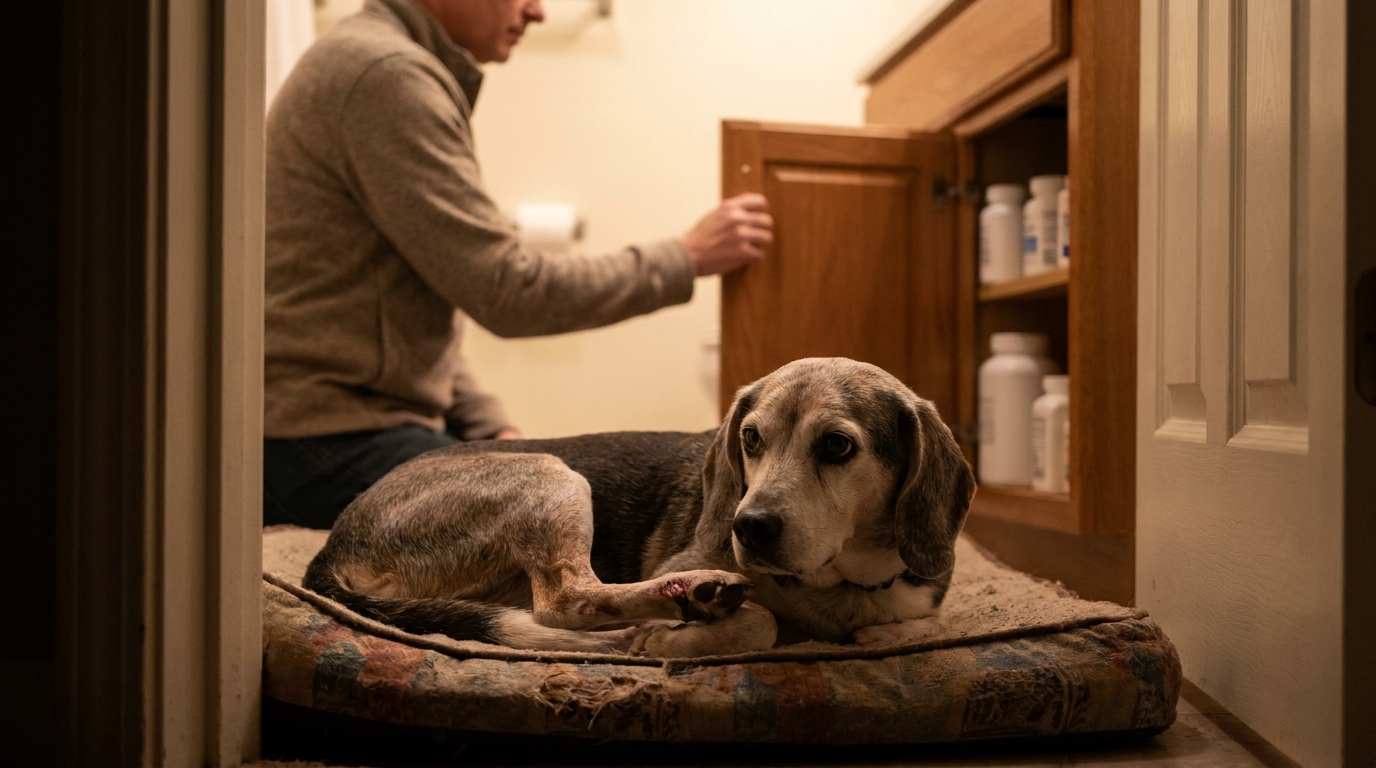
Why ibuprofen, naproxen, Tylenol and aspirin can hurt dogs, what to do if your dog swallowed one, and safe ways to help a sore dog tonight.
Quick answer: No. Never give your dog ibuprofen (Advil, Motrin) or naproxen (Aleve), and never give acetaminophen (Tylenol) or aspirin on your own. These pills can cause stomach ulcers, bleeding, and kidney or liver damage, and they are dangerous on top of a vet pain medicine or steroid. If your dog already swallowed one, call a pet poison line or an emergency vet now, even if it seems fine.
This article is general information, not a diagnosis. If you think your pet is in danger, go to the nearest emergency animal hospital.
Human pain relievers and dogs at a glance
Ibuprofen (Advil, Motrin), naproxen (Aleve), acetaminophen (Tylenol) and aspirin are the pain relievers most homes keep, and none is safe to give a dog on your own. The Merck Veterinary Manual says a pet eating a human NSAID (non-steroidal anti-inflammatory drug) is one of the most common poisonings reported to poison control centers, often after a well-meaning owner gives the pill.
| Medicine | Main danger | If swallowed |
|---|---|---|
| Ibuprofen (Advil, Motrin) | Ulcers, kidney injury | Poison line now |
| Naproxen (Aleve) | Lasts days; ulcers, kidney injury | Poison line now |
| Tylenol | Liver and red blood cell damage | Poison line now |
| Aspirin, even baby aspirin | Ulcers, bleeding; clashes with vet NSAIDs and steroids | Poison line now |
| Cold, flu or allergy combination pills | Hidden pain or stuffy-nose drugs | Poison line now |
| Pain creams or gels with NSAIDs | Licked off skin; cats most at risk | Wash off; call poison line |
| Another dog's leftover NSAID | Wrong drug or dose for your dog | Vet or poison line now |
Acetaminophen is the drug in Tylenol, and it also turns up in some cold, flu, allergy and prescription pain products, so check every label.
My dog already swallowed a pain pill: what to do now
Act now, even if your dog seems fine. Pet Poison Helpline says the sooner a poisoning is treated, the easier and safer the treatment. If your dog is vomiting blood, collapsing or having a seizure, go straight to an ER and bring the packaging.
- Find the product name and the strength on the label, count how many pills are missing, and note the time and your dog's weight.
- Call ASPCA Animal Poison Control at (888) 426-4435 (a consultation fee may apply) or Pet Poison Helpline at (855) 764-7661 (a per-incident fee applies), or go straight to an emergency vet.
- Don't make your dog vomit unless a vet or the poison line tells you to. This guide explains when making a dog throw up helps and when it harms.
- Skip home antidotes and upset-stomach remedies, some of which contain aspirin-like ingredients.
- Bring every bottle or box to the ER. The Merck Veterinary Manual says the exact product matters for treatment, since acetaminophen and some NSAIDs are inside many cough and cold products.
The same steps apply if your dog got an extra dose of its own NSAID, or a human pain pill on top of a vet NSAID or a steroid such as prednisone.
If your pet licked a pain cream off your skin or chewed a tube, call a pet poison line now, and clean any cream off its fur and skin as well as you can. The ASPCA warns that even a small exposure to NSAID creams can be serious, especially for cats.
Signs of pain-reliever poisoning
These signs come from the Merck Veterinary Manual, the FDA and Pet Poison Helpline.
| Sign | Possible cause | What to do |
|---|---|---|
| Vomiting, diarrhea, not eating | Stomach irritation or ulcer | Poison line or ER now |
| Vomit with blood; black, tarry stool | Bleeding ulcer | ER now |
| Pale gums, painful or swollen belly, weakness | Bleeding or perforation | ER now |
| Peeing much more, or little or no urine | Kidney injury | ER now |
| Yellow gums, skin or eyes | Liver injury | ER now |
| Brown or muddy gums, swollen face or paws, heavy breathing | Tylenol damage to red cells | ER now |
| Fever, heavy breathing after aspirin | Aspirin poisoning | ER now |
| Wobbly, tremors, seizures, collapse | Large overdose | ER now |
No signs yet does not mean safe: ulcers can be present before any sign shows, and kidney damage can appear later. Call now rather than waiting to see.
Why human pain pills hurt dogs more than people
A dog is not a small person. The FDA explains that in a dog, a human NSAID may last longer, be processed differently, be absorbed faster and reach higher levels in the blood.
The Merck Veterinary Manual describes ibuprofen's margin of safety in dogs as narrow, and Pet Poison Helpline says the same of naproxen: the gap between an amount that seems harmless and one that causes ulcers or kidney injury is small. Merck says vets no longer recommend ibuprofen for dogs because it can cause stomach ulcers and perforations. Naproxen (Aleve) keeps cycling between the liver and the gut, so it stays in a dog's body for days, and Pet Poison Helpline warns that even a small amount can cause very serious signs, even death, in a large dog.
Acetaminophen is not an NSAID, but the FDA says it can damage a dog's liver, sometimes to the point of liver failure, and damage red blood cells so they can't carry oxygen. Repeated small exposures can poison a dog as well, per Merck.
The FDA adds that NSAID kidney injury is more likely in dogs that are dehydrated, under anesthesia or have kidney disease, and urges caution in dogs with liver, heart or digestive problems.
Is aspirin ever OK for dogs?
Only if a vet who has examined your dog in person tells you to. Aspirin is not on the FDA's list of approved pain relievers for dogs. Pet Poison Helpline notes that vets do use it in some pets for specific conditions, but giving a human drug to a dog is extralabel use, which federal rules (21 CFR 530.3) tie to a vet who has recently seen the animal.
A low-strength "baby" version is still aspirin. The Merck Veterinary Manual says dogs handle aspirin better than cats do, but long-term use can cause stomach ulcers, and poisoning can bring vomiting, fever, heavy breathing and bleeding that lasts longer than normal.
The bigger danger is mixing. The FDA says never to give aspirin or a steroid such as prednisone along with a vet NSAID like carprofen, meloxicam or Galliprant, because doubling up raises the risk of stomach and gut side effects. Switching from one NSAID to another also calls for a wash-out period with no NSAID in between, and your vet sets that gap. Aspirin, ibuprofen and naproxen are NSAIDs too, so a home dose can delay the right pain medicine. Tell your vet exactly what you gave and when, plus any steroid or diuretic your dog takes.
Pet Poison Helpline adds that aspirin-like salicylates hide in some upset-stomach remedies, skin products, muscle rubs and oil of wintergreen, so check labels.
What vets use for dog pain instead
FDA-approved, prescription-only NSAIDs for dogs include:
- Carprofen (Rimadyl and generics)
- Deracoxib (Deramaxx, Doxidyl)
- Firocoxib (Previcox)
- Grapiprant (Galliprant), which works differently but is still treated as an NSAID
- Meloxicam (Metacam and generics), given by mouth
Between them, they are labeled for pain and inflammation from osteoarthritis and after soft-tissue or orthopedic surgery; Galliprant is approved for osteoarthritis only. A brand-new sprain or back injury is not a labeled use, which is one reason a fresh injury usually needs a hands-on exam.
The labels say every dog should have a thorough history and physical exam before starting an NSAID, with bloodwork strongly recommended before starting and periodically during treatment. The FDA adds that an NSAID that suits one dog is not automatically safe for another, so never share leftover carprofen, and never give more, more often or longer than prescribed without asking your vet.
For some dogs, your vet may add gabapentin, a human-labeled drug; see whether carprofen and gabapentin are safe together. To compare two vet options, see Galliprant vs carprofen, including how switching works. If your dog on carprofen seems sore again, call your vet before giving anything else. After surgery, follow your vet's discharge pain plan and never add a human pain pill; if your dog trembles at home afterward, read about dog shaking after surgery.
On any vet NSAID, the FDA says to stop the drug and call your vet right away for vomiting, diarrhea, eating less, acting "off," drinking more or less, or skin redness or scabs. Black or tarry stool, vomit with blood, or yellow gums, skin or eyes mean ER now, not a call tomorrow.
Pain that cannot wait
Go to an emergency vet now if your dog:
- can't stand or walk, drags its back legs or toes, or has a wobbly hind end with back pain (ACVS says a ruptured disc is generally considered a true surgical emergency)
- can't pee, or strains with nothing coming out
- was hit by a car, even if it seems fine, or went down after a fall or a jump
- has a swollen, hard or painful belly, especially with retching that brings nothing up (a sign of bloat, per Merck)
- vomits blood, passes black or tarry stool, or has pale, yellow, or brown or muddy gums
- has trouble breathing, collapses, has tremors or has a seizure
Get a same-day, hands-on exam if your dog cries out when touched or picked up, or is hunched but still walking, and go to the ER if it gets worse or your dog can't walk. A dog that won't put any weight on a leg also needs to be seen the same day, since a fracture, torn ligament or dislocation is possible. For seniors, see old dog back legs giving out.
Safe things you can do tonight for a sore dog
Before reaching for any bottle, the FDA says to call a vet. Meanwhile, these steps are safe:
- Rest. No running, jumping, stairs or rough play. For a torn knee ligament, the American College of Veterinary Surgeons (ACVS) says strict leash-only activity typically eases pain best.
- Short leash potty trips, then back to bed.
- A padded bed in a quiet, protected spot, the kind of place AAHA's pain guidelines say sore pets prefer.
- Non-slip footing: a rug or carpet runner over slick floors.
- A ramp or pet steps for the couch or car, and a baby gate across the stairs.
- A harness instead of a neck collar if your dog seems to have neck pain, as ACVS advises for disc disease. Neck pain itself needs a same-day, hands-on exam.
- A cold pack for fresh swelling only. AAHA says to wrap it in a towel, use short sessions of 10 to 15 minutes and call your vet. Don't wrap the leg yourself.
- Gentle handling. A dog in pain may bite, even its owner.
Supplements are not a substitute for an exam. Over the long term, ACVS says keeping a dog lean is the most important part of arthritis care.
A limp or stiffness that hasn't improved after about a day of rest needs a vet, even if your dog is eating, alert and peeing normally.
When a video visit helps
If your dog already swallowed a human pain reliever, call ASPCA Animal Poison Control at (888) 426-4435 (a consultation fee may apply) or Pet Poison Helpline at (855) 764-7661 (a per-incident fee applies), or go to an emergency vet now. A video visit can't run bloodwork or treat a poisoning, and any of the emergency signs above means an ER now.
If your dog is limping or stiff but still putting weight on every leg, eating and alert, doesn't cry out when touched, and hasn't swallowed a human pain reliever, a $64.99 live video visit with Dr. Tiffany Delacruz, DVM can help instead of guessing with the medicine cabinet. Your dog must be located in Florida, New York or Virginia, and live video slots run about 8 AM to 11 PM ET; a same-day slot isn't guaranteed. On camera she can watch your dog walk, stand and lie down, go over every medicine and supplement your dog already takes, including any steroid, and tell you whether rest at home is enough or an in-person exam is needed, and how soon.
No prescription is promised, and she cannot tell you to give Tylenol, aspirin, ibuprofen or naproxen by video. Whether an FDA-approved dog pain medicine fits is her call after the visit, within state rules. Because the labels call for a physical exam and baseline bloodwork first, starting one often means an in-person visit. In Florida, a prescription based only on a video visit is limited to FDA-approved animal drugs used as labeled, for up to 14 days, can't be renewed without an in-person exam, and can't include human or controlled drugs. Virginia allows an electronic exam and New York's rules are unsettled, but in every state, federal rules require an in-person exam before a dog gets a human drug. RexVet is a 501(c)(3) non-profit and is not a pharmacy; if she sends a prescription to an outside pharmacy, a pharmacy transfer fee applies. Book a live video visit with Dr. Delacruz.
Need an Expert Opinion on This Topic?
Book a video visit with a licensed vet, evenings and weekends included
See open timesFrequently Asked Questions
Can I give my dog baby aspirin?
Not on your own. Baby aspirin is still aspirin: it can cause stomach ulcers and bleeding, and it is dangerous on top of a vet NSAID or a steroid such as prednisone. Aspirin is not on the FDA's list of approved pain relievers for dogs. Only a vet who has examined your dog in person should decide whether it fits a specific problem.
Can dogs have Tylenol?
Not on your own. Acetaminophen, the drug in Tylenol, can damage a dog's liver and red blood cells. When a dog can't take an NSAID, a vet who has examined the dog in person sometimes uses acetaminophen instead, though there is little evidence it works well. Never start it yourself. If your dog swallowed any, call a pet poison line now; yellow or brown gums or a swollen face or paws mean the ER.
How much ibuprofen is toxic to a dog?
There is no safe amount to give at home. Ibuprofen has a narrow margin of safety in dogs, and your dog's size and health change the risk, so don't try to work it out from the label. Call a pet poison line with the bottle in hand.
What can I give my dog for pain over the counter?
Nothing from the medicine cabinet. The FDA says no over-the-counter NSAID for dogs or cats is FDA-approved, and any NSAID sold online or in a pet store without a prescription is an unapproved animal drug. Approved dog pain medicines are prescription-only and need an exam first. Until then, rest your dog and use the safe home steps above.
Can I give my cat Tylenol?
Never. The FDA says acetaminophen is fatal to cats, which lack the liver enzymes needed to break it down safely, and some cats react to very small amounts. Cats are also more sensitive than dogs to aspirin and ibuprofen, and a cat that licks a pain cream off your skin counts as exposed. If your cat was exposed, call a pet poison line or go to an emergency vet now; don't wait for brown or muddy gums, a swollen face or heavy breathing.
My dog is on carprofen. Can I add aspirin?
No. The FDA says never to give aspirin or a steroid such as prednisone along with a vet NSAID like carprofen, because doubling up raises the risk of stomach and intestinal ulcers. If you already gave both, call your vet or a pet poison line now. If pain is breaking through, ask your vet about the plan; switching to a different NSAID needs a no-NSAID gap that your vet sets.
My dog ate ibuprofen but seems fine. Do I still need to call?
Yes, call now. The FDA says dogs can have stomach and intestinal ulcers without showing signs. Kidney damage can also take time to show. Don't make your dog vomit unless a vet or poison line tells you to.
Can an online vet prescribe pain medicine for my dog in Florida, New York or Virginia?
Nothing is promised, and no vet can approve Tylenol, aspirin or ibuprofen for your dog by video. A dog pain medicine is the vet's call after the visit, and the labels call for a physical exam and bloodwork first. In Florida, a video-only prescription is limited to FDA-approved animal drugs used as labeled, for up to 14 days, with no renewal without an in-person exam and no human or controlled drugs. Virginia allows an electronic exam and New York's rules are unsettled, but in every state, federal rules require an in-person exam before a dog gets a human drug such as gabapentin.
FAQs
Can I give my dog baby aspirin?
Not on your own. Baby aspirin is still aspirin: it can cause stomach ulcers and bleeding, and it is dangerous on top of a vet NSAID or a steroid such as prednisone. Aspirin is not on the FDA's list of approved pain relievers for dogs. Only a vet who has examined your dog in person should decide whether it fits a specific problem.
Can dogs have Tylenol?
Not on your own. Acetaminophen, the drug in Tylenol, can damage a dog's liver and red blood cells. When a dog can't take an NSAID, a vet who has examined the dog in person sometimes uses acetaminophen instead, though there is little evidence it works well. Never start it yourself. If your dog swallowed any, call a pet poison line now; yellow or brown gums or a swollen face or paws mean the ER.
How much ibuprofen is toxic to a dog?
There is no safe amount to give at home. Ibuprofen has a narrow margin of safety in dogs, and your dog's size and health change the risk, so don't try to work it out from the label. Call a pet poison line with the bottle in hand.
What can I give my dog for pain over the counter?
Nothing from the medicine cabinet. The FDA says no over-the-counter NSAID for dogs or cats is FDA-approved, and any NSAID sold online or in a pet store without a prescription is an unapproved animal drug. Approved dog pain medicines are prescription-only and need an exam first. Until then, rest your dog and use the safe home steps above.
Can I give my cat Tylenol?
Never. The FDA says acetaminophen is fatal to cats, which lack the liver enzymes needed to break it down safely, and some cats react to very small amounts. Cats are also more sensitive than dogs to aspirin and ibuprofen, and a cat that licks a pain cream off your skin counts as exposed. If your cat was exposed, call a pet poison line or go to an emergency vet now; don't wait for brown or muddy gums, a swollen face or heavy breathing.
My dog is on carprofen. Can I add aspirin?
No. The FDA says never to give aspirin or a steroid such as prednisone along with a vet NSAID like carprofen, because doubling up raises the risk of stomach and intestinal ulcers. If you already gave both, call your vet or a pet poison line now. If pain is breaking through, ask your vet about the plan; switching to a different NSAID needs a no-NSAID gap that your vet sets.
My dog ate ibuprofen but seems fine. Do I still need to call?
Yes, call now. The FDA says dogs can have stomach and intestinal ulcers without showing signs. Kidney damage can also take time to show. Don't make your dog vomit unless a vet or poison line tells you to.
Can an online vet prescribe pain medicine for my dog in Florida, New York or Virginia?
Nothing is promised, and no vet can approve Tylenol, aspirin or ibuprofen for your dog by video. A dog pain medicine is the vet's call after the visit, and the labels call for a physical exam and bloodwork first. In Florida, a video-only prescription is limited to FDA-approved animal drugs used as labeled, for up to 14 days, with no renewal without an in-person exam and no human or controlled drugs. Virginia allows an electronic exam and New York's rules are unsettled, but in every state, federal rules require an in-person exam before a dog gets a human drug such as gabapentin.
Medically Reviewed
Reviewed by Dr. Tiffany Delacruz, DVM — licensed veterinarian and CEO of RexVet. Last reviewed October 28, 2026.
Content is for informational purposes and does not replace professional veterinary advice.
Chief Executive Officer · Licensed Veterinarian
Dr. Delacruz is a licensed Doctor of Veterinary Medicine specializing in preventive care and veterinary telehealth. She reviews all health content on RexVet to ensure accuracy and clinical relevance.
Sources & References
- · American Veterinary Medical Association — Telehealth Guidelines
- · AVMA — Pet Care Resources
- · U.S. FDA — Animal & Veterinary