
Why Is My Cat Eating Cat Litter? Kittens vs Adult Cats
By RexVet Team | Reviewed by Dr. Tiffany Delacruz, DVM
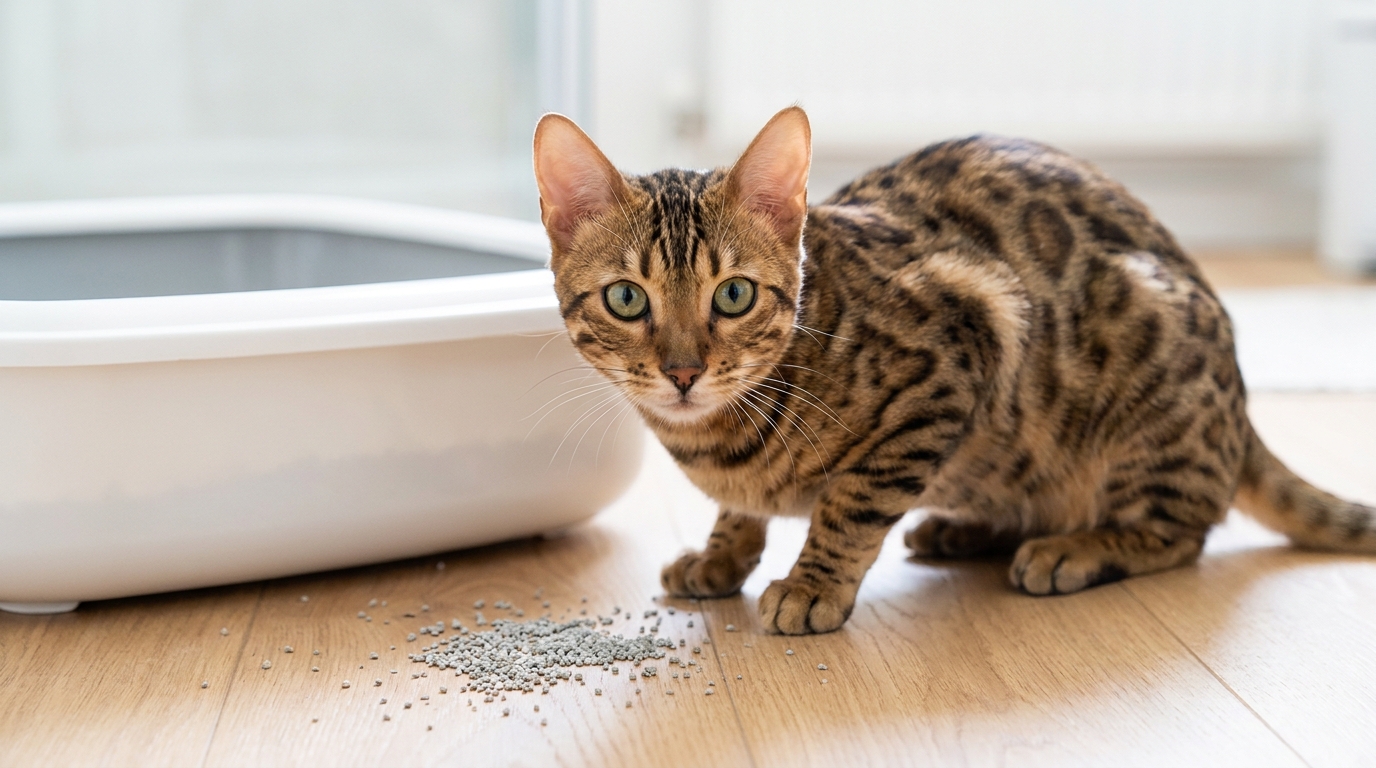
Why is my cat eating cat litter? Kittens often do it out of curiosity, but in an adult cat it can signal anemia or another illness that needs a vet.
Go to an emergency vet now if your cat is vomiting repeatedly, straining without passing stool, has a painful or swollen belly, has very pale or white gums, seems weak or collapses, or stops eating after eating litter.
Why Is My Cat Eating Cat Litter? Understanding Pica
Eating things that are not food has a name. According to PetMD, "The repeated abnormal ingestion of substances not normally eaten is a health condition known as pica."
Your cat's age matters most here. A kitten that chews a few granules while playing is usually just exploring. An adult cat that suddenly starts eating or licking litter is a different story. PetMD notes that "Acute (sudden onset) pica usually has a medical condition causing it."
So this guide treats kittens and adult cats separately. First, the signs that cannot wait.
Emergency Signs: Go to an Emergency Vet Now
Go to an emergency vet now if your cat:
- is vomiting repeatedly
- is straining in the litter box and passing little or no stool or urine
- has a painful or swollen belly
- has very pale, white, grey or bluish gums
- seems weak or collapses
- stops eating after eating litter
PetMD warns that clumping clay litter "can form a cement-like concretion of material in the stomach, leading to an intestinal blockage." A blockage needs a hands-on exam and imaging that only a clinic can provide.
A cat that strains and produces nothing may be blocked in the gut, but a cat that cannot pass urine is also an emergency, and the two can look alike. If your cat is straining in the litter box and passing little or no stool or urine, go to an emergency vet now.
Unsure whether what you see counts? Our pet emergency checklist walks through the red flags, and our guide to why cats vomit covers vomiting in more detail. If you see any sign above, go now; do not wait to see if it passes.
Kittens: Usually Curiosity, but Watch the Belly
Kittens explore with their mouths. PetMD explains: "Many kittens will play with cat litter just as they play with toys. They can even ingest the litter during play, and this can become a problem if it becomes impacted in their gastrointestinal tract."
Some exploring is normal in a kitten, but the litter type matters:
- Switch to non-clumping litter. Give a young kitten a non-clumping litter.
- Watch stool and appetite. Any change is worth a call to your vet.
- Offer better things to play with. Toys and short play sessions make the box less interesting.
Some kittens need a vet, not more toys. A kitten with fleas, pale gums or weakness should see a veterinarian, because PetMD lists severe flea infestation among the causes of anemia in cats. Very pale or white gums, or weakness, mean an emergency vet now. For more on the first months, see our kitten care guide.
Adult Cats: Call Your Vet
An adult cat needs a different response. International Cat Care advises, "If your adult cat starts eating litter, contact your veterinary team straight away for advice." For an adult cat, calling the vet is the first step, not watching and waiting.
One possible reason is anemia, which means too few healthy red blood cells. International Cat Care notes that "Cats with anaemia may lick or consume litter." PetMD adds that anemic cats "become lethargic and have pale gums."
According to PetMD, causes of anemia in cats include:
- kidney failure
- feline leukemia (FeLV) and feline immunodeficiency virus (FIV)
- blood parasites
- severe flea infestation
- certain cancers
Only a vet can confirm anemia, with bloodwork. You cannot tell from home, and you should not try to treat it at home with supplements or human medicines. Pale gums are a reason to see a vet, not a diagnosis.
For background on two of the causes above, read our guides to early signs of kidney disease in cats and why indoor cats still need flea protection.
Other Reasons Cats Eat Litter
Anemia is not the only possibility. Other causes include:
- The litter smells like food. PetMD notes that litter made from food-based products such as corn, walnut shells, wheat or grass "can be enticing to cats because of its scent."
- Dietary deficiencies. Your vet can review what and how you feed.
- Intestinal parasites. See our guide to cat worms, their signs and types.
- Rarely, hyperthyroidism. An overactive thyroid is an uncommon cause. It tends to come with other changes, such as weight loss despite a good appetite. Our guide to cats losing weight while eating normally explains more.
- Boredom and stress. More play and a steady routine can help, but in an adult cat only after a vet has looked for a medical cause.
Which Litters Are Riskier if Eaten
The litter type changes the risk if your cat swallows some. Here is how PetMD describes the main types:
- Clumping clay: PetMD says it is "linked to vomiting, diarrhea, gastrointestinal obstruction, and respiratory problems when eaten by cats."
- Clumping crystal (silica): this type "runs the same risk of gastrointestinal issues as clay litter does, including blockage."
- Corn, walnut and wheat: these food-based litters can rarely grow mold, according to PetMD, and their scent can draw cats in.
- Paper and wood: PetMD says this litter "is not considered toxic if ingested; however, if ingested in large amounts, it can still cause stomach upset or blockage."
No litter is safe to eat in quantity. If your cat is eating litter, moving to a non-clumping type while you arrange a vet check is a sensible step, but for an adult cat it does not replace the vet visit.
What to Do Tonight
Start with the emergency list above. If any of those signs are present, go to an emergency vet now. If not, here is what to do this evening:
- Limit further snacking. Scoop out loose clumps and gently interrupt your cat if you see them eating litter.
- Note how much and how often. Write down roughly how much was eaten, when you first noticed, and how often it happens.
- Check the basics. Make sure your cat is eating, drinking and passing stool and urine as usual.
- Look at the gums in daylight. Gently lift the lip near a window or under good light. Healthy gums are usually pink. If they look pale, white, grey or bluish, do not wait: go to an emergency vet now. Some cats have naturally dark-pigmented gums, so check a pink area or ask a vet what is normal for your cat. If the color looks normal, write down what you saw.
- Keep the litter details. Save a small sample, the bag or a photo of the label so a vet knows the litter type.
- Scoop daily. It shows whether stool and urine look normal.
For perspective, PetMD notes that "Most litter ingestion occurs in small amounts and will cause no side effects to your kitty." That is reassuring for a kitten that nibbled a few granules, but for an adult cat that has started the habit, the advice stays the same: contact your vet.
PetMD is also clear about when to act: "If you notice your cat is eating litter persistently, or if your cat stops eating and shows symptoms of vomiting, diarrhea, constipation, coughing, wheezing, or lethargy, take them to the vet."
If your cat is also sleeping in the box, read our guide to when a cat sleeping in the litter box means an emergency.
What a RexVet Online Vet Can and Cannot Do
A video visit can help you decide what to do next, especially when your regular clinic is closed. RexVet's veterinarians are licensed in Florida, New York and Virginia. During a video visit, the veterinarian can:
- take the history: your cat's age, diet, how suddenly the litter eating started and any other symptoms
- look at gum color and body condition on camera, though camera lighting limits accuracy
- check the type of litter you use
- help you decide between watching at home, a vet visit for bloodwork, or the ER
A video visit cannot run bloodwork or a blood smear, take X-rays to look for a blockage, or test for FeLV or FIV. If those are needed, the vet will tell you to go in person or to an ER. For an adult cat that has newly started eating litter, an in-person visit for bloodwork is still part of the plan.
If the veterinarian decides medication is appropriate, they can prescribe where state rules allow. In Florida, a veterinarian who has seen your pet only by video may prescribe only FDA-approved animal drugs used as labeled, for up to 14 days (1 month for flea-and-tick-only products), and cannot renew without an in-person exam.
If you are in one of those three states and want a vet's help deciding your next step, you can book a RexVet video visit. RexVet's veterinarians are licensed in Florida, New York and Virginia only, they are available 24/7, and a video visit is $64.99.
When to Go In Person in Florida, New York or Virginia
Go to an emergency vet now for straining with little or no stool or urine, repeated vomiting, a painful or swollen belly, very pale, white, grey or bluish gums, weakness or collapse, or not eating after eating litter.
Book an in-person clinic visit for these non-emergency reasons:
- Any adult cat that has started eating litter should see a vet in person for bloodwork, even if it seems well otherwise.
- Weight loss, or a change in appetite or energy.
- Ongoing mild signs, such as softer stool, or a kitten that keeps eating litter after you switch to a non-clumping type.
Florida law also builds in a path to hands-on care. A veterinarian practicing telehealth must give you "the contact information for at least one physical veterinary clinic in the vicinity of the patient's location," under Florida Statutes section 474.2021.
To learn how video visits work where you live, see our pages for Florida, New York and Virginia.
Frequently Asked Questions
Is it normal for kittens to eat litter?
Many kittens play with litter and may swallow some, according to PetMD; it is usually curiosity, but swallowed litter can become impacted in the gut. Switch a young kitten to a non-clumping litter and watch stool and appetite. A kitten with fleas, pale gums or weakness needs a vet.
Is clumping litter dangerous if my cat eats it?
It can be. PetMD notes that clumping clay "can form a cement-like concretion of material in the stomach, leading to an intestinal blockage," and that clumping crystal litter carries the same risk of gut problems, including blockage. If your cat ate clumping litter, call a veterinarian and tell them roughly how much. Go to an emergency vet if any sign on the emergency list appears.
Does eating litter mean my cat is anemic?
It can. International Cat Care notes that "cats with anaemia may lick or consume litter," but litter eating has several possible causes, so a veterinarian needs bloodwork to tell whether anemia is involved. Do not try to diagnose or treat it at home. If the gums look very pale or white, or your cat is weak, go to an emergency vet now.
What should I do if my cat ate a lot of litter?
Check the emergency signs first; if any are present, go to an emergency vet now. Otherwise, if your cat ate a lot of litter, especially clumping clay or crystal litter, or is a kitten, call a veterinarian now for advice and tell them the litter type and roughly how much was eaten. Watch for the signs PetMD lists: vomiting, diarrhea, constipation, coughing, wheezing, or lethargy.
How do I stop my cat from eating litter?
Start with the cause. For an adult cat, that means contacting your vet first so a medical problem can be ruled out. After that, a non-clumping litter that does not smell like food, daily scooping, and more play can help.
In a kitten, eating litter is usually curiosity; in an adult cat, it is a reason to call your vet, and any emergency sign above means an emergency vet first. If you would like help deciding what to do next, book a video visit now. RexVet's veterinarians are licensed in Florida, New York and Virginia only, they are available 24/7, and a video visit is $64.99.
FAQs
Is it normal for kittens to eat litter?
Many kittens play with litter and may swallow some, according to PetMD; it is usually curiosity, but swallowed litter can become impacted in the gut. Switch a young kitten to a non-clumping litter and watch stool and appetite. A kitten with fleas, pale gums or weakness needs a vet.
Is clumping litter dangerous if my cat eats it?
It can be. PetMD notes that clumping clay "can form a cement-like concretion of material in the stomach, leading to an intestinal blockage," and that clumping crystal litter carries the same risk of gut problems, including blockage. If your cat ate clumping litter, call a veterinarian and tell them roughly how much. Go to an emergency vet if any sign on the emergency list appears.
Does eating litter mean my cat is anemic?
It can. International Cat Care notes that "cats with anaemia may lick or consume litter," but litter eating has several possible causes, so a veterinarian needs bloodwork to tell whether anemia is involved. Do not try to diagnose or treat it at home. If the gums look very pale or white, or your cat is weak, go to an emergency vet now.
What should I do if my cat ate a lot of litter?
Check the emergency signs first; if any are present, go to an emergency vet now. Otherwise, if your cat ate a lot of litter, especially clumping clay or crystal litter, or is a kitten, call a veterinarian now for advice and tell them the litter type and roughly how much was eaten. Watch for the signs PetMD lists: vomiting, diarrhea, constipation, coughing, wheezing, or lethargy.
How do I stop my cat from eating litter?
Start with the cause. For an adult cat, that means contacting your vet first so a medical problem can be ruled out. After that, a non-clumping litter that does not smell like food, daily scooping, and more play can help.
In a kitten, eating litter is usually curiosity; in an adult cat, it is a reason to call your vet, and any emergency sign above means an emergency vet first. If you would like help deciding what to do next, book a video visit now. RexVet's veterinarians are licensed in Florida, New York and Virginia only, they are available 24/7, and a video visit is $64.99.
Medically Reviewed
Reviewed by Dr. Tiffany Delacruz, DVM — licensed veterinarian and CEO of RexVet. Last reviewed September 23, 2026.
Content is for informational purposes and does not replace professional veterinary advice.
Chief Executive Officer · Licensed Veterinarian
Dr. Delacruz is a licensed Doctor of Veterinary Medicine specializing in preventive care and veterinary telehealth. She reviews all health content on RexVet to ensure accuracy and clinical relevance.
Sources & References
- · American Veterinary Medical Association — Telehealth Guidelines
- · AVMA — Pet Care Resources
- · U.S. FDA — Animal & Veterinary
Need an Expert Opinion on This Topic?
Connect with a certified vet via video call in minutes
Talk to Vet Now