
Sandspurs in Dog's Paw? How to Remove Them and When to Worry
By RexVet Team | Reviewed by Dr. Tiffany Delacruz, DVM
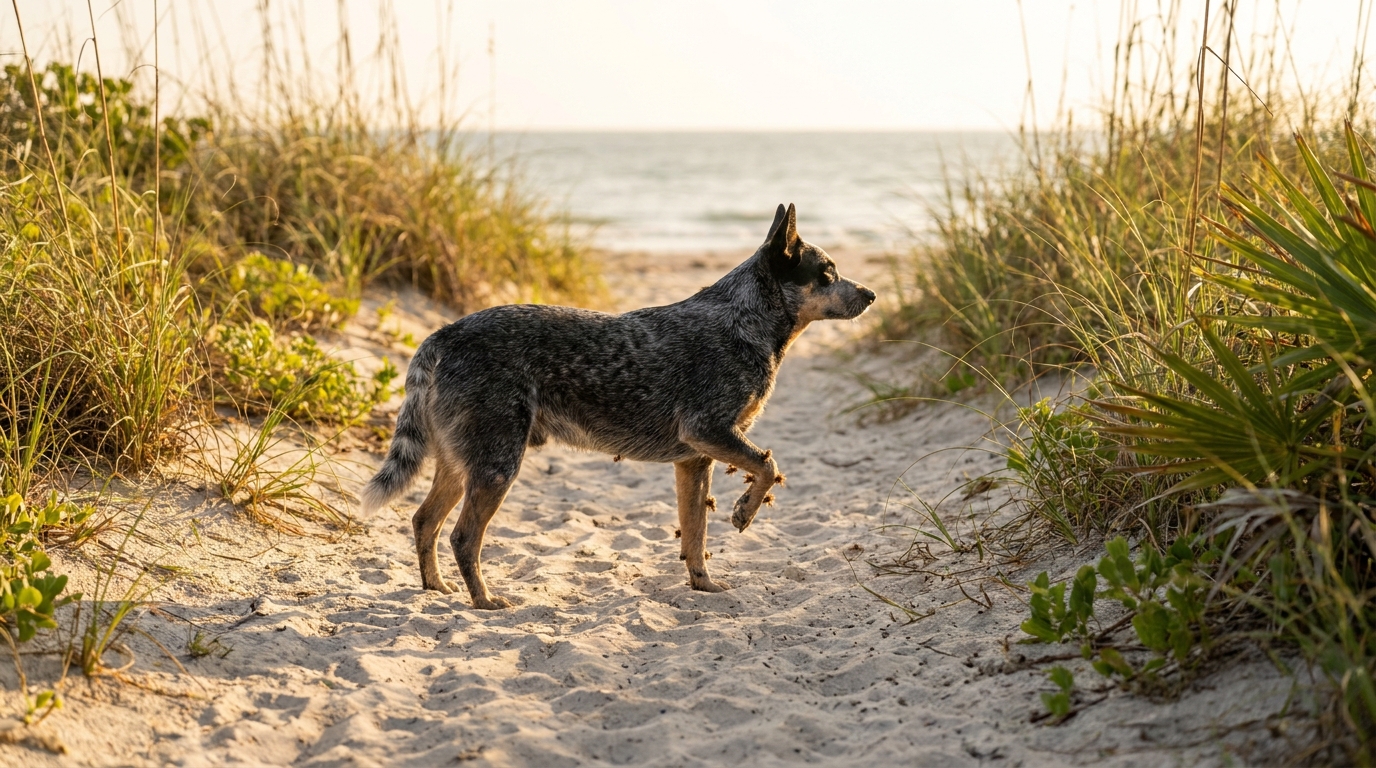
Sandspurs in dog's paw? Hold the paw still, lift out burs you can see with tweezers, and leave anything buried deep for a vet to remove.
Go to a vet now if your dog swallowed a bur and is gagging, coughing or struggling to breathe, if a bur is in or near an eye, or if a paw is badly swollen, hot or oozing.
Your dog comes in from the yard or a beach path and suddenly holds up a paw, licks it hard or hops on three legs. In sandy parts of Florida, a sandspur is a good first thing to check for.
Sandspurs in dog's paw: why these burs hurt so much
Sandspurs (also called sandburs or sticker burrs) are the seed burs of a grass. The UF/IFAS Extension office in Taylor County describes the spines as "tiny and short in length, very sharp, with a curved hook on the tip end (similar to a fish hook)."
That hook is the whole problem. A bur that pokes into a pad or the skin between the toes catches, and every step presses on it again. That is why a dog who stepped on a sticker burr can start limping so suddenly.
UF/IFAS Extension also notes that from June through November the flower stalks appear with spiny, bur-like flower clusters.
UF/IFAS EDIS, the university's publication library, says of southern sandbur: "This native grass is adapted to dry, sandy soils and has a shallow, fibrous root system." Sandy lawns, beach paths and park edges are all places your dog can pick them up.
Emergency signs: when a bur is more than a paw problem
Some bur problems go beyond a sore foot. These need an in-person emergency vet now, not a wait-and-see approach at home:
- A swallowed bur with gagging, coughing or trouble breathing. If your dog chewed at burs and is now gagging, coughing or struggling to breathe, go to an emergency vet now. Do not reach into the throat.
- A bur in or near an eye. Do not try to remove it yourself. Keep your dog from rubbing the face and go to an emergency vet.
- A paw that is badly swollen, hot or oozing. This is not a paw to watch overnight. Take your dog to an in-person vet now.
- Extreme distress. A dog who cannot settle, cries out or will not let you near the foot needs hands-on care, not more attempts at home.
If you are not sure whether something counts as an emergency, our pet emergency checklist walks through the signs. When in doubt, go.
Getting them out safely
If there are no emergency signs and you can see the burs, you can usually handle the ones on the surface at home. Set yourself up first, because a dog with a sore foot may pull away or snap.
- Protect your hands. UF/IFAS Extension advises: "Use leather gloves when dealing with any spiny or sharp grass blade plants to protect your hands and arms from injury."
- Get a helper. Have someone hold your dog calmly, with one arm around the chest and a steady hand near the head. Work in good light.
- Use clean tweezers. VCA Animal Hospitals puts it simply: "If the foreign object is located where you can easily grasp it with tweezers, gently remove it."
- Know when to stop. VCA is just as clear about the other case: "If the debris is lodged deeply, leave it alone." Do not dig into the pad, squeeze the skin or cut anything.
- Comb burs out of the fur. For burs tangled in hair, work them loose with a comb, a little at a time. Do not drag them through the skin.
Why leave the deep ones? VCA explains: "Deep-seated foreign bodies need to be extracted by your veterinarian, who can sedate your dog to make the procedure more comfortable."
If you are wondering how to get sandspurs off a dog that has them all over the legs and belly, the same rules apply.
Check between the toes
Once the obvious burs are out, look closer. VCA's advice for a limping dog is to "Look between the toes for foreign bodies (thorns, splinters, grass awns) or redness." See VCA's guide to first aid for limping dogs.
- In good light, gently spread each toe apart and look at the skin and the fur between them.
- Check every pad, including the larger central pad, for a dark speck, a small hole or a red spot.
- Run your gloved fingers through the fur on the top of the foot and up the leg. Burs can ride higher than you expect.
- Check all four feet, not just the one your dog is favoring.
If you find a bur that is embedded rather than sitting on the surface, do not tug at it. Leave it for your vet.
Signs a spine is still in there
Sometimes you get the bur out but a small piece of a spine stays in the skin. Other times a bur went in and you never saw it.
Puncture wounds like this are common in dogs. PetMD notes that "Splinters, stickers, and animal bites (from other dogs, mostly) are the most common puncture wounds seen in dogs." PetMD also warns that puncture wounds often become infected under the skin, even when the surface looks fine.
VCA describes what to feel for: "A deeper infection, like an abscess, will appear as a warm, soft to mildly firm swelling under the skin." A swelling like that means a vet check. It is not something to keep watching at home.
Other signs that something is still bothering the foot:
- Licking or chewing at the same spot
- A limp that is still there, or comes back, after a day of rest
- A sore spot your dog pulls away from when you touch it
- Redness or swelling that stays in one place
Any of these means a vet check. If you are not sure a bur is to blame, our guides to dog paw licking causes and treatment and why a dog licks its paws constantly can help you sort it out.
Burs in the mouth
Dogs bite at burs stuck in their fur and feet, so burs can end up in the mouth. If your dog was chewing at their paws, check the mouth too.
Only do this if your dog allows it. A dog in pain may snap, so go slowly and stop if your dog resists. In good light, gently lift the lips and look along the gums, inside the cheeks and between the teeth.
If you see a bur on the tongue, the gums or toward the throat, do not try to pull it out yourself; a vet should remove it. If your dog is gagging, coughing, struggling to breathe or still in obvious distress, go to an emergency vet now.
Heavy drooling after chewing at burs is another reason to look closer. Our guide on sudden heavy drooling in dogs covers what to check and when to go in.
What a RexVet online vet can and cannot do for sandspurs
For a sandbur stuck in a dog's paw with no emergency signs, a video visit can help you decide what to do next. It is for non-emergency questions. Breathing trouble, a bur in or near an eye, or a badly swollen, hot or oozing paw needs an in-person vet, not a video call.
A video vet can:
- Look at the paw up close on camera while you spread the toes and hold it to the light
- Coach you through safe removal of burs you can reach
- Spot swelling, redness or signs that a spine may still be in the paw
- Help you decide whether this is home care or a clinic visit
A video vet cannot sedate your dog, probe the pad or take X-rays. If the vet suspects a spine is still in the paw, the next step is a clinic visit.
If the veterinarian decides medication is appropriate, they can prescribe where state rules allow. In Florida, a veterinarian who has seen your pet only by video may prescribe only FDA-approved animal drugs used as labeled, for up to 14 days (1 month for flea-and-tick-only products), and cannot renew without an in-person exam. A retained spine or a possible abscess needs hands-on care at a clinic.
RexVet's veterinarians are licensed in Florida, New York and Virginia and are available 24/7, including nights, weekends and holidays. A video visit is $64.99. Book a RexVet video visit.
A clear photo or short video of the paw helps the vet see what you see. Our guide on how to upload pet photos and videos for an online vet review explains how to get a useful shot.
Where sandspurs grow, and preventing the next one
UF/IFAS EDIS describes the plant's range: "Southern sandbur is an annual grass that grows in pastures and cropland throughout the warm areas of the southern United States from Virginia to California." In Florida, watch the sandy edges of yards, paths and empty lots.
A few habits help:
- Steer around sandy, weedy patches. Watch for the spiny clusters along path edges.
- Wipe and check paws after walks. A damp cloth and a quick look between the toes can catch burs before they work in.
- Consider dog boots. Dog boots can reduce paw contact with burs. Still check the fur between the toes and up the legs, because burs can catch above the boot.
For other Florida paw hazards, see our guides to hot pavement paw burns and fire ant bites on dogs in Florida.
When to be seen in person in Florida, New York or Virginia
Some sandspur problems need a vet's hands, not just a vet's eyes. See a vet in person if you notice:
- A spine you cannot reach, or one that is lodged deeply
- Warm swelling in the paw
- A limp that lasts past a day of rest or keeps coming back
- A bur in the mouth you cannot easily see or reach, or any bur in or near an eye (that one is an emergency)
In person, a vet can sedate your dog to remove a deep-seated piece more comfortably, as VCA describes. Do not put this off if the foot is not improving.
If you start with a video visit in Florida, state law requires the telehealth vet to give you "the contact information for at least one physical veterinary clinic in the vicinity of the patient's location" (Fla. Stat. 474.2021). You can read more about online vet care in Florida, New York and Virginia.
Frequently Asked Questions
How do I get sandspurs out of my dog's paw?
Put on leather gloves, have a helper hold your dog, and work in good light. Grasp each bur you can easily reach with clean tweezers and gently remove it, as VCA advises. If the debris is lodged deeply, leave it alone and let a vet remove it. Comb burs out of the fur rather than pulling them through the skin.
Can sandspurs cause an infection in dogs?
They can. PetMD lists stickers among the most common causes of puncture wounds in dogs and warns that punctures often become infected under the skin. VCA notes that a deeper infection, like an abscess, shows up as a warm swelling under the skin. If you feel a swelling like that, or your dog keeps licking or limping, have a vet check the paw.
What if my dog ate a sandspur?
If your dog allows it, gently lift the lips and check the gums, the inside of the cheeks and between the teeth for burs. Do not pull a bur from the tongue, gums or throat yourself; a vet should remove it. If your dog is gagging, coughing or struggling to breathe, go to an emergency vet now.
Do dog boots help with sandspurs?
Dog boots can reduce paw contact with burs, which helps on sandy walks. Burs can still catch in the fur above the boot and on the legs. Check the fur between the toes and up the legs after every walk, boots or not.
When is sandspur season in Florida?
UF/IFAS Extension says that from June through November the flower stalks appear with spiny, bur-like flower clusters. Those are the months to watch sandy paths and lawns closely. Wiping and checking your dog's paws after walks is a good habit all year.
If your dog has a sore paw and no emergency signs, you do not have to guess alone. RexVet's veterinarians are licensed in Florida, New York and Virginia and are available 24/7 to look at the paw with you and help you decide on home care or a clinic visit. A video visit is $64.99, and you can book a video visit now.
FAQs
How do I get sandspurs out of my dog's paw?
Put on leather gloves, have a helper hold your dog, and work in good light. Grasp each bur you can easily reach with clean tweezers and gently remove it, as VCA advises. If the debris is lodged deeply, leave it alone and let a vet remove it. Comb burs out of the fur rather than pulling them through the skin.
Can sandspurs cause an infection in dogs?
They can. PetMD lists stickers among the most common causes of puncture wounds in dogs and warns that punctures often become infected under the skin. VCA notes that a deeper infection, like an abscess, shows up as a warm swelling under the skin. If you feel a swelling like that, or your dog keeps licking or limping, have a vet check the paw.
What if my dog ate a sandspur?
If your dog allows it, gently lift the lips and check the gums, the inside of the cheeks and between the teeth for burs. Do not pull a bur from the tongue, gums or throat yourself; a vet should remove it. If your dog is gagging, coughing or struggling to breathe, go to an emergency vet now.
Do dog boots help with sandspurs?
Dog boots can reduce paw contact with burs, which helps on sandy walks. Burs can still catch in the fur above the boot and on the legs. Check the fur between the toes and up the legs after every walk, boots or not.
When is sandspur season in Florida?
UF/IFAS Extension says that from June through November the flower stalks appear with spiny, bur-like flower clusters. Those are the months to watch sandy paths and lawns closely. Wiping and checking your dog's paws after walks is a good habit all year.
If your dog has a sore paw and no emergency signs, you do not have to guess alone. RexVet's veterinarians are licensed in Florida, New York and Virginia and are available 24/7 to look at the paw with you and help you decide on home care or a clinic visit. A video visit is $64.99, and you can book a video visit now.
Medically Reviewed
Reviewed by Dr. Tiffany Delacruz, DVM — licensed veterinarian and CEO of RexVet. Last reviewed September 26, 2026.
Content is for informational purposes and does not replace professional veterinary advice.
Chief Executive Officer · Licensed Veterinarian
Dr. Delacruz is a licensed Doctor of Veterinary Medicine specializing in preventive care and veterinary telehealth. She reviews all health content on RexVet to ensure accuracy and clinical relevance.
Sources & References
- · American Veterinary Medical Association — Telehealth Guidelines
- · AVMA — Pet Care Resources
- · U.S. FDA — Animal & Veterinary
Need an Expert Opinion on This Topic?
Connect with a certified vet via video call in minutes
Talk to Vet Now