
Why Is My Dog Suddenly Drooling a Lot? What to Do Tonight
By RexVet Team | Reviewed by Dr. Tiffany Delacruz, DVM
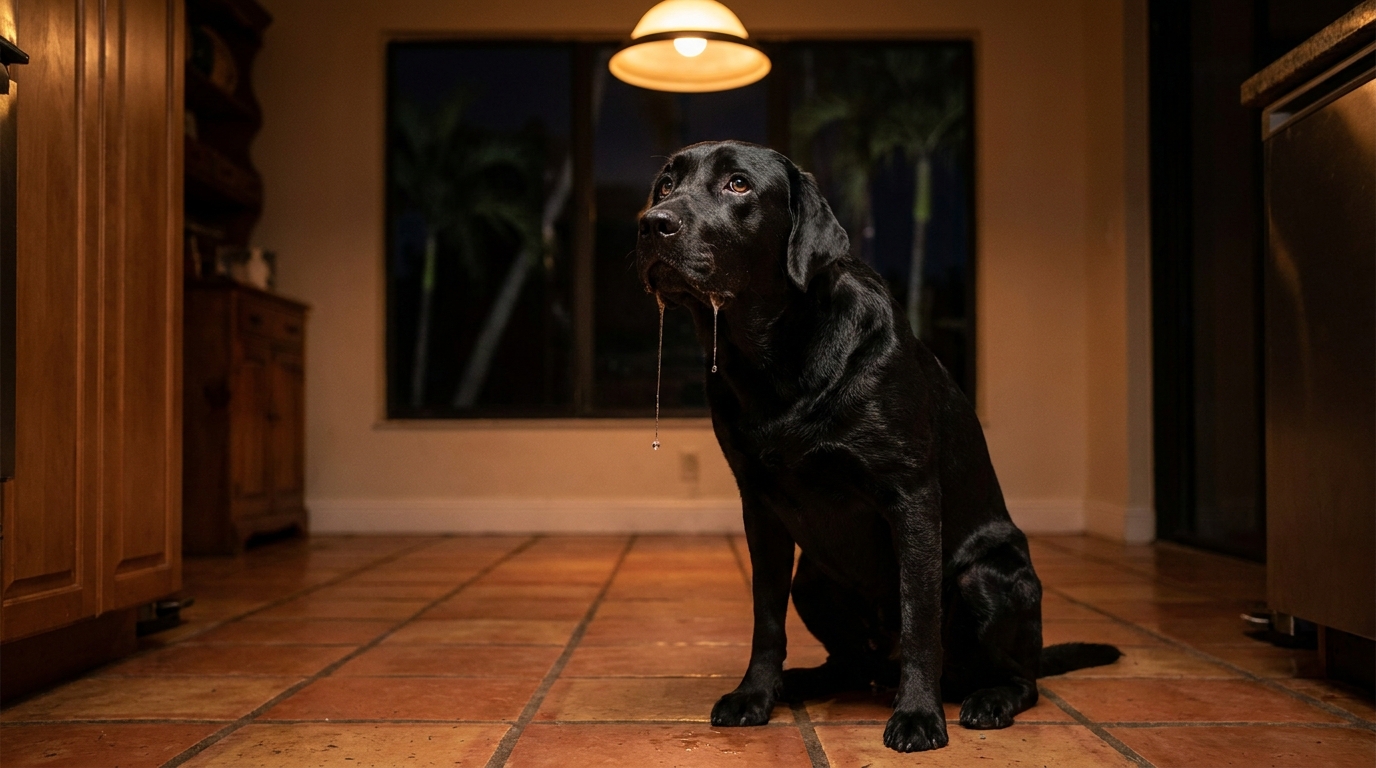
Sudden heavy drooling in a dog can be harmless or a same-hour emergency; here is how to tell which signs mean go now and which can wait.
If your dog is drooling and also retching without bringing anything up, has a swollen or tight belly, pale or blue gums, trouble breathing, is stumbling or seizing, or you saw it mouth a toad or a chemical, go to an in-person emergency vet now, not a video visit.
If you are typing "why is my dog suddenly drooling a lot" into your phone tonight, start here: the second sign, not the drool, tells you whether to drive now or watch.
Is it an emergency? The drooling-plus-which-sign matrix
Match what you see:
- Drooling plus retching with nothing coming up, a swollen or tight belly, or restlessness that will not settle: suspect bloat. Go to an in-person emergency vet now.
- Drooling plus frothy foam, vigorous head shaking, pawing at the mouth, a stumbling gait, a seizure, trouble breathing or blue gums, especially after being outside: suspect a toad or a toxin. Go to an in-person emergency vet now.
- Drooling plus blood in the saliva, a mouth held open, or an object you can see stuck in the mouth: in person tonight.
- Drooling in a dog that is otherwise alert, eating, drinking and behaving normally: watch closely and video-triage.
When you are not sure which group a sign belongs to, treat it as an emergency and go. See the guide to online vet vs emergency vet.
First, the 60-second timeline check
Spend one minute on the last hour and write the answers down; every vet will ask:
- When did the drooling start, and what was your dog doing just before?
- Was the dog outside or unsupervised in the last hour? Florida owners: was it a warm evening? See the cane toad section below.
- What could it have chewed or licked: trash, plants, cleaners, a new chew, a bone, a stick, human food, a medication? The guides to toxic foods for dogs and household toxins room by room list the usual suspects.
- Any thunderstorm, fireworks or car ride tonight?
- Any new food, treat or chew in the last day?
Why is my dog suddenly drooling a lot? The seven causes, most dangerous first
Veterinarians call drooling ptyalism. The Merck Veterinary Manual explains that it can be true oversecretion of saliva or pseudoptyalism, where a normal amount of saliva runs out because of the shape of the lower lip or a swallowing problem. Merck's triggers include drugs, toxins or poisons; local irritation or inflammation; infectious diseases such as rabies; motion sickness, fear, nervousness or excitement; reluctance to swallow or interference with swallowing; lesions under the tongue; tonsillitis; heavy, pendulous lower lips; metabolic disorders; and an abscess or blockage of a salivary gland. The seven to think about tonight:
- Toad toxin and chemical or plant irritants. Anything caustic in the mouth causes an immediate flood of saliva, often foamy. In Florida, think cane toad first (next section).
- Something stuck in the mouth. Merck notes that thorns, grass awns, plant burrs and fishhooks can embed in the lips, and that thread, string or another object can get caught under the tongue. The dog paws, scratches or rubs at its mouth, has foul breath, drools heavily, may refuse to eat, and may not let you look.
- Bloat (GDV). Profuse drooling with retching that produces nothing and a belly that looks swollen. This one can kill within hours; see below.
- Nausea and motion sickness. Merck lists motion sickness among drooling triggers. If vomiting follows, see why is my dog vomiting and dog throwing up at night.
- Mouth pain. Merck says bad breath and drooling are common with mouth inflammation, tongue inflammation (glossitis) and sore throat, and that drooling with reluctance to eat is a common sign of glossitis, though the cause may go undiscovered unless the mouth is carefully examined. Trench mouth can produce blood-tinged saliva; fungal stomatitis causes drooling, bad breath, refusal to eat and open sores. For dental disease, see the guide to dog dental cleaning costs.
- Fear, nervousness and excitement. All three are on Merck's list. Storms, fireworks or a car ride can set it off in a dog that never drools otherwise; see storm anxiety in dogs.
- Pseudoptyalism. Heavy, pendulous lower lips or a swallowing problem mean normal saliva simply runs out. The clue is history: a dog that has always drooled versus one that suddenly started.
When drooling has no obvious cause, expect the vet to ask about rabies vaccination status.
Florida dog parents: the cane toad and why nighttime drooling on a warm evening is a go-now situation
The Merck Veterinary Manual says the cane toad (Rhinella marina, also called the marine or giant toad) is established in Florida and a few other southern states, not in New York or Virginia, and that toad encounters are most common in warm or mild weather.
Merck describes the signs as immediate because the toxin is extremely irritating: profuse, sometimes frothy salivation with vigorous head shaking, pawing at the mouth and retching. Severe exposures can cause cardiac arrhythmias, difficulty breathing, blue gums and seizures. The Sonoran Desert toad, the other high-toxin species, lives in the southwestern US and northern Mexico, far from any of RexVet's three states. Pet Poison Helpline adds that the cane toad and the Sonoran Desert toad excrete larger amounts of toxin, and that severe drooling, difficulty breathing, irregular heart rate, stumbling, seizure and death can occur.
First aid is to immediately and thoroughly rinse the mouth with copious amounts of water. Keep the dog's head down so the water runs out of the mouth, not down the throat, and keep the dog from inhaling the froth or rinse water, which carries the toxin. Then go straight to an in-person emergency vet. Do not make the dog vomit and do not give charcoal, milk or any other home remedy; a video visit cannot treat toad poisoning.
What is safe to do at home tonight, and what you must never do
Safe to do tonight, and while someone gets the car if you are heading to the ER:
- Look in the mouth with a flashlight, but only if the dog will let you.
- Rinse the mouth with water after any suspected toad, plant or chemical contact, water flowing out, not down the throat, then go.
- Remove food, chews and toys.
- Keep the dog calm and cool in a quiet room.
- Check gum color and the shape of the belly every few minutes. Normal gums are pink; pale, white or blue gums need in-person care now.
- Photograph or bag anything the dog chewed, keep the packaging, and note the time.
Never do this:
- Never make the dog vomit at home, by any method.
- Never give any human medicine, activated charcoal, milk, salt, oil or any other home antidote.
- Never pull on a string, thread or fishhook you can see.
- Never push fingers deep into a painful mouth.
- Never wait until morning when a red-flag sign is present.
Is it bloat? How to read the belly and the retching
Bloat is the stomach filling with gas; when it twists, it becomes gastric dilatation-volvulus (GDV). VCA Animal Hospitals says dogs with GDV appear distressed or restless, salivate profusely, have trouble breathing, retch without producing anything, and may collapse or be unable to stand; the stomach area may look swollen, particularly on the left side. VCA calls GDV an immediate, life-threatening emergency that needs veterinary intervention within minutes to a few hours.
- Soft, pliable belly, resting calmly, no retching: not the bloat picture.
- Hard, swollen or tight belly that feels like a drum, pacing, restlessness or collapse, repeated attempts to vomit with nothing coming up: treat as bloat and go now.
An early GDV dog can still be walking around, so "still alert" is no reason to wait, and VCA says any dog can bloat, even dachshunds and chihuahuas. A video visit cannot treat or rule out bloat; see the RexVet guide to a dog's bloated stomach.
When to see a vet in person vs. when an online vet visit helps
Telehealth is a triage tool, not a substitute for an emergency clinic. Bloat, toad poisoning, a chemical or plant burn and a stuck object are always in-person emergencies; no camera can treat them.
In person now: any red-flag sign from the matrix at the top.
In person this week: drooling with bad breath, chewing on one side, reluctance to eat, or a mouth the dog will not let you open; blood in the saliva stays in the tonight group (see the matrix above). That pattern points to stomatitis, glossitis, trench mouth or dental disease and needs a hands-on oral exam, often with dental X-rays.
Video first:
- A dog that is drooling but alert, eating and drinking.
- Drooling that started after a car ride, a storm or fireworks.
- Drooling with mild nausea and no other sign.
- When you simply cannot tell which group applies.
On camera the veterinarian checks gum color, watches the retching pattern and the shape of the belly, looks at the mouth if the dog allows, reviews your timeline, and decides between monitor and re-check in the morning, an in-person oral exam this week, or the ER tonight.
If your dog is alert and breathing normally, you can book a RexVet video visit now for $64.99, any hour, if your dog is in Florida, New York or Virginia, the only states where RexVet's veterinarians are licensed. No prescription is promised, and a video visit cannot treat an emergency.
What the vet will do and what happens next
It depends on the cause:
- Toad or toxin exposure: emergency stabilization in person.
- Something stuck in the mouth: a sedated oral exam and removal.
- Bloat: emergency decompression of the stomach and surgery.
- Mouth disease: a dental cleaning, extractions, or treatment of the inflammation, often after dental X-rays.
- Nausea- or anxiety-driven drooling: if the veterinarian determines that medication is appropriate, they can prescribe where state rules allow; nothing is promised in advance.
If your dog is drooling but otherwise alert, you do not have to guess until the clinic opens. Pet parents whose dog is in Florida, New York or Virginia, the three states where RexVet's veterinarians hold licenses, can book a video visit with a RexVet veterinarian for $64.99, 24/7, nights and weekends included. The visit helps you decide between watching, an oral exam and the ER; it cannot treat an emergency, and the veterinarian decides whether any medication is appropriate.
Frequently asked questions
Why is my dog suddenly drooling a lot and acting weird at night?
Sudden drooling with pacing, hiding or pawing at the mouth usually means pain, nausea, fear or something in the mouth. A tight belly, restlessness that will not settle, retching with nothing coming up, trouble breathing, frothing, vigorous head shaking, pawing at the mouth after being outside, stumbling or blood mean an in-person emergency vet now; a dog that is otherwise alert, eating and drinking can be watched and checked by video.
My dog is drooling and retching but nothing comes up: is that bloat?
It can be, and you should treat it as bloat until an emergency vet rules it out. VCA Animal Hospitals lists profuse salivation and unproductive retching among the signs of GDV and says it needs veterinary intervention within minutes to a few hours. Go to the nearest emergency clinic now.
My dog in Florida is foaming at the mouth after being outside: what do I do right now?
Assume a cane toad, rinse and go. Immediately and thoroughly rinse the mouth with lots of running water so it flows out of the mouth rather than down the throat, keep the dog from breathing in the froth or rinse water, then drive straight to an in-person emergency vet. Do not make the dog vomit or give any home remedy.
Should I make my dog vomit if I think it licked or ate something?
No, never make a dog vomit at home. Chemicals and plants can do more damage coming back up, and the dog can inhale them. Keep the dog calm, remove whatever is left, and contact a vet or a pet poison hotline right away; the veterinarian decides whether decontamination is needed.
Can an online vet help if my dog is drooling a lot?
Yes, if your dog is alert, eating and breathing normally; a video vet cannot treat bloat, toad poisoning, a chemical burn or a stuck object, and those go to an in-person emergency vet. On camera a veterinarian can check gum color, breathing, the belly and the mouth, then help you decide between the ER tonight and monitoring until morning.
Sources
FAQs
Why is my dog suddenly drooling a lot and acting weird at night?
Sudden drooling with pacing, hiding or pawing at the mouth usually means pain, nausea, fear or something in the mouth. A tight belly, restlessness that will not settle, retching with nothing coming up, trouble breathing, frothing, vigorous head shaking, pawing at the mouth after being outside, stumbling or blood mean an in-person emergency vet now; a dog that is otherwise alert, eating and drinking can be watched and checked by video.
My dog is drooling and retching but nothing comes up: is that bloat?
It can be, and you should treat it as bloat until an emergency vet rules it out. VCA Animal Hospitals lists profuse salivation and unproductive retching among the signs of GDV and says it needs veterinary intervention within minutes to a few hours. Go to the nearest emergency clinic now.
My dog in Florida is foaming at the mouth after being outside: what do I do right now?
Assume a cane toad, rinse and go. Immediately and thoroughly rinse the mouth with lots of running water so it flows out of the mouth rather than down the throat, keep the dog from breathing in the froth or rinse water, then drive straight to an in-person emergency vet. Do not make the dog vomit or give any home remedy.
Should I make my dog vomit if I think it licked or ate something?
No, never make a dog vomit at home. Chemicals and plants can do more damage coming back up, and the dog can inhale them. Keep the dog calm, remove whatever is left, and contact a vet or a pet poison hotline right away; the veterinarian decides whether decontamination is needed.
Can an online vet help if my dog is drooling a lot?
Yes, if your dog is alert, eating and breathing normally; a video vet cannot treat bloat, toad poisoning, a chemical burn or a stuck object, and those go to an in-person emergency vet. On camera a veterinarian can check gum color, breathing, the belly and the mouth, then help you decide between the ER tonight and monitoring until morning.
Sources
Medically Reviewed
Reviewed by Dr. Tiffany Delacruz, DVM — licensed veterinarian and CEO of RexVet. Last reviewed September 19, 2026.
Content is for informational purposes and does not replace professional veterinary advice.
Chief Executive Officer · Licensed Veterinarian
Dr. Delacruz is a licensed Doctor of Veterinary Medicine specializing in preventive care and veterinary telehealth. She reviews all health content on RexVet to ensure accuracy and clinical relevance.
Sources & References
- · American Veterinary Medical Association — Telehealth Guidelines
- · AVMA — Pet Care Resources
- · U.S. FDA — Animal & Veterinary
Need an Expert Opinion on This Topic?
Connect with a certified vet via video call in minutes
Talk to Vet Now