
Fire Ant Bites on Dogs in Florida: What to Do Right Now
By RexVet Team | Reviewed by Dr. Tiffany Delacruz, DVM
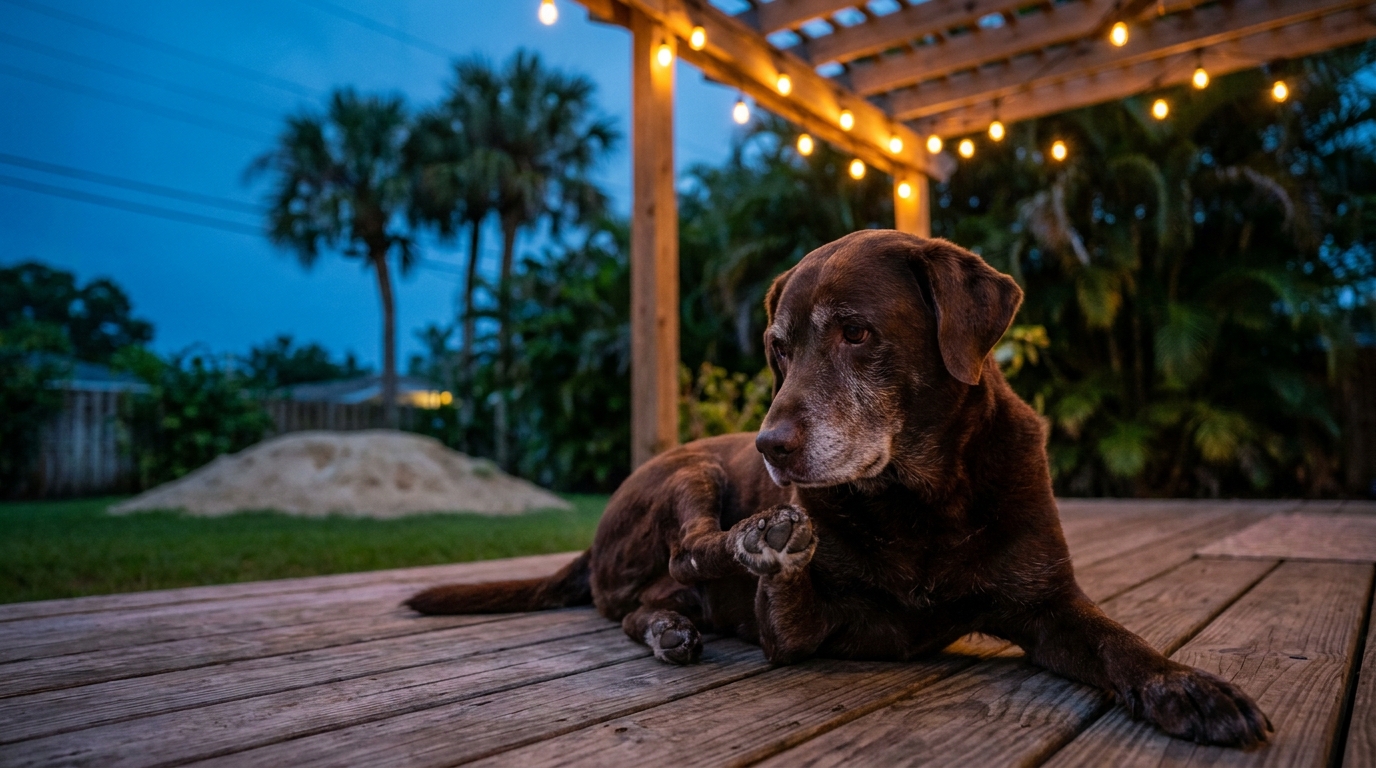
Most fire ant stings on a Florida dog are itchy red bumps you can cool and watch, but many stings, vomiting, swelling or weakness mean a vet now.
Go to an in-person emergency vet now if your dog was swarmed and cannot get away from the ants, is vomiting, has severe swelling of the face or neck, hives, trouble breathing or wheezing, heavy drooling, is wobbly, weak or collapsing, has a seizure, or was stung in or around an eye.
Fire ant bites on dogs in Florida happen in seconds: the dog steps on a mound in the yard, at the park or by a lake and comes back with ants in the coat and red bumps on the belly and paws. Check your dog against the bold line first; if none of those signs are there, get the ants off, cool the stings and keep reading.
Fire Ant Bites on Dogs in Florida: What Just Happened
A fire ant bites only to hold on; the venom comes from a sting, so this article says stings. The Merck Veterinary Manual describes the ants latching on with their mandibles, stinging with a nonbarbed stinger and moving in a circular pattern until the venom gland is empty. A disturbed mound sends swarms that attack the intruder, each ant delivering up to 10 stings.
University of Florida IFAS says the most notorious fire ant in Florida is the red imported fire ant, known for painful, burning stings and visible dirt mounds. Mounds prefer open, sunny lawns and parks, sit near ditches, ponds and lakes, and turn up under cracked pavement, which is where a Tampa or Miami dog meets them.
What Fire Ant Stings Look Like on a Dog
The Merck Veterinary Manual describes a wheal-and-flare reaction that typically settles within an hour. People often get a pustule; in dogs that rarely happens. The usual result is an itchy red bump (a papule), and these resolve within 24 hours in most cases. Dead fire ants can be stuck to the skin and coat.
Pet Poison Helpline says stings are often on the feet and the nose or muzzle, and that in animals the eye is the most critical site for fire ant damage. Veterinary first-aid guidance gives the clues: a dog that suddenly paws at its face, chews at a foot or begins to swell anywhere. Look at the belly, groin, armpits, between the toes, the muzzle and the eyelids. A sting in or around an eye is in the bold line: in-person vet now.
The First 10 Minutes: Ants Off, Cool It Down, Stop the Licking
Move the dog away from the mound first; attached ants keep stinging. Brush or pick the clinging ants off with a gloved hand or a cloth. Do not hose the dog while ants are attached. Then the home care from veterinary first-aid guidance:
- A thick baking-soda-and-water paste on the sting sites.
- An ice pack for 10 minutes (the Merck Veterinary Manual also lists a cool compress).
- An Elizabethan collar (cone) if the dog keeps licking or scratching.
- Fresh water to drink.
That is the whole list. No human creams, sprays or ointments, no popping the bumps, and no medication of any kind until a veterinarian says which product and how to give it.
When Fire Ant Stings Must Be Seen in Person: Go Now If You See These Signs
Veterinary first-aid guidance lists these signs after an insect sting as needing immediate veterinary care:
- Severe swelling around the head and neck that could compromise breathing.
- Hives on any part of the body.
- Difficulty breathing or wheezing.
- Excessive drooling.
- Agitation.
- Vomiting or diarrhea.
- Dizziness or disorientation.
- Seizures.
Severe cases are mostly many-sting cases: the Merck Veterinary Manual notes that severely affected animals were likely unable to move away from the ant colony and received multiple stings. A severe systemic reaction can bring prostration, seizures, bloody vomiting or diarrhea, and needs IV fluids, corticosteroids, epinephrine and supportive care that only a clinic can give.
Pet Poison Helpline adds two more: a sting in or around the eye, the most critical site for fire ant damage in animals, needs an in-person vet now, and any exposure to fire ant killer or bait means contact your veterinarian or Pet Poison Helpline immediately.
A video visit cannot give any of that. The emergency online vet page and the guide to an online vet versus an emergency vet explain where the line sits.
The Watch Window: What Normal Looks Like Over the Next Day
Veterinary first-aid guidance says allergic reactions usually occur within 20 minutes of the sting but can show up hours later, which is why the watch matters. The Merck Veterinary Manual says most local bumps settle within 24 hours. Check the dog every hour while you are awake: gums pink and moist, breathing quiet with no wheeze, no new swelling of the face or neck, normal energy, takes a treat or a meal, and bumps the same or fewer rather than spreading.
Swelling that spreads fast, new hives, or a face or neck that is getting bigger mean the emergency vet now. A single sting site that stays hot, oozes or worsens over the following days is different: University of Florida IFAS notes that sting effects can last up to 10 days and can become infected if the skin is broken open, which is why the cone matters; that spot is a question for a veterinarian, by video or in person. Chronically itchy skin can muddy the picture; see the allergies in Florida page.
Benadryl for Fire Ant Bites on Dogs: Ask the Vet Before You Give It
Veterinary first-aid guidance says an oral antihistamine such as diphenhydramine can minimize the reaction and decrease itching, then adds: consult your veterinarian first for proper dosing. A veterinary drug handout on diphenhydramine explains why: its use in animals is off label, so the veterinarian's directions may differ from the box, and you follow the veterinarian. It takes effect in about 1 to 2 hours, and side effects can include lethargy, dry mouth, vomiting, diarrhea and lack of appetite.
An antihistamine is for itch and a mild local reaction at home; hives, swelling toward the throat, trouble breathing or weakness are emergency-clinic signs that need a veterinarian's treatment in person, not a pill from the cupboard. Many products sold under the same brand contain other ingredients, so have the exact box in hand for the veterinarian on the call, who decides whether an over-the-counter antihistamine is appropriate for this dog and what to give. RexVet's Benadryl for dogs page is the vet-reviewed reference; this article prints no doses.
Was It a Fire Ant or a Bee or Wasp? Swollen Face and Muzzle
A swollen face may not have been fire ants. The Merck Veterinary Manual says bee and wasp stings in small animals usually land on the face or inside the mouth; the venom causes pain and swelling within minutes that can progress to redness, edema and anaphylaxis, and a honeybee stinger can remain embedded. Fire ant stings cluster on skin that touched the ground, often with dead ants in the coat; a bee or wasp sting is usually one swollen spot.
The triage rule is the same either way. A single puffy muzzle with normal breathing and pink gums is a same-hour vet question; you can book an appointment and show the swelling on camera. Swelling spreading toward the throat, hives, vomiting, weakness or any change in breathing is an emergency-clinic trip. The same watch window and antihistamine rule apply.
What a RexVet Online Vet Visit Can and Cannot Do for Fire Ant Stings
If your dog has any sign from the bold line, skip the video and go in person. For the dog with red bumps, normal breathing and pink gums, a RexVet online vet in Florida can look at the bumps, paws, muzzle, eyelids and gums on camera, watch the dog breathe and move, decide whether an over-the-counter antihistamine is appropriate for this dog and what to give, and set the watch window and the exact go-to-ER triggers for your dog.
If the veterinarian decides medication is appropriate, they can prescribe where state rules allow. The visit is live video with a veterinarian licensed in Florida, and under Florida Statutes 474.2021 telehealth-only prescriptions are limited to a 14-day supply, may not be renewed without an in-person examination, and cannot include controlled substances; see the Florida pet telehealth guide.
A video visit cannot give epinephrine, injections, IV fluids or oxygen, cannot stain and examine a stung eye, and cannot treat a dog that is vomiting, wobbly or collapsing; a RexVet veterinarian will send you to a clinic if that is what the dog needs.
If your dog is breathing normally and you want a veterinarian's eyes on the bumps tonight, you can book a RexVet video visit now for $64.99. RexVet's veterinarians are licensed in Florida, New York and Virginia only and are available 24/7; see the 24/7 online vet page.
Keeping Your Dog Out of Florida Fire Ant Mounds This Fall
University of Florida IFAS says mounds prefer open, sunny lawns, parks and pastures, sit near creeks, ditches, ponds and lakes, and turn up under cracked pavement and around stumps. Mating flights usually follow a rainy period and are most common in spring and fall, so a fresh mound can appear in a lawn that was clear last week. In hot, dry summer months the ants sometimes forage indoors and can threaten sleeping or invalid pets, and Pet Poison Helpline adds that summer stings carry the most venom.
- Walk the lawn after rain before letting the dog out and look for new mounds.
- Keep the dog leashed near mounds and along water edges.
- Check paws and belly after yard time.
- Keep the dog off treated mounds and away from ant bait, and do not treat the yard while the dog is in it.
If your dog has bumps now and is breathing normally, you do not have to decide alone: you can book a video visit with a RexVet veterinarian for $64.99, 24/7; RexVet's veterinarians are licensed in Florida, New York and Virginia only. A dog with any sign from the bold line goes to an in-person emergency vet instead.
Frequently asked questions
What should I do if my dog gets bitten by fire ants?
Get the dog away from the mound, brush the ants off with a gloved hand or cloth, then a baking soda paste, an ice pack for 10 minutes, a cone if the dog keeps licking, and fresh water; no medication until a veterinarian says what and how much. Vomiting, face or neck swelling, hives, trouble breathing, wobbliness, a seizure or an eye sting means an in-person emergency vet now.
How long do fire ant bites take to heal on a dog?
The Merck Veterinary Manual says the itchy red bumps dogs get resolve within 24 hours in most cases. A cone stops the dog breaking the skin open, which is how a sting gets infected; if the bumps are not fading after a day, ask a veterinarian.
Will Benadryl help my dog with fire ant bites?
Veterinary first-aid guidance says an oral antihistamine such as diphenhydramine can decrease itching, but to consult your veterinarian first for proper dosing; its use in dogs is off label. Ask the veterinarian on the call which product and how much, with the exact box in hand. Hives, throat swelling or trouble breathing are emergency-clinic signs that need a veterinarian's treatment in person, not a pill from the cupboard.
What do fire ant bites look like on a dog?
Clusters of small, itchy red bumps rather than the white pustules people get, usually on the belly, groin, armpits, between the toes, muzzle and eyelids, sometimes with dead ants in the coat. Pawing at the face or chewing a foot are the clues; a sting in or around an eye is an in-person visit now.
Can an online vet in Florida help with fire ant bites on my dog?
Yes, for a dog with local bumps and normal breathing. A veterinarian licensed in Florida can look at the bumps, paws, muzzle, eyelids and gums on live video, decide between home care and an in-person visit, and set the watch window; if the veterinarian decides medication is appropriate, they can prescribe where state rules allow. A dog that is vomiting, wobbly, collapsing or stung in the eye needs an in-person emergency vet, not a video call.
Sources
- Merck Veterinary Manual: Wasp, Bee, and Ant Stings to Animals
- Veterinary first-aid guidance: First Aid for Insect Stings in Dogs
- Veterinary drug handout: Diphenhydramine
- University of Florida IFAS Gardening Solutions: Fire Ants
- University of Florida IFAS ENY226/LH059: Managing Imported Fire Ants in Urban Areas
- Pet Poison Helpline: Fire Ant Venom, Small but Mighty
- Florida Statutes 474.2021: Veterinary telehealth (The Florida Senate)
FAQs
What should I do if my dog gets bitten by fire ants?
Get the dog away from the mound, brush the ants off with a gloved hand or cloth, then a baking soda paste, an ice pack for 10 minutes, a cone if the dog keeps licking, and fresh water; no medication until a veterinarian says what and how much. Vomiting, face or neck swelling, hives, trouble breathing, wobbliness, a seizure or an eye sting means an in-person emergency vet now.
How long do fire ant bites take to heal on a dog?
The Merck Veterinary Manual says the itchy red bumps dogs get resolve within 24 hours in most cases. A cone stops the dog breaking the skin open, which is how a sting gets infected; if the bumps are not fading after a day, ask a veterinarian.
Will Benadryl help my dog with fire ant bites?
Veterinary first-aid guidance says an oral antihistamine such as diphenhydramine can decrease itching, but to consult your veterinarian first for proper dosing; its use in dogs is off label. Ask the veterinarian on the call which product and how much, with the exact box in hand. Hives, throat swelling or trouble breathing are emergency-clinic signs that need a veterinarian's treatment in person, not a pill from the cupboard.
What do fire ant bites look like on a dog?
Clusters of small, itchy red bumps rather than the white pustules people get, usually on the belly, groin, armpits, between the toes, muzzle and eyelids, sometimes with dead ants in the coat. Pawing at the face or chewing a foot are the clues; a sting in or around an eye is an in-person visit now.
Can an online vet in Florida help with fire ant bites on my dog?
Yes, for a dog with local bumps and normal breathing. A veterinarian licensed in Florida can look at the bumps, paws, muzzle, eyelids and gums on live video, decide between home care and an in-person visit, and set the watch window; if the veterinarian decides medication is appropriate, they can prescribe where state rules allow. A dog that is vomiting, wobbly, collapsing or stung in the eye needs an in-person emergency vet, not a video call.
Sources
- Merck Veterinary Manual: Wasp, Bee, and Ant Stings to Animals
- Veterinary first-aid guidance: First Aid for Insect Stings in Dogs
- Veterinary drug handout: Diphenhydramine
- University of Florida IFAS Gardening Solutions: Fire Ants
- University of Florida IFAS ENY226/LH059: Managing Imported Fire Ants in Urban Areas
- Pet Poison Helpline: Fire Ant Venom, Small but Mighty
- Florida Statutes 474.2021: Veterinary telehealth (The Florida Senate)
Medically Reviewed
Reviewed by Dr. Tiffany Delacruz, DVM — licensed veterinarian and CEO of RexVet. Last reviewed September 16, 2026.
Content is for informational purposes and does not replace professional veterinary advice.
Chief Executive Officer · Licensed Veterinarian
Dr. Delacruz is a licensed Doctor of Veterinary Medicine specializing in preventive care and veterinary telehealth. She reviews all health content on RexVet to ensure accuracy and clinical relevance.
Sources & References
- · American Veterinary Medical Association — Telehealth Guidelines
- · AVMA — Pet Care Resources
- · U.S. FDA — Animal & Veterinary
Need an Expert Opinion on This Topic?
Connect with a certified vet via video call in minutes
Talk to Vet Now