
Pumpkin for Dogs: Does It Help Diarrhea or Constipation?
By RexVet Team | Reviewed by Dr. Tiffany Delacruz, DVM
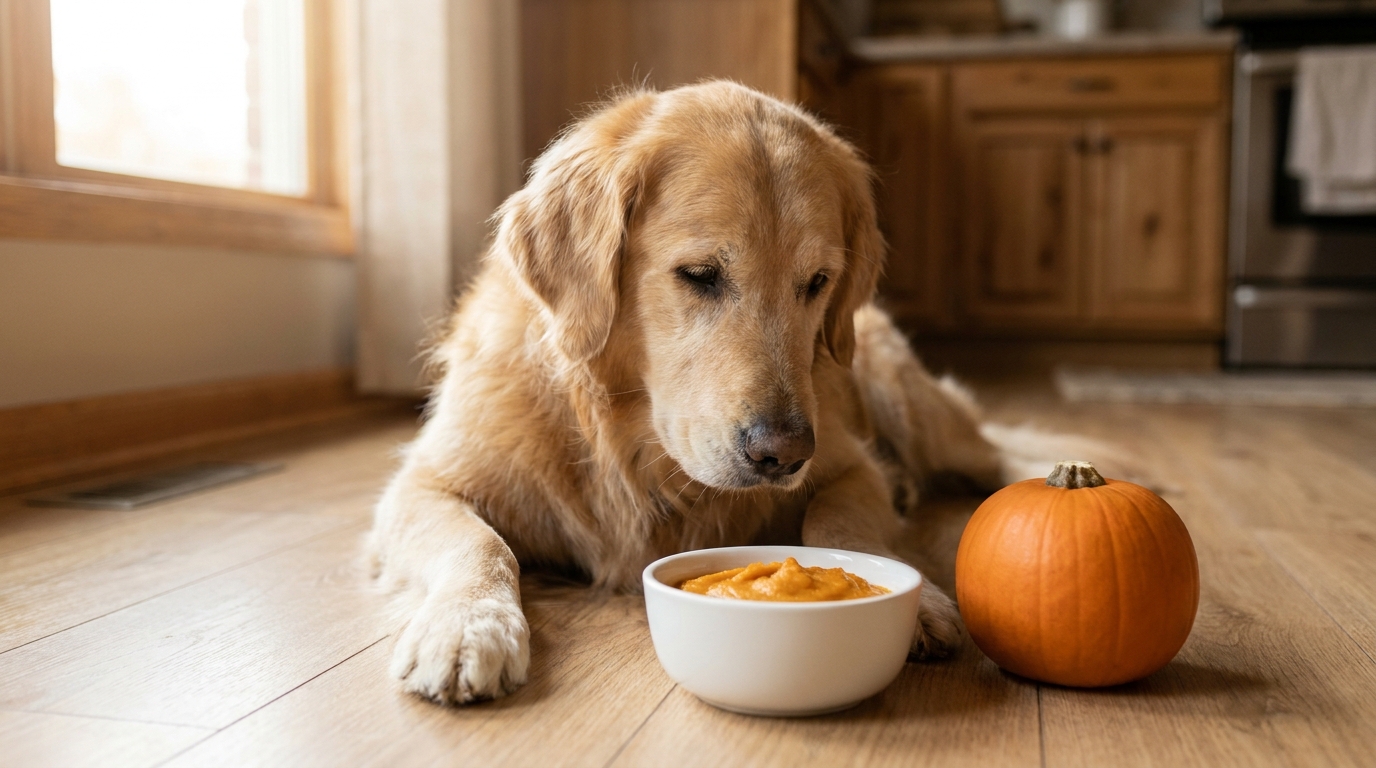
Plain pumpkin is safe for most dogs and may ease mild stool trouble. Here are the kinds to skip and the signs that need a vet instead.
Quick answer: Plain cooked or 100% canned pumpkin is safe for most dogs in small amounts; its fiber may ease mild diarrhea or constipation, though evidence is limited. Avoid pie filling (possible xylitol). Call a vet if a bright adult dog's diarrhea lasts past 48 hours, or today for a toy breed or senior; a puppy with diarrhea needs an in-person vet today. Repeated vomiting, black stool or straining with nothing out means an emergency vet now.
This article is general information, not a diagnosis. If you think your pet is in danger, go to the nearest emergency animal hospital.
Can dogs eat pumpkin?
Yes: plain cooked pumpkin and 100% canned pumpkin puree are safe for most dogs in small amounts, while raw pumpkin, the rind, pie filling, pie and soft or moldy jack-o'-lanterns are not. PetMD (reviewed by Jennifer Coates, DVM) advises 100% canned pumpkin with no added sugar, salt or spices, and warns that raw pumpkin can cause choking or an intestinal blockage. To cook fresh pumpkin, peel it, remove the seeds, and roast or boil the flesh with no butter, oil, spices or sweeteners.
Halloween and carved pumpkins. A dog that ate a soft or moldy carved pumpkin needs a call to a vet or poison line now, even if your dog seems fine or has vomited only once. The Merck Veterinary Manual explains that molds on food waste and compost make toxins that can cause vomiting, drooling, overheating, wobbliness, tremors and seizures within 1 to 2 hours or up to several hours later.
Go to an emergency vet now, even if your dog seems fine, after a large amount of clearly moldy pumpkin or compost, or for repeated vomiting, drooling, wobbliness, trembling, twitching, overheating or seizures. Don't make your dog vomit unless a vet or poison line tells you to. The poison lines are ASPCA Animal Poison Control, (888) 426-4435 (a consultation fee may apply), and Pet Poison Helpline, (855) 764-7661 (a per-incident fee applies).
Does pumpkin help dog diarrhea?
Pumpkin's fiber may firm up mild diarrhea in a bright adult dog, but pumpkin is only food fiber: it does not treat diarrhea caused by an infection, parasites, a toxin or pancreatitis, which needs a vet. USDA FoodData Central lists plain canned pumpkin as about 90% water and about 3% fiber by weight, so it is a mild source of fiber.
Dog studies of added fiber for diarrhea used psyllium or high-fiber diets in dogs a vet had already examined, not pumpkin, so the evidence for pumpkin itself is limited. In a 2000 Journal of Veterinary Internal Medicine review of 37 dogs with long-term large-bowel diarrhea, psyllium added to a highly digestible diet gave a very good to excellent response in most of them. We found no published pumpkin feeding trial in dogs.
AKC says pumpkin suits only mild diarrhea and is "not a substitute for veterinary care in severe cases." The Cornell Riney Canine Health Center advises calling the vet if loose stool lasts more than two days, and sooner for a dog that stops eating, is lethargic, is vomiting or passes fresh blood. Black, tarry stool or vomiting more than once means an emergency vet now. Don't give human anti-diarrhea medicine unless a vet says to.
A puppy with any diarrhea needs an in-person vet today, and a toy-breed or senior dog needs a vet the same day; never withhold food from a puppy or toy breed. A puppy with diarrhea plus vomiting, low energy or no appetite needs an emergency vet now because of the risk of parvo, even after a negative parvo test. For slime, jelly or red streaks, see the guide to mucus or jelly-like stool in dogs.
Pumpkin for dog constipation: when it helps and when it can't
Pumpkin's fiber may help mild constipation in a dog that is drinking well, but a dog that strains again and again with little or nothing coming out needs an emergency vet now, because a blockage or a urinary problem can look the same. The Merck Veterinary Manual lists pumpkin among fiber options for mild constipation and says a pet should be well hydrated before fiber is added, to avoid a fiber impaction.
VCA Animal Hospitals advises calling a vet if a dog has had no bowel movement within 48 to 72 hours of the last one. Use 48 hours as your line, and call a vet today for a constipated dog that is not drinking or has vomited once. VCA also notes that a straining dog may pass small amounts of liquid stool or blood that owners mistake for diarrhea.
Straining can also be a urinary problem. The Merck Veterinary Manual notes: "Occasionally, efforts to urinate are mistaken by owners as constipation." VCA says a urinary obstruction, with straining and no urine or only small squirts, is more common in male dogs and is an emergency. The guide to a dog peeing blood but acting normal covers the other urinary signs.
Pumpkin puree, pie filling, fresh pumpkin and seeds
Only plain pumpkin is safe for a dog: 100% canned pumpkin puree or plain cooked, peeled pumpkin flesh, never pie filling, pie or spiced pumpkin products. The ingredient list should name pumpkin and nothing else, and AKC warns that canned pumpkin pie mix may contain xylitol.
| Form | Safe? | Why |
|---|---|---|
| 100% canned puree | Yes | Plain fiber |
| Plain cooked, peeled | Yes | No rind or seeds |
| Pie filling | No | Sugar, spices; may have xylitol |
| Pumpkin pie | No | Sugar, fat, spices |
| Sugar-free pie | No; ER now | May hold xylitol |
| Raw pumpkin or rind | No | Choking, blockage |
| Soft or moldy carved | No; call now | Mold toxins |
| Plain seeds, ground | Rarely | High in fat |
| Salted seeds | No | Too much salt |
Sources: PetMD (puree, filling, raw, cooked and seeds), AKC and the FDA (xylitol), the Merck Veterinary Manual (mold toxins), USDA FoodData Central (seed fat) and ASPCA (salt).
Pet Poison Helpline says the small amount of nutmeg used in recipes is very unlikely to cause serious toxicity, though mild stomach upset can occur. The fat, dairy and any xylitol in pie are the bigger worry.
How much pumpkin? Ask the veterinarian first
There is no single right amount of pumpkin for every dog, so ask a veterinarian before using it for diarrhea or constipation and start small, because too much fiber can loosen stool or upset the stomach.
PetMD advises keeping all treats, pumpkin included, within 10% of a dog's daily diet. Ask a vet first for a dog on a prescription diet or with a history of pancreatitis, diabetes, stomach or kidney disease, or food allergies, and stop the pumpkin and call a vet if the stool gets looser; a swollen or painful belly means an emergency vet now.
When pumpkin is not the answer
Pumpkin is not the answer when a dog's diarrhea lasts past 48 hours (call a vet) or comes with repeated vomiting, black or jam-like stool, a painful belly or straining with nothing coming out (emergency vet now).
| Sign | Do now |
|---|---|
| Vomits more than once | ER now |
| Black, tarry or jam-like stool | ER now |
| Pale gums, weakness, collapse | ER now |
| Swollen belly, dry retching | ER now |
| Straining, little or nothing out | ER now |
| Straining to pee, little or no urine | ER now |
| Puppy plus vomiting, low energy or not eating | ER now |
| Puppy with any diarrhea | Vet today, in person |
| Toy breed or senior dog | Vet today |
| One vomit, or more than a streak of blood | Vet today |
| Only red streaks | Vet in 24 hours |
| Bright adult, diarrhea past 48 hours | Call a vet |
| No stool in 48 hours | Call a vet |
| On an NSAID or steroid | Call that vet before next dose |
| Keeps coming back, 3+ weeks | In-person exam |
The 48-hour wait applies only to a bright adult dog that is eating and drinking and has no other sign. If more than one row fits, follow the most urgent. A swollen or tight belly with dry retching, drooling or restlessness can be bloat, which the Merck Veterinary Manual says mainly affects large and giant-breed, deep-chested dogs; it means an emergency vet now, and pumpkin is never the answer here.
The Merck Veterinary Manual lists loss of appetite, vomiting, weakness, belly pain, dehydration and diarrhea as the most common signs of severe pancreatitis in dogs; milder cases may show vague signs or none. If your dog ate butter, grease or fatty scraps, the Thanksgiving leftovers section below covers what to watch for and when to go to an emergency vet.
A dog on an NSAID or a steroid that develops vomiting or diarrhea needs a call to the prescribing vet before the next dose; hold the NSAID until that vet says otherwise, but don't stop a steroid on your own. Repeated vomiting, or bloody or black stool, in a dog on an NSAID or a steroid means an emergency vet now, because the FDA warns that NSAIDs can cause stomach or intestinal ulcers. Diarrhea that keeps coming back, lasts 3 weeks or more, or comes with weight loss needs an in-person exam.
Pumpkin pie and Thanksgiving leftovers
Plain pumpkin in small amounts is fine for most dogs at Thanksgiving, but pumpkin pie, whipped cream and rich desserts can upset a dog's stomach or trigger pancreatitis, and a sugar-free pie may contain xylitol, which means an emergency vet now.
Pet Poison Helpline names butter, drippings, gravies and meat scraps as pancreatitis triggers, with signs up to 4 days later, and ASPCA says dairy can cause diarrhea. After a regular pumpkin or pecan pie with no chocolate, watch for 4 days: one vomit in a dog that is still bright means call a vet today, and repeated vomiting, belly pain or weakness means an emergency vet now. The Thanksgiving foods chart for dogs covers the rest of the table.
The FDA notes that xylitol can be used in pies and can drop a dog's blood sugar within 10 to 60 minutes, while serious effects may not show for 12 to 24 hours. After a sugar-free pie, go to an emergency vet now, even if your dog seems fine, and call a poison line on the way. ASPCA adds that xylitol can cause liver damage. Your regular clinic may be closed on Thanksgiving Day, so look up the nearest emergency hospital before the holiday.
Is pumpkin good for cats?
Plain pumpkin is sometimes suggested for mild constipation in cats, but a cat that strains in the litter box and passes little or nothing may have a urinary blockage and needs an emergency vet now, especially a male cat. The Cornell Feline Health Center lists canned pumpkin among the fibers added for constipation. PetMD adds that only plain 100% pumpkin is safe for cats, that too much canned pumpkin usually causes diarrhea, and that you should check with a vet before giving pumpkin to a cat with diarrhea.
Cornell calls a urethral blockage, in which a cat passes little or no urine and grows more distressed, "an absolute emergency." Never give pumpkin, a laxative or an enema to a straining cat; the Merck Veterinary Manual warns that phosphate-containing enemas must be avoided in cats because they can cause severe electrolyte imbalances. A cat that keeps getting constipated or stops eating needs a vet, and the guide to blood in cat stool explains how straining to pee can look like constipation.
When a video visit helps
A video visit with a licensed RexVet vet fits a bright adult dog that has had mild diarrhea or mild constipation for less than 48 hours and is still eating and drinking, when you want to know whether to try plain pumpkin, a bland diet or nothing at all. RexVet is a 501(c)(3) non-profit, and a $64.99 live video visit is with a veterinarian licensed in your pet's state (Florida, New York or Virginia), with your dog located there during the visit. Live slots run about 8 AM to 11 PM ET, and Thanksgiving availability isn't confirmed, so check open slots when you book a video visit.
The veterinarian reviews diet changes, what your dog ate, stool photos or video, and your dog's age and breed, then sets a home plan and tells you when a stool test or an in-person exam is needed. A video visit cannot run a fecal test, take X-rays or feel the belly. No prescription is promised: any medicine is the veterinarian's decision after the visit, and state rules limit what can be prescribed by video (see the FAQ below). RexVet is not a pharmacy; if the veterinarian prescribes, a pharmacy fills the prescription and a pharmacy transfer fee applies.
Not a fit: a puppy with any diarrhea needs an in-person vet today. Black, tarry or jam-like stool, repeated vomiting, a swollen or painful belly, straining with little or nothing coming out, a dog straining to pee with little or no urine, pale gums or weakness, or a dog that ate a sugar-free pie all mean an emergency vet now, not a video call. After a soft or moldy pumpkin, call a vet or poison line now.
Need an Expert Opinion on This Topic?
Book a video visit with a licensed vet, evenings and weekends included
See open timesFrequently Asked Questions
Can dogs eat pumpkin every day?
Yes, many dogs can have a little plain pumpkin daily (PetMD), but check with a vet first and stop if the stomach gets upset. Keep all treats within 10% of the daily diet, and skip pumpkin for a dog on a prescription diet or with a history of pancreatitis, diabetes, stomach or kidney disease, or food allergies unless that dog's vet agrees. A dog that seems to need pumpkin daily for normal stool needs an in-person exam.
How fast does pumpkin work for diarrhea?
There is no proven timeline: if a bright adult dog's mild diarrhea is not clearly better within 48 hours, call a vet. No veterinary source we checked gives a time for pumpkin to work. A puppy with diarrhea needs an in-person vet today, and a toy-breed or senior dog needs a vet the same day.
Is canned pumpkin the same as pie filling?
No. 100% canned pumpkin is plain pumpkin; pie filling adds sugar and spices and may contain xylitol, so check that the label lists only pumpkin. If your dog ate a filling that is sugar-free or lists xylitol, go to an emergency vet now and call a poison line on the way.
Can dogs eat pumpkin seeds?
Yes, as a rare treat: plain roasted pumpkin seeds, ground up, are safe for most dogs (PetMD); skip salted or seasoned seeds. Whole seeds can choke a small dog (PetMD), and roasted kernels are about half fat by weight (USDA FoodData Central). No dog study shows that pumpkin seeds treat worms, so ask a vet about parasite prevention instead.
Can dogs eat pumpkin pie?
No. After a sugar-free pie, which may contain xylitol (FDA), go to an emergency vet now, even if your dog seems fine, and call a poison line on the way. Don't make your dog vomit unless a vet or poison line tells you to. A dog that looks fine an hour later is not in the clear, because serious effects may not show for 12 to 24 hours (FDA). After a regular pumpkin pie with no chocolate, watch for 4 days: one vomit in a bright dog means call a vet today; repeated vomiting, belly pain or weakness means an emergency vet now.
Can an online vet help with my dog's diarrhea in Florida, New York or Virginia?
Often yes, for mild diarrhea or constipation in a bright adult dog located in Florida, New York or Virginia. On a video visit, a veterinarian licensed in your pet's state can review what your dog ate, stool photos, and your dog's energy and gum color, then say whether home care or an in-person exam comes next. Stool and blood tests, X-rays, a hands-on belly exam and any suspected blockage need an in-person clinic. If medicine comes up, Florida limits prescriptions based only on a video visit to FDA-approved animal drugs used as labeled, for up to 14 days (1 month for products labeled only for fleas and ticks), with no renewal without an in-person exam; human-labeled drugs, compounded antibacterial, antifungal, antiviral or antiparasitic drugs and controlled substances need an in-person exam first. In every state, federal rules require an in-person exam before a vet uses a human medication or uses an animal drug off-label. Virginia allows the exam to be electronic, but prescribing is still the veterinarian's call. In New York, the rules for veterinary video care are still unsettled, so a visit may cover less. No prescription is promised, and emergencies go to an ER.
Will pumpkin help if my dog swallowed a bone, toy or something toxic?
No. Pumpkin cannot push a bone, corn cob or toy through the gut, and it is not an antidote to any poison. After a swallowed cooked bone, don't make your dog vomit, and call a vet the same day even if your dog seems fine. A swallowed corn cob or toy piece means an in-person visit the same day. Gagging, drooling, retching, repeated vomiting, belly pain, or black or bloody stool mean an emergency vet now (see the turkey bones and leftovers guide). For a sugar-free dessert (possible xylitol) or rat or mouse bait, go to an emergency vet now and call a poison line on the way; for chocolate, onion, garlic or moldy food, call a poison line now. For grapes or raisins, which turn up in some holiday dishes, call a vet or poison line now and get your dog seen in person, even if they seem fine.
FAQs
Can dogs eat pumpkin every day?
Yes, many dogs can have a little plain pumpkin daily (PetMD), but check with a vet first and stop if the stomach gets upset. Keep all treats within 10% of the daily diet, and skip pumpkin for a dog on a prescription diet or with a history of pancreatitis, diabetes, stomach or kidney disease, or food allergies unless that dog's vet agrees. A dog that seems to need pumpkin daily for normal stool needs an in-person exam.
How fast does pumpkin work for diarrhea?
There is no proven timeline: if a bright adult dog's mild diarrhea is not clearly better within 48 hours, call a vet. No veterinary source we checked gives a time for pumpkin to work. A puppy with diarrhea needs an in-person vet today, and a toy-breed or senior dog needs a vet the same day.
Is canned pumpkin the same as pie filling?
No. 100% canned pumpkin is plain pumpkin; pie filling adds sugar and spices and may contain xylitol, so check that the label lists only pumpkin. If your dog ate a filling that is sugar-free or lists xylitol, go to an emergency vet now and call a poison line on the way.
Can dogs eat pumpkin seeds?
Yes, as a rare treat: plain roasted pumpkin seeds, ground up, are safe for most dogs (PetMD); skip salted or seasoned seeds. Whole seeds can choke a small dog (PetMD), and roasted kernels are about half fat by weight (USDA FoodData Central). No dog study shows that pumpkin seeds treat worms, so ask a vet about parasite prevention instead.
Can dogs eat pumpkin pie?
No. After a sugar-free pie, which may contain xylitol (FDA), go to an emergency vet now, even if your dog seems fine, and call a poison line on the way. Don't make your dog vomit unless a vet or poison line tells you to. A dog that looks fine an hour later is not in the clear, because serious effects may not show for 12 to 24 hours (FDA). After a regular pumpkin pie with no chocolate, watch for 4 days: one vomit in a bright dog means call a vet today; repeated vomiting, belly pain or weakness means an emergency vet now.
Can an online vet help with my dog's diarrhea in Florida, New York or Virginia?
Often yes, for mild diarrhea or constipation in a bright adult dog located in Florida, New York or Virginia. On a video visit, a veterinarian licensed in your pet's state can review what your dog ate, stool photos, and your dog's energy and gum color, then say whether home care or an in-person exam comes next. Stool and blood tests, X-rays, a hands-on belly exam and any suspected blockage need an in-person clinic. If medicine comes up, Florida limits prescriptions based only on a video visit to FDA-approved animal drugs used as labeled, for up to 14 days (1 month for products labeled only for fleas and ticks), with no renewal without an in-person exam; human-labeled drugs, compounded antibacterial, antifungal, antiviral or antiparasitic drugs and controlled substances need an in-person exam first. In every state, federal rules require an in-person exam before a vet uses a human medication or uses an animal drug off-label. Virginia allows the exam to be electronic, but prescribing is still the veterinarian's call. In New York, the rules for veterinary video care are still unsettled, so a visit may cover less. No prescription is promised, and emergencies go to an ER.
Will pumpkin help if my dog swallowed a bone, toy or something toxic?
No. Pumpkin cannot push a bone, corn cob or toy through the gut, and it is not an antidote to any poison. After a swallowed cooked bone, don't make your dog vomit, and call a vet the same day even if your dog seems fine. A swallowed corn cob or toy piece means an in-person visit the same day. Gagging, drooling, retching, repeated vomiting, belly pain, or black or bloody stool mean an emergency vet now (see the turkey bones and leftovers guide). For a sugar-free dessert (possible xylitol) or rat or mouse bait, go to an emergency vet now and call a poison line on the way; for chocolate, onion, garlic or moldy food, call a poison line now. For grapes or raisins, which turn up in some holiday dishes, call a vet or poison line now and get your dog seen in person, even if they seem fine.
Medically Reviewed
Reviewed by Dr. Tiffany Delacruz, DVM — licensed veterinarian and CEO of RexVet. Last reviewed October 31, 2026.
Content is for informational purposes and does not replace professional veterinary advice.
Chief Executive Officer · Licensed Veterinarian
Dr. Delacruz is a licensed Doctor of Veterinary Medicine specializing in preventive care and veterinary telehealth. She reviews all health content on RexVet to ensure accuracy and clinical relevance.
Sources & References
- · American Veterinary Medical Association — Telehealth Guidelines
- · AVMA — Pet Care Resources
- · U.S. FDA — Animal & Veterinary