
Dog Peeing Blood but Acting Normal? Causes and How Soon to Act
By RexVet Team | Reviewed by Dr. Tiffany Delacruz, DVM
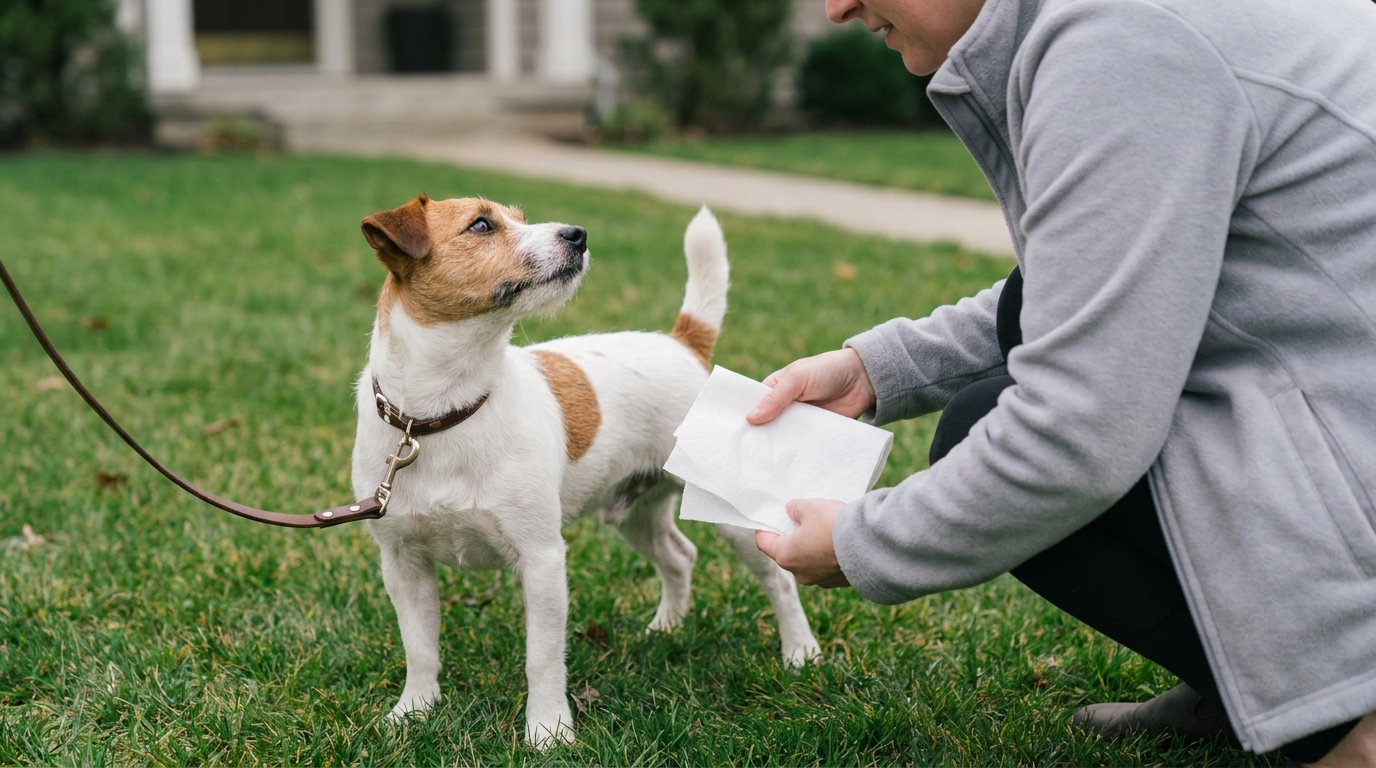
Pink or red urine in a dog who seems fine still needs a vet. See which signs mean the ER now, the same day or within 24 hours.
Quick answer: Blood in a dog's urine is never normal. If your dog is peeing normal amounts, eating and acting like themselves, see a vet within 24 hours for a urine test. Go to an emergency vet now if your dog strains with little or no urine, passes clots or dark red urine, is weak or has pale gums, vomits repeatedly, or may have eaten rat or mouse poison.
This article is general information, not a diagnosis. If you think your pet is in danger, go to the nearest emergency animal hospital.
How Fast to Act: Sign-by-Sign Time Limits
The Animal Medical Center, a non-profit specialty hospital, says blood in the urine is not always an emergency, but the pet should see a vet within 24 hours. Clots or dark red urine mean the nearest veterinary ER. Stop at the first row that fits your dog.
| Sign | What it can mean | How fast |
|---|---|---|
| Straining again and again with little or no urine, or you can't tell pee from poop | Possible urinary blockage | ER now; do not wait |
| Hard, swollen or painful belly | Overfull bladder or blockage | ER now |
| Clots, or dark red, brown or cola-colored urine | Heavy bleeding, or pigment from damaged red cells or muscle | ER now |
| Pale, white or yellow gums, weakness, collapse or fast breathing | Blood loss, red-cell destruction or a clotting problem | ER now |
| Nosebleed, bleeding gums, bruises, purple spots, blood in vomit or stool | Clotting or platelet problem | ER now |
| Any chance of rat or mouse poison, even if your dog seems fine | Bleeding can start 3 to 7 days later | ER now; call a poison line on the way |
| A fall, car strike or hard hit to the belly | Bladder or kidney injury | ER now |
| Repeated vomiting, or vomiting with any sign above | Blockage, kidney injury, pyometra or poisoning | ER now |
| Intact female in the 4 months after a heat: drinking more, tired, vomiting or discharge | Possible pyometra (womb infection) | Same day; ER now if she vomits or seems ill |
| Intact male with a fever or who seems unwell (painful belly: ER now) | Possible prostate infection | Same day |
| Tired, poor appetite or one vomit, still peeing normally | Possible kidney infection | Same day |
| First episode, normal amounts, eating and bright, none of the above | UTI, stones or crystals, prostate (intact males) | Within 24 hours, for a urine test |
| Intact female, normal heat: swollen vulva, bleeding under about 3 weeks, no creamy discharge or urinary signs | Likely heat (the blood comes from the uterus) | No rush if she is well; watch for pyometra signs for 4 months |
| Pink urine that keeps returning, or returns after antibiotics; dog 9+ or at-risk breed | Stones or bladder tumor (TCC) | Within 24 hours; ask about a culture and ultrasound |
"Within 24 hours" applies only when no ER or same-day sign is present.
Straining with little coming out. A dog that strains and passes little or no urine may be blocked. Go to an emergency vet now. Do not wait to see if it passes; a full blockage can turn fatal within a day or two.
Possible rat or mouse poison. If your dog may have eaten rat or mouse poison, go to an emergency vet now, even if he seems fine, and call a poison line on the way. Peeing blood can be the first bleeding sign. Treatment works best within hours, and bleeding can start 3 to 7 days later (Merck), so a normal clotting test on day one does not clear him. Bring the package, and do not try to make him throw up at home. Call ASPCA Animal Poison Control at (888) 426-4435 (a consultation fee may apply) or the Pet Poison Helpline at (855) 764-7661 (a per-incident fee applies).
Pale or yellow gums. Red, brown or dark urine with pale or yellow gums, weakness or collapse means the ER now: it can mean red blood cells are being destroyed, not bladder bleeding.
First Check: Is It Blood, and Is It From the Bladder?
Red near the back end does not always mean a bleeding bladder.
- Heat in an intact female. Heat bleeding comes from the uterus and shows at a swollen vulva, not from the bladder. It usually lasts one to three weeks and tapers off near the end (Merck Veterinary Manual).
- Drips between pees. Blood that drips when the dog is not peeing usually comes from the urethra, prostate, prepuce or vagina rather than the bladder, says Dr. Lulich, DACVIM, of the Minnesota Urolith Center.
- Pigment instead of blood. A positive blood reading on a urine strip can mean red cells, hemoglobin from destroyed red cells, or myoglobin from muscle (Merck).
A paper-towel photo helps the vet but cannot confirm blood. Only a urine test, where the lab spins the sample and checks it under a microscope, shows whether red urine is real blood or another pigment.
Why a Dog Can Pee Blood and Still Act Normal
Acting normal does not mean the cause is minor. Many dogs with an enlarged prostate look normal (Merck), bladder tumors mimic infection, and rat-poison bleeding starts days later. The main causes:
- Urinary tract infection (UTI). A common cause of pink urine and frequent urges to pee. UTI signs overlap with stones and tumors, so the vet wants a urine test, not a guess. If little or nothing comes out when your dog squats, go to the ER: it may be a blockage. Our guide to dog UTI symptoms and diagnosis covers the infection side in more detail.
- Bladder stones and crystals. A stone that blocks the urethra is an emergency, Merck notes. Some stones do not show on a plain X-ray, so the vet may need an ultrasound. Crystals in the urine are not the same as stones.
- Prostate disease in intact males. An enlarged prostate is the most common prostate disorder in intact male dogs and can start as young as 2.5 years (Merck). It can cause on-and-off blood in the urine or drips from the prepuce.
- Clotting problems, including rat poison. Some rat and mouse poisons stop blood from clotting, and bleeding can start days after the bait is eaten. Act on the exposure, not the signs.
- Bladder cancer. Transitional cell carcinoma (TCC) is the most common bladder tumor in dogs, and its signs look just like a UTI. Purdue lists Scottish Terriers, Shetland Sheepdogs, Beagles, West Highland White Terriers and Wire Hair Fox Terriers as higher-risk breeds. MSPCA-Angell notes dogs are often 9 to 11 at diagnosis, females are affected more often, and antibiotics can ease signs while the tumor grows.
- Bleeding from a kidney. Sometimes, often in young large-breed dogs, the bleeding comes from a kidney and no cause is found (idiopathic renal hematuria). A vet can only reach that answer after ruling out other causes, and heavy bleeding can still cause anemia or clots that block urine flow. Pembroke Welsh Corgis can inherit a kidney blood-vessel condition (renal telangiectasia) whose most common sign is blood in the urine.
- Kidney infection. Merck lists lethargy, poor appetite and vomiting; fever and belly pain are less common. See a vet the same day, or the ER now for repeated vomiting.
- Trauma. A fall, car strike or hit to the belly can injure the bladder or kidneys. Go to the ER even if your dog still pees.
Male, Female and Senior Dogs: What Changes
| Your dog | Most likely causes | Ask the vet about |
|---|---|---|
| Intact male | Enlarged prostate (can start as young as 2.5 years), prostate infection, UTI, stones | A prostate exam, urine culture, ultrasound, and whether neutering fits |
| Neutered male | UTI, stones, bladder tumor; neutering does not protect against prostate cancer | Urine culture and imaging, not just a UTI guess |
| Spayed female | UTI, stones, bladder tumor (TCC is more common in females) | Culture, ultrasound, and an ovarian remnant check if she shows heat signs |
| Intact female | Heat (uterine bleeding at a swollen vulva), UTI, stones; pyometra after a heat | Whether the blood is from the vulva or the urine; a pyometra check if unwell |
| Senior dog (8+) | UTI, stones, bladder tumor (often found at 9 to 11), prostate disease, clotting problems | Urine culture and bladder ultrasound |
| Young dog, no urinary signs | Rat poison or another clotting problem, trauma, kidney bleeding with no cause found | Clotting tests if poison is possible, a urine test, kidney imaging |
Intact females after a heat. Cornell's Riney Canine Health Center says pyometra, an infected uterus, often develops 1 to 2 months after the last heat and can kill through sepsis. Its bloody discharge is easy to mistake for bloody urine, and some dogs show no discharge at all; those dogs are often sicker. Pyometra is an emergency. An intact female who drinks or pees more, is lethargic or has discharge in the weeks to months after a heat should be seen today; if she vomits or seems ill, go to an emergency vet now. Do not wait to measure her water intake first.
Spayed females. A spayed dog should not come into heat. If she shows heat signs, see a vet within 24 hours and ask about leftover ovarian tissue (ovarian remnant syndrome). If she also seems unwell, she needs a vet the same day.
Where in the Stream the Blood Shows Up
The timing of the red in the stream can hint at its source, Dr. Lulich says.
| When blood appears | Often suggests |
|---|---|
| At the start of peeing | Urethra or genital tract (prostate, prepuce, vulva or vagina) |
| Throughout the stream | Bladder, ureters, kidneys or a clotting problem |
| At the end of peeing | A spot on the lower bladder wall, such as stones or polyps |
| Drips when the dog is not peeing | Urethra, prostate, prepuce or vagina rather than the bladder |
This is a rough guide only: heavy urethral or prostate bleeding can back up into the bladder, so it does not replace an exam or a urine test.
What to Do Before the Vet Visit
- Take a photo of the urine on a white paper towel in good light.
- Write down the pattern: how often your dog pees, how much comes out, any straining, and when the color started.
- List possible triggers: heat dates, recent surgery, falls, and any chance of rat or mouse bait.
- Keep water available.
- Ask before you bring urine. Call the clinic first; for a culture they usually take the sample themselves. If they want a home sample, catch it in a clean container as your dog pees (not off the floor or grass), bring it as soon as you can, or refrigerate it for no more than 24 hours and tell them it was refrigerated. Never delay the visit to get a sample, and skip it if your dog is straining with little coming out.
Do not give any human pain reliever or leftover or human antibiotics, and do not use cranberry pills in place of a vet check. Human pain relievers can be dangerous for dogs, and antibiotics given before a urine sample can make the test harder to read.
Can a Video Visit Help?
Peeing normal amounts and acting fine? If your dog is in Florida, New York or Virginia, a $64.99 live video visit with Dr. Tiffany Delacruz, DVM (licensed in those three states; live slots about 8 AM to 11 PM ET) can review the history and your urine photo and help sort out whether it sounds more like heat, prostate or bladder bleeding. She can tell you whether a urine test at a local clinic within 24 hours is enough or your dog needs to be seen in person now. A video visit cannot test urine, a photo cannot prove the red is real blood, and antibiotics are not promised: any prescription depends on the exam, test results, and state and federal rules. RexVet is not a pharmacy; if a prescription is sent to an outside pharmacy, a pharmacy transfer fee applies. Straining with little or no urine, clots or dark red urine, pale gums, weakness, or possible rat poison means the ER (call a poison line on the way for rat poison), not a video call.
Book a live video visit with Dr. Delacruz
Why the Vet Wants a Urine Test Before Antibiotics
Guidelines from the International Society for Companion Animal Infectious Diseases (ISCAID) say dogs with lower urinary signs should get a urinalysis, ideally with a urine culture. The best culture sample is taken with a needle straight from the bladder (cystocentesis), unless the vet suspects a bladder tumor. Your vet may collect the sample and start treatment while the culture is pending. The workup may include:
- Urinalysis to look for red cells, other pigments, crystals and bacteria.
- A urine culture to show which bacteria grow and which antibiotics work.
- X-rays or ultrasound for stones, masses and prostate changes.
- Clotting tests if rat poison is possible, sometimes repeated, because early results can look normal.
- A urine BRAF test, which can support a bladder cancer diagnosis, but a negative result does not rule cancer out. Ultrasound is usually part of the workup.
Dr. Weese, lead author of the ISCAID guideline, says bacteria in the urine without symptoms usually do not need antibiotics: one more reason to test before treating.
Need an Expert Opinion on This Topic?
Book a video visit with a licensed vet, evenings and weekends included
See open timesFrequently Asked Questions
Will blood in dog urine go away on its own?
The color may fade, but the cause may not be gone. Infections, stones, tumors and clotting problems can continue while the urine looks clearer, and tumor signs can ease on antibiotics while the tumor grows. If your dog is acting normally, see a vet within 24 hours; for any red-flag sign, go to an emergency vet now.
Is it an emergency if my dog is peeing blood clots?
Yes. The Animal Medical Center calls clots a medical emergency. Clots can mean heavy bleeding and can block urine flow, so go to the nearest veterinary ER now.
Can stress make a dog pee blood?
Do not assume stress. Blood in the urine has a physical cause, such as an infection, stones, a prostate problem, a clotting problem or a tumor, and a urine test is how a vet looks for it. Book a vet visit within 24 hours, or go to an emergency vet for any red-flag sign.
Why is my female dog peeing blood with no pain?
If she is not spayed and her vulva is swollen, she may be in heat. Heat bleeding comes from the uterus, usually lasts one to three weeks and tapers off. If it is clearly heat and she is well, there is no rush, but watch for pyometra signs for 4 months. In a spayed dog, heat signs can mean leftover ovarian tissue. A UTI, stones and bladder tumors can also cause painless bleeding, and bladder tumors are more common in females. If it is not clearly heat, see a vet within 24 hours. If she drinks more, seems tired or has discharge after a heat, see a vet the same day; if she vomits or seems ill, go to an emergency vet now, because pyometra is an emergency.
Does cranberry help a dog peeing blood?
There is no good evidence that cranberry treats a dog peeing blood, and it does not replace a urine test. The ISCAID guideline group says there is not enough evidence to recommend cranberry for bladder infections, and dog data are very limited. Get the urine tested within 24 hours, or sooner for any red-flag sign.
Is blood in the urine after spay surgery normal?
Do not assume it is normal. Call the clinic that did the surgery the same day and describe what you see, including how much she is peeing. Go to an emergency vet now if she is straining with little or no urine, passing clots, has pale gums, or is weak or very tired.
Can an online vet prescribe antibiotics for a dog peeing blood in Florida, New York or Virginia?
Possibly, but never guaranteed. It depends on your dog's location, the exam, a urine test, and state and federal rules. In Florida, a video-only prescription is limited to FDA-approved animal drugs used exactly as labeled, for up to 14 days, and cannot be renewed without an in-person exam. Human drugs, compounded anti-infectives and controlled drugs need an in-person exam. Federal rules also require an in-person exam before any drug is used off-label. Virginia allows the required exam to be electronic. New York's rules for vet telehealth prescribing are unsettled. The right antibiotic depends on a urine test and often a culture, so many dogs need a clinic visit first.
FAQs
Will blood in dog urine go away on its own?
The color may fade, but the cause may not be gone. Infections, stones, tumors and clotting problems can continue while the urine looks clearer, and tumor signs can ease on antibiotics while the tumor grows. If your dog is acting normally, see a vet within 24 hours; for any red-flag sign, go to an emergency vet now.
Is it an emergency if my dog is peeing blood clots?
Yes. The Animal Medical Center calls clots a medical emergency. Clots can mean heavy bleeding and can block urine flow, so go to the nearest veterinary ER now.
Can stress make a dog pee blood?
Do not assume stress. Blood in the urine has a physical cause, such as an infection, stones, a prostate problem, a clotting problem or a tumor, and a urine test is how a vet looks for it. Book a vet visit within 24 hours, or go to an emergency vet for any red-flag sign.
Why is my female dog peeing blood with no pain?
If she is not spayed and her vulva is swollen, she may be in heat. Heat bleeding comes from the uterus, usually lasts one to three weeks and tapers off. If it is clearly heat and she is well, there is no rush, but watch for pyometra signs for 4 months. In a spayed dog, heat signs can mean leftover ovarian tissue. A UTI, stones and bladder tumors can also cause painless bleeding, and bladder tumors are more common in females. If it is not clearly heat, see a vet within 24 hours. If she drinks more, seems tired or has discharge after a heat, see a vet the same day; if she vomits or seems ill, go to an emergency vet now, because pyometra is an emergency.
Does cranberry help a dog peeing blood?
There is no good evidence that cranberry treats a dog peeing blood, and it does not replace a urine test. The ISCAID guideline group says there is not enough evidence to recommend cranberry for bladder infections, and dog data are very limited. Get the urine tested within 24 hours, or sooner for any red-flag sign.
Is blood in the urine after spay surgery normal?
Do not assume it is normal. Call the clinic that did the surgery the same day and describe what you see, including how much she is peeing. Go to an emergency vet now if she is straining with little or no urine, passing clots, has pale gums, or is weak or very tired.
Can an online vet prescribe antibiotics for a dog peeing blood in Florida, New York or Virginia?
Possibly, but never guaranteed. It depends on your dog's location, the exam, a urine test, and state and federal rules. In Florida, a video-only prescription is limited to FDA-approved animal drugs used exactly as labeled, for up to 14 days, and cannot be renewed without an in-person exam. Human drugs, compounded anti-infectives and controlled drugs need an in-person exam. Federal rules also require an in-person exam before any drug is used off-label. Virginia allows the required exam to be electronic. New York's rules for vet telehealth prescribing are unsettled. The right antibiotic depends on a urine test and often a culture, so many dogs need a clinic visit first.
Medically Reviewed
Reviewed by Dr. Tiffany Delacruz, DVM — licensed veterinarian and CEO of RexVet. Last reviewed October 20, 2026.
Content is for informational purposes and does not replace professional veterinary advice.
Chief Executive Officer · Licensed Veterinarian
Dr. Delacruz is a licensed Doctor of Veterinary Medicine specializing in preventive care and veterinary telehealth. She reviews all health content on RexVet to ensure accuracy and clinical relevance.
Sources & References
- · American Veterinary Medical Association — Telehealth Guidelines
- · AVMA — Pet Care Resources
- · U.S. FDA — Animal & Veterinary