
Can Dogs Eat Turkey? Skin, Bones and Thanksgiving Leftovers
By RexVet Team | Reviewed by Dr. Tiffany Delacruz, DVM
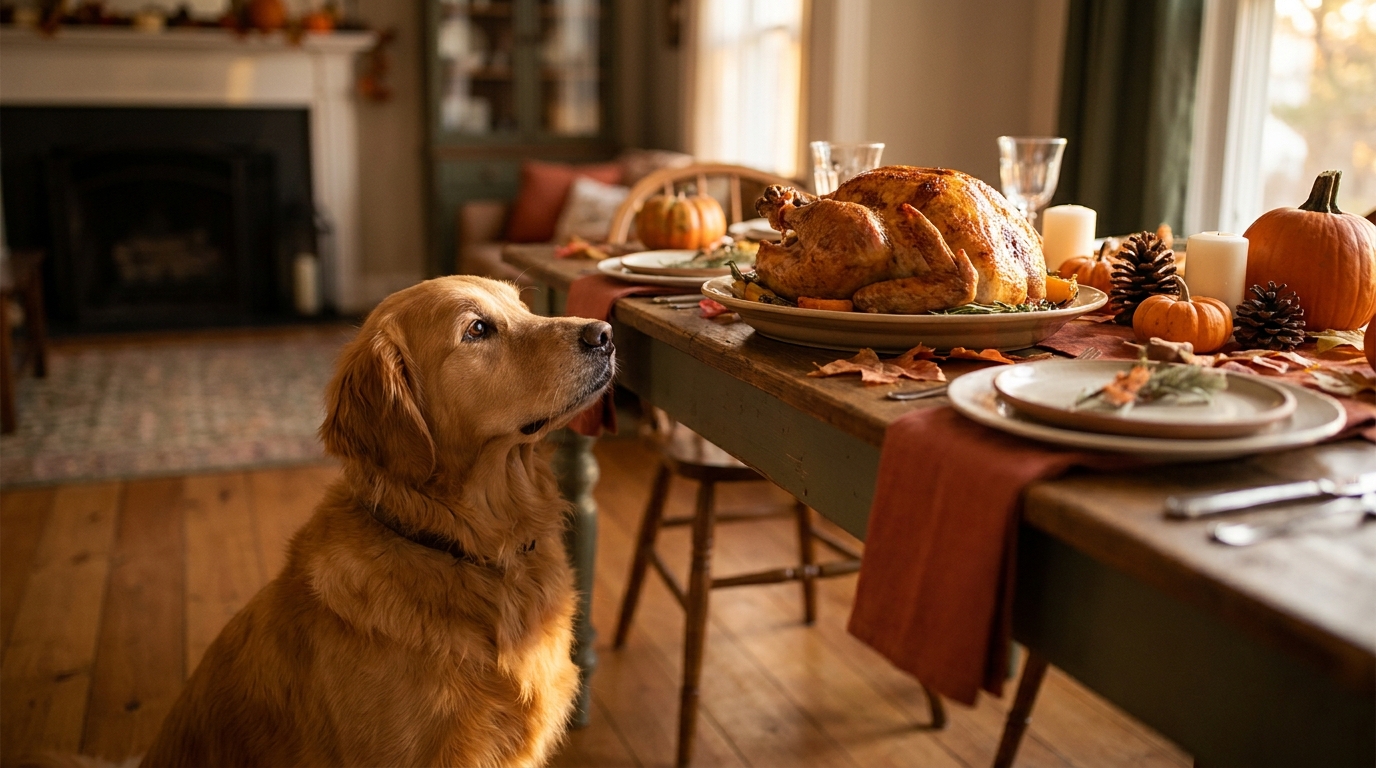
A bite of plain, cooked, boneless turkey is fine for most dogs. Skin, gravy, stuffing and bones are not. Here's what to do if your dog already ate them.
Quick answer: Yes, a small bite of plain, boneless, fully cooked white turkey meat with no skin or seasoning is fine for most dogs. Skin, fat, drippings, gravy, stuffing and cooked bones are not: fat can trigger pancreatitis, onion and garlic damage red blood cells, and bones can cause choking or block the gut. Choking, dry retching, repeated vomiting, a painful belly or visible string means an emergency vet now.
This article is general information, not a diagnosis. If you think your pet is in danger, go to the nearest emergency animal hospital.
Go to an emergency vet now if you see these signs
Any one of these means an emergency animal hospital now:
- Choking, struggling to breathe, pawing at the mouth, or a bone wedged in the mouth or jaw.
- Gagging, heavy drooling, retching, swallowing over and over, bringing food back up, or keeping water down but not food after eating a bone.
- Dry retching, restlessness, fast breathing or a swollen belly, especially in a large, deep-chested dog after a big meal. The Merck Veterinary Manual says these can be signs of bloat (GDV).
- Vomiting more than once, blood in the vomit, not keeping water down, or vomiting with weakness, lethargy, pale gums or collapse.
- Belly pain, such as a hunched back or the "prayer position" (front legs down, rear end up), or black, tarry stool.
- String or twine under the tongue or hanging from the rear. Don't pull it or cut it.
- Coughing or labored breathing after bringing food back up, which Merck notes can mean aspiration pneumonia.
- Ate raw bread or roll dough, even if your dog seems fine.
- Drank turkey brine and is wobbly, trembling, confused or having a seizure.
For onion or garlic stuffing, brine, a sugar-free dessert, grapes, raisins or chocolate, call a poison line now, even if your dog looks normal: ASPCA Animal Poison Control, (888) 426-4435 (a consultation fee may apply), or Pet Poison Helpline, (855) 764-7661 (a per-incident fee applies). Both take calls every day, including Thanksgiving.
Which parts of the turkey can dogs eat?
Only plain, boneless, cooked meat is a yes.
| Part of the meal | Share? | Why |
|---|---|---|
| Plain, boneless, fully cooked white meat, no skin or seasoning | A small bite | ASPCA: boneless and fully cooked |
| Skin and fat trimmings | No | Fatty foods are linked to pancreatitis (Pet Poison Helpline, ASPCA) |
| Drippings, gravy, butter | No | Fatty (Pet Poison Helpline); bouillon gravy is salty (ASPCA) |
| Stuffing | No | Onion and garlic, often powdered (Merck); may hide raisins |
| Cooked bones, neck, carcass | No | Choking (ASPCA); gut injury or blockage (Pet Poison Helpline) |
| Twine, string, netting | No | String can cut through the intestine (Merck, ACVS) |
| Pop-up timer, foil, oven bag, absorbent pad, corn cob | No | Swallowed objects can block the gut |
| Raw or undercooked turkey | No | Salmonella risk (ASPCA, CDC) |
| Brine | No | Salt poisoning (Pet Poison Helpline) |
| Deli, smoked, injected or deep-fried turkey | Skip | Not plain turkey |
Already ate it? What to do now
If more than one row fits, follow the most urgent one.
| What happened | Do this now | Emergency vet now if |
|---|---|---|
| Skin, fat, drippings or gravy only | Watch for 4 days after each fatty meal. One vomit but still bright: call a vet. | Vomits more than once, belly pain, weakness, collapse |
| Swallowed a cooked bone | Don't make your dog vomit. Call a vet the same day, even if fine. | Gagging, drooling, retching, repeated vomiting, belly pain, black or bloody stool |
| String, twine or netting | Don't pull or cut it | Always: go now |
| Timer, foil, oven bag, pad, corn cob | Get seen in person the same day; bring the packaging | Vomiting, not eating, belly pain |
| Raided the carcass in the trash | Call a vet or poison line the same day, even if fine | Any red flag above, or a swollen belly in a big dog |
| Onion or garlic stuffing or gravy | Call a poison line now | Pale or yellow gums, weakness, dark red-brown urine, collapse (can be days later) |
| Drank turkey brine | Call a poison line now | Wobbly, trembling, confused, seizure |
| Raw bread or roll dough | Go to an emergency vet now | Always |
| Sugar-free dessert, grapes, raisins or chocolate | Call a poison line now, even if fine | Any sign at all |
Note what your dog ate and when, bring the packaging, and call the hospital on the way. Don't give human medicines for vomiting or diarrhea unless a vet tells you to.
Ate turkey skin, fat or drippings: the pancreatitis watch
Pancreatitis is an inflammation of the pancreas. Pet Poison Helpline warns that fatty foods such as butter, drippings, gravy and meat scraps can cause it, and ASPCA also warns that high-fat foods can lead to it. Turkey skin and fat trimmings are fatty too. The Merck Veterinary Manual says eating trash or large amounts of table scraps is believed to be a common risk factor, and lists loss of appetite, vomiting, weakness, abdominal pain, dehydration and diarrhea as the most common signs. Mild cases may show vague signs or none.
How long to watch. Pet Poison Helpline says signs can appear up to 4 days after a dog eats fatty food, so keep watching for 4 days after each fatty meal. Don't wait it out once vomiting, belly pain or weakness start. After a Thursday dinner, the first window runs to Monday, and each later plate of leftovers starts a new 4 days. A quiet stretch doesn't prove your dog is in the clear.
When the plan changes. Refusing food, or vomiting with diarrhea, means an in-person visit the same day. Repeated vomiting, belly pain or weakness means an emergency vet now. Merck notes that blood tests and imaging are used to confirm pancreatitis, and that early care helps prevent complications.
Higher-risk dogs. Miniature Schnauzers are especially prone, and the Merck Veterinary Manual also lists Yorkshire Terriers, Cocker Spaniels, Dachshunds and Poodles among breeds with higher rates, but any dog can be affected. Merck adds dogs with Cushing's disease or very high triglycerides, and dogs taking potassium bromide for seizures. Dogs that have had pancreatitis before are at higher risk too. Call sooner for all of these dogs.
Swallowed a cooked turkey bone, neck or leg bone
ASPCA calls poultry bones a major choking hazard. Pet Poison Helpline warns that bones can also block or injure the gut, and some cases need surgery. Treat a neck, a leg bone and carcass pieces the same way.
Don't make your dog throw it up. Leave that decision to a vet or poison line, because a bone coming back up can lodge in or injure the esophagus. Never use salt, mustard, soap or your fingers to make your dog vomit; the Merck Veterinary Manual warns against all of these.
Call a vet the same day, even if your dog seems fine. The American College of Veterinary Surgeons (ACVS) notes that swallowed bones are found with X-rays and ultrasound, so a bright dog can still have one lodged inside. Many vets will want X-rays, especially for a small dog, a large bone or a raided carcass; on Thanksgiving Day, that usually means an emergency hospital. Go in if any vomiting, loss of appetite, lethargy or diarrhea appears. Repeated vomiting, belly pain, weakness, or black or bloody stool means an emergency vet now.
Stuck in the throat. Bones are the most common object that lodges in a dog's esophagus, and a stuck bone needs to come out right away, because it can tear the esophagus (Merck Veterinary Manual). Gagging, heavy drooling, retching, bringing food back up, swallowing over and over, or keeping water down but not food means an emergency vet now.
String, twine, netting and the pop-up timer
One end of string, twine or netting from the roast can catch under the tongue or in the stomach while the rest travels on and cuts through the intestine. If you see string or twine under your dog's tongue or hanging from the rear, don't pull it or try to cut it; string can be embedded in the tissue and pulling can tear the gut (Merck Veterinary Manual). Go to an emergency vet now. ACVS says that when there is evidence of a swallowed string, surgery to explore the gut is warranted, so this is a hospital trip, not a phone or video call. If the twine is missing and your dog may have eaten it, go to an emergency vet now even if you can't see any.
The pop-up timer, foil, an oven bag, the absorbent pad and corn cobs can be swallowed too; Pet Poison Helpline names corn cobs among items that can block the gut. Get your dog seen in person the same day, even if they seem fine, and bring the packaging.
Raided the turkey carcass from the trash
A carcass in the trash is several exposures at once: cooked bones, skin and fat, twine, onion stuffing and packaging. Call a vet or poison line the same day even if your dog seems fine, and bring a photo of what's missing.
A large, deep-chested dog that has eaten a big meal and is dry-retching, restless, breathing fast or has a swollen belly may have bloat (GDV), a life-threatening emergency (Merck). Go to an emergency vet now. Here's what a dog's bloated stomach looks like.
Stuffing, gravy, brine and the rest of the table
Onion and garlic. Onion and garlic, whether raw, cooked or powdered as in stuffing mixes and gravy, contain sulfur compounds that damage red blood cells and can cause Heinz body anemia (Merck Veterinary Manual). Signs such as pale or yellow gums, weakness, dark red-brown urine and collapse can take several days to appear (Merck), so a dog that looks fine isn't in the clear. Pet Poison Helpline adds that Akitas and Shiba Inus are more sensitive. If your dog ate onion- or garlic-seasoned stuffing or gravy, call a poison line now.
Gravy and brine. Gravy made with bouillon is salty, and leftover turkey brine can cause salt poisoning if a dog drinks it; ASPCA warns that high sodium can lead to seizures. Pet Poison Helpline lists excess thirst, vomiting and diarrhea as signs of salt poisoning, and brain swelling in serious cases. If your dog drank brine, call a poison line now. Wobbly, trembling, confused or seizing means an emergency vet now.
Desserts and rolls. Pet Poison Helpline warns that xylitol in sugar-free pies can cause low blood sugar and liver damage, and that grapes, raisins and currants can cause acute kidney failure even in small amounts. Here's why any amount of grapes or raisins is an emergency. ASPCA lists chocolate among foods to keep from pets. For any of these, call a poison line now, even if your dog seems normal. Raw roll dough can rise in the stomach, cause painful bloating that may twist it, and produce alcohol (ASPCA), so go to an emergency vet now.
More holiday hazards are in the toxic foods guide for dogs.
When a video visit can help after turkey skin or drippings
Ate turkey skin, fat or drippings (no bones, string, brine, packaging, or stuffing or gravy with onion or garlic), vomited once, and is still bright, keeping water down, eating and not sore in the belly? A video visit can help you decide whether your dog needs to be seen in person and what to watch for over the next 4 days. It can't X-ray for a bone or run the blood tests used to diagnose pancreatitis.
RexVet is a 501(c)(3) nonprofit, and its vet, Dr. Tiffany Delacruz, DVM, is licensed in Florida, New York and Virginia, so a $64.99 live video visit is for dogs that are in one of those states at the time of the call. Slots usually run between about 8 AM and 11 PM ET. Thanksgiving availability isn't confirmed, so check open slots when you book. If you're spending the holiday out of state, use a local emergency vet.
Repeated vomiting, a painful or hunched belly, retching after a swallowed bone, weakness or collapse, or string visible at the mouth or rear means an emergency vet now, not a video call. For brine, onion or garlic stuffing, a sugar-free dessert, grapes or chocolate, call a poison line.
A safe turkey plate for your dog
If you share, ASPCA advises a small bite of turkey that is boneless and fully cooked. Keep it plain, with no skin, gravy, butter or seasoning, and give it as a treat, not a meal. Skip turkey entirely if your dog has had pancreatitis or eats a low-fat prescription diet, unless your vet says otherwise. Keep the carcass, twine, bones and trash bag out of reach, and empty the trash throughout the day (ASPCA).
- Set your dog's bite aside before the gravy goes on, and pour the brine down the drain.
- Before Thanksgiving, look up the nearest overnight emergency hospital and save both poison line numbers.
Frequently Asked Questions
Can dogs eat turkey skin?
No. Pet Poison Helpline warns that fatty foods such as drippings, gravy and meat scraps can cause pancreatitis, and turkey skin is fatty too. Skip turkey entirely if your dog has had pancreatitis, unless your vet says otherwise. If your dog already ate skin, keep watching for 4 days after each fatty meal; repeated vomiting, belly pain or weakness means an emergency vet now.
How long after eating turkey fat can pancreatitis show up?
Pet Poison Helpline says signs can appear up to 4 days after a dog eats fatty food, so keep watching for 4 days after each fatty meal, including weekend leftovers. Vomiting more than once, a painful belly, weakness or collapse means an emergency vet now. Refusing food, or vomiting with diarrhea, means an in-person visit the same day.
My dog ate a cooked turkey bone. Should I make him throw up?
No, not unless a vet or poison line tells you to. A bone coming back up can lodge in or injure the esophagus, and salt, mustard, soap or fingers should never be used. Call a vet the same day even if your dog seems fine; many will want X-rays. Gagging, heavy drooling, retching, repeated vomiting, belly pain, weakness, or black or bloody stool means an emergency vet now.
Can dogs eat stuffing or gravy?
No. Onion and garlic, whether raw, cooked or powdered, contain sulfur compounds that damage red blood cells, and signs can take several days to appear (Merck Veterinary Manual). Gravy is fatty and often salty. If your dog ate onion- or garlic-seasoned stuffing or gravy, or stuffing with raisins, call a poison line now, even if they seem fine.
My dog swallowed the string or twine from the turkey. What should I do?
Go to an emergency vet now. One end can anchor under the tongue or in the stomach while the rest cuts through the intestine (Merck Veterinary Manual), and the American College of Veterinary Surgeons says evidence of a string-type foreign body warrants surgical exploration. Don't pull or cut string you can see; pulling can tear the gut.
Can dogs eat raw turkey or turkey necks?
No. Raw or undercooked turkey can carry Salmonella, so only share turkey that is fully cooked (ASPCA). The CDC does not recommend raw meat for dogs, because raw animal protein can carry Salmonella and Listeria that can also make people in your home sick. Turkey necks are a no, raw or cooked: ASPCA calls poultry bones a choking hazard, and cooked bones can injure or block the gut (Pet Poison Helpline).
My dog got into the turkey carcass in the trash. Is that an emergency?
It's urgent even if your dog seems fine, because a carcass means bones, fat, twine, onion stuffing and packaging at once. Call a vet or a poison line the same day. Choking, dry retching, repeated vomiting, belly pain, visible string, or a swollen belly in a large, deep-chested dog means an emergency vet now.
Can I talk to a vet online if my dog ate turkey skin over Thanksgiving?
If your dog ate only skin, fat or drippings, vomited once and is still bright, keeping water down, eating and not sore in the belly, a video visit can help you decide whether your dog needs to be seen in person. It can't X-ray for a bone or run pancreatitis blood tests. Dr. Tiffany Delacruz, DVM, is licensed in Florida, New York and Virginia, so a $64.99 live video visit is for dogs in one of those states at the time of the call. Slots usually run between about 8 AM and 11 PM ET; Thanksgiving availability isn't confirmed, so check open slots when you book, and use a local emergency vet if you're out of state. If your dog vomits again, has belly pain, seems weak or collapses, go to an emergency vet now.
FAQs
Can dogs eat turkey skin?
No. Pet Poison Helpline warns that fatty foods such as drippings, gravy and meat scraps can cause pancreatitis, and turkey skin is fatty too. Skip turkey entirely if your dog has had pancreatitis, unless your vet says otherwise. If your dog already ate skin, keep watching for 4 days after each fatty meal; repeated vomiting, belly pain or weakness means an emergency vet now.
How long after eating turkey fat can pancreatitis show up?
Pet Poison Helpline says signs can appear up to 4 days after a dog eats fatty food, so keep watching for 4 days after each fatty meal, including weekend leftovers. Vomiting more than once, a painful belly, weakness or collapse means an emergency vet now. Refusing food, or vomiting with diarrhea, means an in-person visit the same day.
My dog ate a cooked turkey bone. Should I make him throw up?
No, not unless a vet or poison line tells you to. A bone coming back up can lodge in or injure the esophagus, and salt, mustard, soap or fingers should never be used. Call a vet the same day even if your dog seems fine; many will want X-rays. Gagging, heavy drooling, retching, repeated vomiting, belly pain, weakness, or black or bloody stool means an emergency vet now.
Can dogs eat stuffing or gravy?
No. Onion and garlic, whether raw, cooked or powdered, contain sulfur compounds that damage red blood cells, and signs can take several days to appear (Merck Veterinary Manual). Gravy is fatty and often salty. If your dog ate onion- or garlic-seasoned stuffing or gravy, or stuffing with raisins, call a poison line now, even if they seem fine.
My dog swallowed the string or twine from the turkey. What should I do?
Go to an emergency vet now. One end can anchor under the tongue or in the stomach while the rest cuts through the intestine (Merck Veterinary Manual), and the American College of Veterinary Surgeons says evidence of a string-type foreign body warrants surgical exploration. Don't pull or cut string you can see; pulling can tear the gut.
Can dogs eat raw turkey or turkey necks?
No. Raw or undercooked turkey can carry Salmonella, so only share turkey that is fully cooked (ASPCA). The CDC does not recommend raw meat for dogs, because raw animal protein can carry Salmonella and Listeria that can also make people in your home sick. Turkey necks are a no, raw or cooked: ASPCA calls poultry bones a choking hazard, and cooked bones can injure or block the gut (Pet Poison Helpline).
My dog got into the turkey carcass in the trash. Is that an emergency?
It's urgent even if your dog seems fine, because a carcass means bones, fat, twine, onion stuffing and packaging at once. Call a vet or a poison line the same day. Choking, dry retching, repeated vomiting, belly pain, visible string, or a swollen belly in a large, deep-chested dog means an emergency vet now.
Can I talk to a vet online if my dog ate turkey skin over Thanksgiving?
If your dog ate only skin, fat or drippings, vomited once and is still bright, keeping water down, eating and not sore in the belly, a video visit can help you decide whether your dog needs to be seen in person. It can't X-ray for a bone or run pancreatitis blood tests. Dr. Tiffany Delacruz, DVM, is licensed in Florida, New York and Virginia, so a $64.99 live video visit is for dogs in one of those states at the time of the call. Slots usually run between about 8 AM and 11 PM ET; Thanksgiving availability isn't confirmed, so check open slots when you book, and use a local emergency vet if you're out of state. If your dog vomits again, has belly pain, seems weak or collapses, go to an emergency vet now.
Medically Reviewed
Reviewed by Dr. Tiffany Delacruz, DVM — licensed veterinarian and CEO of RexVet. Last reviewed October 18, 2026.
Content is for informational purposes and does not replace professional veterinary advice.
Chief Executive Officer · Licensed Veterinarian
Dr. Delacruz is a licensed Doctor of Veterinary Medicine specializing in preventive care and veterinary telehealth. She reviews all health content on RexVet to ensure accuracy and clinical relevance.
Sources & References
- · American Veterinary Medical Association — Telehealth Guidelines
- · AVMA — Pet Care Resources
- · U.S. FDA — Animal & Veterinary
Need an Expert Opinion on This Topic?
Connect with a certified vet via video call in minutes
Talk to Vet Now