
Mucus in Dog Poop or Jelly-Like Stool: When to Worry
By RexVet Team | Reviewed by Dr. Tiffany Delacruz, DVM
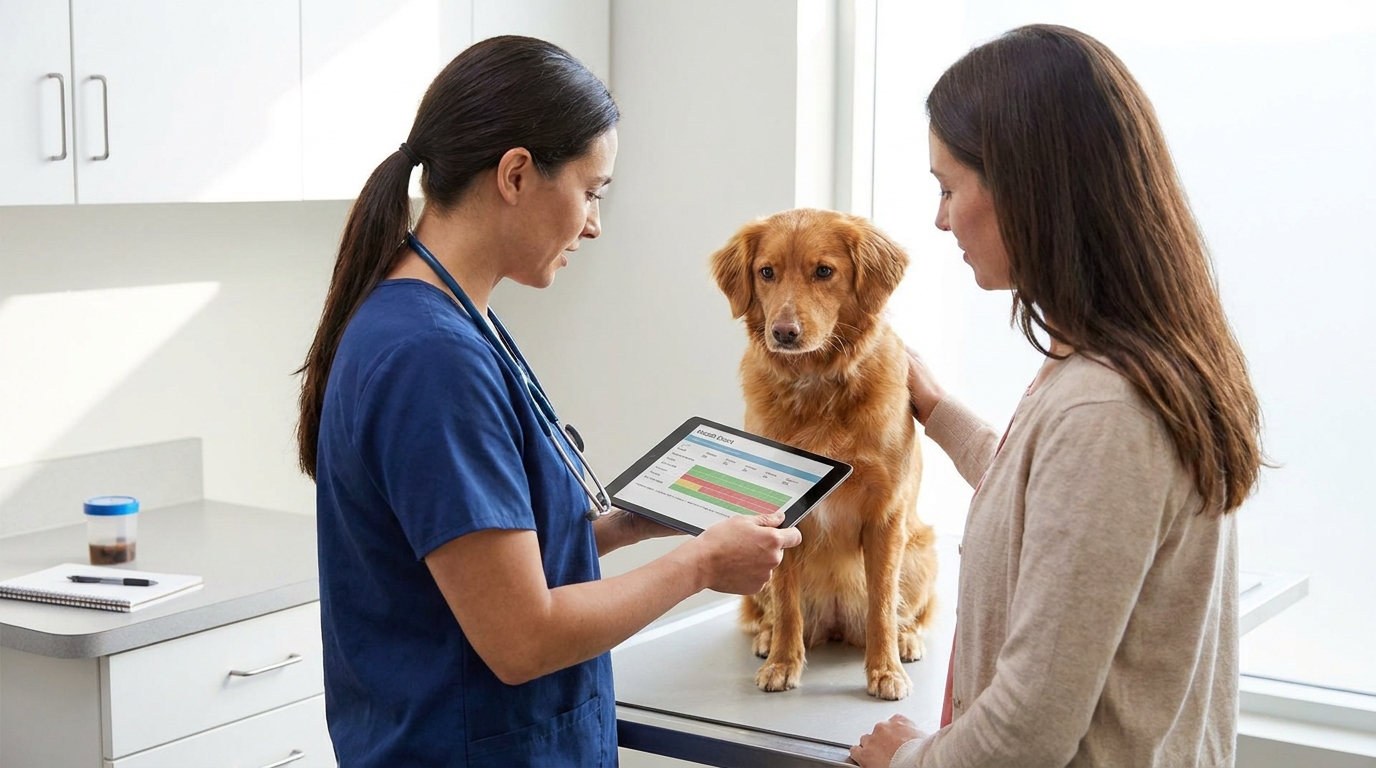
Clear slime, jelly blobs or red 'raspberry jam' stool: what mucus in your dog's poop usually means, which signs need an ER, and what to do next.
Quick answer: A thin coat of clear or white mucus on an adult dog's poop, when the dog is eating, drinking and playful, often comes from mild colon irritation; watch for a day or two. See a vet if it lasts past 2 days, or the same day for a puppy, toy breed or senior. Go to an ER now for raspberry-jam or black stool, repeated vomiting, weakness or pale gums.
This article is general information, not a diagnosis. If you think your pet is in danger, go to the nearest emergency animal hospital.
What mucus in dog poop looks like
Mucus is the slippery, clear or whitish material the large intestine (colon) makes to help stool pass. The colon normally makes some, but in colitis (an inflamed, irritated colon) its mucus-making goblet cells produce far more (Merck Veterinary Manual). Owners usually see three forms:
- A thin, shiny coating on formed or slightly soft stool, or a slimy smear on the grass. In a bright adult dog, this often means mild irritation.
- Jelly blobs or strings on soft stool, sometimes with the last part of the poop almost all jelly. This is the classic look of colitis.
- Bloody jelly. A few red streaks suggest an irritated colon. Lots of red jelly, or stool that looks like raspberry jam, can mean acute hemorrhagic diarrhea syndrome (AHDS), an emergency.
Merck lists the hallmark signs of colitis as diarrhea with mucus, fresh blood and straining, with more frequent, smaller trips. Black, tarry stool is different: it can mean bleeding higher up, in the stomach or small intestine (Merck).
How fast to act: ER now, same day, or within a day or two
Go to an emergency vet now
- Lots of blood, red jelly or 'raspberry jam' stool, especially in a small or toy-breed dog. Merck warns that AHDS can cause shock before a dog looks dehydrated.
- Black, tarry stool. If you gave a bismuth stomach remedy, tell the vet, but do not assume black stool is harmless.
- Repeated vomiting, vomiting with mucus or bloody stool, or a dog that will not drink or cannot keep water down.
- Pale or white gums, weakness, collapse, fast breathing, a racing heartbeat or cold legs, whatever the stool looks like.
- A puppy, especially one 6 weeks to 6 months old or not fully vaccinated, with diarrhea plus vomiting, low energy or no appetite, even if a parvo test was negative. Keep it away from other unvaccinated dogs.
- A toy-breed puppy that stops eating or turns weak, trembly or wobbly, or has a seizure (possible low blood sugar).
- A hunched posture, a painful or swollen belly, or straining again and again with only mucus, blood or nothing coming out. That can mean a blockage or a telescoped bowel (intussusception).
- Straining without passing urine. A blocked bladder can look like straining to poop.
- Your dog may have eaten rat bait, human medicine, a toy, a corn cob or bones, or it has bloody stool with bruising, a nosebleed or blood in the urine; see what to do if your dog ate rat poison. For a suspected poison, you can also call ASPCA Animal Poison Control at (888) 426-4435 (a consultation fee may apply) or Pet Poison Helpline at (855) 764-7661 (per-incident fee).
- A Collie, Australian Shepherd, Shetland Sheepdog or similar breed that got loperamide and is drooling, wobbly, very sleepy, has dilated pupils, seems blind or has a seizure.
Call a vet the same day
- Mucus in a puppy, toy breed or senior, even one acting normal.
- Mucus with more than a streak of blood, belly discomfort, low energy or less appetite.
- Vomiting, diarrhea or mucus in a dog taking a vet NSAID (carprofen, Galliprant, meloxicam) or a steroid such as prednisone. Call that vet before the next dose. Repeated vomiting, vomiting with mucus or bloody stool, or black stool in that dog means ER now.
- You already gave a human anti-diarrhea or bismuth medicine: tell a vet, or call a poison line now if any new signs appear.
Book a vet visit within a day or two
- Mucus that lasts more than 2 days in a bright adult dog. With red streaks, see a vet within 24 hours.
- Worms or small white segments in the stool or around the anus: bring a fresh sample.
Mucus by look: what it means and what to do
| What you see | Often means | What to do |
|---|---|---|
| Thin clear coat, dog normal | Mild colon irritation | Watch 24-48 h |
| Jelly blobs, soft stool | Colitis: diet, stress, scavenging | Vet if over 2 days |
| Mucus with red streaks | Colon irritation | Vet within 24 h |
| Lots of red jelly or 'raspberry jam' | Possible AHDS | ER now |
| Worms or white segments | Parasites | Vet; bring a sample |
| Black, tarry stool | Bleeding higher in gut | ER now |
| Puppy with mucus and vomiting | Possible parvo | ER now |
| Straining, little comes out, sore belly | Possible blockage | ER now |
| Mucus for 3+ weeks or keeps coming back | Chronic colitis, IBD or a mass | In-person exam |
'Watch' applies only to an adult dog that is eating, drinking and playful. Puppies, toy breeds and seniors: same day.
Common causes of mucus in dog stool
Scavenging and sudden food changes
Garbage, dropped food and other animals' poop can all irritate the colon. Cornell's Riney Canine Health Center lists switching foods too fast as a cause of diarrhea, so note any new food or treats. If your dog has started scavenging or eating poop all of a sudden, that habit can have medical causes of its own. Bones, corn cobs, socks and toy pieces can also scrape or block the gut.
Stress colitis
VCA Animal Hospitals calls stress colitis one of the leading causes of large-bowel diarrhea in dogs, often after boarding, travel, a move or holiday guests. Expect urgency, small frequent soft stools, mucus and often a little bright red blood near the end.
Parasites
- Whipworms. The Companion Animal Parasite Council (CAPC) says whipworm diarrhea is often streaked with mucus and fresh blood. Whipworms take 74 to 90 days after infection to start shedding eggs, then shed on and off, so one negative test does not rule them out.
- Giardia. CAPC notes stool from sick dogs is often foul-smelling and may contain mucus. It also sheds on and off.
- Coccidia. CAPC lists diarrhea and weight loss, not mucus, as its signs, and young dogs are more likely to be infected.
- Tapeworms. The CDC describes fresh segments as seed-shaped and able to move, and dried ones as looking like rice grains. Dogs get the most common kind from swallowed fleas, and others from hunting or scavenging rabbits or rodents; stool tests often miss them, so see a vet and treat fleas.
Food allergy, chronic disease and growths
VCA notes allergic colitis is often a reaction to a dietary protein. Mucus that lasts for weeks can also come from inflammatory bowel disease (IBD). Merck notes a rectal exam can find polyps or cancers that mimic colitis, so an older dog that strains or passes thin, bloody stools needs an in-person exam. Merck also describes granulomatous colitis, a rare disease of young Boxers and French Bulldogs, often before age 4, that needs an in-person workup, not repeated diet changes.
Anal-gland problems can cause scooting; a vet checks the glands during the rectal exam.
Holiday food and mucus
Rich table scraps can upset the colon and, in some dogs, trigger pancreatitis. Merck reports that dietary indiscretion, a dog eating what it should not, is believed to be a common pancreatitis risk factor, and Miniature Schnauzers are overrepresented. Repeated vomiting, vomiting with diarrhea, a painful belly or weakness means an ER now; diarrhea with a poor appetite, a vet today.
Check the dish-by-dish chart of Thanksgiving foods for dogs and what to do about turkey skin, bones and leftovers. Put carcasses and corn cobs in a closed bin.
Puppies, toy breeds and seniors have less room for error
Puppies. Mucus in a puppy's poop needs a same-day call and a fresh stool sample. Merck says puppies 6 weeks to 6 months old and dogs not fully vaccinated are most at risk of parvovirus. Signs appear 2 to 14 days after infection (usually 5 to 7), often starting with low energy, poor appetite or fever, then vomiting and diarrhea within a day or two. The diarrhea is often bloody, but not always. Never withhold food from a puppy: toy-breed puppies in their first 6 months can develop low blood sugar.
Toy and small breeds. AHDS is most common in small and toy-breed adults, median age about 5 years in Merck's review, but any dog can get it. It needs hospital care with IV fluids and can be fatal without it.
Seniors. Older dogs are more likely to have polyps, tumors and chronic disease. Merck notes weight loss and vomiting are uncommon in simple colitis, so mucus plus weight loss needs an exam; with vomiting, go to an ER.
What to do at home over the next day or two
This plan is only for an adult dog that is eating, drinking, playful and showing none of the emergency signs above.
- Keep fresh water out. VCA warns fluid loss can come quickly.
- Do not change the diet on your own. Ask a vet before switching foods or cooking at home, and never withhold food from a puppy or toy breed.
- Skip human anti-diarrhea medicines. Cornell advises never giving human medicines such as Pepto Bismol or Imodium unless a vet directs it. Merck, Washington State University and veterinary pharmacists (ACVP) warn that loperamide can cause deep sedation and nerve toxicity, even at normal amounts, in dogs with the MDR1 gene mutation, common in Collies, Australian Shepherds and related breeds.
- Skip bismuth remedies too. Merck notes their salicylate, an aspirin relative, is almost fully absorbed in dogs, and bismuth turns stool black, which can hide bleeding.
- Check other medicines first. The FDA warns against combining two NSAIDs, or an NSAID with a steroid. If your dog takes a pain or arthritis medicine, ask that vet before adding anything; see why human pain relievers are risky for dogs.
- Take a daylight photo of a fresh stool, and a short video if your dog strains.
- Bag a fresh sample for the clinic, as Cornell recommends.
- Keep a log of stool, appetite and energy, plus food changes, scraps, boarding, deworming dates and medicines.
- Clean up promptly and wash your hands. CAPC notes whipworm eggs can survive in soil for years.
What the vet will check
Merck describes the colitis workup as a history, a physical exam with a rectal exam, and stool tests. Depending on age and signs, the in-person tests may include:
| Test | What it looks for |
|---|---|
| Fecal float | Worms, coccidia |
| Giardia antigen test | Giardia |
| Fecal PCR panel | Infections |
| Rectal exam | Masses, anal glands |
| Bloodwork | Fluid loss, organ issues |
| Parvo test (puppies) | Parvo; can miss early |
| X-ray or ultrasound | Objects, masses |
One negative stool test does not rule out whipworms or Giardia, which shed on and off, so a repeat test may be needed. Bring a fresh sample in a sealed bag.
For a stable dog, Merck says a vet-chosen diet trial fed with nothing else for at least 2 weeks usually comes before advanced tests. Most mucus or diarrhea episodes do not need antibiotics, and the treating vet decides after an exam.
Still seeing mucus after medicine or a diet change?
Merck calls colitis chronic once it lasts at least 3 weeks. Mucus that outlasts a course of medicine or a vet diet may have a cause not yet found, such as an on-and-off parasite, a food protein, IBD or a polyp. The next step is an in-person recheck to find it. Most metronidazole given to dogs is human-labeled, and using it off-label for colitis needs an in-person exam. See what to do when diarrhea continues after metronidazole.
When a video visit helps
RexVet is a 501(c)(3) non-profit with one vet. If your adult dog has had mucus in the stool, with or without soft poop, for a day or two but is eating, drinking and playful, a $64.99 live video visit with Dr. Tiffany Delacruz, DVM, can help. Your dog must be located in Florida, New York or Virginia, and visits run about 8 AM-11 PM ET. She can look at photos of the stool, ask about diet changes, table scraps, boarding and deworming history, check your dog's energy, posture and gum color on camera, and tell you whether home care is reasonable or which stool tests to get at a clinic. If mucus keeps coming back and you expect rechecks, the one-time $120 Family Plan covers 4 visits over 12 months for every pet in the home and never auto-renews. Book a live video visit.
A video visit cannot run a fecal test, and no prescription is promised: several common gut medicines are human-labeled, and Florida bars human-labeled drugs after a telehealth-only visit. If a prescription is written and sent to an outside pharmacy, a pharmacy transfer fee applies (RexVet is not a pharmacy; see Terms 5.4). Go to an emergency vet now, not a video visit, for lots of blood or 'raspberry jam' stool, black stool, repeated vomiting, weakness, pale gums, a puppy with vomiting and diarrhea, or a dog that may have eaten rat bait, a toy or human medicine.
Need an Expert Opinion on This Topic?
Book a video visit with a licensed vet, evenings and weekends included
See open timesFrequently Asked Questions
Is mucus in dog poop normal?
The colon normally makes some mucus, and colitis makes it produce far more (Merck Veterinary Manual). An occasional thin, clear coat on firm stool in a bright adult dog is often not an emergency. Mucus that lasts past 2 days, keeps returning, or comes with diarrhea, blood or vomiting needs a vet. Puppies, toy breeds and seniors should be seen the same day.
Why is my dog's poop covered in jelly?
Jelly-like stool is usually extra mucus from an irritated colon, often after scavenging, a food change, rich scraps, boarding stress or parasites. Clear or white jelly on a bright adult dog can be watched for a day or two. Red jelly or 'raspberry jam' stool means an emergency vet now.
Mucus in dog poop but acting normal: should I worry?
For an adult dog that is eating, drinking and playful, watching a day or two is reasonable. See a vet if it lasts past 2 days, or the same day for a puppy, toy breed, senior or a dog on an NSAID or steroid. Vomiting or black stool means an ER now; more than a streak of blood, a vet today.
Can stress cause mucus in dog poop?
Yes. VCA lists stress colitis as one of the leading causes of large-bowel diarrhea in dogs, often after boarding, travel or guests, with mucus, urgency and small, frequent soft stools. Stress does not explain a vomiting puppy, black stool or a painful belly, which need an ER now, or a dog that stops eating, which needs a vet today.
Can worms cause mucus in dog poop?
Yes. Whipworm diarrhea is often streaked with mucus and fresh blood (CAPC), and Giardia stool may contain mucus. Both shed on and off, so one negative test does not rule them out. Tapeworm segments look like small white seeds that can move when fresh (CDC); dogs most often get them by swallowing fleas.
What should I feed a dog with mucus in its poop?
Ask a vet before switching foods, fasting or starting a home diet, and never withhold food from a puppy or toy breed. If a diet change is needed, the vet picks it and says how long to feed it; for a diet trial, Merck notes the food is fed with nothing else for at least 2 weeks before it is judged. Skip table scraps.
Can I give my dog human anti-diarrhea medicine for mucus in its poop?
Not unless a vet tells you to. Loperamide can be toxic to dogs with the MDR1 mutation, common in Collies and Australian Shepherds (Merck, WSU, ACVP), and bismuth turns stool black, which can hide bleeding (Merck). If you already gave something, tell the vet.
Can an online vet help with mucus in my dog's poop in Florida, New York or Virginia?
Often, yes, for a stable adult dog. If your dog is located in Florida, New York or Virginia, Dr. Tiffany Delacruz, DVM, can review stool photos on a live video visit, check energy, posture and gum color on camera, and tell you whether home care is reasonable or which tests to get. Stool tests, a rectal exam, bloodwork, imaging and IV fluids need an in-person clinic, and she can point you to one nearby. If medicine comes up: in Florida a telehealth-only prescription is limited to an FDA-approved animal drug used as labeled, for up to 14 days (1 month for flea/tick-only products), with no renewal without an in-person exam, and human-labeled, controlled or compounded anti-infective drugs are not allowed. Federal rules allow off-label or human-drug use, including most metronidazole for colitis, only after an in-person exam. Virginia allows an electronic exam, but prescribing is still the vet's call, and New York's rules are not settled. No prescription is promised, and emergencies go to an ER.
FAQs
Is mucus in dog poop normal?
The colon normally makes some mucus, and colitis makes it produce far more (Merck Veterinary Manual). An occasional thin, clear coat on firm stool in a bright adult dog is often not an emergency. Mucus that lasts past 2 days, keeps returning, or comes with diarrhea, blood or vomiting needs a vet. Puppies, toy breeds and seniors should be seen the same day.
Why is my dog's poop covered in jelly?
Jelly-like stool is usually extra mucus from an irritated colon, often after scavenging, a food change, rich scraps, boarding stress or parasites. Clear or white jelly on a bright adult dog can be watched for a day or two. Red jelly or 'raspberry jam' stool means an emergency vet now.
Mucus in dog poop but acting normal: should I worry?
For an adult dog that is eating, drinking and playful, watching a day or two is reasonable. See a vet if it lasts past 2 days, or the same day for a puppy, toy breed, senior or a dog on an NSAID or steroid. Vomiting or black stool means an ER now; more than a streak of blood, a vet today.
Can stress cause mucus in dog poop?
Yes. VCA lists stress colitis as one of the leading causes of large-bowel diarrhea in dogs, often after boarding, travel or guests, with mucus, urgency and small, frequent soft stools. Stress does not explain a vomiting puppy, black stool or a painful belly, which need an ER now, or a dog that stops eating, which needs a vet today.
Can worms cause mucus in dog poop?
Yes. Whipworm diarrhea is often streaked with mucus and fresh blood (CAPC), and Giardia stool may contain mucus. Both shed on and off, so one negative test does not rule them out. Tapeworm segments look like small white seeds that can move when fresh (CDC); dogs most often get them by swallowing fleas.
What should I feed a dog with mucus in its poop?
Ask a vet before switching foods, fasting or starting a home diet, and never withhold food from a puppy or toy breed. If a diet change is needed, the vet picks it and says how long to feed it; for a diet trial, Merck notes the food is fed with nothing else for at least 2 weeks before it is judged. Skip table scraps.
Can I give my dog human anti-diarrhea medicine for mucus in its poop?
Not unless a vet tells you to. Loperamide can be toxic to dogs with the MDR1 mutation, common in Collies and Australian Shepherds (Merck, WSU, ACVP), and bismuth turns stool black, which can hide bleeding (Merck). If you already gave something, tell the vet.
Can an online vet help with mucus in my dog's poop in Florida, New York or Virginia?
Often, yes, for a stable adult dog. If your dog is located in Florida, New York or Virginia, Dr. Tiffany Delacruz, DVM, can review stool photos on a live video visit, check energy, posture and gum color on camera, and tell you whether home care is reasonable or which tests to get. Stool tests, a rectal exam, bloodwork, imaging and IV fluids need an in-person clinic, and she can point you to one nearby. If medicine comes up: in Florida a telehealth-only prescription is limited to an FDA-approved animal drug used as labeled, for up to 14 days (1 month for flea/tick-only products), with no renewal without an in-person exam, and human-labeled, controlled or compounded anti-infective drugs are not allowed. Federal rules allow off-label or human-drug use, including most metronidazole for colitis, only after an in-person exam. Virginia allows an electronic exam, but prescribing is still the vet's call, and New York's rules are not settled. No prescription is promised, and emergencies go to an ER.
Medically Reviewed
Reviewed by Dr. Tiffany Delacruz, DVM — licensed veterinarian and CEO of RexVet. Last reviewed October 30, 2026.
Content is for informational purposes and does not replace professional veterinary advice.
Chief Executive Officer · Licensed Veterinarian
Dr. Delacruz is a licensed Doctor of Veterinary Medicine specializing in preventive care and veterinary telehealth. She reviews all health content on RexVet to ensure accuracy and clinical relevance.
Sources & References
- · American Veterinary Medical Association — Telehealth Guidelines
- · AVMA — Pet Care Resources
- · U.S. FDA — Animal & Veterinary