
Dog Eating Poop All of a Sudden? Medical Causes and When to Worry
By RexVet Team | Reviewed by Dr. Tiffany Delacruz, DVM
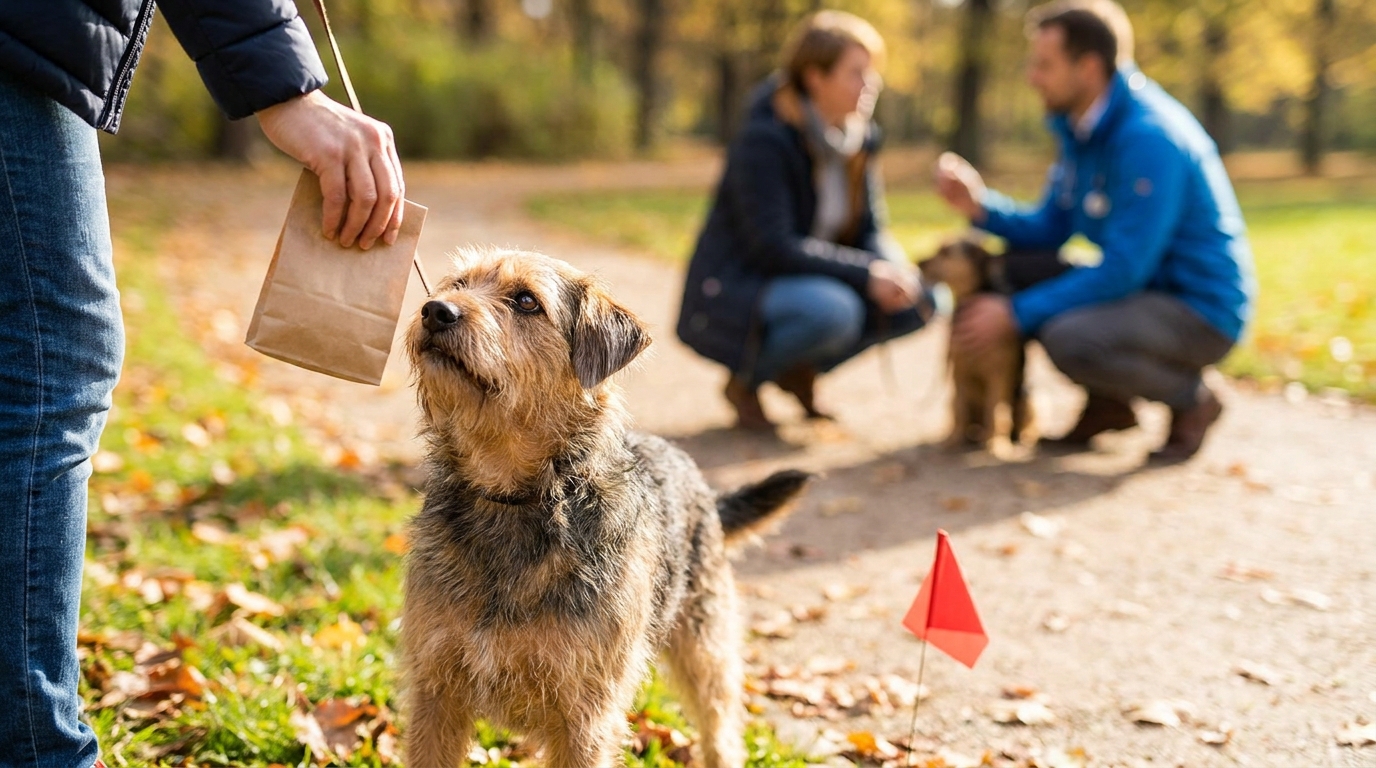
A new poop-eating habit in an adult or senior dog can be a medical clue. Here is what vets check first and which signs mean you should go today.
Quick answer: If an adult or senior dog suddenly starts eating poop, rule out a medical cause before calling it a habit. Book a vet check and stool test within days, even if your dog seems well, and sooner for weight loss despite a big appetite, more thirst or diarrhea. Go to a vet or ER now for repeated vomiting, bloody or black stool, marked lethargy, tremors after eating manure, or a sick, not fully vaccinated puppy.
This article is general information, not a diagnosis. If you think your pet is in danger, go to the nearest emergency animal hospital.
When to see a vet today, not this week
Most dogs that start eating poop are not in danger right now. These situations are different:
- Horse or livestock manure, then wobbly or trembling: ER now. Dewormer passed in the dung of recently treated animals can poison a dog, and the risk is highest in the first few days after the animals were dewormed (Merola and Eubig, 2012). Signs include wobbliness, tremors, drooling, big pupils, unusual sleepiness, blindness, a slow heartbeat or a seizure. Go to an ER and call ASPCA Animal Poison Control at (888) 426-4435 (a consultation fee may apply) or Pet Poison Helpline at (855) 764-7661 (per-incident fee). If the animals were recently dewormed, call a poison line right away, even before signs appear, because the treatment a vet uses to limit absorption works best in the first hours after eating. Any dog can be poisoned, but dogs with the MDR1 mutation, such as Collies, Australian Shepherds and Shetland Sheepdogs, are most at risk.
- A sick puppy after contact with other dogs' stool: vet now. A puppy under about 6 months, or any dog that isn't fully vaccinated, that vomits, has diarrhea, won't eat, runs a fever or turns lethargic within 2 weeks of eating or sniffing other dogs' stool needs an in-person vet or ER now. The Merck Veterinary Manual says parvo signs usually start 5-7 days after infection (range 2-14), and about 25% of dogs with parvo have diarrhea without blood, so don't wait for blood.
- The diabetes pattern plus vomiting or weakness: ER now. A dog that has been drinking more, eating more and losing weight, and is now vomiting, refusing food or weak, may have diabetic ketoacidosis, which is life-threatening.
- Other ER signs. Blood in the stool or black, tarry stool; repeated vomiting; a swollen, hard or painful belly; straining with nothing coming out; marked lethargy, collapse or a seizure.
- Wildlife droppings, then a head tilt: same day. Wobbliness, a head tilt or a behavior change after eating wildlife stool, or soil where raccoons leave droppings, needs an in-person vet today (raccoon roundworm).
Everything else, including brand-new poop eating in an adult dog that seems fine, belongs in the "book within a few days" group. VCA behavior specialists Debra Horwitz and Gary Landsberg, both DVM, DACVB, say medical causes must be ruled out before calling it purely behavioral.
Is it normal for dogs to eat poop?
In puppies, mostly yes. VCA says it is common in some puppies and usually clears up by adulthood with good nutrition, direction and supervision. Mother dogs normally eat their puppies' waste in the nest (Merck), and puppies may copy them.
Adults do it too. In a 2018 survey of more than 1,400 dog owners, nearly 1 in 4 (23%) had seen their dog eat dog poop at least once, and 16% had seen it at least six times. In that study, by Hart and colleagues in Veterinary Medicine and Science, 82-85% of poop eaters went for fresh stool no more than 2 days old, and poop eating showed no link with diet type or age.
VCA says most cases appear to be behavioral. Timing changes the picture. Writing for PetMD, veterinary behaviorist Wailani Sung, DVM, DACVB, notes that sudden poop eating in an adult dog may signal a medical problem. If your dog went years without doing it and just started, treat that change as information.
Sudden poop eating: medical causes a vet rules out first
VCA and PetMD name these causes; the Merck Veterinary Manual describes the signs.
| Cause | Clues that point to it | Test a vet may use |
|---|---|---|
| EPI (low pancreas enzymes) | Weight loss despite a big appetite; large, pale, loose stools | Fasted TLI blood test, plus B12 and folate |
| Gut disease (IBD) or poor absorption | Diarrhea, vomiting, weight loss | Fecal test, bloodwork, B12 and folate |
| Intestinal parasites | Puppy, or a shelter, kennel or dog-park dog | Fecal flotation and Giardia antigen test |
| Diabetes | Drinks and pees more, hungrier, thinner; cataracts | Blood sugar and urine tests |
| Cushing's disease | Age about 7-12; thirst, potbelly, panting, hair loss | Bloodwork, urine, then adrenal tests |
| Steroid medicine (such as prednisone) | Hunger and thirst began after the drug | Review with the vet who prescribed it |
| Too little food or a poorly digestible diet | Thin and always hungry, or on a strict diet | Diet history and body condition check |
| Overactive thyroid (uncommon in dogs) | Big appetite, weight loss; thyroid pills or some raw diets | Thyroid blood test |
EPI (exocrine pancreatic insufficiency) means the pancreas no longer makes enough digestive enzymes, so the dog stays hungry and loses weight. The most common form shows up mainly in young adult German Shepherds, and also in Rough Collies and Eurasiers, but EPI from chronic pancreatitis and other causes can happen at any age and in any breed (Merck).
Diabetes and Cushing's both leave a dog drinking and peeing more and raise appetite. Steroids such as prednisone raise appetite too (Merck), and VCA says they can increase poop eating. If your dog became ravenous after starting a steroid, call the vet who prescribed it. That hunger is an expected side effect, so don't stop the drug or change the dose yourself. Repeated vomiting, black, tarry stool or marked lethargy is not expected: go to an ER.
An overactive thyroid is common in cats (see our guide to cat hyperthyroidism symptoms) but uncommon in dogs, where Merck says it comes mainly from thyroid cancer, too much thyroid medicine, or raw diets containing thyroid tissue. If your dog takes thyroid medicine or eats a raw diet and has become ravenous while losing weight, book a vet check within a few days, and don't change the thyroid dose yourself. PetMD also lists liver and brain disease as less common causes of poop eating.
Senior dog started eating poop? Cushing's and diabetes come first
In an older dog, vets look at appetite first. Cushing's disease, where the body makes too much of the stress hormone cortisol, mainly affects dogs about 7 to 12 years old. Merck lists more thirst and urination, a bigger appetite, a potbelly, panting, hair loss, lethargy and muscle weakness as common signs. If your senior dog's back legs are getting weaker too, our guide to an old dog's back legs giving out explains which changes are urgent.
Diabetes brings more urination, more thirst, a bigger appetite, weight loss, cataracts and weakness. Vets diagnose it from blood sugar that stays high plus sugar in the urine. Book a vet check within a few days for this pattern, and go to an ER now if the dog starts vomiting, refuses food or suddenly gets weaker, because diabetic ketoacidosis is life-threatening.
What about dementia? Canine cognitive dysfunction affects about 14% of dogs 8 and older, by the estimate in the DISHAA checklist (Gary Landsberg, DVM, DACVB). But poop eating is not one of its recognized signs. Cognitive decline is diagnosed only after medical causes are ruled out.
Habit or medical? How to tell the difference
No single sign settles it, but these patterns help.
| Pattern | More likely habit | More likely medical |
|---|---|---|
| Age it started | Puppy, or has always done it | Adult or senior, brand new |
| Weight | Steady | Losing weight |
| Appetite | Always a keen eater | Suddenly much hungrier |
| Stool | Normal | Loose, large, pale or bloody |
| Thirst and peeing | Normal | Drinking and peeing more |
| Medicines | Nothing new | Recently started a steroid |
| Other signs | None | Vomiting, diarrhea or lethargy |
A big appetite alone is not a warning sign: in the Hart survey, owners called 51% of frequent poop eaters greedy, against 28% of non-eaters. What matters is a change, such as a dog that is suddenly hungrier or hungry and losing weight.
Behavior triggers vets recognize
When the exam and tests are normal, the cause is usually behavioral. Vets and researchers name these triggers:
- Long confinement with too little to do (Merck Veterinary Manual).
- Anxiety and boredom (PetMD).
- Other dogs at home. Homes with two or more dogs had more poop eating in the Hart survey.
- Greedy eating (Hart).
- Harsh punishment for accidents. VCA calls rubbing a dog's nose in its stool outmoded, inhumane and useless, and says it may encourage poop eating.
- Copying a mother or playmates, in puppies (VCA).
Owners often blame a move, boarding or a new pet, but no source we checked names these as proven triggers, so still get a medical check. If your dog targets one housemate dog's stool, VCA advises testing that other dog for poor digestion.
Whose poop it is changes the risk
Fresh stool is not automatically safe. The Companion Animal Parasite Council (CAPC) says Giardia cysts are infective the moment they are passed, and Merck notes that parvovirus spreads through feces.
| Source | Main risk | What to do |
|---|---|---|
| Its own stool | Giardia can reinfect; cysts infect at once | Pick up stool right away |
| Another dog's | Parvo if not fully vaccinated; Giardia | Sick puppy within 2 weeks: vet now |
| Old stool or soil | Roundworm eggs, infective after 2-4 weeks | Clean up stool daily |
| Cat litter box | Toxoplasma eggs once litter sits 1-5 days | Scoop daily; block the box |
| Raccoon latrine | Raccoon roundworm (rare nerve disease) | Wobbly or head tilt: vet same day |
| Horse or livestock manure | Dewormer residue; MDR1 dogs most at risk | Wobbly, trembling, big pupils: ER now |
Healthy dogs that eat cat stool usually don't get sick from Toxoplasma (Merck). Washington State University's lab reports the MDR1 mutation in about 70% of Collies, 50% of Australian Shepherds and 15% of Shetland Sheepdogs. The manure danger is dewormer residue in the dung (Pet Poison Helpline), not your dog's monthly heartworm preventive, which WSU says is considered safe for MDR1 dogs at label doses.
What the vet will ask and which tests they may run
Have answers ready: when it started, how often, whose stool, what, how much and when your dog eats, any steroid or thyroid medicine, weight changes, thirst, stool appearance, vaccine history, other pets and any horse or farm contact.
VCA describes the starting point as a physical exam and a diet and stool review, with a stool test for parasites as the minimum. The vet may add:
- Fecal flotation and a Giardia antigen test (CAPC). Giardia is shed on and off, so one negative test may miss it (Merck).
- Bloodwork: a complete blood count (CBC) and chemistry panel.
- TLI, B12 and folate. TLI checks for EPI. Texas A&M's Veterinary Medical Diagnostic Laboratory requires a sample after an overnight fast, so ask the clinic before you feed breakfast. Merck advises checking B12 and folate alongside it.
- Hormone tests only if signs fit. For Cushing's, Merck lists a urine cortisol:creatinine ratio, ACTH stimulation and low-dose dexamethasone suppression tests.
- Ultrasound if gut disease is suspected; Merck says biopsies are recommended when the problem doesn't improve with diet trials.
What to do at home this week
- Pick up stool right away, in the yard and on walks, as PetMD advises.
- Walk on a leash so you can lead your dog away from stool. Teach "leave it," but don't rely on it alone: owners in the Hart survey rated it a success only 4% of the time.
- Don't punish. PetMD warns punishment can lead to fear and distrust.
- Review meals with your vet if your dog is thin and always hungry or on a strict diet. Don't switch foods or add supplements on a guess.
- Use puzzle feeders, which Merck suggests as general help for feeding problems.
- Scoop the litter box daily, keep it out of reach and wash your hands after cleaning it.
We found no controlled studies showing that pineapple, pumpkin, meat tenderizer or taste-deterrent chews work. VCA says papaya, yogurt, cottage cheese and breath mints have never been proven effective, and most dogs get used to taste deterrents. In the Hart survey, owners reported 0-2% success with 11 commercial products.
How a RexVet video visit can help
If your dog is bright and stable and has just started eating poop, a $64.99 live video visit with Dr. Tiffany Delacruz, DVM, can help you work out whether it looks like habit or a medical problem, and how soon to act. RexVet is a 501(c)(3) non-profit. Dr. Delacruz is licensed in Florida, New York and Virginia, so your dog needs to be in one of those states at the time of the visit. Video slots run about 8 AM-11 PM ET.
She will go through diet, feeding schedule, recent medicines such as prednisone, changes at home, weight, thirst and stool history. Then she can tell you which tests to ask your local vet about (a stool test at minimum, plus bloodwork or a fasted TLI test) and whether that should happen this week.
Skip video and go to an in-person vet or ER now for a sick puppy or not fully vaccinated dog after contact with other dogs' stool, tremors or wobbliness after horse manure (call a poison line too), weakness, collapse, lethargy, a swollen belly, bloody or black stool, repeated vomiting, or the diabetes pattern with any vomiting or refusing food.
Stool and blood tests can't be done over video, and any prescription depends on the exam, test results and state law. In Florida, enzyme treatment for EPI cannot be prescribed through a telehealth-only visit, and in other states it may still need an in-person exam under federal rules. Virginia allows an electronic exam for some prescriptions; New York's rules are unsettled. RexVet is not a pharmacy; if a prescription is sent to an outside pharmacy, a pharmacy transfer fee applies. The one-time $120 Family Plan covers 4 visits over 12 months for every pet in the home and never auto-renews. Book a video visit with Dr. Delacruz.
Need an Expert Opinion on This Topic?
Book a video visit with a licensed vet, evenings and weekends included
See open timesFrequently Asked Questions
Can my dog get sick from eating poop?
Yes, depending on whose poop it is. Another dog's stool can spread parvovirus and Giardia, which is infective as soon as it is passed. Most roundworm eggs need 2-4 weeks to become infective (one species can take about 1 week), so old stool and soil carry that risk. Manure from recently dewormed horses can poison a dog; tremors or wobbliness afterward mean an ER now. A puppy that isn't fully vaccinated and gets sick within 2 weeks of eating other dogs' stool needs a vet now.
Does pineapple stop dogs eating poop?
There's no good evidence it does. We found no controlled studies showing that pineapple, pumpkin or meat tenderizer stop poop eating, and owners in a 2018 survey reported 0-2% success with 11 commercial products. What vets advise instead: prompt cleanup, leash walks, no punishment, and a vet check if the habit is new.
Is poop eating a vitamin deficiency?
Not as a rule. A 2018 survey of more than 1,400 owners found no link with diet type. But VCA and PetMD list underfeeding, an unbalanced or poorly digestible diet, poor absorption and missing digestive enzymes as possible causes. Start with a vet review of weight, stool and diet, plus a stool test, rather than supplements.
Why is my dog eating cat poop?
It can be part of a wider poop-eating habit: in a 2018 survey, dogs that ate cat stool were more likely to eat dog stool too. Cat stool can carry Toxoplasma, though healthy dogs usually don't get sick. Scoop the box daily, put it where your dog can't reach it, wash your hands after cleaning it, and take extra care if anyone at home is pregnant.
Will my puppy grow out of eating poop?
Usually. VCA says it is common in some puppies and usually clears up by adulthood with good nutrition, direction and supervision. Pick up stool promptly, never punish, and keep your puppy away from other dogs' stool until it is fully vaccinated, because parvovirus spreads through feces.
My dog ate poop and threw up. Should I worry?
A single vomit in a bright adult dog that keeps water down can usually be watched at home (see our guide to a dog throwing up clear liquid or water). Go to an ER for repeated vomiting, blood, a swollen belly, weakness or collapse, or any vomiting in a dog that has been drinking, peeing and eating more while losing weight (possible diabetic ketoacidosis, which is life-threatening). If the poop was manure from recently dewormed horses or livestock, call ASPCA Animal Poison Control at (888) 426-4435 (a consultation fee may apply) or Pet Poison Helpline at (855) 764-7661 (per-incident fee) now, even if your dog seems fine, and go to an ER for wobbliness, trembling, drooling or big pupils. A puppy that isn't fully vaccinated and vomits after eating other dogs' stool needs a vet now. Don't make your dog vomit, and never give hydrogen peroxide or salt.
Is my senior dog eating poop because of dementia?
Probably not. Poop eating is not a recognized sign of canine cognitive dysfunction, and the DISHAA checklist vets use has no item for it. Cognitive decline is diagnosed only after medical causes are ruled out, so a vet will first look for diabetes, Cushing's disease or a steroid medicine.
FAQs
Can my dog get sick from eating poop?
Yes, depending on whose poop it is. Another dog's stool can spread parvovirus and Giardia, which is infective as soon as it is passed. Most roundworm eggs need 2-4 weeks to become infective (one species can take about 1 week), so old stool and soil carry that risk. Manure from recently dewormed horses can poison a dog; tremors or wobbliness afterward mean an ER now. A puppy that isn't fully vaccinated and gets sick within 2 weeks of eating other dogs' stool needs a vet now.
Does pineapple stop dogs eating poop?
There's no good evidence it does. We found no controlled studies showing that pineapple, pumpkin or meat tenderizer stop poop eating, and owners in a 2018 survey reported 0-2% success with 11 commercial products. What vets advise instead: prompt cleanup, leash walks, no punishment, and a vet check if the habit is new.
Is poop eating a vitamin deficiency?
Not as a rule. A 2018 survey of more than 1,400 owners found no link with diet type. But VCA and PetMD list underfeeding, an unbalanced or poorly digestible diet, poor absorption and missing digestive enzymes as possible causes. Start with a vet review of weight, stool and diet, plus a stool test, rather than supplements.
Why is my dog eating cat poop?
It can be part of a wider poop-eating habit: in a 2018 survey, dogs that ate cat stool were more likely to eat dog stool too. Cat stool can carry Toxoplasma, though healthy dogs usually don't get sick. Scoop the box daily, put it where your dog can't reach it, wash your hands after cleaning it, and take extra care if anyone at home is pregnant.
Will my puppy grow out of eating poop?
Usually. VCA says it is common in some puppies and usually clears up by adulthood with good nutrition, direction and supervision. Pick up stool promptly, never punish, and keep your puppy away from other dogs' stool until it is fully vaccinated, because parvovirus spreads through feces.
My dog ate poop and threw up. Should I worry?
A single vomit in a bright adult dog that keeps water down can usually be watched at home (see our guide to a dog throwing up clear liquid or water). Go to an ER for repeated vomiting, blood, a swollen belly, weakness or collapse, or any vomiting in a dog that has been drinking, peeing and eating more while losing weight (possible diabetic ketoacidosis, which is life-threatening). If the poop was manure from recently dewormed horses or livestock, call ASPCA Animal Poison Control at (888) 426-4435 (a consultation fee may apply) or Pet Poison Helpline at (855) 764-7661 (per-incident fee) now, even if your dog seems fine, and go to an ER for wobbliness, trembling, drooling or big pupils. A puppy that isn't fully vaccinated and vomits after eating other dogs' stool needs a vet now. Don't make your dog vomit, and never give hydrogen peroxide or salt.
Is my senior dog eating poop because of dementia?
Probably not. Poop eating is not a recognized sign of canine cognitive dysfunction, and the DISHAA checklist vets use has no item for it. Cognitive decline is diagnosed only after medical causes are ruled out, so a vet will first look for diabetes, Cushing's disease or a steroid medicine.
Medically Reviewed
Reviewed by Dr. Tiffany Delacruz, DVM — licensed veterinarian and CEO of RexVet. Last reviewed October 24, 2026.
Content is for informational purposes and does not replace professional veterinary advice.
Chief Executive Officer · Licensed Veterinarian
Dr. Delacruz is a licensed Doctor of Veterinary Medicine specializing in preventive care and veterinary telehealth. She reviews all health content on RexVet to ensure accuracy and clinical relevance.
Sources & References
- · American Veterinary Medical Association — Telehealth Guidelines
- · AVMA — Pet Care Resources
- · U.S. FDA — Animal & Veterinary