
Is Christmas Cactus Toxic to Cats and Dogs? When to Worry
By RexVet Team | Reviewed by Dr. Tiffany Delacruz, DVM
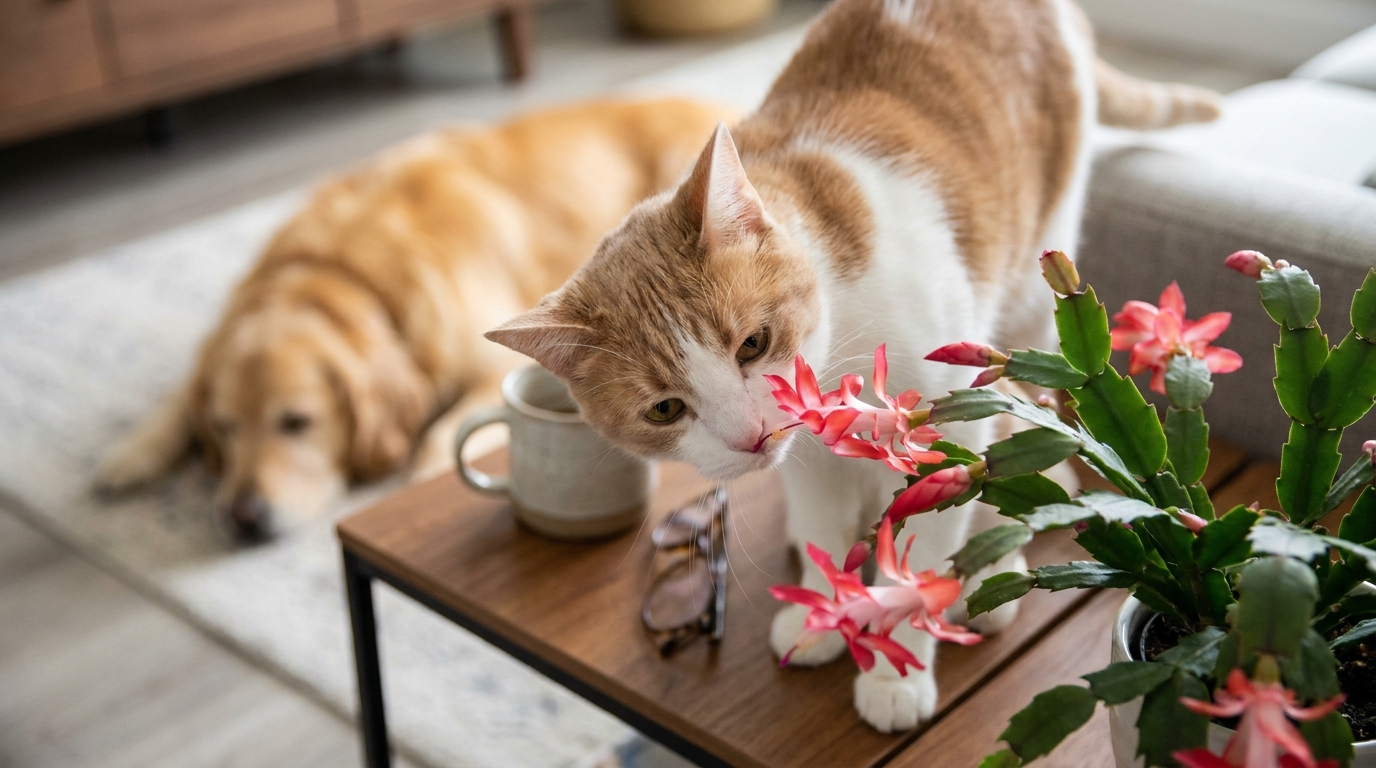
Christmas cactus is rated non-toxic, but a chewed plant can still upset a stomach. Here's how to check the plant, the pot and your pet.
Quick answer: No. The ASPCA lists Christmas cactus as non-toxic to cats and dogs, and NC State Extension rates Thanksgiving and Easter cactus the same. A nibble can still cause nausea, vomiting or a soft stool. See a vet the same day for vomiting more than once in a day, no water kept down, or no food for about 24 hours. Unsure of the plant? Call a poison line.
This article is general information, not a diagnosis. If you think your pet is in danger, go to the nearest emergency animal hospital.
Rated non-toxic, but these signs mean an emergency
If a cat may have chewed any lily, licked lily pollen or drunk lily vase water, go to an emergency vet now.
The ASPCA rates Christmas cactus non-toxic to cats and dogs, and Pet Poison Helpline does not expect serious poisoning. Non-toxic is not harmless, though: the ASPCA notes that eating any plant material can cause vomiting or an upset stomach. The bigger risks are often a toxic look-alike, or the foil, ribbon and plant food that come with the pot.
Go to an emergency vet now for any of these, and call a poison line on the way, not instead of going:
- Any possible lily exposure in a cat, even if your cat seems fine.
- Collapse, weakness, seizures, tremors, wobbliness, pale, white or muddy gums, trouble breathing, or a heartbeat that seems very slow, racing or uneven. A holiday cactus rarely, if ever, causes these (an older ASPCA summary notes wobbliness in cats), so also suspect another plant and bring it or its tag.
- Red vomit, vomit that looks like coffee grounds, or black, tarry stool.
- Repeated vomiting with lethargy; a swollen or hard belly; or a dog retching with nothing coming up.
- String, ribbon or tinsel hanging from the mouth or bottom, or possibly swallowed. Don't pull it or cut it.
- Vomiting after swallowing foil pot wrap, cellophane or plastic berries.
What the ASPCA and Pet Poison Helpline actually say
The ASPCA's plant database lists Christmas cactus (Schlumbergera bridgesii) and shrimp cactus (Schlumbergera russelliana) as non-toxic to dogs, cats and horses.
Thanksgiving cactus (Schlumbergera truncata) is not listed by name, and Easter cactus has no entry of its own. That is a gap in the list, not a warning: NC State Extension tags both as non-toxic for cats and dogs. An older ASPCA Poison Control summary for vets put Christmas cactus (listed there as S. truncata) among holiday plants that cause more worry than they deserve. It still noted vomiting and diarrhea in dogs, sometimes with blood, and reports of wobbliness in cats. Blood in the vomit or black stool means an ER or vet now; wobbliness means an ER now.
Pet Poison Helpline staff veterinarian Charlotte Flint, DVM, says Christmas cactus "is considered a non-toxic plant." Mild vomiting, nausea and diarrhea can occur, but serious toxicity is not expected. That upset usually settles on its own; signs that persist or repeat need a vet.
Christmas, Thanksgiving or Easter cactus? How to tell which one you have
The tag may not match the plant. University of Illinois Extension says Thanksgiving cactus is often sold at Christmas and misnamed Christmas cactus, and sources disagree on the Latin name. For your pet, the real question is whether it's a holiday cactus at all, since every holiday cactus these sources rate is non-toxic.
| Plant | How to recognize it | Toxicity status (who says so) |
|---|---|---|
| Thanksgiving cactus (S. truncata), also called crab cactus | Sawtooth edges (2 to 4 teeth); yellow anthers; blooms ahead of Christmas cactus | NC State: non-toxic to cats and dogs; no ASPCA entry by name |
| Christmas cactus (S. bridgesii or S. x buckleyi, by source) | Scalloped, rounded edges; purple to brown anthers; flowers droop down | ASPCA: non-toxic to cats and dogs |
| Easter cactus (R. gaertneri, formerly Hatiora) | Very rounded edges with brownish bristles at the tips; blooms in spring | NC State: non-toxic to cats and dogs |
| Shrimp cactus (S. russelliana) | A related species; check the plant tag | ASPCA: non-toxic to cats and dogs |
| Warning: Easter lily | A true lily, not Easter cactus or Easter lily cactus | Cats: ER now after any exposure |
Check the stem edges first and the anthers (the pollen-tipped parts in the flower's center) second. Bloom month is only a rough hint. If you can't tell what it is, treat it as an unknown plant and call a poison line.
Holiday look-alikes that are toxic
Some festive plants sold alongside holiday cacti are toxic. If your pet chewed one, or you aren't sure which plant it was, call a poison line.
| Look-alike plant | Main risk | What to do |
|---|---|---|
| Kalanchoe | Heart toxins; usually vomiting or diarrhea; rhythm changes are rare | Poison line now; ER for weakness, collapse or a slow, racing or uneven heartbeat |
| Pencil cactus (Euphorbia) | Milky sap irritates the mouth, stomach, skin and eyes | Poison line; same-day vet for a squinting or tearing eye |
| Poinsettia | Mild: drooling, lip licking, vomiting; irritating sap | Poison line if unsure; same-day vet if vomiting repeats |
| Amaryllis | The bulb is most toxic: vomiting, drooling, tremors | Poison line now; ER for tremors, weakness or seizures |
| Lily (true lilies, daylilies) in cats | Kidney failure from one bitten leaf, licked pollen or vase water | ER now, even with no signs |
| Mistletoe | Stomach upset; slow heart rate in large amounts; plastic berries can block the gut | Poison line; ER for stumbling, weakness or breathing trouble |
| Holly | Low toxicity: vomiting, diarrhea; spiky leaves can hurt the mouth | Poison line if berries were eaten; same-day vet if vomiting repeats |
| Christmas rose (hellebore) | Heart toxins; Pet Poison Helpline says effects can be fatal | Poison line now; ER for weakness or any heartbeat change |
| Cyclamen | Leaves: mild upset; root or tuber: heart rhythm changes, seizures | Poison line now; ER for seizures or collapse |
The ASPCA calls pencil cactus and poinsettia "generally over-rated in toxicity," but sap in an eye still needs a vet the same day; see why a dog squinting one eye needs a prompt check. Check any holiday bouquet for lilies before it comes into a home with a cat.
My pet chewed it: what to do right now
If you're sure it was a holiday cactus and your pet is acting normally:
- Remove loose plant bits from the mouth only if your pet lets you safely. Never pull on string or ribbon.
- Photograph the plant, its tag and the pot, and keep the tag.
- Check the pot for chewed foil, missing ribbon, fertilizer spikes, plant-food packets and plastic picks or berries. Missing ribbon or string means an emergency vet now.
- Don't induce vomiting or give home remedies. The ASPCA warns this can be dangerous and that nothing given at home can safely make a cat vomit. See when making a dog throw up helps and when it harms.
- Keep fresh water and food available. Never hold back food from a cat.
- Over the next day, count any vomits and watch appetite, stool and energy. Check the symptom table below if anything changes.
Call a poison line now for an unknown plant, a possible look-alike, or a missing fertilizer spike or plant-food packet. ASPCA Animal Poison Control is (888) 426-4435, and a consultation fee may apply. Pet Poison Helpline is (855) 764-7661, and a per-incident fee applies. Both answer 24 hours a day, 365 days a year. Have the tag, photo or product label ready.
Symptoms and when to call a vet
If more than one row fits, follow the most urgent. "Same day" means an in-person exam.
| Sign | Likely meaning | Action |
|---|---|---|
| Cat may have bitten a lily, licked its pollen or drunk vase water | Lily poisoning; kidney failure | Go now: ER, even with no signs |
| Repeated vomiting with lethargy; a swollen or hard belly; a dog retching up nothing | Poisoning, blockage or bloat | Go now: ER |
| Red or coffee-ground vomit, or black, tarry stool | Bleeding in the gut | Go now: ER or your vet |
| Wobbliness, tremors, seizures, collapse, pale, white or muddy gums, or a racing, slow or uneven heartbeat | Rarely, if ever, from a holiday cactus; also suspect another plant | Go now: ER; bring the plant or its tag |
| Trouble breathing or weakness | Serious poisoning or other illness | Go now: ER |
| Ribbon, string or tinsel at the mouth or bottom, or possibly swallowed | String caught in the gut | Go now: ER; don't pull or cut it |
| Swallowed foil, cellophane or plastic berries, plus vomiting | Gut blockage | Go now: ER |
| Calm pet that may have eaten a look-alike, an unknown plant or plant food | Possible poisoning | Poison line now with the tag or label |
| Vomits more than once in a day, or can't keep water down | Ongoing irritation; dehydration risk | Same day: vet in person |
| No food for about 24 hours (sooner for a kitten, senior, overweight or diabetic cat) | Illness; fatty-liver risk in cats | Same day: vet in person |
| Soft stool past a day, or a streak of blood in loose stool in a bright pet | Ongoing gut irritation | Same day: vet in person |
| Lethargy, hiding, a hunched posture or belly pain in a pet still alert | Possible blockage or other illness | Same day: vet; ER if weak or collapsed |
| A diabetic cat on insulin vomits | Low blood sugar risk | Call the prescribing vet before the next insulin dose; ER if weak or wobbly |
| Known holiday cactus only: one vomit, a little drooling or one soft stool; pet bright, eating and drinking | Mild upset from plant material | Watch at home; keep food and water available |
Cornell's Riney Canine Health Center says to call your vet about a vomiting dog that is lethargic, has a painful belly or has a fever. A dog retching with nothing coming up may have a bloated stomach, which needs an emergency vet now.
The real risks around the pot
Foil and cellophane. The ASPCA says swallowed foil or cellophane can cause an intestinal blockage and vomiting, and Pet Poison Helpline says the blockage may need surgery. Take the foil sleeve off before you display the plant.
Ribbon, string and tinsel. The Merck Veterinary Manual says swallowed string is seen mostly in cats and often anchors at the base of the tongue or in the stomach. As the gut moves, the string can saw through the intestine, and a string seen in the mouth must never be pulled. Read more about string, lilies and antifreeze in cats. Dogs get into holiday twine and netting too.
Plant food and fertilizer spikes. Pet Poison Helpline says small amounts may cause only mild stomach upset, but larger amounts can cause severe poisoning, and meal-based products can form a stomach mass that leads to a blockage or pancreatitis. Call a poison line with the label in hand.
Plastic picks, berries and broken pots. Pet Poison Helpline says plastic mistletoe berries can block the gut, so remove decorative picks. If the pot tips over, keep pets out of the room until the soil and shards are swept up.
Why cats chew it and how to keep it out of reach
Whatever draws your cat to it, the fix is limiting access:
- Use a hanging planter or a room your cat can't enter. A high shelf alone may not stop a cat that jumps.
- Pick up fallen stem segments and flowers every day.
- Store plant food and fertilizer spikes in a closed cabinet.
- Keep lilies out of any home with a cat; give kalanchoe, amaryllis, Christmas rose and cyclamen the most protection.
- Skip essential-oil or citrus-oil sprays as deterrents. The ASPCA says cats are especially sensitive to essential oils, which can cause stomach upset, nervous system depression and even liver damage.
When a video visit helps and when to go in person
A video visit fits when your pet is bright, eating and drinking, and has had no more than one vomit or a soft stool, and you want help working out what it chewed or what to watch for. RexVet is a 501(c)(3) non-profit. If your pet is in Florida, New York or Virginia during the visit, you can book a $64.99 live video visit with Dr. Tiffany Delacruz, DVM, when a slot is open (usually about 8 AM to 11 PM ET; holiday hours may differ). On camera she can look at photos of the plant, its tag and its pot, and watch your pet's breathing, posture, gum color and how it moves while you show her the mouth. A video visit can't feel the belly or look under the tongue, so it can't rule out a blockage. She can tell you whether your pet needs an in-person exam and point you to clinics nearby. She can't promise medicine: whether any is appropriate depends on the exam, your pet's species and your state's rules. If she prescribes something and it is sent to an outside pharmacy, a pharmacy transfer fee applies; RexVet is not a pharmacy.
Go in person the same day instead if your pet vomits more than once in a day, can't keep water down, hasn't eaten for about 24 hours (sooner for a kitten, senior, overweight or diabetic cat), or has bloody diarrhea or lethargy. If you can't name the plant, call a poison line first. Both poison lines answer 24 hours a day, 365 days a year; RexVet's video visits do not. A video visit isn't for emergencies: for the go-now signs in the table above, go to an emergency vet.
Need an Expert Opinion on This Topic?
Book a video visit with a licensed vet, evenings and weekends included
See open timesFrequently Asked Questions
Are Christmas cactus flowers toxic to cats or dogs?
No source we found rates the flowers on their own, and the ASPCA's Christmas cactus entry gives no warning for any part of the plant. Treat a chewed flower like a chewed stem: watch for nausea, vomiting or a soft stool, and see a vet the same day if your pet vomits more than once in a day.
Is Thanksgiving cactus safe for cats and dogs?
It is rated non-toxic, which isn't the same as harmless. The ASPCA's database doesn't list it by name, but NC State Extension rates it non-toxic to cats and dogs, and an older ASPCA Poison Control summary for vets says it causes more worry than it warrants. Cats and dogs can still vomit or get diarrhea. Vomiting more than once in a day means a vet the same day; blood in the vomit or black stool means an ER or vet now.
My cat ate Christmas cactus and threw up. Now what?
One vomit in a bright cat that is eating and drinking usually just needs watching; don't try to make your cat vomit. See a vet in person the same day for more than one vomit in a day, no water kept down, no food for about 24 hours (sooner for a kitten, senior, overweight or diabetic cat), or lethargy. Go to an emergency vet now if a lily, ribbon or string could be involved, or you see blood, wobbliness or collapse.
Why is my cat obsessed with my Christmas cactus?
The sources we checked don't explain it, so put the plant out of reach: a hanging planter or a room your cat can't enter. Pick up fallen segments, and skip essential-oil or citrus sprays.
Is a Christmas cactus a real cactus?
Yes. NC State Extension places Schlumbergera in the cactus family (Cactaceae). It grows on trees and rocks in the rainforests of southeastern Brazil, and its flat, spineless segments have soft bristles instead of sharp spines.
Do I need to call poison control for a non-toxic plant?
Not usually, if you're sure it was a holiday cactus and your pet is acting normally. Call if you can't identify the plant, if it could be a look-alike such as kalanchoe or amaryllis, or if your pet got into plant food from the pot. ASPCA Animal Poison Control is (888) 426-4435 (a consultation fee may apply), and Pet Poison Helpline is (855) 764-7661 (a per-incident fee applies).
Is Easter cactus the same as Easter lily?
No. NC State Extension rates Easter cactus non-toxic to cats and dogs. Easter lily is a true lily: one bitten leaf, licked pollen or a sip of vase water can cause kidney failure in a cat. Any possible lily exposure in a cat means an emergency vet now.
Can an online vet in Florida, New York or Virginia help if my pet chewed a holiday plant?
Sometimes. If your pet is in Florida, New York or Virginia and acting normally, a live video visit with Dr. Tiffany Delacruz, DVM, can help you decide what to watch for, when a slot is open. If you can't name the plant, call a poison line first. A video visit can't feel the belly, so it can't rule out a blockage, and she can't promise medicine. Possible lily exposure in a cat, collapse, seizures, blood, or string at the mouth or bottom need an emergency vet, not a video visit.
FAQs
Are Christmas cactus flowers toxic to cats or dogs?
No source we found rates the flowers on their own, and the ASPCA's Christmas cactus entry gives no warning for any part of the plant. Treat a chewed flower like a chewed stem: watch for nausea, vomiting or a soft stool, and see a vet the same day if your pet vomits more than once in a day.
Is Thanksgiving cactus safe for cats and dogs?
It is rated non-toxic, which isn't the same as harmless. The ASPCA's database doesn't list it by name, but NC State Extension rates it non-toxic to cats and dogs, and an older ASPCA Poison Control summary for vets says it causes more worry than it warrants. Cats and dogs can still vomit or get diarrhea. Vomiting more than once in a day means a vet the same day; blood in the vomit or black stool means an ER or vet now.
My cat ate Christmas cactus and threw up. Now what?
One vomit in a bright cat that is eating and drinking usually just needs watching; don't try to make your cat vomit. See a vet in person the same day for more than one vomit in a day, no water kept down, no food for about 24 hours (sooner for a kitten, senior, overweight or diabetic cat), or lethargy. Go to an emergency vet now if a lily, ribbon or string could be involved, or you see blood, wobbliness or collapse.
Why is my cat obsessed with my Christmas cactus?
The sources we checked don't explain it, so put the plant out of reach: a hanging planter or a room your cat can't enter. Pick up fallen segments, and skip essential-oil or citrus sprays.
Is a Christmas cactus a real cactus?
Yes. NC State Extension places Schlumbergera in the cactus family (Cactaceae). It grows on trees and rocks in the rainforests of southeastern Brazil, and its flat, spineless segments have soft bristles instead of sharp spines.
Do I need to call poison control for a non-toxic plant?
Not usually, if you're sure it was a holiday cactus and your pet is acting normally. Call if you can't identify the plant, if it could be a look-alike such as kalanchoe or amaryllis, or if your pet got into plant food from the pot. ASPCA Animal Poison Control is (888) 426-4435 (a consultation fee may apply), and Pet Poison Helpline is (855) 764-7661 (a per-incident fee applies).
Is Easter cactus the same as Easter lily?
No. NC State Extension rates Easter cactus non-toxic to cats and dogs. Easter lily is a true lily: one bitten leaf, licked pollen or a sip of vase water can cause kidney failure in a cat. Any possible lily exposure in a cat means an emergency vet now.
Can an online vet in Florida, New York or Virginia help if my pet chewed a holiday plant?
Sometimes. If your pet is in Florida, New York or Virginia and acting normally, a live video visit with Dr. Tiffany Delacruz, DVM, can help you decide what to watch for, when a slot is open. If you can't name the plant, call a poison line first. A video visit can't feel the belly, so it can't rule out a blockage, and she can't promise medicine. Possible lily exposure in a cat, collapse, seizures, blood, or string at the mouth or bottom need an emergency vet, not a video visit.
Medically Reviewed
Reviewed by Dr. Tiffany Delacruz, DVM — licensed veterinarian and CEO of RexVet. Last reviewed October 23, 2026.
Content is for informational purposes and does not replace professional veterinary advice.
Chief Executive Officer · Licensed Veterinarian
Dr. Delacruz is a licensed Doctor of Veterinary Medicine specializing in preventive care and veterinary telehealth. She reviews all health content on RexVet to ensure accuracy and clinical relevance.
Sources & References
- · American Veterinary Medical Association — Telehealth Guidelines
- · AVMA — Pet Care Resources
- · U.S. FDA — Animal & Veterinary