
Dog Squinting One Eye: Causes and When to See a Vet
By RexVet Team | Reviewed by Dr. Tiffany Delacruz, DVM
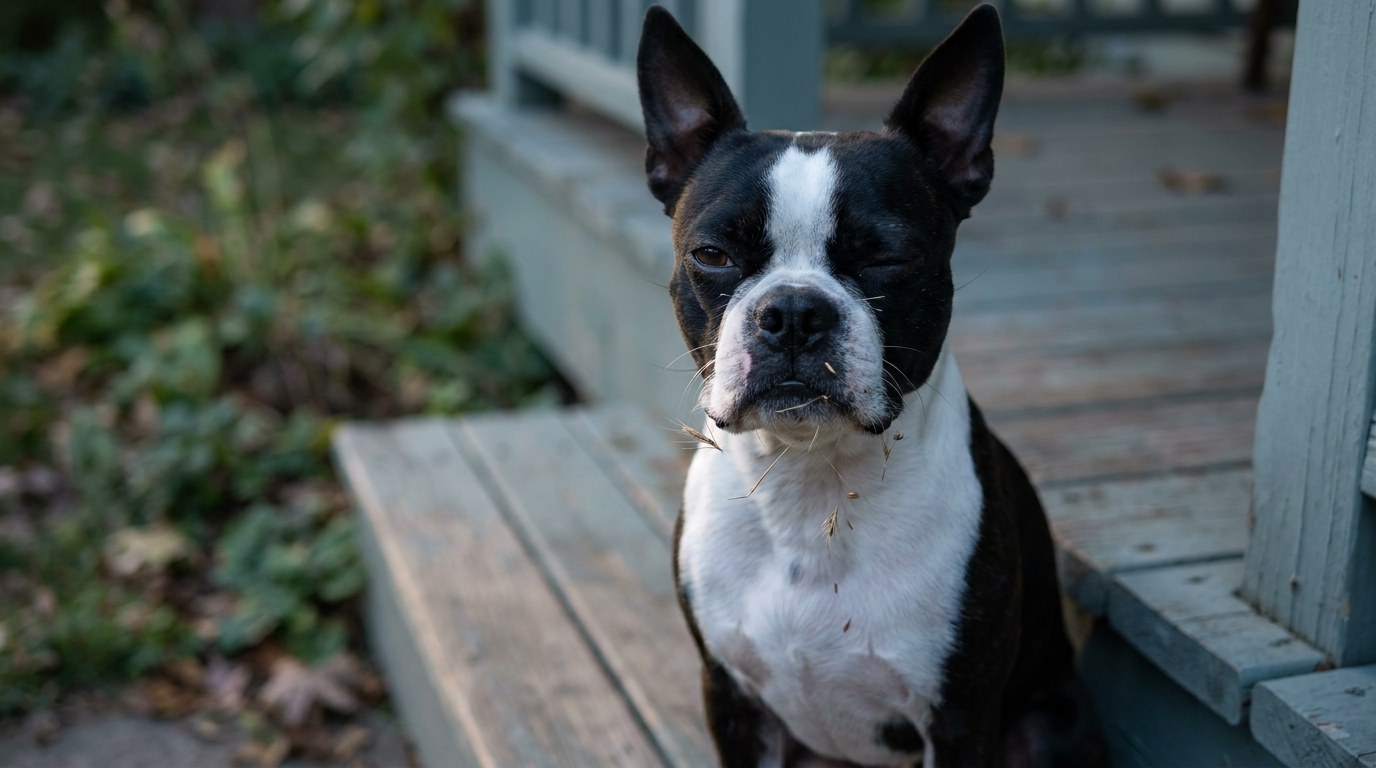
A squint is how dogs show eye pain. Here are the usual causes, the signs that mean go now, and why the eye needs an exam the same day.
Quick answer: Squinting in one eye usually means eye pain from a scratch or ulcer, something caught behind the eyelid, glaucoma or uveitis. Have a vet examine the eye in person the same day, even if it looks mild. Go to an emergency vet now if the eye looks cloudy, hazy or bluish, bulges, the pupils differ in size, your dog won't open it, or your dog seems unable to see.
This article is general information, not a diagnosis. If you think your pet is in danger, go to the nearest emergency animal hospital.
What Squinting in One Eye Means
Squinting, which vets call blepharospasm, is one of the main ways dogs show eye pain, according to the Merck Veterinary Manual. With a scratch or ulcer on the cornea (the clear front of the eye), you usually see squinting plus heavy tearing.
Squinting can also mean trouble inside the eye: glaucoma (high eye pressure, usually with a large pupil) or uveitis (inflammation, usually with a small pupil). Both can cost a dog its sight. A dog with glaucoma may not squint much at all. It may just act quiet, sore or withdrawn, so don't wait for squinting to get worse before you get the eye checked in person.
Cats squint for many of the same reasons; see why a cat squints one eye.
Go to an Emergency Vet Now If You See Any of These
Merck lists problems like these as eye emergencies that need fast treatment to save vision.
- The eye looks cloudy, hazy or bluish.
- The eye bulges or has moved forward out of the lids.
- One pupil is bigger or smaller than the other and the eye is red, cloudy or painful. Your clinic is fine if it can see your dog right away; otherwise, go to an emergency hospital.
- Your dog suddenly bumps into things, or a large pupil doesn't shrink in light.
- Your dog won't open the eye at all.
- Blood, or a white or yellow layer, shows inside the front of the eye.
- The eye has a dent, crater, clear bubble or dark bulge, or its surface looks soft or gooey.
- A cat scratch, thorn or stick injury, or anything stuck in or poking into the eye. Don't try to remove it.
- Pain when opening the mouth, or the third eyelid (the pale membrane in the inner corner) coming across the eye.
- A terrier with a sudden painful, cloudy eye.
- A new squint in the other eye of a dog already diagnosed with glaucoma.
- A squint that is getting worse instead of better.
If shampoo, a cleaner or another chemical got into the eye, start gently flushing the eye with lukewarm tap water right away, and call your vet or a poison line at the same time (or have someone else call) and follow their instructions: ASPCA Animal Poison Control at (888) 426-4435 (a consultation fee may apply) or Pet Poison Helpline at (855) 764-7661 (a per-incident fee applies).
Why Every Squint Needs an Exam the Same Day
If none of those signs fit, your dog still needs an in-person exam the same day. Small ulcers often can't be seen without a dye test at the clinic, so a normal-looking eye can still be hurt. Ulcers can also change quickly: a fast-melting ulcer can perforate the eye within 24 hours, according to a conference paper by veterinary ophthalmologist Robin Stanley (WSAVA, 2007).
Flat-faced dogs such as Pugs, Bulldogs and Shih Tzus should be seen right away, even for a mild squint (see below).
Call your regular clinic and ask whether it can see your dog today for a stain test. If it can't see your dog today and no other clinic can, or it's after hours, go to an emergency hospital.
A Safe Look-Don't-Touch Check at Home
In good light, compare the sore eye with the healthy one.
- Surface: clear and shiny, or cloudy, hazy or bluish? Any dent, bubble or gooey patch?
- Pupils: the same size?
- Shape: does one eye look bigger or pushed forward?
- Discharge: none, clear tears, or thick, sticky goop?
- Inner corner: is the third eyelid sliding across? A red, rounded bump there, often called cherry eye, is a different problem.
Don't pry the lids open or wipe the eye. Keep your dog from pawing or rubbing it, using a cone if you have one. Note when the squint started and what came just before it.
Common Causes of Squinting in One Eye
A scratch or corneal ulcer. Merck says most corneal ulcers in dogs start with an injury such as a nail scratch, something caught in the eye or a chemical splash.
Something stuck in the eye. Plant material is the usual culprit, though Merck notes that sand, metal and glass turn up too. It can hide in the pocket behind the third eyelid, where you can't see it.
Glaucoma. Merck calls acute glaucoma an eye emergency and a common cause of permanent blindness in dogs. Signs include squinting, a red eye, a cloudy cornea, a large pupil and vision loss. The Cornell Riney Canine Health Center says it often starts with just a slightly red eye and some squinting, and that primary glaucoma usually starts in one eye, with the second eye eventually involved. Merck says the primary angle-closure form is most often seen in the American Cocker Spaniel, Basset Hound, Chow Chow, Chinese Shar-Pei, Samoyed and Siberian Husky. Vision lost to glaucoma usually does not come back, so vets work to lower the pressure as fast as possible.
Uveitis. Signs include squinting, redness, a cloudy cornea, a small pupil, and blood or a white or yellow layer inside the eye. The American College of Veterinary Ophthalmologists (ACVO) says uveitis must be treated aggressively to prevent complications that lead to blindness. It can also be the first sign of a body-wide illness such as a tick-borne infection, a fungal infection or cancer, so a vet may recommend bloodwork, especially if your dog seems tired, feverish or off its food.
A slipped lens. In terriers, a sudden painful, cloudy eye can mean the lens has slipped forward, which can trigger glaucoma, Merck notes. Go now.
Dry eye. Thick, sticky discharge or a dull-looking eye can mean too few tears. A clinic checks with a tear test.
Trouble behind the eye. Merck says a thorn or porcupine quill can inflame the tissue behind the eye. Pain when opening the mouth or a bulging eye means go now.
No Discharge, Watery or Goopy: What Each Can Mean
No discharge doesn't mean milder: glaucoma and uveitis often show as redness, haze or unequal pupils, not goop. Watery eyes fit a scratch, an ulcer or something caught under a lid. Goopy, thick discharge can point to dry eye, conjunctivitis or an infected ulcer.
Redness or discharge in only one eye often comes from something local, such as a foreign object or dry eye. But squinting in one eye can still be glaucoma or uveitis, and uveitis can come from a body-wide illness, so one eye is not a reason to wait.
| What you see | What it can mean | How fast |
|---|---|---|
| Squint plus heavy tearing, no goop | Scratch or ulcer on the cornea | Same day, in person |
| Squint plus watery eye after grass or brush | Plant material behind the third eyelid | Same day, in person |
| Squint plus thick, sticky discharge | Dry eye, an inflamed eye lining or an infected ulcer | Same day, in person |
| Squint, little discharge, red eye, larger pupil | Glaucoma | ER now |
| Squint, red eye, smaller pupil | Uveitis | ER now |
| Cloudy, hazy or bluish eye | Ulcer, glaucoma or uveitis | ER now |
| Eye bulging or out of the lids | Eye pushed forward, glaucoma or a problem behind the eye | ER now |
| Dent, bubble or gooey patch on the eye | Deep or melting ulcer | ER now |
| Both eyes red, or squint plus tired, feverish or off food | Uveitis from a body-wide illness | Same day, bloodwork possible |
| Squint that keeps coming back | Stray lashes, rolled-in lids, dry eye or an ulcer slow to heal | Same day, in person |
Squinting After a Walk, Time in Tall Grass or a Bath
If your dog was nosing through brush or tall grass, something may be caught on or under the eyelid. See a vet the same day. A vet can often numb the eye, look behind the third eyelid and lift out what's there, though some objects need sedation or general anesthesia. Never try to pull anything out yourself.
After a bath, shampoo in the eye can cause an ulcer, so gently flush the eye with lukewarm tap water, call your vet or a poison line for instructions, then get the eye checked.
Flat-Faced Breeds and Ulcer Risk
In one UK referral-hospital study of 700 dogs (Packer, Hendricks and Burn, PLoS ONE, 2015), flat-faced dogs were about 20 times more likely to have a corneal ulcer, and dogs with a nose fold nearly 5 times more likely.
ACVO explains that in Pugs, Bulldogs, Shih Tzus and similar breeds the eyes sit forward, the lids may not close fully, and the eye surface has less feeling, which can mask pain from a serious injury. Their ulcers can deepen or melt, risking loss of the eye. Get any squint, even a mild one, checked by a vet right away. If the eye ever pops forward out of the lids, which ACVO says can follow even minor trauma or restraint, go to an emergency vet now.
For breed detail, see eye discharge in Bulldogs.
When the Squint Keeps Coming Back
A squint that keeps returning usually has a cause that hasn't been fixed, such as eyelashes poking out through the back of the lid, rolled-in eyelids (entropion), dry eye, or shallow ulcers that heal very slowly. Merck says those slow ulcers occur especially in older dogs and are most common in Boxers. Each flare-up needs an in-person exam the same day, not leftover medicine.
What the Vet Checks, and Why the Stain Test Needs a Clinic
A vet checks for an ulcer by placing a fluorescein dye on the eye and looking at it under a blue light. According to ACVO, the vet also screens for glaucoma by measuring eye pressure with a tonometer, and checks for dry eye with a tear test. Bloodwork may follow if uveitis is likely.
| Test | What it checks | Possible over video? |
|---|---|---|
| Fluorescein stain plus blue light | Ulcers and scratches | No |
| Tonometry (eye pressure) | Glaucoma and uveitis | No |
| Schirmer tear test | Dry eye | No |
| Numbing drops, then a look behind the third eyelid | A hidden object | No |
Not Sure How Fast to Go? A Video Check With RexVet
RexVet is a non-profit vet telehealth service. If the eye opens, isn't cloudy, hazy or bulging, both pupils look the same size, nothing is visibly stuck in it, no chemical got in it, and the squint isn't getting worse, you can book a $64.99 live video visit with Dr. Tiffany Delacruz, DVM, for dogs in Florida, New York or Virginia (live video slots about 8 AM-11 PM Eastern Time). She can look at the eye up close on camera and tell you how urgently it needs an in-person check and where: your regular clinic the same day, or an emergency hospital tonight.
A video visit can't do the dye (stain) test or the eye-pressure test, so it can't rule out an ulcer or glaucoma. Flat-faced breeds (Pug, Bulldog, Shih Tzu and similar) should skip video and be seen in person right away. Prescriptions are not guaranteed and depend on the exam and state law. For a squinting eye, eye medication should wait until a vet has stained and checked the eye in person. RexVet is not a pharmacy, so if she sends a prescription, a pharmacy transfer fee applies (see our Terms). For any red flag above, or outside those hours, go to an emergency hospital.
Home Remedies: What Never to Put in the Eye
Never put leftover steroid eye drops into a squinting eye. Veterinary ophthalmologists warn that steroids slow ulcer healing, can break down the cornea, and can turn a small ulcer into a deep one fast. Only the stain test rules out an ulcer, so use eye medication only after a vet has checked that eye in person.
Skip old tubes from the medicine cabinet. Without an exam you don't know what's wrong, antibiotics don't treat glaucoma, uveitis or a stuck object, and some eye ointments also contain a steroid such as hydrocortisone (the federal DailyMed label database lists one), which can make an ulcer worse. No home remedy can rule out an ulcer or lower eye pressure, and the ASPCA warns that human pain pills such as ibuprofen can poison dogs.
| Don't | Why |
|---|---|
| Leftover steroid eye drops | Can slow healing and turn a small ulcer into a deep one fast |
| An old antibiotic tube from the cabinet | Won't treat glaucoma, uveitis or a stuck object; some contain a steroid |
| Any human eye drop not prescribed for this eye | No exam means no diagnosis, and it delays the right care |
| Pulling out something stuck in the eye | It may have gone through the cornea; a vet may need sedation |
Protecting Your Dog's Eyes
Check both eyes, hands off, after time in brush or tall grass. Keep shampoo away from the face, and handle a flat-faced dog's head gently. If one eye has glaucoma, watch the other closely. Keep up with the tick prevention your vet recommends, since tick-borne infections can cause uveitis.
Need an Expert Opinion on This Topic?
Book a video visit with a licensed vet, evenings and weekends included
See open timesFrequently Asked Questions
Why is my dog suddenly squinting one eye?
Squinting is how dogs show eye pain. The usual causes are a scratch or ulcer on the cornea, something caught behind the third eyelid, glaucoma or uveitis. Small ulcers often can't be seen without a dye test, so have the eye examined in person the same day.
Is a dog squinting one eye an emergency?
Go to an emergency vet now if the eye looks cloudy, hazy or bluish, bulges, won't open, has a dent, bubble or gooey patch, or has something stuck in it, if the pupils differ in size, or if your dog seems unable to see. Any other squint still needs an in-person exam the same day.
Can I wait a day or two to see if the squinting gets better?
No. A veterinary ophthalmologist warns that a fast-melting ulcer can perforate the eye within 24 hours, and Merck calls acute glaucoma an emergency and a common cause of permanent blindness in dogs. Small ulcers are invisible without a stain test, so have the eye examined in person the same day.
My dog is squinting but there's no discharge. Is that less serious?
Not necessarily. Glaucoma and uveitis happen inside the eye and often show as redness, haze or unequal pupils, not goop. A dog with glaucoma may barely squint and just act quiet. Either way, the eye needs an in-person exam the same day.
My dog started squinting after time in tall grass or after a bath. What happened?
Plant material can hide behind the third eyelid, and shampoo splashed in the eye can cause an ulcer. Don't pull anything out yourself; see a vet the same day. If a product got in the eye, gently flush it with lukewarm tap water and call your vet or ASPCA Animal Poison Control at (888) 426-4435 (a consultation fee may apply) right away.
Are Pugs, Bulldogs and other flat-faced dogs more at risk?
Yes. In one UK referral-hospital study of 700 dogs, flat-faced dogs were about 20 times more likely to have a corneal ulcer. Their corneas feel less, so a serious ulcer can look minor. Get any squint checked right away, and go to an emergency vet now if the eye pops forward.
Is there a home remedy, or can I use leftover eye drops?
No home remedy can rule out an ulcer or lower eye pressure. At home, keep your dog from rubbing the eye, using a cone if you have one. Leftover antibiotics don't treat glaucoma, uveitis or a stuck object, and steroid drops, or ointments that also contain a steroid, can turn a small ulcer into a deep one fast. Use eye medication only after a vet has checked that eye in person.
Can an online vet tell what's wrong with a squinting eye?
A video vet can look at the eye on camera and help you decide how urgently to go and where. Video can't do the stain, eye-pressure or tear test, so it can't diagnose an ulcer or rule out glaucoma or uveitis. Flat-faced dogs and any eye with a red flag should go straight to an in-person vet.
FAQs
Why is my dog suddenly squinting one eye?
Squinting is how dogs show eye pain. The usual causes are a scratch or ulcer on the cornea, something caught behind the third eyelid, glaucoma or uveitis. Small ulcers often can't be seen without a dye test, so have the eye examined in person the same day.
Is a dog squinting one eye an emergency?
Go to an emergency vet now if the eye looks cloudy, hazy or bluish, bulges, won't open, has a dent, bubble or gooey patch, or has something stuck in it, if the pupils differ in size, or if your dog seems unable to see. Any other squint still needs an in-person exam the same day.
Can I wait a day or two to see if the squinting gets better?
No. A veterinary ophthalmologist warns that a fast-melting ulcer can perforate the eye within 24 hours, and Merck calls acute glaucoma an emergency and a common cause of permanent blindness in dogs. Small ulcers are invisible without a stain test, so have the eye examined in person the same day.
My dog is squinting but there's no discharge. Is that less serious?
Not necessarily. Glaucoma and uveitis happen inside the eye and often show as redness, haze or unequal pupils, not goop. A dog with glaucoma may barely squint and just act quiet. Either way, the eye needs an in-person exam the same day.
My dog started squinting after time in tall grass or after a bath. What happened?
Plant material can hide behind the third eyelid, and shampoo splashed in the eye can cause an ulcer. Don't pull anything out yourself; see a vet the same day. If a product got in the eye, gently flush it with lukewarm tap water and call your vet or ASPCA Animal Poison Control at (888) 426-4435 (a consultation fee may apply) right away.
Are Pugs, Bulldogs and other flat-faced dogs more at risk?
Yes. In one UK referral-hospital study of 700 dogs, flat-faced dogs were about 20 times more likely to have a corneal ulcer. Their corneas feel less, so a serious ulcer can look minor. Get any squint checked right away, and go to an emergency vet now if the eye pops forward.
Is there a home remedy, or can I use leftover eye drops?
No home remedy can rule out an ulcer or lower eye pressure. At home, keep your dog from rubbing the eye, using a cone if you have one. Leftover antibiotics don't treat glaucoma, uveitis or a stuck object, and steroid drops, or ointments that also contain a steroid, can turn a small ulcer into a deep one fast. Use eye medication only after a vet has checked that eye in person.
Can an online vet tell what's wrong with a squinting eye?
A video vet can look at the eye on camera and help you decide how urgently to go and where. Video can't do the stain, eye-pressure or tear test, so it can't diagnose an ulcer or rule out glaucoma or uveitis. Flat-faced dogs and any eye with a red flag should go straight to an in-person vet.
Medically Reviewed
Reviewed by Dr. Tiffany Delacruz, DVM — licensed veterinarian and CEO of RexVet. Last reviewed October 19, 2026.
Content is for informational purposes and does not replace professional veterinary advice.
Chief Executive Officer · Licensed Veterinarian
Dr. Delacruz is a licensed Doctor of Veterinary Medicine specializing in preventive care and veterinary telehealth. She reviews all health content on RexVet to ensure accuracy and clinical relevance.
Sources & References
- · American Veterinary Medical Association — Telehealth Guidelines
- · AVMA — Pet Care Resources
- · U.S. FDA — Animal & Veterinary