
German Shepherd Skin Problems: Itching, Hot Spots, Hair Loss
By RexVet Team | Reviewed by Dr. Tiffany Delacruz, DVM
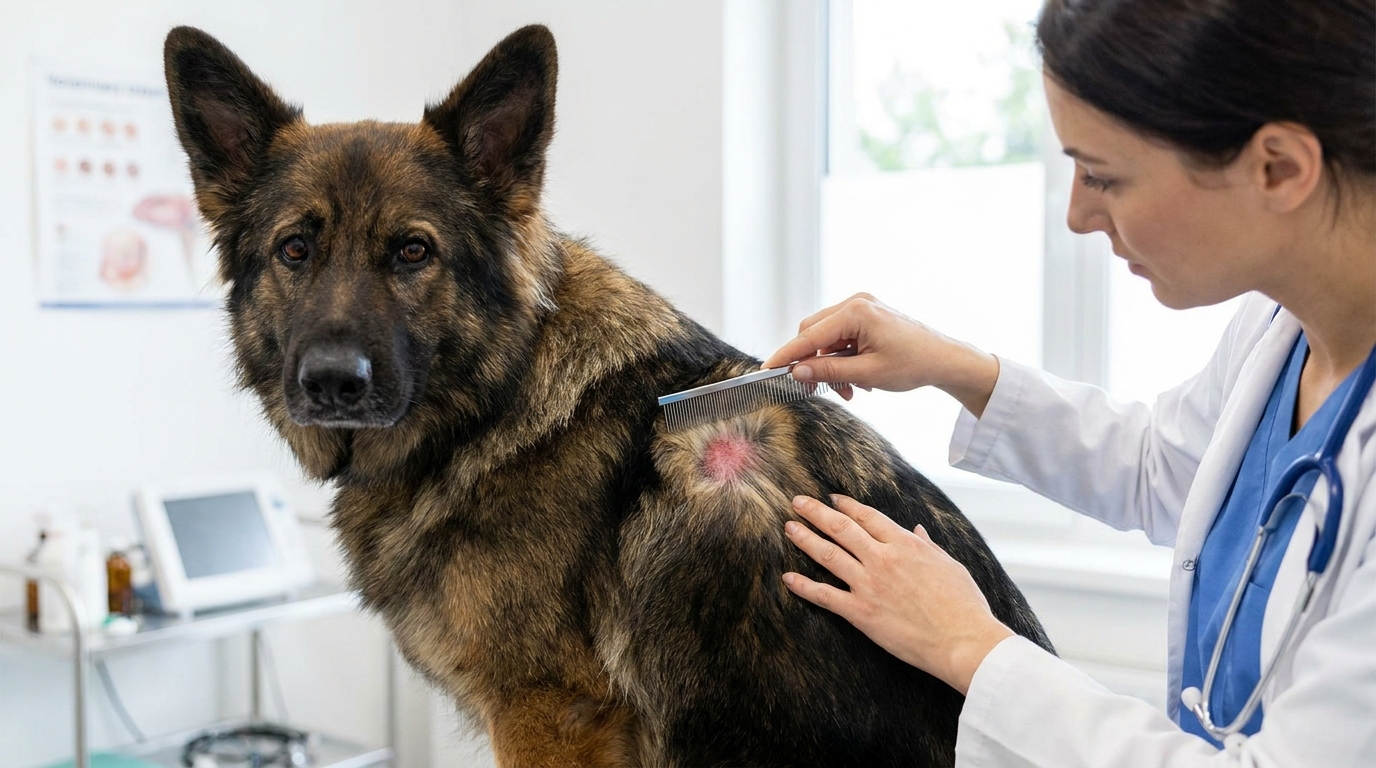
Why German Shepherds itch, get hot spots and lose hair, which signs need a vet today, and safe home care for a thick double coat.
Quick answer: German Shepherd skin problems usually start with an allergy to fleas, pollen or food, which sets off itching, hot spots, hair loss and infection under the thick double coat. A hot spot that spreads fast or is more than 24 hours old needs an in-person vet today; Cornell's Riney Canine Health Center says one that old is likely infected. Face swelling with trouble breathing needs an emergency vet now.
This article is general information, not a diagnosis. If you think your pet is in danger, go to the nearest emergency animal hospital.
From RexVet's own visit data: "Pit bull-type dogs and German Shepherds stood out for skin trouble: 41% of their RexVet visits named skin, itching, allergies or hair loss, compared with 30% of all dog visits." For allergy signs and causes in any breed, see dog skin allergies.
Are German Shepherds prone to skin problems?
Yes, German Shepherds are prone to skin problems: veterinary sources list the breed as predisposed to allergic skin disease, hot spots and a deep, recurring infection called German Shepherd pyoderma, so itching that lasts more than a few days deserves a vet check.
A 2013 Uppsala University study in PLoS Genetics calls the German Shepherd a high-risk breed for canine atopic dermatitis. Tufts University's Cummings School of Veterinary Medicine says German Shepherds may be predisposed to a deep, painful, relapsing form of pyoderma. The AKC describes the breed's double coat as a dense, harsh outer coat over a softer undercoat. That thick coat can trap moisture and hide a sore.
When is a German Shepherd skin problem an emergency?
A German Shepherd with hives or face, lip or eye swelling plus vomiting, diarrhea, drooling, pale gums, weakness, collapse, a seizure, trouble breathing or swallowing, or swelling toward the throat or tongue needs an emergency vet now; new hives or a puffy face with normal breathing and pink gums need an in-person vet within the hour.
Hives or a puffy face that start within 1 hour of a shot, sting or new medicine also mean an emergency vet now, and spreading hives need a vet in person now. If the swelling grows or no vet can see your dog within the hour, go to the nearest emergency vet; see sudden hives or bumps all over.
| Sign | What to do | How soon |
|---|---|---|
| Face swelling, hard breathing | Emergency vet | Now |
| Hives with vomiting or weakness | Emergency vet | Now |
| Tremors after flea product | Emergency vet | Now |
| Ate or licked flea product | Poison line or ER | Now |
| New hives, puffy face, normal breathing | In-person vet | Within 1 hour |
| Hot spot spreading or over a day old | In-person vet | Today |
| Oozing, smelly or painful sores | In-person vet | Today |
| Draining sores near the anus | In-person vet | Today |
| Itch for days, dog well | Video visit | This week |
| Even shedding, normal skin | Brush and watch | No rush |
For a dog that ate flea chews, licked a flea product or swallowed an essential oil, or a dog flea product put on a cat, call ASPCA Animal Poison Control at (888) 426-4435 (a consultation fee may apply) or the Pet Poison Helpline at (855) 764-7661 (a per-incident fee applies) now, or go to an emergency vet. A dog that drools heavily, stumbles, weakens or trembles after an oil went on the skin or was swallowed needs the nearest emergency vet now; call a poison line on the way. Tremors, wobbliness or seizures after a flea or tick product mean the nearest emergency vet first, not a phone call.
Ear tips, the tail tip or footpads turning purple or black, ulcerating or sloughing, or a sudden head tilt, loss of balance, circling or severe ear pain, also mean an emergency vet now.
Why is my German Shepherd itching so much?
Most itchy German Shepherds have an allergy to fleas, pollen, dust mites or a food, often with a bacterial or yeast skin infection on top; where the dog itches is a useful first clue, and itching that lasts more than a few days needs a vet check.
| Where it itches | Common clue |
|---|---|
| Rump and tail base | Fleas |
| Paws, belly, armpits, face | Allergy |
| Ears, head shaking | Ear infection |
| Ear edges, elbows, hocks | Mange mites |
| Lower back, outer thighs, crusts | Pyoderma |
| Under the tail, draining sores | Perianal fistula |
The Merck Veterinary Manual says flea allergy classically causes crusted, itchy skin over the hips, the base of the tail and the thighs, and that very sensitive dogs may show almost no fleas because they groom them off, so flea control for every pet in the home comes first. Cornell's Riney Canine Health Center says sarcoptic mange most often affects the ear edges, elbows and hocks and is very contagious between dogs and can give people an itchy rash; crusts in those spots, a sudden intense itch, or a new itchy rash on people at home need an in-person exam with a skin scrape. For more causes, see why a dog itches with no fleas.
Why do German Shepherds get so many hot spots?
German Shepherds get many hot spots because allergies and fleas make the skin itch and the thick double coat holds moisture against it, so licking and chewing turn a small patch into a raw, oozing hot spot; a hot spot that spreads fast, is more than 24 hours old, or keeps coming back on the lower back, hips or thighs needs an in-person vet the same day.
Cornell's Riney Canine Health Center says hot spots are most common in dogs with long or thick coats, including German Shepherd Dogs, and that a hot spot more than 24 hours old is likely infected. It names allergies and fleas as the primary causes and a coat that stays damp after swimming, wading or rain as a risk, and notes that anal gland infections can cause hot spots under the tail that owners may miss.
Until the vet visit: put on a cone or a covering to stop the licking, as VCA Animal Hospitals recommends, and keep the spot dry. Do not trim the hair with scissors; VCA warns it is easy to cut the skin, and a vet clips the area as part of treatment. The Merck Veterinary Manual says hydrogen peroxide damages healthy tissue and should not be used to clean wounds; skip rubbing alcohol and essential oils too. Ask a vet who has examined your dog in person before using any human cream or medicine.
Is my German Shepherd blowing coat or losing hair?
Normal coat blowing in a German Shepherd comes out evenly, in clumps of soft undercoat once or twice a year, with healthy skin underneath; bald patches, red, scaly or darkened skin, or hair loss with itching is not normal shedding and needs a vet check.
The Merck Veterinary Manual says shedding without bald patches or symmetric hair loss is usually just the coat renewing itself.
| Sign | Coat blow | Hair loss |
|---|---|---|
| Pattern | Even, all over | Patches |
| Skin | Normal | Red, scaly or dark |
| Itch | No | Often |
| Timing | Once or twice a year | Any time |
Merck says hypothyroidism can cause a dry coat, heavy shedding, slow regrowth and thinning on both sides, and that hormone-related hair loss tends not to be inflamed unless a skin infection sets in. VCA Animal Hospitals lists more drinking and urinating, a bigger appetite, a pot belly, panting and thin skin among the signs of Cushing's disease. Hair loss on both sides with weight gain, low energy, heat-seeking, more drinking and peeing or a pot belly needs a vet within days for blood tests drawn in person; see why a dog is always cold.
What is German Shepherd pyoderma?
German Shepherd pyoderma is a deep, painful bacterial skin infection that the breed appears predisposed to; it usually starts on the lower back near the tail, the outer hips or the outer thighs and needs an in-person exam with cytology, a culture and sometimes a biopsy.
A 2006 review in Veterinary Clinics of North America, quoted by the University of Sydney's OMIA database, says the first sore usually looks like a hot spot, followed by hair loss, darkened skin, bumps, pustules, crusts and draining tracts, often with swollen lymph nodes. The same author linked it to flea allergy, atopic dermatitis, food allergy, immune problems or hypothyroidism, or found no cause; control came only once each cause was treated.
The Merck Veterinary Manual says culture with susceptibility testing matters most when pyoderma keeps coming back. Sores that hurt, smell or ooze blood or pus, or sores with fever or low energy, need an in-person vet today; see also scabs on a dog's back.
Why is my German Shepherd licking under the tail?
A German Shepherd that keeps licking or biting under the tail may have anal gland trouble or a flea allergy, but in this breed it can also be perianal fistula: painful, draining tracts around the anus that need an in-person vet the same day.
VCA Animal Hospitals notes one study found about 80% of perianal fistula cases were in German Shepherds. It is more common in intact males and middle-aged dogs and can come back. VCA's listed signs include heavy licking at the tail, straining to pass stool, blood in the stool, reluctance to sit and aggression when the hindquarters are touched; straining, blood in the stool or pain at the tail needs an in-person vet the same day.
A German Shepherd that strains again and again with only mucus, blood or nothing coming out, or strains without passing urine, needs an emergency vet now. An older dog that strains or passes thin, bloody stools needs an in-person exam.
Can food cause skin problems in German Shepherds?
Yes, a food allergy can cause year-round itching, repeat ear infections and paw licking in a German Shepherd, and the only reliable test is a strict elimination diet of at least 8 weeks (some dogs need up to 12), then the old food again.
A 2015 review in BMC Veterinary Research concluded that elimination diet trials should last at least 8 weeks to diagnose more than 90% of food-allergic dogs and cats, and the Merck Veterinary Manual says food allergy itch varies little from season to season. Blood, saliva and hair tests cannot diagnose a food allergy. Plan the trial food, treats and chews with a vet before you start; see how an elimination diet works.
What can I do at home for my German Shepherd's skin?
Year-round flea control for every pet in the home, brushing out dead undercoat, drying the coat fully after baths and swims, and photos of the skin every few days are the safest home steps for a German Shepherd's skin before a vet visit.
For fleas, use a product labeled for each pet's species, age and weight, exactly as the label directs, and never put a dog flea product on a cat; the ASPCA warns that permethrin must never be used on cats, and a cat that had a dog flea product put on it needs a poison line (numbers above) or an emergency vet now, even before any signs; a cat that is wobbly, trembles or seizes after contact needs an emergency vet now. The FDA links isoxazoline flea products to tremors and seizures in some pets, so mention any seizure history to the vet.
Skip tea tree and other essential oils, vinegar, coconut oil and other home remedies on the skin, broken or not.
When does a video visit fit for a German Shepherd skin problem?
A video visit fits a German Shepherd that is eating, drinking and acting normally and has itching for more than a few days, patchy hair loss, a small hot spot that appeared today, is not spreading and can be seen the same day, or skin flare-ups that keep coming back, reviewed between flares. A hot spot that will be more than about a day old by the time of the visit needs an in-person vet instead.
RexVet, a nonprofit online vet service, serves pets located in Florida, New York and Virginia by video visit, with a veterinarian licensed in your pet's state; your dog needs to be in one of those states during the visit.
The veterinarian looks at the skin and coat on camera, reviews your photos, goes over flea control, diet, bathing and the timeline, and gives you a care plan, which may include in-person tests such as skin cytology, scrapings or a culture.
From RexVet's own visit data: "Of the main concern groups, visits for vomiting, diarrhea or digestive problems were among the most likely to end with a prescription (21%), while only 5% of skin and itching visits did." For skin problems, the main job of a visit is finding the cause and planning the next steps.
Book a $64.99 live video visit with a licensed RexVet vet. Live video slots run about 8 AM to 11 PM ET, and holiday hours are not confirmed, so check open slots when you book. For flare-ups that keep coming back, the one-time $120 Family Plan covers 4 visits over 12 months for every pet in the home and never auto-renews.
No prescription is promised; any medicine is the veterinarian's decision after the visit. In Florida, video-only prescriptions are limited to FDA-approved animal drugs used as labeled, for up to 14 days (1 month for products labeled only for fleas and ticks), with no renewal until an in-person exam, and human-labeled, controlled and compounded anti-infective drugs need an in-person exam. Federal rules require an in-person exam before a human medicine or an off-label animal drug is used, in every state. Virginia allows an electronic exam, and New York's rules for video-only prescriptions are still unsettled, so a visit there may cover less. RexVet is not a pharmacy: if the veterinarian sends a prescription to an outside pharmacy, a pharmacy transfer fee applies.
Video does not fit any sign in the table above that calls for an emergency vet, a poison line or an in-person vet, such as new hives or any face swelling, tremors after a flea product, a hot spot that spreads fast or is over a day old, or draining sores around the anus. Repeat hot spots on the lower back, hips or thighs need an in-person exam too. After about 11 PM ET, or in any emergency, go to an emergency hospital.
Need an Expert Opinion on This Topic?
Book a video visit with a licensed vet, evenings and weekends included
See open timesFrequently Asked Questions
Can I put anything on my German Shepherd's hot spot?
Nothing from the medicine cabinet: no hydrogen peroxide, alcohol, essential oils or human creams; use a cone, keep the spot dry and call a vet. Pet Poison Helpline warns that concentrated tea tree oil on the skin can cause severe poisoning in pets. A hot spot that spreads fast or is over a day old needs an in-person vet today.
Why does my German Shepherd keep getting hot spots in the same place?
Repeat hot spots in one place often point to an untreated trigger, such as fleas, an allergy, anal gland trouble or a deeper skin infection. On the lower back, outer hip or outer thigh, a hot spot can be the first sign of German Shepherd pyoderma, which needs an in-person exam, not more home care.
Why does my German Shepherd have dandruff in winter?
Dry winter air is a common cause, but heavy dandruff along the back can be Cheyletiella mites, which can spread to people. The ASPCA advises a humidified home, towel-drying as soon as the dog comes in, and fewer baths in cold spells. Red skin, bumps or hair loss, or a new rash on people at home, means the dog needs an in-person exam.
Will my German Shepherd's hair grow back?
Usually, once the cause is treated, though hair often recovers more slowly than skin. VCA Animal Hospitals lists failure to regrow hair after clipping or shaving as a sign of hypothyroidism, so a dog whose hair stays thin needs a vet check, often with blood tests drawn in person.
Are German Shepherd skin problems contagious to other pets or people?
Some are: sarcoptic mange, Cheyletiella mites and ringworm can spread to other pets and people. The CDC says ringworm spreads easily from pets to people. Flea allergy is not contagious, but fleas move between pets, so treat every dog and cat with a flea product labeled for its species. Anyone at home with an itchy or ring-shaped rash should see their own doctor, and the dog needs an in-person exam, where a vet can do a skin scrape or a ringworm test.
How long does it take a German Shepherd's hot spot to heal?
There is no set number of days; a hot spot that spreads, oozes or is over 24 hours old needs an in-person vet today. Cornell's Riney Canine Health Center says to leave alone the healthy-looking scab that forms as a hot spot heals, because peeling it off can delay healing.
Can an online vet help with my German Shepherd's itching in Florida, New York or Virginia?
Often, yes: a veterinarian licensed in your pet's state can assess an itchy German Shepherd located in Florida, New York or Virginia by video. On camera the veterinarian can check the skin, coat, hot spots and outer ears and build a plan; cytology, scrapings, cultures, blood tests and deep or draining sores need an in-person visit. No prescription is promised. If medicine comes up, Florida limits video-only prescriptions to FDA-approved animal drugs used as labeled, for up to 14 days (1 month for products labeled only for fleas and ticks), with no renewal until an in-person exam; federal rules require an in-person exam before any human or off-label drug, in every state. Virginia allows an electronic exam, and New York's rules are still unsettled.
FAQs
Can I put anything on my German Shepherd's hot spot?
Nothing from the medicine cabinet: no hydrogen peroxide, alcohol, essential oils or human creams; use a cone, keep the spot dry and call a vet. Pet Poison Helpline warns that concentrated tea tree oil on the skin can cause severe poisoning in pets. A hot spot that spreads fast or is over a day old needs an in-person vet today.
Why does my German Shepherd keep getting hot spots in the same place?
Repeat hot spots in one place often point to an untreated trigger, such as fleas, an allergy, anal gland trouble or a deeper skin infection. On the lower back, outer hip or outer thigh, a hot spot can be the first sign of German Shepherd pyoderma, which needs an in-person exam, not more home care.
Why does my German Shepherd have dandruff in winter?
Dry winter air is a common cause, but heavy dandruff along the back can be Cheyletiella mites, which can spread to people. The ASPCA advises a humidified home, towel-drying as soon as the dog comes in, and fewer baths in cold spells. Red skin, bumps or hair loss, or a new rash on people at home, means the dog needs an in-person exam.
Will my German Shepherd's hair grow back?
Usually, once the cause is treated, though hair often recovers more slowly than skin. VCA Animal Hospitals lists failure to regrow hair after clipping or shaving as a sign of hypothyroidism, so a dog whose hair stays thin needs a vet check, often with blood tests drawn in person.
Are German Shepherd skin problems contagious to other pets or people?
Some are: sarcoptic mange, Cheyletiella mites and ringworm can spread to other pets and people. The CDC says ringworm spreads easily from pets to people. Flea allergy is not contagious, but fleas move between pets, so treat every dog and cat with a flea product labeled for its species. Anyone at home with an itchy or ring-shaped rash should see their own doctor, and the dog needs an in-person exam, where a vet can do a skin scrape or a ringworm test.
How long does it take a German Shepherd's hot spot to heal?
There is no set number of days; a hot spot that spreads, oozes or is over 24 hours old needs an in-person vet today. Cornell's Riney Canine Health Center says to leave alone the healthy-looking scab that forms as a hot spot heals, because peeling it off can delay healing.
Can an online vet help with my German Shepherd's itching in Florida, New York or Virginia?
Often, yes: a veterinarian licensed in your pet's state can assess an itchy German Shepherd located in Florida, New York or Virginia by video. On camera the veterinarian can check the skin, coat, hot spots and outer ears and build a plan; cytology, scrapings, cultures, blood tests and deep or draining sores need an in-person visit. No prescription is promised. If medicine comes up, Florida limits video-only prescriptions to FDA-approved animal drugs used as labeled, for up to 14 days (1 month for products labeled only for fleas and ticks), with no renewal until an in-person exam; federal rules require an in-person exam before any human or off-label drug, in every state. Virginia allows an electronic exam, and New York's rules are still unsettled.
Medically Reviewed
Reviewed by Dr. Tiffany Delacruz, DVM — licensed veterinarian and CEO of RexVet. Last reviewed November 5, 2026.
Content is for informational purposes and does not replace professional veterinary advice.
Chief Executive Officer · Licensed Veterinarian
Dr. Delacruz is a licensed Doctor of Veterinary Medicine specializing in preventive care and veterinary telehealth. She reviews all health content on RexVet to ensure accuracy and clinical relevance.
Sources & References
- · American Veterinary Medical Association — Telehealth Guidelines
- · AVMA — Pet Care Resources
- · U.S. FDA — Animal & Veterinary