
Dog Food Allergy: Symptoms and How an Elimination Diet Works
By RexVet Team | Reviewed by Dr. Tiffany Delacruz, DVM
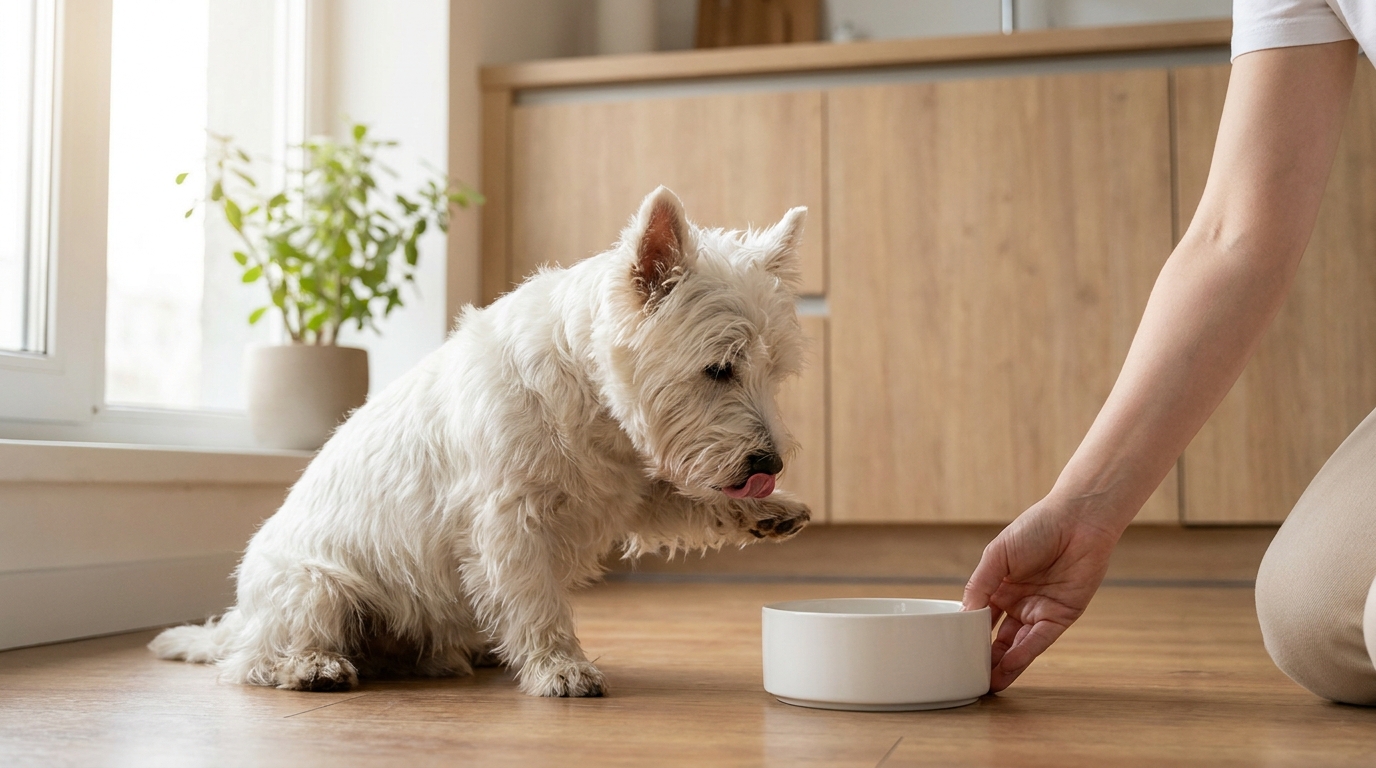
Year-round itch, repeat ear infections and soft stools can point to food. Here is how to spot a food allergy and run a strict diet trial.
Quick answer: Food allergy in dogs usually shows up as year-round itching of the ears, paws and belly, often with repeat ear or skin infections and sometimes soft, frequent stools. Blood, saliva and hair tests cannot diagnose a food allergy; a strict elimination diet of at least 8 weeks, then the old food again, is the reliable test. After eating, hives with vomiting, sudden pale gums or weakness, collapse or trouble breathing need an emergency vet now.
This article is general information, not a diagnosis. If you think your pet is in danger, go to the nearest emergency animal hospital.
Emergency signs after a dog eats
A dog that gets hives or a swollen face together with vomiting, diarrhea, heavy drooling, pale gums, weakness, collapse or trouble breathing within an hour of eating needs an emergency vet now. The Merck Veterinary Manual calls this anaphylaxis, a rare, life-threatening reaction in which gut signs are the main signs in dogs, so hives do not have to appear. Sudden vomiting, diarrhea or heavy drooling with pale gums or weakness soon after eating, swelling that spreads toward the throat or tongue, a seizure, trouble breathing or collapse also means the emergency hospital now.
Hives or a puffy face with normal breathing and pink gums are usually not life threatening, Merck notes, but they still need a veterinarian within the hour; go in if the swelling grows or no veterinarian can see your dog that soon. Do not give a human antihistamine or other human medicine unless a veterinarian tells you to, and never re-test a food at home after a severe reaction.
| Sign | What to do |
|---|---|
| Hives plus vomiting or drooling | ER now |
| Sudden pale gums or weakness | ER now |
| Trouble breathing, collapse | ER now |
| Swelling toward throat | ER now |
| Puffy face only, normal breathing, pink gums | Vet within 1 hour |
| Diarrhea with more than one vomit | ER now |
| Black, tarry or raspberry jam stool | ER now |
| Swollen or painful belly, dry retching | ER now |
| Can't keep water down | ER now |
| Head tilt, loss of balance | ER now |
| Diarrhea with one vomit or not eating | In-person today |
| Puppy with diarrhea | In-person today |
| More than a streak of blood in stool | In-person today |
| Toy breed or senior with diarrhea | Same-day call |
| Soft stool past 2 days | Call a vet |
Food allergy signs in dogs
Year-round itching of the ears, paws and belly, repeat ear or skin infections, and sometimes softer, more frequent stools are the classic signs of a food allergy in a dog. The Merck Veterinary Manual says the itch can be as severe as scabies and usually affects the ear flaps, paws and belly, with the rear end affected less often. Merck lists gut trouble as the problem most often seen with the skin signs: vomiting, diarrhea, weight loss or more than 3 bowel movements a day.
Repeat bacterial and yeast skin infections and outer ear infections were among the most common problems in a 2019 review of 825 food-allergic dogs in BMC Veterinary Research. If loose stool started right after a plate of scraps, see diarrhea after table food, which covers that kind of upset and when it needs a vet.
These signs are not specific to food. Skin was the top concern in RexVet dog visits (18%), followed by itching, ear problems and allergies.
| Sign | Food allergy | Pollen, mites, mold |
|---|---|---|
| Itch timing | All year | Seasonal or all year |
| Main itchy spots | Ears, paws, belly | Face, ears, paws, armpits |
| Ear infections | Common | Common |
| Soft stools, more poops | Sometimes | Less likely |
| First signs | Any age, often 1 to 4 yr | Usually 6 mo to 3 yr |
Some dogs have both, so looks alone cannot tell them apart. Have a vet examine your dog for pus, crusts, a bad smell, red, moist or raw skin, spreading hot spots, a painful or swollen ear, or wounds from scratching; ear-canal and skin tests are done in person, and infections are usually treated before or as a trial starts.
Food allergy, food intolerance or environmental allergy?
A food allergy is an immune reaction to an ingredient, usually a protein; a food intolerance is a digestive upset without that immune reaction; and environmental allergies to pollen, dust mites or mold can cause the same itch in a dog. Guidelines from the International Committee on Allergic Diseases of Animals (ICADA) say a food reaction can look exactly like environmental atopic dermatitis or set off its flares, so any dog with year-round itch needs a strict elimination diet to rule food out. Gut signs point more toward food.
Rule out parasites first. ICADA says every itchy dog should be checked for fleas or flea dirt, and every dog and cat in the home should be on effective flea control before and during a trial. Scabies mites cause an equally intense itch and need an in-person exam; skin scrapings often miss them, so a negative scraping does not rule scabies out. If you find no fleas, itching with no fleas in sight covers the other common causes.
Which ingredients cause food allergies in dogs?
The Merck Veterinary Manual lists beef, dairy, chicken, wheat and lamb as the most common food allergens in dogs, which may reflect how often dogs have been fed them. Four of those five are animal proteins. Corn and rice are rarely reported triggers, according to a 2016 review in BMC Veterinary Research, and grain-free foods can still contain beef, chicken or dairy, so grain-free food is not an allergy treatment.
Do dog food allergy tests work?
Blood, saliva and hair tests sold for dog food allergies are not reliable; the Merck Veterinary Manual says the only reliable way to prove a food allergy is an elimination diet followed by a re-challenge with the old food. In a 2019 study in the Journal of Small Animal Practice, researchers sent samples from an allergic dog, a non-allergic dog, fake fur and water to a commercial hair and saliva test, and its results were no better than chance. A 2019 study in The Veterinary Journal found saliva and blood tests could not separate food-allergic dogs from healthy ones.
How an elimination diet trial works
An elimination diet trial means a dog eats only a hydrolyzed or novel-protein diet chosen with a veterinarian, plus water, for at least 8 weeks (some dogs need up to 12), and then the old food goes back in; if the itch returns within about 2 weeks, food is part of the problem. A hydrolyzed diet breaks proteins into pieces the immune system is less likely to react to; a novel-protein diet avoids every ingredient the dog has eaten before. A 2015 review in BMC Veterinary Research concluded that trials should last at least 8 weeks to diagnose more than 90% of food-allergic dogs and cats, and ICADA advises continuing every trial until the veterinarian examines the dog.
| Stage | What happens | Your job |
|---|---|---|
| Start | Trial diet and water | Remove all extras |
| Weeks 2-4 | Gut signs often settle | Log itch, stools |
| Weeks 5-8 | Itch often eases | Stay strict |
| Weeks 8-12 | Vet recheck | Don't stop early |
| Challenge | Old food back | Watch 2 weeks |
| After | Avoid the trigger | Plan for slips |
Improvement alone does not confirm a food allergy; the challenge does. The veterinarian plans the challenge, and a dog that has ever had hives, face swelling or a severe reaction after eating should not be re-fed the old food at home. In a 2020 review in BMC Veterinary Research, half of food-allergic dogs flared by day 5 after the old food went back in, and nearly all by day 14.
The dog eats nothing but the trial diet and water, ICADA says. That rules out:
- Treats, table food, crumbs, rawhide or pill treats
- Flavored chews, toys, toothpaste or supplements
- Chewable or flavored medicines, including heartworm and flea chews
- Other pets' food, bowls or poop
Never stop parasite prevention: Merck says chewable or flavored heartworm and flea products generally contain beef, pork or soy protein, so ask the veterinarian for an unflavored or topical product. Do not hide pills in cheese, peanut butter or treats, and feed other pets separately. A few soft stools can follow the switch; Cornell's Riney Canine Health Center says diarrhea after a food change may mean the switch was made too quickly, so ask the veterinarian whether to change over gradually. A home-cooked trial diet should come from a board-certified veterinary nutritionist's recipe, and any weight loss needs a vet check.
Why store-bought limited-ingredient foods can fail a trial
Store-bought limited-ingredient foods can fail a food trial because studies have found ingredients not listed on the label in many of them, which is why a veterinarian chooses the trial diet. A 2017 study in Veterinary Dermatology found DNA from animal species not on the label in 9 of 10 over-the-counter diets tested, most often beef and pork, while the two hydrolyzed diets tested matched their labels. ICADA notes that some prescription diets may also carry traces of other foods, so no diet is guaranteed clean. Some hydrolyzed diets are made from chicken or soy, and some dogs allergic to those foods may still react to them.
Prescription diets are therapeutic foods, not FDA-approved medicines. FDA's policy for these diets weighs whether they are sold only through or under the direction of a veterinarian, which is one reason sellers ask for a vet's authorization.
Food trials and the holidays
A dog's food trial and the holiday table rarely mix, so either protect the trial with a household plan or ask the veterinarian about starting it after New Year's; an 8-week trial started in early November runs through Thanksgiving on November 26 and Christmas.
If a trial is already running, put a rule card on the fridge: "Trial diet and water only." Brief guests and children, keep the dog in another room during meals, pick up dropped food fast and lock the trash. The Thanksgiving food chart, the holiday cheese board guide and these tips for calm visits with holiday guests help in a busy house. Regular clinics may be closed on Thanksgiving, Christmas Day or New Year's Day, so find the nearest open emergency hospital before the meal.
Living with a dog food allergy
Once a dog's trigger food is found, treatment is avoiding it, often by staying on a complete and balanced diet without it, with a plan for accidental slips and for any environmental allergy on top. The Merck Veterinary Manual says some dogs stay on the trial diet if it is balanced for long-term feeding. Many dogs do well, but some still need long-term itch control, and skin infections make itch worse. Add new foods no more often than every 2 weeks, and only with the veterinarian's plan.
When a video visit helps
A food trial is mostly history, records and follow-up, so a video visit with a veterinarian licensed in your dog's state can plan one and check on it for a dog with no emergency signs. RexVet, a nonprofit online vet service, serves pets located in Florida, New York and Virginia by video visit; your dog needs to be in one of those states during the call.
A licensed RexVet vet reviews every food, treat, chew, supplement and flavored medicine your dog gets, the itch pattern and any past ear or skin infections, and looks at the skin, paws and ear flaps on camera. The veterinarian helps choose the trial diet, writes the household rules with you, sets check-ins at about 4 and 8 weeks, and plans the challenge step. They will tell you when your dog needs an in-person exam, for example an ear-canal exam, skin or ear cytology, a skin scraping for mites, or bloodwork or stool tests for gut signs.
Book a $64.99 live video visit; live visits run about 8 AM to 11 PM ET, there are no overnight visits, and holiday hours are not confirmed, so check open slots when you book. The one-time $120 Family Plan covers 4 visits over 12 months for every pet in the home and never auto-renews, which can cover the start, the check-ins and the challenge of one trial.
No prescription is promised; any medicine is the veterinarian's decision after the visit. Whether a prescription diet can be authorized after a video visit is also the veterinarian's decision and depends on the diet, the retailer and state rules. Florida s.474.2021 limits telehealth-only prescriptions to FDA-approved animal drugs used as labeled, for up to 14 days (1 month for products labeled only for fleas and ticks), with no renewal without an in-person exam, and no human-labeled drugs, controlled drugs, or compounded antibacterial, antifungal, antiviral or antiparasitic drugs. So a dog in Florida that needs medicine for more than 14 days, or a refill, needs an in-person exam first. Under federal rules, a human drug or an off-label use needs a vet who has examined the dog in person. Virginia allows the exam to be electronic; New York's telehealth prescribing rules are not settled. A pharmacy transfer fee applies if a prescription for medicine is sent to an outside pharmacy.
A video visit is not the right call for hives or face swelling with vomiting, drooling, pale gums, weakness, collapse or trouble breathing after eating; go to the nearest emergency vet now.
Need an Expert Opinion on This Topic?
Book a video visit with a licensed vet, evenings and weekends included
See open timesFrequently Asked Questions
How long after eating does a food allergy show up in dogs?
Itch from a food allergy usually flares within days of eating the trigger, and in nearly all dogs within 14 days. A 2020 review in BMC Veterinary Research found half of food-allergic dogs flared by day 5 after their old food went back in. Hives soon after eating are a faster reaction; Merck says they generally develop within 20 minutes. If hives or face swelling come with vomiting, diarrhea, drooling, pale gums, weakness, collapse, a seizure, swelling toward the throat or trouble breathing, go to an emergency vet now; sudden vomiting with pale gums or weakness soon after eating is an emergency even without hives. Hives or a puffy face with normal breathing and pink gums still need a veterinarian within the hour.
Can a dog suddenly become allergic to a food it has eaten for years?
Yes. Food allergy can first appear at any age, and the trigger is something the dog already eats, even a food fed for years. The Merck Veterinary Manual says food-allergic dogs typically show signs between 1 and 4 years old, with onset reported from under 6 months to 13 years. An older dog with new itching or repeat skin infections needs a full in-person exam, because other diseases can look the same.
Is grain-free food better for dogs with allergies?
No. Most dogs with food allergies react to animal proteins such as beef, dairy or chicken, which grain-free foods can still contain. The FDA, which has been looking into a possible link between some diets high in peas or lentils and a heart disease called DCM, advises talking with a veterinarian before switching a dog to grain-free food. Low energy or a cough on such a diet needs a vet soon; trouble breathing or collapse means an emergency vet now.
Are at-home dog food allergy tests accurate?
No. Blood, saliva and hair tests sold for dog food allergies cannot diagnose or rule out a food allergy. In a 2019 Journal of Small Animal Practice study, a commercial hair and saliva test gave results no better than chance on samples that included fake fur and water. The Merck Veterinary Manual says an elimination diet followed by a re-challenge is the only reliable way to prove one.
Can puppies have food allergies?
Yes. A 2019 review in BMC Veterinary Research found that almost 40% of food-allergic dogs had skin signs by one year of age. A puppy's trial diet must be complete and balanced for growth, so the veterinarian chooses it. Any puppy with diarrhea needs an in-person vet the same day.
How long does a food trial take for a dog?
At least 8 weeks, and some dogs need up to 12, then up to 2 weeks with the old food back in. The Merck Veterinary Manual gives 2 to 4 weeks for gut signs and 8 to 12 weeks for skin signs, and the veterinarian decides when the trial ends.
Can an online vet start a food trial or authorize a prescription diet in Florida, New York or Virginia?
Yes for the trial: it can be planned by video for a dog located in Florida, New York or Virginia; diet authorization is not promised. On camera, the veterinarian reviews the diet history, looks at the skin, paws and ear flaps, helps choose the diet and runs the 4- and 8-week checks. Ear-canal exams, cytology, skin scrapings, bloodwork, stool tests and any severe reaction need in-person care. Authorizing a prescription diet depends on the diet, the retailer and state rules, and no prescription is promised. If medicine comes up, Florida limits a telehealth-only prescription to FDA-approved animal drugs used as labeled, for up to 14 days (1 month for flea- and tick-only products), with no renewal and no human-labeled, controlled or compounded antibacterial, antifungal, antiviral or antiparasitic drugs without an in-person exam. Under federal rules, an off-label or human-drug use needs an in-person exam. Virginia allows the exam to be electronic, and New York's rules are not settled.
FAQs
How long after eating does a food allergy show up in dogs?
Itch from a food allergy usually flares within days of eating the trigger, and in nearly all dogs within 14 days. A 2020 review in BMC Veterinary Research found half of food-allergic dogs flared by day 5 after their old food went back in. Hives soon after eating are a faster reaction; Merck says they generally develop within 20 minutes. If hives or face swelling come with vomiting, diarrhea, drooling, pale gums, weakness, collapse, a seizure, swelling toward the throat or trouble breathing, go to an emergency vet now; sudden vomiting with pale gums or weakness soon after eating is an emergency even without hives. Hives or a puffy face with normal breathing and pink gums still need a veterinarian within the hour.
Can a dog suddenly become allergic to a food it has eaten for years?
Yes. Food allergy can first appear at any age, and the trigger is something the dog already eats, even a food fed for years. The Merck Veterinary Manual says food-allergic dogs typically show signs between 1 and 4 years old, with onset reported from under 6 months to 13 years. An older dog with new itching or repeat skin infections needs a full in-person exam, because other diseases can look the same.
Is grain-free food better for dogs with allergies?
No. Most dogs with food allergies react to animal proteins such as beef, dairy or chicken, which grain-free foods can still contain. The FDA, which has been looking into a possible link between some diets high in peas or lentils and a heart disease called DCM, advises talking with a veterinarian before switching a dog to grain-free food. Low energy or a cough on such a diet needs a vet soon; trouble breathing or collapse means an emergency vet now.
Are at-home dog food allergy tests accurate?
No. Blood, saliva and hair tests sold for dog food allergies cannot diagnose or rule out a food allergy. In a 2019 Journal of Small Animal Practice study, a commercial hair and saliva test gave results no better than chance on samples that included fake fur and water. The Merck Veterinary Manual says an elimination diet followed by a re-challenge is the only reliable way to prove one.
Can puppies have food allergies?
Yes. A 2019 review in BMC Veterinary Research found that almost 40% of food-allergic dogs had skin signs by one year of age. A puppy's trial diet must be complete and balanced for growth, so the veterinarian chooses it. Any puppy with diarrhea needs an in-person vet the same day.
How long does a food trial take for a dog?
At least 8 weeks, and some dogs need up to 12, then up to 2 weeks with the old food back in. The Merck Veterinary Manual gives 2 to 4 weeks for gut signs and 8 to 12 weeks for skin signs, and the veterinarian decides when the trial ends.
Can an online vet start a food trial or authorize a prescription diet in Florida, New York or Virginia?
Yes for the trial: it can be planned by video for a dog located in Florida, New York or Virginia; diet authorization is not promised. On camera, the veterinarian reviews the diet history, looks at the skin, paws and ear flaps, helps choose the diet and runs the 4- and 8-week checks. Ear-canal exams, cytology, skin scrapings, bloodwork, stool tests and any severe reaction need in-person care. Authorizing a prescription diet depends on the diet, the retailer and state rules, and no prescription is promised. If medicine comes up, Florida limits a telehealth-only prescription to FDA-approved animal drugs used as labeled, for up to 14 days (1 month for flea- and tick-only products), with no renewal and no human-labeled, controlled or compounded antibacterial, antifungal, antiviral or antiparasitic drugs without an in-person exam. Under federal rules, an off-label or human-drug use needs an in-person exam. Virginia allows the exam to be electronic, and New York's rules are not settled.
Medically Reviewed
Reviewed by Dr. Tiffany Delacruz, DVM — licensed veterinarian and CEO of RexVet. Last reviewed November 4, 2026.
Content is for informational purposes and does not replace professional veterinary advice.
Chief Executive Officer · Licensed Veterinarian
Dr. Delacruz is a licensed Doctor of Veterinary Medicine specializing in preventive care and veterinary telehealth. She reviews all health content on RexVet to ensure accuracy and clinical relevance.
Sources & References
- · American Veterinary Medical Association — Telehealth Guidelines
- · AVMA — Pet Care Resources
- · U.S. FDA — Animal & Veterinary