
Dog Hives or Sudden Bumps All Over: When to Worry
By RexVet Team | Reviewed by Dr. Tiffany Delacruz, DVM
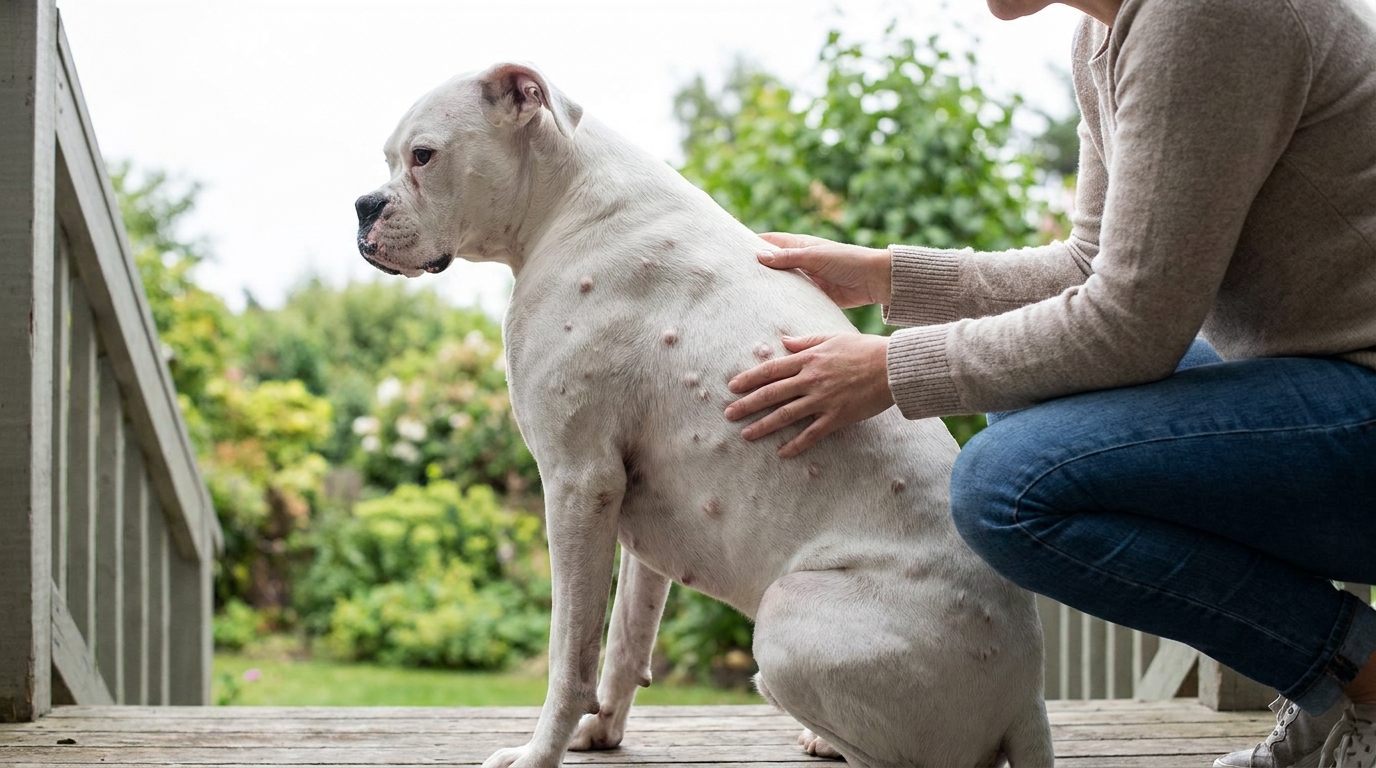
Hives can show up on a dog soon after a sting, shot, food or new shampoo. Learn how to spot them and which signs mean the ER now.
Quick answer: Dog hives are raised, itchy welts that appear suddenly after a bite, sting, medicine, vaccine, food or new product. New hives need an in-person vet within the hour. Go to an emergency vet now if hives come with vomiting, diarrhea, pale gums, weakness, breathing trouble or collapse, or start within 1 hour of a shot, sting or new medicine. Do not give Benadryl unless an in-person vet says to.
This article is general information, not a diagnosis. If you think your pet is in danger, go to the nearest emergency animal hospital.
Emergency signs: when hives mean trouble
A dog with hives plus vomiting, diarrhea, heavy drooling, pale gums, weakness, collapse, a seizure, hard or noisy breathing, trouble swallowing, or swelling toward the throat or tongue needs an emergency vet now, because these can be signs of anaphylaxis. So does a dog with hives or a puffy face that start within 1 hour of a shot, sting or new medicine.
Hives on their own are usually not life-threatening, but the Merck Veterinary Manual says they can be a precursor to anaphylaxis, a severe allergic reaction that in dogs shows up mainly as gut signs such as vomiting and diarrhea. The 2026 RECOVER first aid guidelines from veterinary emergency specialists say anaphylaxis can happen with or without skin signs, so sudden vomiting, diarrhea, drooling, pale gums or weakness soon after a sting, shot, new medicine or food means an emergency vet now even if no hives appear. Other new hives, with normal breathing and pink gums, need a vet in person within the hour, the same rule as in the guide to a dog itching with no fleas for sudden swelling.
| What you see | Do this |
|---|---|
| Hives plus vomiting, diarrhea or drooling | ER now |
| Pale, gray or blue gums, cold legs, weakness, collapse or a seizure | ER now |
| Hard, fast or noisy breathing | ER now |
| Gagging, trouble swallowing or a changed bark | ER now |
| Swelling toward throat or tongue | ER now |
| Hives or puffy face within 1 hour of a shot, sting or new medicine | ER now |
| Many stings, or a sting in the mouth | ER now |
| Flat-faced breed, any face swelling | ER now |
| Hives or puffy face later the day of a shot | Clinic or ER now |
| Spreading hives | In-person vet now |
| Hives or puffy face, normal breathing, pink gums | In-person vet within 1 hour |
| Hives faded, dog back to normal | Video or clinic visit |
| Repeat hives, now faded | Video or clinic visit |
Go to the nearest emergency vet if the swelling grows or no vet can see your dog within the hour.
What hives look like compared with other bumps
Hives on a dog are raised, rounded welts under the fur, most often on the head, legs, body and belly, that come up suddenly and often fade within hours, while the pimples, pustules, crusts and rings of peeling skin of a skin infection build up over days. The medical name for hives is urticaria. VCA Animal Hospitals says the welts range from about 1/4 inch (5 mm) to several centimeters, can merge, and can show up on the face, lips, tongue, throat and ears.
| Bump | Looks like | Lasts |
|---|---|---|
| Hives | Raised, rounded welts | Hours to 2 days |
| Insect bite | One red, sore bump | A few days |
| Skin infection | Pimples, crusts, peeling rings | Builds over days |
| Lump under skin | Firm, one spot | Stays; needs a needle check |
Some bumps are not hives and need an in-person vet the same day, or the ER if your dog is weak: painful bumps or draining sores after a bath or grooming, sores with pus, blood or a bad smell, and bumps that blister, turn purple or bruise-like, open into sores or peel, especially after a new medicine or with fever, tiredness or not eating.
Common triggers for sudden hives in dogs
The Merck Veterinary Manual lists insect bites and stings first among the most common causes of hives in animals, along with medicines, vaccines and foods, and plants and products on the skin can also trigger them, though often no cause is found.
Hives usually appear quickly, and Merck says generally within 20 minutes of the trigger, but after a vaccine or medicine they can show up hours later. Around the holidays, check what is new: treats, rich food, a bath before guests, holiday plants, cleaning products and shots before boarding.
Hives or a puffy face that start later on the day of a shot mean going back to the vaccinating clinic, or an ER if it is closed, now (see a dog acting tired after vaccines). Hives that start hours after a new medicine mean calling the prescribing vet right away, before the next dose is due, to ask whether to give it rather than deciding on your own; if you cannot reach that vet before then, call an emergency vet, and go now if any emergency sign appears. The dog food allergy guide covers food reactions.
What to do at home before the vet visit
For a dog with mild hives and normal breathing, remove the trigger if you know it, take clear photos and a short video, and get your dog to an in-person vet within the hour while you watch for emergency signs. If the hives started within 1 hour of a shot, sting or new medicine, go to the nearest emergency vet now instead.
- Rinse the coat with cool, plain water if a plant, shampoo or cleaner may be on it, but only if it does not delay the vet trip, and dry a small dog well.
- Photograph the bumps now, because they can fade before a vet sees them.
- Write down everything new in the last day.
- Use no human creams, sprays, oils or medicines unless a vet who has examined your dog in person says to.
Can I give my dog Benadryl for hives?
Do not give a dog Benadryl or any other human allergy medicine for hives unless a veterinarian who has examined your dog in person tells you to, and still have your dog seen; an allergy pill does not treat anaphylaxis. Benadryl (diphenhydramine) is a human-labeled drug, and federal rules require an in-person exam before a vet directs that use.
ASPCA Animal Poison Control warns that decongestants such as pseudoephedrine, sold in some allergy products, can cause agitation, a fast heart rate and sometimes tremors or seizures in pets; the Pet Poison Helpline says a "-D" after an allergy medicine's name signals a decongestant. Separately, some sugar-free liquid medicines contain xylitol, which is toxic to dogs. If your dog swallowed any human allergy, cold or decongestant medicine or a sugar-free liquid medicine, go to an ER or call ASPCA Animal Poison Control at (888) 426-4435 (a consultation fee may apply) or the Pet Poison Helpline at (855) 764-7661 (a per-incident fee applies).
How long do dog hives last?
Hives on a dog often fade within a few hours and usually within 2 days, the Merck Veterinary Manual says, but a dog with new hives should still see a vet in person within the hour, because hives can be the first sign of anaphylaxis. Merck adds that hives can come back while the trigger remains or as treatment wears off; if they return, call the vet who treated your dog, and go to an emergency vet now if any emergency sign appears. Treatment for new hives in a dog depends on the cause and is decided by a veterinarian who examines your dog in person; the Merck Veterinary Manual notes that some hives need no treatment, which only an exam can confirm.
Hives that keep coming back
Hives that keep coming back in a dog point to an ongoing trigger such as a food, a medicine, insects or an environmental allergy, and a veterinarian can track it with a trigger diary and, if food is suspected, an elimination diet of at least 8 weeks. The Merck Veterinary Manual says chronic hives should be biopsied, which means an in-person visit. For itching that lingers between flare-ups, see why a dog itches with no fleas; for a suspected food trigger, the elimination diet guide explains how the diet trial works.
When a video visit helps
A video visit helps once a dog's hives have faded, when hives keep coming back between flare-ups, or for itchy bumps or crusts that built up over days on an otherwise well dog, with no pus, blood or bad smell. RexVet, a nonprofit online vet service, serves pets located in Florida, New York and Virginia by video visit, with a veterinarian licensed in your pet's state.
On camera, the veterinarian looks at the skin and your flare-up photos and videos, helps tell hives from bites, pimples or a lump, goes through new foods, treats, medicines, vaccines, plants and products from the day before, and sets up a trigger diary and a plan. They also say which tests need an in-person visit (skin samples, a biopsy or allergy testing), whether an elimination diet of at least 8 weeks makes sense, and whether medicine might help and, if so, whether it can be prescribed after a video visit under your state's rules or needs an in-person exam first. A bump that stays for days, or swells and shrinks in one spot, needs an in-person needle sample, so do not squeeze it.
Book a $64.99 live video visit with a licensed RexVet vet. Live video slots run about 8 AM to 11 PM ET, there are no overnight visits, and holiday hours are not confirmed, so check open slots when you book. For repeat hives, the one-time $120 Family Plan covers 4 visits over 12 months for every pet in the home and never auto-renews.
Video is not for new hives or face, lip or eye swelling, which need a vet in person within the hour, or for spreading hives, which need a vet in person now. Hives or a puffy face within 1 hour of a shot, sting or new medicine mean the nearest emergency vet now; later on the day of a shot, the vaccinating clinic or an ER now; after a new medicine, call the prescribing vet right away. Vomiting, diarrhea, drooling, pale gums, weakness, collapse, breathing trouble, throat or tongue swelling, or face swelling in a flat-faced breed mean the nearest emergency vet now. Outside about 8 AM to 11 PM ET, use an emergency hospital.
No prescription is promised; any medicine is the veterinarian's decision after the visit. In Florida, medicine prescribed after a video-only visit is limited to FDA-approved animal drugs used as labeled, for up to 14 days, or up to 1 month for products labeled only for flea and tick control, with no renewal until the dog has an in-person exam; human-labeled drugs (including allergy pills such as diphenhydramine), controlled drugs and compounded antibacterial, antifungal, antiviral or antiparasitic medicines need an in-person exam. Federal rules require a vet who has examined the dog in person before using a human drug or an animal drug off-label, in every state. Virginia allows the exam itself to be electronic, and New York's telehealth prescribing rules are not settled, so a visit there may cover less. A pharmacy transfer fee applies if a prescription is sent to an outside pharmacy.
Need an Expert Opinion on This Topic?
Book a video visit with a licensed vet, evenings and weekends included
See open timesFrequently Asked Questions
Are hives on my dog an emergency?
Sometimes: hives alone are usually not life-threatening, but hives with vomiting, diarrhea, pale gums, weakness, breathing trouble or collapse mean an emergency vet now. Heavy drooling, swelling toward the throat or tongue, any face swelling in a flat-faced breed, or hives or a puffy face within 1 hour of a shot, sting or new medicine also mean the ER now. Other new hives, or a puffy face with normal breathing and pink gums, need a vet in person within the hour; go to the ER if the swelling grows or no vet can see your dog that soon.
Can a new food or treat give my dog hives?
Yes, food reactions can cause hives in dogs; the Merck Veterinary Manual lists them among the most common causes, along with insect bites and stings, medicines and vaccines. Hives with vomiting, diarrhea, drooling, pale gums, weakness, collapse or breathing trouble after eating mean an emergency vet now, and sudden vomiting with pale gums or weakness after eating is an emergency even without hives. Never re-feed that food at home after a reaction like that.
Can stress or anxiety cause hives in dogs?
Possibly: the Merck Veterinary Manual says stress can trigger or worsen hives in dogs. Bites, stings, medicines, vaccines and foods are the more usual causes, though, so a vet looks for those first. Stress does not change the rules: new hives still need an in-person vet within the hour, and hives with vomiting, diarrhea, pale gums, weakness or breathing trouble need an emergency vet now.
Why does my dog have bumps that come and go?
Bumps that fade within hours and then come back are typical of hives. The Merck Veterinary Manual says hives can return while the trigger is still there or as treatment wears off. A single bump that looks like a hive or bite but is still there after a few days, or that swells and shrinks in the same spot, needs an in-person vet check; VCA says some skin tumors look like insect bites or allergic reactions, and a needle sample is how vets tell. Do not squeeze it.
Can puppies get hives after their vaccines?
Yes, puppies can get hives after shots; hives or a puffy face within 1 hour of a vaccine mean the nearest emergency vet now. In a 2012 Veterinary Immunology and Immunopathology survey of 57,300 vaccinated dogs in Japan, every anaphylaxis case began within 60 minutes and 83.3% of all vaccine reactions began within 12 hours, so hives or a puffy face later that day mean the vaccinating clinic, or an ER if it is closed, now. Tell the vet about any reaction before the next shots and let the vet decide on spacing; never skip or delay a rabies vaccine on your own, since the law requires it.
Can an online vet look at my dog's hives in Florida, New York or Virginia?
Yes, once the hives have faded or when they keep coming back; active hives or a puffy face need an in-person vet within the hour. For a dog located in Florida, New York or Virginia during the visit, a veterinarian licensed in your pet's state can review the skin and flare-up photos on camera and plan next steps; needle samples, a biopsy and allergy testing happen in person. No prescription is promised. If medicine comes up, Florida limits telehealth-only prescriptions to FDA-approved animal drugs used as labeled, for up to 14 days, with no renewal until an in-person exam; human drugs such as Benadryl need an in-person exam in every state under federal rules. Virginia allows an electronic exam, and New York's rules are not settled, so a visit there may cover less.
FAQs
Are hives on my dog an emergency?
Sometimes: hives alone are usually not life-threatening, but hives with vomiting, diarrhea, pale gums, weakness, breathing trouble or collapse mean an emergency vet now. Heavy drooling, swelling toward the throat or tongue, any face swelling in a flat-faced breed, or hives or a puffy face within 1 hour of a shot, sting or new medicine also mean the ER now. Other new hives, or a puffy face with normal breathing and pink gums, need a vet in person within the hour; go to the ER if the swelling grows or no vet can see your dog that soon.
Can a new food or treat give my dog hives?
Yes, food reactions can cause hives in dogs; the Merck Veterinary Manual lists them among the most common causes, along with insect bites and stings, medicines and vaccines. Hives with vomiting, diarrhea, drooling, pale gums, weakness, collapse or breathing trouble after eating mean an emergency vet now, and sudden vomiting with pale gums or weakness after eating is an emergency even without hives. Never re-feed that food at home after a reaction like that.
Can stress or anxiety cause hives in dogs?
Possibly: the Merck Veterinary Manual says stress can trigger or worsen hives in dogs. Bites, stings, medicines, vaccines and foods are the more usual causes, though, so a vet looks for those first. Stress does not change the rules: new hives still need an in-person vet within the hour, and hives with vomiting, diarrhea, pale gums, weakness or breathing trouble need an emergency vet now.
Why does my dog have bumps that come and go?
Bumps that fade within hours and then come back are typical of hives. The Merck Veterinary Manual says hives can return while the trigger is still there or as treatment wears off. A single bump that looks like a hive or bite but is still there after a few days, or that swells and shrinks in the same spot, needs an in-person vet check; VCA says some skin tumors look like insect bites or allergic reactions, and a needle sample is how vets tell. Do not squeeze it.
Can puppies get hives after their vaccines?
Yes, puppies can get hives after shots; hives or a puffy face within 1 hour of a vaccine mean the nearest emergency vet now. In a 2012 Veterinary Immunology and Immunopathology survey of 57,300 vaccinated dogs in Japan, every anaphylaxis case began within 60 minutes and 83.3% of all vaccine reactions began within 12 hours, so hives or a puffy face later that day mean the vaccinating clinic, or an ER if it is closed, now. Tell the vet about any reaction before the next shots and let the vet decide on spacing; never skip or delay a rabies vaccine on your own, since the law requires it.
Can an online vet look at my dog's hives in Florida, New York or Virginia?
Yes, once the hives have faded or when they keep coming back; active hives or a puffy face need an in-person vet within the hour. For a dog located in Florida, New York or Virginia during the visit, a veterinarian licensed in your pet's state can review the skin and flare-up photos on camera and plan next steps; needle samples, a biopsy and allergy testing happen in person. No prescription is promised. If medicine comes up, Florida limits telehealth-only prescriptions to FDA-approved animal drugs used as labeled, for up to 14 days, with no renewal until an in-person exam; human drugs such as Benadryl need an in-person exam in every state under federal rules. Virginia allows an electronic exam, and New York's rules are not settled, so a visit there may cover less.
Medically Reviewed
Reviewed by Dr. Tiffany Delacruz, DVM — licensed veterinarian and CEO of RexVet. Last reviewed November 4, 2026.
Content is for informational purposes and does not replace professional veterinary advice.
Chief Executive Officer · Licensed Veterinarian
Dr. Delacruz is a licensed Doctor of Veterinary Medicine specializing in preventive care and veterinary telehealth. She reviews all health content on RexVet to ensure accuracy and clinical relevance.
Sources & References
- · American Veterinary Medical Association — Telehealth Guidelines
- · AVMA — Pet Care Resources
- · U.S. FDA — Animal & Veterinary