
Dog Not Eating After Dental Cleaning: Normal or a Red Flag?
By RexVet Team | Reviewed by Dr. Tiffany Delacruz, DVM
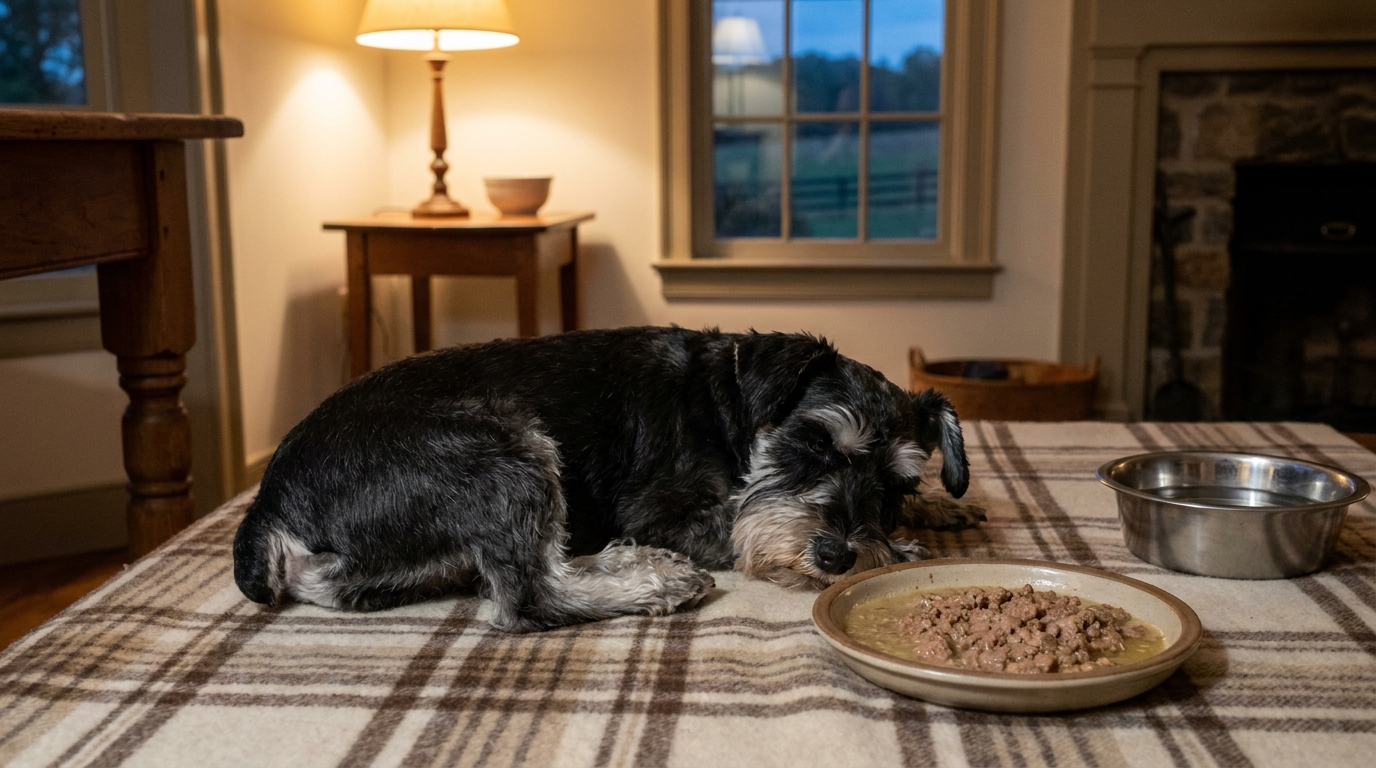
A skipped meal or one vomit is common the day after dental anesthesia; repeated vomiting, bleeding or refusing water means call the clinic today.
If your dog cannot be roused, is bleeding steadily from the mouth, has vomited more than once, has a swollen face, pale gums or trouble breathing, or will not drink, call the clinic that did the anesthesia now or go to an in-person emergency vet.
A dog not eating after dental cleaning is a common worry the evening after the procedure: the dog came home groggy, turned down dinner, and the clinic that did the anesthesia has closed. Here is what is expected, what to feed, and which signs mean call the clinic or go to an emergency vet tonight.
Is it normal for a dog not to eat or to vomit the day after a dental cleaning?
Usually, yes. VCA Animal Hospitals explains that anesthetics and sedatives take several hours to wear off; many dogs are sleepy or tired for 12 to 24 hours after anesthesia, and behavior gradually returns to normal over the next 24 to 48 hours. The AVMA says most pets go home the same day and may seem a little groggy for the rest of it. Some dogs also feel nauseous after general anesthesia, so one vomit, especially after eating or drinking too fast, is not unusual.
VCA says most dogs eat the day of surgery or very soon after, and that with today's anesthetics, many of which are reversible, a dog should be almost normal by discharge. Even so, a dog that skips dinner on the first evening is not unusual: the mouth may be tender, especially if teeth were pulled, and the stomach has been empty since the night before.
The second day is the check-in line. Because behavior should be normal within 24 to 48 hours, a dog with no interest in food or water into the second day should be reported to the clinic that did the anesthesia today. That clinic is always the first call.
Normal vs. call the clinic vs. go now: a decision table
Find where your dog fits tonight. The bleeding, swelling, odor and cough thresholds come from VCA's post-operative instructions.
Normal: watch at home
- Sleepy for the rest of the day
- Ate half a meal or skipped one
- One vomit after eating or drinking too fast
- A slight cough from the breathing tube
- A little blood-tinged saliva after extractions
Call the clinic today
- Still no interest in food or water into the second day
- Intermittent blood seepage that continues more than 24 hours
- A cough that persists or worsens
- Bad odor or discharge from the mouth
- Excessive swelling or redness
Go now: the clinic or an in-person emergency vet
- Cannot be roused or is unusually sluggish
- Continuous or excessive bleeding
- Vomited more than once
- Swollen face
- Trouble breathing
- Pale gums
- Will not drink at all
Anything on the middle list is a call to the clinic that did the anesthesia today, not tomorrow. If it is closed, the discharge sheet usually lists an after-hours line or a partner emergency hospital, which matters on a Virginia weekend. See also dog vomiting and not eating: how long is too long to wait.
What actually happened under anesthesia, and why the next day can be rough
AAHA describes the steps of a professional cleaning: blood work, an IV catheter, then anesthesia with monitoring until the pet is fully recovered. Dental X-rays are taken because more than 50% of a tooth's structure sits below the gumline, which is also where most dental disease occurs and why the cleaning is done under anesthesia. The teeth are then scaled above and below the gumline, polished and probed, and damaged teeth are extracted.
The tube placed in the trachea during anesthesia can occasionally cause mild irritation and a slight cough. VCA says a mild post-surgical cough typically diminishes over the next few days; if it persists or worsens, contact the hospital. A tender mouth plus a stomach empty since last night's fasting explains a dog that sniffs the bowl and walks away.
The RexVet post on how much a dog dental cleaning costs explains what each step adds to the bill.
If teeth were extracted: sore mouth, soft food and what to skip
A dog not eating after tooth extraction has an extra reason to hesitate: sutured gums. VCA's oral-surgery guidance is that soft food is usually recommended until healing is complete; in practice that means kibble softened until mushy or canned food. Anti-inflammatory medication is given after oral surgery to decrease swelling and inflammation, and AAHA notes that antibiotics are prescribed if dental disease is extensive, especially when an extraction is required. Both are the surgeon's call; if an antibiotic such as Clavamox came home, that page is background reading only.
Your clinic's discharge sheet sets the house rules; the usual ones: no hard chews, bones, antlers, tug toys or dental treats until the recheck, and if a cone was sent home, keep it on at mealtimes. Watch for pawing at the mouth or dropping food; the AVMA lists reduced appetite or refusal to eat, dropping food, pain in or around the mouth and bleeding from the mouth among the signs that teeth need checking, and after surgery they mean the mouth is still too sore.
Recheck visits are required to confirm healing is progressing, so keep that appointment even if your dog looks fine. For what extractions cost, see the cost of a tooth extraction in Florida.
What to feed tonight and tomorrow
VCA's post-operative instructions give a simple plan for the first evening: offer about half of the regular dinner a few hours after arriving home, and if your dog eats it and still seems hungry, offer the rest about an hour later. Because some dogs feel nauseous after general anesthesia, dividing the meal into smaller portions lowers the risk of nausea and vomiting. Unless the clinic told you otherwise, do not restrict water.
Make the food easy to say yes to: soften kibble until mushy or use canned food, warm it slightly, and hand-feed a spoonful if your dog is hesitant. Keep it bland and familiar, and skip rich treats, table scraps and new foods. Do not force a big meal. Keep water within reach of the bed, especially in Florida heat. If your dog vomits after eating, see what you can do at home when your dog is vomiting.
Set up a soft, clean bed in a quiet, draft-free room, keep your dog indoors overnight, and limit outings to short leash walks. In a New York walk-up, carry a small dog down the stairs rather than let a wobbly patient manage them.
Pain and nausea medicine: what the clinic sent home and what not to add
If medication was sent home, read the label carefully and give all of it exactly as directed. The surgeon may have dispensed an anti-inflammatory such as carprofen or an anti-nausea medication such as Cerenia; the RexVet pages on both are background reading, not dosing guides.
Never add human painkillers, leftover pet medication or a second anti-inflammatory on top of what the surgeon dispensed. They can harm your dog.
If you suspect the medication is upsetting the stomach, do not skip, stop or change a dose on your own. Call the clinic that performed the surgery first; it knows exactly what was given. An online veterinarian may consider an anti-nausea medication only if it is clinically appropriate and where state rules allow, and will not replace or rewrite the surgeon's post-operative plan.
When to call the dental clinic, when to go to the ER, and when an online vet visit helps
The clinic that did the anesthesia comes first. It knows what was done, what was dispensed and what the X-rays showed.
The emergency vet is for the go-now list. A dog that cannot be roused, is bleeding steadily, has vomited more than once, has a swollen face, pale gums or trouble breathing, or will not drink needs hands-on care, not a camera.
A RexVet video visit fits the gray zone. That is the bright-eyed dog that is drinking but skipped dinner, vomited once or has a small cough, when the clinic is closed and you are not sure whether to watch or go. On camera, a veterinarian licensed in Florida, New York or Virginia checks gum color and moisture, assesses hydration with a skin tent, sees whether the dog takes a soft treat, looks at the mouth for swelling or bleeding, reviews the discharge sheet and sets a clear watch-versus-go plan. A camera cannot examine the mouth as well as the surgeon's in-person recheck, and the visit does not replace it.
If your dog is in that gray zone, you can book a RexVet video visit now for $64.99, 24/7. RexVet's veterinarians are licensed in Florida, New York and Virginia only; the visit is for triage and a plan.
The next two weeks: healing, the recheck and getting back to brushing
Appetite and energy should be back within the 24 to 48 hour window; a dog still off food or water into the second day calls the clinic, not the calendar. Healing takes longer. VCA says activity should be restricted for 7 to 10 days after most procedures, recommends soft food until healing is complete, and requires the recheck visit to confirm it; most dogs recover with minimal discomfort and return to their daily routines rapidly. If appetite dips again later, see dog loss of appetite warning signs.
Once the mouth has healed, home care decides how long this cleaning lasts. Brush daily if you can; the AVMA calls it the single most effective thing you can do between cleanings. Most dogs need a professional cleaning every 1 to 2 years (AAHA), and by age three most already have some periodontal disease. Anesthesia-free cleanings are not recommended by the American Veterinary Dental College.
If it is late, the clinic is closed and your dog is drinking and alert but still turning down food, you do not have to guess alone. You can book a video visit with a RexVet veterinarian for $64.99, 24/7; RexVet's veterinarians are licensed in Florida, New York and Virginia only. The visit helps you decide between watching overnight and going in tonight, and it does not replace the surgeon's recheck.
Frequently asked questions
Is it normal for my dog not to eat the day after a dental cleaning?
Yes, a skipped meal the day after is common. VCA says many dogs are sleepy or tired for 12 to 24 hours, and as long as your dog is alert and drinking, one missed meal is usually nothing to worry about. No interest in food or water into the second day means contact the clinic that did the anesthesia.
My dog threw up after a dental cleaning. Should I be worried?
One vomit is common; more than one is a red flag. Some dogs experience nausea after general anesthesia, and eating or drinking too fast can also trigger a single episode. Vomiting more than once means call the clinic that did the anesthesia now, or go to an in-person emergency vet if it is closed.
How long will my dog be groggy or tired after dental anesthesia?
Groggy for the rest of the day, then a gradual return to normal over 24 to 48 hours, according to VCA. A dog that is unusually sluggish or cannot be roused easily needs the clinic or an in-person emergency vet immediately.
What should I feed my dog after tooth extractions, and for how long?
Canned food or kibble softened until mushy; VCA says soft food is usually recommended until healing is complete and that recheck visits are required to confirm it. Activity is separately restricted for 7 to 10 days after most procedures. Keep hard chews, bones, tug toys and dental treats out of reach until the recheck.
Can an online vet help if my dog isn't eating after a dental cleaning?
Yes, for the gray zone, not for emergencies. A RexVet veterinarian licensed in Florida, New York or Virginia can check hydration and gum color on camera, review the discharge instructions and help you decide whether an in-person visit is needed tonight. The video visit does not replace the surgeon's post-operative plan or recheck, and a dog on the go-now list needs an emergency vet, not a video call.
Sources
FAQs
Is it normal for my dog not to eat the day after a dental cleaning?
Yes, a skipped meal the day after is common. VCA says many dogs are sleepy or tired for 12 to 24 hours, and as long as your dog is alert and drinking, one missed meal is usually nothing to worry about. No interest in food or water into the second day means contact the clinic that did the anesthesia.
My dog threw up after a dental cleaning. Should I be worried?
One vomit is common; more than one is a red flag. Some dogs experience nausea after general anesthesia, and eating or drinking too fast can also trigger a single episode. Vomiting more than once means call the clinic that did the anesthesia now, or go to an in-person emergency vet if it is closed.
How long will my dog be groggy or tired after dental anesthesia?
Groggy for the rest of the day, then a gradual return to normal over 24 to 48 hours, according to VCA. A dog that is unusually sluggish or cannot be roused easily needs the clinic or an in-person emergency vet immediately.
What should I feed my dog after tooth extractions, and for how long?
Canned food or kibble softened until mushy; VCA says soft food is usually recommended until healing is complete and that recheck visits are required to confirm it. Activity is separately restricted for 7 to 10 days after most procedures. Keep hard chews, bones, tug toys and dental treats out of reach until the recheck.
Can an online vet help if my dog isn't eating after a dental cleaning?
Yes, for the gray zone, not for emergencies. A RexVet veterinarian licensed in Florida, New York or Virginia can check hydration and gum color on camera, review the discharge instructions and help you decide whether an in-person visit is needed tonight. The video visit does not replace the surgeon's post-operative plan or recheck, and a dog on the go-now list needs an emergency vet, not a video call.
Sources
Medically Reviewed
Reviewed by Dr. Tiffany Delacruz, DVM — licensed veterinarian and CEO of RexVet. Last reviewed September 19, 2026.
Content is for informational purposes and does not replace professional veterinary advice.
Chief Executive Officer · Licensed Veterinarian
Dr. Delacruz is a licensed Doctor of Veterinary Medicine specializing in preventive care and veterinary telehealth. She reviews all health content on RexVet to ensure accuracy and clinical relevance.
Sources & References
- · American Veterinary Medical Association — Telehealth Guidelines
- · AVMA — Pet Care Resources
- · U.S. FDA — Animal & Veterinary
Need an Expert Opinion on This Topic?
Connect with a certified vet via video call in minutes
Talk to Vet Now