
What Can I Safely Do at Home When My Dog Is Vomiting?
By RexVet Team | Reviewed by Dr. Tiffany Delacruz, DVM
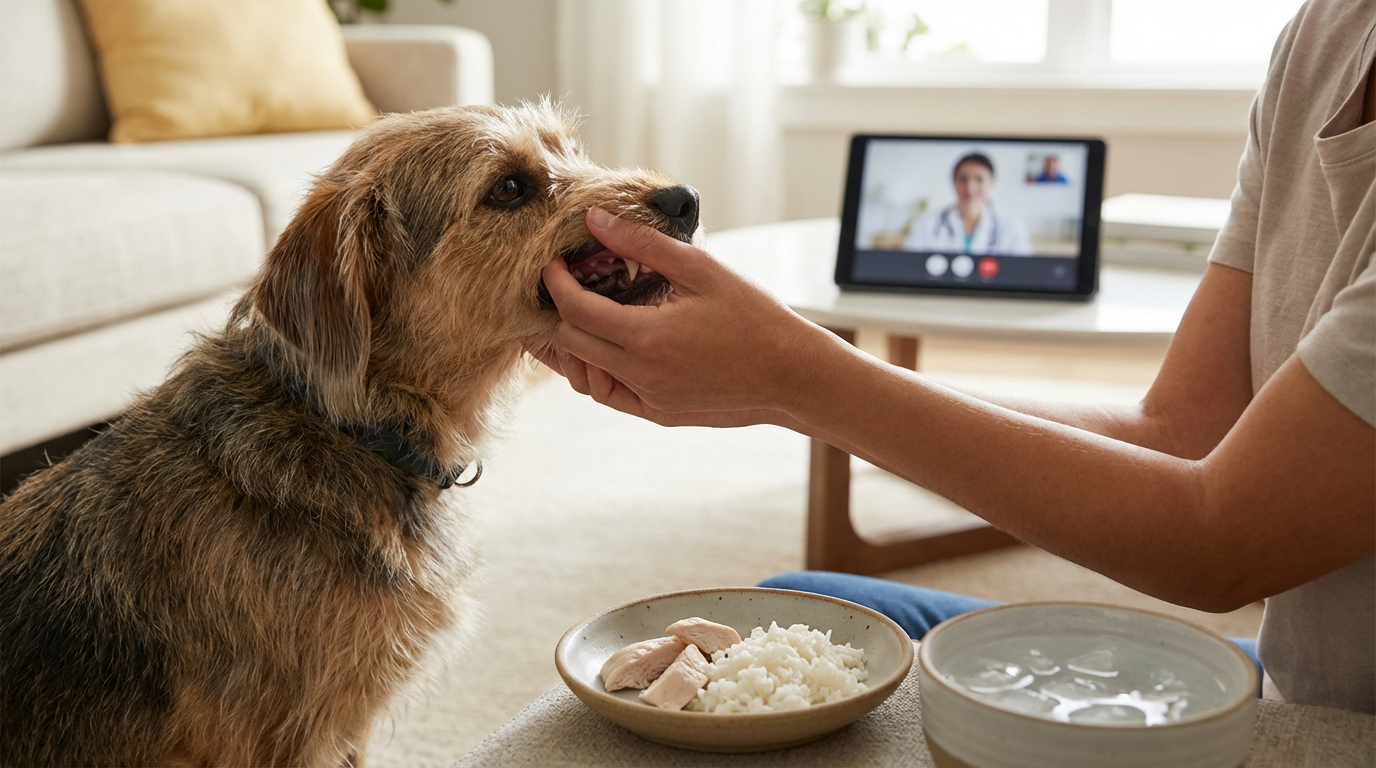
Quick answer: If an otherwise bright, alert dog vomits once or twice, withhold food for 6 to 12 hours, offer small frequent sips of water rather than a full bowl, then reintroduce a small bland meal such as plain boiled chicken and white rice and build back to normal food over two to three days. Never give human anti-nausea or pain medicine. Go to a vet immediately if there is blood in the vomit, vomiting that repeats for more than 12 hours or more than three times in a day, a swollen or painful belly, unproductive retching, pale or tacky gums, weakness, or if the dog is a puppy, a senior, or may have eaten a toy, bone, or a toxin.
Finding your pet unwell is stressful, and it is natural to wonder, While many cases of dietary indiscretion resolve on their own, distinguishing between a simple upset stomach and a serious medical emergency is vital for your dog's safety. Vomiting is a common symptom, but it can quickly lead to dehydration or signal more severe issues like a foreign body obstruction or bloat.
As you navigate this situation, your primary goal is to monitor for red flags like lethargy, blood in the vomit, or repeated unproductive retching . If you are asking yourself,, remember that professional guidance is the safest path. RexVet offers 24/7 virtual triage to help you determine if your pet needs an urgent clinic visit or if you can safely manage the situation with a bland diet at home. By utilizing our telehealth services, you gain immediate access to licensed veterinary advice, ensuring you avoid ineffective home remedies and get the right care for your pet quickly and affordably.
Immediate Steps to Take When Your Dog Vomits
Home care has a limit. When your dog crosses it, a licensed veterinarian can review the case by video, day or night: online vet for dogs — $64.99, FL/NY/VA →
When your pet is ill, you might ask, The first step is to remove food for a few hours to let the stomach settle, but never withhold water unless directed by a professional. Observe your dog closely for signs of dehydration, such as tacky gums or low energy. If you notice persistent lethargy , blood, or signs of bloat, seek immediate care.
To determine, consider these essential observation steps to help our triage experts:
- Record the frequency and appearance of the vomit, noting if it is yellow bile or contains undigested food.
- Distinguish between vomiting vs regurgitation by observing if the act is active heaving or passive expulsion.
- Check for potential dietary indiscretion by scanning your home for missing items or trash access.
- Document any other symptoms like diarrhea or loss of appetite.
Using our virtual consultation platform, you can share these details with a licensed veterinarian. This helps you decide if a simple bland diet is appropriate or if you need an in-person visit , saving you time and stress.
Recognizing When Your Dog Needs Emergency Care
When you find yourself asking,, it is critical to recognize the red flags that signal a move beyond simple dietary indiscretion. While mild cases might resolve, you must act immediately if your dog exhibits signs of bloat , such as a distended, hard abdomen or unproductive retching. These symptoms are life-threatening and require an emergency clinic visit rather than home monitoring. Similarly, if you notice lethargy that prevents your pet from rising or interacting, or if the vomit contains significant amounts of blood, do not wait for the situation to worsen.
You might wonder,, especially when assessing the risk of dehydration. Always monitor your dog’s gum moisture and skin elasticity. If your pet seems weak or refuses water, our RexVet virtual triage service provides an affordable, accessible way to get a professional opinion from a licensed veterinarian without the stress of an unnecessary emergency room trip. We help you distinguish between manageable upset stomachs and urgent health crises, ensuring your pet receives the right care at the right time.
Managing Food and Water Intake During Episodes
When you find yourself asking,, managing hydration is your primary focus. While withholding food helps rest the digestive tract, water should remain available in small, frequent amounts. Large gulps often trigger further vomiting, so offer ice cubes or limited portions every hour to prevent dehydration. If your dog cannot keep even small amounts of water down, this is a clear sign that professional intervention is needed.
Transitioning to a bland diet is a common strategy, but only start this once your dog has gone several hours without vomiting. A simple mix of boiled, skinless chicken and plain white rice—typically a ratio of one part protein to three parts starch—is gentle on the stomach. If you are still unsure about the next steps, is a question our RexVet team answers every day. We provide 24/7 virtual guidance to help you navigate these dietary adjustments safely, ensuring you avoid common mistakes that could exacerbate your pet's condition.
The Role of Virtual Triage in Digestive Issues
When you ask,, virtual triage acts as a critical filter. Instead of rushing to a clinic for every minor stomach upset, you can connect with a RexVet professional to assess if your dog's symptoms require immediate physical intervention or if supportive care suffices. This digital bridge prevents unnecessary stress for your pet and saves on costly emergency fees.
By using our telehealth platform, you gain access to expert guidance that helps you avoid common pitfalls like administering human medications, which can be toxic to dogs. We empower you to make informed decisions by evaluating specific triggers, such as recent dietary changes or potential toxin exposure. If you are still wondering,, our licensed veterinarians provide a structured plan to monitor your pet's vital signs and hydration levels effectively. This proactive approach ensures that you only seek in-person care when truly necessary, keeping your dog comfortable at home while maintaining a high standard of professional medical oversight.
Preparing for Your Virtual Veterinary Consultation
When you are frantically searching for, it is essential to prepare for a productive virtual consultation. Gathering specific data points helps our veterinarians provide accurate triage. Before your video call, check your dog's environment for potential toxins, such as household cleaners or toxic plants, and note the exact time the symptoms started. If you have a clear video of the episode, have it ready to share; visual evidence of the physical act often clarifies the difference between vomiting and regurgitation.
You might wonder while waiting for your appointment. Start by removing access to food to allow the gastrointestinal tract to rest, but keep fresh water available unless your dog is actively retching. Our RexVet experts often recommend keeping a simple log of your dog's activity levels and any changes in stool consistency. This preparation ensures that our licensed team can quickly assess if your pet needs immediate in-person care or if supportive home monitoring is the safest, most cost-effective path forward for your furry family member.
Why Avoiding Human Medications Is Crucial
When you are searching for, you might be tempted to reach into your medicine cabinet. Please stop immediately. Human medications, including common pain relievers like ibuprofen, aspirin, or acetaminophen, are highly toxic to dogs and can cause severe kidney failure, stomach ulcers, or even fatal internal bleeding. Even over-the-counter anti-nausea drugs intended for humans can be dangerous due to dosage differences and chemical formulations that pets cannot safely process.
Many owners assume that if a drug is safe for a person, it must be safe for a pet, but this is a dangerous misconception. A single pill can lead to an emergency situation that far exceeds the cost and stress of a simple virtual consultation . If you are still asking,, the answer is to prioritize professional triage over unverified home remedies. Our licensed veterinarians at RexVet can provide safe, species-specific guidance to help your pet recover comfortably without the risks associated with human pharmaceutical products.
Monitoring Your Dog for Signs of Dehydration
When you are worried and asking,, your primary focus should be on identifying signs of dangerous fluid loss. Dehydration happens faster than many owners realize, especially in smaller breeds or senior dogs. A simple way to check for this is the skin tent test: gently lift the skin between your dog's shoulder blades; it should snap back into place instantly. If the skin remains peaked or moves slowly, your pet may already be dehydrated.
You should also inspect their gums. Healthy gums are moist and slick. If they feel tacky or dry to the touch, this is a major red flag. When considering, remember that your pet cannot tell you how they feel, so these physical cues are essential. If you notice these symptoms, avoid waiting for the condition to escalate. Our RexVet team provides 24/7 virtual triage to help you interpret these signs accurately. We help you determine if your dog needs immediate clinic care or can be monitored safely, ensuring you never have to guess during a health crisis.
Supporting Recovery With Gentle Dietary Changes
When your dog finally stops vomiting, the transition back to regular meals must be handled with extreme care to prevent a relapse. You might be asking, The most effective approach is a gradual reintroduction of a bland, easily digestible diet. Start by offering a very small portion—about one-quarter of their usual meal size—to see if they can keep it down without distress.
A bland diet typically consists of a 1:3 ratio of boiled, skinless chicken breast to plain white rice, ensuring no oils, fats, or seasonings are added. If your pet tolerates this small meal for several hours, you can slowly increase the volume over the next two to three days. If you are still wondering,, remember that our RexVet virtual consultations can provide a customized feeding schedule based on your dog's specific health history. Monitoring their stool consistency during this phase is vital; any return of diarrhea or lethargy indicates you should book an appointment for professional guidance immediately.
How long is too long for a dog to be puking?
Determining the duration of vomiting is essential for your pet's health. While a single episode might be a minor dietary slip, persistent vomiting lasting over 12 to 24 hours warrants immediate professional attention. When you ask,, remember that frequency matters more than just the act itself. If your dog vomits multiple times within a few hours or continues to retch despite having no food in their stomach, the risk of electrolyte imbalance and dehydration rises sharply.
You should also consider the intensity of the symptoms. If your dog appears bright and alert, you might monitor them closely. However, if you notice lethargy or a lack of interest in their surroundings, waiting is not an option. Asking often leads to the realization that professional triage is the safest path. Our RexVet team helps you evaluate if your pet's condition is worsening, providing the clarity you need to avoid unnecessary stress or dangerous delays in care.
How to help a dog if it's vomiting?
When you find yourself asking,, the most important action is to observe the environment for potential triggers. Often, dogs ingest non-food items that cause irritation, so checking the area for chewed toys, plants, or trash is a vital first step. While many owners try to guess the cause, our RexVet virtual triage team can help you identify if the issue stems from dietary indiscretion or something more serious like a foreign body.
If your dog remains active and alert, you might consider a short period of rest for their stomach. However, if you are still wondering,, remember that professional guidance is the safest path to avoid complications. Our 24/7 telehealth platform allows you to connect with a licensed veterinarian instantly, providing a cost-effective way to manage your pet's health without unnecessary stress. By documenting symptoms early, you ensure your dog receives the right care, whether that means simple home monitoring or a timely visit to a clinic.
What human foods help with dog vomiting?
When you are researching, you might wonder if certain household staples can soothe an upset stomach. While some owners consider plain yogurt or canned pumpkin, these can sometimes worsen symptoms depending on the underlying cause. It is essential to avoid adding any seasonings, oils, or dairy, which can trigger further gastrointestinal distress.
Instead of experimenting with various foods, focus on consistency. If you are still asking, the most reliable approach is to consult with a professional who can assess your specific situation. Our virtual triage team at RexVet helps you determine if your dog's symptoms are likely due to simple dietary indiscretion or if they require a more thorough medical investigation. By using our 24/7 platform, you can share video evidence of the vomiting episode, allowing our licensed veterinarians to provide tailored advice that keeps your pet safe and comfortable at home while avoiding the risks of unproven home remedies.
Need an Expert Opinion on This Topic?
Book a video visit with a licensed vet, evenings and weekends included
See open timesFrequently Asked Questions
What can I safely do at home when my dog is vomiting for the first time?
When your dog vomits once, the best approach is careful observation. Remove their food bowl for a few hours to let their stomach settle, but ensure they have access to small amounts of fresh water to prevent dehydration. If your dog is acting normally, has energy, and is not vomiting repeatedly, you can monitor them closely. If the vomiting continues, happens more than twice, or if your dog seems lethargic, it is time to book a virtual consultation with a RexVet professional to determine if further action is needed.
Should I give my dog human medication to stop the vomiting?
No, you should never give your dog human medications for vomiting unless specifically directed by a licensed veterinarian. Many human over-the-counter drugs are toxic to dogs and can cause severe health complications or mask symptoms of a serious underlying condition. If you are wondering what you can safely do at home when your dog is vomiting, the safest path is to contact a vet via our telehealth platform. We can provide safe, pet-specific guidance and, if necessary, issue a prescription through our pharmacy.
What are the signs that my dog's vomiting requires emergency care?
You should seek immediate emergency care if your dog shows signs of a foreign body obstruction, such as repeated unproductive retching, or symptoms of bloat, which include a hard, distended abdomen and extreme restlessness. Other urgent warning signs include blood in the vomit, severe lethargy, or signs of extreme pain. If you are unsure about the severity, our virtual triage service can help you decide if you need an emergency clinic or if the situation can be managed with professional guidance at home.
How can I tell the difference between vomiting and regurgitation?
Understanding the difference is key to knowing what you can safely do at home when your dog is vomiting. Vomiting is an active process involving abdominal heaving and usually results in partially digested food or bile. Regurgitation is a passive process where undigested food or liquid comes up without warning or effort. Regurgitation can indicate issues with the esophagus or swallowing. If you are confused about what you are seeing, taking a video of the episode for a RexVet consultation can provide our team with the clarity needed to help your pet.
When is it safe to start a bland diet after my dog has been vomiting?
Once your dog has gone 6 to 12 hours without vomiting, you can introduce a bland diet in small, frequent portions. A common recommendation is a mix of boiled, unseasoned chicken breast and plain white rice. Start with a very small amount to see how they tolerate it. If they keep it down, you can slowly increase the portion size over the next day. If the vomiting returns, stop the food immediately and consult with a veterinarian to discuss the next steps for your pet's recovery.
How can the RexVet Family Plan help if my dog has recurring digestive issues?
If your dog frequently experiences stomach upset, the RexVet Family Plan is a cost-effective way to get ongoing professional support. Instead of worrying about individual visit fees, you get 24/7 access to our team of licensed veterinarians. This allows you to quickly triage symptoms, get advice on diet changes, and receive prescription services without the stress and expense of frequent in-person clinic visits. It is the perfect safety net for multi-pet households needing affordable, expert care at their fingertips.
Related reading: Grass-eating episodes too? sudden frantic grass eating: nausea or habit.
FAQs
What can I safely do at home when my dog is vomiting for the first time?
When your dog vomits once, the best approach is careful observation. Remove their food bowl for a few hours to let their stomach settle, but ensure they have access to small amounts of fresh water to prevent dehydration. If your dog is acting normally, has energy, and is not vomiting repeatedly, you can monitor them closely. If the vomiting continues, happens more than twice, or if your dog seems lethargic, it is time to book a virtual consultation with a RexVet professional to determine if further action is needed.
Should I give my dog human medication to stop the vomiting?
No, you should never give your dog human medications for vomiting unless specifically directed by a licensed veterinarian. Many human over-the-counter drugs are toxic to dogs and can cause severe health complications or mask symptoms of a serious underlying condition. If you are wondering what you can safely do at home when your dog is vomiting, the safest path is to contact a vet via our telehealth platform. We can provide safe, pet-specific guidance and, if necessary, issue a prescription through our pharmacy.
What are the signs that my dog's vomiting requires emergency care?
You should seek immediate emergency care if your dog shows signs of a foreign body obstruction, such as repeated unproductive retching, or symptoms of bloat, which include a hard, distended abdomen and extreme restlessness. Other urgent warning signs include blood in the vomit, severe lethargy, or signs of extreme pain. If you are unsure about the severity, our virtual triage service can help you decide if you need an emergency clinic or if the situation can be managed with professional guidance at home.
How can I tell the difference between vomiting and regurgitation?
Understanding the difference is key to knowing what you can safely do at home when your dog is vomiting. Vomiting is an active process involving abdominal heaving and usually results in partially digested food or bile. Regurgitation is a passive process where undigested food or liquid comes up without warning or effort. Regurgitation can indicate issues with the esophagus or swallowing. If you are confused about what you are seeing, taking a video of the episode for a RexVet consultation can provide our team with the clarity needed to help your pet.
When is it safe to start a bland diet after my dog has been vomiting?
Once your dog has gone 6 to 12 hours without vomiting, you can introduce a bland diet in small, frequent portions. A common recommendation is a mix of boiled, unseasoned chicken breast and plain white rice. Start with a very small amount to see how they tolerate it. If they keep it down, you can slowly increase the portion size over the next day. If the vomiting returns, stop the food immediately and consult with a veterinarian to discuss the next steps for your pet's recovery.
How can the RexVet Family Plan help if my dog has recurring digestive issues?
If your dog frequently experiences stomach upset, the RexVet Family Plan is a cost-effective way to get ongoing professional support. Instead of worrying about individual visit fees, you get 24/7 access to our team of licensed veterinarians. This allows you to quickly triage symptoms, get advice on diet changes, and receive prescription services without the stress and expense of frequent in-person clinic visits. It is the perfect safety net for multi-pet households needing affordable, expert care at their fingertips.
Medically Reviewed
Reviewed by Dr. Tiffany Delacruz, DVM — licensed veterinarian and CEO of RexVet. Last reviewed August 25, 2026.
Content is for informational purposes and does not replace professional veterinary advice.
Chief Executive Officer · Licensed Veterinarian
Dr. Delacruz is a licensed Doctor of Veterinary Medicine specializing in preventive care and veterinary telehealth. She reviews all health content on RexVet to ensure accuracy and clinical relevance.
Sources & References
- · American Veterinary Medical Association — Telehealth Guidelines
- · AVMA — Pet Care Resources
- · U.S. FDA — Animal & Veterinary