
Dog Diarrhea After Eating Table Food or Holiday Leftovers
By RexVet Team | Reviewed by Dr. Tiffany Delacruz, DVM
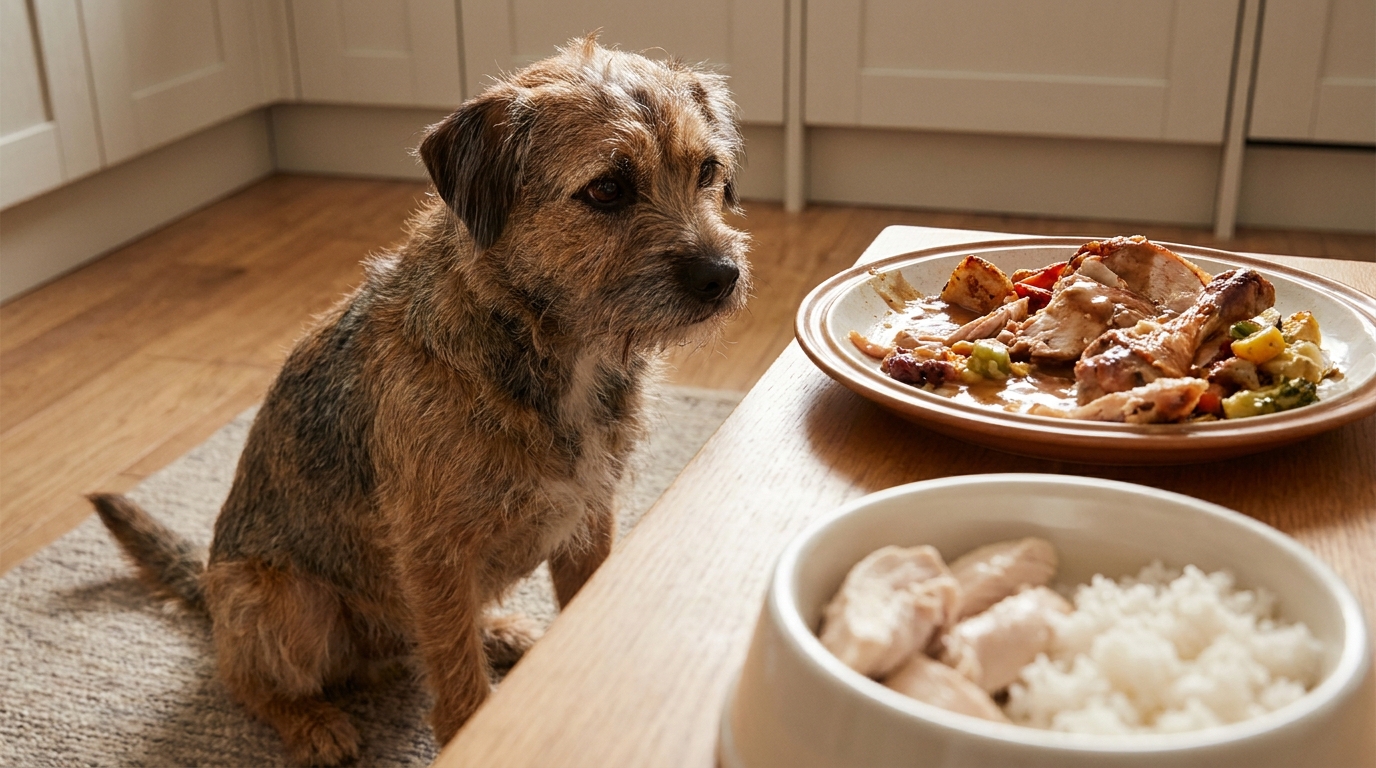
Loose stool after a counter raid, guest scraps or the trash: how long to wait, when fat means a same-day call, and which signs need an ER now.
Quick answer: Diarrhea after table food or holiday leftovers is usually a stomach upset, but fatty scraps can trigger pancreatitis. After fat, skin, drippings or trash, call a vet today, even if your dog seems fine. After plain food, call if a bright adult dog's diarrhea lasts past 2 days (toy breeds and seniors: today). Any puppy, one vomit or refusing food: in-person vet today. Repeated vomiting, belly pain, black stool or weakness: emergency vet now.
This article is general information, not a diagnosis. If you think your pet is in danger, go to the nearest emergency animal hospital.
Go to an emergency vet now if you see these signs
A dog with diarrhea after table food needs an emergency vet now, not a video visit, if it vomits more than once, has black, tarry or "raspberry jam" stool, a swollen or painful belly, dry retching, pale gums, weakness or collapse, or can't keep water down.
Also go now for vomiting with bloody stool or blood in the vomit, refusing water, straining again and again with little or nothing coming out, straining to pee with little or no urine (a blocked bladder can look like straining to poop), fast breathing, a racing heartbeat, cold legs, a hunched or "prayer" stance, tremors or a seizure (call a poison line on the way), or a puppy 6 weeks to 6 months old, or not fully vaccinated, with diarrhea plus vomiting, low energy or no appetite. Dry retching with nothing coming up, restlessness, drooling or a swollen belly after a big meal can mean bloat, which the Merck Veterinary Manual calls a life-threatening emergency that mainly affects large, deep-chested dogs.
What your dog ate changes the first call; these steps match our Thanksgiving food chart for dogs:
- Xylitol (sugar-free desserts, gum, mints) or raw bread or pizza dough: emergency vet now, even if your dog seems fine; call a poison line on the way.
- Onion or garlic (stuffing, gravy), chocolate, macadamia nuts or turkey brine: poison line now; see onion and garlic toxicity in dogs.
- Grapes, raisins or currants: poison line now, plus an in-person vet even if your dog seems fine.
- Alcohol: poison line or vet now; ER now if your dog is wobbly or trembling.
- Moldy leftovers or compost: clinic now (an emergency hospital if yours is closed), before tremors start; Pet Poison Helpline warns these can carry tremor-causing mycotoxins.
- A cooked bone, corn cob, foil, oven bag, skewer, toothpick or pop-up timer: in-person vet the same day, even if your dog seems fine (on a holiday, usually an emergency hospital); bring the packaging. Gagging, drooling, retching, repeated vomiting, not eating, belly pain, straining, or black or bloody stool means ER now. See turkey bones and leftovers.
- String, twine or roast netting: emergency vet now; never pull or cut it.
The poison lines are ASPCA Animal Poison Control, (888) 426-4435 (a consultation fee may apply), and Pet Poison Helpline, (855) 764-7661 (a per-incident fee applies). Never make a dog vomit unless a vet or poison line tells you to.
Why table food gives dogs diarrhea
Rich, fatty, salty or unfamiliar food eaten in one sitting is a common cause of diarrhea in dogs, which veterinarians call dietary indiscretion; VCA lists eating garbage or other irritating material among the common causes.
- Fat (turkey skin, drippings, butter, ham fat): the Merck Veterinary Manual says eating trash or large amounts of table scraps is believed to be a common risk factor for pancreatitis.
- Salt (ham, brine, gravy): the ASPCA says salt poisoning can bring vomiting, diarrhea, tremors and seizures.
- Dairy and nuts: the ASPCA says pets lack lactase, so dairy can cause diarrhea, and high-fat nuts such as pecans and walnuts can cause vomiting, diarrhea and possibly pancreatitis.
- A sudden switch: Cornell's Riney Canine Health Center says diarrhea after a food change may mean the switch was made too quickly.
- The trash: a trash-bin or carcass raid, sometimes called garbage gut, mixes fat, bones and spoiled food, so call a vet or poison line the same day, even if your dog seems fine.
How long does diarrhea last after a dog eats people food?
Mild diarrhea after a small amount of plain, non-fatty people food often clears on its own in a bright adult dog, and Cornell's Riney Canine Health Center advises calling a vet if loose stool lasts more than two days; after fatty scraps or a trash raid, call a vet the same day.
Fat changes the clock because the Merck Veterinary Manual says mild pancreatitis may show only vague signs such as diarrhea, lethargy or a poor appetite. Diarrhea that keeps coming back, lasts for weeks or comes with weight loss needs an in-person exam, even if your dog seems well.
| When | What you see | What to do |
|---|---|---|
| Plain food, days 1-2 | Soft stool, bright adult | Watch at home |
| After fat or trash | Diarrhea only, bright | Call a vet today |
| Past 2 days | Not better | Call a vet |
| Any time | One vomit, or won't eat | In-person vet today |
| Any time | Vomits again, belly pain | ER now |
| Any time | Black stool, weakness | ER now |
Upset stomach, pancreatitis, blockage or toxin?
Nobody can tell a dog's stomach upset from pancreatitis, a blockage or a toxin just by looking, but diarrhea alone in a bright dog usually points to a simple upset, while vomiting, belly pain, low energy, weakness or refusing food in the 4 days after a fatty meal raises concern for pancreatitis.
Some dogs with belly pain hold a "prayer position," front legs down and rear end up, but the Merck Veterinary Manual notes that many show no obvious sign. The FDA adds restlessness, shaking and fever to the list, and Pet Poison Helpline says vomiting can start 1 to 4 days after the fatty meal, so a calm first day is not the all-clear.
| Signs | Points to | Do now |
|---|---|---|
| Loose stool only, bright | Mild upset | Watch; fat or trash: call today |
| One vomit, or won't eat | Upset or pancreas | In-person today |
| Vomits again, belly pain, weak | Pancreas or blockage | ER now |
| Dry retching, swollen belly | Bloat | ER now |
| Straining, little comes out | Gut or bladder blockage | ER now |
| Tremors, wobbly | Toxin or salt | ER now; call poison line |
For the full 4-day watch, see what to watch after a dog eats grease, butter or fat.
What to do in the first 24 hours
In the first day after a dog gets diarrhea from table food, keep fresh water available, stop all treats and table food, and note each stool and your dog's appetite and energy; don't give human anti-diarrhea or pain medicines unless a vet tells you to.
Cornell says to keep fresh water available at all times. Don't force your dog to drink, and skip broth or gravy, which can hide onion, garlic or salt. Veterinary advice on fasting and bland food differs, so ask a vet first, and never fast a puppy, a toy breed or a diabetic dog. Photograph each stool and keep any packaging to show the vet.
Cornell also advises never giving human medicines such as Pepto Bismol (bismuth subsalicylate) or Imodium (loperamide) unless a veterinarian directs it. Washington State University warns that loperamide causes nerve toxicity in dogs with the MDR1 mutation, most common in herding breeds such as collies and Australian shepherds. Bismuth subsalicylate is a salicylate, a relative of aspirin, and the Merck Veterinary Manual says aspirin can erode a dog's stomach lining, which adds risk for a dog on an NSAID or steroid.
Dogs that need a vet sooner
Puppies, toy breeds, seniors, Miniature Schnauzers, and dogs with past pancreatitis, diabetes, kidney or heart disease, or a daily NSAID or steroid should see or call a vet the same day for diarrhea after table food instead of waiting two days.
- Puppies and toy breeds: any puppy with diarrhea needs an in-person vet the same day. The Merck Veterinary Manual says toy and miniature breeds are especially at risk of low blood sugar, so a toy-breed puppy that turns weak, trembly or wobbly, or stops eating, needs an ER now.
- Diabetic dogs: the American Animal Hospital Association's diabetes guidelines say to contact the veterinarian if a diabetic pet does not eat. For vomiting or diarrhea, call the vet who manages the insulin the same day, before changing meals or the insulin.
- Dogs on a daily NSAID or steroid: call the prescribing vet before the next dose. Black stool or repeated vomiting means an ER now.
- Other pancreatitis risks: dogs on a vet-prescribed low-fat diet or potassium bromide, and dogs with Cushing's disease or very high triglycerides, also need a same-day check after fatty scraps.
What stool color and texture can tell you
Black, tarry stool in a dog can mean bleeding in the stomach or upper small intestine, the Merck Veterinary Manual says, and needs an emergency vet now, while a few red streaks with mucus usually point to an irritated colon and need a vet within 24 hours; mucus alone in a bright adult dog needs a vet if it lasts past 2 days.
Lots of red jelly, often called "raspberry jam" stool, is also an emergency: Merck describes hemorrhagic gastroenteritis (HGE) as sudden vomiting and bloody diarrhea in formerly healthy dogs, says young, toy and miniature breeds appear predisposed, and warns the fluid loss can lead to shock. If a bismuth remedy was given, tell the vet, but never assume black stool is harmless. Our guide to mucus or jelly-like stool in dogs covers each look.
| Stool | May mean | Urgency |
|---|---|---|
| Black, tarry | Upper-gut bleeding | ER now |
| Raspberry jam | Possible HGE | ER now |
| Bloody, plus vomiting | Possible HGE | ER now |
| More than a streak of blood | Bleeding | In-person today |
| Red streaks with mucus | Colon upset | Vet in 24 h |
| Watery, many times | Fluid loss | Call a vet today |
| Soft, dog bright | Mild upset | Watch; fat: call today |
Holiday timing: when your clinic is closed
Your dog's regular vet clinic may be closed on Thanksgiving, Christmas Day or New Year's Day, so before the meal, find the nearest emergency hospital that is open on the holiday and overnight and save both poison line numbers.
The FDA says to throw leftovers into a trash bin pets can't get into. Ask guests not to feed scraps. Bag bones, string, skewers and packaging, take them outside right away, and keep your dog out of the kitchen while food is out.
When a live video visit can help
A live video visit can help when an adult dog has diarrhea after table food or leftovers but has not vomited, is still bright, drinking, eating and not sore in the belly, and has not eaten anything toxic or swallowed bones, string, a corn cob, foil or packaging.
A licensed RexVet vet, a veterinarian licensed in your pet's state (Florida, New York or Virginia, with your dog located there during the call), goes over what was eaten and when, looks at stool photos or a short video, gum color and posture, and watches as you show the belly on camera. The veterinarian then tells you whether your dog needs to be seen in person and how urgently, and can point you to a nearby clinic or emergency hospital. A visit is $64.99, with live slots about 8 AM to 11 PM ET; holiday availability is not guaranteed.
A video visit cannot feel the belly, run bloodwork for pancreatitis, take X-rays or an ultrasound, test stool or give IV fluids, so some dogs will still need a clinic. Outside about 8 AM to 11 PM ET, if no slot is open, or if your dog is getting worse, go to an emergency vet; if you are traveling outside these three states, use a local vet.
Don't book a video visit for any vomiting with the diarrhea, refusing food, more than a streak of blood or any puppy with diarrhea (see a vet in person the same day), or for anything on the emergency, poison or object lists above (follow those steps now).
No prescription is promised; any medicine is the veterinarian's decision after the visit, and state rules limit what can be prescribed after a video-only visit (see the FAQ). A pharmacy transfer fee applies if a prescription is sent to an outside pharmacy (RexVet is not a pharmacy).
If your dog fits, check open slots and book a live video visit.
Need an Expert Opinion on This Topic?
Book a video visit with a licensed vet, evenings and weekends included
See open timesFrequently Asked Questions
Can table scraps cause diarrhea in dogs?
Yes. Rich, fatty, salty or unfamiliar food is a common cause of diarrhea in dogs, which veterinarians call dietary indiscretion. The Merck Veterinary Manual says eating trash or large amounts of table scraps is believed to be a common risk factor for pancreatitis, so after fatty scraps or a trash raid, call a vet the same day even if your dog seems fine.
How long does diarrhea last after a dog eats human food?
Mild cases in a bright adult dog often clear on their own; call a vet if loose stool lasts more than two days, or the same day after fatty food or trash. Cornell's Riney Canine Health Center gives that two-day line. Toy breeds and seniors need a same-day call. Any puppy with diarrhea, one vomit with the diarrhea, or refusing food means an in-person vet today. Repeated vomiting, black stool, belly pain or weakness means an emergency vet now.
Should I fast my dog after diarrhea from table food?
Ask a vet first. Veterinary advice on fasting differs, and puppies, toy breeds and diabetic dogs should never be fasted. For a diabetic dog, call the vet who manages the insulin before changing or skipping meals. Keep fresh water available the whole time.
Can I give my dog Imodium or Pepto for diarrhea after people food?
Not unless a vet tells you to. Cornell's Riney Canine Health Center advises against Pepto Bismol, Imodium or other human medicines without a vet's direction, and Washington State University warns that loperamide can cause nerve toxicity in dogs with the MDR1 mutation. If you already gave one, tell the vet, and treat black, tarry stool as an emergency anyway.
Is plain pumpkin or rice OK for a dog with diarrhea?
Ask a vet first; if a vet suggests pumpkin, use plain 100% canned pumpkin, never pie filling, and keep rice plain and unseasoned. Our guide to pumpkin for diarrhea or constipation in dogs covers what is and isn't known.
My dog has diarrhea after Thanksgiving but is acting normal; is that OK?
It may be a simple upset, but after fatty holiday food, call a vet the same day and watch for 4 days. Pet Poison Helpline says vomiting can start 1 to 4 days after a fatty meal. Each later plate of leftovers starts a new 4-day watch. During those days, refusing food or one vomit along with the diarrhea means an in-person vet the same day. Vomiting more than once, belly pain or weakness means an emergency vet now.
My dog has diarrhea after eating turkey. Is it serious?
Often a mild upset, but after turkey skin, fat or drippings, call a vet the same day. The FDA warns against feeding poultry skin and other high-fat scraps, which can cause pancreatitis. After a little plain, lean turkey meat, watch and call a vet if loose stool lasts more than two days. A swallowed cooked bone needs an in-person vet the same day, even if your dog seems fine (on a holiday, usually an emergency hospital), and gagging, drooling, retching, repeated vomiting, not eating, belly pain, straining, or black or bloody stool after a bone means an emergency vet now; don't make your dog vomit. Vomiting more than once, belly pain, weakness or black stool means an emergency vet now.
Can I talk to a vet online about diarrhea after holiday food?
Often, yes, for a bright adult dog with diarrhea but no vomiting, located in Florida, New York or Virginia during the visit. On camera, the veterinarian can review what was eaten, stool photos, gums and posture, watch as you show the belly, and say whether your dog needs an in-person visit and how soon, but cannot feel the belly or run tests. Any vomiting, refusing food, more than a streak of blood in the stool, a swallowed object or a puppy with diarrhea needs an in-person vet, not a video visit, and a possible toxin needs the poison line or ER steps above; repeated vomiting, belly pain, weakness, xylitol, raw dough or string means an emergency vet now. If medicine comes up: in Florida (s.474.2021), after a video-only visit a vet can prescribe only an FDA-approved animal drug used as labeled, for up to 14 days (1 month for products labeled only for fleas and ticks), with no renewal without an in-person exam; human-labeled drugs (including loperamide and bismuth subsalicylate), controlled drugs and compounded anti-infectives need an in-person exam. Federal rules allow off-label or human-drug use only after an in-person exam. Virginia allows the exam to be electronic, but prescribing is still the veterinarian's call, and New York's telehealth prescribing rules are not settled. No prescription is promised.
FAQs
Can table scraps cause diarrhea in dogs?
Yes. Rich, fatty, salty or unfamiliar food is a common cause of diarrhea in dogs, which veterinarians call dietary indiscretion. The Merck Veterinary Manual says eating trash or large amounts of table scraps is believed to be a common risk factor for pancreatitis, so after fatty scraps or a trash raid, call a vet the same day even if your dog seems fine.
How long does diarrhea last after a dog eats human food?
Mild cases in a bright adult dog often clear on their own; call a vet if loose stool lasts more than two days, or the same day after fatty food or trash. Cornell's Riney Canine Health Center gives that two-day line. Toy breeds and seniors need a same-day call. Any puppy with diarrhea, one vomit with the diarrhea, or refusing food means an in-person vet today. Repeated vomiting, black stool, belly pain or weakness means an emergency vet now.
Should I fast my dog after diarrhea from table food?
Ask a vet first. Veterinary advice on fasting differs, and puppies, toy breeds and diabetic dogs should never be fasted. For a diabetic dog, call the vet who manages the insulin before changing or skipping meals. Keep fresh water available the whole time.
Can I give my dog Imodium or Pepto for diarrhea after people food?
Not unless a vet tells you to. Cornell's Riney Canine Health Center advises against Pepto Bismol, Imodium or other human medicines without a vet's direction, and Washington State University warns that loperamide can cause nerve toxicity in dogs with the MDR1 mutation. If you already gave one, tell the vet, and treat black, tarry stool as an emergency anyway.
Is plain pumpkin or rice OK for a dog with diarrhea?
Ask a vet first; if a vet suggests pumpkin, use plain 100% canned pumpkin, never pie filling, and keep rice plain and unseasoned. Our guide to pumpkin for diarrhea or constipation in dogs covers what is and isn't known.
My dog has diarrhea after Thanksgiving but is acting normal; is that OK?
It may be a simple upset, but after fatty holiday food, call a vet the same day and watch for 4 days. Pet Poison Helpline says vomiting can start 1 to 4 days after a fatty meal. Each later plate of leftovers starts a new 4-day watch. During those days, refusing food or one vomit along with the diarrhea means an in-person vet the same day. Vomiting more than once, belly pain or weakness means an emergency vet now.
My dog has diarrhea after eating turkey. Is it serious?
Often a mild upset, but after turkey skin, fat or drippings, call a vet the same day. The FDA warns against feeding poultry skin and other high-fat scraps, which can cause pancreatitis. After a little plain, lean turkey meat, watch and call a vet if loose stool lasts more than two days. A swallowed cooked bone needs an in-person vet the same day, even if your dog seems fine (on a holiday, usually an emergency hospital), and gagging, drooling, retching, repeated vomiting, not eating, belly pain, straining, or black or bloody stool after a bone means an emergency vet now; don't make your dog vomit. Vomiting more than once, belly pain, weakness or black stool means an emergency vet now.
Can I talk to a vet online about diarrhea after holiday food?
Often, yes, for a bright adult dog with diarrhea but no vomiting, located in Florida, New York or Virginia during the visit. On camera, the veterinarian can review what was eaten, stool photos, gums and posture, watch as you show the belly, and say whether your dog needs an in-person visit and how soon, but cannot feel the belly or run tests. Any vomiting, refusing food, more than a streak of blood in the stool, a swallowed object or a puppy with diarrhea needs an in-person vet, not a video visit, and a possible toxin needs the poison line or ER steps above; repeated vomiting, belly pain, weakness, xylitol, raw dough or string means an emergency vet now. If medicine comes up: in Florida (s.474.2021), after a video-only visit a vet can prescribe only an FDA-approved animal drug used as labeled, for up to 14 days (1 month for products labeled only for fleas and ticks), with no renewal without an in-person exam; human-labeled drugs (including loperamide and bismuth subsalicylate), controlled drugs and compounded anti-infectives need an in-person exam. Federal rules allow off-label or human-drug use only after an in-person exam. Virginia allows the exam to be electronic, but prescribing is still the veterinarian's call, and New York's telehealth prescribing rules are not settled. No prescription is promised.
Medically Reviewed
Reviewed by Dr. Tiffany Delacruz, DVM — licensed veterinarian and CEO of RexVet. Last reviewed October 31, 2026.
Content is for informational purposes and does not replace professional veterinary advice.
Chief Executive Officer · Licensed Veterinarian
Dr. Delacruz is a licensed Doctor of Veterinary Medicine specializing in preventive care and veterinary telehealth. She reviews all health content on RexVet to ensure accuracy and clinical relevance.
Sources & References
- · American Veterinary Medical Association — Telehealth Guidelines
- · AVMA — Pet Care Resources
- · U.S. FDA — Animal & Veterinary