
Dog Coughing After Surgery: Breathing Tube or Pneumonia?
By RexVet Team | Reviewed by Dr. Tiffany Delacruz, DVM
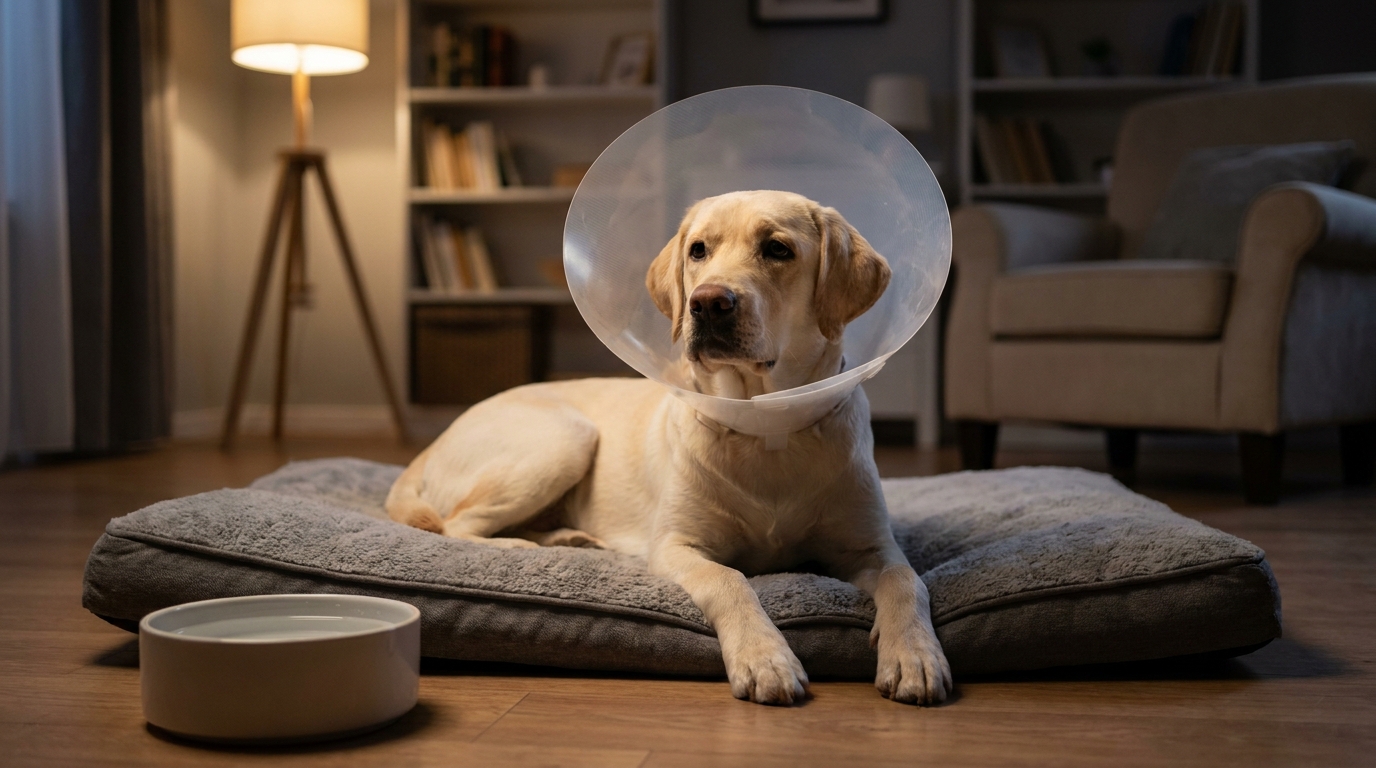
Dog coughing after surgery is usually mild throat irritation from the breathing tube, but fast or labored breathing, fever or lethargy need a vet.
Go to an in-person emergency vet now if your dog is breathing fast or hard while resting, has blue, gray or very pale gums, cannot settle, collapses, or is coughing along with fever, weakness or refusing food and water after surgery.
Hearing your dog cough or gag the night after surgery is worrying, especially when the surgical clinic is already closed. Here is what the breathing tube does, which signs mean an emergency vet tonight, and how to check a mild cough at home.
Why is my dog coughing after surgery?
During general anesthesia for a spay, neuter, dental cleaning or other procedure, a breathing tube is placed in the windpipe. VCA explains that "a breathing tube, called an endotracheal tube, is then inserted into the windpipe or trachea." The tube delivers oxygen and anesthetic gas, and it protects the lungs: VCA notes that it "seals off the airway so that the patient does not accidentally aspirate fluids or other foreign material while unconscious and unable to swallow."
That protection can leave the throat a little irritated. In its post-operative instructions for dogs, VCA says: "Your dog may have had a tube placed in the trachea (windpipe) during anesthesia to administer oxygen and anesthetic gas. This procedure can occasionally cause mild irritation and a slight cough." VCA adds that "a mild post-surgical cough will typically diminish over the next few days."
So tube irritation is a usual, mild reason for a dog coughing after anesthesia or after being intubated. It fits a slight cough in a dog that is otherwise getting brighter, and it should fade rather than get deeper or more frequent. If your dog is gagging after surgery rather than coughing, use the same checks below.
Emergency signs: when a post-surgery cough could be pneumonia
If you see any of these signs, go to an in-person emergency vet now. Do not wait for the surgical clinic to open.
- Breathing that is fast or hard while your dog is resting or asleep, with the belly or sides working hard
- Blue, gray, white or very pale gums
- Your dog cannot settle or get comfortable
- Collapse, or your dog cannot stand
- A cough together with fever, weakness or lethargy
- A cough together with refusing food and water
The reason these signs matter is aspiration pneumonia. The Merck Veterinary Manual describes it as "a lung infection caused by inhalation of foreign material," and notes: "Disturbances in the normal swallowing mechanism, such as in anesthetized or comatose animals... may also lead to aspiration pneumonia."
Merck lists the signs of aspiration pneumonia as coughing, exercise intolerance, labored or rapid breathing, rapid heart rate and fever, and adds bluish mucous membranes. For pneumonia in general, Merck also lists lethargy, loss of appetite and a deep cough.
Gray, white or very pale gums are also an emergency.
For further reading once your dog is on the way to care, see our guides on pneumonia warning signs in dogs and our pet emergency checklist.
Normal tube cough vs a cough to worry about: a quick home check
This check is for a dog that has none of the emergency signs above. It only takes a moment, and what you notice is useful to whichever vet sees your dog next.
- Breathing. Watch your dog breathe while resting or asleep. Fast breathing, or the belly and sides working hard with each breath, is an emergency sign. You can count breaths to report to a vet, but do not use the count to decide that your dog is fine.
- Gum color. In good light, gently lift the lip and look at the gums. Blue, gray, white or very pale gums are an emergency. After a dental procedure, lift the lip very gently.
- Energy, eating and drinking. Is your dog slowly getting brighter, and does it drink when you offer water? The American College of Veterinary Surgeons notes that it is normal for a pet to eat less than usual or skip a meal during the first 24 hours after surgery. Weakness or lethargy with a cough, or refusing both food and water, is an emergency.
- The sound. A mild, dry cough that is getting less frequent fits the slight cough VCA describes. A deep cough is on Merck's list of pneumonia signs, and a wet cough or one that keeps getting more frequent needs a vet.
- Video. Film one coughing episode on your phone, plus a short clip of your dog breathing at rest. It shows the vet exactly what you are seeing.
If any check turns up an emergency sign, do not wait for morning. Waiting for the surgical clinic to open is only for a mild, dry cough in a dog that is otherwise bright, drinking and breathing normally.
What you can do tonight for a mild cough after surgery
Start with the discharge sheet. It was written for your dog's procedure, so it comes first whenever it differs from general advice.
- Keep your dog quiet and indoors, with short, calm bathroom trips only.
- Walk your dog on a harness instead of a neck collar for now, unless your discharge sheet says otherwise.
- Keep fresh water available, but follow your discharge sheet on how much water and food to offer the first evening.
- Do not force food.
- Never give human cough syrups or cold medicines, or any other human medicine.
A cough may not be the only worry on the first night home. If your dog is whining or restless, read our guide on a dog crying all night after surgery. If the procedure was a dental cleaning and your dog is skipping food, see a dog not eating after a dental cleaning.
Could it be kennel cough from the clinic?
It is a fair question, especially if your dog spent the day at the clinic. Kennel cough is a contagious airway infection with its own pattern. A veterinarian uses the timing of the cough, any other signs, and recent contact with other dogs to tell it apart from tube irritation.
Kennel cough is possible, but it is not something you need to settle at home, and a cough after a procedure does not mean the clinic did anything wrong. Noting when the cough started, how it sounds, and any other signs you have seen helps your vet decide the likely cause.
If you want to know more about how the infection behaves, our guide to kennel cough symptoms, duration and treatment covers it in detail.
For a mild cough, call the surgical clinic first when it is open
For a mild cough in a dog with none of the emergency signs, the team that did the surgery is the right first call. They know how the anesthesia and the procedure went and what they expect during recovery. VCA's guidance is: "If coughing persists or worsens, contact the hospital." VCA also says, "However, do not hesitate to contact the hospital if you are concerned."
The American College of Veterinary Surgeons notes that discharge instructions "typically include guidance on pain management, activity restriction, incision care and monitoring." Have that sheet in front of you when you call, along with your cough video and the names of the medicines sent home.
While you are keeping an eye on the cough, check the incision too. Look for swelling, redness, discharge or a new lump, and mention anything you find on the same call. If you notice a soft swelling near a spay incision, our guide on whether a lump under a spay incision is a seroma or an infection explains what to look for.
What a RexVet online vet can and cannot do for a post-surgery cough
If your dog has any of the emergency signs above, skip the video visit and go to an in-person emergency vet now. If none of those signs are present, a RexVet video visit can help you decide what to do next tonight.
On a video call, a RexVet veterinarian can:
- Hear and watch the cough live
- Watch your dog's breathing effort at rest
- Look at gum color on camera
- Read the discharge sheet and the medicines sent home with you
- Help you decide between three next steps: go to an emergency clinic now, call the surgical clinic in the morning, or watch at home with clear red flags
A video visit cannot:
- Listen to the chest with a stethoscope
- Take chest X-rays
- Give oxygen or fluids
If the veterinarian decides medication is appropriate, they can prescribe where state rules allow. Florida limits telehealth-only prescribing to a 14-day supply, with no renewal without an in-person exam. No controlled substances, including controlled cough medicines, are prescribed by video.
RexVet's veterinarians are licensed in Florida, New York and Virginia, and they are available 24/7, including nights, weekends and holidays. A video visit is $64.99. If your dog's cough is mild and you want a veterinarian to look and listen tonight, book a RexVet video visit.
When a post-surgery cough must be seen in person in Florida, New York or Virginia
Every emergency sign listed above means an in-person emergency vet now, day or night. So does any change in your dog's breathing, or vomiting or regurgitating followed by coughing.
Your dog also needs an in-person exam, usually at the surgical clinic, if:
- The cough persists or gets worse.
- The cough changes from mild and dry to deep or wet.
- Your dog is still not eating along with the cough after the first 24 hours, even if it is drinking and bright.
If the clinic is closed and you are worried, an emergency clinic can see your dog tonight. A video visit does not replace an exam in any of these cases. Under Florida law, a veterinarian using telehealth must give you the contact information for at least one physical veterinary clinic near your pet's location, so you know where to go when an exam is needed.
RexVet sees pets by video only for pet parents in Florida, New York and Virginia. Our state pages explain how that works where you live: online vet in Florida, online vet in New York and online vet in Virginia.
Frequently Asked Questions
Is it normal for a dog to cough after surgery?
It can be. VCA notes the breathing tube can occasionally cause mild irritation and a slight cough. A cough with fast or hard breathing, abnormal gum color, weakness or refusing food and water is an emergency.
How long does a cough last after intubation?
VCA says a mild post-surgical cough "will typically diminish over the next few days." If the cough is not improving, is getting worse, or turns deep or wet, call the surgical clinic. If the clinic is closed and any emergency sign is present, go to an emergency vet now.
Can a dog get pneumonia after anesthesia?
Yes. The Merck Veterinary Manual notes that disturbances in the normal swallowing mechanism, such as in anesthetized animals, may lead to aspiration pneumonia. Merck's signs include coughing, labored or rapid breathing, rapid heart rate, fever, bluish mucous membranes, lethargy and a deep cough. If your dog vomits and then coughs, or shows any of these other signs along with a cough after surgery, go to an in-person emergency vet now.
Could my dog have caught kennel cough at the vet?
It is possible, but a cough after a procedure has other explanations, including irritation from the breathing tube. A veterinarian decides from the pattern: when the cough started, how it sounds, any other signs, and recent contact with other dogs.
Can I give my dog cough medicine after surgery?
Do not give any human cough syrup, cold medicine or other human medicine. Ask the surgical clinic or another veterinarian first, because they decide whether any treatment is appropriate for your dog while it recovers from surgery.
If your dog's cough is mild, your dog is bright and breathing comfortably, and the surgical clinic is closed, you do not have to wait until morning to talk it through with a veterinarian. RexVet is a 501(c)(3) non-profit, and RexVet's veterinarians are licensed in Florida, New York and Virginia and available 24/7. A video visit is $64.99, and you can book a video visit now.
FAQs
Is it normal for a dog to cough after surgery?
It can be. VCA notes the breathing tube can occasionally cause mild irritation and a slight cough. A cough with fast or hard breathing, abnormal gum color, weakness or refusing food and water is an emergency.
How long does a cough last after intubation?
VCA says a mild post-surgical cough "will typically diminish over the next few days." If the cough is not improving, is getting worse, or turns deep or wet, call the surgical clinic. If the clinic is closed and any emergency sign is present, go to an emergency vet now.
Can a dog get pneumonia after anesthesia?
Yes. The Merck Veterinary Manual notes that disturbances in the normal swallowing mechanism, such as in anesthetized animals, may lead to aspiration pneumonia. Merck's signs include coughing, labored or rapid breathing, rapid heart rate, fever, bluish mucous membranes, lethargy and a deep cough. If your dog vomits and then coughs, or shows any of these other signs along with a cough after surgery, go to an in-person emergency vet now.
Could my dog have caught kennel cough at the vet?
It is possible, but a cough after a procedure has other explanations, including irritation from the breathing tube. A veterinarian decides from the pattern: when the cough started, how it sounds, any other signs, and recent contact with other dogs.
Can I give my dog cough medicine after surgery?
Do not give any human cough syrup, cold medicine or other human medicine. Ask the surgical clinic or another veterinarian first, because they decide whether any treatment is appropriate for your dog while it recovers from surgery.
If your dog's cough is mild, your dog is bright and breathing comfortably, and the surgical clinic is closed, you do not have to wait until morning to talk it through with a veterinarian. RexVet is a 501(c)(3) non-profit, and RexVet's veterinarians are licensed in Florida, New York and Virginia and available 24/7. A video visit is $64.99, and you can book a video visit now.
Medically Reviewed
Reviewed by Dr. Tiffany Delacruz, DVM — licensed veterinarian and CEO of RexVet. Last reviewed September 22, 2026.
Content is for informational purposes and does not replace professional veterinary advice.
Chief Executive Officer · Licensed Veterinarian
Dr. Delacruz is a licensed Doctor of Veterinary Medicine specializing in preventive care and veterinary telehealth. She reviews all health content on RexVet to ensure accuracy and clinical relevance.
Sources & References
- · American Veterinary Medical Association — Telehealth Guidelines
- · AVMA — Pet Care Resources
- · U.S. FDA — Animal & Veterinary
Need an Expert Opinion on This Topic?
Connect with a certified vet via video call in minutes
Talk to Vet Now