
Lump Under My Dog's Spay Incision: Seroma or Infection?
By RexVet Team | Reviewed by Dr. Tiffany Delacruz, DVM
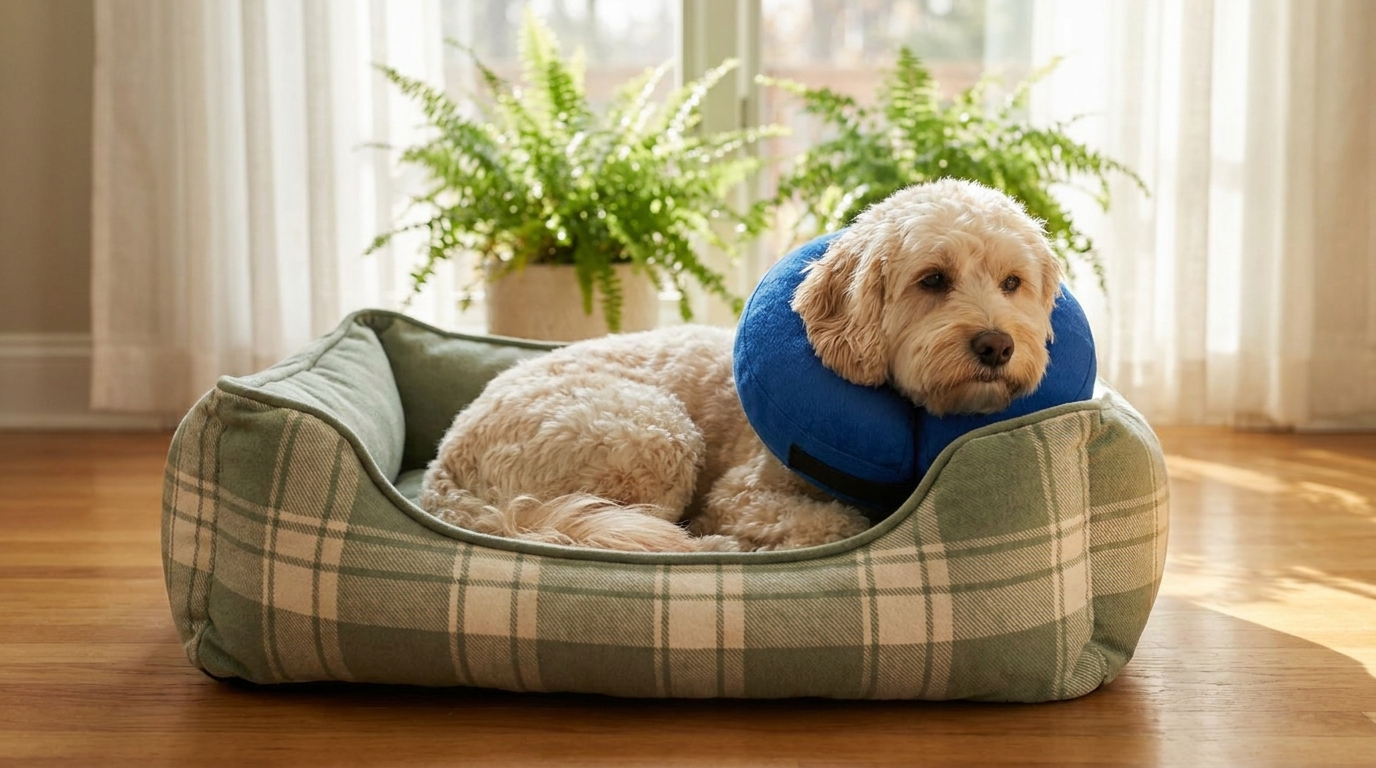
A soft, painless lump under a spay incision is often a seroma, but heat, discharge or separating edges means a vet must see it tonight.
If the incision is hot, red or oozing pus or blood, smells bad, the edges are pulling apart or you can see tissue underneath, or your dog is lethargic, vomiting or refusing food, go back to your surgeon or an in-person emergency clinic now rather than waiting for morning.
If you searched "lump under my dog's spay incision" tonight, the clinic is probably closed and you want to know whether this is a fluid pocket, an infection, or the incision coming apart.
Is this an emergency? The signs that mean go in tonight
VCA Animal Hospitals says to contact your veterinarian immediately for:
- Continuous dripping or seepage of blood or fluid, or intermittent blood seepage that goes on past 24 hours.
- Swelling, excessive redness, a foul smell or discharge.
- A dog that has removed some or all of the sutures.
The ASPCA says to contact your veterinarian if the incision is open or you notice redness, swelling or discharge at the surgery site, and also if your dog is lethargic, eating less, vomiting or has diarrhea.
A lump that appeared suddenly after a jump, or is clearly bigger than it was a few hours ago, also means go in tonight: deeper layers can separate while the skin looks closed, and only a hands-on exam can tell.
Your surgeon's after-hours line and an emergency clinic can examine the incision, drain or culture it, re-close it and give medication; a screen cannot. If you are unsure, see the pet emergency checklist and online vet or emergency room.
What a normal healing spay incision looks like
According to VCA Animal Hospitals, a normal incision is clean, with the skin edges touching, and the skin is a normal or slightly reddish-pink color. VCA also notes that a little blood may seep intermittently for up to 24 hours, especially if the dog has been active.
VCA explains that bruising is common in pale-skinned dogs, may not appear until a few days after the operation, and can look much larger than the incision because blood seeps under the skin edges.
A firm, even ridge along the line as the deeper layers knit is a common finding; the surgeon confirms it at the recheck.
VCA's incision-care page advises restricting activity for 7 to 14 days, keeping the incision dry, and expecting non-dissolving sutures or staples out at 10 to 14 days. The ASPCA says no running or jumping for up to two weeks or as long as your veterinarian recommends, no bath for at least ten days, and check the incision daily. Your surgeon's timeline governs; see the spay and neuter cost and recovery guide.
Seroma: the soft, fluid-filled lump
A seroma is a pocket of fluid under the skin; Cornell's Riney Canine Health Center describes it, in general terms, as a fluid pocket forming in the space left after surgery. The Merck Veterinary Manual notes that surgeons close wound layers individually to minimize the dead space that might contribute to seroma formation, one reason rest and the cone matter.
The classic description is soft or squishy, movable, not hot, not painful, with a dog who is eating and acting normally. The vet's plan is usually rest, the cone and a surgeon recheck; sometimes the vet drains it in the clinic. Never drain, squeeze or press on the lump at home; that can introduce bacteria and cause an infection.
A seroma that keeps growing, or showed up right after a jump, is not one to watch overnight; call the surgeon or an emergency clinic. Even a classic-looking seroma should be confirmed by a vet who sees it, tonight by video or tomorrow at the clinic. For lumps away from an incision, see sudden lumps under a dog's skin.
Infection: when the lump is hot, red, painful or leaking
Look for redness spreading from the line, warm or hot skin, swelling that keeps growing, pus or cloudy discharge, a bad smell, and pain when touched. The dog may be unusually quiet or hiding, shivering, or refusing food. Softness does not rule infection out; a soft lump that is warm, tender or leaking, or a dog that is off, counts as infection until a vet says otherwise.
Licking is the most common way bacteria get in. The ASPCA says licking the incision may cause infection and advises a well-fitted Elizabethan collar, and VCA warns that moisture from baths or swimming can introduce bacteria into the wound, so a wet belly from a Florida pool or wet grass is worth avoiding. Whether an antibiotic is needed is decided by a vet who examines the dog, and the surgical clinic remains the first call for post-operative medication; a video visit is a triage opinion, not a treatment for an infected incision. For non-surgical cuts, see minor pet wounds.
Dehiscence: when the incision is opening
Dehiscence means the incision is coming apart: a gap between the edges, sutures missing or chewed, tissue or fat showing, or fluid running from the line. The skin closure has given way, and only the vet can tell whether the deeper layers are intact. VCA notes that it takes only a few seconds of chewing for a dog to remove stitches or damage the surgery site.
Cover the area with a clean, dry cloth, put the cone on, and go straight to your surgeon or an emergency clinic now. Do not try to close, tape or glue the gap or put anything on it. A video visit cannot manage an open incision.
Seroma vs infection vs opening: the quick comparison
- Seroma. Feel: soft, squishy, movable. Temperature: cool. Color: normal skin. Discharge: none. Pain: none. The dog acts normal. Tonight: a video visit, or the surgeon in the morning, sooner if it grows.
- Infection. Feel: swollen and tender, may be firm or tense. Temperature: warm or hot. Color: red, spreading. Discharge: cloudy, yellow or green, sometimes smelly. Pain: yes. The dog is quiet, shivering or off food. Tonight: the surgeon's after-hours line or an emergency clinic now.
- Incision opening. Feel: a gap you can see. Temperature and pain: vary. Color: raw edges, tissue or fat visible. Discharge: fluid from the line. The dog may act completely normal; licking or a missing cone is the usual clue. Tonight: the surgeon's after-hours line or an emergency clinic now.
What to do at home tonight, and what not to do
Do:
- Keep the cone on at all times, including while your dog sleeps; VCA notes that a recovery garment covering the incision is an alternative.
- Crate your dog or close them in one quiet room: no stairs, couch or jumping. Carry a small dog on New York apartment stairs; in a Virginia yard, bathroom breaks are leash-only, off the wet grass.
- Keep the belly dry: no baths, pools, beach, sprinklers or wet grass, a real issue in Florida humidity, and off hot pavement.
- Photograph the incision daily in the same light and compare with day one. Note appetite, energy and any licking.
Do not:
- Put anything on the incision. VCA Animal Hospitals warns never to clean it with hydrogen peroxide or alcohol, because they damage the cells and delay healing; ointments stay off too.
- Give leftover antibiotics, leftover pet medication, or human pain relievers such as ibuprofen, acetaminophen or aspirin. If the surgeon sent home a pain medication such as carprofen, give it exactly as labeled; the RexVet carprofen page lists side effects to watch for.
- Press, squeeze, massage or try to drain the lump.
- Take the cone off "just for a bit."
Surgeon, emergency clinic or online vet: who to call
Call the clinic that did the spay first; their after-hours line is part of the surgery, and they know what was done inside. Go to an emergency clinic for any red flag in the bold line above.
A RexVet video visit fits the in-between: the clinic cannot be reached, the dog is bright and eating, and the skin is closed and cool. On camera the vet views the incision in good light, compares it with your day-one photo, asks about licking, cone use, activity, appetite and energy, and says whether this looks like a seroma to watch, a suture ridge, bruising, or something that needs hands-on care tonight. Medication decisions stay with a vet who can examine the dog and, for post-operative drugs, with the surgical clinic.
RexVet's veterinarians are licensed in Florida, New York and Virginia only and are available 24/7. A video visit is $64.99 and does not promise a prescription. If your dog fits the in-between, book a RexVet video visit now.
Frequently asked questions
Is a lump under my dog's spay incision normal?
A firm, even ridge along the line and a small bruise are common, but a new soft lump or one that is growing should not be assumed fine. Have a vet see it, tonight by video or tomorrow at the surgeon; go in now if it is hot, leaking or your dog is unwell.
How can I tell if the lump is a seroma or an infection?
A seroma is soft, cool and painless and the dog acts normal; an infection brings heat, spreading redness, discharge, smell, pain, or a dog that is quiet, shivering or off food. If any infection sign is present, or you cannot tell, call the surgeon's after-hours line or an emergency clinic tonight.
Should I drain or squeeze a seroma at home?
No. Pressing, squeezing or draining the lump at home can push bacteria into a closed space and turn a fluid pocket into an infection. Drainage, when needed, is done by the vet in the clinic; leave it alone and have a vet look at it.
How long does a seroma take to go away after a spay?
There is no set timeline; the surgeon monitors it at the recheck; some shrink with rest and the cone, others need the vet to drain them. If it gets bigger, warmer or painful, starts leaking, or your dog goes off food, call the surgeon or an emergency clinic that day.
Can an online vet look at my dog's spay incision lump tonight?
Yes. In Florida, New York and Virginia, a RexVet veterinarian can look at the incision on camera, compare it with your day-one photo and give a triage opinion. The surgical clinic is still the first call, and an open, hot or leaking incision needs an in-person visit tonight.
If the incision is closed and cool and your dog is bright, RexVet's veterinarians, licensed in Florida, New York and Virginia only, are available 24/7 for a $64.99 video visit, a triage opinion rather than a prescription promise. Book a RexVet video visit now.
Sources
FAQs
Is a lump under my dog's spay incision normal?
A firm, even ridge along the line and a small bruise are common, but a new soft lump or one that is growing should not be assumed fine. Have a vet see it, tonight by video or tomorrow at the surgeon; go in now if it is hot, leaking or your dog is unwell.
How can I tell if the lump is a seroma or an infection?
A seroma is soft, cool and painless and the dog acts normal; an infection brings heat, spreading redness, discharge, smell, pain, or a dog that is quiet, shivering or off food. If any infection sign is present, or you cannot tell, call the surgeon's after-hours line or an emergency clinic tonight.
Should I drain or squeeze a seroma at home?
No. Pressing, squeezing or draining the lump at home can push bacteria into a closed space and turn a fluid pocket into an infection. Drainage, when needed, is done by the vet in the clinic; leave it alone and have a vet look at it.
How long does a seroma take to go away after a spay?
There is no set timeline; the surgeon monitors it at the recheck; some shrink with rest and the cone, others need the vet to drain them. If it gets bigger, warmer or painful, starts leaking, or your dog goes off food, call the surgeon or an emergency clinic that day.
Can an online vet look at my dog's spay incision lump tonight?
Yes. In Florida, New York and Virginia, a RexVet veterinarian can look at the incision on camera, compare it with your day-one photo and give a triage opinion. The surgical clinic is still the first call, and an open, hot or leaking incision needs an in-person visit tonight.
If the incision is closed and cool and your dog is bright, RexVet's veterinarians, licensed in Florida, New York and Virginia only, are available 24/7 for a $64.99 video visit, a triage opinion rather than a prescription promise. Book a RexVet video visit now.
Sources
Medically Reviewed
Reviewed by Dr. Tiffany Delacruz, DVM — licensed veterinarian and CEO of RexVet. Last reviewed September 16, 2026.
Content is for informational purposes and does not replace professional veterinary advice.
Chief Executive Officer · Licensed Veterinarian
Dr. Delacruz is a licensed Doctor of Veterinary Medicine specializing in preventive care and veterinary telehealth. She reviews all health content on RexVet to ensure accuracy and clinical relevance.
Sources & References
- · American Veterinary Medical Association — Telehealth Guidelines
- · AVMA — Pet Care Resources
- · U.S. FDA — Animal & Veterinary
Need an Expert Opinion on This Topic?
Connect with a certified vet via video call in minutes
Talk to Vet Now