
Dog Ate a Chicken Bone Off the Street: What to Do Now
By RexVet Team | Reviewed by Dr. Tiffany Delacruz, DVM
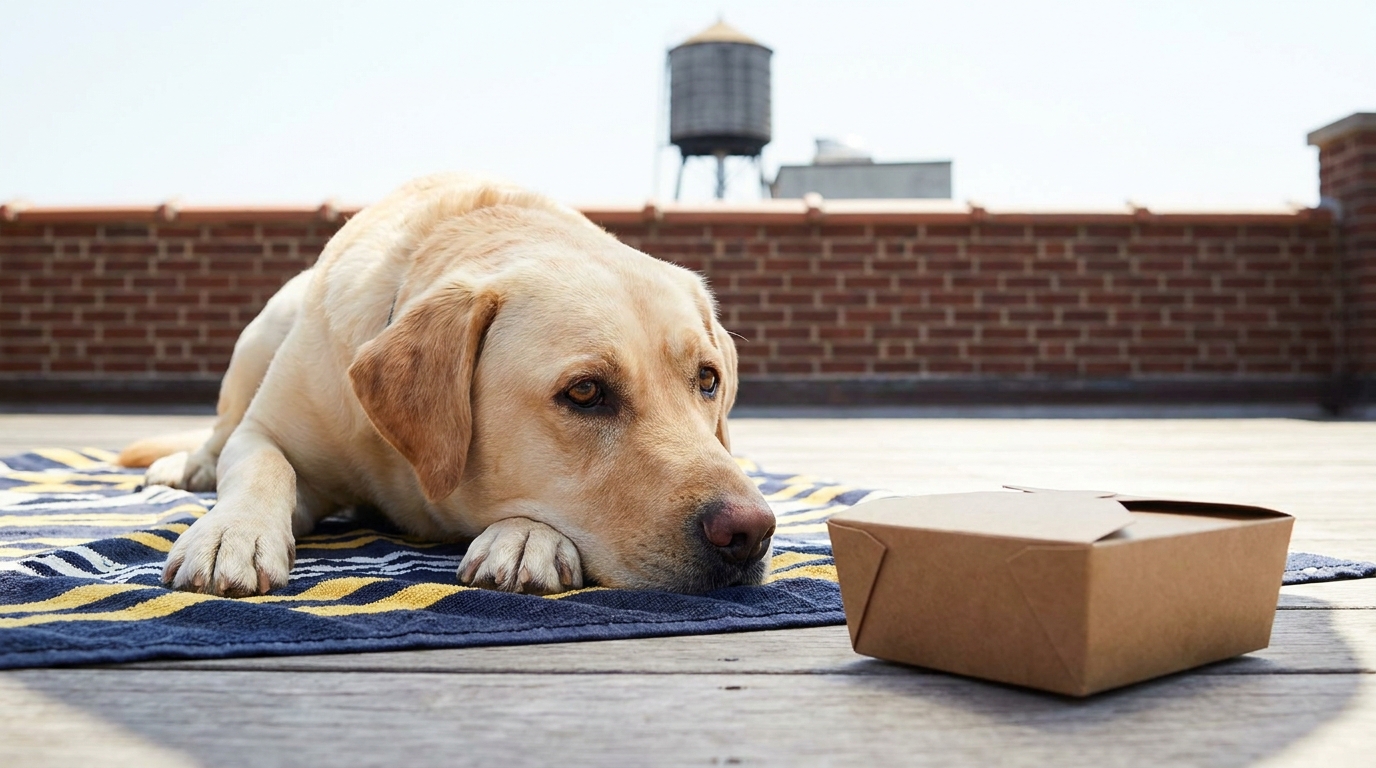
Do not make your dog vomit; remove leftover bone, feed a soft meal, and watch closely for 72 hours for vomiting, straining, drooling or belly pain.
Go to an in-person emergency vet right now if your dog is choking, gagging, retching, drooling suddenly and heavily, struggling to breathe, vomiting blood, passing bloody or black stool, straining without producing stool, or has a swollen or painful belly.
If your dog ate a chicken bone off the street and none of those signs are present, take a breath. New York sidewalks offer plenty of chances: a takeout container by a tree pit, a split trash bag on collection night, a wing bone under a bench. A dog that looks comfortable right now needs a plan, not a panic.
What to do in the first five minutes
Calmly get any leftover bone away from your dog and out of reach. If your dog knows "drop it", use it. Do not force the jaws open or sweep the throat. The American Kennel Club notes that dogs can be possessive over food and tend to bolt whatever is left before you can take it. A hand in the mouth can also push a fragment further back or earn you a bite.
Then look at your dog: is it breathing and swallowing normally, and not pawing at its mouth? Gagging, retching or heavy drooling is the bold line above: go in person now.
If your dog looks comfortable, note four things because a veterinarian will ask: the time, roughly how much bone went down (a wing tip or a whole drumstick), cooked or raw, and your dog's approximate weight.
The American Kennel Club's advice is to confirm your dog is not choking and then call your veterinarian. That call is step one, not a last resort. For a dog that is breathing and swallowing normally, a video veterinarian licensed in New York counts as that first call; you can book an appointment from the sidewalk.
Why you should not make your dog throw up
Forcing the bone back up feels logical and is the wrong move. The American Kennel Club says do not try to induce vomiting, as sharp fragments could cause additional injury coming back up. Do not try to make your dog vomit at home.
There is a second reason to leave the bone where it is. PetMD notes that chicken bones often will dissolve once they hit a dog's stomach, before they have a chance to become dangerous. That is not a certainty, which is why the 72-hour watch exists, but it is a reason to stay calm.
Cooked bones have their own entry in RexVet's toxic foods guide for dogs.
Dog ate a chicken bone off the street: how big is the risk?
Three things change the picture: the size of your dog, how much bone went down, and whether it was cooked or raw.
- Dog size. PetMD says puppies are often at a higher risk than adult dogs of developing complications from eating chicken bones because their digestive system is smaller. The same logic applies, qualitatively, to small and toy dogs: the narrower the passage, the less room a fragment has.
- Amount of bone. One wing bone in a large dog is a different situation from a whole drumstick in a small dog. Be honest with the veterinarian about how much you think went down.
- Cooked versus raw. The American Kennel Club notes that cooking makes chicken bones brittle, so they break into sharp pieces. Raw is not a harmless alternative: the ASPCA Animal Poison Control Center notes that dogs might sustain injury or obstruction to the gastrointestinal tract when ingesting bones, which could be serious and require surgery. No bone is a recommended chew.
Feed a soft meal and keep the next few days calm
One condition first: only offer food if your dog is comfortable, breathing and swallowing normally, with none of the bold-line signs. A dog that is drooling, gagging or swallowing repeatedly may have a bone lodged in the esophagus; do not feed it, go in person.
For a comfortable dog, PetMD suggests that a few slices of plain white bread, or some soft food, given soon after the bone went down may help coat it. The American Kennel Club adds that a veterinarian may suggest pieces of white bread to cushion fragments, with the caveat that advice differs from one veterinarian and one situation to the next, so ask yours.
For the next few days:
- Water as normal.
- No chews, no bones of any kind, no hard treats.
- No rough play, fetch or strenuous exercise.
- Walks on a short leash so you see every stool.
The 72-hour watch: what to check each day
Day 1 is about the front end: appetite, drooling, retching, vomiting and energy. Retching, gagging, repeated swallowing and heavy drooling are not watch signs; they are go-in-person-now signs. Any vomiting means stop watching and get a veterinarian on the line: a video vet if your dog is otherwise comfortable, an in-person emergency vet if it repeats or contains blood. RexVet's page on vomiting in NYC dogs covers what the veterinarian will ask.
Days 2 and 3 are about the back end. Check each stool for bone fragments, straining, blood or a black, tarry color, and check the belly for swelling or flinching when touched. The American Kennel Club says to look through each day's stool for fragments passing through, and that if you don't see them within 72 hours after ingestion, it's a good idea to visit the vet.
The Merck Veterinary Manual says intestinal obstruction signs usually include lethargy, loss of appetite and vomiting, and that diarrhea, abdominal pain, abdominal swelling and dehydration may also occur. Any of those means a veterinarian now, not at the end of the window.
A practical trick: photograph each stool with your phone so a video vet can review the log. Seeing fragments is encouraging, but the watch runs the full 72 hours, and pain at any point means stop waiting.
Signs that mean go to an in-person emergency vet now
The Merck Veterinary Manual says bones are the most common foreign object lodged in the esophagus, and that sudden and excessive drooling, gagging, regurgitation and repeated attempts to swallow are the signs of an esophageal foreign object. That bone needs to come out, which is an in-person job.
The American Kennel Club's list of signs that call for a veterinarian covers low energy, constipation or straining, blood in the stool, vomiting, a bloated belly, poor appetite and general discomfort. Any of those means your dog needs an in-person veterinarian now. PetMD warns that choking, vomiting and diarrhea after a bone can turn life threatening.
If your dog shows any of the bold-line signs (choking, gagging or retching, heavy sudden drooling, trouble breathing, vomiting blood, bloody or black stool, straining without stool, or a swollen or painful belly), bypass every other option, including a video visit, and go directly to an in-person emergency facility. RexVet's pet emergency checklist covers the general go-now signs, and what an ER vet visit costs in New York tells you what to expect at the desk.
What a RexVet online vet visit can and cannot do for a swallowed chicken bone
For a dog that is comfortable right now, a video visit turns "my dog ate a chicken bone, should I be worried?" into a plan. A veterinarian licensed in New York sees your dog on camera within minutes and:
- sizes the risk from your dog's weight, the amount of bone and the timing;
- watches your dog breathe and swallow;
- checks gum color and belly comfort with you as the hands;
- says plainly: watch at home, or go to an emergency hospital;
- gives you a feeding and monitoring plan; and
- sets your personal ER triggers: the signs that mean stop watching and drive.
A video visit cannot take an x-ray, palpate the abdomen directly, remove a lodged bone, perform endoscopy or surgery, or give IV fluids. If the veterinarian suspects an obstruction, the answer is an in-person hospital. See online vet vs. emergency vet and online vet in New York.
If your dog is comfortable, breathing and swallowing normally and has none of the signs above, you can book a RexVet video visit now for $64.99. RexVet's veterinarians are licensed in Florida, New York and Virginia only, so a video visit is only for dogs and owners located in those three states at the time of the call; they are available 24/7. It is triage and a monitoring plan, not a prescription.
What happens at the hospital if a bone gets stuck
The veterinarian examines your dog and may take abdominal x-rays, which the Merck Veterinary Manual says may reveal foreign objects, obstruction, abdominal fluid or bloat. Where the bone is decides what happens next.
A bone lodged in the esophagus can often be removed through the dog's mouth with a flexible endoscope; left untreated, it can perforate the esophagus, which may require surgery.
An object in the stomach may also come out by endoscope, and if it cannot, surgery may be needed. Tell the veterinarian about any tendency your dog has to eat bones, garbage or other hard matter.
Stopping the next sidewalk grab in New York
A dog that has done this once may well try it again. A few habits help:
- Walk the building side of the sidewalk on trash collection nights, away from the curbside bags.
- Skip tree pits and the bases of benches, where takeout containers end up.
- Teach "leave it" and "drop it" at home first, then on a calm block.
- Keep a short leash near food vendors, outdoor dining sheds and takeout spots.
- For a confirmed scavenger, a well-fitted basket muzzle that lets your dog pant, drink and take treats is a comfort tool, not a punishment.
And if it happens again, you know the drill: no vomiting, bone out of reach, a soft meal if your dog is comfortable, a veterinarian on the line. If your dog has none of the emergency signs, you can book a video visit with a RexVet veterinarian for $64.99, 24/7; RexVet's veterinarians are licensed in Florida, New York and Virginia only, for dogs located in those three states. It is triage and monitoring, not a prescription.
Frequently asked questions
My dog ate a chicken bone but seems fine, should I still worry?
Seeming fine right after your dog ate a chicken bone off the street is not the all-clear: the 72-hour watch still applies. Check appetite, energy and every stool for three days. Lethargy, vomiting, straining or belly pain means a veterinarian now, and the bold-line signs mean an in-person emergency vet now.
Should I make my dog throw up after eating a chicken bone?
No. The American Kennel Club warns against making a dog vomit because sharp pieces can cut on the way back up. Do not try to make your dog vomit at home. Keep your dog calm, remove any leftover bone, and get a veterinarian on the line.
How long does it take a dog to pass a chicken bone?
The American Kennel Club advises checking each stool for fragments and seeing a veterinarian if none have appeared within 72 hours of the bone going down. Timing varies by dog and by how much bone went down. Contact a veterinarian sooner if your dog strains, looks uncomfortable or stops eating.
Can I give my dog bread after eating a chicken bone?
Maybe, and only if your dog is comfortable and swallowing normally. PetMD suggests a few slices of plain white bread or some soft food soon after ingestion to help coat the bone, and the American Kennel Club notes that a veterinarian may suggest white bread but that advice differs by veterinarian and by situation. Ask a veterinarian whether it fits your dog.
Can an online vet help if my dog ate a chicken bone in NYC?
Yes, as long as none of the emergency signs are present. A RexVet veterinarian licensed in New York can see your dog on camera 24/7, size the risk, watch breathing and swallowing, and tell you whether to monitor at home or go to an emergency clinic. See online vet in NYC for how a visit works; a video vet cannot x-ray, remove a bone or do surgery, so a suspected obstruction goes in person.
Sources
- American Kennel Club: Can Dogs Eat Chicken Bones?
- PetMD: What To Do if Your Dog Ate a Chicken Bone
- Merck Veterinary Manual: Disorders of the Stomach and Intestines in Dogs
- Merck Veterinary Manual: Disorders of the Esophagus in Dogs
- ASPCA Animal Poison Control Center: People Foods to Avoid Feeding Your Pets
FAQs
My dog ate a chicken bone but seems fine, should I still worry?
Seeming fine right after your dog ate a chicken bone off the street is not the all-clear: the 72-hour watch still applies. Check appetite, energy and every stool for three days. Lethargy, vomiting, straining or belly pain means a veterinarian now, and the bold-line signs mean an in-person emergency vet now.
Should I make my dog throw up after eating a chicken bone?
No. The American Kennel Club warns against making a dog vomit because sharp pieces can cut on the way back up. Do not try to make your dog vomit at home. Keep your dog calm, remove any leftover bone, and get a veterinarian on the line.
How long does it take a dog to pass a chicken bone?
The American Kennel Club advises checking each stool for fragments and seeing a veterinarian if none have appeared within 72 hours of the bone going down. Timing varies by dog and by how much bone went down. Contact a veterinarian sooner if your dog strains, looks uncomfortable or stops eating.
Can I give my dog bread after eating a chicken bone?
Maybe, and only if your dog is comfortable and swallowing normally. PetMD suggests a few slices of plain white bread or some soft food soon after ingestion to help coat the bone, and the American Kennel Club notes that a veterinarian may suggest white bread but that advice differs by veterinarian and by situation. Ask a veterinarian whether it fits your dog.
Can an online vet help if my dog ate a chicken bone in NYC?
Yes, as long as none of the emergency signs are present. A RexVet veterinarian licensed in New York can see your dog on camera 24/7, size the risk, watch breathing and swallowing, and tell you whether to monitor at home or go to an emergency clinic. See online vet in NYC for how a visit works; a video vet cannot x-ray, remove a bone or do surgery, so a suspected obstruction goes in person.
Sources
- American Kennel Club: Can Dogs Eat Chicken Bones?
- PetMD: What To Do if Your Dog Ate a Chicken Bone
- Merck Veterinary Manual: Disorders of the Stomach and Intestines in Dogs
- Merck Veterinary Manual: Disorders of the Esophagus in Dogs
- ASPCA Animal Poison Control Center: People Foods to Avoid Feeding Your Pets
Medically Reviewed
Reviewed by Dr. Tiffany Delacruz, DVM — licensed veterinarian and CEO of RexVet. Last reviewed September 19, 2026.
Content is for informational purposes and does not replace professional veterinary advice.
Chief Executive Officer · Licensed Veterinarian
Dr. Delacruz is a licensed Doctor of Veterinary Medicine specializing in preventive care and veterinary telehealth. She reviews all health content on RexVet to ensure accuracy and clinical relevance.
Sources & References
- · American Veterinary Medical Association — Telehealth Guidelines
- · AVMA — Pet Care Resources
- · U.S. FDA — Animal & Veterinary
Need an Expert Opinion on This Topic?
Connect with a certified vet via video call in minutes
Talk to Vet Now