
My Dog Ate a Silica Gel Packet: Is It Dangerous?
By RexVet Team | Reviewed by Dr. Tiffany Delacruz, DVM
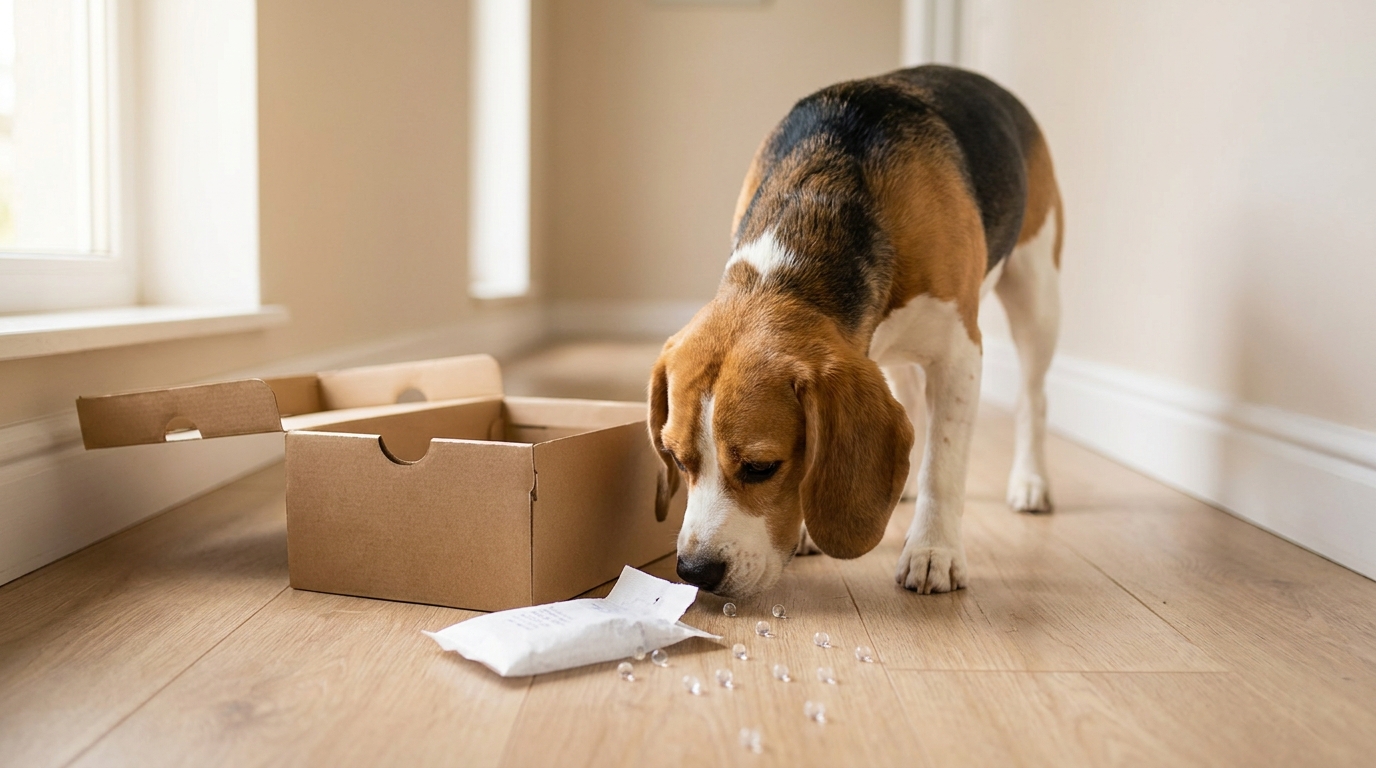
My dog ate a silica gel packet? Silica gel itself is nontoxic; the real risks are iron oxygen absorbers, dyed beads and blockage in small dogs.
Call an animal poison control line or go to an in-person emergency vet now if the packet may have been an oxygen absorber (dark, rust-colored contents that stick to a magnet, often from jerky or treat bags), your dog is vomiting blood or vomiting over and over, has a swollen or painful belly, or a small dog swallowed a large packet or several.
Before anything else, check which kind of packet it was: clear or white silica beads, or dark contents that stick to a magnet. That decides whether you can watch at home or need a poison line right now.
My Dog Ate a Silica Gel Packet: What Is Actually Inside
These little "do not eat" packets turn up everywhere. The ASPCA lists shoes, bags, coats, electronics, medications, vitamins, food and even cat litter.
According to PetMD, silica gel is made of silicon dioxide and works as a desiccant, soaking up moisture from the air. Pet Poison Helpline describes it as "Virtually non-toxic" and says "No true toxicity risk exists from exposure to silica gel packets." It adds that "The beads do not enlarge in the stomach and the exterior packaging is usually soft and presents little risk of injury of obstruction."
Nontoxic does not mean your dog will feel nothing, though. The ASPCA notes: "If eaten, silica gel can cause gastrointestinal upset, including vomiting and diarrhea—depending on the quantity consumed."
Still, the outlook for plain silica gel is good. PetMD says "the most likely outcome is that the silica gel beads, and the packet, will make their way through the digestive tract without the dog developing any symptoms at all," and that "Dogs who have eaten silica gel have an excellent prognosis."
That reassurance covers plain silica gel only. Iron oxygen absorbers and colored indicator beads change the picture, and so does a big packet in a small dog.
First, Make Sure It Was Really Silica: The Oxygen Absorber Trap
Not every "do not eat" packet holds silica gel. Pet Poison Helpline explains that "Elemental iron granules are placed in small packets called oxygen absorbers," which are "often found in packages of beef jerky, pepperoni, dried fruits, dog jerky treats."
This matters because iron is a real poison. Pet Poison Helpline warns that "Elemental iron can cause severe poisoning, even in the small amounts contained in one oxygen absorber packet."
The fridge-magnet check
According to Pet Poison Helpline, if an oxygen absorber is broken open, "dark brown to rust colored material is visible," and "This material is magnetic which allows for quick differentiation between packets containing iron and those containing silica gel or charcoal."
Hold a fridge magnet close to the contents. If the material clings to it, treat it as iron. Plain silica gel beads will not react.
Treat the packet as an oxygen absorber if any of these are true:
- The contents are dark brown or rust-colored.
- The packet came from a bag of jerky, pepperoni, dried fruit or dog treats.
- The magnet result is unclear.
- You cannot find the packet or its contents to check.
If so, call ASPCA Animal Poison Control at (888) 426-4435 (a consultation fee may apply) or Pet Poison Helpline at 855-764-7661, or go to an in-person emergency vet now. Do not try to make your dog vomit, and do not wait for symptoms to appear.
What about charcoal canisters?
Some treat and jerky bags hold a small white plastic charcoal canister instead. The charcoal inside is black but does not stick to a magnet, so the magnet check still tells it apart from iron. Pet Poison Helpline notes that a charcoal canister "can cause a foreign body obstruction in small dogs," so if a small dog swallowed one, call your veterinarian.
Emergency Signs: When to Call Poison Control or Go to the ER Now
Do not wait and watch. Call a poison line or go to an in-person emergency vet if:
- The packet may have been an oxygen absorber, or you cannot tell.
- Your dog is vomiting blood.
- Your dog is vomiting over and over.
- Your dog has a swollen or painful belly.
- A small dog swallowed a large packet, or several packets.
- Your dog ate a large amount of colored beads.
- Your dog collapses, has trouble breathing or seems very weak.
For iron, Pet Poison Helpline says "After ingestion, vomiting (with or without blood) is one of the first signs of poisoning."
Keep both numbers handy: ASPCA Animal Poison Control at (888) 426-4435, available "24/7, 365 days a year" (a consultation fee may apply), and Pet Poison Helpline at 855-764-7661.
Have the torn packet next to you when you call. For a wider list of warning signs, see our pet emergency checklist.
Colored Beads: When the Dye Matters
Plain silica gel beads are clear or white, but some packets look different. Pet Poison Helpline explains: "Some silica products are mixed with a moisture indicator, these indicators may be toxic in large doses." It adds: "If a dye is present, the silica gel will no longer be a clear to white but instead bright orange, blue, pink or green."
If the beads were colored and your dog ate a lot of them, keep the packet and call your veterinarian or a poison line (numbers above) now. If you are unsure how many are missing, make the call anyway.
Small Dogs and Big Packets: The Blockage Risk
For plain silica, the bigger question is the packet, not the beads. The ASPCA warns that "Some silica gel packets may be fairly large, and if ingested, could potentially cause obstruction in the intestinal tract."
That risk matters most when a small dog swallows a large packet, or several packets. A blockage cannot be ruled out on a video call; it needs an in-person exam.
Signs that a packet may be stuck include:
- Repeated vomiting
- Not eating, or losing interest in food
- A painful, tender or swollen belly
- Straining to poop, or not passing stool
If you see any of these signs, take your dog to a vet in person or to an emergency vet now. For more on foreign-body red flags, read our guide on what to do when a dog eats a chicken bone.
What to Do at Home for the Next Day or Two
This section applies only to plain clear or white silica gel, about one packet, in a dog that is acting normally. Any possible oxygen absorber is a poison-line or ER call, not a watch-at-home situation.
For that plain-silica case, PetMD says: "If your dog ate a small amount of silica gel (one packet, for example), taking a wait-and-see approach makes sense." It adds: "If your dog seems fine after a day or two, you probably don't have anything more to worry about."
Here is what careful watching looks like:
- Keep fresh water available.
- Watch whether your dog eats normally.
- Watch for vomiting or diarrhea.
- Notice energy level.
- Check that your dog is passing stool without straining.
- Save the torn packet and the box or bag it came from.
- Pick up any other packets in the house.
Do not try to make your dog vomit, and do not give any human medicine or home remedy. If mild vomiting or diarrhea keeps going, or your dog just seems off, call your vet. Any of the emergency signs above means an in-person emergency vet now. Our guide on why a dog is vomiting explains the warning signs in more detail.
To prevent a repeat, throw packets away in a lidded bin as soon as you open a box or bag. If you keep any, store them where your dog cannot reach them.
What a RexVet Online Vet Can and Cannot Do After a Dog Eats a Packet
If the packet could have been an oxygen absorber, or your dog has any emergency sign above, skip the video visit and call a poison line or go to an emergency vet. Once both are ruled out, a video visit can help you decide what to do next.
On a video visit, a veterinarian can:
- Look at the torn packet and its label with you on camera.
- Walk you through the magnet check step by step.
- Weigh the risk based on your dog's size and how many packets are missing.
- Help you decide between watching at home, calling a poison line or going in now.
A video vet cannot take X-rays, measure blood iron, induce vomiting or give fluids. If your dog needs any of those, the vet will send you to an in-person clinic.
If the veterinarian decides medication is appropriate, they can prescribe where state rules allow. In Florida, telehealth-only prescribing is limited to a 14-day supply, and those prescriptions may not be renewed without an in-person examination (Florida Statutes 474.2021). Controlled substances are not prescribed by video.
RexVet is a 501(c)(3) non-profit. RexVet's veterinarians are licensed in Florida, New York and Virginia and are available 24/7. If you are in one of those states and your dog ate plain silica gel and is acting normally, you can book a RexVet video visit. A RexVet video visit is $64.99.
When to See a Vet in Person in Florida, New York or Virginia
Everything in the Emergency Signs list above is a poison-line or ER call, right away. Outside those emergencies, book an in-person visit with a vet if:
- Mild vomiting or diarrhea keeps going instead of settling.
- Your dog is eating less or seems quieter than normal after a day or two of watching.
- The veterinarian on a video visit recommends a hands-on exam.
Under Florida Statutes 474.2021, a veterinarian using telehealth must give you "the contact information for at least one physical veterinary clinic in the vicinity of the patient's location," so you know where to go if your dog needs to be seen.
You can learn more about video care in your state on our pages for Florida, New York and Virginia. Our guide to toxic foods for dogs covers other kitchen hazards worth knowing.
Frequently Asked Questions
Is silica gel toxic to dogs?
Plain silica gel is virtually non-toxic, according to Pet Poison Helpline, though the ASPCA notes it can cause vomiting or diarrhea depending on how much was eaten. The exceptions are colored indicator beads, which "may be toxic in large doses," and iron oxygen absorbers, which look similar. First make sure the packet was not an oxygen absorber, because that is a poison-line or ER case.
What if my dog ate the whole packet, paper and all?
Pet Poison Helpline says the packaging is usually soft and presents little risk. If a small dog swallowed a large packet or several, or you notice any blockage signs, see a vet in person now.
Why does the packet say "do not eat" if it is nontoxic?
Silica gel is not meant to be eaten, so it carries the label, as Pet Poison Helpline explains. The warning is not a sign that the beads are poisonous. The same words also appear on iron oxygen absorbers, which are dangerous, so always check which kind your dog found.
How do I tell silica gel from an oxygen absorber?
Silica gel beads are clear, white or brightly colored and do not react to a magnet. An oxygen absorber shows dark brown to rust-colored material that sticks to a magnet, and it often comes from jerky or treat bags. If the contents stick, look dark or you cannot tell, treat it as an emergency: call a poison line (numbers above) or go to an in-person emergency vet now.
How long until a silica packet passes?
There is no set passing time to count on. PetMD suggests watching your dog closely for a day or two instead. If vomiting, straining, belly pain or a poor appetite shows up during that time, see a vet in person.
For plain silica gel in a dog that is acting normally, a video visit can help you decide what comes next. Help is available 24/7, and RexVet's veterinarians are licensed in Florida, New York and Virginia. If you are in one of those states, book a video visit now. A RexVet video visit is $64.99.
FAQs
Is silica gel toxic to dogs?
Plain silica gel is virtually non-toxic, according to Pet Poison Helpline, though the ASPCA notes it can cause vomiting or diarrhea depending on how much was eaten. The exceptions are colored indicator beads, which "may be toxic in large doses," and iron oxygen absorbers, which look similar. First make sure the packet was not an oxygen absorber, because that is a poison-line or ER case.
What if my dog ate the whole packet, paper and all?
Pet Poison Helpline says the packaging is usually soft and presents little risk. If a small dog swallowed a large packet or several, or you notice any blockage signs, see a vet in person now.
Why does the packet say "do not eat" if it is nontoxic?
Silica gel is not meant to be eaten, so it carries the label, as Pet Poison Helpline explains. The warning is not a sign that the beads are poisonous. The same words also appear on iron oxygen absorbers, which are dangerous, so always check which kind your dog found.
How do I tell silica gel from an oxygen absorber?
Silica gel beads are clear, white or brightly colored and do not react to a magnet. An oxygen absorber shows dark brown to rust-colored material that sticks to a magnet, and it often comes from jerky or treat bags. If the contents stick, look dark or you cannot tell, treat it as an emergency: call a poison line (numbers above) or go to an in-person emergency vet now.
How long until a silica packet passes?
There is no set passing time to count on. PetMD suggests watching your dog closely for a day or two instead. If vomiting, straining, belly pain or a poor appetite shows up during that time, see a vet in person.
For plain silica gel in a dog that is acting normally, a video visit can help you decide what comes next. Help is available 24/7, and RexVet's veterinarians are licensed in Florida, New York and Virginia. If you are in one of those states, book a video visit now. A RexVet video visit is $64.99.
Medically Reviewed
Reviewed by Dr. Tiffany Delacruz, DVM — licensed veterinarian and CEO of RexVet. Last reviewed September 22, 2026.
Content is for informational purposes and does not replace professional veterinary advice.
Chief Executive Officer · Licensed Veterinarian
Dr. Delacruz is a licensed Doctor of Veterinary Medicine specializing in preventive care and veterinary telehealth. She reviews all health content on RexVet to ensure accuracy and clinical relevance.
Sources & References
- · American Veterinary Medical Association — Telehealth Guidelines
- · AVMA — Pet Care Resources
- · U.S. FDA — Animal & Veterinary
Need an Expert Opinion on This Topic?
Connect with a certified vet via video call in minutes
Talk to Vet Now