
Cat Tail Pull Injury: Signs to Check Now After a Door or Tug
By RexVet Team | Reviewed by Dr. Tiffany Delacruz, DVM
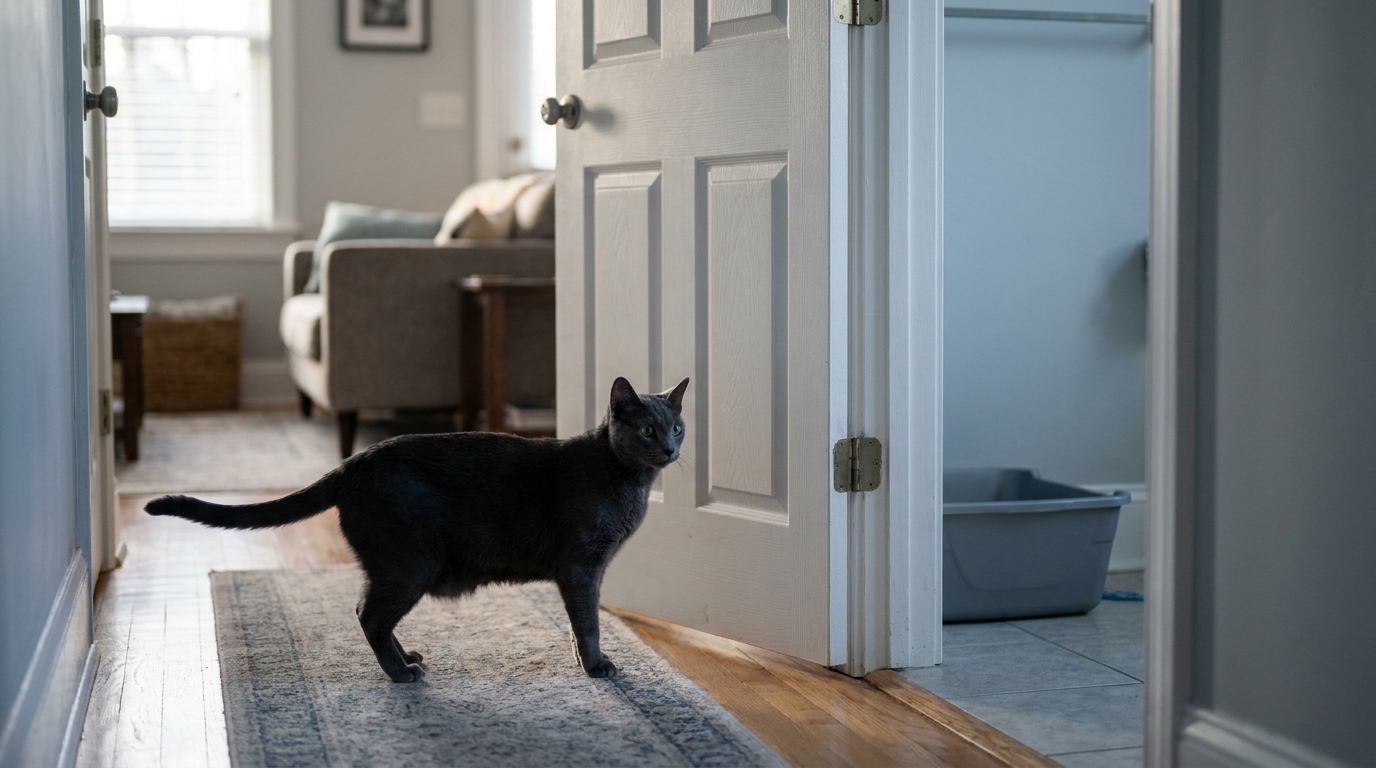
Cat tail pull injury after a door slam or a tug? Check whether the tail drags and whether your cat can pee normally. Bladder trouble can't wait.
Go to an emergency vet now if your cat strains in the litter box with little or no urine, cannot stand or walk on the back legs, is dribbling urine, or has an open wound or exposed bone on the tail.
Cat Tail Pull Injury: What Happens Inside the Tail
A tail can get hurt in ordinary ways. Veterinary Partner (VIN) notes, "A child might pull a tail or it might get caught in a closing door." A tail stepped on in a busy kitchen, a cat tail caught in a door, or a tug during play can all end with the same worried question: is my cat going to be OK?
The tail itself is only part of the story. The spinal cord does not reach the tail. What matters most sits at the base of the tail, where long nerve branches from the spinal cord pass on their way to the bladder, bowel and back legs. In Veterinary Partner's article on tail pull injuries in cats, VIN explains that "nerves exiting the cord to provide control and sensation to the tail, hind legs, urinary bladder, large intestine, and anus must extend long branches to reach their destinations."
In plain words: pulling the tail can stretch nerves that also run the bladder and bowel. That is why a tail injury in a cat is judged first by how the cat pees and poops, and only second by how the tail looks.
Emergency Signs: Bladder First
A limp or dragging tail is upsetting to see, but the tail is not the emergency. The bladder is. Veterinary Partner (VIN) puts it simply: "It is important not to allow the bladder to over-stretch." A cat whose bladder cannot empty needs hands-on care, and it cannot wait until morning.
Go to an in-person emergency vet now, not later tonight, if your cat has any of these signs:
- Straining in the litter box with little or no urine coming out
- Dribbling or leaking urine
- Not able to stand or walk on the back legs
- An open wound on the tail, or bone showing through the skin
Our guide on a male cat straining to pee walks through what straining looks like and what to do on the way to the clinic. If you are not sure whether what you are seeing counts as an emergency, use our practical pet emergency checklist, and when in doubt, go.
Call the emergency clinic as you leave so they know a cat with a possible bladder problem is on the way. Carry your cat in a carrier, supporting the back end, and keep your hands away from the tail.
What to Check at Home Tonight
If your cat has none of the emergency signs above, you still need to look closely. Veterinary Partner (VIN) lists signs of a tail pull injury that owners can notice at home:
- "A tail that drags or is never held high."
- "Involuntary dribbling of urine."
- "A dilated, flaccid anal sphincter with or without diarrhea or fecal incontinence."
Here is how to check, calmly and without handling the tail:
- Watch the tail. Does it hang, drag on the floor, or stay low while your cat walks? A cat tail dragging behind needs a vet check, even if everything else looks normal.
- Watch the walk. Is your cat steady on the back legs, or wobbly, crouched or slow to jump?
- Check the litter box. Look for normal urine clumps and normal stool. Keep an eye on the box through the evening so you know your cat is actually peeing, not just visiting.
- Look at the back legs and under the tail. Wet fur on the back legs, or urine spots where your cat has been lying, can mean urine is leaking.
Now sort what you found:
- Emergency vet now: straining with little or no urine, no urine clumps in the box at all, dribbling urine or wet fur from leaking, or not being able to stand.
- In-person vet the same day: stool leaking out, diarrhea you cannot explain, a wobbly back end, or any wound on the tail.
- Vet check soon, not an emergency: a cat that pees normal clumps, passes normal stool and walks well, but whose tail hangs or looks sore. A video visit is a reasonable first step, and finding out whether the tail is broken takes an in-person exam with X-rays.
While you watch, leave the tail alone. Do not pull, straighten, splint or bandage the tail. Avoid touching or lifting it at all, because the base of a hurt tail can be painful. Keep your cat in a quiet room with food, water and a low-sided litter box that is easy to step into.
Why Peeing Matters More Than the Tail
It is natural to focus on the tail, because that is the part you can see. The bigger risk is the part you cannot see. According to Veterinary Partner (VIN), "The fine muscles of the bladder can become so stretched out that even if the nerves recover, the bladder may still remain unable to empty fully."
That is why the bladder comes first in every step of this guide. A hanging tail is worrying. A bladder that stays too full is more urgent, and it needs a veterinarian's hands.
A cat that is peeing everywhere after a tail injury is not being naughty or making a point. Leaking urine can be a sign that the nerves to the bladder are not working the way they should. Please do not scold. Dribbling or leaking urine is one of the emergency signs, so take your cat to an in-person emergency vet now.
If your cat needs help emptying the bladder while the nerves recover, a veterinarian may show you how to help at home. Do not try it unless a vet has shown you how, in person.
Recovery, in VIN's Words
This part calls for patience. Veterinary Partner (VIN) says, "Nerves heal notoriously slowly."
VIN also gives a sense of the timeline, in its own words: "Most cats who are going to recover function do so in a one-week period, and most cats who do not recover urinary control after a month probably will remain incontinent."
Notice what that line is built around: urinary control, not the tail. The key thing to watch during recovery is whether your cat pees normally. A tail can stay limp even when bladder control returns, so judge progress by the litter box, not the tail. Keep your follow-up visits, and tell your vet about every litter-box change.
Sometimes a tail does not get its movement or feeling back. On that point, VIN says, "If the tail is not expected to recover mobility or sensation, there are some reasons to consider amputation." Whether that applies to your cat is a decision for your cat's veterinarian after an in-person exam. Your vet will talk through the reasons with you.
Tail Pull in Cats vs. a Limp Tail in Dogs
If you also have a dog whose tail went limp after swimming, that is a different problem, and it is covered in our guide to a dog's limp tail after swimming. This article stays with cats, where a pulled tail is about the nerves to the bladder and bowel.
What a RexVet Online Vet Can and Cannot Do After a Tail Injury
First, the most important line in this section: if your cat has any of the emergency signs above, go to an emergency vet, not a video visit.
For a cat without those signs, a video visit can help you sort out what you are seeing. On a video call, a RexVet veterinarian can:
- Watch how your cat carries the tail and how your cat walks
- Go through the litter-box details with you: clumps, stool, straining, leaks
- Look at photos of wet fur, urine spots or a wound
- Help you decide between a same-day in-person visit and watching at home for now
- Do follow-up visits while bladder control is being watched
A video vet cannot take X-rays, feel the bladder, test anal tone or place a catheter. Only an in-person exam, including checks of the bladder and anal tone, and X-rays can show how badly the nerves and bones are hurt. That limit is the reason any doubt about peeing means going in person.
If the veterinarian decides medication is appropriate, they can prescribe where state rules allow. In Florida, a veterinarian who has seen your pet only by video may prescribe only FDA-approved animal drugs used as labeled, for up to 14 days (1 month for flea-and-tick-only products), and cannot renew without an in-person exam.
Clear photos and short videos help a lot. Before your visit, film your cat walking across the room from the side and from behind, and take a photo of the back legs and the area under the tail. Our guide on how to upload pet photos and videos for an online vet review shows you how.
If your cat pees and passes stool normally and walks well, but the tail still hangs or you are unsure what you are seeing, you can book a RexVet video visit for $64.99. RexVet's veterinarians are licensed in Florida, New York and Virginia and are available 24/7, including nights, weekends and holidays.
When to Be Seen in Person in Florida, New York or Virginia
Some things need a veterinarian's hands, an X-ray and a proper look at the bladder. Plan an in-person visit if your cat has:
- Any change in peeing or pooping that is not on the emergency list, even a small one
- A wobbly or weak back end (see what to do when a cat's back legs are suddenly wobbly)
- Any wound on the tail
- A hanging or dragging tail that your vet wants X-rayed to check for a break
Anything on the emergency list near the top of this guide means going to an in-person emergency vet now, not booking an appointment for later.
Sometimes the signs are vague. A cat may walk a little stiffly, sit oddly or avoid jumping without any obvious injury. Our guide on a cat limping with no visible injury can help you decide how soon to go.
If you start with a video visit in Florida, the state's telehealth rules also point you toward hands-on care. Under Florida Statutes 474.2021, when the first exam of your pet is done by video, the veterinarian must give you "the contact information for at least one physical veterinary clinic in the vicinity of the patient's location."
To learn how video visits work where you live, see our pages for Florida, New York and Virginia.
Frequently Asked Questions
Can a cat's tail heal after being pulled?
Sometimes, but it takes patience. Veterinary Partner (VIN) says, "Nerves heal notoriously slowly." The outlook depends mostly on bladder and bowel control, not on how the tail looks, so watch the litter box closely and keep every follow-up visit.
How do I know if my cat's tail is broken?
You cannot tell at home. A hanging or dragging tail can mean a break, nerve damage or both, and only an in-person exam with X-rays can tell. If you see an open wound or exposed bone, go to an emergency vet now.
Why is my cat peeing everywhere after a tail injury?
Veterinary Partner (VIN) includes this among the signs of a tail pull injury: "Involuntary dribbling of urine." Leaking can mean the nerves to the bladder are affected. Dribbling or leaking urine is one of the emergency signs: go to an in-person emergency vet now, especially if your cat also strains with little or no urine. This is not a behavior problem.
Will my cat's tail need to be amputated?
Not always. Veterinary Partner (VIN) says, "If the tail is not expected to recover mobility or sensation, there are some reasons to consider amputation." Your cat's veterinarian decides this after an in-person exam and will explain the reasons with you.
How should I pick up my cat after a tail injury?
Slide one hand under the chest and the other under the back end, so the hips and back legs are fully supported. Do not touch, lift or hold the tail. For a trip to the vet, a carrier that opens from the top lets you lower your cat in gently.
A tail injury can look frightening, but you now know what to check first: the bladder, the bowel and the back legs. If you are in Florida, New York or Virginia and your cat has none of the emergency signs, you can book a RexVet video visit for $64.99 to talk through what you are seeing and plan the next step. RexVet's veterinarians are licensed in Florida, New York and Virginia, RexVet is a 501(c)(3) non-profit, and our vets are available 24/7.
FAQs
Can a cat's tail heal after being pulled?
Sometimes, but it takes patience. Veterinary Partner (VIN) says, "Nerves heal notoriously slowly." The outlook depends mostly on bladder and bowel control, not on how the tail looks, so watch the litter box closely and keep every follow-up visit.
How do I know if my cat's tail is broken?
You cannot tell at home. A hanging or dragging tail can mean a break, nerve damage or both, and only an in-person exam with X-rays can tell. If you see an open wound or exposed bone, go to an emergency vet now.
Why is my cat peeing everywhere after a tail injury?
Veterinary Partner (VIN) includes this among the signs of a tail pull injury: "Involuntary dribbling of urine." Leaking can mean the nerves to the bladder are affected. Dribbling or leaking urine is one of the emergency signs: go to an in-person emergency vet now, especially if your cat also strains with little or no urine. This is not a behavior problem.
Will my cat's tail need to be amputated?
Not always. Veterinary Partner (VIN) says, "If the tail is not expected to recover mobility or sensation, there are some reasons to consider amputation." Your cat's veterinarian decides this after an in-person exam and will explain the reasons with you.
How should I pick up my cat after a tail injury?
Slide one hand under the chest and the other under the back end, so the hips and back legs are fully supported. Do not touch, lift or hold the tail. For a trip to the vet, a carrier that opens from the top lets you lower your cat in gently.
A tail injury can look frightening, but you now know what to check first: the bladder, the bowel and the back legs. If you are in Florida, New York or Virginia and your cat has none of the emergency signs, you can book a RexVet video visit for $64.99 to talk through what you are seeing and plan the next step. RexVet's veterinarians are licensed in Florida, New York and Virginia, RexVet is a 501(c)(3) non-profit, and our vets are available 24/7.
Medically Reviewed
Reviewed by Dr. Tiffany Delacruz, DVM — licensed veterinarian and CEO of RexVet. Last reviewed September 26, 2026.
Content is for informational purposes and does not replace professional veterinary advice.
Chief Executive Officer · Licensed Veterinarian
Dr. Delacruz is a licensed Doctor of Veterinary Medicine specializing in preventive care and veterinary telehealth. She reviews all health content on RexVet to ensure accuracy and clinical relevance.
Sources & References
- · American Veterinary Medical Association — Telehealth Guidelines
- · AVMA — Pet Care Resources
- · U.S. FDA — Animal & Veterinary
Need an Expert Opinion on This Topic?
Connect with a certified vet via video call in minutes
Talk to Vet Now