
Cat Stress Cystitis (FIC): Signs, Triggers and What Helps
By RexVet Team | Reviewed by Dr. Tiffany Delacruz, DVM
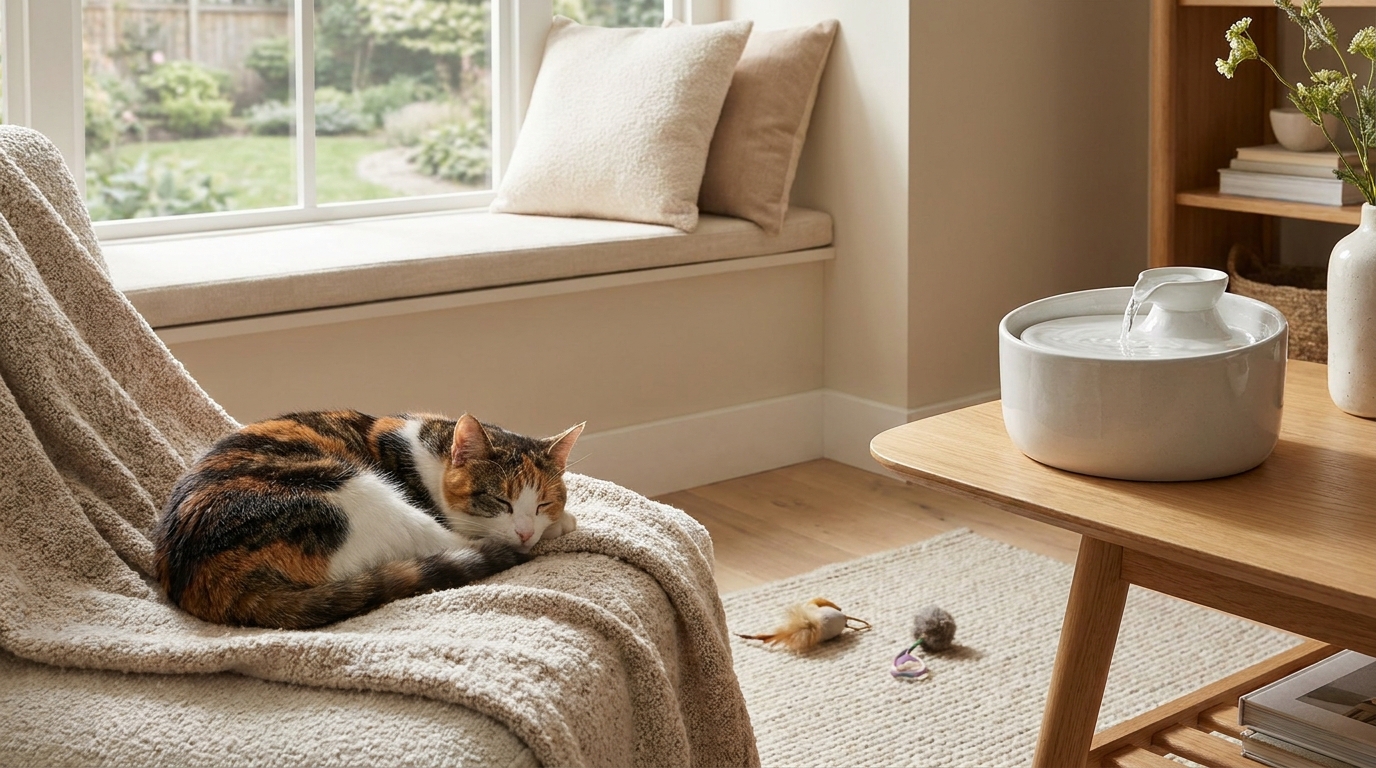
Frequent small pees, pink urine or accidents after a change at home can mean stress cystitis. Which signs are an emergency, and what helps?
Quick answer: Any cat straining with little or no urine, and any male cat peeing often in small amounts, needs an emergency vet now. A female cat that still pees without straining or crying, and eats and acts normally, but goes often, in small amounts or with blood, may have stress cystitis (feline idiopathic cystitis, or FIC) and needs a vet today. FIC is diagnosed by ruling out stones and infection, so a urine test is needed.
This article is general information, not a diagnosis. If you think your pet is in danger, go to the nearest emergency animal hospital.
What is stress cystitis in cats?
Stress cystitis, or feline idiopathic cystitis (FIC), is painful bladder inflammation diagnosed when tests find no stones, infection or other cause, and the Cornell Feline Health Center calls it the most common diagnosis in cats with lower urinary tract signs. "Idiopathic" means the cause is unknown: the Merck Veterinary Manual says the bladder itself, stress and altered nerve and hormone signaling are all implicated.
Both male and female cats get FIC, Merck notes, and International Cat Care says it tends to start in young adult cats. From RexVet's study of its video visits, not only cat visits: After skin, urinary health was the most-selected specific concern, named in 14% of RexVet visits.
Is stress cystitis an emergency?
Any cat straining with little or no urine needs an emergency vet now, and so does a male cat peeing often in small amounts; a female cat that is still passing urine and acting normally needs a vet today.
| What you see | How soon |
|---|---|
| Straining, little or no urine | ER now |
| Unsure if peeing at all | ER now |
| Urinary signs plus crying, vomiting or hiding | ER now |
| Male vomits, litter change | ER now |
| Male licking genitals a lot | ER now |
| Many trips, small pees | Male: ER now; others: vet today |
| Pink or bloody urine | Male: ER now; others: vet today |
| No urine in 24 hours | Male: ER now; others: vet today |
| Peeing outside box, normal clumps | Vet today |
"Others: vet today" applies only to a cat that is not straining and is eating and acting normally; if no clinic can see it today, go to an ER. The Merck Veterinary Manual lists lethargy, loss of appetite, reluctance to move and a painful belly as signs of a blockage, so a cat with urinary signs that is very quiet, not eating, reluctant to move or has a swollen or painful belly goes to an ER now, and so does a previously blocked cat that strains again.
International Cat Care says a cat with FIC may become blocked by muscle spasm or a urethral plug, mainly in males, because their urethras are longer and narrower. The Cornell Feline Health Center calls urethral obstruction an absolute emergency and says death may follow complete obstruction in less than 24 to 48 hours, so go now; do not wait overnight to see if it passes. Cornell says males are at greater risk of a blockage than females, but females can block too.
The Merck Veterinary Manual says owners might mistake a blockage for constipation, so give a straining cat no laxative or hairball remedy.
What does a cystitis flare look like?
The common signs of a cystitis flare in a cat are frequent trips to the litter box, small clumps, pink or bloody urine, crying while peeing, licking the genitals and peeing outside the box, according to the Cornell Feline Health Center and International Cat Care. These signs overlap with a blockage: a male cat with frequent trips, small clumps, pink urine or genital licking, or any cat straining, crying in the box or passing little or no urine, needs an emergency vet now.
International Cat Care adds that blood may show only on a vet's urine test, and that some cats overgroom the belly or genitals, lash out or turn irritable.
To help the veterinarian, count trips, photograph clumps and list recent changes, but never delay an emergency trip to do it. Clumps bigger than usual can point to a different problem, such as kidney disease, an overactive thyroid or diabetes (see an older cat drinking a lot of water). Pink clumps that are not on a stool may be bloody urine; the guide to blood in cat stool explains how to tell.
What triggers a stress cystitis flare?
Stress is an important factor in feline idiopathic cystitis: the Cornell Feline Health Center names changes in the environment, the feeding schedule and the number of animals in the home, and International Cat Care calls conflict with another cat the single most common source of stress in cats with FIC.
International Cat Care also lists overcrowding, changes to the people in the house, cats seen outside and the owner's own stress.
The AAFP (now the FelineVMA) and ISFM house-soiling guidelines (2014) say excess weight, low activity, a multi-cat home and indoor housing may raise the risk. A 2022 review in Frontiers in Veterinary Science says many studies found cats with FIC more likely to eat dry food and drink less water, and that male cats have a higher risk.
| Trigger | Why it matters | Try this |
|---|---|---|
| Guests | Noise, strangers | Safe room |
| Travel or boarding | New places | Carrier practice |
| Moved litter box | Lost routine | Keep its spot |
| New pet | Tension | Slow intro |
| Cat conflict | Top stressor | Own resources |
| Sudden diet change | Can trigger | Change slowly |
| Dirty box | Avoidance | Scoop daily |
| Drinks little | Strong urine | Fresh water |
Is stress cystitis the same as a UTI?
Stress cystitis is not a bladder infection (UTI): the Merck Veterinary Manual says urinary signs in a young cat usually come from a noninfectious disease, so a vet needs a urine test and culture to tell infection from FIC.
International Cat Care says cats with FIC do not have a bacterial infection and should not be given antibiotics, and that UTIs can cause similar signs but are far less common in cats. Merck says cats 10 or older, and female cats, are at higher risk of infection. Never give leftover antibiotics: they are used only after a urine test shows infection, chosen by the vet who examined your cat.
How long does a cystitis flare last?
International Cat Care says FIC signs often ease on their own over 5 to 10 days and often come back, but any cat with new urinary signs needs a vet, and a cat straining with little or no urine needs an emergency vet now.
That range is not a waiting period: International Cat Care says to contact a vet as soon as signs start, because only testing rules out stones, infection or a blockage. The AAFP and ISFM guidelines say FIC may settle by itself, wax and wane, or become chronic.
What helps a cat with stress cystitis at home?
After a vet rules out a blockage, more water, a calm routine, a clean litter box in a quiet spot and a safe place to hide help a cat with stress cystitis: International Cat Care says most cats with FIC improve significantly with more water and a richer home environment.
The AAFP and ISFM guidelines say several home changes made together have been documented to significantly decrease clinical signs:
- Boxes: the Cornell Feline Health Center advises one more litter box than the number of cats, in quiet, safe areas.
- Litter and cleaning: the house-soiling guidelines advise fine, unscented clumping litter, removing waste at least once a day, and washing boxes with soap and hot water, never strong chemicals or ammonia-based products.
- Safe places: the Merck Veterinary Manual advises a safe retreat, such as a perch or enclosure where a cat can hide from children, other pets or strange smells, plus play with toys and full access to its own food, water and resting spots.
- Water, no punishment: Merck says plenty of fresh, clean water makes urine less concentrated, and it advises never punishing a cat for peeing outside the box.
Never give a human pain reliever: the ASPCA says acetaminophen can be fatal to cats because it changes their red blood cells so they cannot carry oxygen. If your cat swallowed one, go to an emergency vet now and call ASPCA Animal Poison Control at (888) 426-4435 (a consultation fee may apply) or the Pet Poison Helpline at (855) 764-7661 (per-incident fee) on the way. Never give cranberry, vinegar or supplements in place of a vet, squeeze your cat's belly or try to empty its bladder by hand, or limit water to cut down on accidents.
What will a vet do for a cat with cystitis?
A vet will examine a cat with urinary signs and run a urinalysis first, then often a urine culture, blood work, X-rays or ultrasound to rule out stones, infection and other causes, the Cornell Feline Health Center says.
The physical exam is also how the vet checks for a blocked bladder. The Merck Veterinary Manual lists treatment as stress and litter-box management, attention to tension between cats, diet changes and pain relief from a vet, and International Cat Care says no medication specifically treats FIC, so a combined plan matters most.
A holiday plan for a cat prone to cystitis
A cat prone to stress cystitis does best through the holidays with a quiet room set up before guests arrive (litter, water, food and a hiding spot), the same feeding and play times, and its litter box left exactly where it is.
- Guests: open the safe room a few days before Thanksgiving or Christmas.
- Travel and boarding: the AAFP and ISFM Environmental Needs Guidelines describe a carrier as a transportable safe place; add your cat's own bedding. The guide to cat travel anxiety covers carrier practice.
- New Year's Eve: plan the safe room ahead, as the guide to a cat scared of fireworks explains.
- Past flares: plan with a vet before the change, never change food during a flare, and watch the litter box closely for several days afterward, calling a vet at the first urinary sign.
A clinic closed for the holiday does not change the rule: a cat straining with little or no urine goes to an emergency hospital now (see what to do when your vet is closed).
When a video visit helps and when it does not
Any cat straining with little or no urine, and any male cat peeing often in small amounts or with pink urine, needs an emergency vet now, not a video call; a female cat still passing urine without straining, or any cat passing normal-size clumps, that is eating and acting like itself is where a video visit helps.
RexVet, a nonprofit online vet service, serves pets located in Florida, New York and Virginia by video visit. From the same visit study: Eye problems were the top specific concern in RexVet cat visits (17%), ahead of urinary health and breathing problems.
A $64.99 live video visit with a licensed RexVet vet, a veterinarian licensed in your pet's state, fits these cases during open live slots, about 8 AM to 11 PM ET:
- a female cat peeing more often or with pink urine that is still passing urine, is not straining, crying, vomiting or hiding, and is eating (it still needs a urine test at a clinic today);
- any cat passing normal-size clumps that has started peeing outside the box and is otherwise well;
- a cat with past flares that is well now, to plan ahead of guests, travel, a move or New Year's Eve. A video visit is not a refill of the medicine from the last flare; the veterinarian decides what is appropriate and legal in your pet's state.
If your cat fits one of these cases, book a live video visit. On camera, the veterinarian can watch your cat at the litter box, look at clump photos and the box setup, go through triggers at home, build a water, litter-box and safe-room plan, and say whether an in-person urine test or exam is needed and how soon.
A video visit cannot rule out a blocked bladder; that takes a hands-on physical exam, so if you are unsure whether a cat is passing urine, go to an emergency vet now. Urine tests, X-rays and ultrasound need a clinic, and FIC cannot be diagnosed on video.
A video visit does not fit, and an emergency vet is needed now, for any cat straining with little or no urine; a male cat with repeated trips, small clumps or spots, pink urine, crying in the box, genital licking, vomiting with a litter-box change or no urine in 24 hours; any cat with urinary signs that is crying, vomiting, very quiet, hiding or not eating; and a previously blocked cat that strains again. Any other cat with no urine in 24 hours that is not straining and is eating and acting normally needs an in-person vet the same day.
No prescription is promised; the veterinarian decides whether any medicine is appropriate. No drug is FDA-approved for FIC, so medicines for it are used extralabel. Extralabel or human-labeled use needs a veterinarian-client-patient relationship that, under federal rules (21 CFR 530.3), cannot be formed by video alone. In Florida, a video-only prescription is limited to FDA-approved animal drugs used as labeled, for up to 14 days, with no renewal without an in-person exam; human-labeled drugs and controlled substances need an in-person exam. Virginia lets the state exam be electronic, but that federal rule still applies; New York's rules are unsettled. RexVet is not a pharmacy; a pharmacy transfer fee applies when RexVet sends a prescription to your pharmacy.
Need an Expert Opinion on This Topic?
Book a video visit with a licensed vet, evenings and weekends included
See open timesFrequently Asked Questions
My female cat keeps going in and out of the litter box but only pees a little. Is it an emergency?
Yes, if your cat strains with little or no urine or you cannot tell: go to an emergency vet now, because females can block too. A female cat passing small clumps without straining or crying, and eating and acting normally, needs a vet today for a urine test. A male cat making the same trips needs an emergency vet now.
Can stress really make my cat pee blood?
Yes. International Cat Care says a stressful event can trigger an FIC flare, and Cornell says cats with FIC often have blood in their urine. Stones and infection look the same, so a urine test is needed. A female cat with pink urine that is still peeing without straining or crying, and is eating and acting normally, needs a vet today; a male cat with bloody urine, or any cat straining with little or no urine, needs an emergency vet now.
Can a male cat with cystitis get blocked?
Yes. A male cat that strains, makes repeated trips with small pees, passes no urine, has pink urine, cries in the box, licks his genitals a lot or vomits with any litter-box change needs an emergency vet now. The Merck Veterinary Manual says a blockage may occur in male cats because of their longer, narrower urethras and that it is a medical emergency, so do not wait overnight.
Can stress cystitis in cats be treated at home?
Partly. Home changes can ease flares, but a cat with new urinary signs needs a vet first, and a straining cat needs an ER now. Pain relief comes only from a vet: never give a human pain reliever or leftover antibiotics.
Is cystitis in cats contagious to my other cat?
No, not as veterinary sources describe it: International Cat Care says cats with FIC do not have a bacterial infection. Another cat can add stress, so give each cat its own food, water, litter box and resting spot.
Why does my cat pee in the sink or bathtub?
It can be a sign of bladder pain, not spite, so call a vet today. Cornell and International Cat Care list peeing in unusual places among lower urinary signs. A male cat passing only small clumps or spots, or any cat straining, needs an emergency vet now. Never punish it.
Will my cat need a special diet for cystitis?
Maybe; that is the veterinarian's decision, not a switch to make at home during a flare. Cornell says diets made for urinary health may lower the chance of a blockage in cats with FIC, and International Cat Care says to follow the veterinary team's diet advice and change food gradually.
Can an online vet help with cat cystitis in Florida, New York or Virginia?
Partly. A video visit can help a female cat still passing urine without straining, or any cat passing normal-size clumps, but it cannot diagnose FIC or rule out a blockage. For a cat located in Florida, New York or Virginia, a licensed RexVet vet can review the signs, litter-box video and home setup, and say which in-person tests are needed; urine tests, X-rays and ultrasound need a clinic. Any straining cat, and any male cat peeing often in small amounts or with pink urine, needs an emergency vet now. No prescription is promised: Florida limits video-only prescriptions to FDA-approved animal drugs used as labeled, for up to 14 days, with no renewal without an in-person exam; Virginia lets the exam be electronic, but federal rules (21 CFR 530.3) still tie extralabel and human-drug use to an in-person exam; New York's rules are unsettled.
FAQs
My female cat keeps going in and out of the litter box but only pees a little. Is it an emergency?
Yes, if your cat strains with little or no urine or you cannot tell: go to an emergency vet now, because females can block too. A female cat passing small clumps without straining or crying, and eating and acting normally, needs a vet today for a urine test. A male cat making the same trips needs an emergency vet now.
Can stress really make my cat pee blood?
Yes. International Cat Care says a stressful event can trigger an FIC flare, and Cornell says cats with FIC often have blood in their urine. Stones and infection look the same, so a urine test is needed. A female cat with pink urine that is still peeing without straining or crying, and is eating and acting normally, needs a vet today; a male cat with bloody urine, or any cat straining with little or no urine, needs an emergency vet now.
Can a male cat with cystitis get blocked?
Yes. A male cat that strains, makes repeated trips with small pees, passes no urine, has pink urine, cries in the box, licks his genitals a lot or vomits with any litter-box change needs an emergency vet now. The Merck Veterinary Manual says a blockage may occur in male cats because of their longer, narrower urethras and that it is a medical emergency, so do not wait overnight.
Can stress cystitis in cats be treated at home?
Partly. Home changes can ease flares, but a cat with new urinary signs needs a vet first, and a straining cat needs an ER now. Pain relief comes only from a vet: never give a human pain reliever or leftover antibiotics.
Is cystitis in cats contagious to my other cat?
No, not as veterinary sources describe it: International Cat Care says cats with FIC do not have a bacterial infection. Another cat can add stress, so give each cat its own food, water, litter box and resting spot.
Why does my cat pee in the sink or bathtub?
It can be a sign of bladder pain, not spite, so call a vet today. Cornell and International Cat Care list peeing in unusual places among lower urinary signs. A male cat passing only small clumps or spots, or any cat straining, needs an emergency vet now. Never punish it.
Will my cat need a special diet for cystitis?
Maybe; that is the veterinarian's decision, not a switch to make at home during a flare. Cornell says diets made for urinary health may lower the chance of a blockage in cats with FIC, and International Cat Care says to follow the veterinary team's diet advice and change food gradually.
Can an online vet help with cat cystitis in Florida, New York or Virginia?
Partly. A video visit can help a female cat still passing urine without straining, or any cat passing normal-size clumps, but it cannot diagnose FIC or rule out a blockage. For a cat located in Florida, New York or Virginia, a licensed RexVet vet can review the signs, litter-box video and home setup, and say which in-person tests are needed; urine tests, X-rays and ultrasound need a clinic. Any straining cat, and any male cat peeing often in small amounts or with pink urine, needs an emergency vet now. No prescription is promised: Florida limits video-only prescriptions to FDA-approved animal drugs used as labeled, for up to 14 days, with no renewal without an in-person exam; Virginia lets the exam be electronic, but federal rules (21 CFR 530.3) still tie extralabel and human-drug use to an in-person exam; New York's rules are unsettled.
Medically Reviewed
Reviewed by Dr. Tiffany Delacruz, DVM — licensed veterinarian and CEO of RexVet. Last reviewed November 6, 2026.
Content is for informational purposes and does not replace professional veterinary advice.
Chief Executive Officer · Licensed Veterinarian
Dr. Delacruz is a licensed Doctor of Veterinary Medicine specializing in preventive care and veterinary telehealth. She reviews all health content on RexVet to ensure accuracy and clinical relevance.
Sources & References
- · American Veterinary Medical Association — Telehealth Guidelines
- · AVMA — Pet Care Resources
- · U.S. FDA — Animal & Veterinary