
Cat Keeps Licking Its Lips? Nausea, Mouth Pain or String
By RexVet Team | Reviewed by Dr. Tiffany Delacruz, DVM
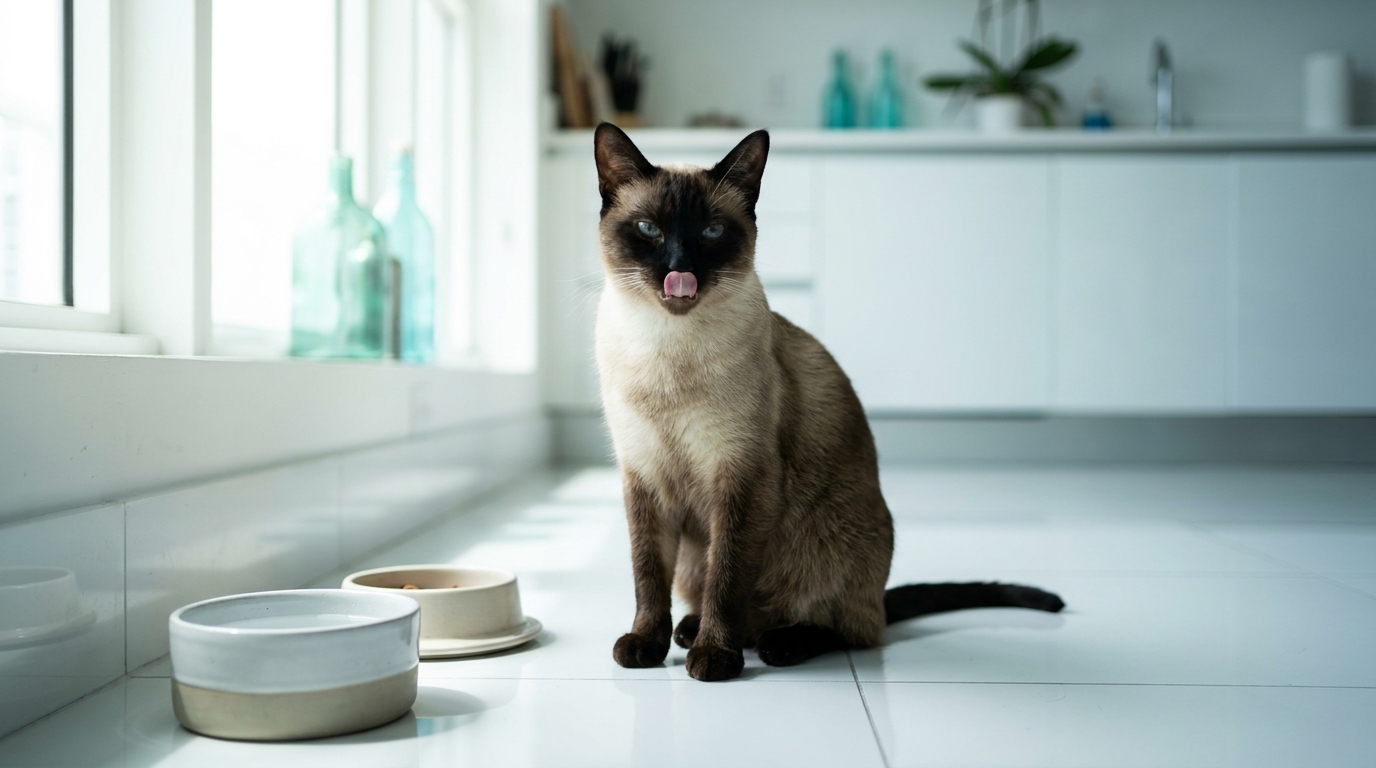
Cat keeps licking its lips? It's often nausea or mouth pain. Check under the tongue for string, and watch for vomiting or skipped meals.
Go to an emergency vet now if you see string or thread under your cat's tongue or hanging from the mouth (do not pull it), or if your cat retches nonstop, has trouble breathing, collapses, or strains to pee with little or nothing coming out.
Cat keeps licking its lips: what it usually means
A cat that licks or smacks its lips over and over is telling you something feels off. One possible reason is nausea.
PetMD's guide to nausea in cats lists these signs of nausea, among others:
- Licking or smacking their lips
- Retching without throwing up
- Not eating as much or at all
The same guide adds a fair warning: "Unfortunately, nausea is a vague clinical sign that can be caused by many medical issues ranging from mild to severe." In other words, lip licking tells you that something is bothering your cat, but not what it is or how serious it is. That is why the other things you see matter so much: whether your cat is still eating, whether there is vomiting, and whether there is anything in the mouth that should not be there.
String can hide under the tongue, so a careful look inside the mouth is part of figuring it out. We walk through that below, right after the emergency signs.
Emergency signs: string comes first
Before anything else, rule out string. PetMD's page on cats that have eaten string describes exactly the behavior you may be watching: "A cat may continually lick their lips or seem to be trying to get something out of their mouth."
If you can see string, thread, yarn, ribbon or dental floss under the tongue or hanging from your cat's mouth, PetMD is clear: "Don't pull the string in your cat's mouth." It explains why: "Pulling the loose end of the string can cause serious damage to their organs." And it tells you what to do instead: "Bring them to a vet or emergency clinic immediately."
Go to an in-person emergency vet now, not later today and not after a video call, if your cat has any of these:
- String or thread under the tongue or hanging from the mouth. Leave it where it is.
- Retching again and again, with or without bringing anything up.
- Trouble breathing.
- Collapse, or being too weak to stand.
- Straining in the litter box with little or nothing coming out. Read why a male cat straining to pee is an emergency.
PetMD's list of nausea causes also includes "Toxin ingestion (such as pesticides, ethylene glycol, certain plants)." If you think your cat chewed a plant or got into a pesticide, do not wait to see if the licking settles. Treat it as a possible poisoning and call an emergency vet or a poison line right away: ASPCA Animal Poison Control at (888) 426-4435 or Pet Poison Helpline at (855) 764-7661. Both answer 24/7, and a fee may apply.
If you are not sure whether what you are seeing counts as an emergency, our practical pet emergency checklist walks through the signs that should send you straight to an ER.
How to look in your cat's mouth safely
If your cat is breathing normally, alert and not retching, a quick, gentle look in the mouth can tell you a lot. Keep it short and calm.
- Get good light. A phone flashlight works well. Dim light makes it easy to miss a thread or a red patch of gum.
- Ask a helper. One person holds the cat gently against their body, or wraps the cat loosely in a towel with only the head out. The other person does the looking.
- Lift the lip. Gently raise the upper lip on each side and look at the gums and teeth. Note any redness, swelling or bleeding at the gum line, and any tooth that looks broken or chipped.
- Look under the tongue. Look slowly, because a thin thread can be easy to miss.
If you see string or thread, do not pull it. PetMD warns that pulling it can cause serious damage to their organs. Go to an emergency vet now.
Stop if your cat fights or tries to bite. A frightened cat can bite hard, and no mouth check is worth a bite wound. Your veterinarian can do a fuller exam.
If your look turns up red gums, a bad smell or a damaged tooth, our guide to cat dental warning signs explains what to watch next. And if your cat started drooling and licking right after biting into something, such as a glow stick, see why the drooling after a glow stick bite looks so scary.
Common causes of nausea in cats
When there is no string and the mouth looks normal, nausea from the stomach or gut is the next thing to think about. PetMD's list of common causes of nausea in cats includes:
- Switching to a new food or new treats too fast
- Eating human foods that can cause belly upset
- Hairballs
- Constipation
- Swallowing a non-food item that can get stuck in the gastrointestinal tract
Some of these are mild. Others are not. A swallowed object, and string above all, can need emergency care. That is why the string check comes first and why missing toys or pieces of toys are worth thinking about.
If your cat is also throwing up, our guide to why a cat vomits and which signs are urgent goes deeper. If drooling is the bigger worry, read our cat drooling guide. PetMD lists drooling as a sign of nausea too, so if you see cat drooling and licking lips together, it is worth reading both.
How fast to act
Timing depends on what else is going on. PetMD's nausea guide says it's "extremely important to bring your cat to a veterinarian as soon as possible" if you notice signs of nausea and:
- The signs do not resolve within 24 hours
- Your cat starts vomiting
- Your cat has not eaten for 24 hours or more
For milder cases, where your cat is still eating and acting alert, PetMD says: "Your cat should be seen within 48 hours." That is a window to get an appointment, not a reason to wait and hope the licking stops.
And none of these time frames apply to the emergency signs above. String in the mouth, nonstop retching, trouble breathing, collapse or straining to pee means an emergency vet now.
What to note before the visit
A few simple notes make any visit, in person or by video, more useful. Jot these down on your phone:
- When the licking started, and whether it happens after meals, after grooming or at random.
- Any food or treat change, including new treats, a new bag of the usual food, or table scraps.
- Anything missing from the toy basket. PetMD notes that your veterinarian will ask "if you've noticed any missing toys or pieces of toys." Look for missing string toys, hair ties, ribbon or thread too. If something stringy is missing and your cat is licking, retching or not eating, that is an emergency visit now, not a note for later.
- Litter-box changes, such as fewer stools, hard stools, diarrhea or changes in peeing.
- Appetite and energy, including the last time your cat ate a normal meal.
- A short video of the licking. The licking may stop by the time you are talking to a vet, so a clip lets the vet see what you saw.
What a RexVet online vet can and cannot do for lip licking
When the emergency signs are ruled out and your cat is stable, a video visit can help you sort out what the lip licking means and what to do next. RexVet's veterinarians are licensed in Florida, New York and Virginia, and they are available 24/7, including nights, weekends and holidays.
During a video visit, a veterinarian can:
- Watch the licking and swallowing on video, live or from a clip you recorded
- Guide you through a careful look in your cat's mouth
- Go through your cat's food, treat and litter-box history
- Help you decide between going to an ER now, booking in-person tests, or following a home plan
A video visit cannot include bloodwork, X-rays or ultrasound. That matters here. A suspected swallowed object or ongoing vomiting may need an in-person exam and imaging, and the vet will tell you if that is the case. Our guide on how to upload pet photos and videos for an online vet review shows how to share your clips.
If the veterinarian decides medication is appropriate, they can prescribe where state rules allow. In Florida, a veterinarian who has seen your pet only by video may prescribe only FDA-approved animal drugs used as labeled, for up to 14 days (1 month for flea-and-tick-only products), and cannot renew without an in-person exam.
If your cat is stable and you are in Florida, New York or Virginia, you can book a RexVet video visit for $64.99, any time, 24/7.
When to be seen in person in Florida, New York or Virginia
Trouble breathing, collapse, nonstop retching or string in the mouth means an emergency vet now, not a video visit. Beyond those emergencies, plan an in-person exam if you notice:
- Lip licking or other nausea signs that have not settled within 24 hours, which PetMD says needs a vet as soon as possible
- Vomiting
- Not eating
- Weight loss
- Anything found under the tongue or stuck in the mouth
If you use telehealth in Florida, the law expects the vet to point you toward hands-on care too. Under Florida Statutes 474.2021, a telehealth veterinarian must give you "the contact information for at least one physical veterinary clinic in the vicinity of the patient's location."
To learn how online vet care works where you live, see our pages for Florida, New York and Virginia.
Frequently Asked Questions
Is lip licking a sign of nausea in cats?
It can be. PetMD lists licking or smacking the lips as a sign of nausea in cats, along with retching without throwing up and eating less or not at all. PetMD's string page adds that a cat that has eaten string "may continually lick their lips," so check under the tongue for string.
Why is my cat licking its lips and swallowing?
PetMD lists lip licking and drooling among the signs of nausea in cats, and its string page notes that a cat may "seem to be trying to get something out of their mouth." So cat licking lips and swallowing can point to nausea or to something stuck in the mouth. If you see string or anything stuck, or your cat is drooling and won't eat, get your cat seen promptly. If it is string, go to an emergency vet now and do not pull it.
Can I give my cat an antacid?
No. Do not give your cat an antacid or any other human medicine. Ask a veterinarian about what is safe for your cat.
My cat is licking its lips but eating normally: should I worry?
If your cat is still eating and alert, PetMD says: "Your cat should be seen within 48 hours." If the signs have not settled within 24 hours, your cat starts vomiting, or your cat has not eaten for 24 hours or more, PetMD says to see a veterinarian as soon as possible. Any string, nonstop retching, trouble breathing or collapse means an emergency vet now.
What if I see string under my cat's tongue?
Do not pull it. PetMD warns that pulling the loose end can cause serious damage to their organs. Leave it in place and go to an emergency vet now.
Once string and the other emergency signs are ruled out, you don't have to guess what the lip smacking means on your own. RexVet is a non-profit, and RexVet's veterinarians are licensed in Florida, New York and Virginia and are available 24/7. If you are in one of those states, you can book a RexVet video visit for $64.99 and show the vet what your cat is doing.
FAQs
Is lip licking a sign of nausea in cats?
It can be. PetMD lists licking or smacking the lips as a sign of nausea in cats, along with retching without throwing up and eating less or not at all. PetMD's string page adds that a cat that has eaten string "may continually lick their lips," so check under the tongue for string.
Why is my cat licking its lips and swallowing?
PetMD lists lip licking and drooling among the signs of nausea in cats, and its string page notes that a cat may "seem to be trying to get something out of their mouth." So cat licking lips and swallowing can point to nausea or to something stuck in the mouth. If you see string or anything stuck, or your cat is drooling and won't eat, get your cat seen promptly. If it is string, go to an emergency vet now and do not pull it.
Can I give my cat an antacid?
No. Do not give your cat an antacid or any other human medicine. Ask a veterinarian about what is safe for your cat.
My cat is licking its lips but eating normally: should I worry?
If your cat is still eating and alert, PetMD says: "Your cat should be seen within 48 hours." If the signs have not settled within 24 hours, your cat starts vomiting, or your cat has not eaten for 24 hours or more, PetMD says to see a veterinarian as soon as possible. Any string, nonstop retching, trouble breathing or collapse means an emergency vet now.
What if I see string under my cat's tongue?
Do not pull it. PetMD warns that pulling the loose end can cause serious damage to their organs. Leave it in place and go to an emergency vet now.
Once string and the other emergency signs are ruled out, you don't have to guess what the lip smacking means on your own. RexVet is a non-profit, and RexVet's veterinarians are licensed in Florida, New York and Virginia and are available 24/7. If you are in one of those states, you can book a RexVet video visit for $64.99 and show the vet what your cat is doing.
Medically Reviewed
Reviewed by Dr. Tiffany Delacruz, DVM — licensed veterinarian and CEO of RexVet. Last reviewed September 26, 2026.
Content is for informational purposes and does not replace professional veterinary advice.
Chief Executive Officer · Licensed Veterinarian
Dr. Delacruz is a licensed Doctor of Veterinary Medicine specializing in preventive care and veterinary telehealth. She reviews all health content on RexVet to ensure accuracy and clinical relevance.
Sources & References
- · American Veterinary Medical Association — Telehealth Guidelines
- · AVMA — Pet Care Resources
- · U.S. FDA — Animal & Veterinary
Need an Expert Opinion on This Topic?
Connect with a certified vet via video call in minutes
Talk to Vet Now