
My Cat Bit a Glow Stick: Why the Drooling Looks So Scary
By RexVet Team | Reviewed by Dr. Tiffany Delacruz, DVM
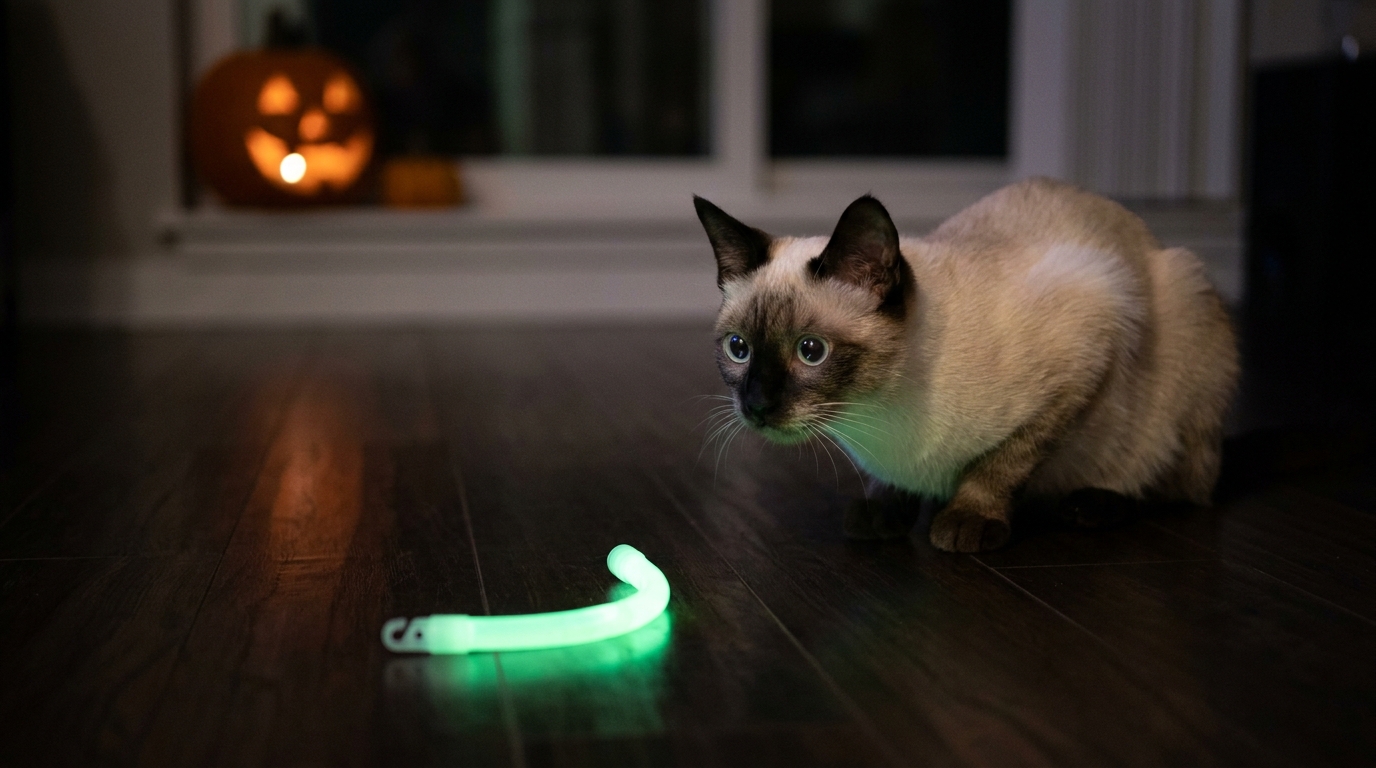
My cat bit a glow stick and is drooling? The liquid is bitter but rarely dangerous: wipe the mouth, offer tuna water or broth, and check the eyes.
Go to an emergency vet now if your cat is struggling to breathe, collapses, may have swallowed pieces of the plastic casing or a glass vial, or got the liquid in an eye and keeps squinting; redness of the eyes, continued drooling or not eating needs a veterinarian.
A cat that has just bitten into a glow stick or glow necklace can look frightening. Suddenly there is drool or foam, frantic pawing at the mouth, racing around the room or hiding under the bed. It is easy to assume your cat has been poisoned.
The reassuring part comes first: the drama is a reaction to a very bitter taste, and glow sticks are rarely deadly. Below: why it happens, what to do now, and when your cat needs to be seen in person.
What Happens When My Cat Bit a Glow Stick
Glow sticks, necklaces and bracelets are filled with what Vetstreet describes as "an oily liquid known as dibutyl phthalate," often shortened to DBP. In that Vetstreet article, a veterinarian from the ASPCA Animal Poison Control Center explains that "in the quantities contained in glow sticks, this substance is more of an irritant than a toxin."
The real problem is the taste. According to the same source, the liquid "typically has a very bitter taste," and pets that bite into it "begin to drool uncontrollably."
PetMD lists the signs you are most likely to see after a cat bites glow jewelry:
- Drooling
- Pawing at the mouth
- Agitation or irritation
- Vomiting, which is rare
PetMD sums it up this way: "Other than the reaction to the bad taste, glow sticks and glow jewelry are generally not toxic." Pet Poison Helpline agrees: "While rarely deadly, just one bite into glow sticks can cause your cat to drool profusely."
"Generally not toxic" is not the same as harmless, though. The liquid can irritate the eyes, pieces of the casing can be swallowed, and a cat that keeps drooling or stops eating needs to be seen. Those exceptions come next.
Emergency Signs That Need an In-Person Vet
The warning at the top covers the go-now signs. Here is why each one matters.
Not every glow stick is just plastic and liquid. Vetstreet notes that "Some of the larger glow sticks can also contain a small glass vial." If you think your cat swallowed any piece of the plastic casing or a glass vial, go to an in-person or emergency vet now rather than waiting to see.
The other triggers come from Pet Poison Helpline: "If you see signs of redness to the eyes, squinting, continued drooling, or not eating, a trip to the veterinarian may be necessary." Any of those signs means your cat needs a veterinarian, not more waiting at home.
If you are not sure what your cat got into, you can call ASPCA Animal Poison Control at (888) 426-4435 or Pet Poison Helpline at (855) 764-7661. Both answer around the clock, and a fee may apply. For a wider list of warning signs, keep our practical pet emergency checklist handy.
What to Do Right Now
If none of the emergency signs apply, you can usually handle this at home. Pet Poison Helpline says, "Most of these exposures can be managed at home." Work through these steps calmly:
- Take away every glow item. Pick up the broken stick and any other glow necklaces, bracelets or sticks in the room so your cat cannot bite again. If pieces of the stick seem to be missing, that means an in-person visit.
- Put on gloves. They keep the oily liquid off your hands.
- Wipe the mouth. VCA Animal Hospitals advises that you "use a wet facecloth or towel to remove the DBP from your pet's mouth and tongue." Wipe gently. Do not pry the jaw open or restrain a struggling cat.
- Offer something tasty. Pet Poison Helpline says: "Offer (but do not force) your cat to drink some chicken broth or canned tuna (in water, not oil)." If your cat refuses, leave it.
- Find the liquid on the fur. Check the chin, chest and front paws first. PetMD notes that "Taking your pet into a darkened room can help you locate the chemical," because the spots still glow.
- Wash it off. PetMD recommends "Washing the chemical off of your cat's fur and skin with shampoo and water." If your cat will not tolerate a bath, wipe the glowing spots with a damp cloth instead, rinsing the cloth often.
That last step matters: liquid left on the fur gets licked off during grooming, and the drooling starts all over again.
If the Liquid Got in an Eye
VCA notes that glow stick liquid can cause "irritation of the eyes," along with drooling and stomach upset. The eye is the main reason to have your cat seen.
If your cat will let you, flush the eye gently with plenty of lukewarm water; if it fights you, skip this step. Use water only, with no eye drops, ointment or other product, and then call a veterinarian. Redness or squinting means the eye needs an in-person exam, and a cat that keeps squinting should go to an emergency vet now.
Why Your Cat Is Acting So Wild
The behavior can be just as alarming as the drool. Vetstreet notes that a normally calm cat "may become agitated to the point of aggression or may even vomit," and that "Some animals may try to run away or hide." This is a reaction to the taste, not a sign your cat has turned on you.
Here is what helps:
- Once the mouth has been wiped, let your cat settle in a quiet, dim room.
- Do not chase a cat that has run off to hide, and do not hold it any longer than you need to for cleaning.
- Put down fresh water and a small dish of broth or tuna water, and give your cat time.
PetMD offers some reassurance: "Generally, no treatment is needed for cats that ingest glow jewelry." That does not override the emergency signs above.
Dogs Bite Glow Sticks Too
Dogs chew glow sticks too, and the liquid inside is the same bitter DBP. VCA lists "gagging, drooling and gastrointestinal upset" as the signs to expect, along with eye irritation if the liquid splashes.
First aid is the same as for a cat: take the stick away, wipe the mouth and tongue with a wet cloth, and find and wash off any liquid on the coat.
VCA's advice is clear: "If your pet ingested the whole glow stick or is very distressed from the DBP, consult your veterinarian." A dog that swallowed a stick or pieces of one should be seen in person.
Halloween Night in Florida, New York and Virginia
Glow necklaces and bracelets tend to come home in pockets and treat bags after trick-or-treating, school events and parties.
- Never put glow necklaces or bracelets on a pet's collar, even for a costume photo.
- Keep glow items off floors, couches and low tables where a cat can bat them around.
- Empty pockets and treat bags before they land on the floor.
- Once a glow stick fades, throw it in a closed bin, not an open wastebasket.
Halloween brings other hazards as well. Our guide to toxic foods for cats covers candy and treats, and our list of common household items toxic to cats covers the rest of the house.
What a RexVet Online Vet Can and Cannot Do
If there are no emergency signs but you want a veterinarian's view, a video visit can help. RexVet is a 501(c)(3) non-profit, and RexVet's veterinarians are licensed in Florida, New York and Virginia.
On a video visit, a veterinarian can:
- Watch your cat's drooling and behavior on camera
- Look at the mouth and eyes while you hold the phone close
- Confirm whether what you are seeing fits a bitter-taste reaction
- Help you work out whether pieces may be missing from the stick, which means an in-person exam
- Help you decide between home care and an in-person exam
A video visit cannot stain the eye to check for injury, cannot X-ray for plastic or glass, and cannot treat a corneal injury. Trouble breathing, collapse, or a swallowed casing or vial means going straight to an emergency vet, not to a video call.
If the veterinarian decides medication is appropriate, they can prescribe where state rules allow. In Florida, a veterinarian who has seen your pet only by video may prescribe only FDA-approved animal drugs used as labeled, for up to 14 days (1 month for flea-and-tick-only products), and cannot renew without an in-person exam.
If your cat's drooling or behavior still has you worried and none of the emergency signs apply, you can book a RexVet video visit. A video visit is $64.99, available 24/7, for pet parents in Florida, New York and Virginia only.
When to Go In Person in Florida, New York or Virginia
Some problems need a hands-on exam. See a veterinarian in person if:
- The eye is red, or your cat is squinting
- The drooling does not stop
- Your cat will not eat
- Your cat may have swallowed pieces of the casing or a glass vial
- Your cat has any trouble breathing, which means an emergency vet right away
Florida law also requires a telehealth veterinarian to provide "the contact information for at least one physical veterinary clinic in the vicinity of the patient's location."
Learn more about online vet care in Florida, New York and Virginia.
Frequently Asked Questions
Are glow sticks poisonous to cats?
Not in the usual sense. Pet Poison Helpline calls them "rarely deadly" and says "Most of these exposures can be managed at home," and Vetstreet describes the liquid as more of an irritant than a toxin in glow-stick amounts. The exceptions are liquid in the eye, a swallowed piece of casing or a glass vial, and drooling that continues or a cat that will not eat, all of which need a veterinarian.
Why is my cat foaming at the mouth after biting a glow stick?
The foaming is usually a reaction to the bitter taste; Vetstreet says pets "begin to drool uncontrollably" after biting into the liquid. Wipe the mouth with a wet cloth and, as Pet Poison Helpline suggests, offer (but do not force) chicken broth or canned tuna in water, not oil. The emergency signs above still apply, so trouble breathing or a swallowed piece means an emergency vet.
How long will my cat drool after biting a glow stick?
There is no set time. Rinsing the mouth with a wet cloth and offering (not forcing) broth or tuna water usually helps it settle; drooling that continues, or a cat that will not eat, needs a veterinarian. Our guide to cat drooling causes explains other reasons a cat may drool.
What if glow stick liquid got in my cat's eye?
Rinse it gently with lukewarm water if your cat allows it, and put nothing else in the eye. Then call a veterinarian: Pet Poison Helpline lists redness of the eyes and squinting among the signs that may call for a trip to the veterinarian, and a cat that keeps squinting should go to an emergency vet now.
Can I give my cat milk after it bit a glow stick?
Broth or tuna water is the better choice. Pet Poison Helpline suggests chicken broth or canned tuna in water, not oil; offer it, but do not force it. If your cat refuses everything, including its normal food, call a veterinarian.
A glow stick bite looks alarming, but it is usually a bitter-taste reaction that settles with gentle cleaning and time. If there are no emergency signs and you would still like a veterinarian's opinion, you can book a video visit now. It is $64.99, available 24/7, for pet parents in Florida, New York and Virginia only.
FAQs
Are glow sticks poisonous to cats?
Not in the usual sense. Pet Poison Helpline calls them "rarely deadly" and says "Most of these exposures can be managed at home," and Vetstreet describes the liquid as more of an irritant than a toxin in glow-stick amounts. The exceptions are liquid in the eye, a swallowed piece of casing or a glass vial, and drooling that continues or a cat that will not eat, all of which need a veterinarian.
Why is my cat foaming at the mouth after biting a glow stick?
The foaming is usually a reaction to the bitter taste; Vetstreet says pets "begin to drool uncontrollably" after biting into the liquid. Wipe the mouth with a wet cloth and, as Pet Poison Helpline suggests, offer (but do not force) chicken broth or canned tuna in water, not oil. The emergency signs above still apply, so trouble breathing or a swallowed piece means an emergency vet.
How long will my cat drool after biting a glow stick?
There is no set time. Rinsing the mouth with a wet cloth and offering (not forcing) broth or tuna water usually helps it settle; drooling that continues, or a cat that will not eat, needs a veterinarian. Our guide to cat drooling causes explains other reasons a cat may drool.
What if glow stick liquid got in my cat's eye?
Rinse it gently with lukewarm water if your cat allows it, and put nothing else in the eye. Then call a veterinarian: Pet Poison Helpline lists redness of the eyes and squinting among the signs that may call for a trip to the veterinarian, and a cat that keeps squinting should go to an emergency vet now.
Can I give my cat milk after it bit a glow stick?
Broth or tuna water is the better choice. Pet Poison Helpline suggests chicken broth or canned tuna in water, not oil; offer it, but do not force it. If your cat refuses everything, including its normal food, call a veterinarian.
A glow stick bite looks alarming, but it is usually a bitter-taste reaction that settles with gentle cleaning and time. If there are no emergency signs and you would still like a veterinarian's opinion, you can book a video visit now. It is $64.99, available 24/7, for pet parents in Florida, New York and Virginia only.
Medically Reviewed
Reviewed by Dr. Tiffany Delacruz, DVM — licensed veterinarian and CEO of RexVet. Last reviewed September 23, 2026.
Content is for informational purposes and does not replace professional veterinary advice.
Chief Executive Officer · Licensed Veterinarian
Dr. Delacruz is a licensed Doctor of Veterinary Medicine specializing in preventive care and veterinary telehealth. She reviews all health content on RexVet to ensure accuracy and clinical relevance.
Sources & References
- · American Veterinary Medical Association — Telehealth Guidelines
- · AVMA — Pet Care Resources
- · U.S. FDA — Animal & Veterinary
Need an Expert Opinion on This Topic?
Connect with a certified vet via video call in minutes
Talk to Vet Now