
Cat Panting? 6 Causes + When It's a Vet Emergency
By RexVet Team | Reviewed by Dr. Tiffany Delacruz, DVM
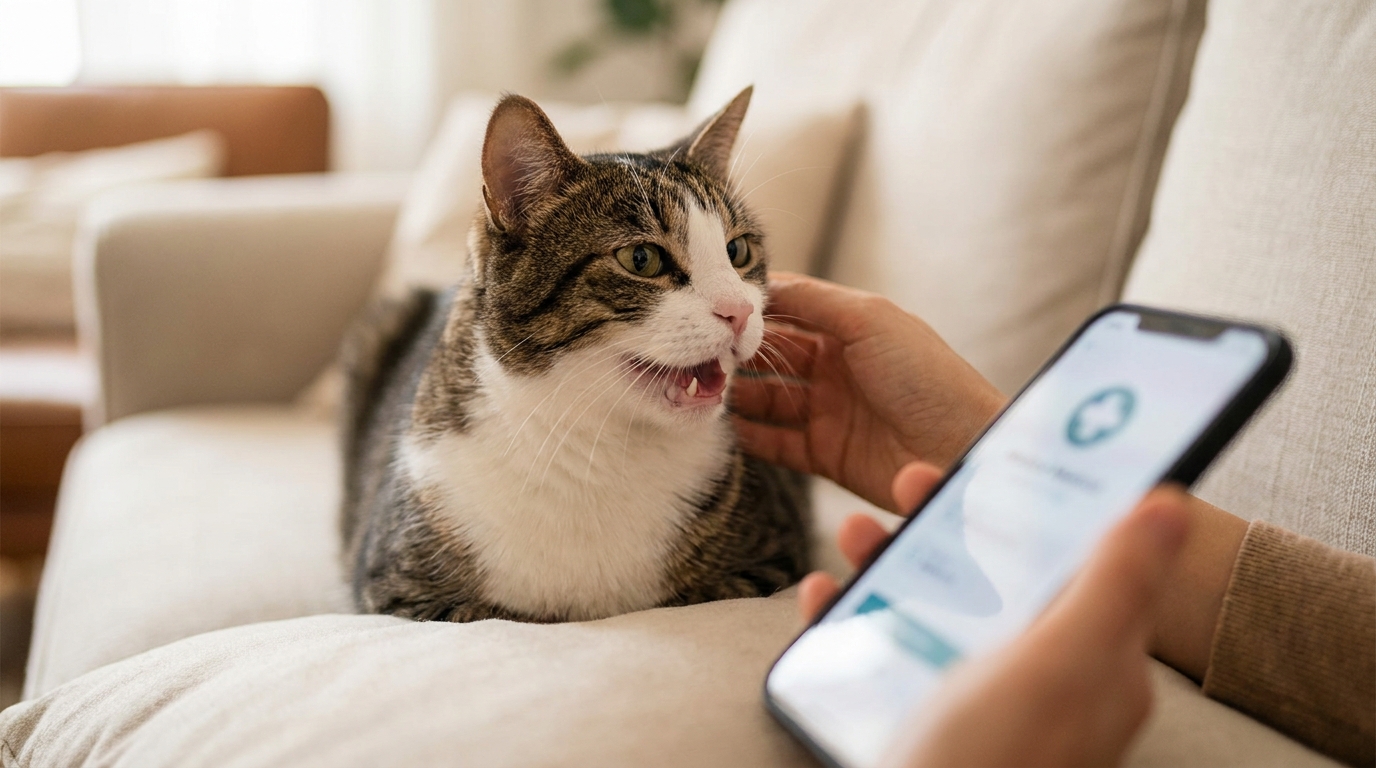
Quick answer: Cats rarely pant. Brief open-mouth breathing straight after hard play, a stressful car ride, or on a hot day can be normal if it settles within a few minutes and the cat then breathes with its mouth closed. Panting is an emergency if it lasts more than a few minutes, happens at rest or overnight, or comes with blue, grey or very pale gums, fast shallow breathing, stretched-out neck and elbows held away from the body, drooling, or hiding. Cats mask respiratory disease until they are critical, so open-mouth breathing at rest means an in-person vet now, not in the morning.
Cat Panting: Why It Happens and When It’s Serious is a common concern for owners who notice their feline friend breathing with an open mouth after play, travel, or a stressful event. While dogs pant to cool down, cats rarely show this behavior unless something is off.
Cat Panting: Why It Happens and When It’s Serious notes that occasional panting after intense exercise, a hot day, or a frightening experience like a car ride is normal and resolves within a few minutes. However, if breathing remains rapid, the cat shows signs of distress, or the gums appear pale or blue, it may signal overheating, pain, anxiety, or a health issue.
Medical conditions that can cause persistent panting include feline asthma, heart disease, heartworm infection, or respiratory infections. Fewer than 10% of cats pant under ordinary circumstances, so any prolonged episode warrants close monitoring and professional advice if symptoms worsen.
For cat owners unsure whether the panting is benign or urgent, a visit with a veterinarian can provide clarity. RexVet offers 24/7 triage for $64.99, helping you decide if home care is sufficient or if an in‑person emergency clinic is needed, all without the stress of a clinic trip.
Is Panting Normal in Cats?
Occasional panting in cats is not typical, but it can happen after intense play, a stressful car ride, or on a hot day. When the episode lasts only a few minutes and the cat returns to normal breathing, it is usually harmless and does not require immediate intervention. This observation matches the guidance found in Cat Panting: Why It Happens and When It’s Serious.
However, panting that continues beyond a few minutes, is accompanied by open‑mouth breathing, pale or blue gums, weakness, or signs of distress may indicate overheating, pain, anxiety, or an underlying condition such as asthma or heart disease. Recognizing these warning signs helps owners decide when to seek further evaluation, as noted in Cat Panting: Why It Happens and When It’s Serious.
If you notice any concerning symptoms, move your cat to a cool, quiet area, offer water, and monitor breathing rate. For quick guidance, a licensed veterinarian can assess the situation via RexVet for $64.99, helping you determine whether home care is sufficient or an in‑person emergency visit is needed.
Common Reasons Cats Pant
Cat Panting: Why It Happens and When to Worry
Understanding Cat Panting: Why It Happens and When It’s Serious is vital for every pet parent. While dogs use panting to regulate temperature, cats typically do not. When you see your cat breathing with an open mouth, it often signals an underlying issue that requires attention. Common triggers include intense physical exertion, extreme heat, or significant emotional distress. However, persistent panting can also point to serious conditions like feline asthma, heart disease, or even heartworm infection.
Because cats are masters at masking illness, even subtle changes in their breathing pattern can be a red flag. If you notice your cat panting after playing or during a car ride, monitor them closely. If the behavior doesn't subside quickly, it is time to take action. Cat Panting: Why It Happens and When It’s Serious serves as a reminder that early intervention is key. If you are ever unsure about your cat's respiratory health, you can connect with a licensed veterinarian through RexVet for just $64.99. This affordable, 24/7 virtual triage helps you determine if your pet needs immediate in-person care or if you can safely manage the situation from home.
Cat Panting vs Cat Coughing
Distinguishing between these two respiratory signs is crucial for your pet's health. While Cat Panting: Why It Happens and When It’s Serious emphasizes that open-mouth breathing is a red flag, coughing often presents as a dry, hacking motion where the cat extends its neck forward, sometimes mistaken for hairball attempts. Panting involves rapid, shallow chest movements without the rhythmic abdominal contraction seen in coughing. Understanding Cat Panting: Why It Happens and When It’s Serious helps you identify if your cat is struggling to oxygenate or merely clearing an airway obstruction.
Feature | Cat Panting | Cat Coughing |
|---|---|---|
Physical Motion | Open-mouth, rapid breaths | Neck extension, hacking |
Primary Indicator | Respiratory distress/overheating | Airway irritation/asthma |
Urgency Level | High | Moderate to High |
If you notice either behavior, do not wait for it to escalate. Our non-profit platform allows you to connect with a licensed veterinarian for $64.99 to determine if your cat needs immediate emergency care or if the issue can be managed at home. Visit RexVet to get professional guidance today.
When Cat Panting May Be Urgent
When evaluating Cat Panting: Why It Happens and When It’s Serious, you must recognize that cats are not built to pant like dogs. While a brief moment of heavy breathing after a chase is often harmless, certain red flags demand immediate attention. If you observe your cat struggling for air, notice a distinct blue or purple tint to their tongue or gums, or see them collapse from exhaustion, these are critical signs of respiratory distress. Such symptoms suggest that your cat is not merely cooling down but is failing to oxygenate their body properly.
Furthermore, persistent open-mouth breathing that continues long after the exertion has stopped is a major warning sign. In the context of Cat Panting: Why It Happens and When It’s Serious, owners should also watch for extreme lethargy or a posture where the cat stretches their neck forward to open their airway. Because cats are experts at hiding pain, these indicators often appear only when the underlying condition has become severe. If you notice these alarming behaviors, do not wait for them to resolve on their own. Connecting with a professional via RexVet for $64.99 allows you to receive expert triage guidance immediately, ensuring your pet gets the right level of care without unnecessary stress.
How an Online Vet Can Triage Panting
When you notice your cat struggling to breathe, an online consultation serves as a vital first step in triage. Understanding Cat Panting: Why It Happens and When It’s Serious allows you to gather the right information before your video call. During a virtual visit, a licensed veterinarian can observe your pet in their natural environment, which often reduces the stress that might otherwise worsen their respiratory state.
Your vet will guide you through a visual assessment, checking for key indicators like the color of their gums, the rate of their chest movements, and their overall posture. This remote evaluation is highly effective for determining if your cat is experiencing a manageable issue or a true medical emergency. By reviewing Cat Panting: Why It Happens and When It’s Serious, you can better prepare for questions regarding recent activities, potential environmental triggers, or changes in behavior. If the situation requires immediate in-person care, our experts will provide clear instructions on what to look for at the clinic. Otherwise, they can offer guidance on home monitoring or necessary follow-up steps, ensuring you receive professional advice without the cost and stress of an unnecessary emergency room trip.
Preparing for a RexVet Virtual Consultation
When preparing for a RexVet virtual consultation, your setup is crucial for an accurate assessment of Cat Panting: Why It Happens and When It’s Serious. To help our vets, choose a well-lit area where your cat is calm, as bright, natural light allows us to better evaluate gum color and respiratory effort. Position your camera to capture the full body, focusing on the chest and abdomen to observe the rhythm of their breathing.
Before the call, keep your cat in a quiet room to minimize stress, which can mask or exacerbate symptoms. Avoid holding your cat tightly, as this may restrict their movement and make it harder to see natural breathing patterns. If your cat is panting, try to record a short, clear video clip from a distance before the session begins. Having this footage ready helps our team understand Cat Panting: Why It Happens and When It’s Serious by providing a baseline of their behavior. By providing a clear, steady view of your pet, you enable our licensed veterinarians to offer the most precise guidance possible, ensuring you receive professional support for your cat's health from the comfort of home.
Managing Chronic Conditions That Cause Panting
For cats living with chronic health issues like feline asthma or congestive heart failure, breathing patterns require vigilant observation. While Cat Panting: Why It Happens and When It’s Serious often focuses on acute episodes, long-term management is equally vital. Cats with diagnosed heart disease may pant because their lungs are struggling to clear fluid, while asthmatic cats might pant during an inflammatory flare-up. Consistent monitoring at home allows you to identify subtle baseline changes before they escalate into a crisis.
Telehealth offers a seamless way to handle these ongoing needs. Through regular virtual check-ins, our licensed veterinarians can review your cat’s respiratory rate, adjust medication dosages , or facilitate refill requests where state rules allow via our integrated pharmacy. This proactive approach ensures your cat remains stable without the stress of frequent, unnecessary trips to a clinic. By utilizing Cat Panting: Why It Happens and When It’s Serious as a guide for when to seek help, you can better manage your pet's chronic condition. If you notice a sudden increase in resting respiratory effort, consult a professional immediately. RexVet provides 24/7 access to expert guidance for just $64.99, helping you maintain your cat’s health effectively and affordably.
When to Choose RexVet for $64.99
When you notice your feline companion struggling to breathe, the uncertainty can be overwhelming. Cat Panting: Why It Happens and When It’s Serious serves as a vital resource for pet parents, but sometimes you need a direct, professional opinion to navigate the situation. If your cat is exhibiting rapid, shallow breaths or open-mouth behavior that does not resolve within a few minutes, you may be facing a situation that requires immediate veterinary guidance.
RexVet provides a bridge between home observation and the stress of an emergency clinic. For a flat fee of $64.99, you can connect with a licensed veterinarian who will help you assess your cat's condition in real-time. This service is specifically designed to help you determine if your pet needs urgent in-person care or if you can safely monitor them at home. By utilizing this affordable triage option, you can avoid the high costs and potential trauma of an unnecessary trip to the hospital. Remember, Cat Panting: Why It Happens and When It’s Serious emphasizes that early professional input is the best way to ensure your cat receives the appropriate level of care during a respiratory event.
When to Choose RexVet for $64.99
Choosing RexVet for a $64.99 virtual triage session is a smart, cost-effective way to navigate the complexities of Cat Panting: Why It Happens and When It’s Serious. Rather than guessing if your pet needs emergency care, our licensed veterinarians provide immediate, professional guidance from the comfort of your home. This service is ideal for owners who want to avoid the high costs and stress of an unnecessary trip to an emergency hospital when the situation might be manageable through home monitoring or medication adjustments.
By selecting this option, you gain access to expert assessment that helps you distinguish between benign post-play panting and symptoms requiring urgent intervention. Our team can help you identify if your cat's breathing patterns align with the warnings in Cat Panting: Why It Happens and When It’s Serious. If our vets determine that your cat requires in-person care, they will provide clear, actionable steps to ensure your pet is safe. Choosing this path ensures you get the right care at the right time, keeping your focus on your cat's health without the burden of excessive clinic fees.
When to Choose RexVet for $64.99
When you notice your feline companion struggling to breathe, the uncertainty can be overwhelming. Cat Panting: Why It Happens and When It’s Serious serves as a vital resource for pet parents, but sometimes you need a direct, professional opinion to navigate the situation. If your cat is exhibiting rapid, shallow breaths or open-mouth behavior that does not resolve within a few minutes, you may be facing a situation that requires immediate veterinary guidance.
RexVet provides a bridge between home observation and the stress of an emergency clinic. For a flat fee of $64.99, you can connect with a licensed veterinarian who will help you assess your cat's condition in real-time. This service is specifically designed to help you determine if your pet needs urgent in-person care or if you can safely monitor them at home. By utilizing this affordable triage option, you can avoid the high costs and potential trauma of an unnecessary trip to the hospital. Remember, Cat Panting: Why It Happens and When It’s Serious emphasizes that early professional input is the best way to ensure your cat receives the appropriate level of care during a respiratory event.
Need an Expert Opinion on This Topic?
Book a video visit with a licensed vet, evenings and weekends included
See open timesFrequently Asked Questions
Why is my cat panting like a dog?
Unlike dogs, cats do not typically pant to regulate their body temperature. If you are wondering about cat panting: why it happens and when it’s serious, the most important thing to know is that it is rarely normal behavior. While a cat might pant briefly after extreme exertion or intense stress, it is often a sign of underlying distress. If your cat is panting like a dog, it is best to observe them closely and consult a professional to rule out respiratory or heart issues.
Is cat panting after playing normal?
Occasional, very brief panting immediately following intense play can occur in some cats, but it should resolve quickly once they stop moving and rest. If the panting lasts for more than a minute or is accompanied by open-mouth breathing, it is not normal. When evaluating cat panting: why it happens and when it’s serious, consider the intensity of the play. If your cat is panting after only light activity, this is a red flag that warrants a virtual consultation with a RexVet professional to discuss potential health concerns.
What does open-mouth breathing mean in cats?
Open-mouth breathing is a significant clinical sign that your cat is struggling to get enough oxygen. This is a primary indicator when assessing cat panting: why it happens and when it’s serious. It often points to severe conditions like feline asthma, heart disease, or respiratory infections. Because this can be life-threatening, you should never wait for it to pass. Use our RexVet service to get immediate guidance from a licensed veterinarian who can help you determine if you need to head to an emergency clinic or if the situation can be stabilized at home.
Should I ask a vet if my cat is breathing fast?
Yes, you should always seek veterinary advice if your cat is breathing fast, especially at rest. A normal respiratory rate for a resting cat is typically under 30 breaths per minute. If you notice your cat breathing fast, it is a key part of understanding cat panting: why it happens and when it’s serious. Because it is difficult to distinguish between simple anxiety and a medical emergency at home, our virtual triage service is the perfect, cost-effective way to get an expert opinion without the stress of an unnecessary trip to the clinic.
How can I tell if my cat's panting is an emergency?
Emergency signs include blue or pale gums, extreme lethargy, collapse, or obvious labored breathing where the cat's sides are heaving. If you see these, seek in-person emergency care immediately. For less obvious symptoms, our cat panting: why it happens and when it’s serious guide suggests using RexVet for $64.99. Our vets can help you assess the situation via video to decide if your cat needs urgent intervention or if you can monitor them safely at home.
FAQs
Why is my cat panting like a dog?
Unlike dogs, cats do not typically pant to regulate their body temperature. If you are wondering about cat panting: why it happens and when it’s serious, the most important thing to know is that it is rarely normal behavior. While a cat might pant briefly after extreme exertion or intense stress, it is often a sign of underlying distress. If your cat is panting like a dog, it is best to observe them closely and consult a professional to rule out respiratory or heart issues.
Is cat panting after playing normal?
Occasional, very brief panting immediately following intense play can occur in some cats, but it should resolve quickly once they stop moving and rest. If the panting lasts for more than a minute or is accompanied by open-mouth breathing, it is not normal. When evaluating cat panting: why it happens and when it’s serious, consider the intensity of the play. If your cat is panting after only light activity, this is a red flag that warrants a virtual consultation with a RexVet professional to discuss potential health concerns.
What does open-mouth breathing mean in cats?
Open-mouth breathing is a significant clinical sign that your cat is struggling to get enough oxygen. This is a primary indicator when assessing cat panting: why it happens and when it’s serious. It often points to severe conditions like feline asthma, heart disease, or respiratory infections. Because this can be life-threatening, you should never wait for it to pass. Use our RexVet service to get immediate guidance from a licensed veterinarian who can help you determine if you need to head to an emergency clinic or if the situation can be stabilized at home.
Should I ask a vet if my cat is breathing fast?
Yes, you should always seek veterinary advice if your cat is breathing fast, especially at rest. A normal respiratory rate for a resting cat is typically under 30 breaths per minute. If you notice your cat breathing fast, it is a key part of understanding cat panting: why it happens and when it’s serious. Because it is difficult to distinguish between simple anxiety and a medical emergency at home, our virtual triage service is the perfect, cost-effective way to get an expert opinion without the stress of an unnecessary trip to the clinic.
How can I tell if my cat's panting is an emergency?
Emergency signs include blue or pale gums, extreme lethargy, collapse, or obvious labored breathing where the cat's sides are heaving. If you see these, seek in-person emergency care immediately. For less obvious symptoms, our cat panting: why it happens and when it’s serious guide suggests using RexVet for $64.99. Our vets can help you assess the situation via video to decide if your cat needs urgent intervention or if you can monitor them safely at home.
Medically Reviewed
Reviewed by Dr. Tiffany Delacruz, DVM — licensed veterinarian and CEO of RexVet. Last reviewed August 25, 2026.
Content is for informational purposes and does not replace professional veterinary advice.
Chief Executive Officer · Licensed Veterinarian
Dr. Delacruz is a licensed Doctor of Veterinary Medicine specializing in preventive care and veterinary telehealth. She reviews all health content on RexVet to ensure accuracy and clinical relevance.
Sources & References
- · American Veterinary Medical Association — Telehealth Guidelines
- · AVMA — Pet Care Resources
- · U.S. FDA — Animal & Veterinary