
Cat Arthritis Signs: Winter Stiffness and What Helps
By RexVet Team | Reviewed by Dr. Tiffany Delacruz, DVM
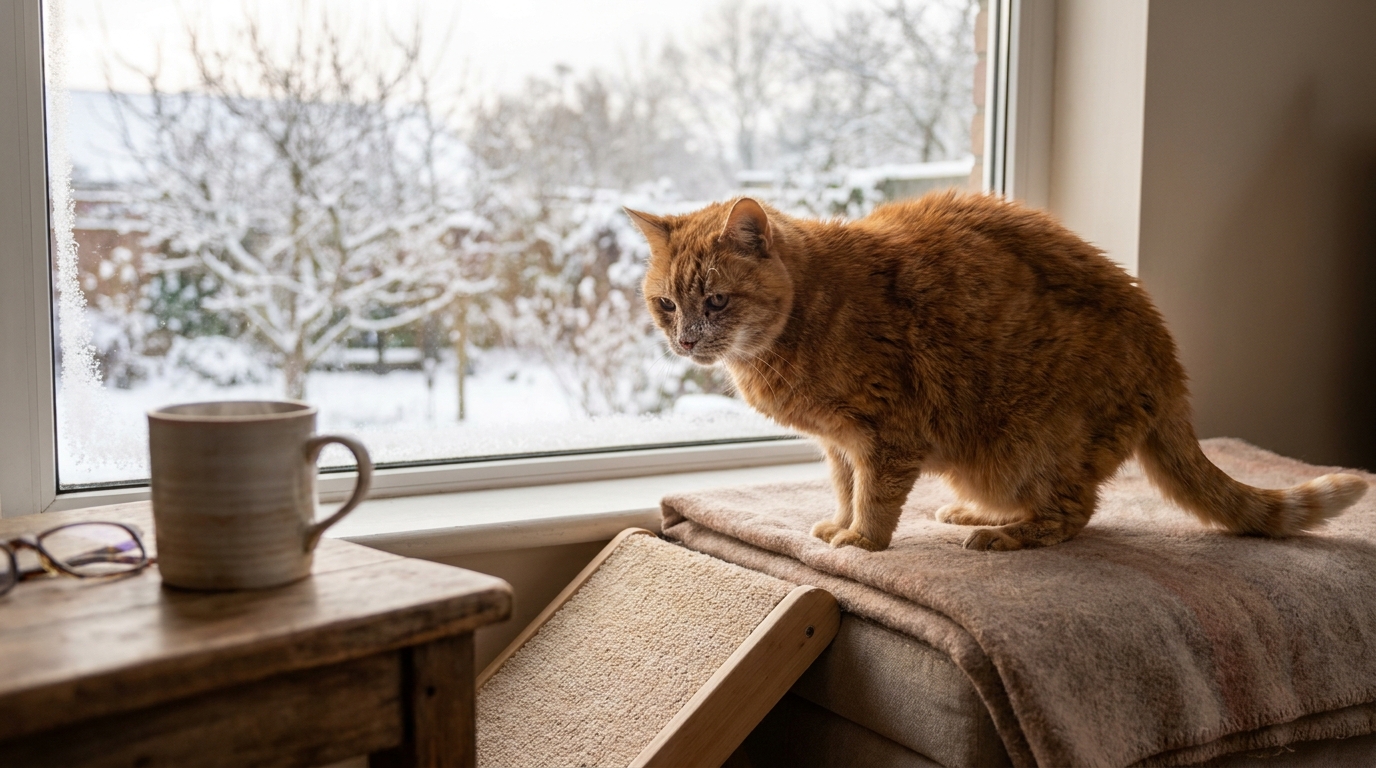
How to spot arthritis in an older cat, why stiffness can show more in winter, what helps at home, and which sudden leg signs mean an ER now.
Quick answer: Cats hide arthritis well, so the signs are usually changes rather than limping: jumping less or hesitating, missing the litter box, grooming less, sleeping more and getting grumpy when touched. Many owners notice more stiffness in cold, damp weather. Book a vet visit for these signs, and go to an emergency vet now if your cat suddenly cannot use its back legs or cries out in pain.
This article is general information, not a diagnosis. If you think your pet is in danger, go to the nearest emergency animal hospital.
Emergency: Sudden Back-Leg Weakness Is Not Arthritis
A cat that suddenly cannot use one or both back legs, cries out, is panting or breathing fast, or has cold back paws with pale or bluish pads may have a blood clot (saddle thrombus) and needs an in-person emergency vet now. Arthritis comes on slowly, so any sudden loss of leg use is not arthritis.
The Merck Veterinary Manual says this clot, called aortic thromboembolism, causes paralysis, pain and cold limbs, and a partial blockage can cause milder weakness in both back legs or weakness in only one back leg. Go to an ER now for sudden weakness in one back leg, even if the cat seems comfortable, or for a cat that cannot stand, even with warm paws. Sudden lameness in a front leg with a cold paw can also be a clot. Sudden but painless weakness in both back legs with warm, pink paws, in a cat still eating, drinking and breathing normally, needs a veterinarian with bloodwork within 24 hours; weakness that began in the last few hours is urgent tonight.
| What you see | Could be | What to do |
|---|---|---|
| Sudden back-leg loss or crying | Blood clot | ER now |
| Cold back paws or pale pads | Blood clot | ER now |
| Front leg lame, cold paw | Blood clot | ER now |
| One back leg weak, sudden | Blood clot | ER now |
| Cannot stand at all | Clot or other | ER now |
| Open-mouth breathing | Heart, clot | ER now |
| Fall or hit by a car | Injury | ER now |
| Straining, little urine | Blockage | ER now |
| Ate a pain pill or cream | Poisoning | ER or poison line now |
| Leg takes no weight | Injury | Vet today |
| Both back legs weak, no pain, warm paws | Nerve, blood, clot | Bloodwork within 24 hours; tonight if it began in the last few hours |
| Slow change over weeks | Arthritis | Vet visit soon |
Signs of Arthritis in Cats
Signs of arthritis in a cat are usually changes in habits rather than a limp: jumping less or hesitating, using a chair as a step, a matted lower back, peeing or pooping just outside the box, and playing less. The 2024 ISFM and AAFP feline guidelines list moving and jumping less, less tolerance of petting or handling, litter box changes, muscle loss and an unkempt coat as signs of joint pain in cats.
| Change you notice | Why arthritis causes it |
|---|---|
| Stops jumping up | Sore hips or back |
| Uses a chair as a step | Big jumps hurt |
| Misses the litter box | High sides hurt |
| Matted lower back | Cannot twist to groom |
| Hides, grumpy | Pain when touched |
| Sleeps more | Moves less |
| Plays less | Running hurts |
Sources: the 2024 ISFM and AAFP guidelines; Cornell Feline Health Center. Missing the box is a book-a-visit sign only if your cat still passes normal amounts of urine without straining. Straining with little or no urine, or crying in the box, may be a urinary blockage and needs an emergency vet now, especially in a male cat. Extra sleep is common in older cats, but a cat that is lethargic and eating less needs a vet today. Call a vet once a cat has gone about 24 hours without food, and sooner for a senior, overweight or diabetic cat.
How Common Is Arthritis in Older Cats?
Arthritis is very common in older cats and often missed, because cats hide pain and often do not limp. One X-ray study of 100 cats older than 12, published in the Journal of the American Veterinary Medical Association in 2002, found signs of degenerative joint disease in 90% of them. X-ray changes, including changes in the spine, are not the same as painful arthritis. The Cornell Feline Health Center notes that arthritis is more common in overweight cats and can also follow an injury to a joint.
From RexVet's visit data: Arthritis and joint concerns were named in 15% of RexVet visits for pets 11 or older, versus about 1% for pets under 7.
Does Cold Weather Make Cat Arthritis Worse?
Many owners notice a cat with arthritis seems stiffer in cold, damp weather; there is little research on weather and arthritis in cats, but warmth and easier access help stiff cats. The 2024 ISFM and AAFP feline guidelines say warm beds or safe, non-electric, self-warming heat pads may help cats with joint pain.
In winter, a stiff cat may nap longer in one warm spot and avoid a chilly room where the litter box sits, so move a soft bed, water and a low-sided box closer to the spot it has claimed. For safe temperature limits, see how cold is too cold for cats. Dog owners can compare dog arthritis in cold weather.
Home Changes That Help a Stiff Cat Today
Lower-sided litter boxes, ramps or steps to favorite spots, warm padded beds out of drafts, food and water on every floor, and a vet-guided healthy weight make daily life easier for a cat with arthritis. The 2024 ISFM and AAFP guidelines add that the box needs at least one low side and room to turn around, and that resting spots should be easy to reach.
Give a stiff cat a padded, self-warming (non-electric) bed off cold floors and out of drafts. Skip electric heating pads, electric blankets, heated beds and microwaved packs for a senior or stiff cat that may not move off them. Never put heat on a hot or swollen joint, a fresh injury, a surgical site, or a cat whose legs are weak or numb; call the vet instead, or go to an ER now if sudden weakness is painful, in one leg, with cold paws, or the cat cannot stand. Never try to warm cold back legs at home: cold, painful or paralyzed back legs need an emergency vet now. A heater or heating-pad burn needs an in-person vet the same day, or an ER now if it is large, deep or on the face, or the cat chewed a cord or was shocked.
A slimmer cat puts less load on sore joints, but only a vet should set the weight plan. Never cut a cat's food sharply: the Merck Veterinary Manual warns that fatty liver disease (hepatic lipidosis) develops when a cat stops eating, and overweight cats are most at risk.
Cat Arthritis Treatment and Pain Medicine
Never give a cat a human pain reliever or a dog's pain medicine: the FDA warns that acetaminophen (Tylenol) is fatal to cats, and ibuprofen, naproxen and aspirin can cause stomach ulcers, kidney damage and bleeding. The Merck Veterinary Manual says cats are more sensitive than dogs to ibuprofen. If a cat swallowed any human or dog pain medicine, call an emergency vet or a poison line now: ASPCA Animal Poison Control at (888) 426-4435 (a consultation fee may apply) or Pet Poison Helpline at (855) 764-7661 (a per-incident fee applies).
Keep your own pain creams and gels away from your cat, and wash your hands after using them: the ASPCA Animal Poison Control Center warns that joint and muscle creams can contain drugs such as diclofenac and flurbiprofen that harm cats even in small amounts. If your cat licks a treated area, call a vet or a poison line now.
A veterinarian may weigh these options after an exam:
- Anti-inflammatory pain relievers (NSAIDs). In the US, no anti-inflammatory pain reliever is FDA-approved for long-term use in cats, so a veterinarian decides whether one is safe after an exam and blood tests. Meloxicam and robenacoxib (Onsior) are FDA-approved in cats only for short-term pain control around surgery. The FDA warns repeated meloxicam doses can cause kidney failure or death in cats.
- A monthly injection. Solensia (frunevetmab), approved by the FDA in January 2022, is a once-a-month injection for arthritis pain in cats that a veterinarian gives in the clinic.
- Gabapentin. It is used off-label in cats, and the ISFM guidelines list sedation, wobbliness and weakness as side effects, so a cat that seems much wobblier after starting it needs a call to the prescribing vet. Gabapentin is a human-labeled drug, and a controlled substance in Virginia, so a veterinarian needs to examine your pet in person before prescribing it.
- Omega-3 enriched diets, which the 2024 ISFM and AAFP guidelines support, though few cat studies exist.
If a cat on a prescribed anti-inflammatory stops eating, vomits, has black stool or starts drinking much more, stop the drug and call the prescribing vet the same day; go to an ER now if the cat is weak, vomits blood or the vet cannot be reached.
How a Vet Diagnoses Arthritis in Cats
A vet diagnoses arthritis in a cat by combining your observations and home videos with a joint exam and sometimes X-rays, and checks blood pressure and bloodwork before long-term pain medicine. The 2024 ISFM and AAFP guidelines advise an exam, a blood pressure check and blood tests before long-term anti-inflammatory pain medicine, because kidney disease is common in older cats.
You can start at home with the Feline Musculoskeletal Pain Screening Checklist, published in the Journal of Feline Medicine and Surgery in 2020. It asks six yes-or-no questions about whether your cat does each of these normally:
- Run
- Jump up
- Jump down
- Go up stairs
- Go down stairs
- Chase toys or prey
An abnormal answer on any item makes joint pain likely. A cat that does all six normally can still have joint pain, so mention any other change to a vet. A litter box change alone does not mean arthritis: the same research found it a poor screening question on its own.
Feline guidelines from ISFM and AAFP call short home videos of a cat walking, using stairs and jumping an excellent addition to the exam. Cats often do not move at a clinic the way they do at home. Film at your cat's eye level, including litter box entry.
Arthritis, the Litter Box and Other Senior Problems
Peeing outside the box in an older cat can be arthritis, but kidney disease, diabetes, an overactive thyroid and urinary problems cause it too, so a vet should check. The Cornell Feline Health Center says arthritic cats may find climbing into the box painful, and that the extra urine from kidney failure, diabetes or hyperthyroidism can soil the box faster and push a cat to go elsewhere.
A cat that is straining with little or no urine, making frequent unproductive trips to the box, or crying while trying to pee may have a urinary blockage and needs an emergency vet now, especially a male cat.
- Drinking or peeing more. An old cat drinking a lot of water needs an in-person exam with blood and urine tests within a few days, or today if the cat eats less, and an emergency vet now if it is vomiting, refusing food, weak or straining to pee.
- Diabetes. In some cats with uncontrolled diabetes, nerve damage makes the cat stand or walk with its hocks (ankles) on or near the ground. The Cornell Feline Health Center calls this rare, says it is not painful, and says it often resolves with treatment.
- An overactive thyroid. Hyperthyroidism causes weight and muscle loss despite a big appetite; an otherwise bright cat needs an exam and thyroid blood test within 1-2 weeks, but weight loss with vomiting, a poor appetite, lethargy or a sudden jump in thirst needs a vet within a day or two, and today if the cat is both lethargic and eating less.
- A limp. A cat that still bears weight and has no emergency signs should see a vet if the limp does not improve within a day or two. A limp with a hot, tender swelling, fever, hiding or skipped meals is often a bite abscess, especially in an outdoor cat, and needs an in-person vet. Never squeeze or lance a swelling at home.
- General weakness. Weakness all over, especially with the head held low, can come from low potassium linked to kidney disease and needs a vet with bloodwork.
When a Video Visit Helps
RexVet, a nonprofit online vet service, serves pets located in Florida, New York and Virginia by video visit, and a visit helps when an older cat is jumping less, grooming less, seems stiff or is missing the litter box, while it still eats, drinks and breathes normally and is not straining or crying in the box. Your cat must be in one of those states during the visit.
Book a $64.99 live video visit with a licensed RexVet vet. Visits run about 8 AM to 11 PM Eastern, with no overnight visits.
The veterinarian watches your cat walk, climb and jump, live and in short videos you take at home. They go through the six-question joint-pain checklist with you and set up the home changes above, including a safe, vet-guided weight plan.
The veterinarian will tell you when your cat needs an in-person exam, X-rays or bloodwork. An in-person exam and blood tests come before arthritis pain medicine for a cat, because no anti-inflammatory pain reliever is FDA-approved for long-term use in cats and kidney disease is common in older cats. The FDA-approved monthly arthritis injection for cats is given in a clinic. No prescription is promised; any medicine is the veterinarian's decision after the visit, and a pharmacy transfer fee applies if a prescription is sent to an outside pharmacy.
The one-time $120 Family Plan gives 4 visits over 12 months for every pet in the home and never auto-renews, which suits check-ins as the home changes take effect.
Not a fit for video: a cat that suddenly drags or cannot use one or both back legs, is suddenly weak in one back leg, cannot stand, has cold back paws or pale or bluish pads, cries out in pain, pants, breathes fast or with its mouth open, or strains with little or no urine. Go to the nearest emergency vet now. Never give a cat a human pain reliever, a dog's pain medicine or leftover pet medication.
Need an Expert Opinion on This Topic?
Book a video visit with a licensed vet, evenings and weekends included
See open timesFrequently Asked Questions
At what age do cats get arthritis?
Arthritis is most common in older cats and becomes more likely with age. X-ray changes are not always painful, so ask a vet about slow changes in jumping, grooming or litter box habits.
Can I give my cat aspirin or ibuprofen for arthritis pain?
No. Never give a cat aspirin, ibuprofen, naproxen, acetaminophen (Tylenol) or a dog's pain medicine. The FDA warns that acetaminophen is fatal to cats, and these drugs can cause stomach ulcers, kidney damage and bleeding. If your cat swallowed any of them, call an emergency vet or ASPCA Animal Poison Control at (888) 426-4435 (a consultation fee may apply) now.
Do joint supplements like glucosamine help cats with arthritis?
Joint supplements have weak evidence in cats. A 2022 review of studies, almost all in dogs, found glucosamine and chondroitin did not ease arthritis pain, while omega-3 supplements and omega-3 enriched diets had better support. Few cat studies exist, so ask a vet before adding any supplement.
Is heat good for a cat with arthritis?
Yes, gentle non-electric warmth helps, such as a padded, self-warming bed off cold floors and out of drafts. Skip electric heating pads, electric blankets, heated beds and microwaved packs, never put heat on a hot or swollen joint, a fresh injury, a surgical site or a cat whose legs are weak or numb, and never warm cold back legs at home: they need an emergency vet now. A heater or heating-pad burn needs an in-person vet the same day, or an ER now if it is large, deep or on the face, or the cat chewed a cord or was shocked.
Why did my older cat stop jumping on the bed?
Joint pain is a common reason an older cat stops jumping up. A slow change over weeks needs a vet visit soon. A sudden stop with crying, dragging back legs, cold back paws or pale pads, or fast or open-mouth breathing needs an emergency vet now.
Can an online vet help with my cat's arthritis if my cat is in Florida, New York or Virginia?
Yes, for assessment and a home plan, if your cat is in Florida, New York or Virginia during the visit and has no emergency signs. On camera, a veterinarian licensed in your cat's state can watch your cat walk and jump, review your home videos and tell you whether your cat needs an in-person exam, X-rays or bloodwork. Long-term arthritis pain medicines for cats are used off-label, are human-labeled or are given as an in-clinic injection, so in all three states a veterinarian needs to examine your cat in person before prescribing them. Florida limits video-only prescriptions to FDA-approved animal drugs used as labeled, for up to 14 days, with no renewal without an in-person exam and no human-labeled or controlled drugs. Virginia allows the exam to be done by video, but federal rules still require an in-person exam before a veterinarian uses a human drug or uses an animal drug off-label. New York's telehealth prescription rules are still unsettled. A prescription is never guaranteed, and a pharmacy transfer fee applies if one is sent to an outside pharmacy.
FAQs
At what age do cats get arthritis?
Arthritis is most common in older cats and becomes more likely with age. X-ray changes are not always painful, so ask a vet about slow changes in jumping, grooming or litter box habits.
Can I give my cat aspirin or ibuprofen for arthritis pain?
No. Never give a cat aspirin, ibuprofen, naproxen, acetaminophen (Tylenol) or a dog's pain medicine. The FDA warns that acetaminophen is fatal to cats, and these drugs can cause stomach ulcers, kidney damage and bleeding. If your cat swallowed any of them, call an emergency vet or ASPCA Animal Poison Control at (888) 426-4435 (a consultation fee may apply) now.
Do joint supplements like glucosamine help cats with arthritis?
Joint supplements have weak evidence in cats. A 2022 review of studies, almost all in dogs, found glucosamine and chondroitin did not ease arthritis pain, while omega-3 supplements and omega-3 enriched diets had better support. Few cat studies exist, so ask a vet before adding any supplement.
Is heat good for a cat with arthritis?
Yes, gentle non-electric warmth helps, such as a padded, self-warming bed off cold floors and out of drafts. Skip electric heating pads, electric blankets, heated beds and microwaved packs, never put heat on a hot or swollen joint, a fresh injury, a surgical site or a cat whose legs are weak or numb, and never warm cold back legs at home: they need an emergency vet now. A heater or heating-pad burn needs an in-person vet the same day, or an ER now if it is large, deep or on the face, or the cat chewed a cord or was shocked.
Why did my older cat stop jumping on the bed?
Joint pain is a common reason an older cat stops jumping up. A slow change over weeks needs a vet visit soon. A sudden stop with crying, dragging back legs, cold back paws or pale pads, or fast or open-mouth breathing needs an emergency vet now.
Can an online vet help with my cat's arthritis if my cat is in Florida, New York or Virginia?
Yes, for assessment and a home plan, if your cat is in Florida, New York or Virginia during the visit and has no emergency signs. On camera, a veterinarian licensed in your cat's state can watch your cat walk and jump, review your home videos and tell you whether your cat needs an in-person exam, X-rays or bloodwork. Long-term arthritis pain medicines for cats are used off-label, are human-labeled or are given as an in-clinic injection, so in all three states a veterinarian needs to examine your cat in person before prescribing them. Florida limits video-only prescriptions to FDA-approved animal drugs used as labeled, for up to 14 days, with no renewal without an in-person exam and no human-labeled or controlled drugs. Virginia allows the exam to be done by video, but federal rules still require an in-person exam before a veterinarian uses a human drug or uses an animal drug off-label. New York's telehealth prescription rules are still unsettled. A prescription is never guaranteed, and a pharmacy transfer fee applies if one is sent to an outside pharmacy.
Medically Reviewed
Reviewed by Dr. Tiffany Delacruz, DVM — licensed veterinarian and CEO of RexVet. Last reviewed November 4, 2026.
Content is for informational purposes and does not replace professional veterinary advice.
Chief Executive Officer · Licensed Veterinarian
Dr. Delacruz is a licensed Doctor of Veterinary Medicine specializing in preventive care and veterinary telehealth. She reviews all health content on RexVet to ensure accuracy and clinical relevance.
Sources & References
- · American Veterinary Medical Association — Telehealth Guidelines
- · AVMA — Pet Care Resources
- · U.S. FDA — Animal & Veterinary