
Carprofen and Gabapentin Together: Is It Safe for Dogs?
By RexVet Team | Reviewed by Dr. Tiffany Delacruz, DVM
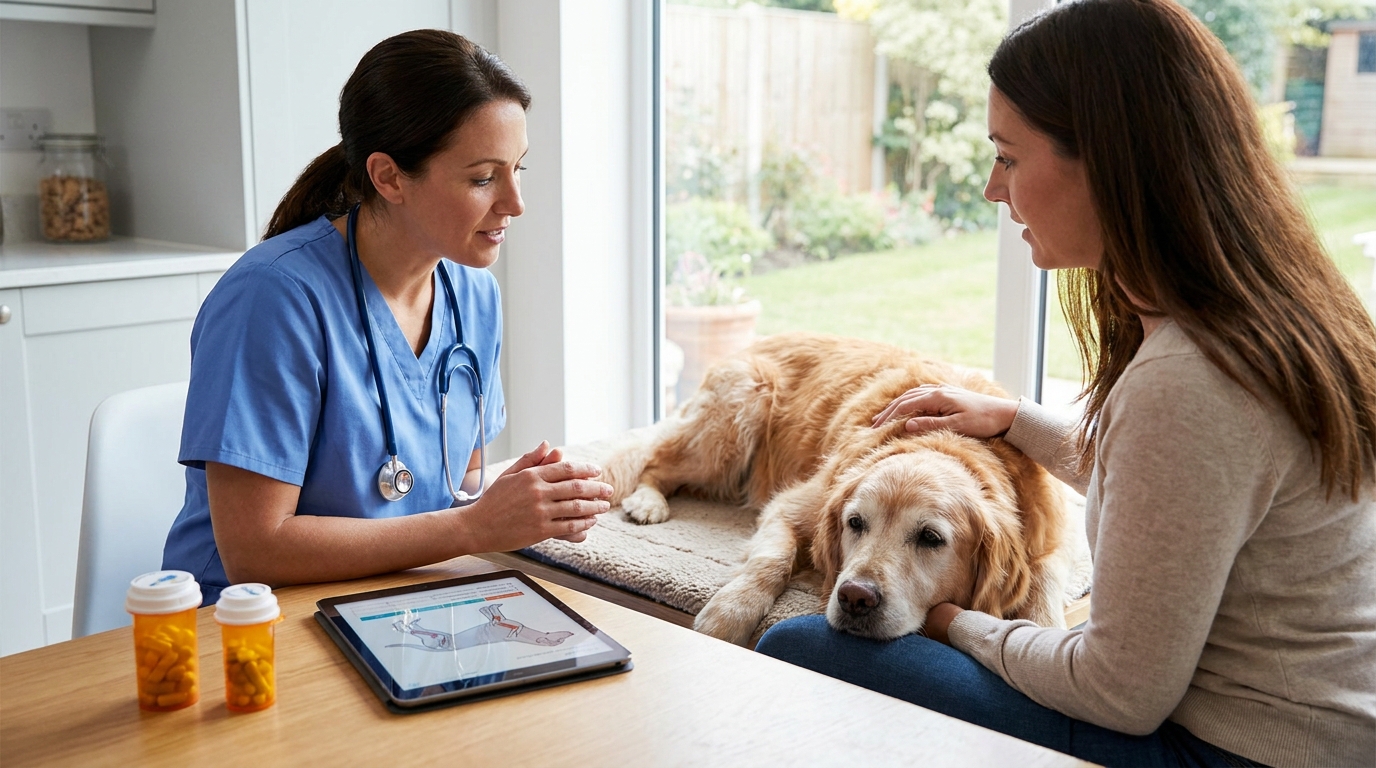
Why vets pair these two pain medicines, the signs that mean hold the carprofen and call, and what never to add on top.
Quick answer: Usually, yes. Vets often prescribe carprofen (Rimadyl) and gabapentin together: carprofen eases joint pain and inflammation, gabapentin targets nerve pain, and no direct interaction between them is documented. Give both only as prescribed. If your dog vomits, skips a meal or seems newly wobbly, hold the carprofen and call your vet now. For black or tarry stool, bloody vomit, pale or yellow gums, or collapse, go to an ER.
This article is general information, not a diagnosis. If you think your pet is in danger, go to the nearest emergency animal hospital.
Why vets prescribe carprofen and gabapentin together
Carprofen, sold as Rimadyl and under other names, is a nonsteroidal anti-inflammatory drug (NSAID) made for dogs. Gabapentin is a human medicine that vets use in dogs for nerve-related pain. Because the two work on pain in different ways, a vet can pair them instead of leaning harder on one drug. The 2022 AAHA Pain Management Guidelines call this multimodal pain relief.
- Arthritis. Carprofen is FDA-approved for osteoarthritis pain and inflammation in dogs. If joint pain still shortens walks, a vet may add gabapentin. For a senior whose hind end is weakening, see our guide to old dog back legs giving out.
- After surgery. Carprofen is also approved for pain after orthopedic surgery, such as a knee (TPLO) repair, and soft-tissue surgery, such as a spay or a lump removal.
- Back or neck pain. Gabapentin is aimed at nerve pain. Carprofen for this use is off-label, so your vet decides after an exam.
The Rimadyl label says that if a dog on daily carprofen needs more pain control, other pain relief should be considered, not a second NSAID. Gabapentin is not an NSAID.
Side effects and warning signs when your dog is on both
Act on the most urgent row that fits your dog.
| Warning sign | Likely source | What to do now |
|---|---|---|
| Sleepy, calmer than usual | Gabapentin, most often | Tell your vet; call if worse |
| New wobbliness | Either drug, or a spine problem | Hold carprofen; call vet now |
| Vomiting, diarrhea or a skipped meal | Carprofen (stomach) | Hold carprofen; call vet now |
| Drinking or peeing more or less | Kidneys | Hold carprofen; call vet now |
| Hives, face swelling, new red or scabby skin | Allergy | Call vet now; ER if breathing is hard |
| Black, tarry stool or bloody vomit | Stomach bleeding | ER now |
| Repeated vomiting, pale gums or a painful, swollen belly | Possible ulcer or bleeding | ER now |
| Yellow gums, skin or eyes | Liver | ER now |
| Can't stand, drags or knuckles feet | Spine, nerves or sedation | ER now |
| Seizure, collapse, hard to wake, slow or hard breathing | Several causes | ER now |
Hold means skip the carprofen only. Don't stop gabapentin suddenly unless your vet tells you to, especially if your dog takes it for seizures.
The Merck Veterinary Manual lists sleepiness and wobbliness as gabapentin effects in dogs, and the Rimadyl owner sheet lists incoordination too. Call now if sleepiness gets worse, doesn't improve or comes with a new wobble; don't assume it will wear off. A dog that can't stand, drags its feet, is weak on one side or loses bladder control needs an ER, especially if the pair was prescribed for back, neck or post-surgery pain. Don't blame those signs on gabapentin.
Black or tarry stool, or vomit that looks like coffee grounds, can mean stomach bleeding: that is an ER trip, not a phone call. If pain still breaks through on both drugs, call your vet instead of adding anything from home.
How carprofen and gabapentin differ
| Feature | Carprofen | Gabapentin |
|---|---|---|
| Drug type | NSAID | Seizure and nerve-pain drug |
| Main job | Eases joint pain and swelling | Dampens nerve pain signals |
| FDA status in dogs | Approved for dogs | Human drug, used off-label |
| Main side effects | Stomach, kidney, liver | Sleepiness, wobbliness |
| Cleared mainly by | Liver | Kidneys |
| Bloodwork | Baseline, then rechecks on long use | Ask your vet |
The carprofen label says the drug is broken down mainly in the liver. Merck notes that dogs partly process gabapentin in the liver and excrete it through the kidneys.
The FDA tells owners of dogs on long-term NSAIDs to have blood tests before starting and to ask how often to recheck. If your dog has kidney disease, ask what testing fits both drugs.
Is there a drug interaction between carprofen and gabapentin?
No direct interaction is documented. The carprofen label lists no interaction with gabapentin, and gabapentin barely binds to blood proteins and is cleared mostly by the kidneys, so a direct clash is unlikely. That is not the same as a study proving the pair safe, and each drug keeps its own risks.
The real link is the kidneys. Merck explains that NSAIDs block prostaglandins that keep the kidneys' blood vessels open when blood pressure drops, so hydration matters. The Rimadyl label says dogs that are dehydrated, on diuretics, or have kidney, heart or liver disease face the most kidney risk. Gabapentin is the other half: the kidneys clear most of it, so it can build up and cause more sleepiness in a dog with kidney disease. So if your dog vomits, has diarrhea, or stops eating or drinking, hold the carprofen and call your vet now.
The evidence for adding gabapentin is thin. The 2022 AAHA pain guidelines rank NSAIDs first for chronic pain in dogs, alongside omega-3 fatty acids, exercise and weight control, and list gabapentin as a second-tier add-on with little supporting data. In one small study of dogs after knee (TPLO) surgery, published in VCOT Open in 2023, adding gabapentin to carprofen did not improve pain scores or how well dogs used the leg. Vets still prescribe it, often for nerve pain, so don't stop it on your own.
Dogs who need extra caution
- Kidney disease, heart disease or a diuretic. All raise carprofen's kidney risk, and weak kidneys let gabapentin build up.
- Liver disease. Merck reports rare, unpredictable liver injury from carprofen and advises liver monitoring, especially in older dogs.
- Bleeding disorders such as von Willebrand's disease. The label does not recommend carprofen.
- Young puppies and pregnant, nursing or breeding dogs. Carprofen's safety has not been established.
- Dogs on a steroid such as prednisone. The label says not to combine it with carprofen, because of ulcer risk.
- Dogs on other sedating drugs, such as trazodone, tramadol, Benadryl or an opioid. Human gabapentin labeling warns of serious breathing problems when it is combined with opioids.
- Human gabapentin liquids. Some contain xylitol, which is toxic to dogs. Only give the gabapentin prescribed for your dog, never a person's. If your dog got a xylitol product, call a poison line or go to an ER now; weakness, wobbliness, collapse or a seizure means an ER.
- Homes with cats. Never give carprofen to a cat. If a cat eats any, call your vet or a poison line now.
What not to add on top of carprofen and gabapentin
The FDA warns never to give two NSAIDs, or an NSAID plus a steroid, at the same time.
| Add-on | Okay with both? | Why |
|---|---|---|
| Ibuprofen, naproxen, aspirin | No | Human NSAIDs; stomach and kidney harm |
| Tylenol | Not on your own | Can harm a dog's liver |
| Meloxicam | No | A second NSAID |
| Galliprant | No | Another NSAID (piprant class) |
| Prednisone or a steroid shot | No | Stomach ulcer risk with carprofen |
| Trazodone | Only if your vet adds it | More sleepiness; vet weighs it |
| Tramadol | Only if your vet adds it | Sedation; serotonin risk with trazodone |
| Benadryl | Ask your vet first | Sleepiness; avoid combo products |
| CBD | Ask your vet first | Not regulated; little dog data |
| Diuretics like furosemide | Vet's OK first | Added kidney strain |
| Fish oil, joint supplements | Usually fine | Tell your vet |
Never give a dog human pain relievers on your own; our guide to older dogs with weak back legs explains why.
- Acetaminophen is not an NSAID; in dogs it mainly damages the liver. AAHA lists it only as a vet-directed fallback when NSAIDs can't be used, so never add it on your own.
- Already gave one? If your dog got ibuprofen, naproxen, aspirin or acetaminophen on top of carprofen, call a poison line or go to an ER now.
- Galliprant (grapiprant) doesn't block COX enzymes, but it is still an NSAID, and its label says not to combine it with any other NSAID or a corticosteroid.
- A recent steroid shot counts as a steroid, so tell your vet.
- Upset-stomach remedies. Some contain an aspirin-like salicylate, so don't add one on top of carprofen.
- Trazodone, tramadol and Benadryl. Human labels warn that trazodone raises bleeding risk with NSAIDs and can cause serotonin syndrome with tramadol. Many Benadryl-type products also contain a pain reliever or decongestant; never use those.
- Switching drugs. When moving between pain medicines, or off a steroid, your vet will tell you how long to wait.
- Arthritis flare. If arthritis pain flares while your dog is on carprofen, call your vet rather than adding anything; our guide to an arthritis flare-up on carprofen explains what to do.
How far apart to give them, missed doses and vomited pills
Neither drug's label sets a spacing rule between the two, so give them on the schedule your vet wrote. Carprofen can be given with or without food; follow your vet's instructions. If your dog also takes an antacid, ask your vet about timing.
- Missed dose. Never give two doses to catch up. Ask your vet what to do.
- Vomited pill. Don't re-give it without asking your vet. With carprofen, vomiting also means hold the next dose and call now.
- Double dose or a raided bottle. The chewable carprofen label warns that eating a large number of the flavored chewables can cause severe reactions. Call your vet, an ER or a poison line now, even if your dog seems fine: ASPCA Animal Poison Control (888) 426-4435 (a consultation fee may apply) or Pet Poison Helpline (855) 764-7661 (per-incident fee). Don't make your dog vomit at home.
- Storage. Keep the chewables out of reach of every pet.
Carprofen, gabapentin and trazodone after surgery
A pain plan after surgery may include carprofen and gabapentin, and some dogs also get trazodone to stay calm. In one AAHA case report, a dog having knee surgery got trazodone and gabapentin before the procedure to reduce stress, then went home on carprofen and gabapentin. If your dog came home on all three, follow the discharge sheet, which overrides general advice. Trazodone and gabapentin both add sleepiness, and human trazodone labels note more bleeding risk with NSAIDs, so watch stool color.
A sleepy first night is common after anesthesia and pain medicine. A dog that is very hard to wake, or breathing slowly and shallowly, is different: go to an ER, especially if a second sedating drug is in the plan. If your dog keeps crying, can't settle or guards the incision, call the surgical team now, or an ER if you can't reach them, rather than giving anything extra.
Tracking your dog's comfort before the recheck
A short daily log helps your vet judge the plan: how your dog gets up and walks, skipped meals, stool color, water intake, sleepiness or wobbliness, and any missed or vomited dose. At the recheck, bring a list of everything your dog gets, including supplements and any recent shot, and ask when the next bloodwork is due.
Can an online vet prescribe or refill either one?
Carprofen is an FDA-approved animal drug, labeled for osteoarthritis pain and pain after surgery; any other use, such as back or neck pain, is extralabel. Gabapentin is a human drug, so every use is extralabel. For extralabel use, federal rules (21 CFR 530.3) require a vet who has examined the animal; since February 2023, the FDA has said telemedicine alone can't meet that.
- Florida (s. 474.2021). A vet who has seen your dog only by video may prescribe an FDA-approved animal drug like carprofen only as its label directs, for up to 14 days, with no renewal without an in-person exam, and only if the vet judges it safe. Two 2026 bills to change this did not pass.
- Virginia lets the exam be done electronically, but gabapentin still needs an in-person exam, and Virginia lists it as a Schedule V controlled substance.
- New York. As of our last check, gabapentin is not scheduled under state law, and the rules for telehealth prescribing are unsettled.
RexVet is a 501(c)(3) non-profit. A $64.99 live video visit with Dr. Tiffany Delacruz, DVM, licensed in Florida, New York and Virginia, fits when your dog is already on a carprofen and gabapentin plan from your own vet and you have a question that can wait for a scheduled slot: how the plan fits a borderline kidney value, how to tell post-surgery grogginess from pain, or whether a sedating medicine your vet suggested, such as trazodone, could add to the sleepiness. If your dog skips a meal, vomits or turns newly wobbly, hold the carprofen and call the vet who prescribed it now. If you can't reach them and your dog is otherwise alert and stable, a video visit in an open slot can help you decide what to do next; if no slot is open, call an emergency vet.
Dr. Delacruz can review the plan and tell you whether your dog needs bloodwork or an in-person exam. Slots run about 8 AM to 11 PM ET for dogs located in Florida, New York or Virginia, with no same-day guarantee. She cannot start, refill or change gabapentin by video. A carprofen prescription by video has the limits above, and ongoing refills of either drug stay with your regular vet. No prescription is promised. RexVet is not a pharmacy; if she sends a prescription to an outside pharmacy, a pharmacy transfer fee applies (see Terms 5.4).
A video visit is not for black or tarry stool, bloody vomit, pale or yellow gums, a seizure, collapse, not being able to stand, or a dog that is very hard to wake or breathing slowly: go to an emergency vet now. For a double dose, call an ER or a poison line.
For a plan question that can wait, you can book a live video visit with Dr. Delacruz. The Family Plan is a one-time $120 for 4 visits over 12 months, covers every pet in the home, and never auto-renews.
Need an Expert Opinion on This Topic?
Book a video visit with a licensed vet, evenings and weekends included
See open timesFrequently Asked Questions
Can I give carprofen and gabapentin at the same time?
Usually yes. If your vet wrote the same times for both, give them together; no label says to space them apart. Carprofen can be given with or without food unless your vet says otherwise. If your dog takes an antacid, ask about gabapentin timing. Never double up after a missed dose.
Does gabapentin make carprofen work better?
Sometimes, but the proof is limited. AAHA treats gabapentin as a second-tier add-on, and a small 2023 study after knee (TPLO) surgery found no gain in pain scores or leg use when it joined carprofen. Your vet may want it for nerve pain, so don't stop it on your own; if pain breaks through, call rather than adding anything.
Can my dog take both every day long term?
Many dogs do, under a vet's supervision. On long-term carprofen, your vet will usually want baseline bloodwork and repeat liver and kidney checks. If your dog vomits, has diarrhea, or stops eating or drinking, hold the carprofen and call your vet now. Don't stop gabapentin suddenly unless your vet says so.
Why is my dog wobbly on carprofen and gabapentin?
A slightly unsteady walk is a known gabapentin effect, but carprofen can rarely cause incoordination too, so hold the carprofen and call your vet now about any new wobbliness. Go to an ER if your dog can't stand, drags or knuckles its feet, is weak on one side, loses bladder control or is very hard to wake. With back or neck pain, these signs can mean the spine is worsening.
Can I add trazodone or Benadryl?
Only if a vet who examined your dog in person adds it. Both add sleepiness, and human labels note a higher bleeding risk when trazodone is combined with NSAIDs. Never use a Benadryl-type combination product, and never add ibuprofen, naproxen, aspirin, acetaminophen, prednisone or a second NSAID on top of carprofen.
Can an online vet in FL, NY or VA refill carprofen or gabapentin?
Not as an ongoing refill. In Florida, a vet who has seen your dog only by video may prescribe carprofen only as labeled, for up to 14 days, with no renewal without an in-person exam. Gabapentin needs an in-person exam under federal rules in all three states, and New York's telehealth rules are unsettled. A video visit with Dr. Tiffany Delacruz can review your vet's plan, but no prescription is promised.
What if my dog got into the carprofen chewables or got a double dose?
Call your vet, an ER or a poison line now, even if your dog seems fine: ASPCA Animal Poison Control (888) 426-4435 (a consultation fee may apply) or Pet Poison Helpline (855) 764-7661 (per-incident fee). Don't make your dog vomit at home. Store the flavored chewables out of reach, and never give carprofen to a cat. If a cat eats some, call right away.
FAQs
Can I give carprofen and gabapentin at the same time?
Usually yes. If your vet wrote the same times for both, give them together; no label says to space them apart. Carprofen can be given with or without food unless your vet says otherwise. If your dog takes an antacid, ask about gabapentin timing. Never double up after a missed dose.
Does gabapentin make carprofen work better?
Sometimes, but the proof is limited. AAHA treats gabapentin as a second-tier add-on, and a small 2023 study after knee (TPLO) surgery found no gain in pain scores or leg use when it joined carprofen. Your vet may want it for nerve pain, so don't stop it on your own; if pain breaks through, call rather than adding anything.
Can my dog take both every day long term?
Many dogs do, under a vet's supervision. On long-term carprofen, your vet will usually want baseline bloodwork and repeat liver and kidney checks. If your dog vomits, has diarrhea, or stops eating or drinking, hold the carprofen and call your vet now. Don't stop gabapentin suddenly unless your vet says so.
Why is my dog wobbly on carprofen and gabapentin?
A slightly unsteady walk is a known gabapentin effect, but carprofen can rarely cause incoordination too, so hold the carprofen and call your vet now about any new wobbliness. Go to an ER if your dog can't stand, drags or knuckles its feet, is weak on one side, loses bladder control or is very hard to wake. With back or neck pain, these signs can mean the spine is worsening.
Can I add trazodone or Benadryl?
Only if a vet who examined your dog in person adds it. Both add sleepiness, and human labels note a higher bleeding risk when trazodone is combined with NSAIDs. Never use a Benadryl-type combination product, and never add ibuprofen, naproxen, aspirin, acetaminophen, prednisone or a second NSAID on top of carprofen.
Can an online vet in FL, NY or VA refill carprofen or gabapentin?
Not as an ongoing refill. In Florida, a vet who has seen your dog only by video may prescribe carprofen only as labeled, for up to 14 days, with no renewal without an in-person exam. Gabapentin needs an in-person exam under federal rules in all three states, and New York's telehealth rules are unsettled. A video visit with Dr. Tiffany Delacruz can review your vet's plan, but no prescription is promised.
What if my dog got into the carprofen chewables or got a double dose?
Call your vet, an ER or a poison line now, even if your dog seems fine: ASPCA Animal Poison Control (888) 426-4435 (a consultation fee may apply) or Pet Poison Helpline (855) 764-7661 (per-incident fee). Don't make your dog vomit at home. Store the flavored chewables out of reach, and never give carprofen to a cat. If a cat eats some, call right away.
Medically Reviewed
Reviewed by Dr. Tiffany Delacruz, DVM — licensed veterinarian and CEO of RexVet. Last reviewed October 24, 2026.
Content is for informational purposes and does not replace professional veterinary advice.
Chief Executive Officer · Licensed Veterinarian
Dr. Delacruz is a licensed Doctor of Veterinary Medicine specializing in preventive care and veterinary telehealth. She reviews all health content on RexVet to ensure accuracy and clinical relevance.
Sources & References
- · American Veterinary Medical Association — Telehealth Guidelines
- · AVMA — Pet Care Resources
- · U.S. FDA — Animal & Veterinary