
Can I Give My Dog Melatonin? Uses, Xylitol and Safety
By RexVet Team | Reviewed by Dr. Tiffany Delacruz, DVM
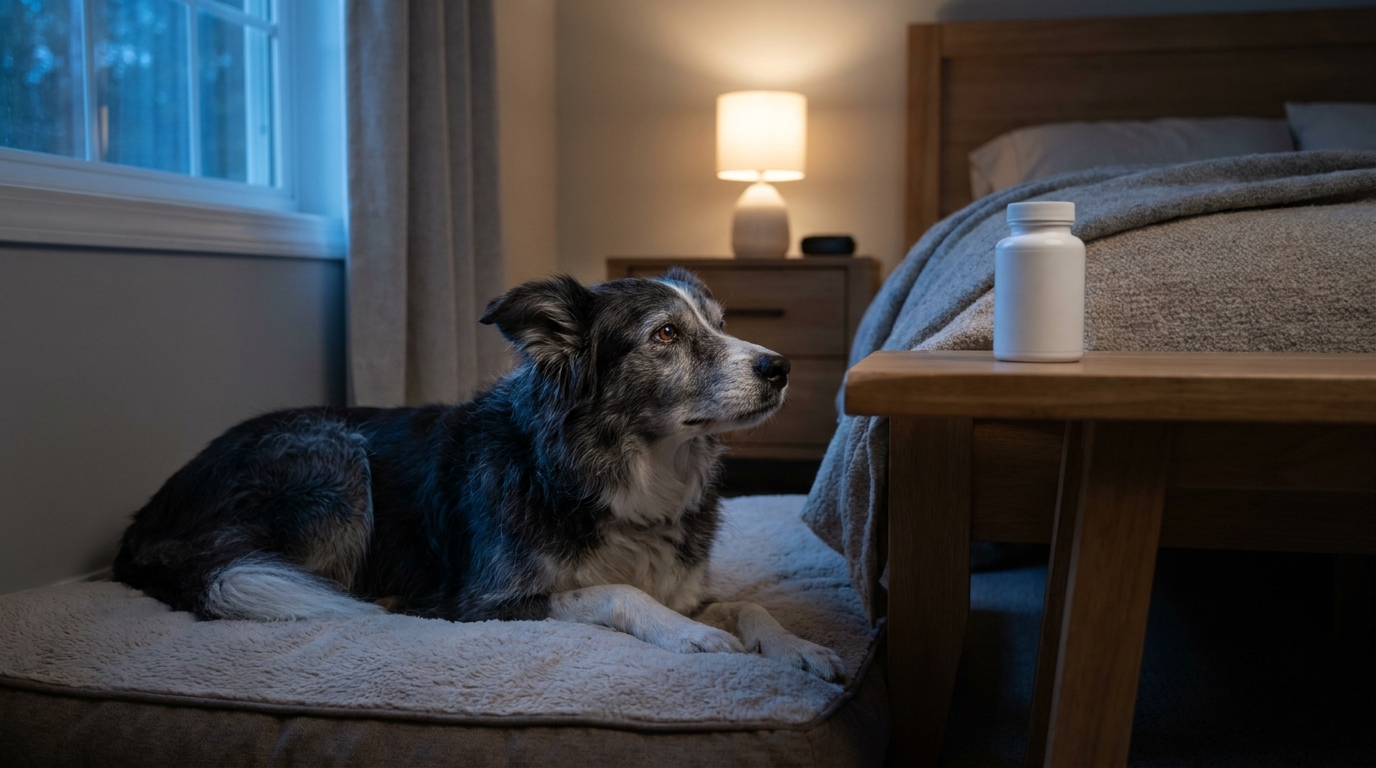
Plain melatonin is generally low risk for dogs, but products made for people can hide xylitol or 5-HTP. Who should skip it, and what to do if eaten.
Quick answer: Melatonin is generally considered low risk for dogs, but ask a vet first: the product and amount depend on your dog's health and medicines. Never use slow-release melatonin or one that lists xylitol, birch sugar, wood sugar or 5-HTP. A dog that ate xylitol, 5-HTP or a product with no readable label needs an emergency vet now, even if it seems fine; for a whole bottle of plain melatonin, call a poison line now.
This article is general information, not a diagnosis. If you think your pet is in danger, go to the nearest emergency animal hospital.
Is melatonin safe for dogs?
Melatonin is a sleep hormone sold over the counter that vets sometimes recommend for dogs, and plain melatonin is generally considered low risk (Merck Veterinary Manual), but no melatonin product is FDA-approved for dogs and what is in the bottle can differ from the label. The bigger risks are added ingredients, the wrong product type, and your dog's health and medicines.
The FDA does not approve dietary supplements, including melatonin, before they are sold. A 2023 JAMA study of 25 US melatonin gummies made for people found 74% to 347% of the labeled amount, and one had no melatonin but did contain CBD. No FDA review has confirmed that a dog melatonin chew works or contains what its label says.
My dog ate melatonin: what to do now
A dog that ate any amount of a melatonin product with xylitol or 5-HTP needs an emergency vet now, calling a poison line on the way, and a dog that ate a whole bottle of plain melatonin or many gummies needs a call to a poison line now. Find the bottle and read the full ingredient list; if there is no label or you can't read it, treat the product as if it contains xylitol.
What was eaten and what to do
| What was eaten | Main risk | Do this |
|---|---|---|
| Plain melatonin, label read | Sleepy, upset stomach | Call a vet |
| Whole bottle, plain | Vomiting, wobbly | Poison line now |
| Many plain gummies or chews | High sodium | Poison line now |
| Any xylitol | Low blood sugar | ER now |
| Melatonin with 5-HTP | Seizures, overheating | ER now |
| No label or unknown | May hold xylitol | ER now |
| Sleeping pill or PM pill | Other drugs | Poison line now |
| Can't stand, very sedated | Overdose | ER now |
On every "ER now" row, call a poison line on the way, not instead of going. "Plain" means the label shows no xylitol and no 5-HTP, and "PM pill" means a "PM" pain reliever. Bring the packaging, and don't make your dog vomit at home.
Also go to an emergency vet now, calling a poison line on the way, if your dog:
- Vomits, is weak, wobbles, trembles, collapses or has a seizure after possible xylitol.
- Has yellow gums, bruising or bleeding, black stool or vomiting 24 to 48 hours or later after xylitol.
- Can't stand or walk, is very sedated or hard to wake, trembles, collapses, has a seizure or vomits repeatedly after any melatonin or sleep aid.
- Is very thirsty or wobbly after many gummies or chews.
- Is choking on a chewed bottle, cap or blister pack.
A dog that may have swallowed part of a bottle, cap or blister pack but is breathing normally needs an in-person vet now (see intestinal blockage in dogs). Even without xylitol, many gummies or chews can cause dangerously high blood sodium (ASPCA, Merck Veterinary Manual). For gummies that might contain THC or CBD, follow the steps for a dog that ate a weed edible or THC gummy. The ASPCA says melatonin alone is not expected to cause severe signs, but xylitol, 5-HTP and many gummies can; while you call a poison line, confine a wobbly dog so it can't get hurt.
ASPCA Animal Poison Control: (888) 426-4435 (a consultation fee may apply). Pet Poison Helpline: (855) 764-7661 (a per-incident fee applies). Both poison lines take calls every day, including holidays.
Check the label for xylitol and 5-HTP first
The Merck Veterinary Manual warns that many melatonin products made for people contain added ingredients that are dangerous to dogs, especially xylitol and 5-HTP, so read the full label before any melatonin goes near a dog. The FDA says xylitol may also be listed as birch sugar or wood sugar. ASPCA Animal Poison Control lists flavored fast-dissolve and gummy sleep aids among products that can contain xylitol, but any form of melatonin can contain it.
The FDA says xylitol can drop a dog's blood sugar within 10 to 60 minutes, though serious effects sometimes don't show for 12 to 24 hours, and the Merck Veterinary Manual adds that xylitol can cause liver failure. For any amount, go to an emergency vet now, even if your dog seems fine, and call a poison line on the way.
The Merck Veterinary Manual warns that 5-HTP, an add-in in some combination sleep products, can cause serotonin syndrome. In a review of ASPCA poison-center cases (JAVMA, 2000), 19 of 21 dogs that ate 5-HTP got sick within 10 minutes to 4 hours, with vomiting or diarrhea, seizures, tremors, overheating and brief blindness, and 3 died.
What to check on a melatonin label
| Product type | Check for |
|---|---|
| Gummies | Xylitol, 5-HTP, CBD |
| Dissolving tablet | Xylitol |
| Chewable | Xylitol |
| Liquid | Xylitol, alcohol |
| Tablet or capsule | 5-HTP, herbs |
| Extended release | Don't use |
| Dog chews | NASC seal, xylitol |
VCA says slow-release (sustained-release) melatonin should not be used in pets. The National Animal Supplement Council (NASC) says its Quality Seal means the maker passes a facility audit every two years and random product testing against the label; it is a quality check, not FDA approval and not proof the product works, and it does not mean a product is free of xylitol.
What vets use melatonin for in dogs
Vets use melatonin for some dogs with sleep problems, noise fears such as fireworks, and certain non-allergic hair-loss conditions, either alone or with other treatment (VCA, Merck Veterinary Manual). VCA's melatonin handout calls these uses off-label, meaning no approved animal label covers them, so the vet decides whether melatonin fits your dog, which product to use and how much.
For hair loss, the Merck Veterinary Manual reports that recurrent flank alopecia and pattern baldness have improved with melatonin, but a vet first rules out causes such as thyroid or adrenal disease, skin infection or mites, usually with in-person tests. For anxiety, fear and sleep problems, melatonin is at most one part of a plan that also looks for the cause and may add behavior work or other treatment.
Melatonin for fireworks, travel and holiday stress
For predictable stress such as New Year's Eve fireworks, talk to a vet weeks ahead and try any supplement or medicine your vet recommends on a quiet day first, because melatonin alone is often not enough for a dog that panics. VCA's storms and fireworks handout says some dogs respond well to melatonin and that it can often be combined with traditional medication, but advises checking with your vet first because side effects and interactions can occur.
VCA's handout on severe noise phobia adds that calming products must already be working before the noise starts and that sedatives do not reduce anxiety. For a dog that panics, the vet may build a behavior plan and decide after an exam whether prescription calming medicine fits; the guide to anxiety medications for dogs explains why some options need an in-person exam first. Don't shut in a panicking dog you can't watch, because VCA warns that panicking dogs can seriously injure themselves when confined.
For travel, if your dog drools, vomits or trembles in the car, read the guide to dog car sickness signs and what actually helps, and ask a vet before giving any product for a trip. A travel health certificate needs an in-person exam, and Florida law bars issuing one by telehealth.
Senior dogs who are up at night
Night pacing, waking and confusion in an older dog can be canine cognitive dysfunction, pain or a need to pee more often, so a vet should look for the cause before melatonin becomes the answer. VCA lists restlessness or pacing at night, with more sleep by day, as a sign of cognitive dysfunction, but says a full medical and behavioral assessment comes first; the Merck Veterinary Manual says vets must rule out physical problems, especially pain.
A senior dog with new night pacing, confusion or extra drinking that came on gradually needs an exam before any melatonin, and often bloodwork or a urine test. A sleeping breath count that stays above 30 a minute on repeat checks means a vet today, and blood in the urine in a dog that is acting normal means a vet within 24 hours. Daylight saving time ended on Sunday, Nov 1, and senior dogs adjust to new schedules more slowly (VCA), so move walks and dinner to the new clock times gradually.
Go to an emergency vet now if a senior dog who is up at night:
- Has back legs that suddenly give out or drag, or can't pee (see old dog back legs giving out).
- Has sudden new confusion, a head tilt, circling or a seizure.
- Is restless with a swollen, tight or hard belly, or retches with nothing coming up.
- Has labored or open-mouth breathing at rest, or gray, blue or pale gums.
- Strains with little or no urine, or passes clots or dark red urine.
Side effects and dogs that should not get melatonin
VCA lists sleepiness, weight gain and changes in fertility as melatonin's side effects, and ASPCA Animal Poison Control says a dog that eats too much plain melatonin often has vomiting and sleepiness, and sometimes wobbliness. Dogs that are pregnant, nursing, used for breeding, not yet sexually mature, have severe liver disease or take other medicines need a vet's go-ahead first, and Veterinary Partner says melatonin should not be used in diabetic dogs because it can cause insulin resistance.
VCA also says not to give melatonin to a pet that is allergic to it, and lists drugs to use with caution alongside it, including the blood thinner warfarin, benzodiazepine sedatives and the antidepressant fluvoxamine. If your dog takes any medicine, ask the vet who prescribed it before adding melatonin. Ask a vet first if your dog has a history of seizures. VCA's melatonin handout also warns against giving two doses at once or extra doses.
When a video visit helps
RexVet, a nonprofit online vet service, serves pets located in Florida, New York and Virginia by video visit, and a video visit fits when you are weighing melatonin for fireworks, travel, sleep or night waking in an older dog and your dog has no emergency signs. RexVet is a 501(c)(3), and your dog must be located in one of those three states during the visit.
A video visit is not the right first step after any melatonin product with xylitol or 5-HTP, or one with no label (emergency vet now, calling a poison line on the way), or a whole bottle of plain melatonin or many gummies (poison line now). The same goes for a dog that can't stand, is very sedated, trembling, collapsing, seizing or vomiting repeatedly, or a senior dog whose back legs suddenly give out, who can't pee, or who has sudden confusion, a head tilt or circling (emergency vet now).
A $64.99 live video visit is with a licensed RexVet vet, a veterinarian licensed in your dog's state. The veterinarian reviews your dog's age, weight, health conditions and current medicines and supplements, reads the product label with you for xylitol, 5-HTP and other add-ins, asks about the pattern (fear, pain, night waking), and builds a plan, which may include whether melatonin suits your dog and how to try it on a quiet day before the event. They will tell you if your dog needs an in-person exam or bloodwork first, for example a senior dog with new night pacing.
Live slots run about 8 AM to 11 PM ET. Holiday availability isn't confirmed, so check open slots when you book, and book a fireworks-planning visit well before New Year's Eve. For travel, book while your dog is still in one of the three states; a video visit can't provide a travel health certificate.
Melatonin is sold without a prescription, so the visit gives advice about it, not a prescription. No prescription is promised; any medicine is the veterinarian's decision after the visit. If prescription calming medicine comes up, the state prescription limits in the last FAQ below apply. RexVet is not a pharmacy, and a pharmacy transfer fee applies if RexVet sends a prescription to an outside pharmacy.
The one-time $120 Family Plan covers 4 visits over 12 months for every pet in the home and never auto-renews, which suits a behavior plan that needs a follow-up.
To plan ahead for fireworks, travel or a senior dog's nights, book a live video visit.
Need an Expert Opinion on This Topic?
Book a video visit with a licensed vet, evenings and weekends included
See open timesFrequently Asked Questions
Can I give my dog human melatonin?
Only if a vet says so and picks the product, because melatonin made for people can contain xylitol or 5-HTP, which can poison a dog. Veterinary Partner notes that the amount of melatonin in pills can differ widely between brands. Show the vet the whole label; the vet chooses the product and amount for your dog.
How long does melatonin take to work in dogs?
VCA's melatonin handout says melatonin usually takes effect within 1 to 2 hours and wears off within 24 hours. It can last longer in dogs with liver or kidney disease. For hair loss it is much slower: Veterinary Partner says about 40% of dogs with alopecia X show some response within 6 to 8 weeks.
Can I give my dog melatonin for fireworks or thunderstorms?
Sometimes, with a vet's OK: VCA says some dogs afraid of storms and fireworks respond well to melatonin, so ask a vet weeks ahead. For a dog that panics, melatonin alone is often not enough, and a vet may build a behavior plan or decide on prescription medicine after an exam. Try anything the vet recommends on a quiet day first.
Can I give my dog melatonin with trazodone or gabapentin?
Only if the veterinarian who prescribed the trazodone or gabapentin says so; never combine calming products on your own. VCA says melatonin can be used with other medications, but side effects and drug interactions can occur. A product with 5-HTP is especially risky for a dog on behavior medicine, because the Merck Veterinary Manual warns that 5-HTP can cause serotonin syndrome.
What should I do if my dog ate melatonin gummies?
Read the label now: xylitol, 5-HTP or no label means an emergency vet now; many plain gummies mean calling a poison line now. For xylitol, 5-HTP or no label, go even if your dog seems fine, and call a poison line on the way. Even without xylitol, many gummies can cause dangerously high blood sodium (ASPCA, Merck Veterinary Manual), so a dog that is very thirsty, wobbly, trembling or having a seizure needs an emergency vet now. If the gummies might contain THC or CBD, tell the poison line or vet. Don't make your dog vomit at home, and bring the bottle or packaging. ASPCA Animal Poison Control: (888) 426-4435 (a consultation fee may apply). Pet Poison Helpline: (855) 764-7661 (a per-incident fee applies).
Is melatonin safe for cats?
Not without a vet's OK: vets sometimes use melatonin off-label in cats, but research in cats is limited. VCA says vets use it in cats for sleep and behavior problems and to suppress heat cycles, and human products can contain other ingredients, so the vet should choose the product. For car or plane stress, see the cat travel anxiety guide.
Can a video vet tell me how much melatonin to give my dog in Florida, New York or Virginia?
Yes: a licensed RexVet vet can advise on product and amount for a dog located in Florida, New York or Virginia with no emergency signs. On video the veterinarian reviews your dog's age, weight, health, medicines and product labels and first says whether melatonin fits; a dog that ate xylitol or 5-HTP, can't stand, collapses or has a seizure needs an emergency vet instead. Bloodwork, urine tests, hands-on pain exams and skin or hormone tests happen in person, and a senior dog with new night pacing may need an in-person exam first. The visit gives advice about melatonin, not a prescription, and no prescription is promised. If prescription calming medicine comes up, Florida s.474.2021 limits telehealth-only prescribing to FDA-approved animal drugs used on-label, for up to 14 days (1 month for products labeled only for fleas and ticks), with no renewal without an in-person exam and no human-labeled, controlled or compounded anti-infective drugs. In Virginia the exam may be electronic, but federal rules still require an in-person exam for human-labeled drugs; New York rules are unsettled.
FAQs
Can I give my dog human melatonin?
Only if a vet says so and picks the product, because melatonin made for people can contain xylitol or 5-HTP, which can poison a dog. Veterinary Partner notes that the amount of melatonin in pills can differ widely between brands. Show the vet the whole label; the vet chooses the product and amount for your dog.
How long does melatonin take to work in dogs?
VCA's melatonin handout says melatonin usually takes effect within 1 to 2 hours and wears off within 24 hours. It can last longer in dogs with liver or kidney disease. For hair loss it is much slower: Veterinary Partner says about 40% of dogs with alopecia X show some response within 6 to 8 weeks.
Can I give my dog melatonin for fireworks or thunderstorms?
Sometimes, with a vet's OK: VCA says some dogs afraid of storms and fireworks respond well to melatonin, so ask a vet weeks ahead. For a dog that panics, melatonin alone is often not enough, and a vet may build a behavior plan or decide on prescription medicine after an exam. Try anything the vet recommends on a quiet day first.
Can I give my dog melatonin with trazodone or gabapentin?
Only if the veterinarian who prescribed the trazodone or gabapentin says so; never combine calming products on your own. VCA says melatonin can be used with other medications, but side effects and drug interactions can occur. A product with 5-HTP is especially risky for a dog on behavior medicine, because the Merck Veterinary Manual warns that 5-HTP can cause serotonin syndrome.
What should I do if my dog ate melatonin gummies?
Read the label now: xylitol, 5-HTP or no label means an emergency vet now; many plain gummies mean calling a poison line now. For xylitol, 5-HTP or no label, go even if your dog seems fine, and call a poison line on the way. Even without xylitol, many gummies can cause dangerously high blood sodium (ASPCA, Merck Veterinary Manual), so a dog that is very thirsty, wobbly, trembling or having a seizure needs an emergency vet now. If the gummies might contain THC or CBD, tell the poison line or vet. Don't make your dog vomit at home, and bring the bottle or packaging. ASPCA Animal Poison Control: (888) 426-4435 (a consultation fee may apply). Pet Poison Helpline: (855) 764-7661 (a per-incident fee applies).
Is melatonin safe for cats?
Not without a vet's OK: vets sometimes use melatonin off-label in cats, but research in cats is limited. VCA says vets use it in cats for sleep and behavior problems and to suppress heat cycles, and human products can contain other ingredients, so the vet should choose the product. For car or plane stress, see the cat travel anxiety guide.
Can a video vet tell me how much melatonin to give my dog in Florida, New York or Virginia?
Yes: a licensed RexVet vet can advise on product and amount for a dog located in Florida, New York or Virginia with no emergency signs. On video the veterinarian reviews your dog's age, weight, health, medicines and product labels and first says whether melatonin fits; a dog that ate xylitol or 5-HTP, can't stand, collapses or has a seizure needs an emergency vet instead. Bloodwork, urine tests, hands-on pain exams and skin or hormone tests happen in person, and a senior dog with new night pacing may need an in-person exam first. The visit gives advice about melatonin, not a prescription, and no prescription is promised. If prescription calming medicine comes up, Florida s.474.2021 limits telehealth-only prescribing to FDA-approved animal drugs used on-label, for up to 14 days (1 month for products labeled only for fleas and ticks), with no renewal without an in-person exam and no human-labeled, controlled or compounded anti-infective drugs. In Virginia the exam may be electronic, but federal rules still require an in-person exam for human-labeled drugs; New York rules are unsettled.
Medically Reviewed
Reviewed by Dr. Tiffany Delacruz, DVM — licensed veterinarian and CEO of RexVet. Last reviewed November 3, 2026.
Content is for informational purposes and does not replace professional veterinary advice.
Chief Executive Officer · Licensed Veterinarian
Dr. Delacruz is a licensed Doctor of Veterinary Medicine specializing in preventive care and veterinary telehealth. She reviews all health content on RexVet to ensure accuracy and clinical relevance.
Sources & References
- · American Veterinary Medical Association — Telehealth Guidelines
- · AVMA — Pet Care Resources
- · U.S. FDA — Animal & Veterinary