
Why Does My Dog Smell Bad Even After a Bath?
By RexVet Team | Reviewed by Dr. Tiffany Delacruz, DVM
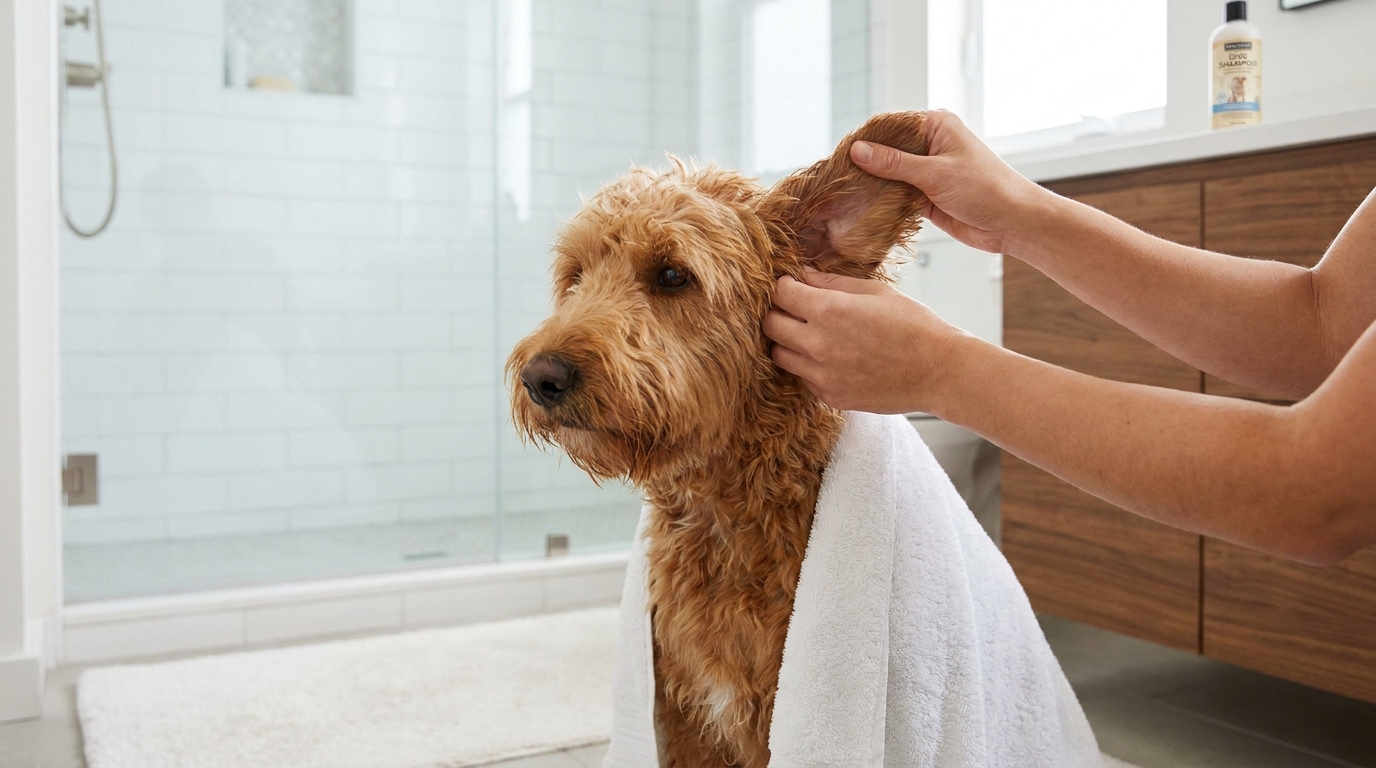
Where a smell that outlasts a bath usually comes from, a 2-minute sniff test by body spot, and which smells need a vet within days, today or now.
Quick answer: If a dog still smells 24 hours after a full bath and a thorough dry, or the smell returns quickly, the odor is likely coming from the skin, ears, mouth, anal glands or skin folds, which shampoo cannot fix. Sniff each spot. A smell with itching or redness needs a vet within a few days; pus or a painful, oozing or swollen spot needs a vet the same day.
This article is general information, not a diagnosis. If you think your pet is in danger, go to the nearest emergency animal hospital.
VCA lists a musty odor among the common signs of yeast dermatitis, and the Merck Veterinary Manual calls anal sac disease the most common disease of the anal region in dogs.
Why does my dog still smell after a bath?
A bath cleans a dog's coat, but a smell that is still there 24 hours later, or returns quickly, usually comes from infected skin, ears, teeth, anal glands or skin folds; a faint wet-dog smell that fades once the coat is fully dry is normal. The American Kennel Club says secondary yeast or bacterial infections on the skin or inside the ears remain the most common medical reasons dogs have an unpleasant smell, often started by allergies, because scratching and licking open the door to infection.
Water releases odor compounds made by the normal yeast and bacteria on a dog's coat. A coat dried all the way to the skin smells less; a thick or double coat left damp keeps smelling. Skunk spray is a special case: its sulfur compounds (thiols) do not dissolve in water, so a regular bath often leaves the smell behind. A skunk bite or scratch (rabies risk), an eye that stays shut, cloudy or red after rinsing with water, or weakness, collapse, trouble breathing, or pale, gray or chocolate-brown gums in the days after a spray needs your vet now, or an ER if closed.
Which smells mean a vet today or an emergency vet now?
A dog with a painful, oozing or smelly sore, pus from an ear, or a hot, swollen lump by the anus needs an in-person vet the same day, and a dog with a new smell plus repeated vomiting, weakness, collapse or trouble breathing needs an emergency vet now.
How soon to see a vet
| Sign | How soon | Where |
|---|---|---|
| Faint smell, no itch | Routine | Home care |
| Smell with itch or redness (skin, paws, folds) | Within days | Vet or video |
| New ear smell | Within days | Clinic |
| Rotten breath | Within days | Vet |
| Fishy rear, no pain | Within days | Vet |
| Jaw or under-eye swelling, bad breath | Within 1 day (same day if not eating) | Vet |
| Smelly or oozing sore | Same day | Clinic |
| Ear with pus | Same day | Clinic |
| Hot lump by anus | Same day | ER or clinic |
| Unspayed, discharge or thirst after heat | Same day | Vet or ER |
| After heat, plus vomiting, not eating, lethargic, weak or swollen belly | Now | ER |
| Sudden face swelling or hives | Right away | Vet or ER |
| Head tilt, falling or severe ear pain | Now | ER |
| New smell with vomiting or weakness | Now | ER |
| Straining, no urine | Now | ER |
| Skin turning purple or black | Now | ER |
If more than one row fits, follow the most urgent. Same day means your vet today, or an emergency clinic if no clinic can see your dog today.
Also go to an emergency vet now for circling, flicking eyes, a drooping face or an eye that cannot blink, sudden hearing loss, fever with ear pain, bleeding from the ear canal, collapse, hard breathing, a swollen, tight or painful belly, or retching that brings nothing up. Go now, too, for tremors, wobbling or vomiting after a dog ate or rolled in garbage, compost, moldy food or a dead animal, or for a puppy (especially an unvaccinated one) with bloody, foul-smelling diarrhea plus vomiting or weakness.
See a vet in person the same day for a fast-spreading raw patch (hot spot), pain when chewing, maggots in a wound or matted fur (don't pull them out), a bad smell under a bandage, splint or cast or from a collar or harness rubbing into the neck, or a urine smell with straining, frequent small pees or blood, or any male dog that dribbles urine.
Sudden swelling of the face, lips or eyes, or spreading hives, needs an in-person vet right away, and an emergency vet now with trouble breathing, vomiting, collapse, pale gums, a seizure, a flat-faced breed, or swelling that starts within an hour of a new product, sting, vaccine or medicine. Swelling under one eye or on the jaw with bad breath needs a vet within 1 day, or the same day if the dog is not eating.
An unspayed female with discharge or heavy drinking up to about 4 months after a heat (VCA lists 2 to 16 weeks) may have pyometra, a uterine infection VCA calls life-threatening. The dog needs a vet exam today, and an emergency vet now with vomiting, not eating, lethargy, weakness or a swollen belly. Pyometra can happen with no discharge or smell. A dog that recently gave birth and has a pus-like discharge from the vulva also needs a vet today, and an emergency vet now if she is weak or not eating.
A taste of plain soap or shampoo usually causes only stomach upset, but a laundry or dish pod, xylitol, birch sugar or wood sugar on the label, a label you can't read, vomiting more than once, weakness or a seizure means an emergency vet now; see what to do if a dog ate soap. For a possible toxin, call ASPCA Animal Poison Control: (888) 426-4435 (a consultation fee may apply). Pet Poison Helpline: (855) 764-7661 (a per-incident fee applies). Do not make your dog vomit unless a poison line or a vet tells you to. A swallowed object means an ER or your vet now.
The 2-minute sniff test: where is the smell coming from?
To find where a dog's smell comes from, sniff the ears, mouth, paws, skin folds and rear end one at a time, once the coat is fully dry; the spot that smells worst is usually the source. Lift each ear flap but put nothing inside, lift the lip, spread the toes, open the folds and look under the tail.
| Spot | Smell | Likely cause |
|---|---|---|
| Ears | Musty, sour or rotten | Ear infection |
| Paws | Corn chips | Often normal |
| Paws | Moldy cheese, red skin | Infection |
| Mouth | Rotten | Teeth, gums |
| Mouth | Fishy | Usually teeth |
| Rear end | Fishy | Anal glands |
| Skin folds | Sour, damp | Fold rash |
| Skin or coat | Musty, greasy | Yeast or seborrhea |
| Genitals, back legs | Urine | Leaking or UTI |
| Wound or matted fur | Rotten | Infection or maggots |
| Whole coat | Wet dog, fades | Damp coat |
A smell points to a spot; only a vet's test confirms the cause.
What does a yeast or skin infection smell like?
A musty or greasy smell with itching, red skin or dark, thickened skin often means a yeast or bacterial skin infection, which a vet confirms with a skin sample checked under a microscope in the clinic. VCA's list of common signs of yeast dermatitis also includes itching, redness, flaky skin, thickened or dark skin and recurring ear infections.
The Merck Veterinary Manual calls pain, crusting, odor, and oozing blood and pus the hallmarks of deep pyoderma, a bacterial skin infection, and says warm, moist areas such as skin folds and the spaces between the toes carry a higher risk of infection; see pyoderma in dogs. Merck also says seborrhea causes extra scale, sometimes excess greasiness and often secondary infection. For an itchy dog, see why a dog itches with no fleas.
A smell with itching, redness or greasy skin needs a vet within a few days. RexVet's visit data show: "Skin was the top concern in RexVet dog visits (18%), followed by itching, ear problems and allergies."
Could the smell be coming from my dog's ears?
A sour, musty or rotten smell from a dog's ear, with head shaking, scratching or discharge, usually means an outer ear infection; a bath will not fix it, and a new ear smell needs an in-person check within days because the vet must see the eardrum before any drops go in. The Merck Veterinary Manual lists head shaking, foul odor, redness, swelling, scratching, discharge and scaly skin as signs.
Put nothing in the ear meanwhile: no vinegar, hydrogen peroxide, rubbing alcohol, oils or leftover drops. Pus from the canal, or sudden, violent head shaking after time in grass, needs a vet the same day, and a head tilt, loss of balance or severe ear pain needs an emergency vet now. See why a dog shakes its head a lot.
Could the smell be coming from my dog's mouth?
Most bad breath in dogs comes from dental disease and needs a dental exam within a few weeks, but a new rotten smell needs a vet within days, and swelling under the eye or on the jaw needs a vet within 1 day (the same day if the dog is not eating). Sudden bad breath with heavy drooling or pawing at the mouth needs a vet the same day; don't pry the mouth open or pull anything out. If the drooling is sudden and frothy after your dog mouthed a toad (common in Florida), a plant or a chemical, or it comes with retching, shaking, wobbling or a seizure, go to an emergency vet now or call a poison line. A new sweet or ammonia smell needs a vet check with bloodwork within days (within 1 day with heavier drinking, weight loss or mouth sores, and an emergency vet now if the dog is vomiting, weak, not eating or breathing hard), and a smell alone cannot confirm diabetes or kidney disease. See what bad breath in dogs can mean.
Could the smell be coming from the anal glands?
A sudden fishy smell from a dog's rear end, often with scooting or licking, usually means the anal glands are full or leaking; a mild case with no pain needs a vet within a few days, and a hot, painful or swollen lump by the anus needs a vet the same day or an ER. The Merck Veterinary Manual says the sacs make a small amount of foul-smelling liquid that is normally squeezed out when the dog passes stool, and a vet can often empty impacted sacs by hand. Don't squeeze them at home.
The American Kennel Club lists painful, swollen lumps near the anus, bleeding or oozing wounds, fever, lethargy or loss of appetite, and pain or trouble sitting as signs that need immediate care, and an emergency veterinarian it quotes says these can worsen within 24 to 48 hours. A firm lump by the anus, even a painless one, or straining to poop needs a vet within days, but a dog that strains and can't pee, or passes only drops, needs an emergency vet now.
Is a corn-chip or wet-dog smell normal?
A faint corn-chip smell from a dog's paws, or a wet-dog smell that fades once the coat dries, is normal and needs no treatment when the skin is not red, itchy or greasy. AKC Chief Veterinarian Dr. Jerry Klein, DVM, says Pseudomonas and Proteus bacteria on the paws can give off a yeasty odor like corn chips. The American Kennel Club says to act only when you see redness, increased licking, hair loss around the footpad or a change in foot smell.
Am I bathing my dog the wrong way?
Leftover shampoo, a damp undercoat and perfume sprays can all leave a dog smelling worse or irritate the skin; most healthy dogs need a bath no more than about once a month unless a vet prescribes medicated baths. Veterinary dermatologist Dr. Jackie Campbell, DVM, DACVD, told the American Kennel Club that a monthly bath is a good idea. Rinse until no suds are left, dry the coat and folds to the skin, and wash bedding and collars. Veterinary dermatologist Dr. Ashley Bourgeois, DVM, DACVD, told the AKC that spray-on fragrances can cause more skin irritation.
Why does my older dog smell worse?
In an older dog, a new smell often comes from the teeth, skin, leaking urine or an illness, and a new smell with heavier drinking, weight loss or mouth sores needs a vet with bloodwork within 1 day (an ER now if the dog is vomiting, weak or not eating). Leaking urine while lying down in an otherwise well dog needs a vet within days, and straining with only drops or no urine needs an emergency vet now. See why a dog leaks urine while lying down.
When a video visit helps
A video visit with RexVet, a nonprofit online vet service, fits a smelly dog that is eating and acting normally: RexVet serves pets located in Florida, New York and Virginia by video visit, and the veterinarian can look at the skin, folds, outer ears, teeth and rear end on camera and say what needs a clinic.
Video is not the first step for any emergency, same-day or within-1-day sign above, such as a head tilt, an ear with pus, a hot lump by the anus, discharge after a heat, face or jaw swelling, or a new smell with heavier drinking or weight loss. A new ear smell also needs an in-person check, because the vet must see the eardrum before drops. A swallowed object means an ER or your vet now. For a possible toxin, call ASPCA Animal Poison Control: (888) 426-4435 (a consultation fee may apply), or Pet Poison Helpline: (855) 764-7661 (a per-incident fee applies).
A video visit fits when the dog is in one of those three states during the visit, is eating and acting normally, and the smell comes with itching, greasy or flaky skin, paw licking, red skin folds, scooting with no hot lump or pain, or a question about breath. Video also fits a known, recurring ear problem between flares, with no pus, pain or head tilt.
A licensed RexVet vet can help find the source and set up a bathing and fold-care plan; skin samples, ear swabs, gland emptying, dental exams under anesthesia and bloodwork need a clinic.
RexVet's visit data show: "Of the main concern groups, visits for vomiting, diarrhea or digestive problems were among the most likely to end with a prescription (21%), while only 5% of skin and itching visits did." No prescription is promised; any medicine is the veterinarian's decision after the visit, within state and federal rules.
Book a $64.99 live video visit with a licensed RexVet vet; live video slots run about 8 AM to 11 PM ET.
Need an Expert Opinion on This Topic?
Book a video visit with a licensed vet, evenings and weekends included
See open timesFrequently Asked Questions
Why does my dog smell like fish?
Usually the anal glands, which can leak a strong, fishy fluid when they are full or irritated. A veterinarian quoted by the American Kennel Club says a fishy odor most often comes from the anal glands, and less often from a urinary tract infection, dental disease or a skin infection. A hot, painful or swollen lump by the anus needs a vet the same day or an ER.
Why do my dog's paws smell like corn chips?
Usually it is normal: bacteria on healthy paws give off a faint, yeasty corn-chip smell. Dr. Amy Attas, VMD, said in an American Kennel Club article that feet that start to smell like moldy cheese need a call to your veterinarian. Redness, more licking or hair loss around the footpads also needs a vet within a few days.
Can I use vinegar or baking soda on my smelly dog?
Not without asking a vet first, and never on red, broken or raw skin or inside the ears. The American Kennel Club advises avoiding home remedies such as borax, hydrogen peroxide (especially inside the ears), vinegar, bleach and coal tar. Veterinary dermatologist Dr. Ashley Bourgeois told the AKC that vets sometimes use diluted vinegar for yeast but must control the strength, because it can irritate and damage skin. There is no reliable guidance for baking soda; ask a vet.
How often should I bathe a dog that smells?
No more than about once a month for most healthy dogs, unless a vet has prescribed a medicated bathing plan. If the smell is back within 24 hours or returns quickly, more baths won't fix it; the source is usually the skin, ears, teeth or anal glands.
Is a bad smell on my dog a sign of infection?
Often, yes: the American Kennel Club says yeast or bacterial infections of the skin or ears are the most common medical reasons dogs smell bad. The smell alone cannot tell yeast from bacteria; a vet confirms the cause with a skin or ear sample checked under a microscope in the clinic.
Can an online vet tell why my dog smells, and can a video visit handle it in Florida, New York or Virginia?
Partly: a licensed RexVet vet can check skin, folds, teeth and the rear on camera; skin tests and ear or gland exams need a clinic. For a dog located in Florida, New York or Virginia during the visit, the veterinarian can help find the source and say how soon a clinic is needed. The visit must be live video; photos alone are not enough. No prescription is promised. In Florida, a video-only prescription is limited to FDA-approved animal drugs used as labeled, for up to 14 days (up to 1 month for products labeled only for fleas and ticks), with no renewal without an in-person exam and no human-labeled, controlled or compounded anti-infective drugs. Virginia allows the exam to be electronic, but federal rules in every state require an in-person exam before a vet uses a human medicine or an animal drug off-label. New York's rules on prescribing after a video-only visit are unsettled, so the veterinarian may refer you to a clinic. RexVet is not a pharmacy; if the veterinarian prescribes, a pharmacy transfer fee applies when RexVet sends the prescription to an outside pharmacy.
FAQs
Why does my dog smell like fish?
Usually the anal glands, which can leak a strong, fishy fluid when they are full or irritated. A veterinarian quoted by the American Kennel Club says a fishy odor most often comes from the anal glands, and less often from a urinary tract infection, dental disease or a skin infection. A hot, painful or swollen lump by the anus needs a vet the same day or an ER.
Why do my dog's paws smell like corn chips?
Usually it is normal: bacteria on healthy paws give off a faint, yeasty corn-chip smell. Dr. Amy Attas, VMD, said in an American Kennel Club article that feet that start to smell like moldy cheese need a call to your veterinarian. Redness, more licking or hair loss around the footpads also needs a vet within a few days.
Can I use vinegar or baking soda on my smelly dog?
Not without asking a vet first, and never on red, broken or raw skin or inside the ears. The American Kennel Club advises avoiding home remedies such as borax, hydrogen peroxide (especially inside the ears), vinegar, bleach and coal tar. Veterinary dermatologist Dr. Ashley Bourgeois told the AKC that vets sometimes use diluted vinegar for yeast but must control the strength, because it can irritate and damage skin. There is no reliable guidance for baking soda; ask a vet.
How often should I bathe a dog that smells?
No more than about once a month for most healthy dogs, unless a vet has prescribed a medicated bathing plan. If the smell is back within 24 hours or returns quickly, more baths won't fix it; the source is usually the skin, ears, teeth or anal glands.
Is a bad smell on my dog a sign of infection?
Often, yes: the American Kennel Club says yeast or bacterial infections of the skin or ears are the most common medical reasons dogs smell bad. The smell alone cannot tell yeast from bacteria; a vet confirms the cause with a skin or ear sample checked under a microscope in the clinic.
Can an online vet tell why my dog smells, and can a video visit handle it in Florida, New York or Virginia?
Partly: a licensed RexVet vet can check skin, folds, teeth and the rear on camera; skin tests and ear or gland exams need a clinic. For a dog located in Florida, New York or Virginia during the visit, the veterinarian can help find the source and say how soon a clinic is needed. The visit must be live video; photos alone are not enough. No prescription is promised. In Florida, a video-only prescription is limited to FDA-approved animal drugs used as labeled, for up to 14 days (up to 1 month for products labeled only for fleas and ticks), with no renewal without an in-person exam and no human-labeled, controlled or compounded anti-infective drugs. Virginia allows the exam to be electronic, but federal rules in every state require an in-person exam before a vet uses a human medicine or an animal drug off-label. New York's rules on prescribing after a video-only visit are unsettled, so the veterinarian may refer you to a clinic. RexVet is not a pharmacy; if the veterinarian prescribes, a pharmacy transfer fee applies when RexVet sends the prescription to an outside pharmacy.
Medically Reviewed
Reviewed by Dr. Tiffany Delacruz, DVM — licensed veterinarian and CEO of RexVet. Last reviewed November 12, 2026.
Content is for informational purposes and does not replace professional veterinary advice.
Chief Executive Officer · Licensed Veterinarian
Dr. Delacruz is a licensed Doctor of Veterinary Medicine specializing in preventive care and veterinary telehealth. She reviews all health content on RexVet to ensure accuracy and clinical relevance.
Sources & References
- · American Veterinary Medical Association — Telehealth Guidelines
- · AVMA — Pet Care Resources
- · U.S. FDA — Animal & Veterinary