
Why Does My Dog Have So Much Gas? Causes and When to Worry
By RexVet Team | Reviewed by Dr. Tiffany Delacruz, DVM
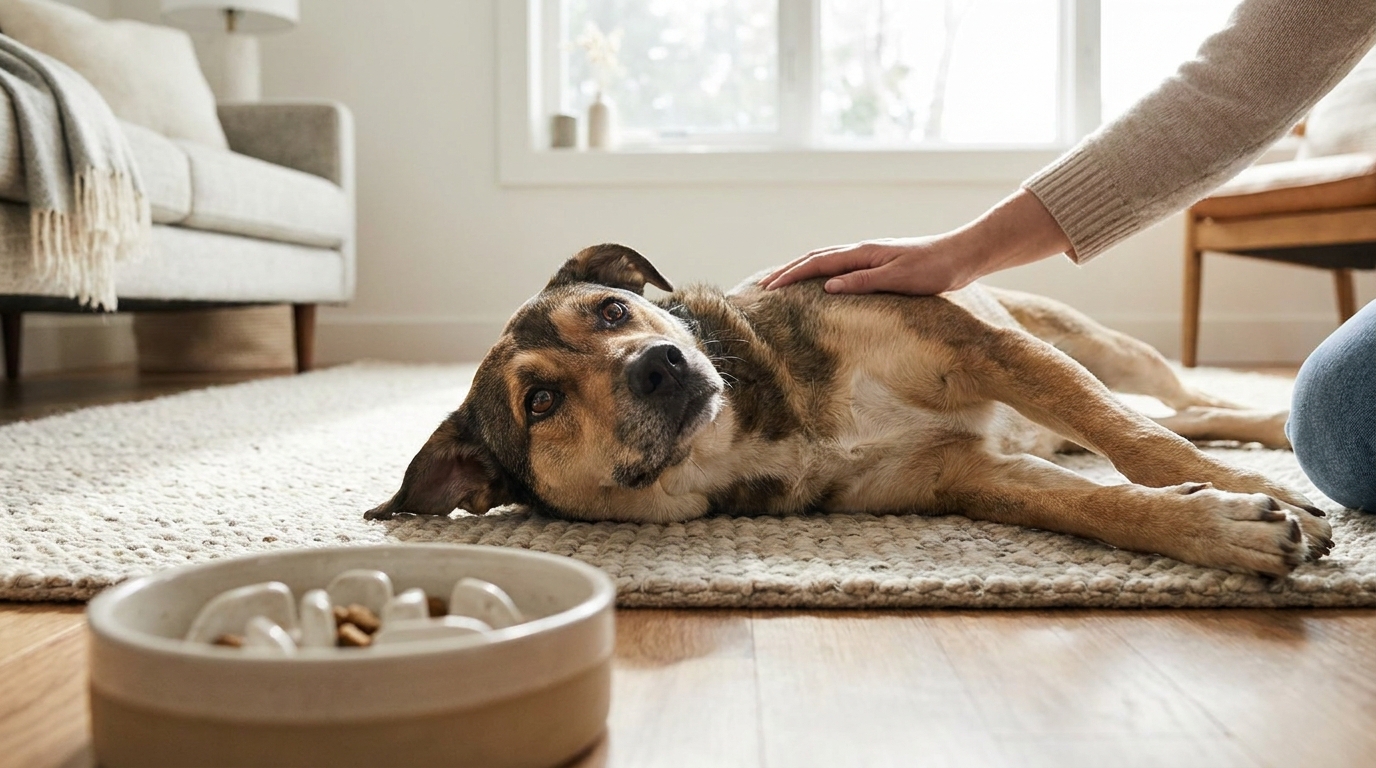
Most dog gas comes from food. Here is how to spot the diet trigger, what helps, and the bloat signs that mean an emergency vet now.
Quick answer: Most dog gas comes from diet: a sudden food change, scraps or dairy. VCA Animal Hospitals also lists swallowed air among the most common causes. Watch a bright, eating adult dog with normal stool for 2 to 3 days. After fatty scraps or trash, call a vet today, even if your dog seems fine. A hard, swollen belly, dry retching or repeated vomiting means an emergency vet now.
This article is general information, not a diagnosis. If you think your pet is in danger, go to the nearest emergency animal hospital.
When is dog gas an emergency?
Gas in a dog is an emergency when it comes with bloat signs: a swollen or hard belly, retching or trying to vomit with nothing coming up, drooling, restlessness or pacing, pale gums, weakness or collapse, which need an emergency vet now.
Bloat, or gastric dilatation-volvulus (GDV), is a stomach that swells with gas and may twist; the American College of Veterinary Surgeons (ACVS) calls it a rapidly progressive, life-threatening condition. The Merck Veterinary Manual says it mainly affects large, deep-chested dogs, but the ACVS notes nearly all breeds have been reported with it. A dog that is still passing gas can still have bloat. Do not walk it off, rub the belly or try a home remedy. These signs match the guide to a bloated stomach in dogs; go to an emergency vet now for:
- A swollen, hard or tight belly, or retching with little or nothing coming up
- Drooling, restlessness or pacing, panting, pale gums, weakness or collapse
- Vomiting more than once, any vomiting in a dull, listless dog, or not keeping water down
- Black or tarry stool, raspberry-jam stool, or bloody stool with vomiting
- Belly pain (a hunched back or "prayer" stance, flinching when the belly is touched, looking at the belly, or standing and stretching), or straining again and again with little or nothing coming out
If your dog ate a whole bag of food or treats: an emergency vet now for any dry retching, restlessness, drooling or a tight belly (possible bloat); with no signs yet, call a vet today and check the label. Before a holiday meal, find the nearest open emergency hospital, because your regular clinic may be closed.
| Sign | Means | Next step |
|---|---|---|
| Gas, bright dog | Likely diet | Watch 2-3 days |
| Gas past 3 days | Diet or gut | Video or vet visit |
| Gas, soft stool | Gut upset | Vet past 2 days |
| Soft stool, one vomit | Gut upset | In-person today |
| Weight loss, pale stool | Digestion | Vet exam |
| Puppy with diarrhea | Many causes | In-person today |
| Vomits again or black stool | Serious | ER now |
| Hard belly or retching | Possible bloat | ER now |
Toy breeds and seniors with soft stool need a same-day call, not a 2-day wait. A puppy with diarrhea that also vomits, will not eat or is listless needs an emergency vet now.
Why does my dog fart so much?
Diet causes most ongoing gas in dogs: VCA Animal Hospitals says most chronic gas comes from a diet the dog digests poorly, and lists air swallowed while gulping food among the most common causes.
A poorly digested diet is not necessarily a poor-quality food, VCA notes. Its list of foods dogs may digest poorly includes soybeans, peas, beans, milk and dairy, and high-fat or spicy foods. The Merck Veterinary Manual adds that poorly digestible carbohydrates can cause diarrhea and flatulence. Less common causes, per VCA, include inflammatory bowel disease, bacterial overgrowth, pancreatitis and intestinal parasites. Merck also lists flatulence among the subtler gut signs of food allergy.
| Cause | Clue | What helps |
|---|---|---|
| New food | Started this week | Switch slowly |
| Table food | After a holiday meal | Stop scraps |
| Fat or trash | Skin, drippings | Call vet today |
| Dairy | Cheese, milk | Skip dairy |
| Eats fast | Gulps, flat face | Slow bowl may help |
| Bone, cob | Swallowed | In-person today |
| Compost | Moldy food | Clinic now |
| Food allergy | Itchy, soft stool | Vet diet trial |
| Parasites | Puppy, new dog | Stool test |
After fat, skin, drippings or trash, call a vet today, even if your dog seems fine. Moldy food or compost means a clinic now (an emergency hospital if yours is closed).
Which Thanksgiving and holiday foods give dogs gas?
Bean dishes, cabbage, Brussels sprouts, broccoli and dairy are classic holiday gas foods that can upset a dog's stomach in large amounts, while onion or garlic in stuffing or gravy is a poison-line call and turkey skin, fat and drippings can trigger pancreatitis.
Vegetables and dairy. The American Kennel Club says even small and moderate amounts of Brussels sprouts can cause flatulence, which is not harmful, and that large amounts of cauliflower and broccoli may add to gas. Plain green beans are listed as OK on the dish-by-dish Thanksgiving foods chart. ASPCA Animal Poison Control says pets do not have significant amounts of lactase, so dairy can cause diarrhea and digestive upset. After a little plain cheese, stop dairy and call a vet if a bright adult dog's diarrhea lasts past 2 days (a toy breed or senior: today), as the guide to cheese and holiday boards advises.
Turkey skin, fat and drippings. The FDA warns that high-fat scraps such as turkey skin and fat trimmings can cause a potentially life-threatening, painful pancreatitis. After any of these or a trash raid, call a vet today, even if your dog seems fine, and watch for 4 days, as the grease and fat guide explains.
Toxic foods. Onion or garlic in stuffing or gravy can damage red blood cells, ASPCA Animal Poison Control says: call a poison line now, even if your dog seems fine, and see the onion and garlic guide for the 3-to-5-day watch; pale, yellow or gray gums, red or brown urine, weakness, fast breathing, repeated vomiting or collapse in those days means an emergency vet now. Chocolate or macadamia nuts: poison line now, too. Grapes, raisins or currants: poison line plus an in-person vet now. Raw yeast dough, which Pet Poison Helpline says keeps rising and can bloat the stomach, or anything with xylitol: emergency vet now, even if your dog seems fine, calling a poison line on the way. A cooked bone, corn cob or foil: an in-person vet the same day, even if your dog seems fine (on a holiday, usually an emergency hospital). A skewer, toothpick, string (never pull it) or battery, even with no signs, or gagging, retching, vomiting, not eating or belly pain after any swallowed item such as a bone, cob, toy or sock: emergency vet now.
ASPCA Animal Poison Control: (888) 426-4435 (a consultation fee may apply). Pet Poison Helpline: (855) 764-7661 (a per-incident fee applies). Never make a dog vomit at home unless a vet or poison line says to.
Gas with diarrhea, vomiting or weight loss: when to see a vet
Gas with diarrhea that lasts more than 2 days in a bright adult dog, or gas with weight loss despite a big appetite, needs a vet visit, while gas with vomiting more than once needs an emergency vet now.
Jillian Haines of Washington State University told dvm360 that weight loss, vomiting, diarrhea and a poor appetite are more worrying signs than gas. These steps match the guide to diarrhea after table food:
- Soft stool in a bright adult dog: call a vet if it lasts past 2 days, as Cornell's Riney Canine Health Center advises. Toy breeds, seniors, Miniature Schnauzers, and dogs with past pancreatitis, diabetes, kidney or heart disease or on a daily NSAID or steroid: call the same day.
- Soft stool plus one vomit, refusing food, more than a streak of blood, or any puppy with diarrhea: an in-person vet today.
- Red streaks of blood with mucus in the stool: a vet within 24 hours.
- One vomit with no diarrhea in a bright dog that is still eating: call a vet today.
- A puppy that also vomits, will not eat or is listless, or a toy-breed puppy that turns weak, trembly or wobbly: an emergency vet now.
Weight loss despite a big appetite, with pale, loose, bulky stool, can point to exocrine pancreatic insufficiency (EPI); the Merck Veterinary Manual says young adult German Shepherds and Rough Collies are predisposed. Parasites such as giardia, more common in younger dogs, need a stool test at a clinic. Ask a vet before fasting any dog, and never fast a puppy, a toy breed or a diabetic dog.
Does a rotten-egg smell mean something is wrong?
The rotten-egg smell of dog gas comes mainly from hydrogen sulfide made by gut bacteria, and smell alone does not mean a dog is sick; gas with weight loss or diarrhea past 2 days needs a vet, and vomiting more than once needs an emergency vet now.
The CDC's Agency for Toxic Substances and Disease Registry describes hydrogen sulfide as a colorless gas that smells like rotten eggs, and a 2001 study in the Journal of the American Veterinary Medical Association describes it as the primary determinant of dog gas odor. Protein that escapes digestion is thought to feed the bacteria involved, dvm360 reports.
What can I give my dog for gas?
Do not give a dog human gas, antacid or anti-diarrhea medicine unless a veterinarian says to, because the FDA warns against giving pets human medicines without a vet's direction; the safe first steps are no table scraps, a slow switch to any new food and slower meals.
Cornell's Riney Canine Health Center also advises against human stomach medicines unless a veterinarian directs it. For ongoing gas, the veterinarian may suggest a more digestible diet, or a diet trial if food allergy is suspected, and can say which, if any, probiotic fits. If gas started after an antibiotic or other new medicine, call the prescribing vet before the next dose, and do not stop it on your own.
How to reduce gas in dogs
To reduce dog gas, feed one complete diet, change foods gradually over at least a week, try a slow-feeder bowl or smaller meals, lock away trash and compost, and keep up regular exercise, but not hard exercise right after a big meal.
- Switch foods slowly: Tufts Petfoodology advises a gradual switch over at least one week.
- Slow the meal: the American Kennel Club suggests slow-feed bowls to cut swallowed air (the evidence is mixed), and the Merck Veterinary Manual names eating quickly and one meal a day among bloat risk factors.
- Lock away trash and compost; the FDA advises a trash bin pets cannot get into.
- Skip raised bowls: the American College of Veterinary Surgeons says elevated feeding has been suggested to increase bloat.
If gas in a bright dog does not ease within 2 to 3 days of removing the likely food, see a vet.
Is it gas or a gurgling stomach?
Stomach gurgling is the sound of gas and fluid moving through a dog's gut, while passing gas is what leaves it; both often follow the same diet triggers, and the same emergency signs apply to both. Gurgling with a hard belly, retching, drooling or restlessness means an emergency vet now.
When a video visit helps, and when it does not
Gas in an adult dog that is bright, eating and passing normal stool is usually a diet issue, and a live video visit can help sort out the cause and a feeding plan. For an adult dog in Florida, New York or Virginia that has gas but is bright, eating and not vomiting, RexVet, a nonprofit online vet service, offers a $64.99 live video visit with a veterinarian licensed in the dog's state, about 8 AM to 11 PM Eastern, every day. 28% of RexVet video visits started between 6 PM and 11 PM in the pet owner's local time.
RexVet serves pets located in Florida, New York and Virginia by video visit, and your dog must be in one of those states during the visit. There are no overnight visits, and holiday hours are not confirmed, so check open slots when you book; a same-day slot is not guaranteed. Outside those hours, if no slot is open, or if your dog is getting worse, go to an emergency vet. If you are traveling outside these three states, use a local vet.
A video visit fits an adult dog that is bright and eating, with gas that started after a food change or holiday scraps (no toxins, bones or string), gas that has lasted more than a couple of weeks without weight loss, or gas with mildly soft stool and no vomiting. Have the food bag, treats, any scraps eaten, a stool photo and a short belly video ready.
A licensed RexVet vet, a veterinarian licensed in your pet's state, reviews diet, eating speed and stool, sets a feeding plan, and says whether a stool test, a diet trial or an in-person exam is needed and how soon. Book a live video visit.
A video visit cannot feel the belly, run bloodwork, take X-rays, test a stool sample or give fluids, so it cannot rule out bloat, pancreatitis or a blockage, and some dogs will still need a clinic; if a stool test is needed, the veterinarian will tell you to take a fresh sample to a local clinic.
A swollen or hard belly, retching that brings nothing up, drooling or pacing, vomiting more than once, black or tarry stool, belly pain, pale gums, weakness or collapse means an emergency hospital now, not a video visit. Refusing food, any vomiting with the gas and soft stool, more than a streak of blood, or any puppy with diarrhea needs an in-person vet today; a puppy that also vomits, will not eat or is listless needs an emergency vet now.
No prescription is promised; the veterinarian decides.
Need an Expert Opinion on This Topic?
Book a video visit with a licensed vet, evenings and weekends included
See open timesFrequently Asked Questions
Is it normal for my dog to fart?
Yes, most dogs pass some gas every day as part of normal digestion, the American Kennel Club says. VCA Animal Hospitals adds that new, excessive gas should be looked into, especially with diarrhea or blood in the stool. A swollen, hard belly or retching that brings nothing up is not normal gas: it can be bloat, which needs an emergency vet now.
Why does my dog suddenly have so much bad gas?
A sudden increase usually follows a food change, new treats, table scraps or a trash raid. After fatty scraps or trash, call a vet today, even if your dog seems fine. Otherwise, stop scraps and watch a bright adult dog with normal stool for 2 to 3 days; call a vet if gas lasts longer or comes with soft stool past 2 days or weight loss.
Can my dog's food cause gas?
Yes. VCA Animal Hospitals says most chronic gas comes from a diet the dog digests poorly, and a sudden diet change can cause excess gas too. Switch foods gradually over at least one week, as Tufts Petfoodology advises, and ask a vet about a food allergy diet trial if gas comes with itching or soft stool.
Which dog breeds are the gassiest?
Boxers, bulldogs and Boston terriers are among the breeds best known for gas, dvm360 reports, but diet is the usual cause in any breed. Flat-faced dogs and fast eaters tend to swallow more air, which may add to gas: a 2024 Journal of Veterinary Internal Medicine study of dogs given swallow X-ray studies at two veterinary teaching hospitals found flat-faced (brachycephalic) dogs were predisposed to swallowing air. A flat-faced dog with noisy breathing, gagging or regurgitation needs a vet check.
Can gas mean my dog has bloat?
Yes, when the belly swells or hardens, or the dog retches with nothing coming up: possible bloat (GDV), an emergency vet now. Drooling, restlessness or pacing, pale gums, weakness and collapse are other signs. Any breed can bloat, and a dog that is still passing gas can still have it.
Can an online vet help with my dog's gas in Florida, New York or Virginia?
Yes, for a bright adult dog with gas and no vomiting, bloat signs or toxins, located in Florida, New York or Virginia during the visit. On camera, a licensed RexVet vet, a veterinarian licensed in your pet's state, can review diet, eating speed and stool photos and set a feeding plan. A video visit cannot feel the belly or test stool, so gas with weight loss, diarrhea that keeps coming back, any vomiting with soft stool, refusing food or a puppy with diarrhea needs an in-person vet, and bloat signs need an emergency vet now. No prescription is promised. If medicine comes up: in Florida (s.474.2021), after a video-only visit a veterinarian can prescribe only an FDA-approved animal drug used as labeled, for up to 14 days (1 month for products labeled solely for flea and tick control), with no renewal without an in-person exam, and not human-labeled, controlled or compounded anti-infective drugs. Under federal rules, off-label or human-drug use needs an in-person exam. Virginia allows the exam to be electronic; New York's rules are still unsettled. RexVet is not a pharmacy; if the veterinarian prescribes, a pharmacy transfer fee applies when the prescription is sent to an outside pharmacy.
FAQs
Is it normal for my dog to fart?
Yes, most dogs pass some gas every day as part of normal digestion, the American Kennel Club says. VCA Animal Hospitals adds that new, excessive gas should be looked into, especially with diarrhea or blood in the stool. A swollen, hard belly or retching that brings nothing up is not normal gas: it can be bloat, which needs an emergency vet now.
Why does my dog suddenly have so much bad gas?
A sudden increase usually follows a food change, new treats, table scraps or a trash raid. After fatty scraps or trash, call a vet today, even if your dog seems fine. Otherwise, stop scraps and watch a bright adult dog with normal stool for 2 to 3 days; call a vet if gas lasts longer or comes with soft stool past 2 days or weight loss.
Can my dog's food cause gas?
Yes. VCA Animal Hospitals says most chronic gas comes from a diet the dog digests poorly, and a sudden diet change can cause excess gas too. Switch foods gradually over at least one week, as Tufts Petfoodology advises, and ask a vet about a food allergy diet trial if gas comes with itching or soft stool.
Which dog breeds are the gassiest?
Boxers, bulldogs and Boston terriers are among the breeds best known for gas, dvm360 reports, but diet is the usual cause in any breed. Flat-faced dogs and fast eaters tend to swallow more air, which may add to gas: a 2024 Journal of Veterinary Internal Medicine study of dogs given swallow X-ray studies at two veterinary teaching hospitals found flat-faced (brachycephalic) dogs were predisposed to swallowing air. A flat-faced dog with noisy breathing, gagging or regurgitation needs a vet check.
Can gas mean my dog has bloat?
Yes, when the belly swells or hardens, or the dog retches with nothing coming up: possible bloat (GDV), an emergency vet now. Drooling, restlessness or pacing, pale gums, weakness and collapse are other signs. Any breed can bloat, and a dog that is still passing gas can still have it.
Can an online vet help with my dog's gas in Florida, New York or Virginia?
Yes, for a bright adult dog with gas and no vomiting, bloat signs or toxins, located in Florida, New York or Virginia during the visit. On camera, a licensed RexVet vet, a veterinarian licensed in your pet's state, can review diet, eating speed and stool photos and set a feeding plan. A video visit cannot feel the belly or test stool, so gas with weight loss, diarrhea that keeps coming back, any vomiting with soft stool, refusing food or a puppy with diarrhea needs an in-person vet, and bloat signs need an emergency vet now. No prescription is promised. If medicine comes up: in Florida (s.474.2021), after a video-only visit a veterinarian can prescribe only an FDA-approved animal drug used as labeled, for up to 14 days (1 month for products labeled solely for flea and tick control), with no renewal without an in-person exam, and not human-labeled, controlled or compounded anti-infective drugs. Under federal rules, off-label or human-drug use needs an in-person exam. Virginia allows the exam to be electronic; New York's rules are still unsettled. RexVet is not a pharmacy; if the veterinarian prescribes, a pharmacy transfer fee applies when the prescription is sent to an outside pharmacy.
Medically Reviewed
Reviewed by Dr. Tiffany Delacruz, DVM — licensed veterinarian and CEO of RexVet. Last reviewed November 17, 2026.
Content is for informational purposes and does not replace professional veterinary advice.
Chief Executive Officer · Licensed Veterinarian
Dr. Delacruz is a licensed Doctor of Veterinary Medicine specializing in preventive care and veterinary telehealth. She reviews all health content on RexVet to ensure accuracy and clinical relevance.
Sources & References
- · American Veterinary Medical Association — Telehealth Guidelines
- · AVMA — Pet Care Resources
- · U.S. FDA — Animal & Veterinary