
My Cat Ate a Lizard: What to Watch For in Florida
By RexVet Team | Reviewed by Dr. Tiffany Delacruz, DVM
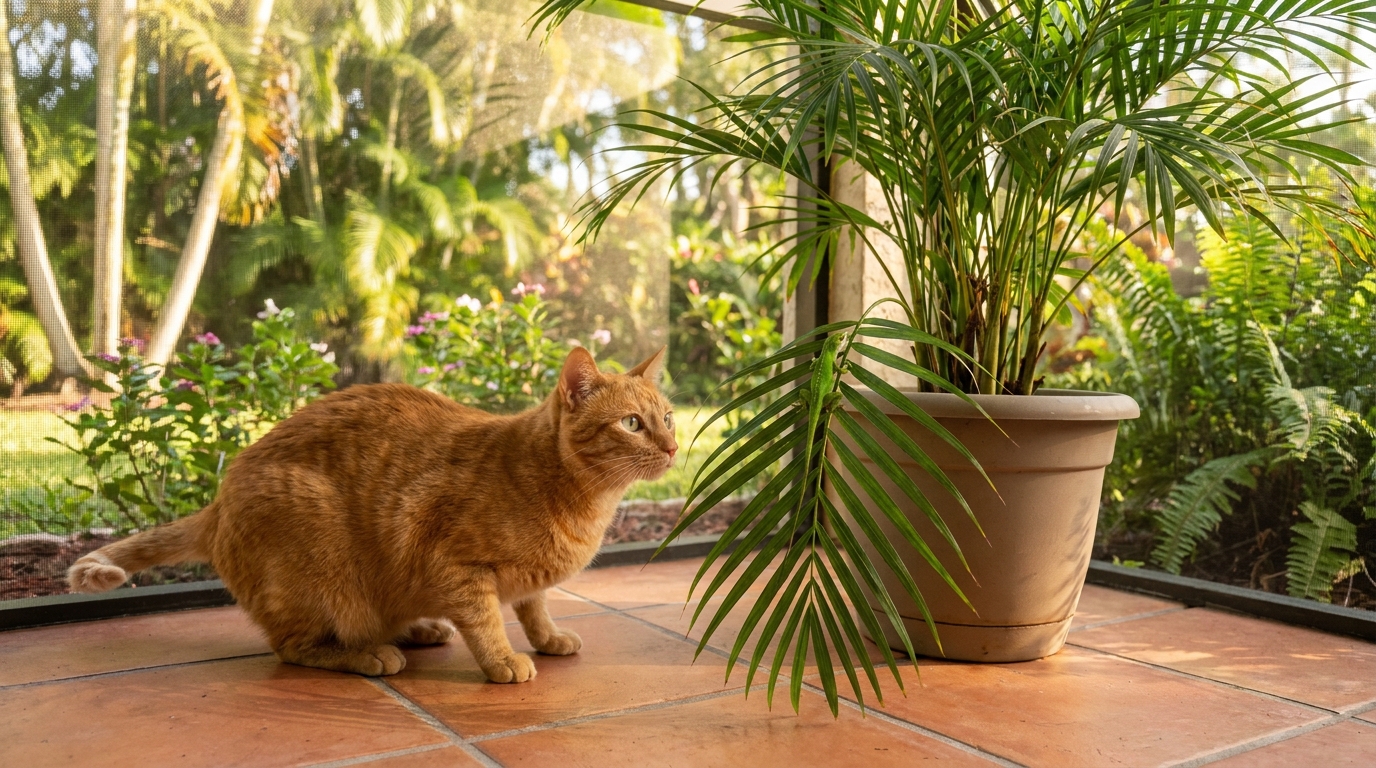
My cat ate a lizard? Most cats are fine tonight, but watch for vomiting now and for liver fluke signs like yellow gums in the months ahead.
Go to an in-person emergency vet now if your cat is vomiting over and over, drooling heavily or pawing at its mouth, breathing with effort, weak or collapsed, or if the animal it caught may have been a toad rather than a lizard.
My Cat Ate a Lizard: Is It Poisonous?
Anoles, geckos and skinks are not venomous or poisonous to cats. The real Florida look-alike emergency is a toad, which is covered in the next section.
So where does the phrase "lizard poisoning" come from? The Companion Animal Parasite Council (CAPC) explains it directly: "'Lizard Poisoning' refers to disease as a result to ingesting lizards containing the P. fastosum infective stage (metacercariae) and subsequent infection with the fluke – not as a result of ingesting the lizard itself."
In other words, the lizard is not a toxin. The concern is a liver parasite that some lizards carry, and that is a slow, weeks-to-months question, not a tonight question.
Tonight's usual issues are an upset stomach or a scratch in the mouth. Some cats vomit after eating prey, often from eating fast or mild stomach upset. If your cat vomits and then goes back to eating, drinking and acting normally, keep watching. Vomiting that keeps happening means your cat needs a vet.
Emergency Signs Tonight, Including the Toad Mix-Up
Go to an in-person emergency vet now, without waiting to see if things improve, if you notice any of these:
- Vomiting over and over, or your cat cannot keep water down.
- Heavy drooling or pawing at the mouth.
- Gagging, trouble swallowing, or something that looks stuck in the throat.
- Breathing with effort.
- Weakness, wobbling or collapse.
- A painful, tense or swollen belly, or your cat hunched and guarding its stomach.
- Any chance that the animal your cat caught was a toad rather than a lizard.
Lizard or toad?
In Florida, toads, not lizards, are the backyard emergency. Lizards are quick, scaly and usually have a long tail. Toads are chunkier, hop rather than scurry, and have dry, bumpy skin. If you did not get a clear look, or you found your cat near a toad, treat it as a possible toad exposure and go in now. Do not wait for signs to show up first.
Heavy drooling and pawing at the mouth are among the signs to take seriously after contact with a toad. Our guide on sudden heavy drooling walks through toad exposure in dogs, and the same emergency rule applies to cats. For a broader list of signs that cannot wait, see our pet emergency checklist for dog and cat owners.
Could it be a blockage?
If your cat keeps vomiting, cannot keep water down, or has a painful or swollen belly, go to an in-person emergency vet now. A blockage needs X-rays or ultrasound, which a video visit cannot do.
Tonight's Home Check
If your cat is alert, breathing normally and showing none of the emergency signs above, a calm home check is the right next step:
- Look in the mouth, gently. If your cat allows it, check for leftover lizard pieces or a scratch on the gums or tongue, and remove any loose pieces you can see. Do not reach down the throat or pull on anything lodged. A cat that is gagging, pawing at its mouth or cannot swallow needs an emergency vet now.
- Offer fresh water. Let your cat drink normally.
- Keep your cat indoors tonight. That way you can watch closely, and there is no second lizard.
- Keep notes. Write down any vomiting, diarrhea or skipped meal, and when it happened. Also note today's date; it matters for the liver fluke watch described below.
- Take a photo. If you still have the animal or what is left of it, a picture helps a vet sort lizard from toad.
Do not try to make your cat vomit, and do not give any human medicine. If you are thinking about holding back food, ask a vet first, because going without food can cause its own problems in cats. Wear gloves when you clean up vomit or lizard remains, and wash your hands afterward.
If vomiting is the main thing you are seeing, our guide to why cats vomit and when to worry covers the other common causes.
Lizard Poisoning in Cats Is Really a Liver Fluke
It helps to keep two things apart. Tonight, a cat that ate a gecko or anole may have a mild stomach upset. Separately, and much later, there is the possibility of a liver fluke infection that has nothing to do with tonight's vomiting.
The fluke is called Platynosomum fastosum. According to CAPC, "Platynosomum fastosum is a liver fluke of cats in Florida, other areas of the southeastern United States, and Hawaii."
Its life cycle, in plain words, runs like this:
- An infected cat passes fluke eggs in its stool.
- Snails eat the eggs, and the young flukes develop inside them.
- Lizards, geckos, toads or pill bugs eat the snails, and the flukes reach their infective stage inside those animals.
- A cat eats one of those animals, and the flukes settle in its liver.
VCA Animal Hospitals sums it up: "Cats are infected by ingesting the second intermediate host, which is why the disease is sometimes called 'lizard poisoning'."
Where this matters: VCA notes, "In the United States, they have been found in Florida and Hawaii," and "Cats that go outdoors and hunt in these regions have a higher risk of infection." CAPC describes the fluke as "Most common in cats that are allowed to hunt."
Not every lizard carries flukes, and a single snack is not a diagnosis. It is simply a reason to note the date and keep an eye on your cat over the coming months.
Signs to Watch For in the Weeks and Months Ahead
Fluke signs, if they appear at all, are slow. This veterinary guide to liver flukes in cats notes that "Many cats with liver flukes are asymptomatic, while others show concerning symptoms, such as jaundice, vomiting, and weight loss," and that "symptoms generally start between two and four months after infection." CAPC adds that "Severe disease and clinical signs are often absent in cats with few worms."
VCA lists these non-specific signs:
- Vomiting
- Diarrhea
- Weight loss
- Poor appetite
- Increased drinking and urination
- Dehydration
And these more severe signs:
- Yellowing of the skin and gums (jaundice)
- Abdominal pain
- A swollen belly
- An enlarged liver, which a vet finds on exam
CAPC puts it simply: "Severe clinical signs include vomiting, jaundice and diarrhea."
If you see yellow gums or skin, a swollen belly, weight loss or a fading appetite in a cat that hunts lizards, do not save it for the next routine checkup. Arrange a prompt in-person visit and mention the lizard and the date you noted. Our guide on what to do when a cat stops eating explains why a cat that skips food needs attention sooner rather than later.
How Liver Flukes Are Diagnosed, and Why Video Cannot Confirm Them
VCA is candid: "Diagnosis is not always straightforward." It explains that "Finding eggs in a fecal sample indicates the disease is present, but standard fecal testing can miss the eggs." CAPC adds, "Multiple fecal exams may be necessary."
Because the eggs can be hard to find, VCA notes that diagnosis "is often presumed based on a combination of clinical signs, supportive blood testing, imaging, and your geographical location."
Every one of those steps happens in person: stool testing, bloodwork, and sometimes an abdominal ultrasound. A video visit cannot confirm or rule out a liver fluke. What a video vet can do is help you decide whether testing makes sense for your cat and when.
Preventing the Next Lizard Snack
Prevention is the most useful thing you can do. CAPC's advice is direct: "Cats should not be allowed to hunt to prevent ingestion of the intermediate hosts." The liver fluke guide linked above agrees that "keeping your cat indoors will prevent them from becoming infected."
In Florida, that takes a few practical steps:
- Lanai time is not lizard-free time. A screened lanai helps, but anoles and geckos slip through gaps and around doors. Check corners and screens.
- Lizards get indoors too. An indoor cat that catches a gecko on the wall can still be exposed, so the same watch applies.
- Replace the hunt with play. Wand toys, treat puzzles and short daily play sessions give a hunting cat an outlet that does not involve wildlife.
- Supervise outdoor time. If your cat goes outside on a harness or in a catio, stay close enough to step in.
What a RexVet Online Vet Can and Cannot Do After a Cat Eats a Lizard
RexVet is a non-profit veterinary telehealth service. RexVet's veterinarians are licensed in Florida, New York and Virginia, and they can see your cat by video when your cat is stable and you want help deciding what comes next.
On a video visit, a veterinarian can:
- Triage vomiting or drooling tonight and tell you whether the signs point to an emergency clinic.
- Look in your cat's mouth with you on camera.
- Help sort lizard from toad, especially if you have a photo.
- Explain the liver fluke risk for your cat's lifestyle, whether indoor, lanai or outdoor.
- Plan whether and when an in-person stool test or bloodwork makes sense.
- Recheck with you later if appetite or energy dips.
A video visit cannot:
- Run stool tests, bloodwork, X-rays or ultrasound.
- Confirm or rule out a blockage or a liver fluke.
- Replace an emergency clinic. If a blockage or toad exposure is suspected, the vet will send you in person.
If the veterinarian decides medication is appropriate, they can prescribe where state rules allow. In Florida, prescriptions based solely on a telehealth evaluation may be issued for up to 14 days of treatment for animal drugs other than flea and tick products and may not be renewed without an in-person examination. Controlled substances cannot be prescribed by video. You can read more about how online vet visits for cats work.
If your cat is stable and has none of the emergency signs above, you can book a RexVet video visit 24/7, including nights and weekends. A video visit is $64.99, and it is available to pet parents located in Florida, New York and Virginia only.
When to See a Vet in Person in Florida, New York or Virginia
Outside the emergency list at the top of this page, plan a same-day or prompt in-person visit if you notice:
- Vomiting that keeps coming back.
- Your cat not eating.
- Yellow gums or yellow skin.
- A swollen belly.
- Weight loss in a cat that hunts.
Florida law also requires a telehealth veterinarian to give you "the contact information for at least one physical veterinary clinic in the vicinity of the patient's location." If a video vet recommends in-person care, you will know where to go. See our Florida online vet page for details.
Liver flukes are a warm-climate problem found in Florida, while cats in New York and Virginia that catch lizards still get the same stomach-upset advice: look in the mouth, watch for vomiting, and go in for any emergency sign. Read more on our New York online vet page and Virginia online vet page.
Frequently Asked Questions
Are Florida lizards poisonous to cats?
No. Anoles, geckos and skinks are not venomous or poisonous to cats. CAPC explains that "lizard poisoning" means a liver fluke infection some lizards carry, "not as a result of ingesting the lizard itself." Toads are the real emergency, so go in now if the animal may have been a toad.
What are the symptoms of lizard poisoning in cats?
Many infected cats show no signs at all. When signs do appear, VCA lists vomiting, diarrhea, weight loss, poor appetite, and increased drinking and urination, with yellow gums or skin and a painful or swollen belly in more severe cases. Any of these in a cat that hunts lizards deserves an in-person visit.
How long after eating a lizard will a cat get sick?
Tonight, any stomach upset usually shows up as vomiting or a skipped meal. Liver fluke signs are much slower: they "generally start between two and four months after infection," and many infected cats never show any. Note the date your cat ate the lizard so you can tell your vet.
Should I deworm my cat after it ate a lizard?
That is a decision for a veterinarian, ideally after testing. Liver flukes are not always easy to confirm, and CAPC notes that multiple fecal exams may be necessary. Do not give any product at home without a vet's advice.
Can indoor cats get liver flukes?
Only by eating an infected host, such as a lizard, gecko, toad or pill bug. Lizards do find their way indoors and onto lanais, so an indoor cat that catches one can still be exposed. Keeping your cat from hunting is the best prevention.
If your cat ate an anole or gecko and is stable, with none of the emergency signs above, you do not have to wonder alone tonight. RexVet's veterinarians are licensed in Florida, New York and Virginia and are available 24/7 for pet parents in those states only. A visit is $64.99, and you can book a video visit now.
FAQs
Are Florida lizards poisonous to cats?
No. Anoles, geckos and skinks are not venomous or poisonous to cats. CAPC explains that "lizard poisoning" means a liver fluke infection some lizards carry, "not as a result of ingesting the lizard itself." Toads are the real emergency, so go in now if the animal may have been a toad.
What are the symptoms of lizard poisoning in cats?
Many infected cats show no signs at all. When signs do appear, VCA lists vomiting, diarrhea, weight loss, poor appetite, and increased drinking and urination, with yellow gums or skin and a painful or swollen belly in more severe cases. Any of these in a cat that hunts lizards deserves an in-person visit.
How long after eating a lizard will a cat get sick?
Tonight, any stomach upset usually shows up as vomiting or a skipped meal. Liver fluke signs are much slower: they "generally start between two and four months after infection," and many infected cats never show any. Note the date your cat ate the lizard so you can tell your vet.
Should I deworm my cat after it ate a lizard?
That is a decision for a veterinarian, ideally after testing. Liver flukes are not always easy to confirm, and CAPC notes that multiple fecal exams may be necessary. Do not give any product at home without a vet's advice.
Can indoor cats get liver flukes?
Only by eating an infected host, such as a lizard, gecko, toad or pill bug. Lizards do find their way indoors and onto lanais, so an indoor cat that catches one can still be exposed. Keeping your cat from hunting is the best prevention.
If your cat ate an anole or gecko and is stable, with none of the emergency signs above, you do not have to wonder alone tonight. RexVet's veterinarians are licensed in Florida, New York and Virginia and are available 24/7 for pet parents in those states only. A visit is $64.99, and you can book a video visit now.
Medically Reviewed
Reviewed by Dr. Tiffany Delacruz, DVM — licensed veterinarian and CEO of RexVet. Last reviewed September 22, 2026.
Content is for informational purposes and does not replace professional veterinary advice.
Chief Executive Officer · Licensed Veterinarian
Dr. Delacruz is a licensed Doctor of Veterinary Medicine specializing in preventive care and veterinary telehealth. She reviews all health content on RexVet to ensure accuracy and clinical relevance.
Sources & References
- · American Veterinary Medical Association — Telehealth Guidelines
- · AVMA — Pet Care Resources
- · U.S. FDA — Animal & Veterinary
Need an Expert Opinion on This Topic?
Connect with a certified vet via video call in minutes
Talk to Vet Now