
Kitten Not Pooping? How to Stimulate and When to See a Vet
By RexVet Team | Reviewed by Dr. Tiffany Delacruz, DVM
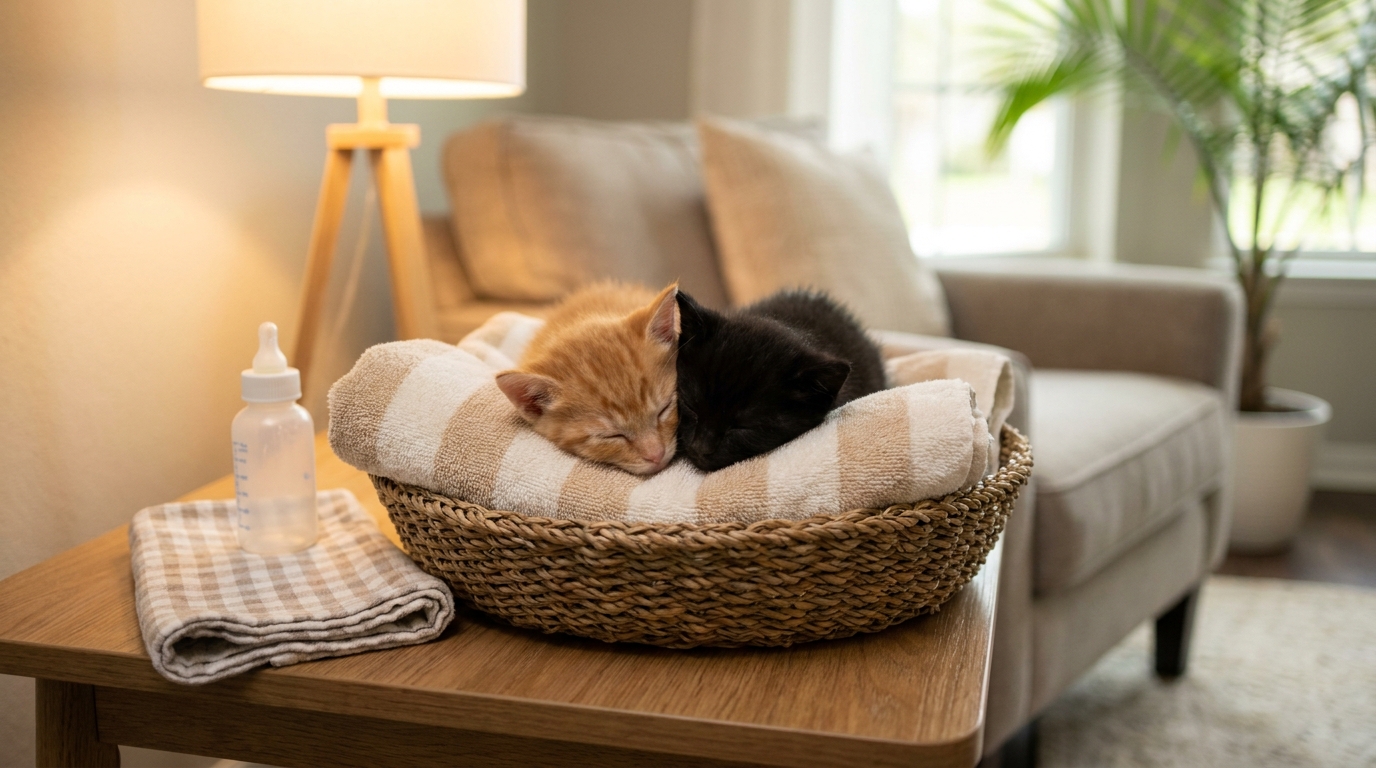
Kitten not pooping? Kittens under about three weeks can't go on their own and need gentle help after meals. A swollen belly needs a vet.
Go to a vet now if your kitten is cold, weak or won't nurse or eat, has a swollen or hard belly, is vomiting, strains with nothing coming out, or cries in pain.
This guide starts with the age rule, then the warning signs, then how to help a young kitten go, how long is too long, and when a vet needs to see your kitten in person.
Kitten Not Pooping: Age Changes Everything
Your kitten's age decides what "normal" looks like. According to VCA Animal Hospitals, "Kittens cannot eliminate (urinate or defecate) on their own until about three weeks of age." VCA adds: "They rely on the mother to stimulate their reflex to initiate elimination."
When a mother cat is around, she does this job for the litter. When she isn't, you do. So if you are caring for a bottle-fed or orphaned kitten that hasn't pooped, the first question is simple: has anyone been stimulating them after meals?
Things change as your kitten grows. PetMD says kittens start to go to the bathroom on their own at 3-4 weeks old.
If you don't know your foster's age, ask the shelter or rescue that placed them. Until you know, it is safest to offer help after each feeding and to use the time lines further down to judge when to call a vet.
Emergency Signs: Go to a Vet Now
Some kittens can't wait for morning, a callback or a video visit. Take your kitten to an in-person vet or emergency clinic right away if you notice any of these:
- Your kitten feels cold.
- Your kitten is weak.
- Your kitten won't nurse or won't eat.
- The belly looks swollen or feels hard.
- Any vomiting.
- Straining with nothing coming out.
- Crying in pain.
PetMD is direct about a kitten with no stool coming out: "If your cat is obstipated and no stool is coming out, then they do need to see a veterinarian as soon as possible—that is a medical emergency." Do not wait to see whether it passes on its own.
For a wider list of warning signs in cats and dogs, see our practical pet emergency checklist.
How to Stimulate a Young Kitten
Here is how to help a young kitten go. VCA advises that after feeding, you can stimulate the reflex by gently stroking the area between the anus and vulva or penis with a warm, moistened cotton ball or soft cloth.
Step by step:
- Feed your kitten first. VCA ties stimulation to the time right after feeding.
- Have a warm, moistened cotton ball or soft cloth ready, as VCA describes.
- Hold your kitten over a paper towel or an old towel so you can see what comes out.
- Gently stroke the area between the anus and the vulva or penis. Keep your touch light.
- Clean and dry your kitten, then write the result in your log (more on that below).
Don't worry if one session gives you nothing. PetMD says: "Don't be concerned if your young kitten doesn't poop with every stimulation, but as they get older, they should have a schedule of when they need to be stimulated or when they use the litter box."
Not sure you're doing it right? That is a good question for a vet who can watch you do it. But any emergency sign above means an in-person vet, not coaching by video.
How Long Is Too Long Without a Poop?
PetMD gives two clear time lines. The first: "For kittens of any age, if they go more than 24 hours without defecating, they might be constipated."
The second: "if a kitten does not regain a normal pooping schedule within 48 hours, they should be taken to a veterinarian as soon as possible, as constipation can be life-threatening for a kitten."
Put together, that means:
- More than 24 hours with no stool: kitten constipation is possible. If your kitten is still young enough to need help, keep stimulating after each meal the way VCA describes, watch closely, and write everything down.
- No normal schedule back within 48 hours: take your kitten to a veterinarian in person as soon as possible.
- Any emergency sign at any point: go now. Don't wait for either mark.
Signs of kitten constipation
PetMD lists these signs:
- Straining to defecate but nothing comes out (tenesmus)
- Producing small, hard fecal balls
The first sign is also on the emergency list above. Small, hard stool is worth noting in your log and mentioning to a vet.
Keep a Simple Log
A simple log helps you track what is really happening, and it gives any vet a clear picture fast. VCA's suggested logbook for orphaned kittens includes "Urination and defecation frequency and consistency."
VCA also recommends weighing: "The birth weight of each kitten should be recorded, and weight should be recorded every day for the first four weeks of life."
You don't need special gear. A kitchen scale and a notes app on your phone are enough. For each kitten, jot down:
- The time of each feeding and how well your kitten ate.
- Whether your kitten peed or pooped after stimulation or in the litter box.
- What the stool looked like: soft, formed, or small and hard.
- The day's weight.
- Anything that seems off, such as less interest in food or less energy.
Start the log from day one, not only once there's a problem. Weight loss on your log is a reason to have your kitten seen in person. Bring the log to any vet visit, in person or by video.
What Not to Do
When a kitten hasn't pooped, it is tempting to try a quick fix you read about online. Please don't. PetMD warns: "Enemas should never be tried at home and must be done by a veterinarian to avoid complications such as colon rupture."
Do not give human laxatives, oils or any human medicine at home. Only a veterinarian can decide what treatment is appropriate for your kitten.
Is your older kitten learning the litter box and nibbling the litter? Our guide on why cats and kittens eat litter covers that. Caring for a grown cat instead? Adult constipation is a different topic; see what to do when an adult cat hasn't pooped.
What a RexVet Online Vet Can and Cannot Do
A video visit can help with a kitten that isn't pooping but is otherwise warm, alert and eating. It does not replace an emergency clinic, and it has real limits for this problem.
On a video visit, a RexVet veterinarian can:
- Watch you stimulate your kitten live and coach your technique.
- Look at the shape of the belly and your kitten's energy on camera.
- Review your log and daily weights.
- Help you decide between a home plan and an in-person visit today.
A video visit cannot:
- Feel your kitten's belly.
- Take X-rays.
- Give fluids or an enema.
If the veterinarian decides medication is appropriate, they can prescribe where state rules allow. In Florida, a veterinarian who has seen your pet only by video may prescribe only FDA-approved animal drugs used as labeled, for up to 14 days (1 month for flea-and-tick-only products), and cannot renew without an in-person exam.
RexVet is a 501(c)(3) non-profit veterinary telehealth service. If your kitten has none of the emergency signs above and you want a vet to check your technique or read your log, book a RexVet video visit. A visit is $64.99, vets are available 24/7, and RexVet's veterinarians are licensed in Florida, New York and Virginia. If your kitten has any of the emergency signs above, go to an in-person ER instead.
A short clip of a stimulation session, a photo of the stool, and your log give the vet more to work with. Here is how to upload pet photos and videos for an online vet review.
When to Be Seen in Person in Florida, New York or Virginia
Go to a clinic in person, not a video visit, if:
- Your kitten shows any emergency sign listed near the top of this page.
- PetMD's 48-hour mark passes without a normal pooping schedule coming back.
- Your log shows weight loss.
- Your kitten stops eating or nursing.
These signs need a hands-on exam and cannot be assessed safely by video. An in-person team can feel the belly and offer care a video visit can't, such as X-rays or fluids.
If you start with a video visit in Florida, state law says the telehealth vet must give you "the contact information for at least one physical veterinary clinic in the vicinity of the patient's location" (Fla. Stat. 474.2021). It is still smart to know your nearest emergency clinic before you need it.
For more on video visits where you live, see our pages for Florida, New York and Virginia.
Frequently Asked Questions
How often should a young kitten poop?
PetMD says that for kittens of any age, going more than 24 hours without defecating might mean constipation. If a normal schedule does not return within 48 hours, PetMD says to take your kitten to a veterinarian as soon as possible. Keep a daily log from the start so you can see the pattern.
How do I stimulate a kitten to poop?
VCA advises that after feeding, you can stimulate the reflex by gently stroking the area between the anus and vulva or penis with a warm, moistened cotton ball or soft cloth. VCA says kittens need this help until about three weeks of age. PetMD says not to be concerned if a young kitten doesn't poop with every stimulation.
When do kittens start using the litter box?
PetMD says kittens start to go to the bathroom on their own at 3-4 weeks old. Before about three weeks (VCA), kittens need you to stimulate them after each feeding. At any age, PetMD's 24-hour and 48-hour lines still apply.
Can I give my kitten a laxative or oil?
No. Do not give a kitten human laxatives, oils or any human medicine at home. Only a veterinarian can decide what treatment is appropriate, and some treatments, such as an enema, must be done by a veterinarian (PetMD). That decision may mean an in-person exam.
What does kitten constipation look like?
PetMD lists straining to defecate with nothing coming out (tenesmus) and small, hard fecal balls. PetMD calls a kitten with no stool coming out a medical emergency, so that kitten needs an in-person vet, not a video visit.
Any emergency sign means the ER first. For a kitten that is warm, alert and eating but still has you worried about how often they go, book a RexVet video visit for $64.99. Vets are available 24/7, and RexVet's veterinarians are licensed in Florida, New York and Virginia.
FAQs
How often should a young kitten poop?
PetMD says that for kittens of any age, going more than 24 hours without defecating might mean constipation. If a normal schedule does not return within 48 hours, PetMD says to take your kitten to a veterinarian as soon as possible. Keep a daily log from the start so you can see the pattern.
How do I stimulate a kitten to poop?
VCA advises that after feeding, you can stimulate the reflex by gently stroking the area between the anus and vulva or penis with a warm, moistened cotton ball or soft cloth. VCA says kittens need this help until about three weeks of age. PetMD says not to be concerned if a young kitten doesn't poop with every stimulation.
When do kittens start using the litter box?
PetMD says kittens start to go to the bathroom on their own at 3-4 weeks old. Before about three weeks (VCA), kittens need you to stimulate them after each feeding. At any age, PetMD's 24-hour and 48-hour lines still apply.
Can I give my kitten a laxative or oil?
No. Do not give a kitten human laxatives, oils or any human medicine at home. Only a veterinarian can decide what treatment is appropriate, and some treatments, such as an enema, must be done by a veterinarian (PetMD). That decision may mean an in-person exam.
What does kitten constipation look like?
PetMD lists straining to defecate with nothing coming out (tenesmus) and small, hard fecal balls. PetMD calls a kitten with no stool coming out a medical emergency, so that kitten needs an in-person vet, not a video visit.
Any emergency sign means the ER first. For a kitten that is warm, alert and eating but still has you worried about how often they go, book a RexVet video visit for $64.99. Vets are available 24/7, and RexVet's veterinarians are licensed in Florida, New York and Virginia.
Medically Reviewed
Reviewed by Dr. Tiffany Delacruz, DVM — licensed veterinarian and CEO of RexVet. Last reviewed September 26, 2026.
Content is for informational purposes and does not replace professional veterinary advice.
Chief Executive Officer · Licensed Veterinarian
Dr. Delacruz is a licensed Doctor of Veterinary Medicine specializing in preventive care and veterinary telehealth. She reviews all health content on RexVet to ensure accuracy and clinical relevance.
Sources & References
- · American Veterinary Medical Association — Telehealth Guidelines
- · AVMA — Pet Care Resources
- · U.S. FDA — Animal & Veterinary
Need an Expert Opinion on This Topic?
Connect with a certified vet via video call in minutes
Talk to Vet Now