
Indoor Cat Got Out and Came Back? What to Check Tonight
By RexVet Team | Reviewed by Dr. Tiffany Delacruz, DVM
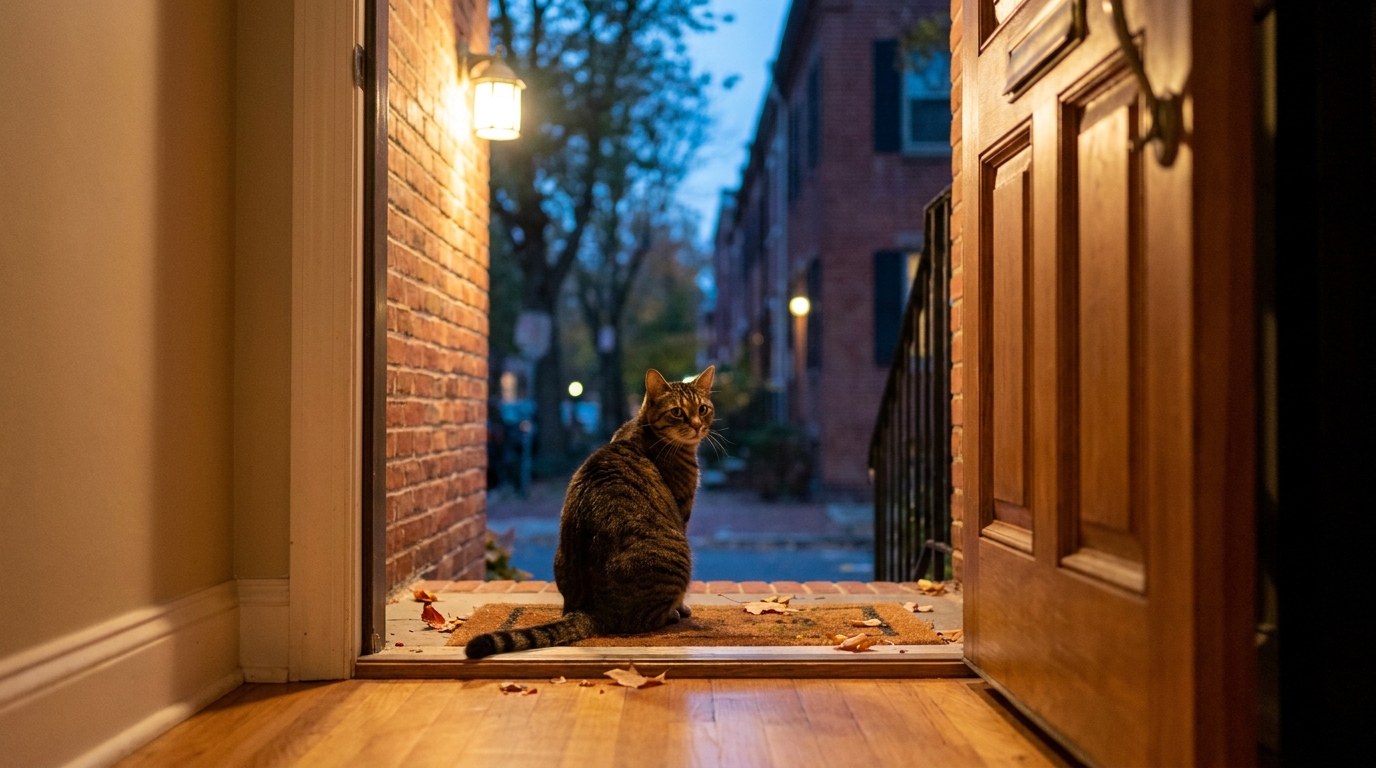
Indoor cat got out and came back? Check for bites, limping and appetite tonight, then ask a vet when to test for FeLV and FIV.
Go to an emergency vet now if your cat is breathing hard, bleeding, can't stand or walk normally, may have been hit by a car or fallen, or is straining in the litter box with little or no urine.
Your cat is home, and that matters most. Whether it was outside overnight or gone for days, watch how your cat acts as well as how it looks.
Indoor cat got out and came back: why a quick check matters even if your cat seems fine
A cat that looks fine can still have a small wound you can't see yet. If your cat met another cat outside, it may have been bitten. VCA Animal Hospitals' guide to fight wound infections in cats explains that "a cat's sharp canine teeth can easily puncture the skin, leaving small, deep wounds in the skin."
The tricky part is what happens next. These punctures "quickly seal over, trapping bacteria under the skin where they can readily multiply," the guide says, and "the infection may go unnoticed for several days until swelling and pain at the puncture site develop."
Emergency signs: go to an ER now, not a video call
Go to an in-person emergency vet now, not a video call, if your cat has any of these:
- Trouble breathing, or breathing hard while resting
- Bleeding that will not stop
- Not using a leg, or not able to stand or walk normally
- A possible car strike or fall, even if your cat seems fine afterward
- Straining in the litter box with little or no urine
- A seizure or collapse
A cat that was outside may also have gotten into something toxic. If you think your cat ate, drank or licked something poisonous while it was out, go to an emergency vet now or call ASPCA Animal Poison Control at (888) 426-4435 or the Pet Poison Helpline at (855) 764-7661. Both lines are open 24/7, and a fee may apply. Don't wait to see whether signs appear, and don't try to treat it at home.
The practical pet emergency checklist on this site lists other signs that also mean the ER. If you're not sure whether something counts as an emergency, treat it as one.
A nose-to-tail check you can do tonight
If there are no emergency signs and no chance your cat got into something toxic, find a quiet, well-lit room and take a slow look. If your cat is sore, wrap it loosely in a towel and stop if it hisses or tries to bite.
Start where bites are most common. According to VCA, "the most common sites of bites are on the head, forelimbs, or at the base of the tail." Part the fur gently and look and feel along:
- The head, cheeks and neck
- Both front legs, from shoulder to paw
- The base of the tail and the rump
- Paws and claws, including between the toes
- Ears, inside and out
- Eyes, for anything that looks different from usual
- The fur all over, for fleas, ticks and burrs
As you go, feel for warmth. The guide says "you may be able to feel heat and swelling around the bite, and your cat will be uncomfortable when the area is touched." It also notes that a bitten leg is usually painful and your cat may limp, and that "many cats will excessively groom the injured area."
If you find a wound, don't put human creams or disinfectants on it. The same guide warns, "Never use disinfectants containing phenols, as these are toxic to cats." Note where the wound is, and take a photo if your cat allows it. Bite punctures are small and seal over quickly, so have any wound from time outside checked by a vet.
Last, start a simple log: when your cat eats, drinks and uses the litter box, plus anything that seems off.
A gentle nose-to-tail check tonight helps you spot what to show a vet. It cannot rule out internal injuries, so any bite, swelling, limp or change in appetite is a reason to be seen.
The bite you can't see yet: watching the next few days
Even a careful check can miss a bite. As VCA puts it, "puncture wounds can close over quickly and can easily be missed, especially in the first few days after a bite."
The same guide notes that some cats may become lethargic and have a fever. A video vet can't take your cat's temperature, so a cat that seems dull or keeps hiding after time outside needs an in-person vet check.
A hidden bite can also turn into an abscess. The fight-wound guide warns that "if several days have passed since the fight, an abscess will usually form, requiring more involved medical treatment." VCA's page on abscesses in cats describes one as a painful swelling that may be "firm to the touch or compressible like a water balloon."
Some abscesses rupture and leak a foul-smelling thick liquid, that page adds. Do not squeeze or open a swelling at home; draining an abscess is done in person at a clinic.
If your cat starts favoring a leg with nothing to see, read our guide to a cat limping with no visible injury and plan a vet visit.
Eating, drinking and the litter box after time outside
Once your cat has settled, offer its usual food and fresh water in a quiet room. Don't force-feed.
The University of Illinois College of Veterinary Medicine explains that "if a cat goes without eating for a few days in a row, there is a risk that the cat could develop a potentially fatal condition called hepatic lipidosis," and that "overweight or obese cats have a greater chance of developing hepatic lipidosis."
If your cat seems lethargic or stops eating, don't wait it out. The vet school's advice, in its column on hepatic lipidosis, is direct: "If a cat stops eating, seek veterinary attention promptly."
The litter box is different. Straining with little or no urine is on the emergency list above, even if your cat is still eating.
FeLV and FIV: why the vet may test now and again later
FeLV (feline leukemia virus) and FIV (feline immunodeficiency virus) spread between cats. The FelineVMA (formerly the AAFP) lists testing "following exposure to an infected cat or a cat of unknown infection status." Any cat your cat met outside is a cat of unknown status to you.
The two viruses spread in different ways. Cornell's page on feline immunodeficiency virus notes that FIV spreads primarily through bite wounds from an infected cat. For FeLV, Cornell says "any close contact among cats can spread FeLV, including bite wounds, mutual grooming, or sharing feeding dishes and litter boxes."
Timing is why testing may happen more than once. Cornell advises that "if there is concern over recent exposure to FeLV the test should be repeated in 3-6 weeks to ensure accuracy."
FIV takes longer to show up. Cornell explains that "it takes the body between 2 and 6 months to develop enough antibodies against FIV to be detected," so a cat infected very recently may test negative even though it is truly infected. Cornell recommends that if exposure is possible, cats are retested after at least 60 days to get a more accurate result.
VCA also advises that "blood tests should be performed after any bite wounds to diagnose these infections." These are blood tests done in person at a clinic; a video vet can help you plan the timing.
Rabies and the other cats at home
Rabies is the other concern. VCA notes that depending on your location, rabies may be a risk if your cat is bitten by an unknown cat or other animal, and that it is essential to keep your cat's rabies vaccine up to date, even if it is primarily an indoor cat. If you are not sure when your cat was last vaccinated, ask your vet.
If a bat or other wild animal may have been involved, see a vet in person and read our rabies steps for a cat that caught a bat.
If you have other cats, until a vet has checked your returned cat, give it its own room; Cornell's advice on reintroducing cats is that "new or returning cats should be confined to their own room with separate litter box, water, and food."
What a RexVet online vet can and cannot do after your cat got out
If your cat has any of the emergency signs above or may have been poisoned, go to an emergency vet or call a poison line instead of waiting for a video call.
For everything else, a video visit can be a useful first step. A RexVet veterinarian can:
- Walk you through the nose-to-tail check on camera
- Look at a scratch, swelling or limp live
- Go over eating, drinking and litter-box habits with you, using your log
- Help you decide between the ER tonight, a clinic visit in the next few days and watching at home
- Plan the FeLV and FIV test timing for you to bring to your clinic
- Recheck your cat by video
A video vet cannot take your cat's temperature, drain an abscess, draw blood for FeLV or FIV tests or give a vaccine. Those happen at a clinic.
If the veterinarian decides medication is appropriate, they can prescribe where state rules allow. In Florida, a veterinarian who has seen your pet only by video may prescribe only FDA-approved animal drugs used as labeled, for up to 14 days (1 month for flea-and-tick-only products), and cannot renew without an in-person exam.
RexVet's veterinarians are licensed in Florida, New York and Virginia and are available 24/7. A video visit is $64.99, and you can book a RexVet video visit tonight.
Stopping the next escape
Cornell's guidance on feline leukemia virus is clear: "Keeping cats indoors, away from potentially infected cats is recommended." It adds, "If outdoor access is allowed, provide supervision or place cats in a secure enclosure to prevent wandering and fighting."
Practical steps:
- Work out how your cat got out, and fix that spot first.
- Check door and window screens.
- Keep an ID collar on your cat and your microchip contact details current, so your cat can be identified and returned if it slips out again.
When to be seen in person in Florida, New York or Virginia
Any sign in the emergency section above, or a possible poisoning, means an emergency vet or a poison line now, not a clinic appointment.
See a vet in person soon for:
- A swelling, puncture, limp or bad smell, as these can be signs of a hidden bite wound or abscess, which is examined and drained in person
- Lethargy or a possible fever (a temperature can't be taken by video)
- Not eating, which calls for prompt veterinary attention
- Any contact with a wild animal, including a bat
- The FeLV and FIV blood tests themselves
In Florida, a telehealth veterinarian must give you the contact information for at least one physical veterinary clinic near you.
You don't have to sort this out alone tonight. RexVet's veterinarians are licensed in Florida, New York and Virginia and are available 24/7. A video visit is $64.99, and you can book a video visit now to go over what you found.
Frequently Asked Questions
Should I take my cat to the vet after it got out?
Yes, if you find a bite, limp or swelling, if your cat is not eating, or if it may have met a wild animal. Any emergency sign listed above, or a possible poisoning, means an emergency vet now. Otherwise, check your cat tonight; a video visit can help you decide how soon it needs to be seen.
When should my cat be tested for FeLV and FIV after getting out?
Ask your vet, who may test now and again later. Cornell advises that if there is concern over recent exposure to FeLV, the test should be repeated in 3-6 weeks, and that cats with possible FIV exposure be retested after at least 60 days to get a more accurate result. Both are blood tests done in person at a clinic.
How do I know if my cat was in a fight?
Look and feel along the head, front legs and base of the tail, which VCA names as the most common bite sites. You may feel heat and swelling around a bite, and your cat will be uncomfortable when the area is touched. A limp, or grooming one spot over and over, can also point to a bite.
Should I keep my cat away from my other cats when it comes back?
Yes. Until a veterinarian has checked your cat, give it its own room. Cornell's reintroduction advice is that returning cats should be confined to their own room with a separate litter box, water, and food.
My cat was gone for days and won't eat. How worried should I be?
Take it seriously. The University of Illinois College of Veterinary Medicine says that a cat that goes without eating for a few days in a row is at risk of a potentially fatal condition called hepatic lipidosis. Its advice is: "If a cat stops eating, seek veterinary attention promptly." Offer the usual food and fresh water in a quiet room, don't force-feed, and contact a vet.
FAQs
Should I take my cat to the vet after it got out?
Yes, if you find a bite, limp or swelling, if your cat is not eating, or if it may have met a wild animal. Any emergency sign listed above, or a possible poisoning, means an emergency vet now. Otherwise, check your cat tonight; a video visit can help you decide how soon it needs to be seen.
When should my cat be tested for FeLV and FIV after getting out?
Ask your vet, who may test now and again later. Cornell advises that if there is concern over recent exposure to FeLV, the test should be repeated in 3-6 weeks, and that cats with possible FIV exposure be retested after at least 60 days to get a more accurate result. Both are blood tests done in person at a clinic.
How do I know if my cat was in a fight?
Look and feel along the head, front legs and base of the tail, which VCA names as the most common bite sites. You may feel heat and swelling around a bite, and your cat will be uncomfortable when the area is touched. A limp, or grooming one spot over and over, can also point to a bite.
Should I keep my cat away from my other cats when it comes back?
Yes. Until a veterinarian has checked your cat, give it its own room. Cornell's reintroduction advice is that returning cats should be confined to their own room with a separate litter box, water, and food.
My cat was gone for days and won't eat. How worried should I be?
Take it seriously. The University of Illinois College of Veterinary Medicine says that a cat that goes without eating for a few days in a row is at risk of a potentially fatal condition called hepatic lipidosis. Its advice is: "If a cat stops eating, seek veterinary attention promptly." Offer the usual food and fresh water in a quiet room, don't force-feed, and contact a vet.
Medically Reviewed
Reviewed by Dr. Tiffany Delacruz, DVM — licensed veterinarian and CEO of RexVet. Last reviewed September 29, 2026.
Content is for informational purposes and does not replace professional veterinary advice.
Chief Executive Officer · Licensed Veterinarian
Dr. Delacruz is a licensed Doctor of Veterinary Medicine specializing in preventive care and veterinary telehealth. She reviews all health content on RexVet to ensure accuracy and clinical relevance.
Sources & References
- · American Veterinary Medical Association — Telehealth Guidelines
- · AVMA — Pet Care Resources
- · U.S. FDA — Animal & Veterinary
Need an Expert Opinion on This Topic?
Connect with a certified vet via video call in minutes
Talk to Vet Now